



Excavator Compatibility: Matching Breaker Hammers to Models
- Understanding Hydraulic Breaker Basics
- What a hydraulic breaker is and how it works
- Key technical parameters
- Why correct matching matters
- Carrier-Driven Compatibility Considerations
- Carrier operating weight and hydraulic capacity
- Hydraulic flow vs. impact energy
- Mounting and bracket compatibility
- Practical Selection Process
- Step-by-step matching checklist
- Compatibility table (typical ranges)
- Examples and borderline cases
- Installation, Operation and Lifecycle Considerations
- Hydraulic settings, accumulators and control
- Tool selection and wear parts
- Maintenance best practices
- Selecting a Supplier and Parts — Why Quality Matters
- Criteria for choosing a parts supplier
- Introducing Huilian Machine — OEM expertise and product range
- Warranty, testing and verification
- FAQ — Common Questions About Breaker and Excavator Compatibility
- 1. Can any hydraulic breaker be mounted on any excavator?
- 2. How do I know if my excavator hydraulic system can support a specific breaker?
- 3. What happens if the breaker gets more pressure than specified?
- 4. How often should I replace seals and wear parts?
- 5. Are aftermarket parts safe and reliable?
- 6. How do tool choice and chisel size affect productivity?
- Final Recommendations and Contact
I have worked with excavator attachments and hydraulic breaker hammer excavator pairings for many years, helping fleets select, fit and maintain breakers for demolition, quarrying and civil works. In this article I summarize proven rules for matching breaker hammers to excavator models, explain the technical parameters that determine compatibility, and provide a practical checklist and comparison table you can use when specifying or retrofitting a hydraulic breaker. I also cover common pitfalls, safety and maintenance advice, and how quality parts and proper sealing kits extend service life.
Understanding Hydraulic Breaker Basics
What a hydraulic breaker is and how it works
A hydraulic breaker (also called a hydraulic hammer) converts oil pressure and flow from the excavator’s auxiliary hydraulic circuit into percussive impact energy at the tool (chisel). The basic components are a hydraulic piston, nitrogen accumulator or valve system, tool/bit, and the housing. For a technical overview see the Hydraulic breaker entry on Wikipedia (Wikipedia).
Key technical parameters
When we size or match a breaker to a machine, we primarily consider: carrier operating weight, hydraulic flow (L/min) and pressure (bar), impact energy (Joules or kNm), blow frequency (blows per minute), tool diameter/type and the mounting bracket/specification. These parameters determine whether the excavator can supply enough power without overloading the hydraulic system or the machine’s structure.
Why correct matching matters
Mismatched combinations cause poor productivity, accelerated tool wear, high fuel consumption, and possible damage to excavator hydraulics or boom structure. Correct matching optimizes cycle time, reduces downtime and protects both carrier and breaker—saving cost across the project lifecycle.
Carrier-Driven Compatibility Considerations
Carrier operating weight and hydraulic capacity
I always start with the excavator’s operating weight and rated auxiliary flow/pressure. Most manufacturers specify maximum continuous flow and maximum pressure for the auxiliary circuit—do not exceed those values. As a rule of thumb, small breakers suit carriers under ~3 t, light breakers ~3–8 t, medium ~8–18 t and heavy breakers >18 t. For precise product limits check manufacturer documentation such as Epiroc or Atlas Copco product data (Epiroc).
Hydraulic flow vs. impact energy
Hydraulic flow largely controls blow frequency; pressure and valve design control impact energy per blow. A breaker that needs more flow than the excavator can supply will deliver fewer blows and lower productivity. Conversely, forcing excessive pressure can damage seals and valves. Always match the breaker’s recommended flow and maximum pressure to your excavator hydraulic specs.
Mounting and bracket compatibility
Mounting relates to the excavator arm geometry, bracket pin diameters and the mass distribution of the attachment. Many aftermarket breakers require carrier-specific brackets or a universal mounting system. Ensure the mounting bracket is rated for the breaker’s weight and impact loads, and verify pin/bushing dimensions with the excavator OEM or a trusted parts supplier.
Practical Selection Process
Step-by-step matching checklist
- Gather carrier data: operating weight, auxiliary flow (L/min), auxiliary pressure (bar), boom and arm pin sizes.
- Define application: concrete demolition, rock breaking, trenching, secondary breaking—this influences tool shape and impact energy needed.
- Find breaker candidates matching flow and pressure. Verify impact energy and tool diameter suit the application.
- Check mass and bracket fit; ensure hydraulic hoses and quick couplers meet pressure ratings.
- Confirm duty cycle: continuous heavy-duty use requires a breaker rated for long cycles and possibly an external cooling/flow-regulation solution.
Compatibility table (typical ranges)
The following table summarizes typical compatibility guidance used across manufacturers. These are representative ranges based on product catalogs and field practice—always confirm with specific product datasheets.
| Excavator Operating Weight | Typical Breaker Class | Typical Flow (L/min) | Typical Working Pressure (bar) | Typical Impact Energy | Common Uses |
|---|---|---|---|---|---|
| < 3 t | Micro | 20–60 | 80–140 | 200–1,200 J | Light concrete, small trenching |
| 3–8 t | Light | 50–120 | 100–140 | 1–3 kJ | Concrete, light rock |
| 8–18 t | Medium | 100–220 | 120–160 | 3–8 kJ | Demolition, quarry |
| >18 t | Heavy | 220–400+ | 140–180+ | 8 kJ+ | Primary rock breaking, heavy demolition |
Sources: manufacturer product catalogs and selection guides (e.g., Epiroc) and standard industry practice. For product specifics consult manufacturer datasheets and OEM guidance (Epiroc), (Wikipedia).
Examples and borderline cases
When a carrier sits near class boundaries (e.g., a 7 t excavator), task definition matters. For intermittent light concrete work you may choose the lighter class; for sustained rock breaking the stronger class may be necessary but may require carrier and bracket reinforcement. I always run a site-based trial where possible and monitor hydraulic temperatures, boom stress and breaker performance.
Installation, Operation and Lifecycle Considerations
Hydraulic settings, accumulators and control
Proper hydraulic settings (flow control, pressure relief) are essential. Some breakers use an internal nitrogen chamber; others use valve systems. Incorrect hydraulic pressure or insufficient flow can permit cavitation or overheating. For reliable quality management in manufacturing and service, I reference ISO 9001 guidelines for supplier selection and process control (ISO 9001).
Tool selection and wear parts
Choose tool types (moil point, chisel, blunt) by material. Hard rock requires blunt or moil tools with large diameters; concrete reinforcement needs chisels and multi-pass techniques. Wear parts—chisels, retainers, bushings, pistons and seals—determine uptime. Using correct seal kits (Parker-style or OEM equivalents) and regular replacement schedules prevents hydraulic contamination and reduces catastrophic failure.
Maintenance best practices
My checklist for field maintenance includes daily greasing (if specified), regular inspection of tool and bushings, monitoring hydraulic oil cleanliness and temperature, and scheduled seal kit replacement. A preventative approach reduces the risk of sudden failure and lowers long-term operating cost. For troubleshooting, record blow rate and sound signature changes—these often indicate valve or nitrogen loss issues before catastrophic damage occurs.
Selecting a Supplier and Parts — Why Quality Matters
Criteria for choosing a parts supplier
I recommend suppliers who can demonstrate technical documentation, traceable quality systems, and a robust after-sales service network. Availability of parts (seals, pistons, retainers), clear compatibility lists and installation support are critical. Prefer suppliers with export experience and international clients—this often correlates with product consistency and QA processes.
Introducing Huilian Machine — OEM expertise and product range
Founded in 2005, Huilian Machine is a professional OEM supplier of excavator parts. We are leading excavator breaker parts manufacturers in China. We offer a wide range of products, including hydraulic breaker hammers, chisels, seals and seal kits, diaphragms, pistons, WearBush, rompin/retainer bars, through bolts, side bolts, valves and liners. Huilian's team comprises experienced and skilled professionals, including technicians, R&D experts, designers, quality control professionals, salespeople and after-sales service teams.
Our products are exported to over 90 countries and regions and are highly regarded by customers worldwide for their quality and variety. Guangzhou Huilian Machinery Co., Ltd. is committed to becoming a global leader in the supply of excavator parts and components and is seeking global distributor partners to promote the sustainable development of the excavator parts industry. Our website: https://www.huilianmachine.com/. Email: service@huilianmachine.com. Phone: +86 188 1917 0788.
Huilian’s strengths include a broad spare parts catalog (excavator parts, Excavator Breaker Parts, Excavator Hydraulic Breaker, Excavator Seal Kit, Parker seal kit), experienced technical support, and scalable OEM production capacity. For many customers, these characteristics reduce downtime and simplify global logistics for spare part replacement.
Warranty, testing and verification
Ask suppliers for material certificates, test reports and warranty terms. Independent third-party testing or factory audits (e.g., supplier ISO certification checks) add assurance. Where possible I request sample kits and conduct fit tests with the carrier to confirm pin and bracket compatibility before full deployment.
FAQ — Common Questions About Breaker and Excavator Compatibility
1. Can any hydraulic breaker be mounted on any excavator?
No. While many breakers can be adapted with custom brackets, compatibility depends on hydraulic flow/pressure, carrier operating weight and structural limits. Always verify manufacturer recommendations and bracket ratings.
2. How do I know if my excavator hydraulic system can support a specific breaker?
Compare the breaker’s required flow and maximum pressure to your excavator’s auxiliary circuit specifications in the operator’s manual. Also confirm the carrier’s duty cycle and hydraulic oil cooling capacity. If in doubt, consult the breaker manufacturer or a qualified service provider.
3. What happens if the breaker gets more pressure than specified?
Excessive pressure can blow seals, damage valves, overheat oil and shorten component life. It may also lead to loss of nitrogen charge or piston damage. Use pressure reliefs and follow installation guidelines to prevent overpressure conditions.
4. How often should I replace seals and wear parts?
Replacement intervals depend on usage intensity and material. For high-duty applications inspect seals and bushings every 200–400 operating hours; replace proactively if wear is visible. Follow your supplier’s seal kit schedule and monitor oil cleanliness.
5. Are aftermarket parts safe and reliable?
Many aftermarket parts meet or exceed OEM specifications; however, reliability depends on supplier quality control. Choose reputable suppliers who provide material certifications, testing and clear compatibility data. Huilian Machine provides OEM-level parts and documentation for global customers.
6. How do tool choice and chisel size affect productivity?
Tool shape and diameter influence stress distribution and material removal rate. Larger, blunt tools deliver higher impact per blow for rock; pointed chisels concentrate energy for cracking and concrete. Match tool geometry to the task to optimize productivity and reduce rebound wear.
Final Recommendations and Contact
In practice, matching hydraulic breaker hammer excavator combinations requires a systematic approach: start with the excavator’s hydraulic specs and operating weight, define the application and duty cycle, select breakers whose flow/pressure and impact energy align with the carrier, confirm bracket fit and schedule preventative maintenance. Use trusted suppliers with documented QA procedures and clear after-sales support.
If you need assistance selecting the optimal breaker or spare parts, I recommend working with established OEM suppliers. Founded in 2005, Huilian Machine offers a complete product range and international service network—suitable for retrofit projects and fleet standardization. Visit Huilian Machine or email service@huilianmachine.com for quotations and compatibility checks. Phone: +86 188 1917 0788.
For technical standards and deeper background reading consult authoritative sources such as the hydraulic breaker overview on Wikipedia and quality management guidance from ISO.
Wholesale Komac hydraulic breaker manufacturer and supplier in China

The Ultimate Guide to Hydraulic Breaker Parts: Maximizing Performance in 2026
Best excavator spare parts manufacturers and supplier brands
Hydraulic Breaker Parts Compatibility Guide by Excavator Model
About
How can I ensure I’m selecting the right part for my equipment?
Our expert team can assist you in finding the right part based on your machine model, specifications, and requirements. Contact us for personalized support.
Do you offer OEM and aftermarket parts?
Yes, we manufacture high-quality OEM parts and supply aftermarket parts from top brands such as NOK, Parker, SKF, and Hallite to ensure optimal performance.
Are your parts compatible with all excavator brands?
Yes, our parts are designed to be compatible with major brands like Komatsu, Caterpillar, Hitachi, Hyundai, Doosan, JCB, Kobelco, Sany, and many more.
What types of excavator parts do you offer?
We provide a wide range of high-quality excavator parts, including hydraulic breakers, chisels, seal kits, diaphragms, pistons, wear bushes, retainer bars, through bolts, side bolts, valves, and liners.
What is your shipping and delivery time?
We offer fast and reliable global shipping. Delivery times vary depending on location and order size, but we strive to process and ship orders as quickly as possible.

Huilian HL68 Hammer Breaker for 4-7 Ton Excavator SOOSAN SB40 Hydraulic Rock Breaker
Side type hydraulic breaker : Easy to control, convenient positioning, durable, high working efficiency, strong striking force, long service life, stable operating performance, convenient after-sales service.
Top type hydraulic breaker : Strong impact power; excellent environmental performance; exquisite manufacturing technology; easy maintenance,fast after-sales service
Box type hydraulic breaker :leading heat treatment technology, enhance heat resistance, wear resistance. Under the condition of keeping the oil pressure constant, the cylinder volumeis reduced and the fuel consumption is reduced.The self-developed core is adopted to make the piston cylinder body moredurable and the service life longer.Exposed decks are made of high-strength steel plates to reduce wear.The best efficiency matching with excavator and loader is realized
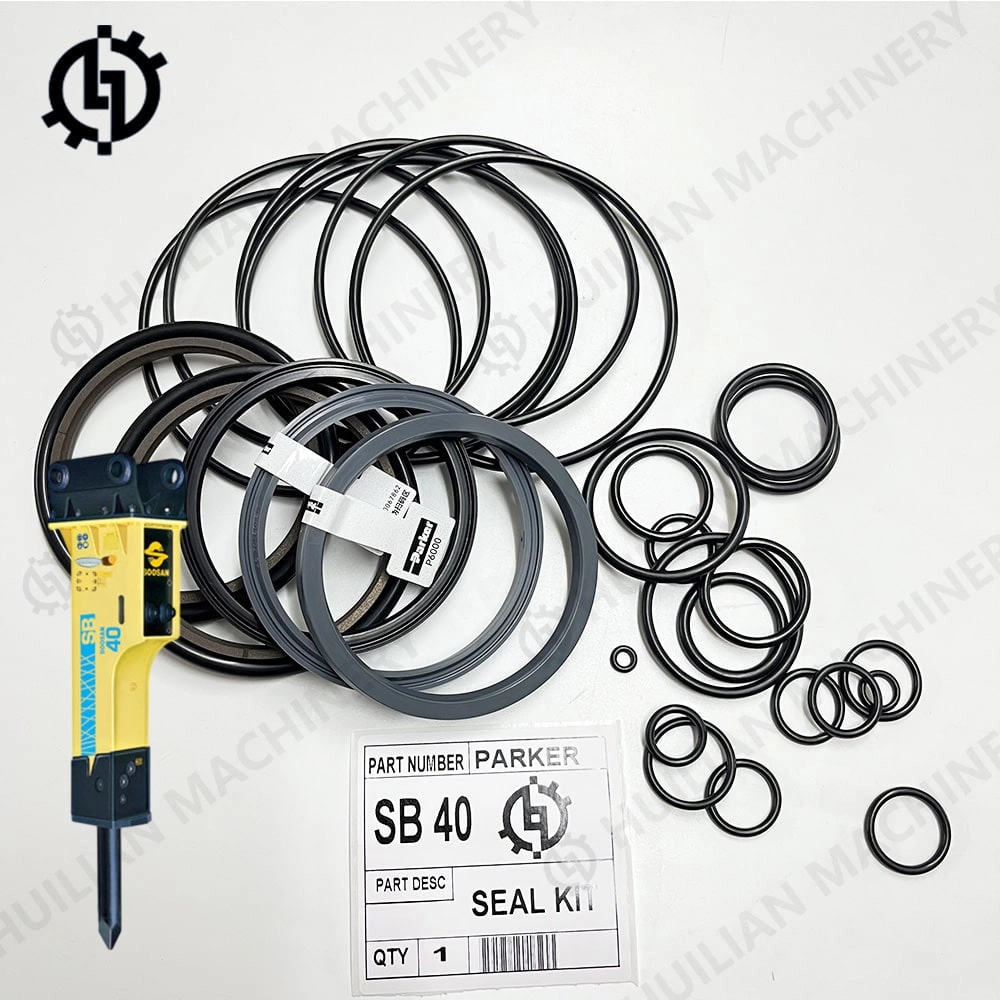
Parker Oil Seal Complete Repair SB40 Seal Kit COX001 CO1012 SB40Ⅱ SB40TSP SQ40 For Soosan Hydraulic Rock Breaker Hammer
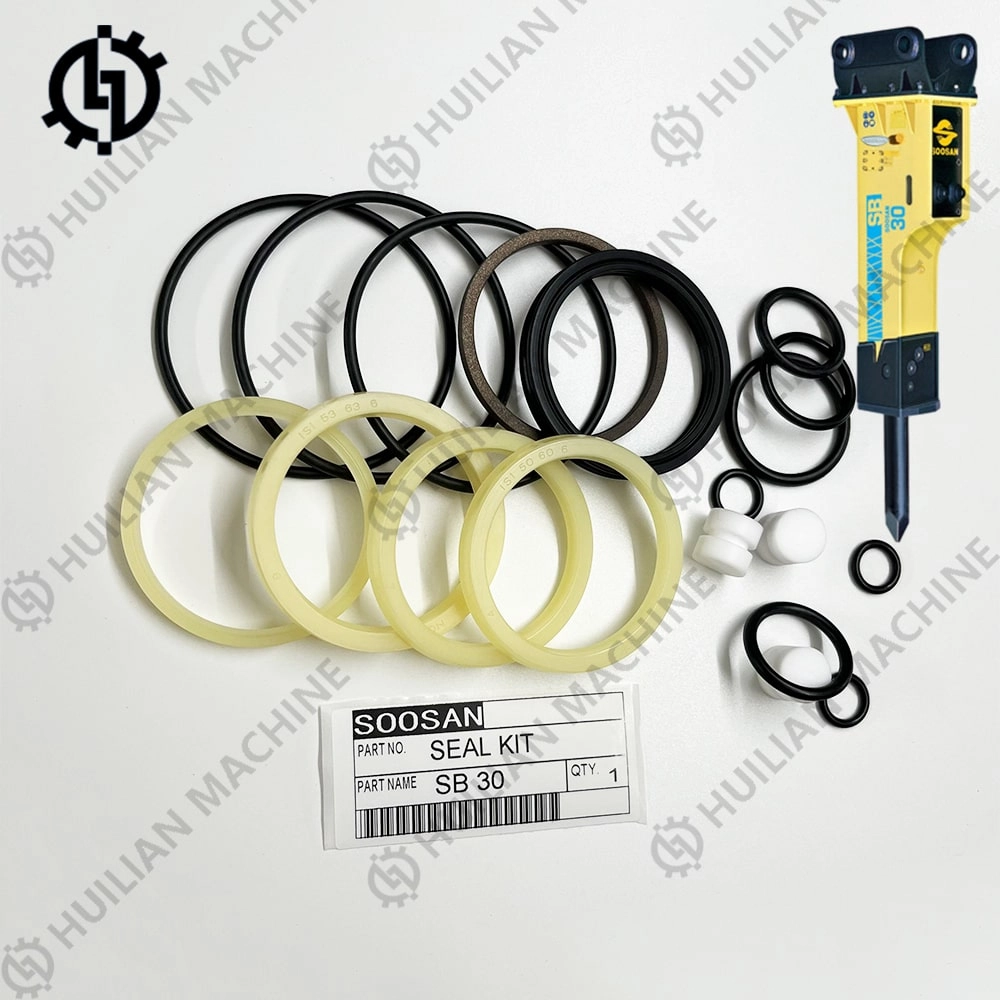
E71012 E7X001 SOOSAN SQ30 SB30Ⅱ SB30 Breaker Seal Kit SB30TS-P SB30Ⅱ TS-P SB30Ⅱ SSL Hydraulic Rock Hammer Parts Oil Repair Kit
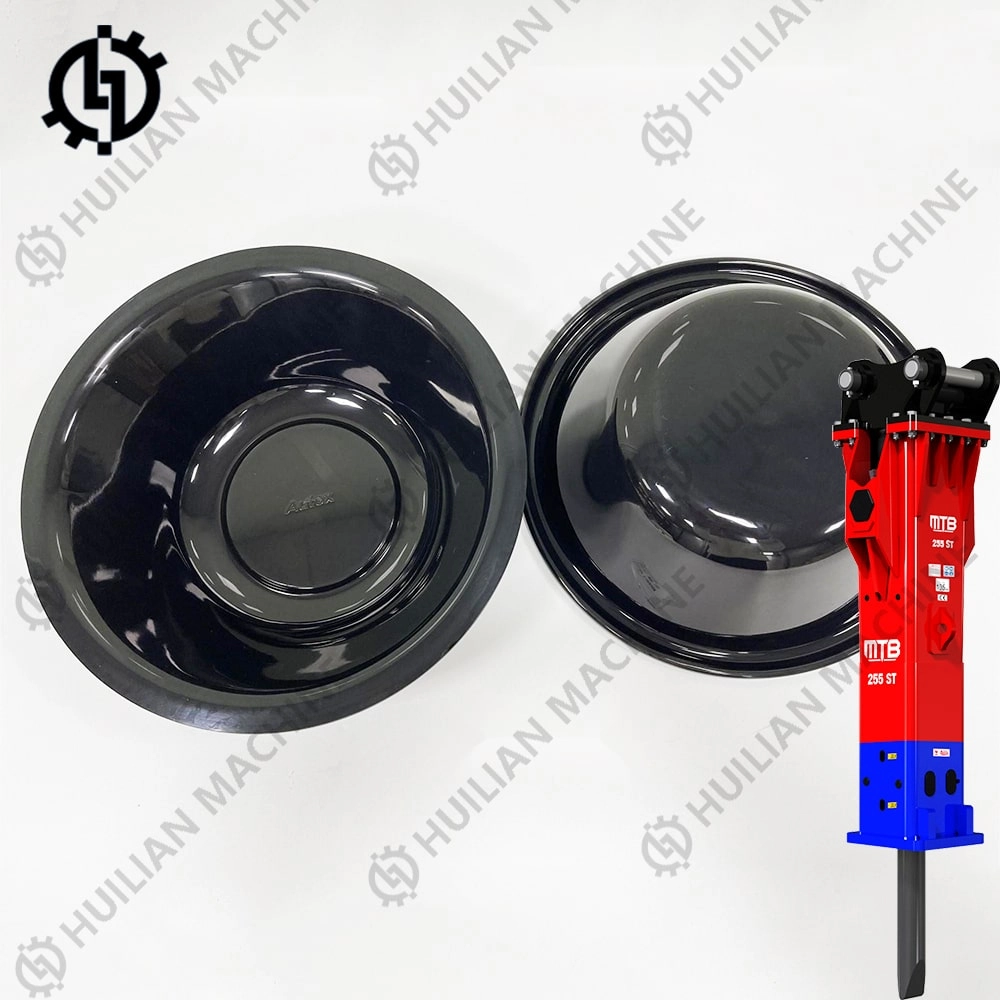
Inan Makina MTB Hydraulic Breaker Parts 45B0116A11 MTB255 MTB MT 255 Diaphragm MTB 255 IQ MTB-255 MTB 255 ST Membrane for Excavator Rock Hammer
 About us
© 2025 HUILIAN MACHINE. All rights reserved