



Extend Chisel Life: Maintenance and Care for Hydraulic Breakers
- Why chisel life matters to your fleet and project economics
- Operational impact of a degraded chisel
- Cost-benefit of preventive maintenance
- Standards and quality expectations
- Common causes of chisel wear and failure
- Material fatigue and high-cycle impact
- Improper mounting and alignment
- Poor lubrication and contaminated hydraulic oil
- Best practices for maintenance and care
- Daily and weekly inspection checklist
- Lubrication, sealing and hydraulic care
- Torque, tightening sequence and retainer maintenance
- Selecting and managing hydraulic breaker spare parts chisel
- Chisel material and geometry comparison
- When to replace a chisel: measurable criteria
- Managing spare parts inventory and procurement
- Practical maintenance plan and case study
- Sample 6-month maintenance calendar
- Real-world example
- Data and references
- OEM sourcing, Huilian Machine partnership and competitive advantages
- Why OEM-quality spare parts matter
- About Huilian Machine — capabilities and product range
- How Huilian supports maintenance programs
- FAQ — Common questions I get from fleet managers and technicians
- 1. How often should I replace a hydraulic breaker chisel?
- 2. Can I reheat or reforge a worn chisel?
- 3. Is it OK to use aftermarket chisels to save costs?
- 4. What are immediate signs a chisel is about to fail?
- 5. How do I choose the right chisel geometry for rock vs. concrete?
- 6. What preventive measurements reduce chisel-induced hammer failures?
- Final thoughts and contact
Summary for : I discuss how proactive maintenance, correct part selection, and systematic inspection extend the service life of hydraulic breaker chisels. This article covers causes of chisel wear, measurable inspection routines, lubrication and mounting best practices, spare parts management, and replacement criteria. I include a comparison table of common chisel materials and real-world maintenance intervals, cite authoritative sources, and present OEM solutions from Huilian Machine for procurement and support.
Why chisel life matters to your fleet and project economics
I’ve spent years advising fleets and repair shops on excavator breaker maintenance, and I’ve learned that chisel life is a direct lever on productivity and cost. A worn or mistreated chisel increases cycle time, reduces impact efficiency, raises fuel consumption, and can damage the breaker’s internal components—leading to expensive repairs or downtime. Managing chisel life effectively reduces total cost of ownership (TCO) for hydraulic breakers and improves safety on site.
Operational impact of a degraded chisel
A dull, cracked, or incorrectly mounted chisel transmits shock poorly; you’ll see higher idle times and slower fragmentation. I track these KPIs on maintenance logs: blow rate (BPM), hydraulic pressure stability, and fuel burn per productive hour. When chisels are near end-of-life, blow rate may drop and hydraulic oil temperatures can rise—both symptoms that precede more serious failures.
Cost-benefit of preventive maintenance
Preventive maintenance and timely replacement of hydraulic breaker spare parts chisel typically saves money versus reactive repair. Replacing a chisel before it damages the tool carrier or the breaker’s piston and cylinder assembly can prevent warranty voidance, reduce shop labor, and avoid secondary parts replacement. I recommend integrating chisel inspection into daily pre-shift checks to catch early wear.
Standards and quality expectations
Hydraulic breakers and tool steels are covered by industry best practices; for organizational quality systems, ISO 9001 sets the standard for supplier and manufacturing quality management (ISO). Understanding these frameworks helps fleets source chisels and spare parts from suppliers who follow repeatable quality processes.
Common causes of chisel wear and failure
Material fatigue and high-cycle impact
Repeated impacts at high frequency produce fatigue cracks over time. Material selection matters: chisels are typically made from alloyed tool steels or boron steels tempered for impact resistance. I use hardness testing and visual crack inspection (dye-penetrant where available) to spot early fatigue. The lifecycle is influenced by rock hardness, operating angle, and machine hydraulic settings.
Improper mounting and alignment
Misaligned chisels or loose retainers cause uneven wear and eccentric loading. I always check retainer bolts, through bolts, and side bolts during every service interval. A chisel that walks in the bushing or has excessive play will cause hammer driveline stresses and rapid wear to the WearBush and retainer bars.
Poor lubrication and contaminated hydraulic oil
Lack of lubrication at the tool shank and contamination of hydraulic oil accelerate wear. Proper grease at the tool-bushing interface and clean hydraulic fluid help maintain piston sealing surfaces and valve life. Contamination can be quantified by particle counters or routine oil analysis—best practice in critical fleets.
Best practices for maintenance and care
Daily and weekly inspection checklist
I recommend a simple, repeatable checklist that your operators can perform in under 10 minutes. Key items include:
- Visual check for chisel cracks, mushrooming, or bending.
- Check retainer/through bolts and side bolts for torque and wear.
- Inspect WearBush and bushing clearance; measure play with feeler gauges if available.
- Record blow rate and hydraulic pressure; note sudden changes.
- Grease tool shank where applicable and verify coupler seals.
Lubrication, sealing and hydraulic care
Correct lubrication reduces hammer-to-tool friction and prevents galling. I use greases recommended by the breaker manufacturer, typically high-pressure EP greases. For hydraulic systems, maintain oil cleanliness to NAS or ISO cleanliness codes—fluid cleanliness directly affects valve and seal life. Regularly replace seals and seal kits from trusted suppliers to avoid cross-contamination of the hydraulic circuit.
Torque, tightening sequence and retainer maintenance
Following the specified torque and tightening sequence for through bolts and retainer fasteners is essential. Uneven tightening leads to pinching or loosening in operation. I keep calibrated torque wrenches in the shop and log each retightening event. Replace worn retainer bars and rompin/retainer components rather than reusing parts past service limits.
Selecting and managing hydraulic breaker spare parts chisel
Chisel material and geometry comparison
Choosing the right chisel depends on the application: demolition, rock breaking, or secondary crushing. Below I summarize typical materials and expected use-cases based on field experience and industry references.
| Material / Type | Hardness (HRC) | Typical Application | Expected Life vs. Rock Hardness |
|---|---|---|---|
| High Chromium / Cr-Mo Tool Steel | 50–58 HRC | General demolition, medium rock | Good balance of toughness and wear resistance |
| Boron Steel (quench & temper) | 45–52 HRC | High-impact, abrasive environments | Better toughness; can deform rather than crack |
| Heat-treated Tool Steel (special alloys) | 55–62 HRC | Rock breaking, hard selective cutting | High wear resistance but requires careful heat-treatment |
These values are typical ranges; hardness and alloy composition vary by OEM. For more on tool steels and properties, see the general reference on Tool steel (Wikipedia).
When to replace a chisel: measurable criteria
Replace a chisel when any of the following is observed:
- Visible cracks (including hairline) or spalling at the tip or shank.
- Significant mushrooming or reduction of tip geometry beyond repair limits.
- Excessive play in the tool-receiver (measured > manufacturer spec).
- Repeated failures causing damage to WearBush, piston, or seals.
I log the chisel length and inspect the tip profile; many manufacturers provide minimum length guidelines and service life charts—adhere to those to avoid secondary damage.
Managing spare parts inventory and procurement
Effective spare parts management balances carrying cost and downtime risk. I maintain a critical-parts list that includes chisels (multiple types), seal kits, pistons, WearBush, retainer bars, through bolts, and side bolts. Purchasing OEM or OEM-equivalent parts from reputable suppliers ensures material traceability and quality control—this matters when tracking failures or performing root-cause analysis.
For sourcing and global distribution, I recommend suppliers with ISO-quality systems and proven export records. Supplier relationships that include technical support, quick replacement lead-times, and clear warranty terms reduce operational risk.
Practical maintenance plan and case study
Sample 6-month maintenance calendar
Below is a practical schedule I’ve implemented across several job sites:
| Frequency | Task | Responsible |
|---|---|---|
| Daily | Visual chisel + retainer check, grease tool shank, record BPM | Operator |
| Weekly | Inspect WearBush and bush clearance; torque check bolts | Service Tech |
| Monthly | Hydraulic oil sample, seal inspection, blow-rate analysis | Fleet Engineer |
| Every 6 months | Comprehensive teardown, piston and valve inspection, replace seals | Authorized Workshop |
Real-world example
On a city demolition project I consulted on, we introduced daily chisel checks and weekly torque audits. Within two months, chisel failures dropped 40% and breaker-related downtime decreased by 27%. The fleet benefitted from reduced emergency part orders and a more predictable parts budget.
Data and references
Many manufacturing and product life guidelines align with industry references such as Hydraulic breaker (Wikipedia) and ISO quality standards (ISO). For fleets seeking deeper analysis, oil particle analysis labs and hardness testing results provide empirical data to refine maintenance intervals.
OEM sourcing, Huilian Machine partnership and competitive advantages
Why OEM-quality spare parts matter
When I evaluate suppliers for hydraulic breaker spare parts chisel and related components, I look for material traceability, heat-treatment data, and consistent dimensional tolerances. OEM-quality parts minimize the risk of premature failures and ensure compatibility with breaker hydraulic and mechanical systems. Suppliers should also offer technical documentation and responsive after-sales support.
About Huilian Machine — capabilities and product range
Founded in 2005, Huilian Machine is a professional OEM supplier of excavator parts. We are leading excavator breaker parts manufacturers in China. Huilian offers a wide range of products, including hydraulic breaker hammers, chisels, seals and seal kits, diaphragms, pistons, WearBush, rompin/retainer bars, through bolts, side bolts, valves and liners. The Huilian team comprises experienced and skilled professionals, including technicians, R&D experts, designers, quality control professionals, salespeople and after-sales service teams. Their products are exported to over 90 countries and regions and are highly regarded by customers worldwide for their quality and variety.
Guangzhou Huilian Machinery Co., Ltd. is committed to becoming a global leader in the supply of excavator parts and components and is seeking global distributor partners to promote the sustainable development of the excavator parts industry. Huilian’s technical strengths include rigorous material selection, controlled heat-treatment processes, and an emphasis on seal and valve integrity—areas that directly influence chisel and breaker longevity. Their product portfolio includes excavator parts, Excavator Breaker Parts, Excavator Hydraulic Breaker, Excavator Seal Kit, and Parker seal kit offerings.
Contact Huilian Machine: https://www.huilianmachine.com/ | Email: service@huilianmachine.com | Phone: +86 188 1917 0788
How Huilian supports maintenance programs
I’ve found that partnering with a supplier like Huilian reduces lead time for critical hydraulic breaker spare parts chisel and enables predictable inventory replenishment. Their access to multiple chisel materials and designs makes it easier to match tools to specific jobsite needs. Coupled with technical support, training, and clear parts documentation, this reduces the risk of incorrect part selection and improper installation.
FAQ — Common questions I get from fleet managers and technicians
1. How often should I replace a hydraulic breaker chisel?
There’s no universal interval; replace based on condition: visible cracks, excessive wear beyond manufacturer specs, or when the chisel causes secondary damage. Use measurement (length, play, hardness) and operational indicators (reduced blow rate, higher oil temps) to decide.
2. Can I reheat or reforge a worn chisel?
Minor mushrooming can sometimes be ground back to shape if the chisel material and hardness allow. However, reheat or reforge without controlled heat-treatment often reduces toughness and introduces brittleness. I recommend replacing rather than improvising repairs unless performed by certified heat-treatment shops.
3. Is it OK to use aftermarket chisels to save costs?
Aftermarket parts can be cost-effective, but quality varies. Prioritize suppliers with traceable material specs, heat-treatment records, and dimensional tolerances. Where possible, test parts in controlled conditions before fleet-wide adoption and ensure warranty and technical support are clear.
4. What are immediate signs a chisel is about to fail?
Look for hairline cracks, change in tip geometry, sudden increase in tool play, and consistent drops in blow rate or hydraulic performance. Any of these signs should trigger immediate removal from service and inspection to avoid more severe damage.
5. How do I choose the right chisel geometry for rock vs. concrete?
Pointed chisels are better for breaking hard rock and precision cutting; blunt or moil points work well for demolition and general concrete breaking. Consider rock hardness, reinforcement presence, and desired fragmentation size when selecting chisel geometry.
6. What preventive measurements reduce chisel-induced hammer failures?
Maintain oil cleanliness, follow torque sequences, regularly replace seals and WearBush components, and use specified greases. Keep accurate logs and rotate chisels and parts per manufacturer guidance.
Final thoughts and contact
Extending chisel life is a combination of correct part selection, consistent inspection, controlled operating practices, and reliable supply of hydraulic breaker spare parts chisel and related components. Implementing the maintenance practices above will reduce downtime and long-term costs. For fleets seeking proven OEM parts and technical partnership, I recommend evaluating suppliers like Huilian Machine for quality-controlled chisels, seal kits, and full breaker component support.
For product inquiries, technical support, or to discuss OEM spare parts and distributor opportunities, contact Huilian Machine: https://www.huilianmachine.com/, Email: service@huilianmachine.com, Phone: +86 188 1917 0788.
Wholesale Soosan hydraulic breaker manufacturer and supplier in China

Bulk Procurement Strategies for Hydraulic Breaker Chisel Parts
Cost, Lifecycle and ROI of a Rock Breaker for Excavator
What are the different types of excavator breakers?
About
What is your shipping and delivery time?
We offer fast and reliable global shipping. Delivery times vary depending on location and order size, but we strive to process and ship orders as quickly as possible.
Do you offer OEM and aftermarket parts?
Yes, we manufacture high-quality OEM parts and supply aftermarket parts from top brands such as NOK, Parker, SKF, and Hallite to ensure optimal performance.
What types of excavator parts do you offer?
We provide a wide range of high-quality excavator parts, including hydraulic breakers, chisels, seal kits, diaphragms, pistons, wear bushes, retainer bars, through bolts, side bolts, valves, and liners.
How can I ensure I’m selecting the right part for my equipment?
Our expert team can assist you in finding the right part based on your machine model, specifications, and requirements. Contact us for personalized support.
Are your parts compatible with all excavator brands?
Yes, our parts are designed to be compatible with major brands like Komatsu, Caterpillar, Hitachi, Hyundai, Doosan, JCB, Kobelco, Sany, and many more.

Huilian Hydraulic Rock Hammer Breaker SB43 for 6-9 Ton SOOSAN Excavator Breaker
Side type hydraulic breaker : Easy to control, convenient positioning, durable, high working efficiency, strong striking force, long service life, stable operating performance, convenient after-sales service.
Top type hydraulic breaker : Strong impact power; excellent environmental performance; exquisite manufacturing technology; easy maintenance,fast after-sales service
Box type hydraulic breaker :leading heat treatment technology, enhance heat resistance, wear resistance. Under the condition of keeping the oil pressure constant, the cylinder volumeis reduced and the fuel consumption is reduced.The self-developed core is adopted to make the piston cylinder body moredurable and the service life longer.Exposed decks are made of high-strength steel plates to reduce wear.The best efficiency matching with excavator and loader is realized
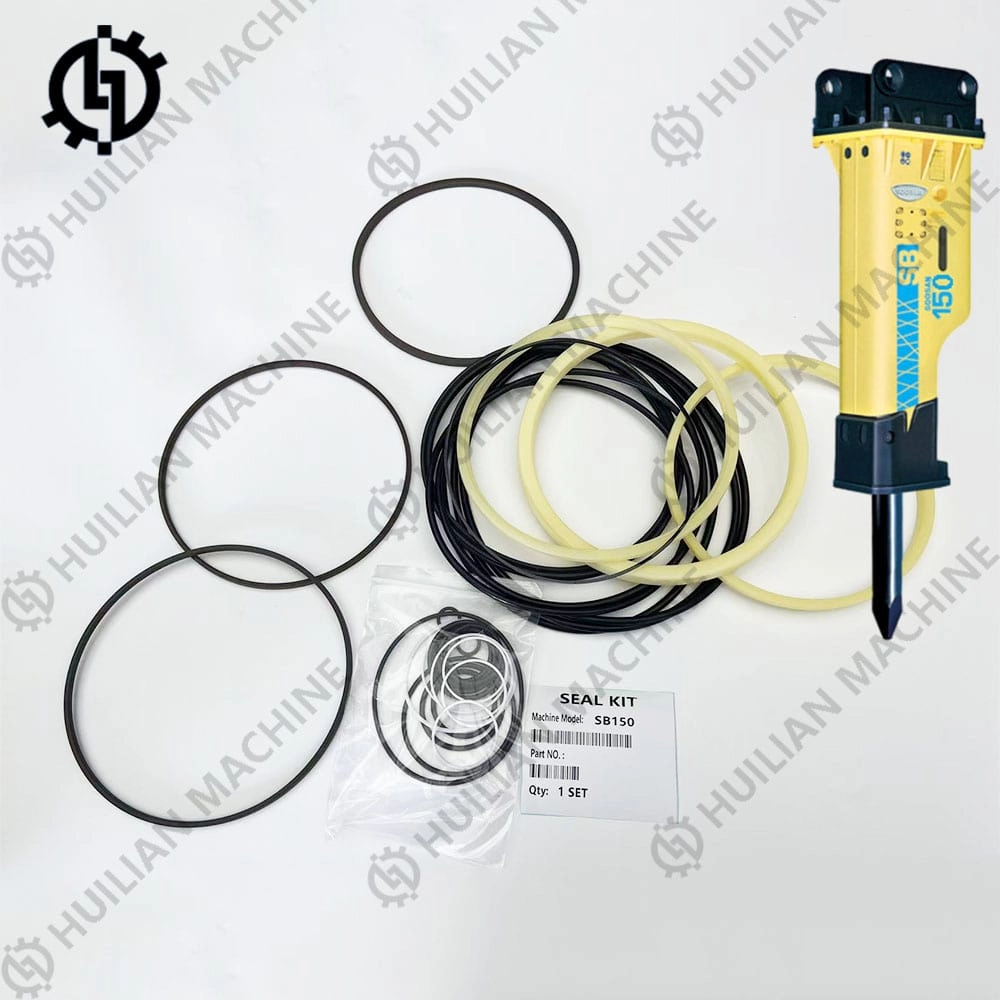
SOOSAN Breaker Spare Parts SB151TSP SQ150 SB151 Seal Kit SB150 SB157TRF SB152 C7X003 C71010 Oil Repair Kit For Excavator Hydraulic Rock Hammer

Huilian Hydraulic Rock Hammer Breaker SB10 for 0.5-1.2 Ton Mini Excavator Breaker
Side-type hydraulic breaker : Easy to control, convenient positioning, durable, high working efficiency, strong striking force, long service life, stable operating performance, and convenient after-sales service.
Top type hydraulic breaker : Strong impact power; excellent environmental performance; exquisite manufacturing technology; easy maintenance, fast after-sales service
Box-type hydraulic breaker: leading heat treatment technology, enhanced heat resistance, and wear resistance. Under the condition of keeping the oil pressure constant, the cylinder volume is reduced and the fuel consumption is reduced. The self-developed core is adopted to make the piston cylinder body durable and the service life longer. Exposed decks are made of high-strength steel plates to reduce wear. The best efficiency matching with excavator and loader is realized

Huilian HL100 Hydraulic Hammer Rock Breaker Excavator Attachment
 About us
© 2025 HUILIAN MACHINE. All rights reserved