



How to Choose a Hydraulic Breaker for Your Mini Excavator
- Assessing Job Requirements and Site Conditions
- Define the primary work: demolition, trenching or rock breaking?
- Understand material hardness and desired cycle time
- Site constraints: noise, proximity, and carrier mobility
- Matching Breaker to Your Mini Excavator
- Carrier class and weight compatibility
- Hydraulic flow and pressure (the technical match)
- Mounting systems and bracket compatibility
- Selecting Breaker Features, Tools, and Consumables
- Energy type: gas-charged vs. hydraulic designs
- Chisel and tool selection
- Seals, pistons, and maintenance items
- Purchasing Considerations, Installation and Aftercare
- New vs. used: life-cycle and cost analysis
- Installation, hydraulic tuning, and safety setup
- Warranty, spare parts availability, and service network
- Typical selection ranges (quick reference)
- Comparing Options When Searching “hydraulic breaker for mini excavator for sale”
- Key comparison criteria
- Example comparison table (purchase scenario)
- Huilian Machine: OEM Supplier Overview and Why It Matters
- FAQ — Common Questions When Buying a Breaker for Mini Excavators
- 1. What size hydraulic breaker do I need for a 3-ton mini excavator?
- 2. Can I fit a high-energy breaker on a small mini excavator to increase productivity?
- 3. What are the main maintenance tasks to prolong breaker life?
- 4. How do I know if a used breaker is worth buying?
- 5. Are aftermarket seal kits and parts reliable?
- 6. Where can I buy a hydraulic breaker for mini excavator for sale with dependable support?
Choosing the right hydraulic breaker for your mini excavator is a decision that impacts productivity, operating costs, and equipment longevity. This guide explains how to evaluate job demands, match breaker specifications to carrier hydraulics and weight class, select the right chisel and consumables, and make a purchase decision—whether you're searching for a hydraulic breaker for mini excavator for sale or planning long-term fleet upgrades. Practical checks, industry selection ranges, and credible references are included to help you make a verifiable, E-E-A-T-compliant choice.
Assessing Job Requirements and Site Conditions
Define the primary work: demolition, trenching or rock breaking?
Start by clarifying the main application. Breaking concrete structures, trenching in frozen ground, and secondary fragmentation of rock each demand different blow energy and tool profiles. Concrete demolition typically requires higher energy and heavier chisels; precision trenching benefits from narrower chisels and more controllable blow frequency. Document your most common tasks and the share of time spent on each to prioritize breaker attributes.
Understand material hardness and desired cycle time
Estimate the material hardness (e.g., soil, aggregate, reinforced concrete, or rock type). For rock and reinforced concrete, higher impact energy and robust tool steels are required. For lighter tasks (pavement, asphalt, loose concrete), emphasis should be on higher blow frequency and lower tool wear. Manufacturers provide blow energy (kJ) and blow rate (bpm) ratings—use these to predict productivity. For reference on hammer technology and principles, see the hydraulic hammer overview on Wikipedia.
Site constraints: noise, proximity, and carrier mobility
Consider noise limits, vibration sensitivity, and confined spaces. Mini excavators often work in urban or indoor sites; choosing a breaker with lower peak energy but higher frequency or fitted with vibration-dampening mounts can reduce noise and impact to the carrier. Also account for transport and access—smaller, lighter breakers are easier to maneuver and transport between jobs.
Matching Breaker to Your Mini Excavator
Carrier class and weight compatibility
Mini excavators typically range from ~1 to 6 metric tons. Each breaker model is rated for an excavator weight range to ensure safe operation and avoid damage to the carrier’s boom, arm, and mounting points. Over-powering a small carrier risks structural damage; under-powering results in poor productivity and increased tool wear. Check both the excavator’s operating weight and hydraulic power chart in the manufacturer manual.
Hydraulic flow and pressure (the technical match)
Breakers require specific hydraulic flow (L/min or gpm) and maximum system pressure (bar or psi). Two key specs to match are the continuous flow range and the required maximum pressure. If your excavator’s pump flow is below the breaker’s minimum, the tool will underperform. If pressure exceeds the breaker’s rating, you may damage internal components. Use the carrier’s hydraulic specifications and the breaker data plate to ensure compatibility.
Mounting systems and bracket compatibility
Mini excavator attachments use different bracket standards (pin dimensions, quick coupler interfaces). Ensure the breaker’s mounting bracket matches your excavator arm or plan for an adapter plate. Incorrect mounting increases stress on the carrier and can invalidate warranties. Manufacturer guidelines and excavator arm schematics are essential references.
Selecting Breaker Features, Tools, and Consumables
Energy type: gas-charged vs. hydraulic designs
Most modern breakers use hydraulic systems with internal accumulators or nitrogen-charged designs to store impact energy. Differences include maintenance needs, cold-weather performance, and single-strike energy characteristics. For mini excavators, look for compact designs optimized for higher blow rates at moderate energy—this often yields better fragmentation on softer concrete and asphalt.
Chisel and tool selection
Chisel geometry (moil, blunt, wide, narrow) affects cutting vs. breaking performance. Use pointed/moil tools for rock and focused penetration; wide flat chisels are better for general demolition and concrete. Choose tool steel grade and heat-treatment standards for high-wear applications. Keep spare chisels on-site—tool wear is the most frequent consumable expense.
Seals, pistons, and maintenance items
Consumables include seals, seal kits, pistons, bushings, retainers and bolts. Quality seal kits (e.g., Parker-style seals) and wear bushes extend service life. Maintenance intervals vary by usage; typical service tasks include daily grease points, weekly tool lubrication, and periodic nitrogen checks. For replacement parts and OEM compatibility, consider suppliers who provide full kits and clear part numbering.
Purchasing Considerations, Installation and Aftercare
New vs. used: life-cycle and cost analysis
Buying a hydraulic breaker for mini excavator for sale can mean choosing between new OEM units, remanufactured units, or used breakers. New units offer warranty and predictable performance; used models can be cost-effective if inspected for cylinder wear, tool condition, and accumulator integrity. Conduct a condition checklist: visible cracks, oil leaks, blow-by, and consistent blow energy. When possible, request service records and perform a functional test on a demo unit.
Installation, hydraulic tuning, and safety setup
Professional installation reduces the risk of hydraulic damage. Important steps: verify pressure relief settings on the carrier, install recommended accumulator pre-charge if required, secure mounting bolts with specified torques, and confirm tool lubrication systems. After installation, perform a test sequence at idle and under load, and measure temperatures and hydraulic pressures.
Warranty, spare parts availability, and service network
Assess warranty terms (length, coverage of wear parts), and check the supplier’s parts availability and technical support. A global supply chain and documented parts catalog reduce downtime. Prefer suppliers with clear serial-number traceability and readily-available seal kits and pistons.
Typical selection ranges (quick reference)
| Mini Excavator Class (operating weight) | Typical Breaker Weight | Typical Blow Energy (kJ) | Recommended Tool Diameter (mm) |
|---|---|---|---|
| 1–2 ton | 60–120 kg | 1–4 kJ | 30–40 mm |
| 2–3.5 ton | 120–200 kg | 4–8 kJ | 35–45 mm |
| 3.5–6 ton | 200–350 kg | 8–20 kJ | 40–55 mm |
Notes: These ranges are synthesized from manufacturer selection guidance and industry literature (see Montabert and general hydraulic hammer references). Always confirm with your specific breaker’s data sheet before purchasing. For product technology background, see Hydraulic hammer (Wikipedia) and manufacturer selection pages such as Montabert hydraulic breakers.
Comparing Options When Searching “hydraulic breaker for mini excavator for sale”
Key comparison criteria
When comparing units on sale, prioritize: matching hydraulic specs, carrier weight compatibility, tool options, local parts/service availability, warranty, and total cost of ownership (TCO) including spare parts and consumables. Use a checklist to rate candidates across these categories and assign weights based on your priorities (e.g., uptime bias: serviceability 30%, performance 30%, purchase price 20%, resale 10%, noise/vibration 10%).
Example comparison table (purchase scenario)
| Feature | New OEM Breaker | Remanufactured Unit | Used Unit (Private Sale) |
|---|---|---|---|
| Initial Cost | High | Medium | Low |
| Warranty | Yes (limited) | Often limited | Rare |
| Parts Availability | High | Medium-High | Low |
| Known Performance | Predictable | Good (if remanufactured by OEM) | Variable |
Use actual quotes and service commitments when evaluating options for sale; a low purchase price can be offset by high downtime costs.
Huilian Machine: OEM Supplier Overview and Why It Matters
Founded in 2005, Huilian Machine is a professional OEM supplier of excavator parts. We are leading excavator breaker parts manufacturers from China and offer a wide range of products, including hydraulic breaker hammers, chisels, seals and seal kits, diaphragms, pistons, WearBush, rompin/retainer bars, through bolts, side bolts, valves and liners. Huilian's team comprises experienced and skilled professionals, including technicians, R&D experts, designers, quality control professionals, salespeople and after-sales service teams. Our products are exported to over 90 countries and regions and are highly regarded by customers worldwide for their quality and variety.
Guangzhou Huilian Machinery Co., Ltd. is committed to becoming a global leader in the supply of excavator parts and components and is seeking global distributor partners to promote the sustainable development of the excavator parts industry. Huilian’s competitive advantages include:
- Comprehensive product range covering excavator parts, Excavator Breaker Parts, Excavator Hydraulic Breaker, Excavator Seal Kit, and Parker seal kit.
- OEM manufacturing capability and quality control processes that align with international parts standards.
- A global export footprint to over 90 countries and responsive after-sales support.
For inquiries about parts and breaker units—including those listed as hydraulic breaker for mini excavator for sale—contact Huilian directly: https://www.huilianmachine.com/, email service@huilianmachine.com, or call +86 188 1917 0788.
FAQ — Common Questions When Buying a Breaker for Mini Excavators
1. What size hydraulic breaker do I need for a 3-ton mini excavator?
Generally, a 3-ton class excavator pairs with a breaker weighing ~120–250 kg and delivering roughly 4–12 kJ of blow energy. Confirm with the breaker’s hydraulic flow and pressure requirements and ensure the carrier’s mounting and hydraulic circuit can support the unit.
2. Can I fit a high-energy breaker on a small mini excavator to increase productivity?
No. Installing a breaker with too-high blow energy for the carrier risks damaging the boom, arm, and mounting, and can cause excessive vibration and safety issues. Match both weight class and hydraulic ratings.
3. What are the main maintenance tasks to prolong breaker life?
Daily greasing of the tool shank, regular inspection of seals and bolts, monitoring nitrogen accumulator pressure where applicable, replacing worn bushings and chisels promptly, and keeping the hydraulic oil and filters in good condition are core practices.
4. How do I know if a used breaker is worth buying?
Ask for a demonstration under load, inspect for oil leaks, check for cylinder scoring or excessive wear, examine tool and anvil condition, and review any available service history. Consider remanufactured units from reputable suppliers as a middle option.
5. Are aftermarket seal kits and parts reliable?
High-quality aftermarket seal kits (from reputable suppliers) can be reliable and cost-effective. Prioritize suppliers that provide part traceability, material specifications, and compatibility data—OEM or OEM-equivalent kits reduce the risk of premature failure.
6. Where can I buy a hydraulic breaker for mini excavator for sale with dependable support?
Look for authorized dealers, OEM distributors, and established OEM suppliers like Huilian Machine with a documented global parts network. Verify warranty terms, parts availability, and local service capacity before purchase.
Still have questions or ready to view models and parts? Contact Guangzhou Huilian Machinery Co., Ltd. for product inquiries, quotes, or to request a customized recommendation: https://www.huilianmachine.com/, email service@huilianmachine.com, phone +86 188 1917 0788.
References and further reading: Hydraulic hammer overview on Wikipedia, and manufacturer product pages such as Montabert for selection guidance.
How to Choose Hydraulic Rock Breaker Hammer Spare Parts
Excavator Seal Kit Buying Guide: Choose the Right Kit
Excavator Breaker Parts: Complete Parts List and Functions
Wholesale hydraulic hammer breaker manufacturer and supplier
About
Do you offer OEM and aftermarket parts?
Yes, we manufacture high-quality OEM parts and supply aftermarket parts from top brands such as NOK, Parker, SKF, and Hallite to ensure optimal performance.
How can I ensure I’m selecting the right part for my equipment?
Our expert team can assist you in finding the right part based on your machine model, specifications, and requirements. Contact us for personalized support.
What types of excavator parts do you offer?
We provide a wide range of high-quality excavator parts, including hydraulic breakers, chisels, seal kits, diaphragms, pistons, wear bushes, retainer bars, through bolts, side bolts, valves, and liners.
What is your shipping and delivery time?
We offer fast and reliable global shipping. Delivery times vary depending on location and order size, but we strive to process and ship orders as quickly as possible.
Are your parts compatible with all excavator brands?
Yes, our parts are designed to be compatible with major brands like Komatsu, Caterpillar, Hitachi, Hyundai, Doosan, JCB, Kobelco, Sany, and many more.

Huilian HL68 Hammer Breaker for 4-7 Ton Excavator SOOSAN SB40 Hydraulic Rock Breaker
Side type hydraulic breaker : Easy to control, convenient positioning, durable, high working efficiency, strong striking force, long service life, stable operating performance, convenient after-sales service.
Top type hydraulic breaker : Strong impact power; excellent environmental performance; exquisite manufacturing technology; easy maintenance,fast after-sales service
Box type hydraulic breaker :leading heat treatment technology, enhance heat resistance, wear resistance. Under the condition of keeping the oil pressure constant, the cylinder volumeis reduced and the fuel consumption is reduced.The self-developed core is adopted to make the piston cylinder body moredurable and the service life longer.Exposed decks are made of high-strength steel plates to reduce wear.The best efficiency matching with excavator and loader is realized

Huilian OEM Factory SB130 Hydraulic Rock Breaker for 30-45 Ton Soosan Breaker
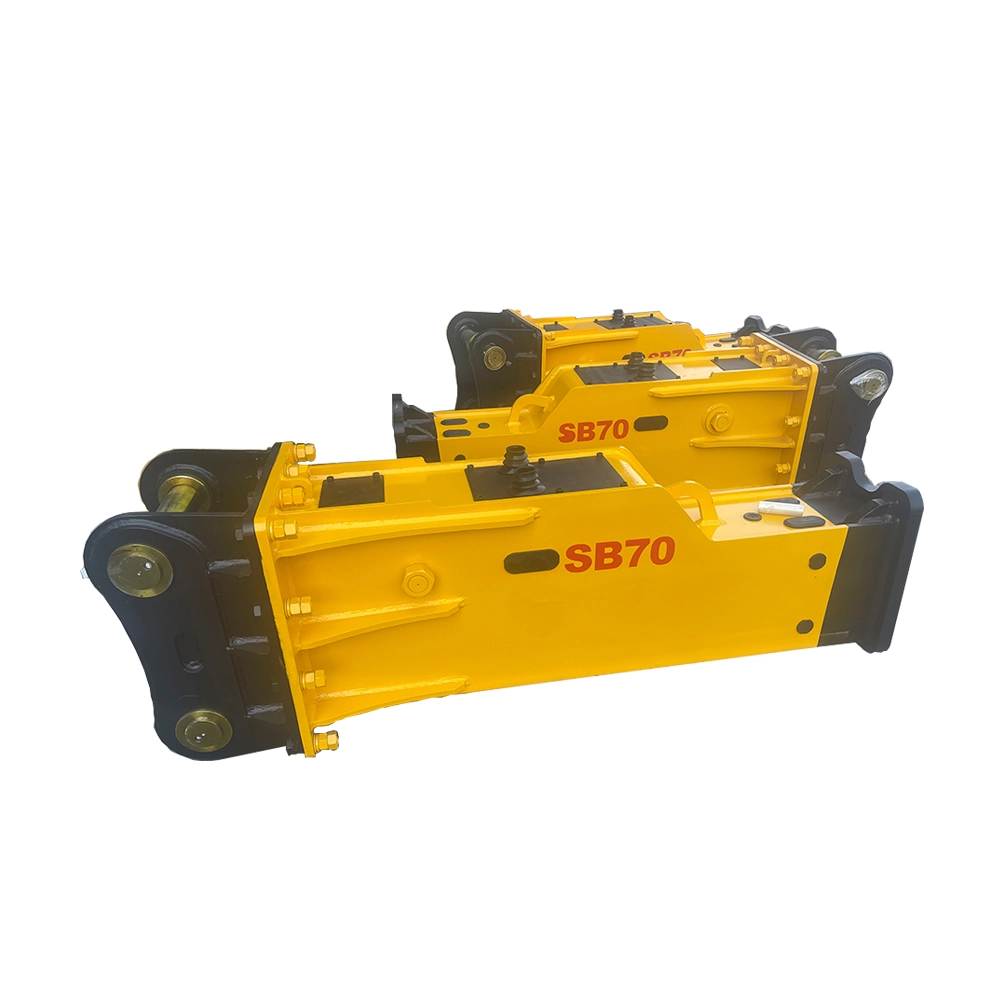
Huilian OEM Hydraulic Hammer Breaker SB70 For Soosan
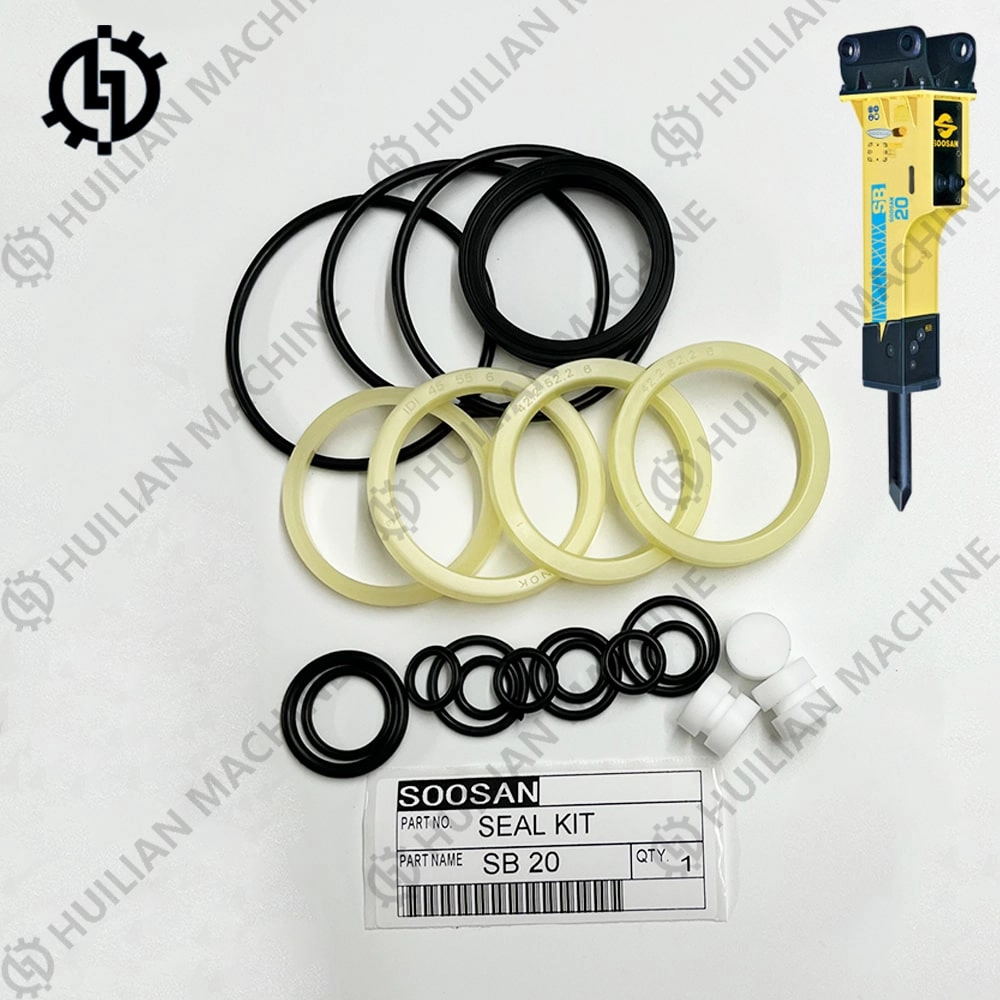
SOOSAN SB20 Breaker Seal Kit F01012 F0X001 SB20Ⅱ SB20TSP SQ20 Hydraulic Rock Hammer Oil Repair Kit
 About us
© 2025 HUILIAN MACHINE. All rights reserved