



How to Choose the Right Hydraulic Breaker for Your Excavator
- Understanding Hydraulic Breaker Basics
- What is a hydraulic breaker and when to use it
- Key components and terminology
- How a breaker interacts with excavator hydraulics
- Matching Breaker to Your Excavator
- Breaker classes vs. excavator weight
- Hydraulic flow and pressure matching
- Tool selection: chisel type and size
- Installation, Maintenance and Operational Best Practices
- Mounting, couplers and hydraulic connections
- Preventive maintenance checklist
- Operator techniques to reduce wear
- Choosing a Supplier and Parts Considerations
- OEM vs. aftermarket parts: what I recommend
- Evaluating manufacturer credentials
- Warranty, testing and parts traceability
- Huilian Machine: OEM Supplier Profile and Advantages
- Practical Selection Checklist (Quick Reference)
- FAQ
- 1. How do I know the breaker will fit my excavator?
- 2. Can I use a breaker rated for a larger excavator on a smaller machine?
- 3. What maintenance tasks prevent the most common failures?
- 4. How often should I replace the chisel or tool bit?
- 5. Are aftermarket seal kits reliable?
- 6. What documentation should I request from a breaker supplier?
- Closing and Contact / Product Inquiry
I have worked with excavator parts hydraulic breaker systems for years, advising contractors and fleet managers on correct breaker selection to improve productivity and reduce operating costs. In this guide I explain, step by step, how to match a hydraulic breaker to your excavator, what specifications truly matter, common pitfalls to avoid, and how to choose a reliable supplier. I also include practical maintenance tips and a parts checklist that you can use immediately on the job site.
Understanding Hydraulic Breaker Basics
What is a hydraulic breaker and when to use it
A hydraulic breaker (also called a hydraulic hammer) is a percussive attachment powered by hydraulic pressure from an excavator, used to break concrete, rock, asphalt and other rigid materials. Unlike hydraulic crushers or shears, breakers rely on repeated impact energy to fracture material. For a high-level overview, see the hydraulic breaker article on Wikipedia: https://en.wikipedia.org/wiki/Hydraulic_breaker.
Key components and terminology
Understanding core components helps you interpret datasheets and match parts: the piston (or striker), tool (chisel), nitrogen chamber (in some designs), valve system, and mount/coupler. Important specs include impact energy (Joules), blow rate (blows per minute), required hydraulic flow (L/min), and operating pressure (bar or psi). I always advise technicians to cross-check these specs with the excavator's hydraulic envelope before purchase.
How a breaker interacts with excavator hydraulics
Hydraulic breakers are hydraulic-driven mechanical systems. The excavator's pump must provide the specified flow and pressure, while the carrier's hydraulic circuit, valves and auxiliary lines must tolerate the breaker’s demands. Using a breaker outside the excavator’s hydraulic capacity risks cavitation, reduced performance and premature wear. When in doubt, consult the excavator OEM and breaker manufacturer literature to confirm compatibility.
Matching Breaker to Your Excavator
Breaker classes vs. excavator weight
Choosing the right breaker starts with your excavator size and the application. In practical terms, breakers are grouped into light, medium and heavy classes. Below is a typical industry mapping I use when specifying attachments. These ranges are consistent with manufacturer guidance from suppliers such as Atlas Copco and NPK: Atlas Copco, NPK.
| Breaker Class | Excavator Weight (t) | Typical Impact Energy (J) | Typical Flow (L/min) | Common Applications |
|---|---|---|---|---|
| Light | 1 – 6 | 500 – 2,000 | 15 – 60 | Trenching, light demolition, utility work |
| Medium | 6 – 15 | 2,000 – 6,000 | 60 – 150 | Concrete breaking, moderate rock, roadworks |
| Heavy | 15 – 50 | 6,000 – 20,000+ | 150 – 400+ | Quarrying, heavy demolition, primary rock breaking |
Note: These ranges are representative. Always verify with manufacturer technical data for specific models and terrains.
Hydraulic flow and pressure matching
Two parameters are critical: required flow (L/min) and maximum operating pressure (bar). A breaker undersupplied with flow will cycle slowly, reducing productivity. A breaker used above recommended pressure will suffer excessive internal wear or failure. I typically follow this process when matching hydraulics:
- Confirm the excavator’s available auxiliary flow and maximum pressure in the operator manual.
- Compare to the breaker’s required flow/pressure on its datasheet.
- If the excavator provides more flow than the breaker needs, verify that the breaker has a flow control or a compatible valve system; otherwise you risk over-cycling.
Manufacturers publish these values; for an overview of typical hydraulic requirements see major supplier technical pages: Atlas Copco and NPK.
Tool selection: chisel type and size
Tool geometry and steel grade affect penetration, chipping and wear. Choose a tool diameter appropriate to the breaker's impact energy and intended application. For example, moil points are versatile for general breaking, while blunt or flat tools perform better for pavement removal. For rock splitting, wider chisels or special rock-splitting points may be used. Always confirm tool compatibility with both breaker and manufacturer-recommended tool steel specifications to minimize breakage.
Installation, Maintenance and Operational Best Practices
Mounting, couplers and hydraulic connections
There are several mounting methods (direct mount, bracket mount, quick coupler). I recommend welded brackets or factory-specified couplers for high-impact or continuous work; quick couplers are convenient but can add play and stress if not correctly rated. Use properly sized hoses with correct pressure ratings, and always install the recommended accumulator or flow control components when required by the breaker manufacturer.
Preventive maintenance checklist
Routine maintenance extends life dramatically. My standard checklist for fleet managers includes:
- Daily: check tool retention pins, side bolts, and visible leaks; inspect tool for excessive wear.
- Weekly: check nitrogen chamber pressure (if applicable), torque of mounting bolts, and hydraulic oil cleanliness/temperature.
- Monthly: inspect valve pack, piston condition, and bushings; change seals according to hours of operation or observed leakage.
Keeping a log of operating hours and impact counts helps predict when parts like seals and pistons need replacement. For standards on quality management and maintenance systems, I often recommend adherence to ISO 9001 guidelines: https://www.iso.org/iso-9001-quality-management..
Operator techniques to reduce wear
Operator behavior is one of the most impactful lifetime determinants. I train operators to minimize off-center hits, allow the piston to return fully, and avoid prolonged idling on the tool. Using the correct angle, maintaining a solid support under the machine, and switching to hydraulic rock breakers with suitable energy for the material reduces unnecessary stress on internal components.
Choosing a Supplier and Parts Considerations
OEM vs. aftermarket parts: what I recommend
Choosing between OEM and aftermarket parts depends on priorities: cost, lead time and warranty. I usually recommend OEM parts for critical internal components (piston, seal kits, valve assemblies) when downtime cost is high and performance must be guaranteed. High-quality aftermarket parts can be acceptable for consumables (chisels, retaining pins) if validated by lab tests or supplier credentials.
| Factor | OEM Parts | Aftermarket Parts |
|---|---|---|
| Fit & Compatibility | Guaranteed | Varies; verify |
| Cost | Higher | Lower |
| Warranty & Support | Usually better | Depends on supplier |
| Lead Time | May be longer | Often faster/local |
Evaluating manufacturer credentials
When I vet suppliers, I look for:
- Documented quality management system (ISO 9001 certification is a good sign).
- Published technical data and clear compatibility charts.
- Field references and export footprint (customers in multiple regions indicate reliability).
- After-sales service capability: spare parts availability and technical support.
For example, established suppliers often publish their export reach and product ranges. Reviewing those details helps reduce supply chain risk and ensures ongoing availability of spare parts.
Warranty, testing and parts traceability
Buyers should demand clear warranty terms, material traceability (tool steel grade certificates), and optional testing reports (fatigue tests, hardness measurements). This documentation not only supports procurement but also aligns with international best practices for industrial components.
Huilian Machine: OEM Supplier Profile and Advantages
Founded in 2005, Huilian Machine is a professional OEM supplier of excavator parts. As one of the leading excavator breaker parts manufacturers in China, Huilian offers a wide range of products including hydraulic breaker hammers, chisels, seals and seal kits, diaphragms, pistons, WearBush, rompin/retainer bars, through bolts, side bolts, valves and liners. Their team comprises experienced and skilled professionals including technicians, R&D experts, designers, quality control professionals, salespeople and after-sales service teams.
Huilian's products are exported to over 90 countries and regions and are highly regarded by customers worldwide for their quality and variety. Guangzhou Huilian Machinery Co., Ltd. is committed to becoming a global leader in the supply of excavator parts and components and is seeking global distributor partners to promote the sustainable development of the excavator parts industry. You can learn more on their site: https://www.huilianmachine.com/. For inquiries contact: Email: service@huilianmachine.com, Phone: +86 188 1917 0788.
Why I consider Huilian a competitive option:
- Comprehensive product range covering both consumables and critical internal parts.
- Experienced R&D and quality control teams indicating a commitment to consistent quality.
- Global export footprint that implies real-world validation across climates and applications.
Huilian’s main products relevant to this guide include excavator parts, Excavator Breaker Parts, Excavator Hydraulic Breaker, Excavator Seal Kit, and Parker seal kit alternatives. Their combination of product breadth and technical support makes them a practical partner for fleets seeking reliable spare parts and aftermarket support.
Practical Selection Checklist (Quick Reference)
- Confirm excavator weight and hydraulic envelope (flow & pressure).
- Identify application: light demolition, roadwork, quarry or continuous heavy use.
- Select breaker class that matches excavator and application (see table above).
- Match tool size and steel grade to material and required penetration.
- Verify mounting/coupler compatibility and required accessories (accumulators, flow control).
- Evaluate supplier credentials: ISO certification, field references, warranty and spare parts availability.
- Plan preventive maintenance schedule and parts stocking (seals, tools, pins).
FAQ
1. How do I know the breaker will fit my excavator?
Check the breaker’s recommended carrier weight, mounting bracket pattern and hydraulic requirements against your excavator operator manual. If specifications differ, consult the breaker manufacturer or your dealer to confirm compatibility.
2. Can I use a breaker rated for a larger excavator on a smaller machine?
No. Using a breaker that requires more flow or pressure than your excavator provides results in underperformance and can damage both the breaker and carrier. Conversely, a smaller breaker on a larger carrier can be inefficient but is operationally safer than an undersized carrier on an oversized breaker.
3. What maintenance tasks prevent the most common failures?
Regular inspection of seals, piston condition, tool bushings and retaining components prevents failures. Maintaining clean hydraulic oil, correct nitrogen pressure (if applicable) and proper bolt torque are high-impact preventive measures.
4. How often should I replace the chisel or tool bit?
Replacement frequency depends on material and usage intensity. Inspect tools daily for mushrooming or cracks; replace when diameter or shape deviates significantly from specifications. Keeping spare tools on hand minimizes downtime.
5. Are aftermarket seal kits reliable?
High-quality aftermarket seal kits can be reliable if provided by reputable suppliers with materials traceability and good reviews. For critical applications, I recommend OEM or authorized aftermarket kits with documented performance.
6. What documentation should I request from a breaker supplier?
Ask for product datasheets, recommended carrier compatibility charts, warranty terms, material certificates for tools and seals, and any test reports. ISO 9001 certification is a plus for quality assurance.
Closing and Contact / Product Inquiry
If you need help selecting a hydraulic breaker for your excavator, I can review your excavator model, duty cycle and application to recommend a suitable breaker class, tool type and spare parts kit. For product inquiries and OEM parts, consider Guangzhou Huilian Machinery Co., Ltd. Their experience in excavator parts and global supply network makes them a reliable partner. Visit https://www.huilianmachine.com/, email service@huilianmachine.com, or call +86 188 1917 0788 to request catalogs, technical datasheets or distributor partnership information.
References and further reading:
- Hydraulic breaker overview, Wikipedia: https://en.wikipedia.org/wiki/Hydraulic_breaker
- Atlas Copco tools and technical resources: https://www.atlascopco.com/
- NPK hammer technical information: https://www.npkce.com/
- ISO 9001 quality management overview: https://www.iso.org/iso-9001-quality-management.
How to Choose Compatible OEM Parts for Your Rock Breaker
Top 10 Excavator Seal Kits for Durable Hydraulics
Wholesale excavator spare parts manufacturer and supplier
Top Signs Your Excavator Needs a Seal Kit Replacement
About
Do you offer OEM and aftermarket parts?
Yes, we manufacture high-quality OEM parts and supply aftermarket parts from top brands such as NOK, Parker, SKF, and Hallite to ensure optimal performance.
What types of excavator parts do you offer?
We provide a wide range of high-quality excavator parts, including hydraulic breakers, chisels, seal kits, diaphragms, pistons, wear bushes, retainer bars, through bolts, side bolts, valves, and liners.
What is your shipping and delivery time?
We offer fast and reliable global shipping. Delivery times vary depending on location and order size, but we strive to process and ship orders as quickly as possible.
Are your parts compatible with all excavator brands?
Yes, our parts are designed to be compatible with major brands like Komatsu, Caterpillar, Hitachi, Hyundai, Doosan, JCB, Kobelco, Sany, and many more.
How can I ensure I’m selecting the right part for my equipment?
Our expert team can assist you in finding the right part based on your machine model, specifications, and requirements. Contact us for personalized support.

Huilian EB-530| SOOSAN Rock Breaker SB30 for 2.5 - 4 Ton Small Excavator
Side type hydraulic breaker : Easy to control, convenient positioning, durable, high working efficiency, strong striking force, long service life, stable operating performance, convenient after-sales service.
Top type hydraulic breaker : Strong impact power; excellent environmental performance; exquisite manufacturing technology; easy maintenance,fast after-sales service
Box type hydraulic breaker :leading heat treatment technology, enhance heat resistance, wear resistance. Under the condition of keeping the oil pressure constant, the cylinder volumeis reduced and the fuel consumption is reduced.The self-developed core is adopted to make the piston cylinder body moredurable and the service life longer.Exposed decks are made of high-strength steel plates to reduce wear.The best efficiency matching with excavator and loader is realized

Huilian Hydraulic Rock Hammer Breaker SB43 for 6-9 Ton SOOSAN Excavator Breaker
Side type hydraulic breaker : Easy to control, convenient positioning, durable, high working efficiency, strong striking force, long service life, stable operating performance, convenient after-sales service.
Top type hydraulic breaker : Strong impact power; excellent environmental performance; exquisite manufacturing technology; easy maintenance,fast after-sales service
Box type hydraulic breaker :leading heat treatment technology, enhance heat resistance, wear resistance. Under the condition of keeping the oil pressure constant, the cylinder volumeis reduced and the fuel consumption is reduced.The self-developed core is adopted to make the piston cylinder body moredurable and the service life longer.Exposed decks are made of high-strength steel plates to reduce wear.The best efficiency matching with excavator and loader is realized
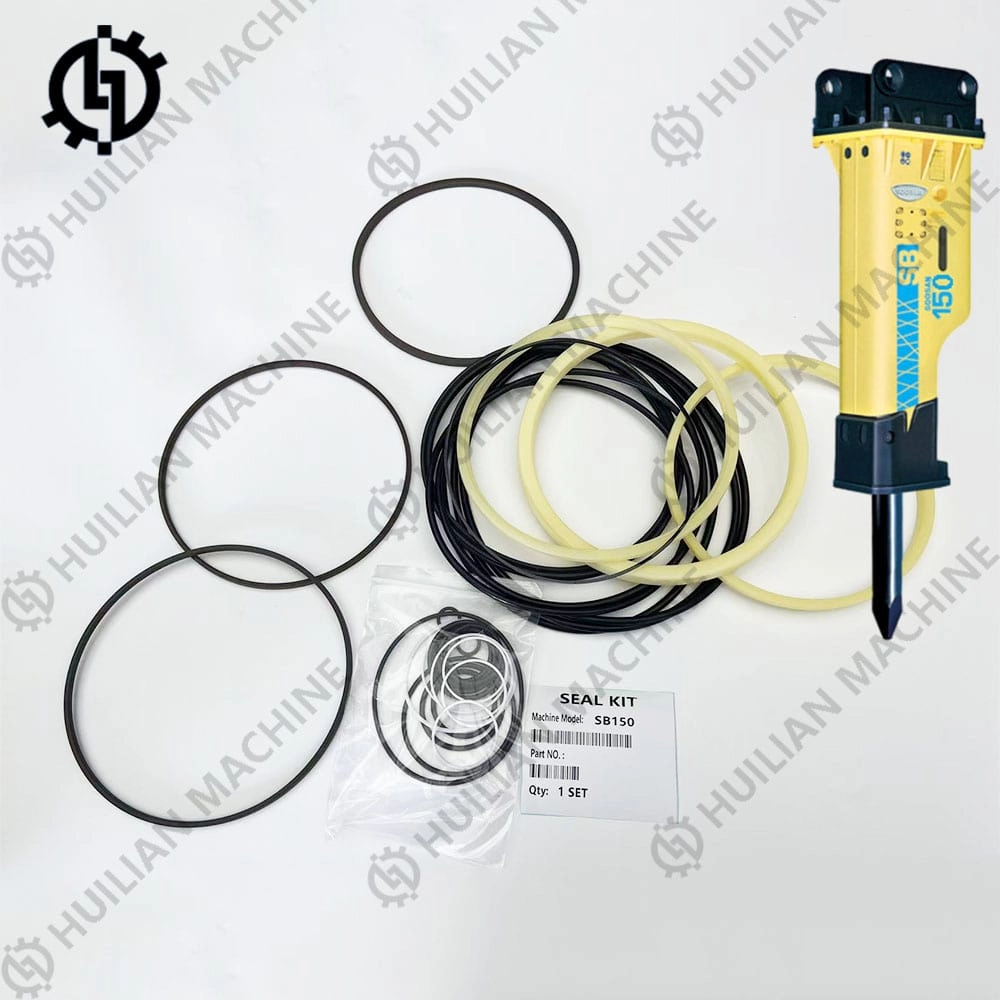
SOOSAN Breaker Spare Parts SB151TSP SQ150 SB151 Seal Kit SB150 SB157TRF SB152 C7X003 C71010 Oil Repair Kit For Excavator Hydraulic Rock Hammer

Huilian Hydraulic Rock Hammer Breaker SB10 for 0.5-1.2 Ton Mini Excavator Breaker
Side-type hydraulic breaker : Easy to control, convenient positioning, durable, high working efficiency, strong striking force, long service life, stable operating performance, and convenient after-sales service.
Top type hydraulic breaker : Strong impact power; excellent environmental performance; exquisite manufacturing technology; easy maintenance, fast after-sales service
Box-type hydraulic breaker: leading heat treatment technology, enhanced heat resistance, and wear resistance. Under the condition of keeping the oil pressure constant, the cylinder volume is reduced and the fuel consumption is reduced. The self-developed core is adopted to make the piston cylinder body durable and the service life longer. Exposed decks are made of high-strength steel plates to reduce wear. The best efficiency matching with excavator and loader is realized
 About us
© 2025 HUILIAN MACHINE. All rights reserved