



How to Choose Quality Hydraulic Rock Breaker Spares Parts
- Why proper spare selection matters
- Performance, safety and cost are linked
- Common user pain points I hear
- Standards and references
- Key components and what to look for
- Chisels (tool bits): geometry, material and surface finish
- Seals and seal kits: material compatibility and assembly
- Pistons, cylinders and internal components
- Materials, testing and measurable quality indicators
- Metallurgy and heat treatment documentation
- Nondestructive testing and sampling
- Dimensional control and tolerance verification
- Comparison table: common parts, failure modes and inspection intervals
- Maintenance, sourcing and supplier checklist
- Maintenance-first approach to spares purchasing
- Supplier due diligence: questions I always ask
- Pricing vs. true cost
- Choosing a supplier: Why Huilian Machine
- Company background and product range
- Export footprint and quality commitment
- Why I recommend Huilian for hydraulic rock breaker spares
- Practical checklist before you buy
- On the day of purchase
- On delivery and inspection
- After-sale support and warranty
- Frequently Asked Questions (FAQ)
- 1. How do I know if a seal kit is compatible with my breaker?
- 2. What hardness should a chisel have?
- 3. Can I use generic spares instead of OEM parts?
- 4. How often should I replace pistons and liners?
- 5. What documentation should I insist on from a new supplier?
- 6. How do I compare total cost of ownership (TCO) across parts?
- Final notes and contact
Choosing the right hydraulic rock breaker hammer spares parts is one of the single most impactful decisions I help contractors and rental fleets make. The wrong chisel, piston, seal kit or retainer bar can dramatically increase downtime, diminish energy transfer, and raise total cost of ownership. In this article I share a practical, field-proven framework—covering component function, material and testing indicators, supplier evaluation, and maintenance best practices—to help you buy spares that actually perform on the jobsite.
Why proper spare selection matters
Performance, safety and cost are linked
When I assess a breaker in the field, I always look for cascading failures: a degraded seal lets hydraulic fluid bypass, which reduces impact energy; reduced energy accelerates chisel wear; increased vibration loosens bolts and damages the housing. Selecting high-quality hydraulic rock breaker hammer spares parts (seals, pistons, chisels, wear bush, retainer bars, through bolts, side bolts, valves and liners) is preventive maintenance—one that lowers operating cost by keeping specific energy transfer and reducing unplanned repairs.
Common user pain points I hear
Typical complaints include rapid chisel wear, frequent seal failures, cracked retainers and recurring leaks. These are often traceable to inferior metallurgy, poor heat treatment, incorrect hardness, or non-OEM geometric tolerances. My goal in this guide is to make the selection process objective and verifiable so you can demand measurable quality from suppliers.
Standards and references
I recommend referencing industry quality frameworks like ISO 9001 for supplier quality systems (ISO 9001 overview) and practical design notes in the hydraulic hammer literature such as the basic overview on hydraulic hammers (Hydraulic hammer - Wikipedia). These resources help frame what quality assurance processes to request from manufacturers and distributors.
Key components and what to look for
Chisels (tool bits): geometry, material and surface finish
Chisels are the wear items that receive the impact energy. I check three things: material composition (high-chromium alloy or boron steel with appropriate heat treatment), tip geometry (flat, conical or moil matched to application), and hardness profile. A quality chisel typically has a hard face (HRC 55–62) with a tougher core for impact resistance. Surface finish and straightness directly affect seal and bush wear.
Seals and seal kits: material compatibility and assembly
Hydraulic seals and seal kits are the most frequent failure points. I insist on materials rated for your operating temperatures and hydraulic fluids (NBR, HNBR, PU, PTFE variants). A genuine seal kit should include diaphragms, O-rings, back-up rings and dust seals sized to the breaker’s bore. Poorly specified elastomers cause extrusion and rapid leakage; ask for material datasheets and recommended temperature/hydraulic fluid compatibility.
Pistons, cylinders and internal components
Pistons and liners must be manufactured to tight tolerances and correct hardness—typically through-hardened or surface-hardened with nitriding or induction hardening where applicable. I validate suppliers by checking machining tolerances, hardness maps and nondestructive testing (NDT) records for heat treatment consistency.
Materials, testing and measurable quality indicators
Metallurgy and heat treatment documentation
Demanding material certificates (e.g., EN/ASTM grade equivalents) and heat treatment records is non-negotiable. I review mill certificates or supplier material test reports that show composition and mechanical properties. For critical parts like retainers and pistons, ensure the supplier provides hardness profiles and case-depth measurements where surface hardening is used.
Nondestructive testing and sampling
Manufacturers should provide evidence of NDT such as magnetic particle inspection (MPI) or dye-penetrant testing for forged components, and ultrasonic testing for critical cast or welded parts. Random sampling ultrasonic or radiographic tests reduce the risk of hidden defects. Ask the supplier to include NDT reports with each batch.
Dimensional control and tolerance verification
Geometric tolerances directly affect sealing and energy transfer. I request SPC (statistical process control) charts and first-article inspection (FAI) reports for new parts. A competent supplier will provide drawing callouts, GD&T adherence proof, and measuring reports—especially for parts like pistons, liners, and through bolts.
Comparison table: common parts, failure modes and inspection intervals
| Part | Common failure mode | Recommended inspection interval | Quality evidence to request |
|---|---|---|---|
| Chisel (tool bit) | Excessive tip wear, bending, cracking | Daily visual; replace at 25–40% loss of tip profile (application dependent) | Material certificate, hardness test, heat treatment report |
| Seal kit (O-rings, diaphragms) | Leaks, extrusion, chemical degradation | Every 250–500 operating hours or at first sign of leakage | Elastomer datasheets, batch traceability |
| Piston / Liner | Scoring, loss of fit, fatigue | 500–1500 hours depending on load | Hardness profiles, NDT reports, dimensional FAI |
| Retainer/rompin bars, side bolts | Fracture, thread wear | Visual before each shift; torque check weekly | Material certs, torque specification, thread gage results |
Sources for inspection intervals are compiled from manufacturer manuals and standard field practice; always cross-reference with your breaker OEM manual for precise service intervals (background on hydraulic hammer design).
Maintenance, sourcing and supplier checklist
Maintenance-first approach to spares purchasing
I recommend a reliability-centered spares strategy: classify parts as critical, essential or consumable. Critical parts (pistons, liners, wear bush) should be stocked proactively; consumables (chisels, seals) can be stocked based on usage curves. Use historical failure data and mission-criticality to set reorder points—this reduces stockouts and prevents emergency purchases from unknown suppliers.
Supplier due diligence: questions I always ask
When evaluating a supplier I always ask for the following and verify them before placing a large order:
- Quality management system certification (e.g., ISO 9001) and recent audit reports.
- Material certificates, heat treatment and hardness test reports per batch.
- NDT and FAI records for critical components.
- Traceability: batch/heat numbers and packing lists linked to certificates.
- Warranty terms, field failure rate data, and aftermarket support (spare logistics, cross-reference charts).
Pricing vs. true cost
Low unit price is attractive, but my benchmark is lifecycle cost per operating hour. A cheaper chisel that doubles change-out frequency or causes seal failures leads to higher true cost. I use simple TCO models that incorporate part cost, expected life (hours), downtime penalty per hour and labor to calculate a normalized cost per operating hour. This makes supplier comparisons objective.
Choosing a supplier: Why Huilian Machine
Company background and product range
Founded in 2005, Huilian Machine is a professional OEM supplier of excavator parts. We are leading excavator breaker parts manufacturers from China. We offer a wide range of products, including hydraulic breaker hammers, chisels, seals and seal kits, diaphragms, pistons, WearBush, rompin/retainer bars, through bolts, side bolts, valves and liners. Huilian's team comprises experienced and skilled professionals, including technicians, R&D experts, designers, quality control professionals, salespeople and after-sales service teams.
Export footprint and quality commitment
Our products are exported to over 90 countries and regions and are highly regarded by customers worldwide for their quality and variety. Guangzhou Huilian Machinery Co., Ltd. is committed to becoming a global leader in the supply of excavator parts and components and is seeking global distributor partners to promote the sustainable development of the excavator parts industry.
Why I recommend Huilian for hydraulic rock breaker spares
What differentiates Huilian in my assessment is the combination of broad product variety, documented quality procedures, and transparent traceability. They provide material certificates, batch NDT records on request, and have the production capability to supply custom seal kits (including Parker-style replacements) and OEM-equivalent replacement components. Their established export channels and after-sales support reduce lead times and logistical risk for international buyers.
Website: https://www.huilianmachine.com/
Email: service@huilianmachine.com
Phone: +86 188 1917 0788
Practical checklist before you buy
On the day of purchase
- Ask for batch material certificates and hardness test results.
- Obtain a copy of NDT/QA inspection records for the batch.
- Confirm compatibility with hydraulic oil and operating temperature range.
On delivery and inspection
- Verify part numbers, dimensions and visible quality against drawings.
- Check seals for correct compound and absence of mold flash or tears.
- Torque-check bolts and confirm thread engagement before first use.
After-sale support and warranty
Ensure your purchase includes a warranty for manufacturing defects and ask the supplier for an RMA procedure. For critical, high-use attachments I negotiate a limited-run field trial with clear acceptance criteria.
Frequently Asked Questions (FAQ)
1. How do I know if a seal kit is compatible with my breaker?
Confirm the kit matches OEM part numbers or dimensions and check the elastomer compound against your hydraulic fluid and operating temperatures. Request datasheets for each elastomer (NBR, HNBR, PU, PTFE) and confirm shore hardness and temperature limits.
2. What hardness should a chisel have?
Quality chisels typically have a hardened face in the range of HRC 55–62 with a tougher core to resist fracture. Exact requirements vary by alloy and manufacturing method—request hardness maps and heat-treatment documentation from the supplier.
3. Can I use generic spares instead of OEM parts?
Yes—if the generic parts come with verified material and QA documentation and match OEM tolerances. Many reputable aftermarket manufacturers provide OEM-equivalent quality at lower cost, but you must insist on certificates and trial acceptance criteria.
4. How often should I replace pistons and liners?
Replacement intervals are highly usage-dependent: heavy demolition work may require replacement at 500–1,000 hours, while lighter rock work may extend life to 1,500 hours or more. Monitor scoring, fit, and hydraulic performance for replacement triggers.
5. What documentation should I insist on from a new supplier?
At minimum: ISO 9001 certification proof, material mill certificates, heat treatment/hardness reports, NDT reports for critical parts, dimensional inspection reports (FAI), and warranty terms. Traceability back to batch and heat numbers is critical for failure investigation.
6. How do I compare total cost of ownership (TCO) across parts?
Compare the normalized cost per operating hour: (purchase cost + expected downtime cost + labor for replacements) / expected life (hours). This allows apples-to-apples comparison between a cheap part with short life and a High Quality part with extended life.
Final notes and contact
Selecting the right hydraulic rock breaker hammer spares parts requires combining metallurgical evidence, dimensional control, practical inspection intervals, and vetted supplier documentation. I encourage teams to standardize acceptance criteria for spares, maintain a small critical inventory, and partner with suppliers who provide transparent QA records.
For reliable OEM-equivalent excavator parts and comprehensive spare solutions—including Excavator Breaker Parts, Excavator Hydraulic Breaker, Excavator Seal Kit, and Parker seal kit replacements—consider Huilian Machine. Their technical documentation, export footprint and product range make them a practical partner for global fleets seeking consistent quality and traceability.
Contact Huilian Machine to discuss product specifications, request material and NDT documentation, or arrange sample orders: https://www.huilianmachine.com/, Email: service@huilianmachine.com, Phone: +86 188 1917 0788.
If you want, I can prepare a supplier evaluation checklist tailored to your breaker model and typical operating conditions—contact me with your machine model and operating profile and I’ll provide a customized sourcing template.

Bulk Procurement Strategies for Hydraulic Breaker Chisel Parts
Compare OEM vs Aftermarket Hydraulic Pump Seal Kits
Top 10 Excavator Hydraulic Breaker Manufacturers and Supplier Brands
OEM vs Aftermarket Excavator Seal Kits: Pros and Cons
About
What is your shipping and delivery time?
We offer fast and reliable global shipping. Delivery times vary depending on location and order size, but we strive to process and ship orders as quickly as possible.
Are your parts compatible with all excavator brands?
Yes, our parts are designed to be compatible with major brands like Komatsu, Caterpillar, Hitachi, Hyundai, Doosan, JCB, Kobelco, Sany, and many more.
What types of excavator parts do you offer?
We provide a wide range of high-quality excavator parts, including hydraulic breakers, chisels, seal kits, diaphragms, pistons, wear bushes, retainer bars, through bolts, side bolts, valves, and liners.
How can I ensure I’m selecting the right part for my equipment?
Our expert team can assist you in finding the right part based on your machine model, specifications, and requirements. Contact us for personalized support.
Do you offer OEM and aftermarket parts?
Yes, we manufacture high-quality OEM parts and supply aftermarket parts from top brands such as NOK, Parker, SKF, and Hallite to ensure optimal performance.
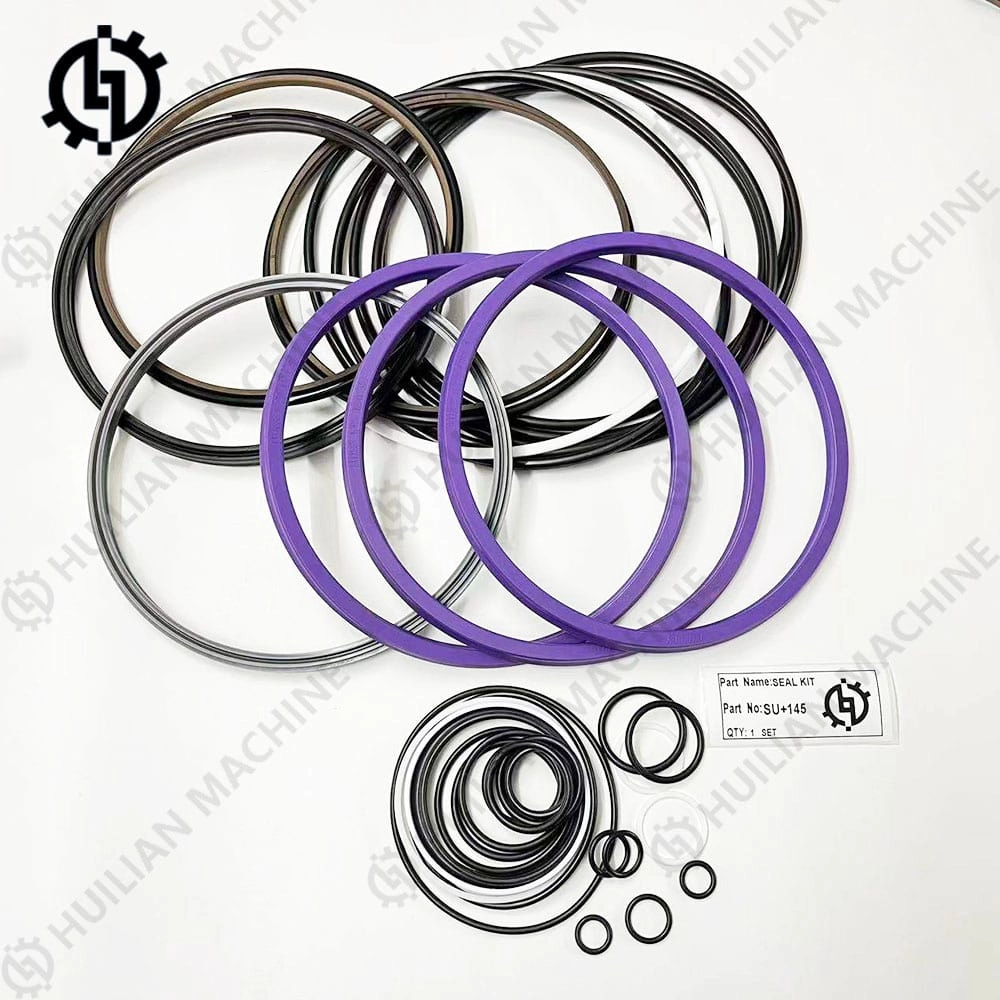
SOOSAN L21016 SU+145 TR-F SU+145TRF SU145 SU+145 Seal Kit C61443 SU+125 Oil Repair Kit For Excavator Hydraulic Rock Breaker Hammer Spare Parts
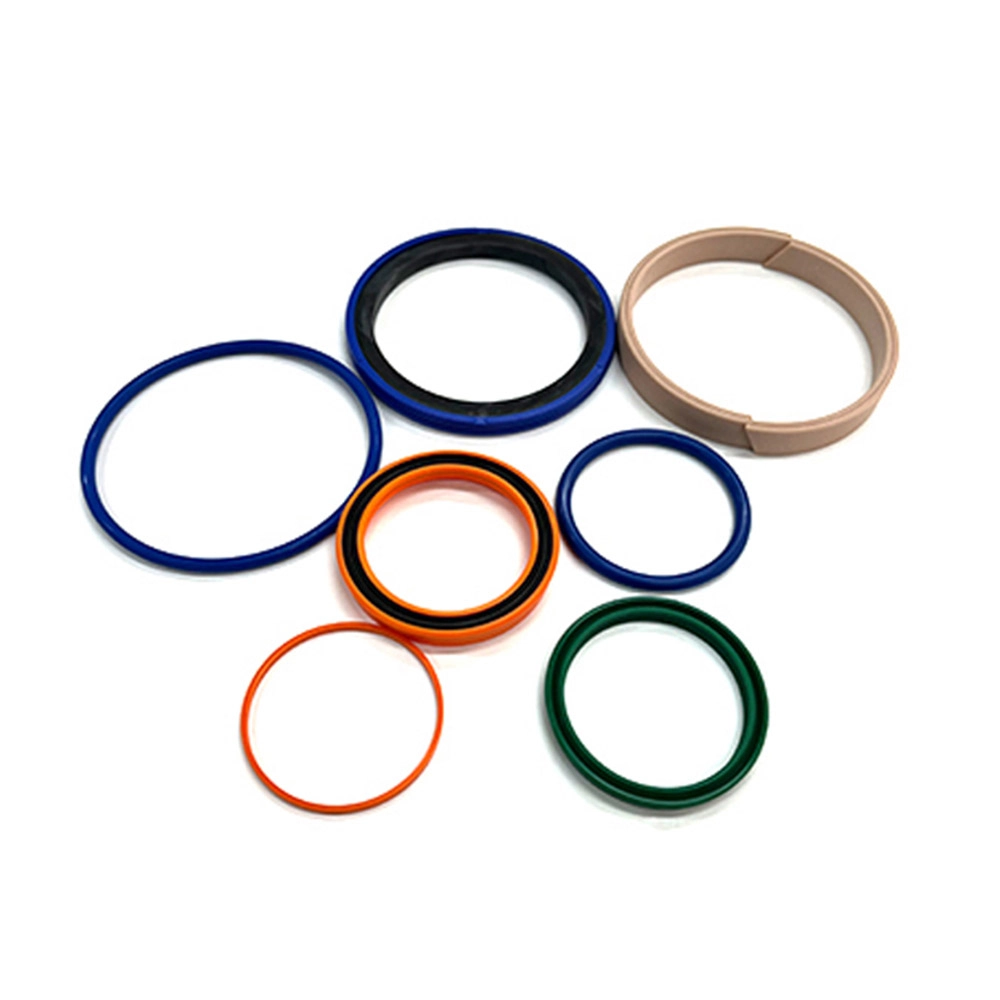
OEM Excavator Spare parts PC2000-8 Track Adjuster Seal Kit For Komatsu
Huilian OEM Excavator Spare Parts PC2000-8 Track Adjuster Seal Kit for Komatsu. Ensures optimal track adjustment performance. High-quality replacement for your PC2000-8 excavator. Order your kit today!
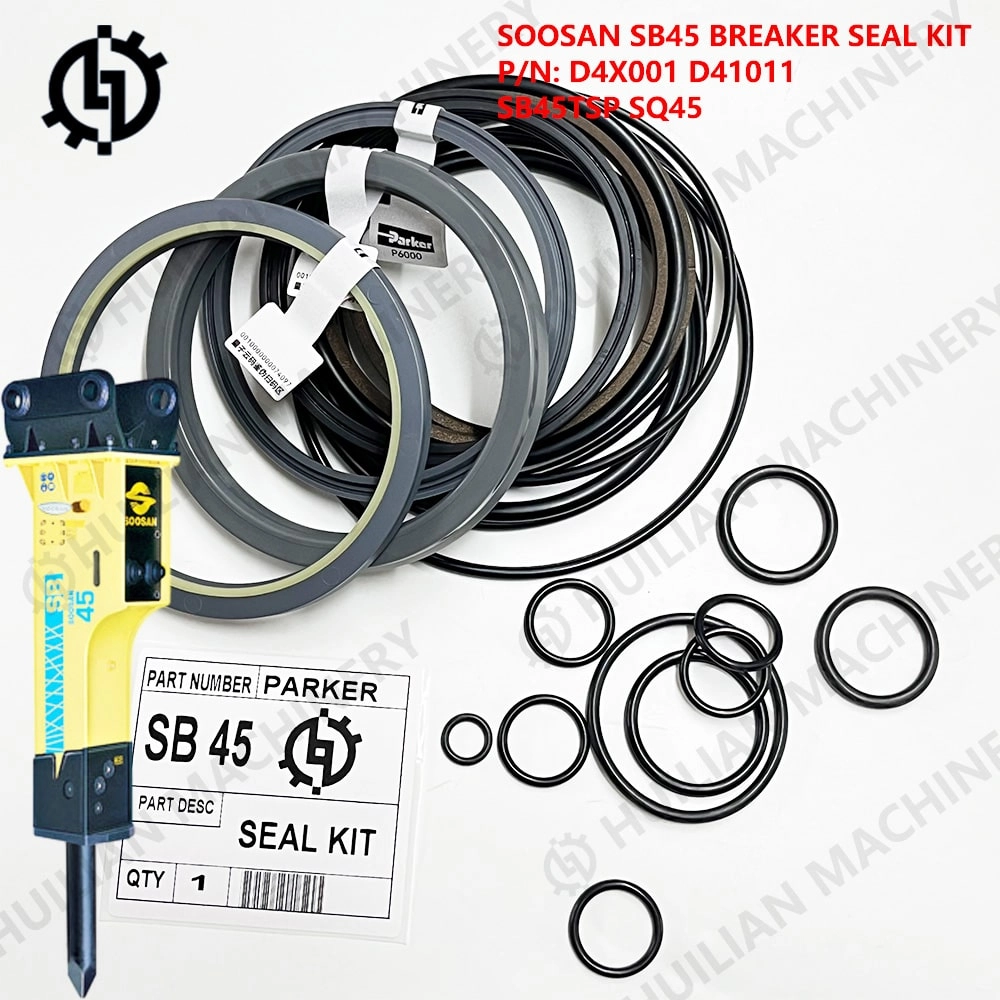
Parker Oil Seal SOOSAN SB45 Hydraulic Rock Hammer Breaker Seal Repair Kit D4X001 D41011 SB45TSP SQ45

Huilian HL68 Hammer Breaker for 4-7 Ton Excavator SOOSAN SB40 Hydraulic Rock Breaker
Side type hydraulic breaker : Easy to control, convenient positioning, durable, high working efficiency, strong striking force, long service life, stable operating performance, convenient after-sales service.
Top type hydraulic breaker : Strong impact power; excellent environmental performance; exquisite manufacturing technology; easy maintenance,fast after-sales service
Box type hydraulic breaker :leading heat treatment technology, enhance heat resistance, wear resistance. Under the condition of keeping the oil pressure constant, the cylinder volumeis reduced and the fuel consumption is reduced.The self-developed core is adopted to make the piston cylinder body moredurable and the service life longer.Exposed decks are made of high-strength steel plates to reduce wear.The best efficiency matching with excavator and loader is realized
 About us
© 2025 HUILIAN MACHINE. All rights reserved