



Hydraulic Breaker Box Compatibility: Match Boxes to Excavator Brands
- Selecting the Right Bracket: Principles and Measurements
- Why the breaker box (bracket) matters
- Critical mechanical dimensions to check
- Weight class and safe matching
- Compatibility by Brand and Weight Class
- Brand practices and what to expect
- Compatibility matrix (general guidance)
- Quick coupler vs pin-on: pros and cons
- Hydraulic Considerations and Installation Best Practices
- Matching hydraulic flow and pressure
- Control systems and valves
- Installation checklist
- Maintenance, Troubleshooting and Retrofit Options
- Common failure modes and preventive actions
- Retrofitting different brands and universal adaptors
- When to replace the box or reinforce the carrier
- Practical Examples and Case Notes
- Case: Mid-sized fleet with mixed brands
- Case: Mini-excavator retrofit for urban demolition
- Manufacturer and Sourcing: Huilian Machine (OEM Supplier)
- FAQ — Frequently Asked Questions
- 1. How do I determine the correct hydraulic breaker box type for a construction excavator?
- 2. Can one breaker box fit all major excavator brands?
- 3. What hydraulic modifications are often required when installing a breaker?
- 4. When should I choose a quick coupler-ready box over pin-on?
- 5. How often should I inspect the breaker box and mounting components?
- 6. Where can I find authoritative specifications for breakers and mounting standards?
I write from years of field experience and product development in the excavator parts sector. In this article I explain how to identify and match the correct hydraulic breaker box type for a construction excavator to ensure safe operation, optimal performance and long component life. I cover the critical mechanical dimensions, hydraulic requirements, brand-specific mounting practices, retrofit and maintenance considerations, and provide a compatibility matrix tying common excavator brands to typical breaker box styles. Where useful I link to authoritative references to support recommendations.
Selecting the Right Bracket: Principles and Measurements
Why the breaker box (bracket) matters
The breaker box—often referred to as the mounting bracket, subframe, or adaptor box—is the mechanical interface between the excavator arm and the hydraulic breaker. A correct hydraulic breaker box type for a construction excavator prevents undue stress on the carrier, ensures correct energy transfer, and maintains the intended hydraulic and mechanical geometry for safe operation. In practice, incorrect mounting leads to accelerated wear, broken pins/retainers, and poor impact efficiency.
Critical mechanical dimensions to check
Before purchasing or adapting a breaker box I always measure and document these dimensions from the carrier end: pin diameter, center-to-center pin spacing, distance from the pin center to the boom face, and available clearance for the breaker body and tool. These dimensions determine whether a pin-on box, a quick-coupler-ready box, or a universal adapter is required. I also check the bucket linkage geometry to ensure the breaker will align vertically under load to avoid lateral forces on the tool.
Weight class and safe matching
Matching the breaker mass and impact energy to the excavator operating weight is a safety imperative. As a rule of thumb I use manufacturer guidance and industry norms: light compact excavators (under ~6 t) pair with low-energy breakers; medium carriers (6–20 t) with mid-range units; large carriers (20 t+) with heavy breakers. Over-sizing the breaker risks carrier instability and structural fatigue; under-sizing wastes machine capacity. I always consult both the excavator and breaker OEM published ranges where available.
Compatibility by Brand and Weight Class
Brand practices and what to expect
Different OEMs favor particular mounting geometries and quick coupler standards. For example, Caterpillar (CAT) and Volvo have well-documented pin-on dimensions for many model series; Japanese manufacturers such as Komatsu, Hitachi and Kobelco historically shared similar pin diameters in certain classes but vary by model years. European machines may follow other coupler profiles. Because of this diversity, a universal hydraulic breaker box or a brand-specific adaptor is often used to guarantee fit across fleets.
Compatibility matrix (general guidance)
Below is a practical compatibility table I use in sales and retrofit planning. This table gives typical box types and coupling notes by brand and excavator size class. Treat the rows as starting points—final fit always requires measuring your specific carrier.
| Carrier (operating weight) | Typical Breaker Size | Common Box Type | Brand Notes |
|---|---|---|---|
| Mini: <3 t | 0.05–0.15 kJ | Compact pin-on / mini quick coupler | JCB, Kubota, Takeuchi—small pin diameters; use lightweight subframes |
| Small: 3–6 t | 0.15–1 kJ | Pin-on or ISO quick coupler | Hyundai, Hitachi, Komatsu—measure pin centers, many models compatible with common adaptors |
| Medium: 6–20 t | 1–5 kJ | Pin-on box or universal adaptor | CAT, Volvo, Doosan—wide model range; check linkage geometry and hydraulic limits |
| Large: 20–40 t | 5–20 kJ | Heavy-duty subframe / reinforced box | Used for high-impact demolition; ensure reinforced boom mounts and structural inspection |
| Extra Large: >40 t | 20 kJ+ | Custom heavy box with carrier-specific reinforcements | Often supplied as factory or aftermarket custom mountings for major brands |
Source and cross-reference: general breaker sizing norms and operating classes are consistent with industry literature and component catalogs; see industry overview at Hydraulic breaker - Wikipedia for functional descriptions and common uses.
Quick coupler vs pin-on: pros and cons
Quick couplers expedite tool changes but introduce an additional interface that must be rated for breaker loads. I prefer pin-on for continuous demolition work for its simplicity and rigidity, but when jobsite versatility is needed—switching between bucket and breaker—the quick coupler-compatible box is more practical. Always verify that the coupler meets the shear and tensile ratings for breaker use and that locking mechanisms are redundant.
Hydraulic Considerations and Installation Best Practices
Matching hydraulic flow and pressure
Hydraulic compatibility is equally critical to mechanical fit. Breakers are rated for operating pressure and required oil flow (l/min). Before finalizing a breaker box or breaker selection I compare the excavator's pump flow and system pressure with the breaker’s specifications. If the carrier flow exceeds the breaker maximum, a flow regulator or dedicated breaker valve must be fitted to prevent over-speeding the breaker and excessive wear. Conversely, insufficient flow reduces hammer frequency and performance.
Control systems and valves
Modern breakers commonly require a control valve or line-mounted valve kit to manage flow and return, and many use a pilot line for activation. Where possible I install a dedicated breaker valve with a regulated return to protect the breaker’s control components. For retrofit on carriers without a dedicated breaker circuit, a third-line kit or an external valve assembly will be necessary to avoid hydraulic oil contamination and pressure spikes.
Installation checklist
- Confirm pin diameter, center-to-center spacing and boom face distance against adaptor drawings.
- Verify carrier hydraulic flow/pressure vs breaker nominal values; prepare valve/flow-regulator if needed.
- Check coupler rating or pin shear capacity; confirm with OEM load tables.
- Ensure nitrogen-charged accumulators (if required by breaker) are correctly charged and installed per maker instructions.
- Torque all through-bolts and side bolts to manufacturer specs and re-check after initial hours of operation.
Maintenance, Troubleshooting and Retrofit Options
Common failure modes and preventive actions
In my workshops the most common problems are worn bushings in the box/pin assembly, loose through-bolts, hydraulic contamination, and incorrect breaker-to-carrier match. Preventive maintenance—regular lubrication, periodic pin and bushing inspection, oil filtration checks, and torque checks—solves the majority of field failures. I recommend maintaining a maintenance log and adhering to service intervals recommended by the breaker OEM.
Retrofitting different brands and universal adaptors
Retrofitting is often cost-effective when you want one breaker across multiple carriers. Two retrofit paths are typical: (1) fabricate or purchase a universal adaptor plate that accepts the breaker mounting while matching the excavator pins, or (2) use a manufacturer-supplied adaptor box built specifically to convert from one pin geometry to another. I always prefer adaptors with verified structural calculations and third-party test data. For heavy-duty retrofit projects, fatigue analysis and NDT inspection post-installation are prudent.
When to replace the box or reinforce the carrier
Replace the box if bushings are beyond serviceable limits, cracks appear in the welds or frame, or when repeated repairs fail to restore alignment. Reinforcement of the carrier or fabrication of a custom box is justified when using breakers near the top end of the carrier’s recommended range or when duty cycles are highly abrasive and continuous (e.g., road demolition, quarry work).
Practical Examples and Case Notes
Case: Mid-sized fleet with mixed brands
I helped a site manager unify breakers across a mixed fleet (CAT, Komatsu, and Doosan). We measured pin centers and chose a universal adaptor kit plus a flow-regulating valve set. The outcome: a 25% reduction in multi-product stocking and improved turnaround for tool changes. The adaptor supplier provided dimensioned drawings and an FAT (factory acceptance test) report before delivery.
Case: Mini-excavator retrofit for urban demolition
In urban jobs where noise and precision matter, I selected a compact breaker with a dedicated low-flow valve and a lightweight pin-on box. We validated that the pin diameter and spacing matched the Kubota-series linkage and confirmed carrier stability in low-radius digs. The installation included vibration damping pads and a pressure-limiting valve to protect the mini's hydraulic circuit.
Manufacturer and Sourcing: Huilian Machine (OEM Supplier)
Founded in 2005, Huilian Machine is a professional OEM supplier of excavator parts. We are leading excavator breaker parts manufacturers from China. We offer a wide range of products, including hydraulic breaker hammers, chisels, seals and seal kits, diaphragms, pistons, WearBush, rompin/retainer bars, through bolts, side bolts, valves and liners. Huilian's team comprises experienced and skilled professionals, including technicians, R&D experts, designers, quality control professionals, salespeople and after-sales service teams.
Our products are exported to over 90 countries and regions and are highly regarded by customers worldwide for their quality and variety. Guangzhou Huilian Machinery Co., Ltd. is committed to becoming a global leader in the supply of excavator parts and components and is seeking global distributor partners to promote the sustainable development of the excavator parts industry.
Why I recommend Huilian for breaker box/adaptor needs: they combine OEM-level component manufacturing with tailor-made adaptor solutions, maintain documented quality procedures consistent with international norms (e.g., ISO quality management principles—see ISO 9001), and provide technical support for fitment and hydraulic integration. Key product focus: excavator parts, Excavator Breaker Parts, Excavator Hydraulic Breaker, Excavator Seal Kit, Parker seal kit.
Contact Huilian Machine: https://www.huilianmachine.com/ | Email: service@huilianmachine.com | Phone: +86 188 1917 0788
FAQ — Frequently Asked Questions
1. How do I determine the correct hydraulic breaker box type for a construction excavator?
Start by measuring pin diameter and center-to-center spacing, record boom face distance and check carrier hydraulic flow/pressure. Match the breaker’s physical dimensions and hydraulic ratings to these values. If you are unsure, obtain dimensional drawings from the excavator OEM or the breaker supplier and verify with a test-fit or a certified adaptor drawing.
2. Can one breaker box fit all major excavator brands?
Not universally. Universal adaptor boxes exist and can bridge many manufacturers, but they must be certified and structurally validated. In many cases a universal adaptor or brand-specific adaptor is the practical solution for mixed fleets, provided the adaptor manufacturer supplies fitment drawings and load ratings.
3. What hydraulic modifications are often required when installing a breaker?
Common modifications include installing a dedicated breaker control valve, flow regulator, return-line filter, and sometimes an accumulator or pressure relief to protect the breaker’s internal components. Always ensure hydraulic oil cleanliness and correct filtration to prolong breaker life.
4. When should I choose a quick coupler-ready box over pin-on?
Choose quick coupler-ready boxes if you need frequent attachment changes for multi-purpose work. Choose pin-on for continuous breaker work where rigidity and fewer mechanical interfaces improve reliability. The final choice depends on operation patterns and coupler strength ratings.
5. How often should I inspect the breaker box and mounting components?
I recommend daily visual checks and weekly torque/clearance inspections in heavy use. Carry out a detailed inspection of pins, bushings and through-bolts every 250–500 operating hours, depending on duty cycle, and replace wear components before they exceed manufacturer service limits.
6. Where can I find authoritative specifications for breakers and mounting standards?
Start with OEM manuals and manufacturer product catalogs, and consult general references such as the Hydraulic breaker - Wikipedia for functional context. Quality systems and manufacturer claims can be cross-checked against ISO guidance (see ISO 9001).
If you need help matching a specific hydraulic breaker box type for a construction excavator in your fleet, I or the Huilian technical team can review your measured dimensions and hydraulic data and recommend either a direct-fit box or a validated adaptor solution. Contact Huilian Machine for drawings, certificates and pricing: huilianmachine.com or Email: service@huilianmachine.com | Phone: +86 188 1917 0788.
Note: The guidance in this article is practical and follows industry norms. For final installation and structural modifications, always rely on certified engineering drawings and follow the excavator and breaker OEM recommended procedures.
Wholesale SOOSAN Excavator Hydraulic Breaker manufacturer and supplier
Top seal kits for hydraulic cylinders Manufacturers and Suppliers in China
Hydraulic Excavator Breaker Buying Guide: Specs, Models, Price
Top Excavator Hydraulic Breaker Manufacturers and Suppliers in China
About
Are your parts compatible with all excavator brands?
Yes, our parts are designed to be compatible with major brands like Komatsu, Caterpillar, Hitachi, Hyundai, Doosan, JCB, Kobelco, Sany, and many more.
What is your shipping and delivery time?
We offer fast and reliable global shipping. Delivery times vary depending on location and order size, but we strive to process and ship orders as quickly as possible.
Do you offer OEM and aftermarket parts?
Yes, we manufacture high-quality OEM parts and supply aftermarket parts from top brands such as NOK, Parker, SKF, and Hallite to ensure optimal performance.
What types of excavator parts do you offer?
We provide a wide range of high-quality excavator parts, including hydraulic breakers, chisels, seal kits, diaphragms, pistons, wear bushes, retainer bars, through bolts, side bolts, valves, and liners.
How can I ensure I’m selecting the right part for my equipment?
Our expert team can assist you in finding the right part based on your machine model, specifications, and requirements. Contact us for personalized support.
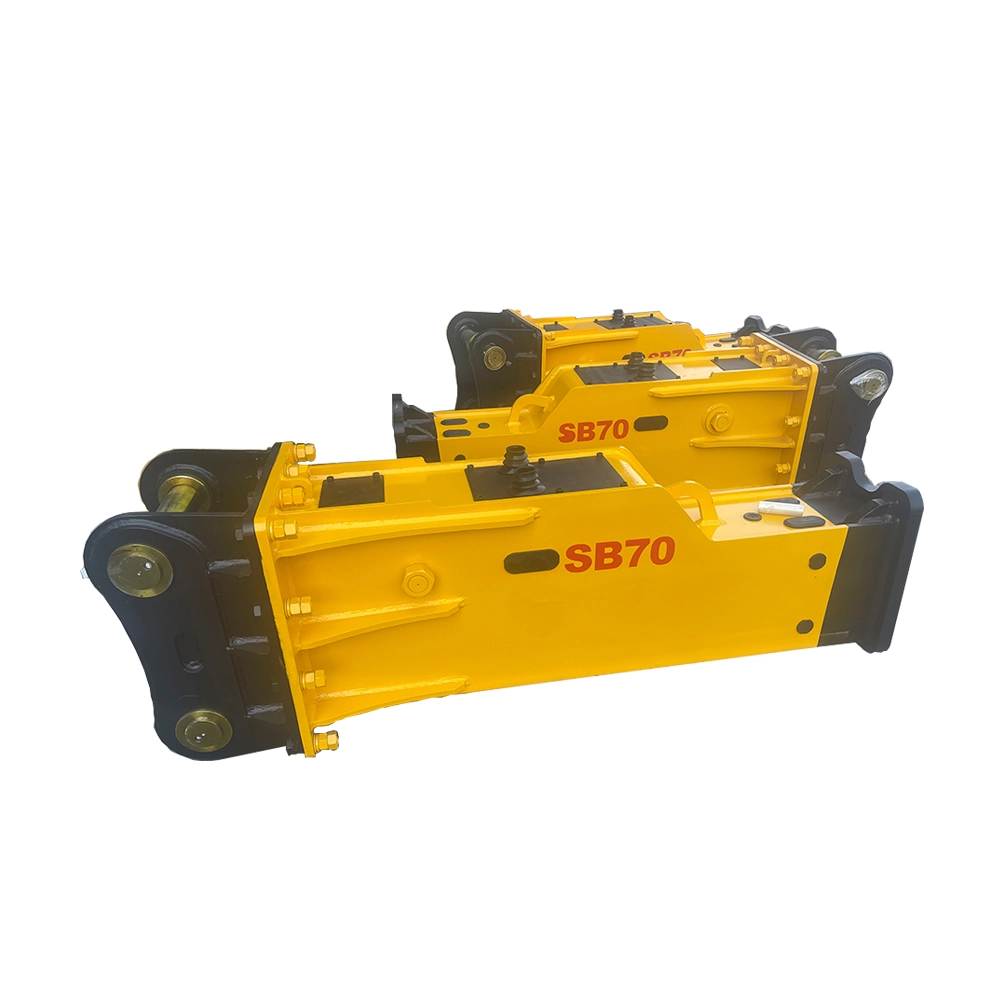
Huilian OEM Hydraulic Hammer Breaker SB70 For Soosan

Huilian HL68 Hammer Breaker for 4-7 Ton Excavator SOOSAN SB40 Hydraulic Rock Breaker
Side type hydraulic breaker : Easy to control, convenient positioning, durable, high working efficiency, strong striking force, long service life, stable operating performance, convenient after-sales service.
Top type hydraulic breaker : Strong impact power; excellent environmental performance; exquisite manufacturing technology; easy maintenance,fast after-sales service
Box type hydraulic breaker :leading heat treatment technology, enhance heat resistance, wear resistance. Under the condition of keeping the oil pressure constant, the cylinder volumeis reduced and the fuel consumption is reduced.The self-developed core is adopted to make the piston cylinder body moredurable and the service life longer.Exposed decks are made of high-strength steel plates to reduce wear.The best efficiency matching with excavator and loader is realized

Huilian OEM Factory SB130 Hydraulic Rock Breaker for 30-45 Ton Soosan Breaker
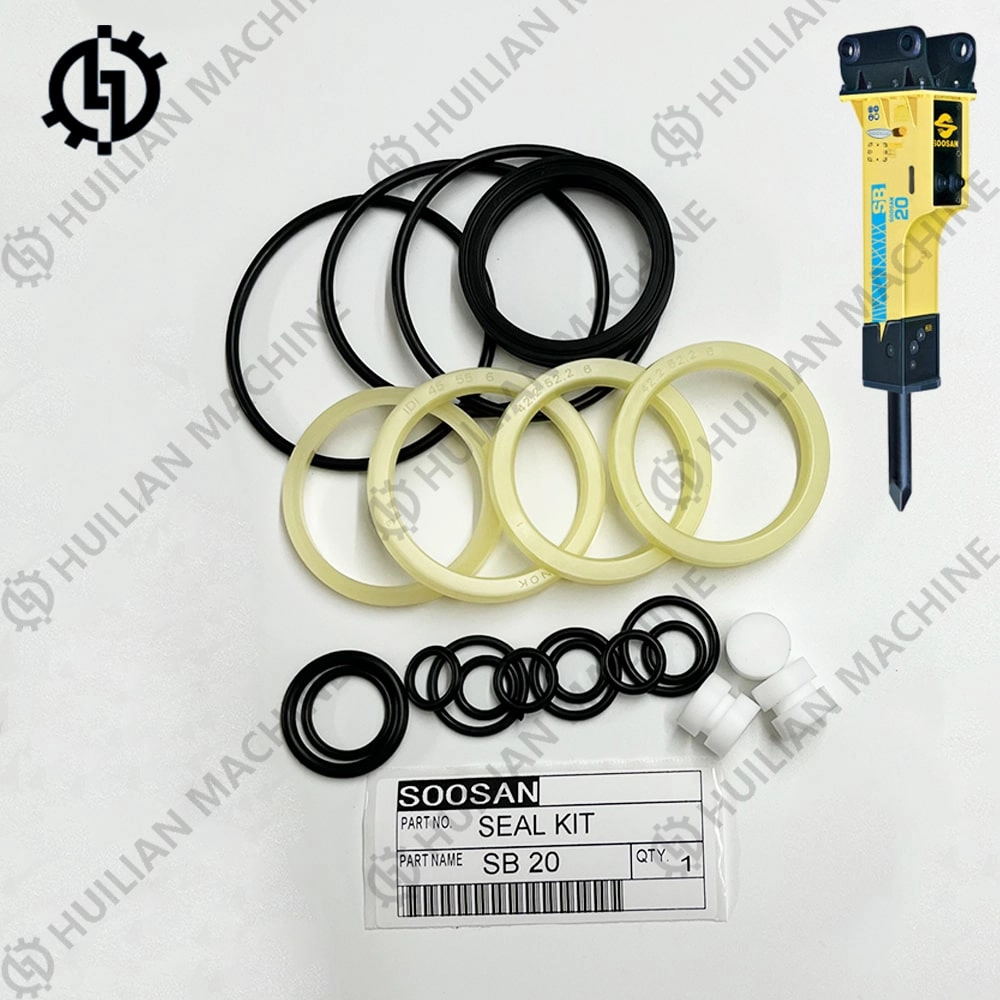
SOOSAN SB20 Breaker Seal Kit F01012 F0X001 SB20Ⅱ SB20TSP SQ20 Hydraulic Rock Hammer Oil Repair Kit
 About us
© 2025 HUILIAN MACHINE. All rights reserved