



Hydraulic Breaker Chisel Types: Point, Moil, and Flat Compared
- Understanding hydraulic breakers and their components
- How hydraulic breakers work
- Chisel as a critical hydraulic breaker spare part
- Key performance factors
- Comparing chisel types: point, moil, and flat
- Overview of the three types
- Side-by-side technical comparison
- Practical trade-offs I consider on the job
- How to select the right chisel: factors and field tips
- Match chisel geometry to material and objective
- Carrier compatibility and impact energy
- Installation, alignment, and safety tips
- Maintenance, monitoring, and optimizing service life
- Routine inspections and measurable indicators
- Materials, heat treatment, and wear-resistant features
- When to regrind, re-tip, or replace
- Procurement, quality assurance, and OEM sourcing
- Specifying hydraulic breaker spare parts chisel for purchase
- Evaluating suppliers and warranty terms
- Why OEM knowledge and local support matter
- About Huilian Machine and why we matter to your parts strategy
- Frequently Asked Questions (FAQ)
- 1. Which chisel type is best for breaking reinforced concrete?
- 2. How often should hydraulic breaker chisels be replaced?
- 3. Can I regrind a worn chisel tip to extend life?
- 4. How do I ensure a new chisel is compatible with my breaker?
- 5. Are there standards or certifications I should look for when buying chisels?
- 6. What's the difference in cost-effectiveness between point, moil, and flat chisels?
I write from years of hands-on experience in the excavator parts and hydraulic breaker industry. In this article I compare the three most common hydraulic breaker spare parts chisel types—point, moil (conical), and flat (blunt)—and explain where each excels, how wear progresses, and what to watch for when purchasing replacements or specifying parts for different ground conditions. I embed selection and maintenance guidance so you can reduce downtime, lower costs, and safely maximize productivity.
Understanding hydraulic breakers and their components
How hydraulic breakers work
A hydraulic breaker (also called a hydraulic hammer) converts hydraulic energy from an excavator or carrier into kinetic energy delivered by a piston to a tool (the chisel) to break rock, concrete, or asphalt. For a technical overview, see the Hydraulic breaker entry on Wikipedia: https://en.wikipedia.org/wiki/Hydraulic_breaker. Knowing the energy transfer path helps explain why chisel geometry matters: the chisel tip shape concentrates or distributes impact energy differently, changing fragmentation behavior and wear patterns.
Chisel as a critical hydraulic breaker spare part
The chisel is one of the most frequently replaced hydraulic breaker spare parts chisel components because it directly contacts the material and absorbs extreme compressive and shear loads. Chisels are typically made from alloyed steel heat-treated for toughness and wear resistance; manufacturers control tip hardness and core toughness to balance life and impact resistance.
Key performance factors
When evaluating chisel types, I focus on five practical factors: penetration rate (how fast it breaks material), fragmentation control (size of broken pieces), wear rate/service life, susceptibility to bending or cracking, and suitability for different base materials (rock, reinforced concrete, frozen ground, asphalt). These factors guide selection for production, demolition, or trenching tasks.
Comparing chisel types: point, moil, and flat
Overview of the three types
Below I summarize the three chisel geometries and their common names: point (pencil/pointed), moil (conical or blunt conical), and flat (spade, blunt). Each geometry changes contact area and stress distribution at impact.
Side-by-side technical comparison
To make selection decisions easier, I present a clear comparison table based on measurable attributes and typical field observations. Data and typical performance descriptions come from industry guides and manufacturer technical notes (example manufacturer resources: Atlas Copco, Montabert) and from operational experience documented in field case studies.
| Attribute | Point Chisel | Moil (Conical) Chisel | Flat (Blunt/Spade) Chisel |
|---|---|---|---|
| Primary use | Precision breaking, deep penetration in rock | General purpose; good for mixed ground and concrete | Scalping, slab breaking, trenching, asphalt removal |
| Contact area | Small (high pressure) | Medium | Large (lower unit pressure) |
| Fragmentation | Fine to medium, focused fracturing | Medium, balanced fragmentation | Large pieces, loosening and prying action |
| Wear characteristics | Tip wears faster, but core often durable | Balanced wear; good service life in mixed tasks | Edge wear but lower tip failure risk |
| Best for | Hard rock, selective demolition | Reinforced concrete, varied materials | Asphalt, slabs, trenching, root removal |
Manufacturer specifications will show variation; for definitive guidance consult your breaker OEM's chisel catalog or technical datasheets. Atlas Copco and other major OEMs publish chisel selection guides useful for matching geometry to carrier and job conditions (see an example reference from Atlas Copco: https://www.atlascopco.com/en).
Practical trade-offs I consider on the job
In my experience, the point chisel provides faster penetration in competent rock but requires more frequent tip replacements and careful alignment to avoid bending. Moil chisels are my go-to for contractors handling mixed demolition because they balance penetration and durability. Flat chisels shine when you need to remove slabs or produce large fragments for later processing—useful for asphalt milling and removal where surface scraping is needed.
How to select the right chisel: factors and field tips
Match chisel geometry to material and objective
Always start with the target material and the desired outcome. If you want small aggregate for crushing, choose point or moil in hard rock. For prying or removing large slabs, choose flat. Consider reinforcement: when cutting reinforced concrete, a moil with appropriate hardness often gives better life than a point, because it tolerates rebar contact better.
Carrier compatibility and impact energy
I always verify that the chisel dimensions and mass match the breaker model and carrier hydraulic power. Incorrect mass or length changes impact frequency and energy transmission, accelerating wear or risking tool and breaker damage. Consult the breaker manual and chisel OEM compatibility charts before ordering replacement hydraulic breaker spare parts chisel items.
Installation, alignment, and safety tips
Proper installation and alignment extend chisel life. Use correct retainer pins, linings, and lubrication as specified by the breaker manufacturer. Misalignment increases lateral stresses and can cause chisel bending or premature wear on the hammer's bushings and piston. Follow safety protocols for lockout/tagout and use protective shrouds when required.
Maintenance, monitoring, and optimizing service life
Routine inspections and measurable indicators
I recommend scheduled inspections: check chisel tip condition, measure tool length reductions, examine retaining components (retainer bars, through bolts, side bolts), and inspect the breaker’s bush and piston for matching wear. Keep records of hours per chisel and operating conditions to build your wear-rate baseline—this data helps optimize reorder cycles and reduces unexpected downtime.
Materials, heat treatment, and wear-resistant features
High-quality chisels combine high surface hardness with a tough, ductile core to resist cracking. Some manufacturers apply surface treatments or use specialized alloys to improve wear life. When sourcing hydraulic breaker spare parts chisel components, ask for material certificates or QA documentation (for example, ISO 9001 certified suppliers frequently supply traceable material specs; see https://www.iso.org/iso-9001-quality-management.).
When to regrind, re-tip, or replace
Minor tip damage can sometimes be re-ground to restore geometry, but this reduces hardness on the surface and can shorten life. For production work I prefer replacing rather than regrinding when tip geometry becomes compromised because consistent geometry preserves breaker efficiency. Replace chisels if you notice bending, excessive mushrooming at the collar, or if length reduction significantly changes impact dynamics.
Procurement, quality assurance, and OEM sourcing
Specifying hydraulic breaker spare parts chisel for purchase
When ordering, specify: breaker model, chisel length, shank diameter, material/treatment, and intended application. Include your expected operating hours and typical material hardness so the supplier can recommend the ideal chisel variant. Ask for compatibility confirmation to prevent returns or on-site failures.
Evaluating suppliers and warranty terms
Choose suppliers with transparent QA processes, documented material testing, and reliable after-sales support. Warranty coverage, replacement policies, and availability of consumables (seals, retainer bars, through bolts, side bolts) are practical differentiators that affect lifecycle cost.
Why OEM knowledge and local support matter
Working with an experienced OEM supplier reduces mismatches and ensures quicker recovery from failures. Manufacturers with R&D and QC teams typically provide better-matched chisels and can advise on custom geometries for unique tasks.
About Huilian Machine and why we matter to your parts strategy
Founded in 2005, Huilian Machine is a professional OEM supplier of excavator parts. We are leading excavator breaker parts manufacturers in China. We offer a wide range of products, including hydraulic breaker hammers, chisels, seals and seal kits, diaphragms, pistons, WearBush, rompin/retainer bars, through bolts, side bolts, valves and liners. Huilian's team comprises experienced and skilled professionals, including technicians, R&D experts, designers, quality control professionals, salespeople and after-sales service teams.
Our products are exported to over 90 countries and regions and are highly regarded by customers worldwide for their quality and variety. Guangzhou Huilian Machinery Co., Ltd. is committed to becoming a global leader in the supply of excavator parts and components and is seeking global distributor partners to promote the sustainable development of the excavator parts industry. Our website: https://www.huilianmachine.com/. Email: service@huilianmachine.com. Phone: +86 188 1917 0788.
Huilian’s core advantages include wide product variety (excavator parts, Excavator Breaker Parts, Excavator Hydraulic Breaker, Excavator Seal Kit, Parker seal kit), strict quality control, experienced R&D, and global logistics networks. For buyers seeking consistent performance, technical support, and traceable manufacturing processes for hydraulic breaker spare parts chisel and associated components, Huilian is positioned to deliver value and scalable supply.
Frequently Asked Questions (FAQ)
1. Which chisel type is best for breaking reinforced concrete?
For reinforced concrete I typically recommend a moil (conical) chisel because it balances penetration with robustness when hitting rebar. If you must cut through heavy rebar, specialized cutting tools or hydraulic shears may be required for efficiency and safety.
2. How often should hydraulic breaker chisels be replaced?
Replacement intervals vary by job severity, material hardness, and chisel quality. Track operating hours and inspect tips weekly in heavy use. In production rock work, consumable chisels often wear after dozens to a few hundred hours; keep spares on hand based on your observed wear rates.
3. Can I regrind a worn chisel tip to extend life?
Minor regrinding is possible but reduces hardened surface thickness and may shorten overall life. For consistent productivity I recommend replacing many production chisels rather than repeated regrinding.
4. How do I ensure a new chisel is compatible with my breaker?
Provide the breaker model, chisel shank diameter, and required length to the supplier. Verify part numbers with the breaker OEM or authorized aftermarket supplier and request compatibility confirmation in writing.
5. Are there standards or certifications I should look for when buying chisels?
Look for suppliers with ISO 9001 quality systems, material traceability, and documented heat treatment processes. These indicators (see ISO 9001) reduce risk. Also consult breaker OEM recommendations for approved spare parts.
6. What's the difference in cost-effectiveness between point, moil, and flat chisels?
Cost-effectiveness depends on matching the chisel to the task. A point chisel may reduce cycle times in hard rock but needs more frequent replacement; a moil can offer longer life in mixed conditions, lowering total cost per ton. Flat chisels reduce labor when removing slabs. I recommend calculating cost per operating hour or cost per cubic meter of material removed for objective comparison.
If you need help selecting the correct hydraulic breaker spare parts chisel for your breaker model or project conditions, contact me or reach out to Huilian Machine for catalog details, material certificates, and pricing. Visit https://www.huilianmachine.com/ or email service@huilianmachine.com. Phone: +86 188 1917 0788.
Rock hammer hydraulic breaker durability: wear parts and lifespan
Wholesale Excavator Breaker Part manufacturer and supplier
Top mini excavator breaker Manufacturers and Suppliers in China
Wholesale excavator concrete breaker manufacturer and supplier
About
How can I ensure I’m selecting the right part for my equipment?
Our expert team can assist you in finding the right part based on your machine model, specifications, and requirements. Contact us for personalized support.
Are your parts compatible with all excavator brands?
Yes, our parts are designed to be compatible with major brands like Komatsu, Caterpillar, Hitachi, Hyundai, Doosan, JCB, Kobelco, Sany, and many more.
Do you offer OEM and aftermarket parts?
Yes, we manufacture high-quality OEM parts and supply aftermarket parts from top brands such as NOK, Parker, SKF, and Hallite to ensure optimal performance.
What types of excavator parts do you offer?
We provide a wide range of high-quality excavator parts, including hydraulic breakers, chisels, seal kits, diaphragms, pistons, wear bushes, retainer bars, through bolts, side bolts, valves, and liners.
What is your shipping and delivery time?
We offer fast and reliable global shipping. Delivery times vary depending on location and order size, but we strive to process and ship orders as quickly as possible.

Huilian Hydraulic Rock Hammer Breaker SB10 for 0.5-1.2 Ton Mini Excavator Breaker
Side-type hydraulic breaker : Easy to control, convenient positioning, durable, high working efficiency, strong striking force, long service life, stable operating performance, and convenient after-sales service.
Top type hydraulic breaker : Strong impact power; excellent environmental performance; exquisite manufacturing technology; easy maintenance, fast after-sales service
Box-type hydraulic breaker: leading heat treatment technology, enhanced heat resistance, and wear resistance. Under the condition of keeping the oil pressure constant, the cylinder volume is reduced and the fuel consumption is reduced. The self-developed core is adopted to make the piston cylinder body durable and the service life longer. Exposed decks are made of high-strength steel plates to reduce wear. The best efficiency matching with excavator and loader is realized

Huilian HL100 Hydraulic Hammer Rock Breaker Excavator Attachment

Huilian HL68 Hammer Breaker for 4-7 Ton Excavator SOOSAN SB40 Hydraulic Rock Breaker
Side type hydraulic breaker : Easy to control, convenient positioning, durable, high working efficiency, strong striking force, long service life, stable operating performance, convenient after-sales service.
Top type hydraulic breaker : Strong impact power; excellent environmental performance; exquisite manufacturing technology; easy maintenance,fast after-sales service
Box type hydraulic breaker :leading heat treatment technology, enhance heat resistance, wear resistance. Under the condition of keeping the oil pressure constant, the cylinder volumeis reduced and the fuel consumption is reduced.The self-developed core is adopted to make the piston cylinder body moredurable and the service life longer.Exposed decks are made of high-strength steel plates to reduce wear.The best efficiency matching with excavator and loader is realized
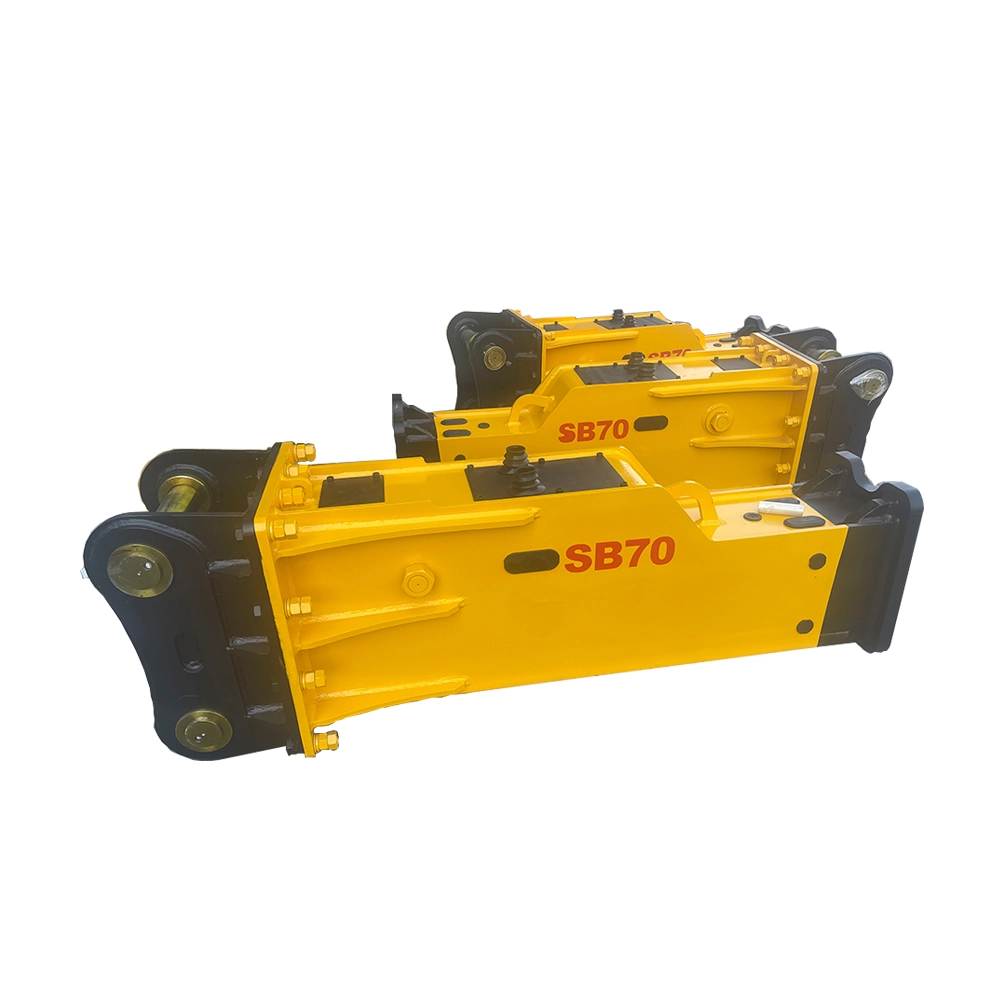
Huilian OEM Hydraulic Hammer Breaker SB70 For Soosan
 About us
© 2025 HUILIAN MACHINE. All rights reserved