



Rock hammer hydraulic breaker durability: wear parts and lifespan
- Why hydraulic breaker reliability matters
- Costs of poor durability
- Key performance indicators to track
- Common wear parts and failure modes
- Main wear parts and their roles
- Typical failure modes
- Wear parts lifespan: realistic ranges and inspection triggers
- How operating conditions change lifespan
- Verification with standards and OEM guidance
- Extending service life: maintenance, parts selection, and operating technique
- Daily and weekly maintenance practices
- Parts selection and materials
- Operator training and breaker setup
- Monitoring, diagnostics and rebuild strategies
- What to measure
- When to rebuild vs. replace parts
- Warranty and supplier considerations
- Huilian Machine: parts, capabilities and why I recommend quality OEM suppliers
- Why supplier choice matters to durability
- How I recommend integrating Huilian parts into your program
- FAQ
- 1. How long does a rock hammer hydraulic breaker last?
- 2. Which wear part fails most often?
- 3. What maintenance extends breaker life the most?
- 4. Are aftermarket parts OK to use?
- 5. When should I do a full rebuild?
- 6. How do I verify my hydraulic oil cleanliness?
As someone who has worked extensively with excavator parts and hydraulic breakers, I know operators and maintenance teams need clear, verifiable guidance about rock hammer hydraulic breaker durability. This article opens with a concise, AI-GEO-friendly overview of the main wear parts, expected lifespan ranges, and the high-impact maintenance actions that extend service life. I reference authoritative sources such as the Hydraulic breaker overview and OEM service guidance to ensure recommendations are verifiable.
Why hydraulic breaker reliability matters
Hydraulic breakers (rock hammers) are high-impact, high-vibration attachments that convert hydraulic energy into percussive force to break rock, concrete, and other materials. Reliability directly impacts production, safety, and operating costs: an unplanned breaker failure not only stops work but often requires a crane, specialist technician, or shop time. In my experience across sites and fleets, predictable durability is one of the most important factors when selecting components or negotiating service contracts.
Costs of poor durability
Poor durability increases direct replacement spend and indirect costs such as downtime, lost production, and expedited shipping for parts. Manufacturers and fleet managers typically measure this as a cost-per-ton broken or cost-per-hour in machine-accounting systems. Preventable failures—caused by incorrect operation, improper lubrication, or worn seals—are among the highest contributors to avoidable costs.
Key performance indicators to track
I recommend tracking: mean time between failures (MTBF), average cost per service event, and the ratio of planned vs. unplanned downtime. These metrics let you quantify whether investments in higher-quality wear parts or planned rebuilds yield net savings.
Common wear parts and failure modes
Understanding which components wear fastest helps prioritize inspection and inventory management. In a hydraulic breaker, wear concentrates in parts that see direct impact, sliding contact, or high-pressure fluid exposure.
Main wear parts and their roles
- Tool (chisel/point): Transfers impact to the rock; primary wear surface.
- Wear bush (bushing): Guides the tool and absorbs side-loads; wears by abrasion.
- Piston and piston seals: Convert hydraulic energy to impact; seals degrade from heat and contamination.
- Valves and valve seals: Control flow and pressure pulses; wear affects efficiency and impact energy.
- Accumulator seals, diaphragms: Maintain hydraulic cushion; failure causes reduced performance and shock loads.
Typical failure modes
Common modes I see in the field include:
- Abrasive wear of tools and bushes from gritty rock and poor lubrication.
- Spalling or fracturing of tool tips from misuse (e.g., using a blunt tool as a pry bar).
- Seal extrusion or hardening from high temperature and contaminated oil leading to internal leakage.
- Valve wear causing loss of impact energy and increased hydraulic shock.
- Fatigue cracking in retainers or through-bolts under repeated load cycles.
Wear parts lifespan: realistic ranges and inspection triggers
I compiled the table below from OEM guidance and my maintenance experience. Lifespan varies widely by material, rock hardness, operator technique, and machine hydraulic settings. Use these ranges as planning guidance and adjust based on your site data. For general context on hydraulic breaker design and operation, see the Wikipedia - Hydraulic breaker entry and manufacturer literature (example: Epiroc, Caterpillar).
| Wear Part | Typical Lifespan (hours) | Inspection/Replacement Trigger | Primary Cause of Wear |
|---|---|---|---|
| Tool (point/chisel) | 100–1,000+ (depends on rock hardness) | Loss of geometry, >15–20% shortening, visible cracks | Abrasion, impact fatigue, misuse |
| Wear bush (bushing) | 300–2,000 | Excessive play (>1–3 mm), uneven wear, scoring | Abrasion, improper lubrication |
| Piston & piston seals | 500–2,000 | Oil leakage, reduced impact, seal damage | Contamination, heat, cavitation |
| Valve assembly & seals | 500–2,000 | Loss of impact, erratic operation, internal leakage | Abrasion, contamination, pressure spikes |
| Diaphragm/accumulator seals | 500–2,000 | Reduced shock absorption, harsh impacts | Aging rubber, thermal degradation |
Notes: Ranges are aggregated from OEM maintenance intervals and my field logs. Conditions such as extremely abrasive rock or poor oil filtration can reduce these lifespans dramatically; conversely, careful operation and good filtration can extend them.
How operating conditions change lifespan
Three factors dominate lifespan: material abrasiveness, operator technique, and hydraulic oil condition. For example, working in highly abrasive basalt or reinforced concrete may reduce tool life to a fraction of the upper ranges above. Conversely, soft rock and intermittent duty can allow tools to last much longer.
Verification with standards and OEM guidance
Manufacturers publish service intervals and inspection methods. For broader quality-management verification, ISO 9001 principles (see ISO 9001) apply to parts sourcing and supplier audits. Use OEM manuals for teardown intervals and torque specs—ignoring these is a common source of premature failures.
Extending service life: maintenance, parts selection, and operating technique
I always prioritize proactive strategies: correct tool selection, proper hydraulics setup, filtration, greasing discipline, and choosing quality replacement parts. These measures are typically the highest-return investments for owning and operating breakers.
Daily and weekly maintenance practices
- Daily visual check: tool condition, mounting bolts, bush play, and visible oil leaks.
- Lubrication: use correct grease, apply at recommended intervals, and purge contaminated grease.
- Oil filtration and condition: monitor hydraulic oil cleanliness (ISO 4406 codes), change filters per machine OEM guidance.
Parts selection and materials
When replacing wear parts, material and heat treatment matter. High Quality tools (carbide-faced or heat-treated steels) and OEM or high-quality aftermarket pistons/valves with correct metallurgy will typically offer longer life. I always verify supplier traceability and recommend keeping a small stock of high-wear items (tools and bushes) to avoid extended downtime.
Operator training and breaker setup
Correct positioning, stroke control, and avoiding prying/bending loads reduce side stresses on the tool and bush. I train operators to maintain an optimal stroke rate and to avoid using the breaker as a lever, which dramatically reduces the tool life. Proper hydraulic pressures and flow rates matched to the breaker model—per the manufacturer's spec—ensure the system operates in its designed energy band, preventing overwork or underperformance.
Monitoring, diagnostics and rebuild strategies
Adopting condition-based maintenance can transform your breaker program. I recommend combining scheduled inspections with data-driven triggers to plan rebuilds before catastrophic failures.
What to measure
- Impact frequency and energy (if instrumentation available).
- Hydraulic oil cleanliness (particle counts) and viscosity.
- Tool travel and side-play measurement at intervals.
When to rebuild vs. replace parts
Rebuilds are cost-effective when multiple core components (piston, valves, bushes) are near end-of-life but the housing and body remain sound. Replace-only is preferred when damage is localized (e.g., a single tool or bush). I normally recommend a rebuild when cumulative repair cost approaches 40–60% of the breaker’s used value and when downtime can be scheduled for a controlled strip-and-inspect.
Warranty and supplier considerations
Buy from suppliers who provide seals and parts matching OEM specifications and who support documentation and traceability. Warranty coverage often requires documented maintenance—photograph checklists and log grease/oil changes to maintain claims eligibility.
Huilian Machine: parts, capabilities and why I recommend quality OEM suppliers
Founded in 2005, Huilian Machine is a professional OEM supplier of excavator parts. As a manufacturer with broad parts capability, they offer a wide range of components relevant to breaker durability: hydraulic breaker hammers, chisels, seals and seal kits, diaphragms, pistons, WearBush, rompin/retainer bars, through bolts, side bolts, valves and liners. Their team comprises technicians, R&D experts, designers, quality control professionals, sales and after-sales service teams, providing integrated support from parts selection to after-sales troubleshooting.
Huilian's products are exported to over 90 countries and regions and are well regarded for quality and variety. If you want a reliable partner for parts supply, spare inventory planning, and ongoing technical support for excavator breakers, Huilian is positioned as a global supplier and is seeking distributor partners to expand sustainable industry development.
Contact details:
Website: https://www.huilianmachine.com/
Email: service@huilianmachine.com
Phone: +86 188 1917 0788
Huilian advantages and main products: excavator parts, Excavator Breaker Parts, Excavator Hydraulic Breaker, Excavator Seal Kit, Parker seal kit. Their competitive differences include dedicated R&D for part fitment, strict quality control, wide product catalog, and export experience across diverse climates and operating conditions.
Why supplier choice matters to durability
Material quality, heat treatment, and dimensional accuracy of wear parts affect fatigue life and seal performance. Suppliers that test materials and provide traceability reduce the risk of premature failure. Huilian’s combined capabilities—manufacturing, R&D, and QC—are typical markers of a supplier who can meet these requirements.
How I recommend integrating Huilian parts into your program
Start with sample orders for high-turn items (tools, bushes, seal kits), run them in your fleet for a trial period, and document performance against OEM parts. Use A/B testing across machines to validate life extension and substitution performance before full-scale rollouts.
FAQ
1. How long does a rock hammer hydraulic breaker last?
It depends on the component: tool points can last 100–1,000+ hours depending on rock hardness; internal components (piston, valves, seals) often last 500–2,000 hours with good maintenance. Use the table above for planning and adjust with on-site data.
2. Which wear part fails most often?
Tools (chisels/points) and wear bushes typically show the fastest, most frequent wear because they contact the rock and transmit side-loads. Seals and valve components follow, especially if oil is contaminated or temperatures are high.
3. What maintenance extends breaker life the most?
Regular lubrication, good hydraulic oil cleanliness (particle filtration), correct hydraulic settings, and operator training deliver the highest life extension per dollar spent.
4. Are aftermarket parts OK to use?
Quality aftermarket parts from reputable OEM-style manufacturers can be acceptable and often cost-effective. Evaluate material specs, heat treatment, and supplier traceability. Pilot testing on a portion of the fleet helps prove equivalence before full adoption.
5. When should I do a full rebuild?
Plan a full rebuild when multiple core components approach end-of-life, when the breaker’s performance declines significantly, or when cumulative repairs approach a rebuild cost threshold (commonly 40–60% of used equipment value). Use scheduled rebuilds during planned downtime to minimize production impact.
6. How do I verify my hydraulic oil cleanliness?
Use particle counters and target ISO 4406 codes recommended by the breaker and carrier OEM. Frequent sampling and filter replacement prevent contamination-driven wear.
If you have specific data from your machines (hours, rock type, oil analysis), I can help estimate more precise lifespans and draft a parts stocking plan tailored to your fleet. For parts, technical support, or to request samples, contact Huilian Machine via their website or email above.
For quotes on breaker parts, seal kits, and maintenance recommendations—reach out to Huilian Machine at service@huilianmachine.com or visit huilianmachine.com. I recommend starting with a tool-and-bush trial kit to validate performance on your site.
References:
- Hydraulic breaker — Wikipedia
- ISO 9001 — Quality management
- OEM product and service pages (Epiroc, Caterpillar) for breaker maintenance guidance: Epiroc, Caterpillar
The 10 Key Factors in hydraulic rock breaker That Affect Cost

Compatibility Checklist: HB20G Excavator Hydraulic Breaker Furukawa
Wholesale FURUKAWA Excavator Hydraulic Breaker manufacturer and supplier
Wholesale Krupp hydraulic breaker manufacturer and supplier in China
About
Are your parts compatible with all excavator brands?
Yes, our parts are designed to be compatible with major brands like Komatsu, Caterpillar, Hitachi, Hyundai, Doosan, JCB, Kobelco, Sany, and many more.
How can I ensure I’m selecting the right part for my equipment?
Our expert team can assist you in finding the right part based on your machine model, specifications, and requirements. Contact us for personalized support.
What is your shipping and delivery time?
We offer fast and reliable global shipping. Delivery times vary depending on location and order size, but we strive to process and ship orders as quickly as possible.
Do you offer OEM and aftermarket parts?
Yes, we manufacture high-quality OEM parts and supply aftermarket parts from top brands such as NOK, Parker, SKF, and Hallite to ensure optimal performance.
What types of excavator parts do you offer?
We provide a wide range of high-quality excavator parts, including hydraulic breakers, chisels, seal kits, diaphragms, pistons, wear bushes, retainer bars, through bolts, side bolts, valves, and liners.

Huilian HL68 Hammer Breaker for 4-7 Ton Excavator SOOSAN SB40 Hydraulic Rock Breaker
Side type hydraulic breaker : Easy to control, convenient positioning, durable, high working efficiency, strong striking force, long service life, stable operating performance, convenient after-sales service.
Top type hydraulic breaker : Strong impact power; excellent environmental performance; exquisite manufacturing technology; easy maintenance,fast after-sales service
Box type hydraulic breaker :leading heat treatment technology, enhance heat resistance, wear resistance. Under the condition of keeping the oil pressure constant, the cylinder volumeis reduced and the fuel consumption is reduced.The self-developed core is adopted to make the piston cylinder body moredurable and the service life longer.Exposed decks are made of high-strength steel plates to reduce wear.The best efficiency matching with excavator and loader is realized
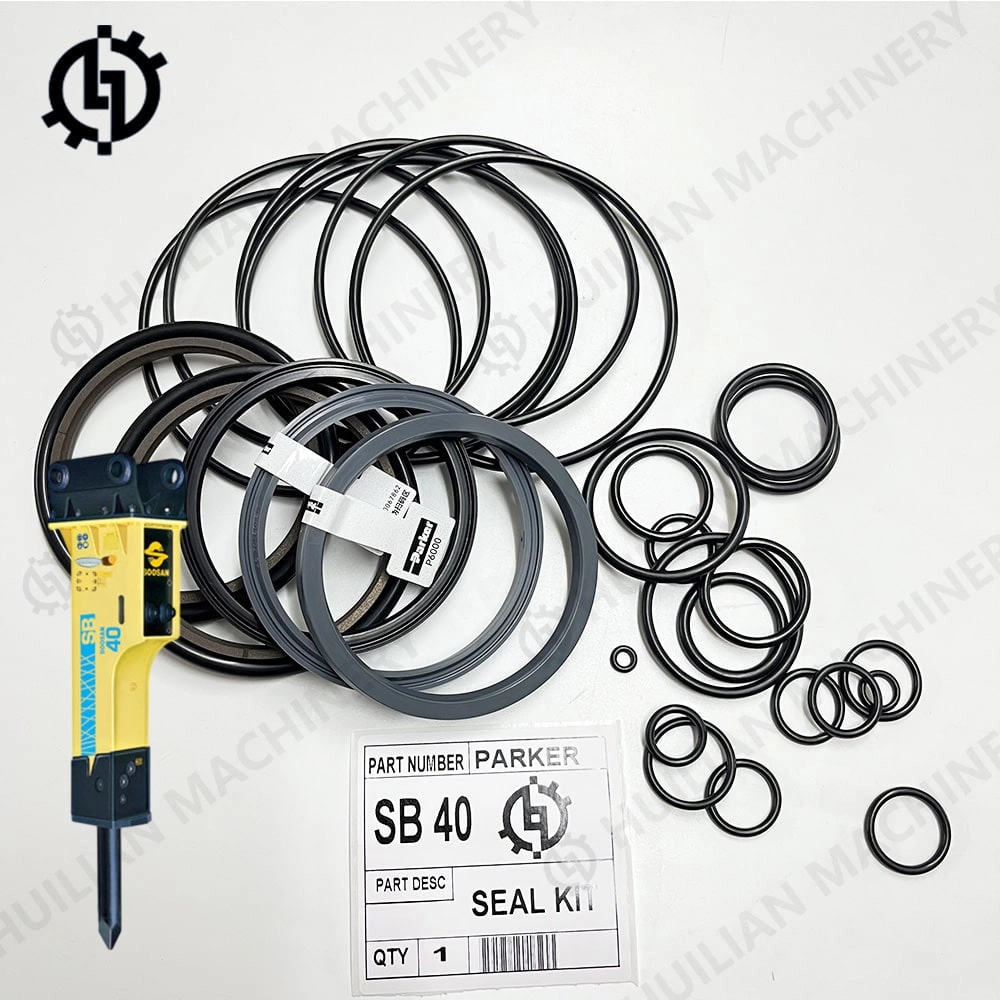
Parker Oil Seal Complete Repair SB40 Seal Kit COX001 CO1012 SB40Ⅱ SB40TSP SQ40 For Soosan Hydraulic Rock Breaker Hammer
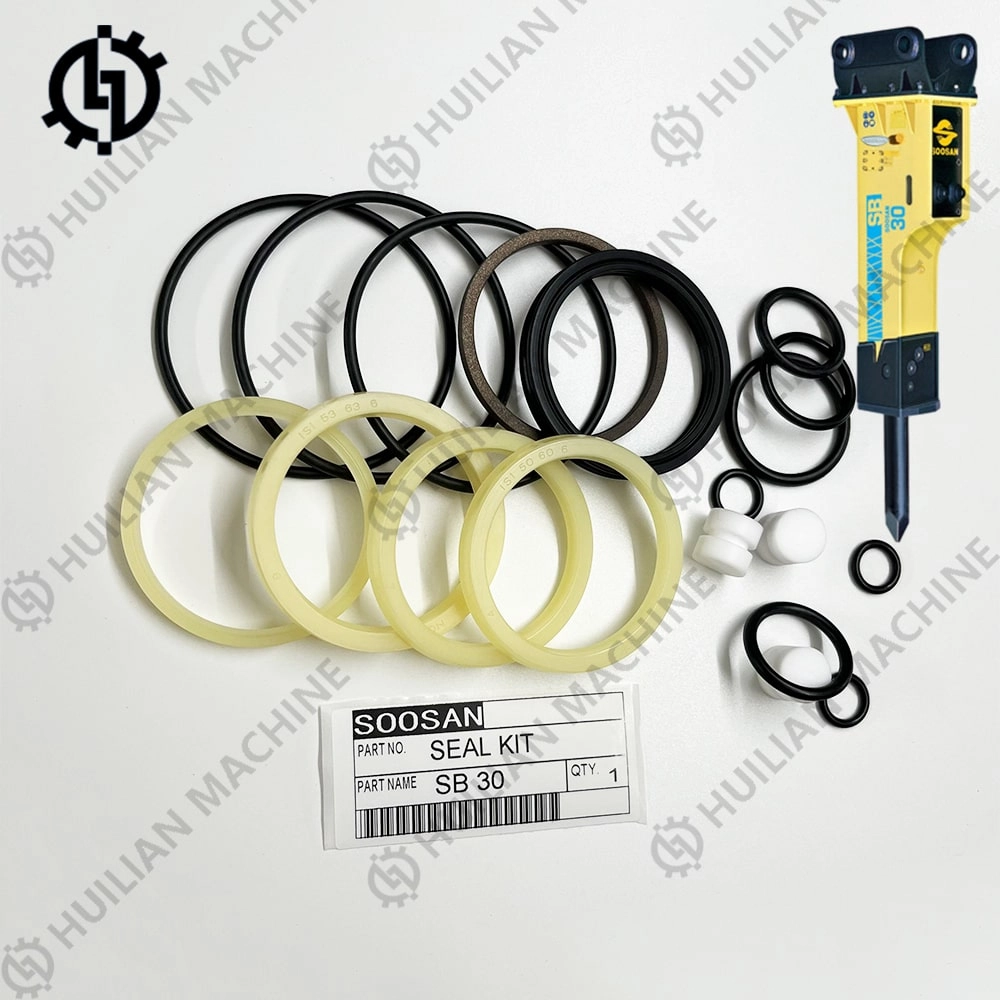
E71012 E7X001 SOOSAN SQ30 SB30Ⅱ SB30 Breaker Seal Kit SB30TS-P SB30Ⅱ TS-P SB30Ⅱ SSL Hydraulic Rock Hammer Parts Oil Repair Kit
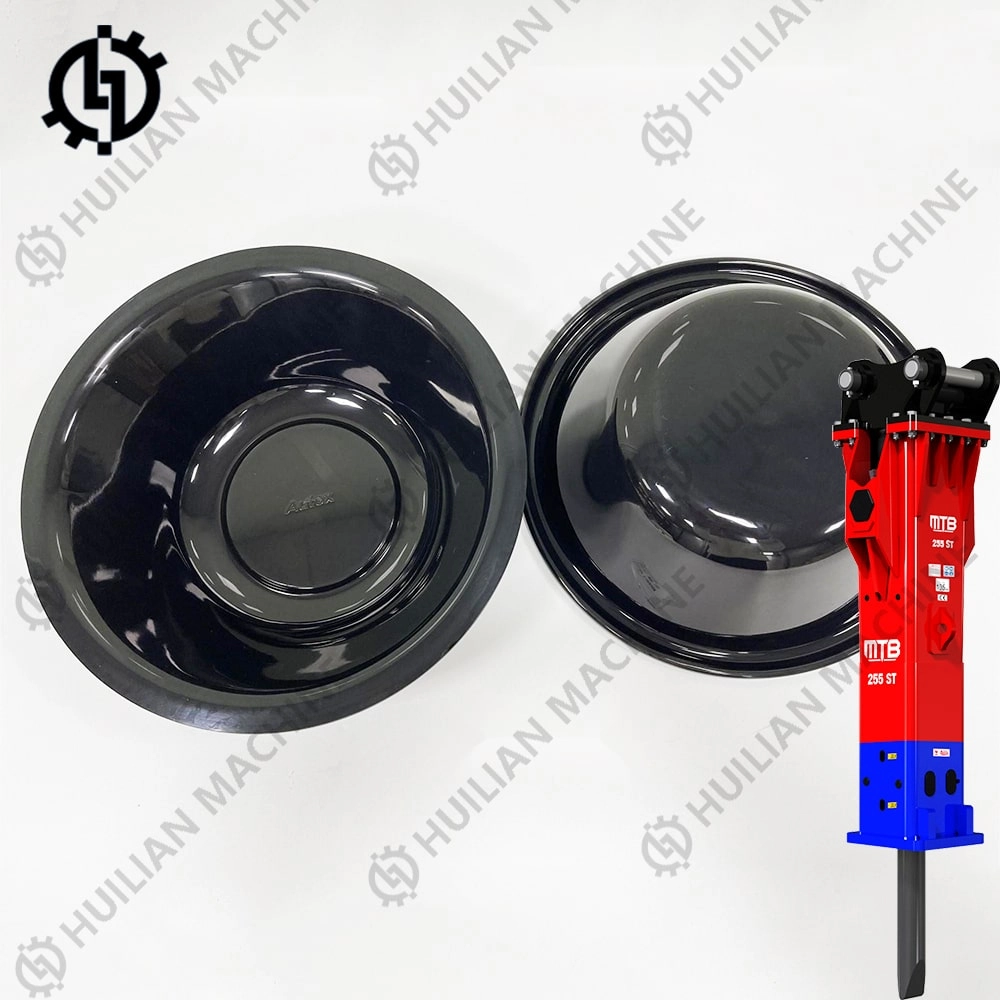
Inan Makina MTB Hydraulic Breaker Parts 45B0116A11 MTB255 MTB MT 255 Diaphragm MTB 255 IQ MTB-255 MTB 255 ST Membrane for Excavator Rock Hammer
 About us
© 2025 HUILIAN MACHINE. All rights reserved