



Hydraulic Breaker Installation and Safety for Excavators
- Overview of Excavator Attachments and Breaker Basics
- What a hydraulic breaker for excavator does
- Basic components and terminology
- How breaker performance relates to machine size
- Installation: Step-by-step Practical Guide
- Pre-installation checklist
- Mounting methods and torque procedure
- Hydraulic plumbing and control setup
- Safety Practices and Site Procedures
- Personal protective equipment (PPE) and operator protection
- Safe operating procedures
- Lockout/tagout and emergency stop
- Maintenance, Troubleshooting and Longevity
- Daily and periodic maintenance tasks
- Common failure modes and fixes
- Troubleshooting checklist (quick reference)
- Performance Optimization and Compliance
- Matching breaker and carrier for efficiency
- Noise, vibration, and environmental controls
- Record-keeping and warranties
- Brand Spotlight: Huilian Machine — OEM Expertise and Global Reach
- Who Huilian is and why it matters
- Product range and technical strengths
- Global footprint and partnership opportunities
- FAQ — Common Questions About Hydraulic Breakers for Excavators
- 1. How do I choose the correct hydraulic breaker for my excavator?
- 2. What safety checks should be done before starting the breaker each day?
- 3. How often should seals and bushings be replaced?
- 4. Can I use a quick coupler to mount a breaker?
- 5. What hydraulic fluid cleanliness level should I aim for?
- 6. Who do I contact for replacement parts and technical support?
I have spent years working with heavy-equipment fleets and OEM parts suppliers, helping contractors choose and install the right hydraulic breaker for excavator work. In this guide I combine field-tested installation steps, safety protocols, and preventive maintenance tips that align with industry standards and regulatory guidance. Whether you operate a 5-ton machine in urban demolition or a 30-ton excavator on a quarry face, you will find concrete, verifiable advice you can apply immediately.
Overview of Excavator Attachments and Breaker Basics
What a hydraulic breaker for excavator does
A hydraulic breaker, also called a breaker hammer, converts hydraulic energy from the host excavator into percussive force used to break rock, concrete, asphalt and other hard substrates. It is one of the most common heavy attachments on excavators because of its versatility in demolition, trenching and quarry work. For a technical overview, see the Hydraulic breaker Wikipedia page (Wikipedia).
Basic components and terminology
Core components include the tool (chisel/point), piston, cylinder, hydraulic valves, nitrogen accumulator (on some designs), mounting bracket (or quick coupler), and lubrication/retainer systems. Understanding these parts helps during installation and troubleshooting—especially when matching the breaker to the excavator hydraulic system.
How breaker performance relates to machine size
Breaker selection is governed by the excavator’s hydraulic flow (l/min or gpm), system pressure (bar or psi), and carrier mass. Under-sizing a breaker causes poor productivity and overheating; over-sizing risks damage to the carrier structure and boom circuits. Typical operating pressures for many breakers fall between 100–200 bar (1,500–3,000 psi) depending on model and application; check manufacturer specs for your exact breaker model and carrier.
Installation: Step-by-step Practical Guide
Pre-installation checklist
Before mounting a hydraulic breaker for excavator, I always verify:
- Carrier compatibility: recommended breaker weight vs. excavator operating weight.
- Hydraulic supply: flow (l/min) and maximum operating pressure (bar/psi).
- Auxiliary controls: proportional valves, relief settings and pilot circuits if required.
- Hardware readiness: through bolts, retaining pins, side bolts, and tool selection (chisel, moil, blunt).
If you need authoritative guidance on hydraulic systems and quality management processes, ISO resources are helpful: ISO 9001.
Mounting methods and torque procedure
There are two common mounting approaches: direct-frame mounting and quick coupler mounting. Direct-frame mounting provides the stiffest connection and best energy transfer, while quick couplers add flexibility for multi-attachment use but require diligent locking and inspection.
When installing through bolts or side bolts, follow manufacturer torque specifications. As a practical baseline, components on smaller carriers typically require torques in the 200–400 Nm range for through bolts, while larger carriers and retainer bars often need higher torques—always use a calibrated torque wrench and the breaker/vendor torque table for exact values.
Hydraulic plumbing and control setup
Match the breaker’s recommended flow and pressure with the excavator hydraulic circuit. Install a high-quality flow control or a proportional valve if the breaker requires variable impact frequency. Ensure the carrier’s relief valve is set higher than the breaker’s maximum working pressure, but within manufacturer limits. Install pressure gauges for commissioning and periodic checks.
Safety Practices and Site Procedures
Personal protective equipment (PPE) and operator protection
OSHA-style precautions apply: operators and ground crew must wear eye and ear protection, high-visibility clothing, and appropriate gloves and boots. For standards and PPE guidance see OSHA. Additionally, ensure the cab is fitted with reinforced glazing if frequent breaker work is expected.
Safe operating procedures
Key safety rules I enforce on site:
- Never operate a breaker while personnel are within the blow zone or near rock/fragment trajectories.
- Run the carrier engine at stable RPM per breaker OEM start-up guidance to avoid pressure swings.
- Avoid continuous striking on a single point for more than recommended cycles—this reduces bushing and tool wear and prevents hydraulic overheating.
For additional worker safety and noise mitigation, consider schedule rotation and noise barriers for urban jobs.
Lockout/tagout and emergency stop
Before any maintenance or chisel replacement, use strict lockout/tagout procedures: isolate hydraulic supply, bleed residual pressure, and secure the attachment. Maintain accessible emergency-stop protocols for the machine that can be activated by ground supervisors.
Maintenance, Troubleshooting and Longevity
Daily and periodic maintenance tasks
Daily: check hydraulic hoses for leaks, verify tool retention and lubrication, inspect bushings and through bolts, and confirm hydraulic temperature is within range.
Weekly/Monthly: change hydraulic oil filters per carrier OEM intervals, inspect accumulator nitrogen pre-charge (if equipped), and measure seal condition. For fluid cleanliness standards, ISO 4406 provides common contamination classification—see ISO 4406.
Common failure modes and fixes
My experience shows common issues include:
- Loss of impact power — often caused by worn seals or low hydraulic flow; inspect the breaker’s seals, valve function, and carrier pump output.
- Hydraulic overheating — typically due to excessive duty cycle or poor fluid cooling; verify hydraulic oil level, radiator/fan function, and reduce continuous hammering.
- Excessive tool wear or breakage — improper tool selection or misalignment; replace with correct chisel width/shape and inspect mounting alignment.
Troubleshooting checklist (quick reference)
| Symptom | Likely Cause | Immediate Action |
|---|---|---|
| Low impact energy | Worn seals, low flow, wrong pressure setting | Check seals, measure flow/pressure, adjust relief valve |
| Overheating hydraulic oil | High duty cycle, dirty fluid, cooling failure | Reduce duty cycle, check filters and coolers, sample fluid |
| Loose retaining bolts | Insufficient torque or vibration | Retorque to spec, use thread locker per OEM |
Performance Optimization and Compliance
Matching breaker and carrier for efficiency
Optimal productivity comes from the right match. I recommend plotting expected cycle time and energy per blow for job requirements. Some operators underestimate the influence of carrier rigidity—using a heavier back-carrier often improves energy transfer and reduces cycle times. Always consult OEM performance curves.
Noise, vibration, and environmental controls
Breaker operation generates significant noise and vibration. Employ anti-vibration mounts where possible, limit operation hours in residential areas, and use acoustic barriers. Monitoring environmental compliance may require noise level logging and reporting to local authorities.
Record-keeping and warranties
Maintain digital logs of operating hours, maintenance actions, and incidents. This supports warranty claims and helps lifecycle forecasting. Many OEMs require documented maintenance to honor warranty—keep torque logs, seal-kit replacements, and oil-change records.
Brand Spotlight: Huilian Machine — OEM Expertise and Global Reach
Who Huilian is and why it matters
Founded in 2005, Huilian Machine is a professional OEM supplier of excavator parts. Over the years I have worked with components similar to their offering and observed consistently reliable interchangeability and well-documented specifications, which is crucial for safe breaker installations and long-term fleet performance. Huilian’s team comprises experienced technicians, R&D experts, designers, quality control professionals, sales and after-sales service teams.
Product range and technical strengths
Huilian is one of the leading excavator breaker parts manufacturers in China. They offer a wide range of products, including hydraulic breaker hammers, chisels, seals and seal kits, diaphragms, pistons, WearBush, rompin/retainer bars, through bolts, side bolts, valves and liners. Their product selection supports both common breaker models and custom retrofit requirements.
Global footprint and partnership opportunities
Huilian's products are exported to over 90 countries and regions and are highly regarded by customers worldwide for quality and variety. Guangzhou Huilian Machinery Co., Ltd. is committed to becoming a global leader in the supply of excavator parts and components and is seeking global distributor partners to promote the sustainable development of the excavator parts industry. For direct inquiries, visit Huilian Machine, email service@huilianmachine.com, or call +86 188 1917 0788.
FAQ — Common Questions About Hydraulic Breakers for Excavators
1. How do I choose the correct hydraulic breaker for my excavator?
Match the breaker to your excavator’s hydraulic flow and pressure, carrier weight, and application (demolition, trenching, quarrying). Refer to the breaker manufacturer’s sizing chart and confirm that your carrier’s relief valve, pump output, and mounting can handle the breaker's demands.
2. What safety checks should be done before starting the breaker each day?
Daily checks: inspect tool condition and retention, verify hydraulic hoses and connections, confirm lubrication, check for loose bolts, and monitor hydraulic temperature and pressures during initial operation.
3. How often should seals and bushings be replaced?
Replacement frequency depends on duty cycle and environment. In abrasive or continuous-duty conditions, seals and bushings may need replacement every few hundred hours; in softer conditions, intervals extend. Monitor for oil leaks, loss of impact power, or unusual vibration.
4. Can I use a quick coupler to mount a breaker?
Yes, but ensure the quick coupler is rated for breaker use and inspected frequently. Quick couplers introduce additional points of failure; for high-intensity breaker work, direct-frame mounting is preferable.
5. What hydraulic fluid cleanliness level should I aim for?
Aim for manufacturer-recommended cleanliness, commonly referenced by ISO 4406 contamination codes. Cleaner fluid preserves valves and seals and reduces premature failure. Regular sampling and filtration are best practice.
6. Who do I contact for replacement parts and technical support?
For OEM-quality parts and global support, consider Huilian Machine. As a long-standing supplier, they provide breaker hammers, chisels, seals and seal kits among other components. Visit https://www.huilianmachine.com/ or email service@huilianmachine.com or phone +86 188 1917 0788.
If you need help selecting the exact model or replacement parts for your hydraulic breaker for excavator, contact me or reach out to Huilian Machine for detailed specifications, OEM-quality replacement parts, and distributor inquiries. Getting the right match and following rigorous safety and maintenance procedures will maximize uptime and minimize lifecycle cost.
Customizing Breaker Tools: Tips for Different Rock Types
Wholesale Stanley hydraulic breaker manufacturer and supplier in China
How to Choose the Right Excavator Breaker Hammer

The 15 Best Hydraulic Rock Breaker Parts Manufacturers in 2026 [Industry Comparison]
About
What types of excavator parts do you offer?
We provide a wide range of high-quality excavator parts, including hydraulic breakers, chisels, seal kits, diaphragms, pistons, wear bushes, retainer bars, through bolts, side bolts, valves, and liners.
Are your parts compatible with all excavator brands?
Yes, our parts are designed to be compatible with major brands like Komatsu, Caterpillar, Hitachi, Hyundai, Doosan, JCB, Kobelco, Sany, and many more.
Do you offer OEM and aftermarket parts?
Yes, we manufacture high-quality OEM parts and supply aftermarket parts from top brands such as NOK, Parker, SKF, and Hallite to ensure optimal performance.
How can I ensure I’m selecting the right part for my equipment?
Our expert team can assist you in finding the right part based on your machine model, specifications, and requirements. Contact us for personalized support.
What is your shipping and delivery time?
We offer fast and reliable global shipping. Delivery times vary depending on location and order size, but we strive to process and ship orders as quickly as possible.

Huilian HL68 Hammer Breaker for 4-7 Ton Excavator SOOSAN SB40 Hydraulic Rock Breaker
Side type hydraulic breaker : Easy to control, convenient positioning, durable, high working efficiency, strong striking force, long service life, stable operating performance, convenient after-sales service.
Top type hydraulic breaker : Strong impact power; excellent environmental performance; exquisite manufacturing technology; easy maintenance,fast after-sales service
Box type hydraulic breaker :leading heat treatment technology, enhance heat resistance, wear resistance. Under the condition of keeping the oil pressure constant, the cylinder volumeis reduced and the fuel consumption is reduced.The self-developed core is adopted to make the piston cylinder body moredurable and the service life longer.Exposed decks are made of high-strength steel plates to reduce wear.The best efficiency matching with excavator and loader is realized
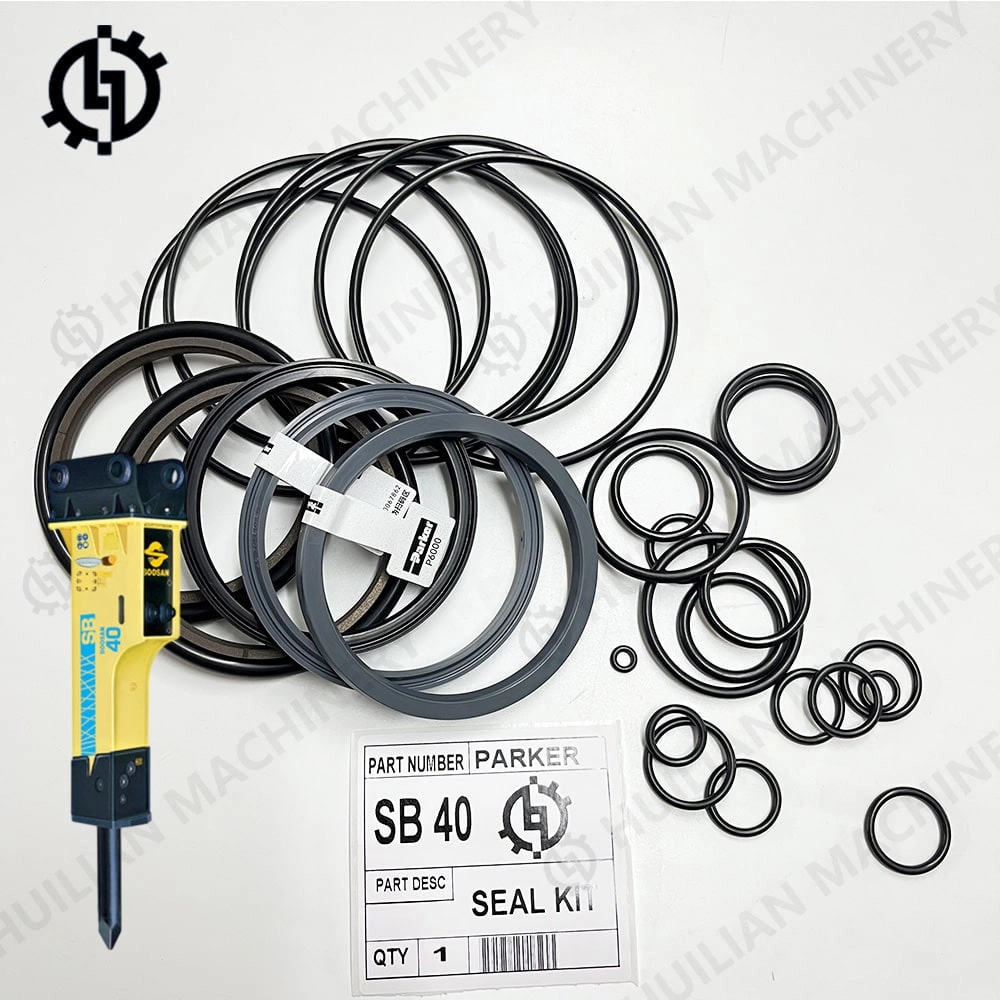
Parker Oil Seal Complete Repair SB40 Seal Kit COX001 CO1012 SB40Ⅱ SB40TSP SQ40 For Soosan Hydraulic Rock Breaker Hammer
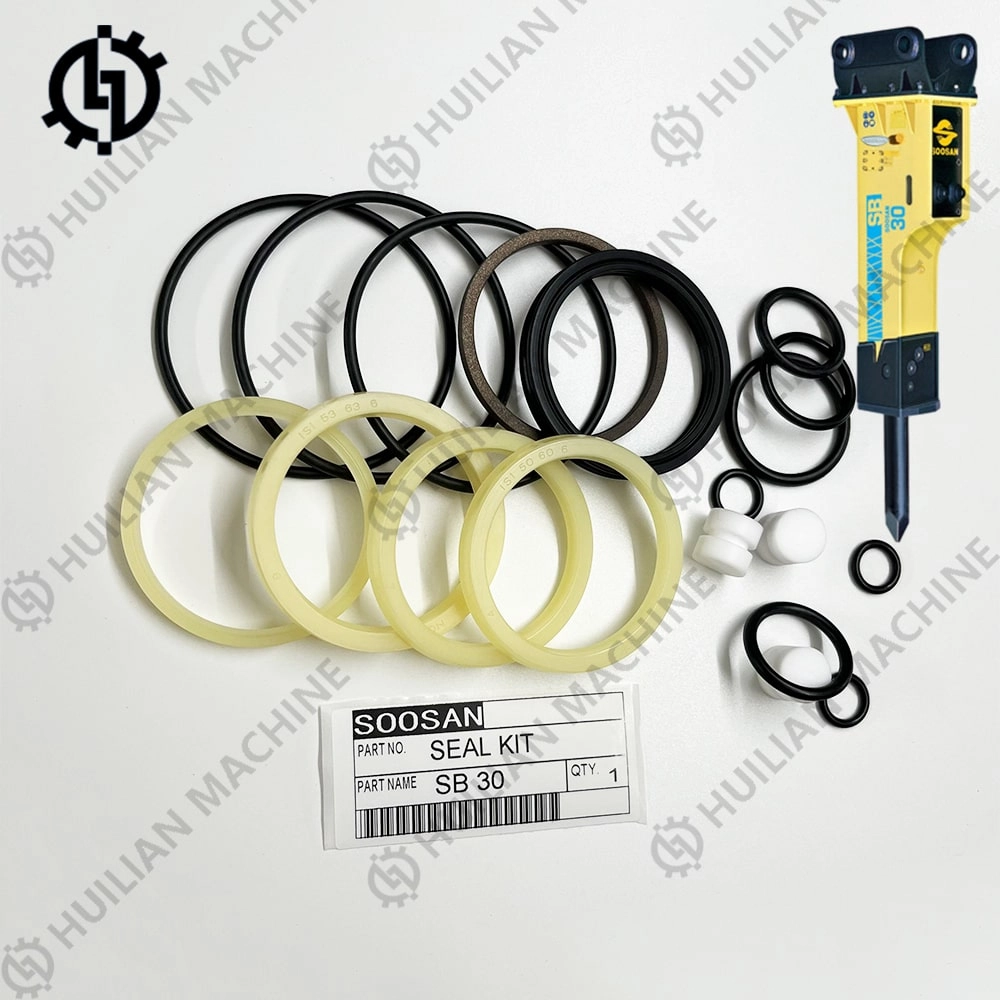
E71012 E7X001 SOOSAN SQ30 SB30Ⅱ SB30 Breaker Seal Kit SB30TS-P SB30Ⅱ TS-P SB30Ⅱ SSL Hydraulic Rock Hammer Parts Oil Repair Kit
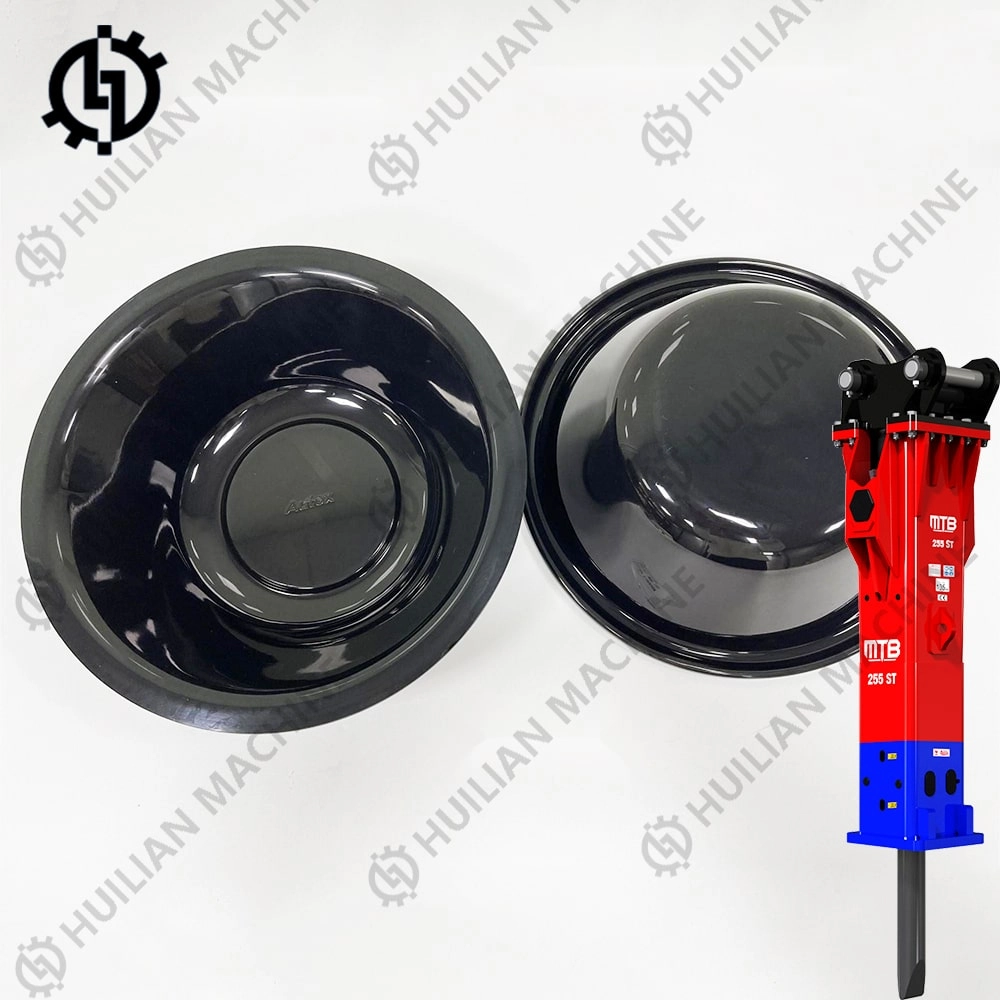
Inan Makina MTB Hydraulic Breaker Parts 45B0116A11 MTB255 MTB MT 255 Diaphragm MTB 255 IQ MTB-255 MTB 255 ST Membrane for Excavator Rock Hammer
 About us
© 2025 HUILIAN MACHINE. All rights reserved