



Hydraulic Breaker Parts Compatibility: Match to Excavators
- Why parts compatibility matters for breaker performance
- Hydraulic matching: flow, pressure and control
- Mechanical fit: carrier weight, bracket and mounting pins
- Control systems and pilot vs. direct control
- Key components and how compatibility affects them
- Piston, cylinder and energy transfer parts
- Chisels, retainer bars and through-bolts
- Wear bushes and bushings
- Seals, seal kits and hydraulic reliability
- Selecting seals and seal kits
- Diagnosing seal wear and failure modes
- Seal kit components I always replace together
- How I verify compatibility before ordering parts
- Step-by-step field compatibility checklist
- Using cross-reference data and drawings
- Practical examples: compatibility table
- Maintenance, inventory and lifecycle considerations
- Planned maintenance and spare parts stocking
- Testing and acceptance of replacement parts
- Data-driven replacement intervals
- Standards, safety and sourcing best practices
- Standards and quality systems
- Safety and regulatory considerations
- Sourcing: OEM vs aftermarket
- About Huilian Machine — OEM expertise and global reach
- Frequently Asked Questions (FAQ)
- 1. How do I know which hydraulic breaker spare parts fit my excavator?
- 2. Can I use aftermarket seal kits for my breaker?
- 3. How often should I replace chisels and wear bushes?
- 4. What are common signs of hydraulic breaker part incompatibility?
- 5. Is it necessary to match breaker control type (pilot vs direct) when changing parts?
- 6. What documentation should I request from a parts supplier?
Matching hydraulic rock breaker hammer spares parts to the correct excavator is not an exercise in part numbers alone — it's a systems-level decision that affects productivity, operating cost, safety, and equipment life. In this article I walk through the technical criteria I use when specifying breaker spare parts for excavators: hydraulic flow and pressure compatibility, carrier mass and mounting, chisel selection and wear parts, seals and seal kits, and practical checks I perform in the field. I also show how to read manufacturer specs, use standardized references, and apply maintenance practices that reduce downtime and total cost of ownership.
Why parts compatibility matters for breaker performance
Hydraulic matching: flow, pressure and control
One of the first checks I perform is hydraulic compatibility. A hydraulic rock breaker hammer spares parts kit will not function properly if the excavator's hydraulic flow (l/min) and maximum pressure (bar) are outside the breaker's design envelope. Incorrect flow or pressure can cause reduced impact energy, accelerated wear of the piston and cylinder, or premature seal failure.
When evaluating compatibility, compare the excavator hydraulic pump flow and relief valve setting against the breaker's required flow and maximum working pressure. Manufacturer manuals and product datasheets are the authoritative source; see for example the general overview of hydraulic breakers on Wikipedia for typical system concepts: https://en.wikipedia.org/wiki/Hydraulic_breaker.
Mechanical fit: carrier weight, bracket and mounting pins
Mechanical compatibility includes carrier class (tonnage), boom/arm geometry, mounting bracket type, and pin diameters. Breaker suppliers rate hammers to match carrier weight ranges (e.g., 5–8 t, 8–12 t). If you install a breaker sized for a much larger carrier on a small excavator, the carrier may be structurally overloaded. Conversely, an oversized carrier with an undersized breaker wastes power and reduces productivity.
Control systems and pilot vs. direct control
Modern excavators may use pilot-operated hydraulic controls or electronic proportional valves. Some breakers are designed for direct line-of-sight control, others require pilot pressure signals. Confirm whether the breaker spares parts or replacement control valve assemblies support your excavator's control architecture to avoid mismatched response and safety issues.
Key components and how compatibility affects them
Piston, cylinder and energy transfer parts
The piston and internal components are the heart of impact generation. Material, heat treatment, and dimensional tolerances determine impact energy and life. When ordering replacement pistons or liners, match bore diameter, stroke length, and material spec exactly. Minor dimensional mismatches can amplify fatigue and cause catastrophic failure.
Chisels, retainer bars and through-bolts
Chisel geometry (moil, blunt, wide) and heat-treated steel grades influence rock fragmentation and wear life. Retainer bars (rompin/retainer bars) and through-bolts secure the tool — use manufacturer-recommended grades and lengths. I keep a parts cross-reference chart for chisels and retainer hardware to ensure the correct hardness and fit.
Wear bushes and bushings
WearBush (wear bush) fit between the breaker housing and tool adapter is critical to prevent excessive lateral movement. Replacing wear bushes with the correct inner and outer diameters restores axial alignment and reduces stress on the tool and pin connections.
Seals, seal kits and hydraulic reliability
Selecting seals and seal kits
Seal material and design must match the hydraulic fluid, temperature range, and pressure. Common seal materials include NBR, HNBR, and polyurethane. For many breakers, OEM seal kits (e.g., Parker-style kits) are designed and tested for the hammer's specific internal geometry. Using a mismatched seal may give temporary life but will likely fail under high-impact pulsation.
Diagnosing seal wear and failure modes
Hydraulic leakages, reduced impact power, or sudden pressure drops are classic signs of seal or valve degradation. I use a structured diagnostic checklist: check fluid cleanliness, look for metal-powder contamination, inspect seal lips for extrusion, and verify correct preload assembly torque. Contamination is a primary cause — follow ISO 4406 cleanliness practices when possible; see ISO guidelines for hydraulic fluid cleanliness: https://www.iso.org/standard/64658..
Seal kit components I always replace together
When undertaking a rebuild I replace the primary piston seals, rod seals, wiper seals, backup rings and O-rings as a kit. Using a complete seal kit avoids uneven ageing-related failure and is standard good practice in the industry.
How I verify compatibility before ordering parts
Step-by-step field compatibility checklist
My standard pre-order checklist includes:
- Confirm breaker model and serial number.
- Measure carrier pump flow and maximum pressure.
- Verify mounting bracket type and pin diameters.
- Inspect tool adapter, chisel type, and wear bush dimensions.
- Check control type (pilot vs direct) and electrical interfaces if applicable.
Using cross-reference data and drawings
I use OEM parts diagrams and cross-reference tables to match part numbers. When in doubt, I request component drawings or 2D/3D dimensions from suppliers to confirm fit. Many reputable suppliers can provide CAD files to confirm mechanical interference and tolerance stacking before shipment.
Practical examples: compatibility table
Below is a practical compatibility guideline I use to shortlist parts. These are typical ranges and should be verified against manufacturer datasheets.
| Excavator Class (t) | Typical Breaker Size | Typical Pump Flow (L/min) | Common Wear Parts to Check |
|---|---|---|---|
| 1–3 | Small/Light | 30–60 | Chisel tips, seals, through-bolts |
| 3–8 | Medium | 60–110 | Pistons, liners, wear bush, seal kits |
| 8–20 | Large | 110–200 | Diaphragms, pistons, retainer bars, heavy chisels |
| >20 | Heavy/Demolition | 200+ | High-duty pistons, reinforced housings, spare valves |
Note: Specific figures vary by manufacturer. Always verify with the breaker and excavator OEM datasheets.
Maintenance, inventory and lifecycle considerations
Planned maintenance and spare parts stocking
I advise mapping critical wear items to operating hours and stocking them based on downtime cost. Typical stocking strategy: keep at least one complete seal kit, one spare chisel, and one set of wear bushes per active breaker. For high-utilization fleets, add spare pistons and retainer bars.
Testing and acceptance of replacement parts
On receipt of major components, I perform dimensional checks, hardness testing for critical wear parts, and pressure tests for valve assemblies. Acceptance tests prevent fitment surprises and validate vendor quality. For hydraulic seal kits and components, I cross-check material certificates when provided.
Data-driven replacement intervals
Where available, I collect operating data — blow counts, impact rate, and hydraulic temperatures — to predict wear life more accurately. Some OEMs publish expected life cycles; otherwise use logged field data to refine replacement intervals over time.
Standards, safety and sourcing best practices
Standards and quality systems
Buyers should prefer suppliers that follow recognized quality systems such as ISO 9001. Quality management systems improve traceability and reduce variability in supply. See ISO 9001 quality management information: https://www.iso.org/iso-9001-quality-management..
Safety and regulatory considerations
Breaker installation affects machine stability and operator safety. Follow manufacturer installation manuals and local safety regulations. For excavations and construction safety guidance refer to authoritative sources such as national occupational safety agencies. Proper guards, lockout/tagout practices, and pressure-relief verifications are non-negotiable.
Sourcing: OEM vs aftermarket
OEM parts often provide the best fit and validated performance. High-quality aftermarket parts can be cost-effective if the supplier provides materials data, heat-treatment specs, and dimensional tolerances. I recommend a risk-based approach: critical pressure-containing components and seals — prefer OEM or qualified equivalents; consumable chisels and bolts — vetted aftermarket may be acceptable if specs match.
About Huilian Machine — OEM expertise and global reach
Founded in 2005, Huilian Machine is a professional OEM supplier of excavator parts. We are leading excavator breaker parts manufacturers from China. We offer a wide range of products, including hydraulic breaker hammers, chisels, seals and seal kits, diaphragms, pistons, WearBush, rompin/retainer bars, through bolts, side bolts, valves and liners.
Huilian's team comprises experienced and skilled professionals, including technicians, R&D experts, designers, quality control professionals, salespeople and after-sales service teams. Our products are exported to over 90 countries and regions and are highly regarded by customers worldwide for their quality and variety.
Guangzhou Huilian Machinery Co., Ltd. is committed to becoming a global leader in the supply of excavator parts and components and is seeking global distributor partners to promote the sustainable development of the excavator parts industry. Our website: https://www.huilianmachine.com/. Email: service@huilianmachine.com. Phone: +86 188 1917 0788.
Huilian advantages: robust OEM manufacturing since 2005, full product range for excavator parts — Excavator Parts, Excavator Breaker Parts, Excavator Hydraulic Breaker, Excavator Seal Kit, Parker seal kit — and strict QC backed by engineering support. This combination of product breadth, technical depth, and global distribution capability makes Huilian a reliable source for hydraulic rock breaker hammer spares parts.
Frequently Asked Questions (FAQ)
1. How do I know which hydraulic breaker spare parts fit my excavator?
Start by recording your excavator make/model, breaker model/serial number, hydraulic pump flow and pressure, and mounting pin sizes. Use OEM cross-reference diagrams or request CAD drawings from suppliers. If uncertain, send photos and measurements to a qualified supplier such as Huilian for verification.
2. Can I use aftermarket seal kits for my breaker?
Yes if the aftermarket kit matches material, dimensions, and recommended fluid compatibility. Prefer seal kits from suppliers who provide material certificates and have experience with breakers. For critical applications, OEM seal kits reduce risk.
3. How often should I replace chisels and wear bushes?
Replacement frequency depends on application intensity. As a rule of thumb, inspect chisels and wear bushes every 250–500 operating hours in heavy duty use. Replace when wear reaches manufacturer-specified limits or when tool alignment is compromised.
4. What are common signs of hydraulic breaker part incompatibility?
Signs include reduced impact energy, excessive vibration, hydraulic pressure spikes/drops, seal leaks, and rapid wear of piston or chisel. Immediate diagnostics are required to prevent more severe damage.
5. Is it necessary to match breaker control type (pilot vs direct) when changing parts?
Yes. Control valves and pilot circuits affect response and safety. Ensure replacement valve assemblies and control-related spare parts are compatible with the excavator's control system; otherwise performance and safety can be compromised.
6. What documentation should I request from a parts supplier?
Request material certificates, dimensional drawings or CAD files, hardness reports for wear parts, and traceability for critical components. For seals, request material composition and compatibility statements.
For additional questions, technical support or to request a parts cross-reference, contact Huilian Machine at service@huilianmachine.com or +86 188 1917 0788. Visit our product pages and view our full catalog at https://www.huilianmachine.com/.
If you need a compatibility assessment, send breaker and excavator details (photos, serial numbers, pump specs) to service@huilianmachine.com — I or a Huilian specialist will respond with a recommended spare parts list and fitment confirmation.
Top 10 Hydraulic Pump Seal Kits for Popular Excavator Models
Top Excavator Breaker Hammers for Heavy-Duty Demolition Projects
How to Choose Quality Excavator Breaker Spare Parts
Mini Excavator Hydraulic Breaker Installation and Safety Guide
About
What types of excavator parts do you offer?
We provide a wide range of high-quality excavator parts, including hydraulic breakers, chisels, seal kits, diaphragms, pistons, wear bushes, retainer bars, through bolts, side bolts, valves, and liners.
Do you offer OEM and aftermarket parts?
Yes, we manufacture high-quality OEM parts and supply aftermarket parts from top brands such as NOK, Parker, SKF, and Hallite to ensure optimal performance.
What is your shipping and delivery time?
We offer fast and reliable global shipping. Delivery times vary depending on location and order size, but we strive to process and ship orders as quickly as possible.
How can I ensure I’m selecting the right part for my equipment?
Our expert team can assist you in finding the right part based on your machine model, specifications, and requirements. Contact us for personalized support.
Are your parts compatible with all excavator brands?
Yes, our parts are designed to be compatible with major brands like Komatsu, Caterpillar, Hitachi, Hyundai, Doosan, JCB, Kobelco, Sany, and many more.
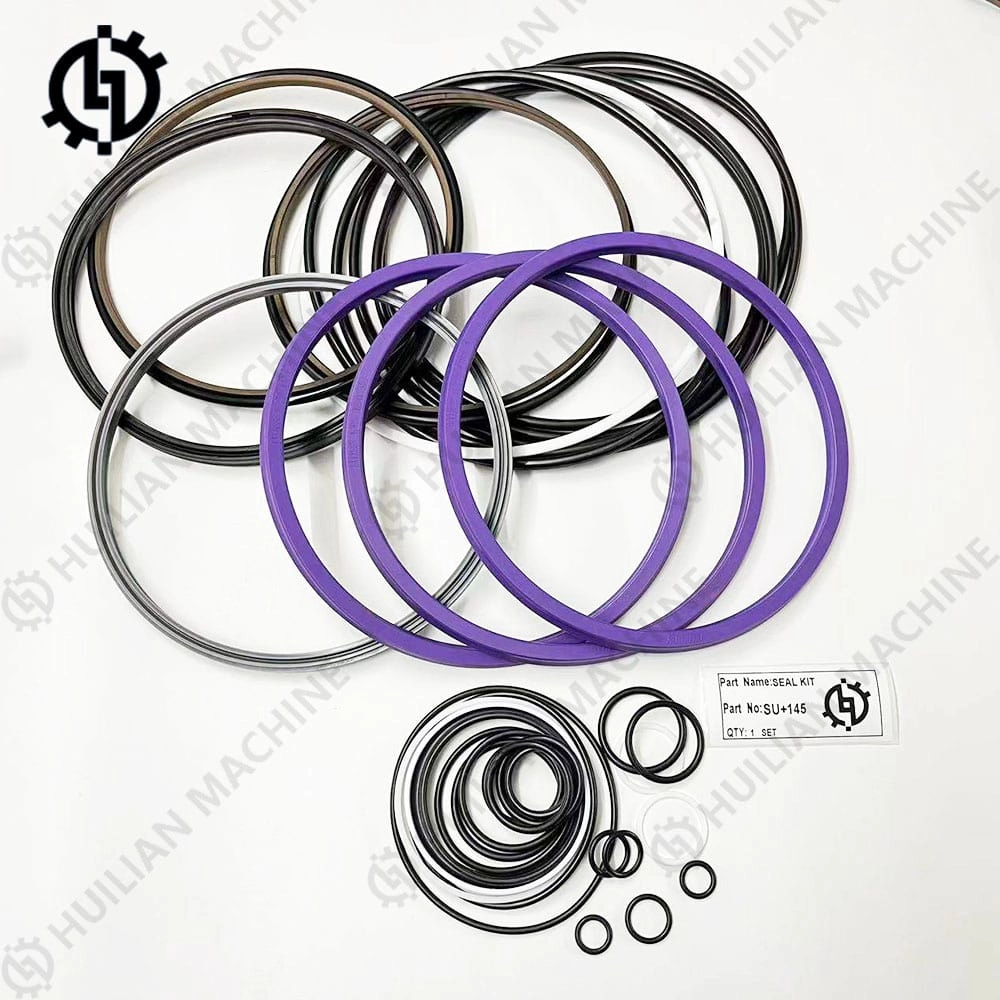
SOOSAN L21016 SU+145 TR-F SU+145TRF SU145 SU+145 Seal Kit C61443 SU+125 Oil Repair Kit For Excavator Hydraulic Rock Breaker Hammer Spare Parts
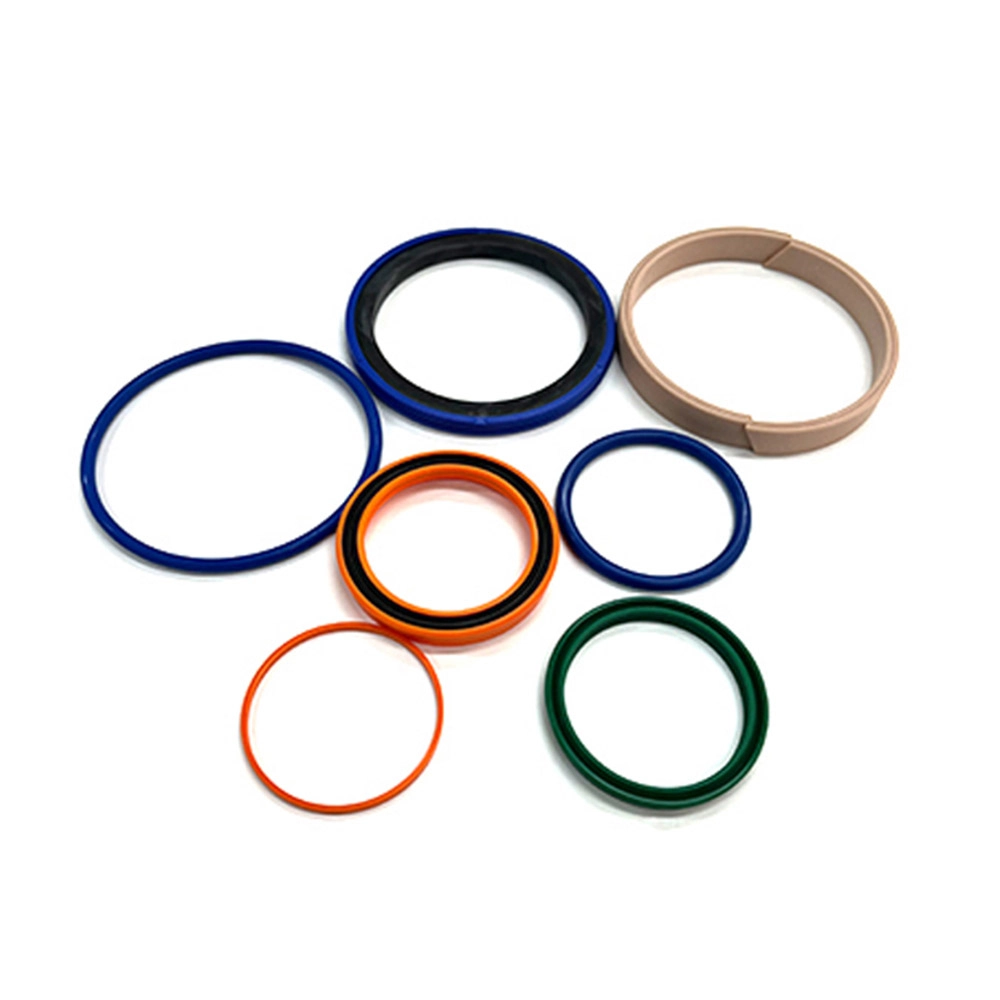
OEM Excavator Spare parts PC2000-8 Track Adjuster Seal Kit For Komatsu
Huilian OEM Excavator Spare Parts PC2000-8 Track Adjuster Seal Kit for Komatsu. Ensures optimal track adjustment performance. High-quality replacement for your PC2000-8 excavator. Order your kit today!
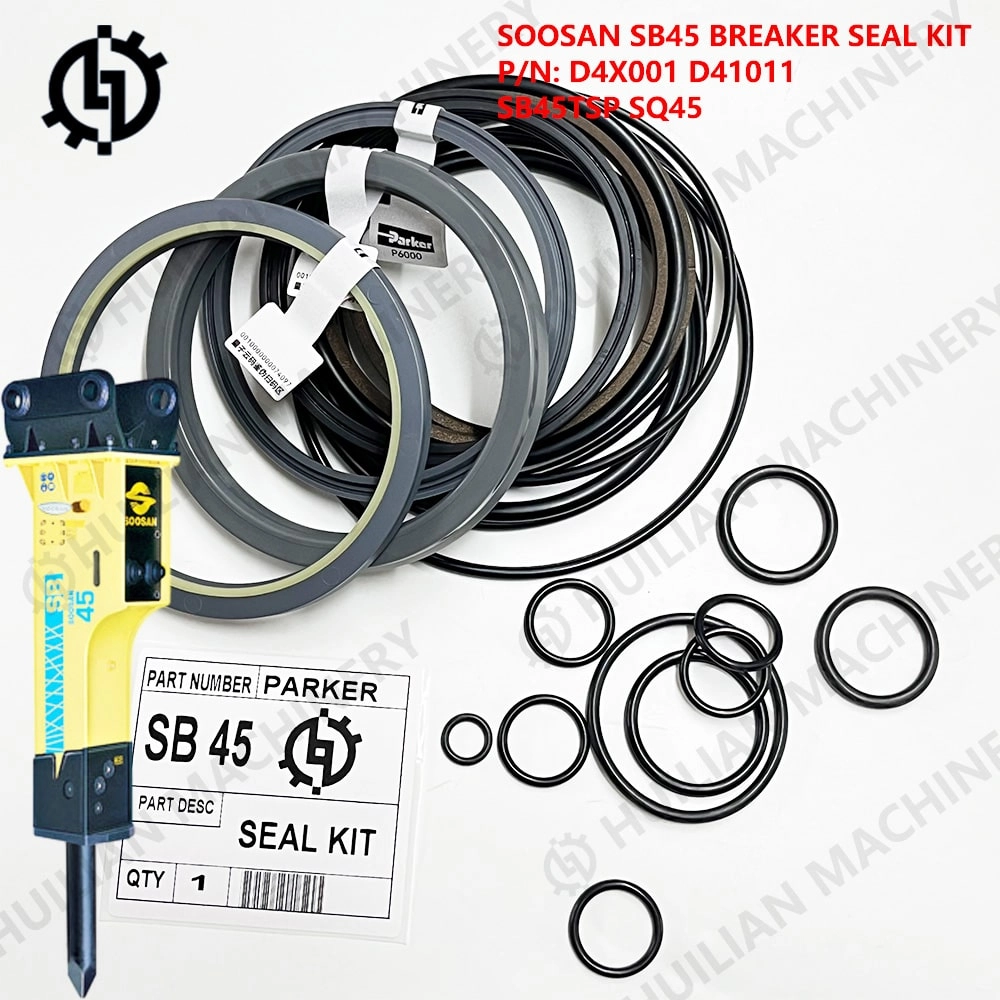
Parker Oil Seal SOOSAN SB45 Hydraulic Rock Hammer Breaker Seal Repair Kit D4X001 D41011 SB45TSP SQ45

Huilian HL68 Hammer Breaker for 4-7 Ton Excavator SOOSAN SB40 Hydraulic Rock Breaker
Side type hydraulic breaker : Easy to control, convenient positioning, durable, high working efficiency, strong striking force, long service life, stable operating performance, convenient after-sales service.
Top type hydraulic breaker : Strong impact power; excellent environmental performance; exquisite manufacturing technology; easy maintenance,fast after-sales service
Box type hydraulic breaker :leading heat treatment technology, enhance heat resistance, wear resistance. Under the condition of keeping the oil pressure constant, the cylinder volumeis reduced and the fuel consumption is reduced.The self-developed core is adopted to make the piston cylinder body moredurable and the service life longer.Exposed decks are made of high-strength steel plates to reduce wear.The best efficiency matching with excavator and loader is realized
 About us
© 2025 HUILIAN MACHINE. All rights reserved