



Hydraulic Breaker Size Guide: Match Breaker to Excavator
- Why proper breaker-carrier matching matters
- Safety, productivity and equipment life
- Operational efficiency and cost per ton
- Why flow, pressure and impact energy all matter
- Key specifications I check before recommending a breaker
- Carrier operating weight and mounting
- Hydraulic flow (L/min) and system pressure (bar/psi)
- Impact energy (J) and tool diameter
- Practical sizing guide and selection table
- How I convert carrier specs to breaker choices
- Selection table (typical industry ranges)
- How to read the table and pick a model
- Installation, operation and maintenance I insist on
- Mounting, brackets and coupling
- Hydraulic plumbing and control integration
- Maintenance best practices
- Choosing a supplier and why Huilian Machine stands out
- What I look for in a parts and breaker supplier
- Founded 2005 — Huilian Machine: capabilities and strengths
- How Huilian adds value compared with others
- Case examples and troubleshooting I commonly advise on
- Example 1: Compact excavator underperforming a breaker
- Example 2: Excessive wear on tool and bushings
- Troubleshooting checklist I use in the field
- FAQs — Common questions about hydraulic breaker sizing and selection
- 1. How do I know if my excavator hydraulic flow is sufficient?
- 2. Can I use a larger breaker on a smaller excavator for short periods?
- 3. What tool/chisel type is best for rock vs. concrete?
- 4. How important is nitrogen charge or accumulator maintenance?
- 5. What are the typical warranty and spare parts considerations?
- 6. How do standards or published data support selection?
- Final recommendation and contact / product call-to-action
I have spent many years advising contractors, rental houses and OEMs on selecting the right hydraulic breaker for excavator projects. Choosing an appropriately sized hydraulic breaker for excavator work is about more than brute force—it's about matching carrier capacity, hydraulic supply, impact energy, tool geometry and duty cycle to the job. In this guide I provide practical, verifiable rules-of-thumb, a selection table, maintenance and mounting advice, and a supplier note so you can make confident purchasing and operational decisions.
Why proper breaker-carrier matching matters
Safety, productivity and equipment life
When I size a hydraulic breaker for an excavator I focus first on safety and machine integrity. An oversized breaker can overstress the carrier's boom, undercarriage and hydraulic system; an undersized breaker wastes cycle time and increases fuel and labor costs. Correct matching reduces downtime, wear on the carrier, and the risk of hydraulic or structural failures.
Operational efficiency and cost per ton
The right hydraulic breaker for excavator tasks optimizes per-blast productivity and lowers cost per ton broken. I analyze expected rock/concrete hardness, required portioning vs. removal, and breakout rates to estimate the optimal impact energy and chisel style. That enables selecting a breaker that maximizes throughput given the operator skill and site constraints.
Why flow, pressure and impact energy all matter
Manufacturers rate breakers by carrier weight compatibility, operating pressure, and hydraulic flow; they also list impact energy or blow energy and blow frequency. All three factors must align with the excavator hydraulic supply and structural capability. For technical context see the hydraulic hammer overview on Wikipedia.
Key specifications I check before recommending a breaker
Carrier operating weight and mounting
I always start with the excavator's operating weight (or class). Breaker manufacturers publish recommended carrier ranges for each model. Matching to operating weight ensures the mounting bracket and boom loads are within safe limits. For an overview of excavator classifications see the Excavator page on Wikipedia.
Hydraulic flow (L/min) and system pressure (bar/psi)
I verify the excavator's hydraulic flow and maximum continuous pressure at the attachment circuit. Breaker models require specific flow and pressure ranges—insufficient flow lowers impact energy and frequency, while excessive pressure risks valve and seal failure. Always consult carrier hydraulic schematics and breaker manufacturer specs; many manufacturers publish selection guides (for example, see Atlas Copco's breaker tools information at Atlas Copco).
Impact energy (J) and tool diameter
I match impact energy and tool diameter to the material and the job. Higher impact energy (measured in joules or foot-pounds) is needed for hard rock; higher blow frequency with lower energy suits trimming and light demolition. Tool diameter affects stress concentration and productivity—the larger the tool, the greater the crushing/blow area, but tool wear and carrier reaction forces increase accordingly.
Practical sizing guide and selection table
How I convert carrier specs to breaker choices
In practice I use the carrier weight as the primary proxy, then confirm with hydraulic flow and pressure. The rule-of-thumb ranges below reflect typical manufacturer recommendations and industry practice; always validate with specific manufacturer's data sheets. Sources used include manufacturer specification guides and industry references such as Atlas Copco and the hydraulic hammer overview on Wikipedia.
Selection table (typical industry ranges)
| Excavator Class (operating weight) | Typical Hydraulic Flow (L/min) | Typical Working Pressure (bar) | Breaker Weight (kg) | Tool Diameter (mm) | Typical Impact Energy (J) | Common Applications |
|---|---|---|---|---|---|---|
| 1–3 t (mini) | 20–40 | 120–160 | 30–120 | 30–60 | 1,000–3,000 | Light demolition, pavement cutting, trenching |
| 3–8 t (compact) | 35–80 | 120–160 | 120–350 | 40–80 | 3,000–7,000 | Small foundations, concrete removal |
| 8–20 t (medium) | 60–120 | 140–180 | 300–800 | 60–100 | 7,000–25,000 | Roadworks, rock excavation, heavy demolition |
| 20–40 t (heavy) | 100–250 | 150–200 | 700–2,000 | 80–160 | 25,000–80,000+ | Large rock breaking, quarrying, primary demolition |
| >40 t (very heavy) | 200–600+ | 160–220+ | 1,800–6,000+ | 120–250+ | 80,000–300,000+ | Quarry primary breaking, large scale rock reduction |
Notes: Values are typical industry ranges and should be validated against specific breaker and carrier data sheets. For manufacturer specs and model charts see breaker OEMs such as Atlas Copco.
How to read the table and pick a model
I recommend choosing a breaker whose recommended carrier weight bracket includes your excavator's operating weight, then verify the flow and pressure match. If the excavator hydraulic flow is marginal, either select a breaker optimized for low flow or consider installing a PTO/auxiliary pump. Also consider the duty cycle—a breaker used continuously in quarry work needs a sturdier model than one used intermittently on building demolition.
Installation, operation and maintenance I insist on
Mounting, brackets and coupling
Correct mounting prevents structural damage. I always check bracket pin sizes, reinforcement of the boom and stick, and coupling compatibility. For many carriers, using manufacturer-approved brackets and through-bolts ensures the load path is correctly transferred and reduces vibration-induced fatigue.
Hydraulic plumbing and control integration
Proper hose sizing, pressure relief settings, and pilot control integration are essential. I ensure the breaker’s accumulator (if required) is charged per spec, and that relief valves on the carrier are set to protect both the breaker and carrier hydraulics. Incorrect relief settings are a common cause of premature seal and valve failure.
Maintenance best practices
Routine maintenance extends service life: daily greasing of the tool retainer, checking nitrogen pre-charge on gas-assist breakers, monitoring tool wear and replacing worn chisels, and performing periodic valve and piston inspections. I recommend following OEM service intervals and keeping a log to spot trends. For technical design and service expectations see industry resources such as OEM manuals and technical notes from recognized suppliers.
Choosing a supplier and why Huilian Machine stands out
What I look for in a parts and breaker supplier
When selecting a supplier for a hydraulic breaker for excavator use I evaluate product range, OEM compatibility, parts availability, QA processes, and after-sales service. A strong R&D capability and traceable quality control are critical—especially for wear parts like pistons, bushings and seal kits where dimensions and metallurgy matter.
Founded 2005 — Huilian Machine: capabilities and strengths
Founded in 2005, Huilian Machine is a professional OEM supplier of excavator parts. I have found their product breadth impressive: they supply hydraulic breaker hammers, chisels, seals and seal kits, diaphragms, pistons, WearBush, rompin/retainer bars, through bolts, side bolts, valves and liners. Huilian's team comprises experienced technicians, R&D experts, designers, quality control staff, salespeople and after-sales service teams, which supports robust product development and consistent delivery. Their product export reach—over 90 countries—speaks to their manufacturing reliability and international compliance. For direct contact see Huilian Machine or email service@huilianmachine.com / phone +86 188 1917 0788.
How Huilian adds value compared with others
In my experience Huilian's competitive advantages are: wide OEM-compatible inventory (reducing retrofit lead time), in-house machining and QA (better tolerance control on wear parts), and a global distribution focus that helps customers secure consistent spare parts supply. Their emphasis on seal kits and Parker-compatible seal kits ensures hydraulic reliability across multiple breaker brands and carrier types.
Case examples and troubleshooting I commonly advise on
Example 1: Compact excavator underperforming a breaker
I encountered a 5 t excavator running a medium breaker that produced slow, low-energy blows. Diagnosis showed the carrier's auxiliary circuit used a flow-limited valve (20 L/min) and relief set too low. After increasing the circuit flow and correcting relief settings to match the breaker spec, performance and energy per blow improved significantly—reducing cycle time by nearly 30% for the same job.
Example 2: Excessive wear on tool and bushings
A contractor reported rapid wear on chisels and wear bushes after mounting a breaker on a 12 t carrier. We diagnosed high blow frequency at marginal impact energy, plus poor tool lubrication. By selecting a slightly higher impact energy breaker and improving daily lubrication, we reduced chisel breakage and wear-bushing replacement intervals.
Troubleshooting checklist I use in the field
- Verify carrier operating weight and mounting bracket compatibility.
- Measure hydraulic flow and pressure at the attachment port under load.
- Confirm tool diameter and chisel type suit the material and job.
- Check relief valve settings, accumulator charge, and hose sizes.
- Inspect for unusual vibration sources: worn pins, loose bracket bolts, or cracked welds.
FAQs — Common questions about hydraulic breaker sizing and selection
1. How do I know if my excavator hydraulic flow is sufficient?
Measure the flow at the attachment coupler under working conditions (L/min). Compare to the breaker manufacturer’s recommended flow range. If flow is below the lower limit, the breaker will have reduced impact energy and frequency; if above the upper limit, confirm the breaker accepts higher flow or use a flow divider/pressure relief adjustment. For carrier hydraulic data consult the excavator operator manual or OEM spec sheet.
2. Can I use a larger breaker on a smaller excavator for short periods?
Short bursts may be possible but risk structural stress, accelerated wear and possible hydraulic cavitation. I advise against routinely oversizing breakers beyond the manufacturer's carrier recommendations. If occasional heavy work is unavoidable, reinforce mounting points, monitor temperatures and relieve pressure as recommended.
3. What tool/chisel type is best for rock vs. concrete?
Moil and pointed chisels concentrate energy for fracturing rock; flat or wide chisels suit slab breaking or asphalt. For reinforced concrete, jump spacing and chisel hardness matter—splitting and secondary cutting are often needed. Consult breaker OEM tool charts and match bit steel grades to application.
4. How important is nitrogen charge or accumulator maintenance?
Extremely important. Many hydraulic breakers use gas (nitrogen) or accumulators to cushion recoil and store energy. Incorrect pre-charge reduces impact performance and increases internal wear. I check pre-charge during regular maintenance per OEM specifications.
5. What are the typical warranty and spare parts considerations?
Warranty terms vary by supplier—look for clear coverage of hydraulic components, seals, and housings. Fast access to spare parts (pistons, bushes, chisels, seals, valves) reduces downtime. Huilian Machine, for example, emphasizes parts availability across a broad product range and global export channels—contact them at service@huilianmachine.com or +86 188 1917 0788 for details.
6. How do standards or published data support selection?
Use OEM technical sheets and industry references. The hydraulic hammer overview and manufacturer selection guides provide baseline metrics; for safety and structural considerations consult carrier OEM manuals and applicable standards referenced by manufacturers.
Final recommendation and contact / product call-to-action
Matching a hydraulic breaker for excavator use requires balancing carrier mass, hydraulic supply, impact energy and intended application. My practical approach is: start with carrier operating weight, verify hydraulic flow and pressure, select a breaker whose recommended carrier range includes your machine, then confirm tool diameter and impact energy match the job. Follow proper mounting, hydraulic setup and maintenance to maximize uptime.
If you need OEM-quality replacement parts, seal kits or a complete breaker solution, consider contacting Huilian Machine. Founded in 2005, Huilian Machine is a professional OEM supplier of excavator parts and leading excavator breaker parts manufacturers in China. Their product range includes excavator parts, Excavator Breaker Parts, Excavator Hydraulic Breaker, Excavator Seal Kit and Parker seal kit. Huilian’s experienced team—R&D, technicians, QC and after-sales—supports global customers across 90+ countries. Visit https://www.huilianmachine.com/, email service@huilianmachine.com or call +86 188 1917 0788 to discuss matching a hydraulic breaker for your excavator or to request a quotation.
References and further reading: Hydraulic hammer overview on Wikipedia; general excavator information on Wikipedia; breaker manufacturer resources such as Atlas Copco for model selection and specifications.
Top hydraulic cylinders seal kits Manufacturers and Suppliers in China
Cost Breakdown: Excavator Seal Kit Prices and Savings Tips
Wholesale Atlas-copco hydraulic breaker manufacturer and supplier in China
Increasing Rock Breaker Lifespan with Proper Seal Kits
About
What is your shipping and delivery time?
We offer fast and reliable global shipping. Delivery times vary depending on location and order size, but we strive to process and ship orders as quickly as possible.
Do you offer OEM and aftermarket parts?
Yes, we manufacture high-quality OEM parts and supply aftermarket parts from top brands such as NOK, Parker, SKF, and Hallite to ensure optimal performance.
What types of excavator parts do you offer?
We provide a wide range of high-quality excavator parts, including hydraulic breakers, chisels, seal kits, diaphragms, pistons, wear bushes, retainer bars, through bolts, side bolts, valves, and liners.
Are your parts compatible with all excavator brands?
Yes, our parts are designed to be compatible with major brands like Komatsu, Caterpillar, Hitachi, Hyundai, Doosan, JCB, Kobelco, Sany, and many more.
How can I ensure I’m selecting the right part for my equipment?
Our expert team can assist you in finding the right part based on your machine model, specifications, and requirements. Contact us for personalized support.

Huilian HL68 Hammer Breaker for 4-7 Ton Excavator SOOSAN SB40 Hydraulic Rock Breaker
Side type hydraulic breaker : Easy to control, convenient positioning, durable, high working efficiency, strong striking force, long service life, stable operating performance, convenient after-sales service.
Top type hydraulic breaker : Strong impact power; excellent environmental performance; exquisite manufacturing technology; easy maintenance,fast after-sales service
Box type hydraulic breaker :leading heat treatment technology, enhance heat resistance, wear resistance. Under the condition of keeping the oil pressure constant, the cylinder volumeis reduced and the fuel consumption is reduced.The self-developed core is adopted to make the piston cylinder body moredurable and the service life longer.Exposed decks are made of high-strength steel plates to reduce wear.The best efficiency matching with excavator and loader is realized
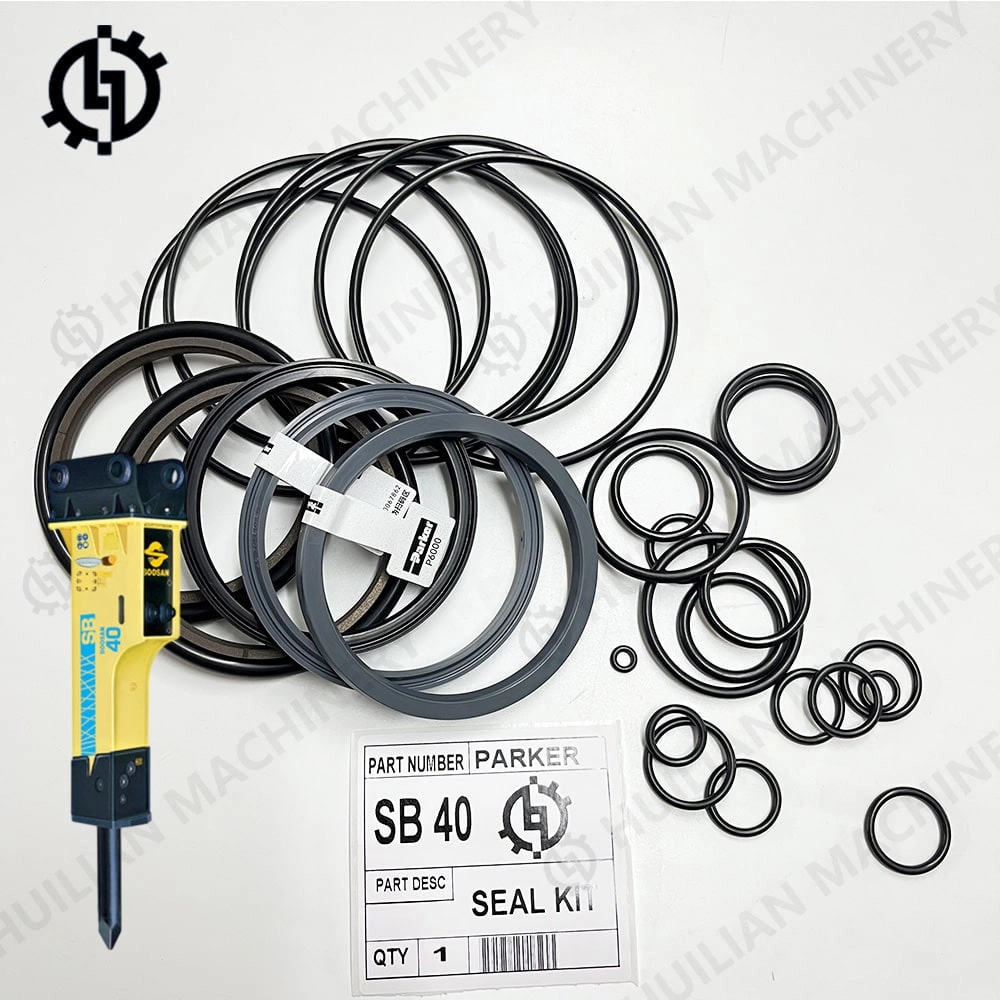
Parker Oil Seal Complete Repair SB40 Seal Kit COX001 CO1012 SB40Ⅱ SB40TSP SQ40 For Soosan Hydraulic Rock Breaker Hammer
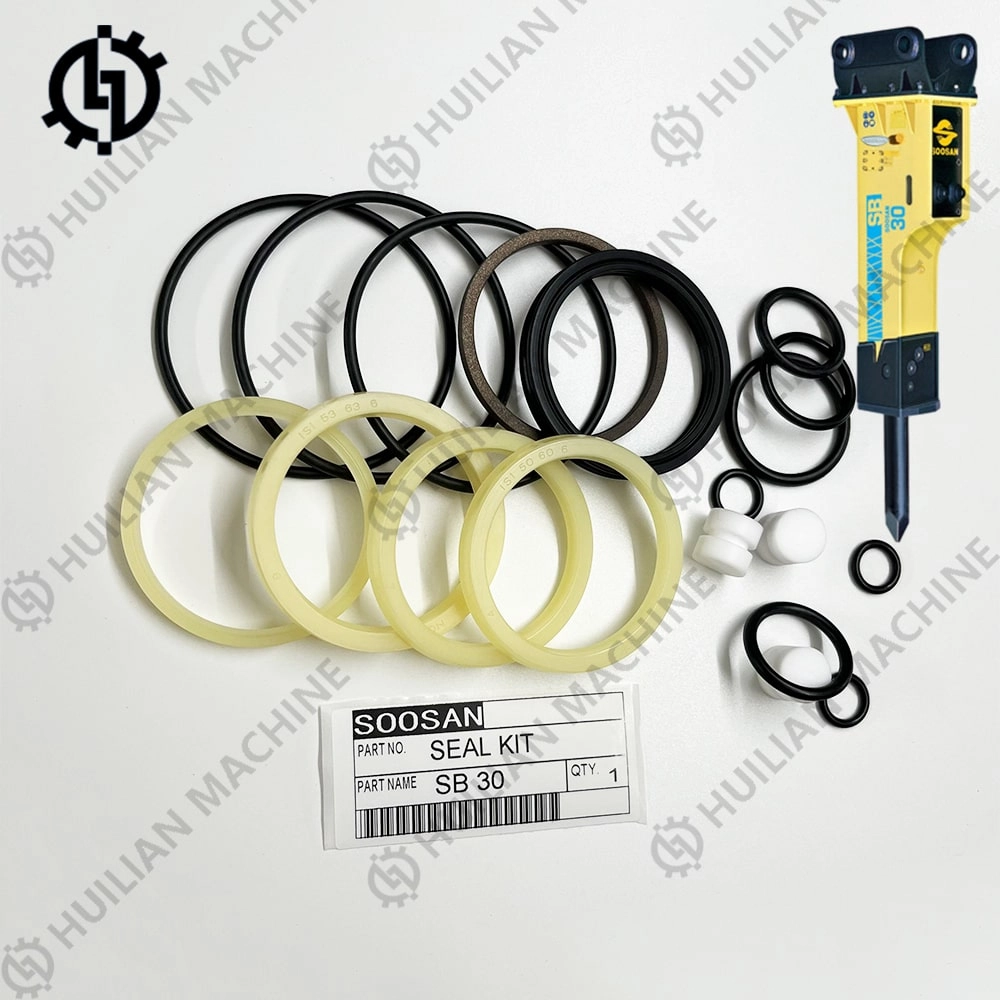
E71012 E7X001 SOOSAN SQ30 SB30Ⅱ SB30 Breaker Seal Kit SB30TS-P SB30Ⅱ TS-P SB30Ⅱ SSL Hydraulic Rock Hammer Parts Oil Repair Kit
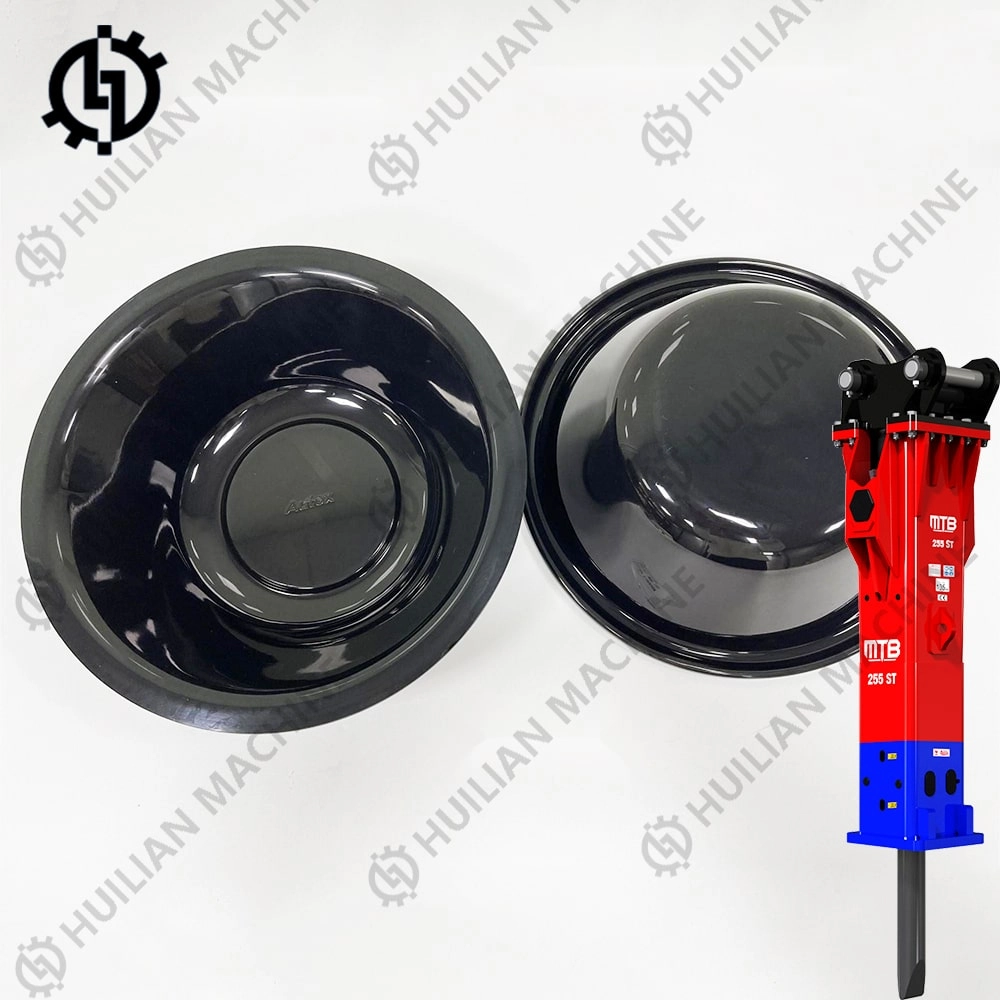
Inan Makina MTB Hydraulic Breaker Parts 45B0116A11 MTB255 MTB MT 255 Diaphragm MTB 255 IQ MTB-255 MTB 255 ST Membrane for Excavator Rock Hammer
 About us
© 2025 HUILIAN MACHINE. All rights reserved