



Hydraulic Concrete Breaker for Excavator vs Hydraulic Hammer — Key Differences
- Choosing the Right Tool for Demolition and Trenching
- What users are really searching for
- Operational goals and matching to carrier machine
- Safety, cycle time and productivity expectations
- Design and Functional Differences
- Core mechanical principles
- Mounting, coupling and interface
- Tooling and chisel types
- Performance Comparison (Side-by-side)
- Key metrics to compare
- Typical ranges and what they mean
- Interpreting the table for procurement
- Maintenance, Lifecycle Cost and Reliability
- Wear parts and common failure modes
- Serviceability and OEM vs aftermarket parts
- Predicting lifecycle costs
- Application Cases and Selection Criteria
- Case A: Urban reinforced concrete removal
- Case B: Road rehabilitation and asphalt removal
- Case C: Heavy rock trenching
- Buying Guide — What I Check Before Recommending a Model
- Technical checklist
- Verification with standards and documentation
- Procurement tips to reduce risk
- About Huilian Machine — OEM Expertise and Product Range
- Frequently Asked Questions (FAQ)
- 1. Is a hydraulic concrete breaker for excavator the same as a hydraulic hammer?
- 2. How do I match a breaker to my excavator?
- 3. What maintenance items should I keep on site?
- 4. Can I use an excavator breaker in cold climates or underwater?
- 5. How do I decide between higher impact energy vs higher BPM?
- 6. Where can I find authoritative references on breaker technology?
- Contact & Next Steps
I write from years of hands-on experience in excavator attachments and breaker systems. In this article I compare a hydraulic concrete breaker for excavator with a hydraulic hammer/hydraulic breaker, highlighting the technical and operational differences that matter to buyers, operators and maintenance teams. I emphasize verifiable data, best practices, and purchasing guidance so you can choose the right tool for your site conditions, machine size and lifecycle cost.
Choosing the Right Tool for Demolition and Trenching
What users are really searching for
When people search for hydraulic concrete breaker for excavator they want a reliable, efficient tool to break reinforced concrete, rock or pavement using the excavator's hydraulic system. They often also compare a hydraulic hammer (a common synonym) to understand subtle differences in tool design, mounting, and performance. My aim is to make those distinctions actionable so you can match tool, carrier and job profile.
Operational goals and matching to carrier machine
Start by defining goals: demolition of thin concrete slabs, breaking large reinforced foundations, trenching in rock, or secondary breaking after a primary crusher. Carrier characteristics (excavator hydraulic flow, pressure, operating weight, linkage and attachment circuit) determine whether a given hydraulic concrete breaker for excavator is compatible. I always validate carrier pump flow (L/min), operating pressure (bar/psi) and hydraulic quick-coupler specs before recommending models.
Safety, cycle time and productivity expectations
Customers often underestimate how tool selection impacts cycle time and operator fatigue. A breaker with higher blow energy but slow repetition may be less productive than one optimized for your stone type. I advise balancing blow energy, blows per minute, and bit geometry to maximize productivity and minimize machine stress and downtime.
Design and Functional Differences
Core mechanical principles
Both a hydraulic concrete breaker for excavator and a hydraulic hammer convert hydraulic energy into percussive impact. The main mechanical distinction lies in the internal energy conversion mechanism and integration with the carrier. A hydraulic breaker (or hydraulic hammer) commonly uses a piston-and-valve system inside a sealed housing; some concrete-specific models add damping and chisel support tailored to reinforced concrete work.
Mounting, coupling and interface
Mounting systems differ: dedicated breaker brackets, pin-on mounts or quick coupler-compatible adaptors. For excavator-mounted hydraulic concrete breakers, the tool often includes specific bushings, through bolts, and retainer bars compatible with standard excavator tool brackets. Ensuring correct mounting reduces side-loads on the carrier boom and prevents premature failure of side bolts, wear bushes and retainers.
Tooling and chisel types
Concrete work demands a variety of chisels—moil points for general breaking, flat chisels for scaling, and blunt chisels for heavy demolition. Hydraulic concrete breaker for excavator packages often include chisels and seal kits designed for high-rebound conditions when encountering rebar. Proper bit selection (and keeping spare chisels and parker-type seals on hand) will materially change job speed and component life.
Performance Comparison (Side-by-side)
Key metrics to compare
When comparing a hydraulic concrete breaker for excavator versus a hydraulic hammer you should compare: carrier weight class, nominal impact energy (kJ or ft-lb), blow frequency (BPM), hydraulic flow requirements (L/min), operating pressure (bar/psi), and tool weight. These metrics determine matching and productivity.
Typical ranges and what they mean
Below is a concise comparison based on industry product datasheets and manufacturer guidance (typical ranges). For exact match, consult the specific breaker/hydraulic hammer datasheet and excavator hydraulic specs.
| Characteristic | Hydraulic Concrete Breaker for Excavator (typical) | Hydraulic Hammer (general term) |
|---|---|---|
| Primary use | Concrete demolition, reinforced concrete, urban works | Broad: rock breaking, quarry, civil works, demolition |
| Impact energy | 1.5–55 kJ (depending on size) | 1–80+ kJ (wide range across models) |
| Blows per minute (BPM) | 200–800 BPM (smaller tools higher BPM) | 150–1000 BPM |
| Hydraulic flow | 20–400 L/min | 15–500 L/min |
| Carrier weight suitability | 1–90 ton excavators (model-dependent) | Mini to large-scale carriers |
| Typical consumables | Chisels, parker seal kits, wear bushes, retaining bars | Similar consumables; heavier duty in larger rock hammers |
Sources: manufacturer datasheets and general industry references such as the Hydraulic breaker overview and carrier guidance on Excavator.
Interpreting the table for procurement
Interpret these ranges in light of your carrier and site: choose a model whose recommended carrier weight and hydraulic flow match your excavator without requiring the engine to run at maximum continuously. Oversizing can reduce precision and increase fuel consumption; undersizing reduces productivity and increases wear.
Maintenance, Lifecycle Cost and Reliability
Wear parts and common failure modes
Most hydraulic concrete breaker for excavator failures are related to consumables: chisels, wear bushes, retaining bars, through bolts, and internal seals (Parker-type seals are common). Seal damage, poor lubrication, and contamination are primary causes of piston and valve degradation. I recommend establishing spare parts inventory and documented maintenance intervals to reduce downtime.
Serviceability and OEM vs aftermarket parts
Serviceability matters—models designed with modular valve packs and accessible kits reduce repair time. OEM parts typically ensure fit and material spec; high-quality aftermarket parts can be cost-effective if sourced from reputable manufacturers. For assured compatibility and warranty support, I often recommend OEM or OEM-grade parts from experienced suppliers.
Predicting lifecycle costs
Lifecycle cost = purchase price + operating fuel cost + wear-part spend + downtime cost. For urban demolition where downtime and precision matter, a slightly higher-capability hydraulic concrete breaker for excavator with robust vibration damping can lower total cost by improving cycle-time and reducing repairs.
Application Cases and Selection Criteria
Case A: Urban reinforced concrete removal
Scenario: Removing a reinforced concrete foundation in a city environment with tight access and noise restrictions. I recommend a mid-weight hydraulic concrete breaker for excavator with anti-vibration mounting, high BPM and chisels optimized for rebar cutting. This combination reduces operator fatigue, minimizes collateral damage, and improves throughput.
Case B: Road rehabilitation and asphalt removal
Scenario: Removing asphalt and thin concrete slabs on roads. A smaller, higher-BPM hydraulic breaker with flat chisels is usually more productive. For repeated pavement work, maintain an inventory of flat chisels and parker seal kits to avoid delays.
Case C: Heavy rock trenching
Scenario: Trenching in dense rock for utilities. Here, a larger hydraulic hammer with higher impact energy and lower BPM is preferred. Ensure carrier is strong enough to handle percussive recoil and that bit geometry matches rock hardness.
Buying Guide — What I Check Before Recommending a Model
Technical checklist
- Carrier compatibility: flow (L/min) and pressure (bar/psi)
- Impact energy and BPM matching the material being broken
- Mounting system and recommended bushings/through bolts
- Availability of spare parts (chisel types, seals, pistons)
- Service network and documented maintenance interval
Verification with standards and documentation
I always cross-check supplier quality claims with internationally-recognized standards—ISO 9001 for quality systems is a baseline for manufacturers (ISO 9001). Reviewing product datasheets, test certificates, and field service records helps validate lifecycle expectations.
Procurement tips to reduce risk
Request field references, ask for mean-time-between-failure (MTBF) data if available, and include spare-parts kits in the initial order (chisel sets, seals, wear bushes). For rental fleets, standardize on one or two breaker models to streamline maintenance and parts inventory.
About Huilian Machine — OEM Expertise and Product Range
Founded in 2005, Huilian Machine is a professional OEM supplier of excavator parts. As a consultant who frequently evaluates supplier capability, I find Huilian's product breadth and technical support particularly strong. We are leading excavator breaker parts manufacturers in China, offering a wide range of products including hydraulic breaker hammers, chisels, seals and seal kits, diaphragms, pistons, wear bushes, rompin/retainer bars, through bolts, side bolts, valves and liners.
Huilian's team comprises experienced and skilled professionals—technicians, R&D experts, designers, quality control professionals, salespeople and after-sales service teams. Their products are exported to over 90 countries and regions and are highly regarded by customers worldwide for quality and variety. Guangzhou Huilian Machinery Co., Ltd. is committed to becoming a global leader in the supply of excavator parts and components and is actively seeking global distributor partners to promote sustainable development of the excavator parts industry.
For procurement or technical inquiries, visit https://www.huilianmachine.com/, email service@huilianmachine.com or call +86 188 1917 0788. Huilian's main product advantages include proven compatibility with major excavator brands, robust OEM-quality spare parts such as Excavator Parts, Excavator Breaker Parts, Excavator Hydraulic Breaker, Excavator Seal Kit and Parker seal kit, and a responsive technical team able to support model matching and after-sales maintenance.
Frequently Asked Questions (FAQ)
1. Is a hydraulic concrete breaker for excavator the same as a hydraulic hammer?
They are often used interchangeably in common language, but hydraulic concrete breaker for excavator typically emphasizes concrete and reinforced-concrete demolition features (chisels, damping), while hydraulic hammer can refer more broadly to percussive tools for rock and general demolition. The best selection depends on the material, carrier, and desired productivity.
2. How do I match a breaker to my excavator?
Match three core parameters: hydraulic flow (L/min), operating pressure (bar/psi), and carrier weight/class. Also ensure the mounting bracket and through-bolt dimensions are compatible. If in doubt, provide your excavator model and hydraulic specs to the supplier for a compatibility check.
3. What maintenance items should I keep on site?
Keep spare chisels, parker-type seal kits, wear bushes, retaining bars, through bolts, and a basic seal installation kit. Regular daily checks for loose bolts, oil leaks, and proper lubrication will greatly extend component life.
4. Can I use an excavator breaker in cold climates or underwater?
Cold climates require low-temperature hydraulic oil, proper warm-up procedures, and seals rated for the ambient temperature. Underwater use demands specialized models or waterproofing kits; consult the manufacturer for certified underwater-capable units to ensure safety and warranty compliance.
5. How do I decide between higher impact energy vs higher BPM?
Higher impact energy with lower BPM suits hard rock and thick concrete where single powerful blows are needed. Higher BPM with lower per-blow energy is better for thin slabs, scaling, or reinforced concrete where repeated rapid impacts fracture material more effectively. Match bit geometry to material for best results.
6. Where can I find authoritative references on breaker technology?
General overviews are available in industry references such as the Hydraulic breaker and excavator pages on Wikipedia. For manufacturer-specific performance data consult OEM datasheets and quality-system references such as ISO 9001.
Contact & Next Steps
If you need a tailored recommendation for a hydraulic concrete breaker for excavator based on your machine model and project profile, contact Huilian Machine for technical matching and spare-parts packages. Visit https://www.huilianmachine.com/, email service@huilianmachine.com, or call +86 188 1917 0788. I can also assist with specification checks and lifecycle-cost comparisons if you provide carrier hydraulic specs and job descriptions.
Choosing the right breaker is a mix of technical fit, tooling, maintenance planning and supplier reliability. With the right data and supplier partnership you can optimize productivity and lifecycle cost for your demolition or trenching projects.

Bulk Procurement Strategies for Hydraulic Breaker Chisel Parts
Top Excavator Breaker Hammer Models for Heavy-Duty Jobs
Hydraulic Breaker Seal Kit Compatibility by Excavator Model

The Ultimate 2026 Excavator Breaker Guide: Maximize Power and Efficiency
About
What is your shipping and delivery time?
We offer fast and reliable global shipping. Delivery times vary depending on location and order size, but we strive to process and ship orders as quickly as possible.
Do you offer OEM and aftermarket parts?
Yes, we manufacture high-quality OEM parts and supply aftermarket parts from top brands such as NOK, Parker, SKF, and Hallite to ensure optimal performance.
What types of excavator parts do you offer?
We provide a wide range of high-quality excavator parts, including hydraulic breakers, chisels, seal kits, diaphragms, pistons, wear bushes, retainer bars, through bolts, side bolts, valves, and liners.
Are your parts compatible with all excavator brands?
Yes, our parts are designed to be compatible with major brands like Komatsu, Caterpillar, Hitachi, Hyundai, Doosan, JCB, Kobelco, Sany, and many more.
How can I ensure I’m selecting the right part for my equipment?
Our expert team can assist you in finding the right part based on your machine model, specifications, and requirements. Contact us for personalized support.

Huilian HL68 Hammer Breaker for 4-7 Ton Excavator SOOSAN SB40 Hydraulic Rock Breaker
Side type hydraulic breaker : Easy to control, convenient positioning, durable, high working efficiency, strong striking force, long service life, stable operating performance, convenient after-sales service.
Top type hydraulic breaker : Strong impact power; excellent environmental performance; exquisite manufacturing technology; easy maintenance,fast after-sales service
Box type hydraulic breaker :leading heat treatment technology, enhance heat resistance, wear resistance. Under the condition of keeping the oil pressure constant, the cylinder volumeis reduced and the fuel consumption is reduced.The self-developed core is adopted to make the piston cylinder body moredurable and the service life longer.Exposed decks are made of high-strength steel plates to reduce wear.The best efficiency matching with excavator and loader is realized
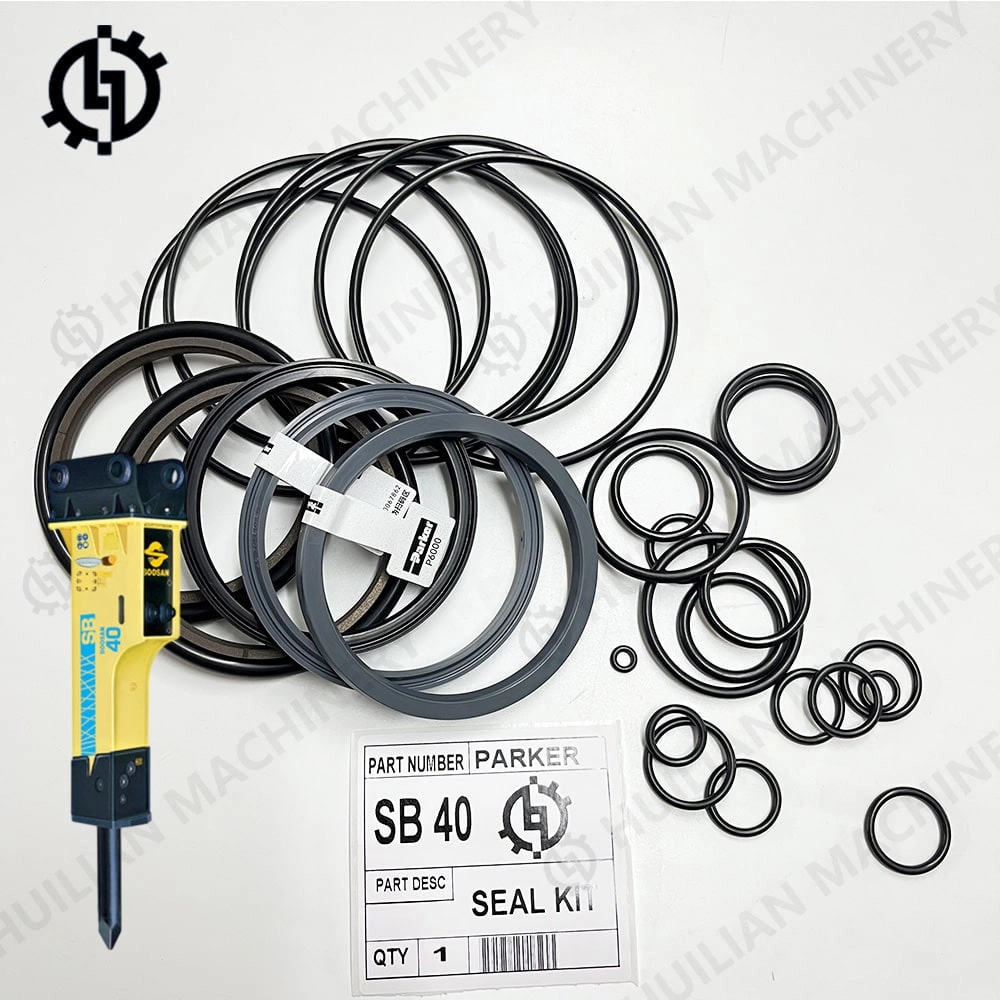
Parker Oil Seal Complete Repair SB40 Seal Kit COX001 CO1012 SB40Ⅱ SB40TSP SQ40 For Soosan Hydraulic Rock Breaker Hammer
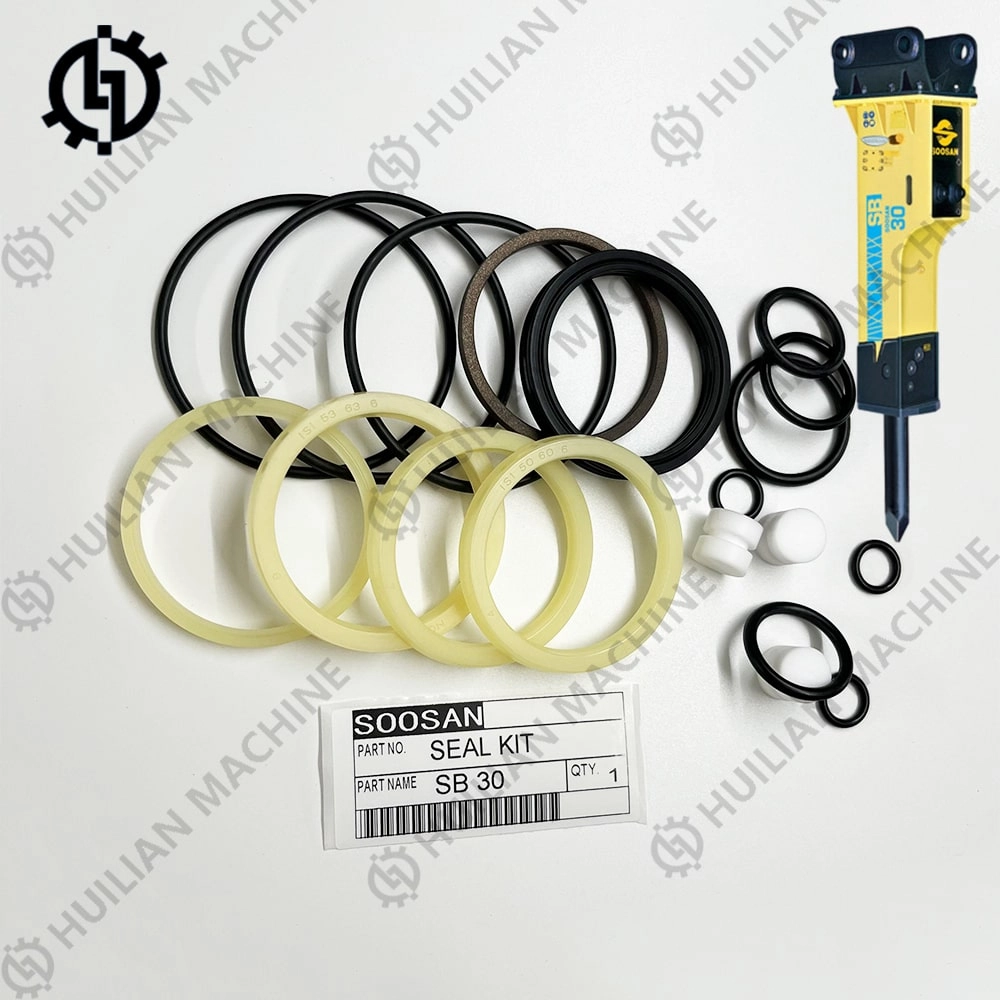
E71012 E7X001 SOOSAN SQ30 SB30Ⅱ SB30 Breaker Seal Kit SB30TS-P SB30Ⅱ TS-P SB30Ⅱ SSL Hydraulic Rock Hammer Parts Oil Repair Kit
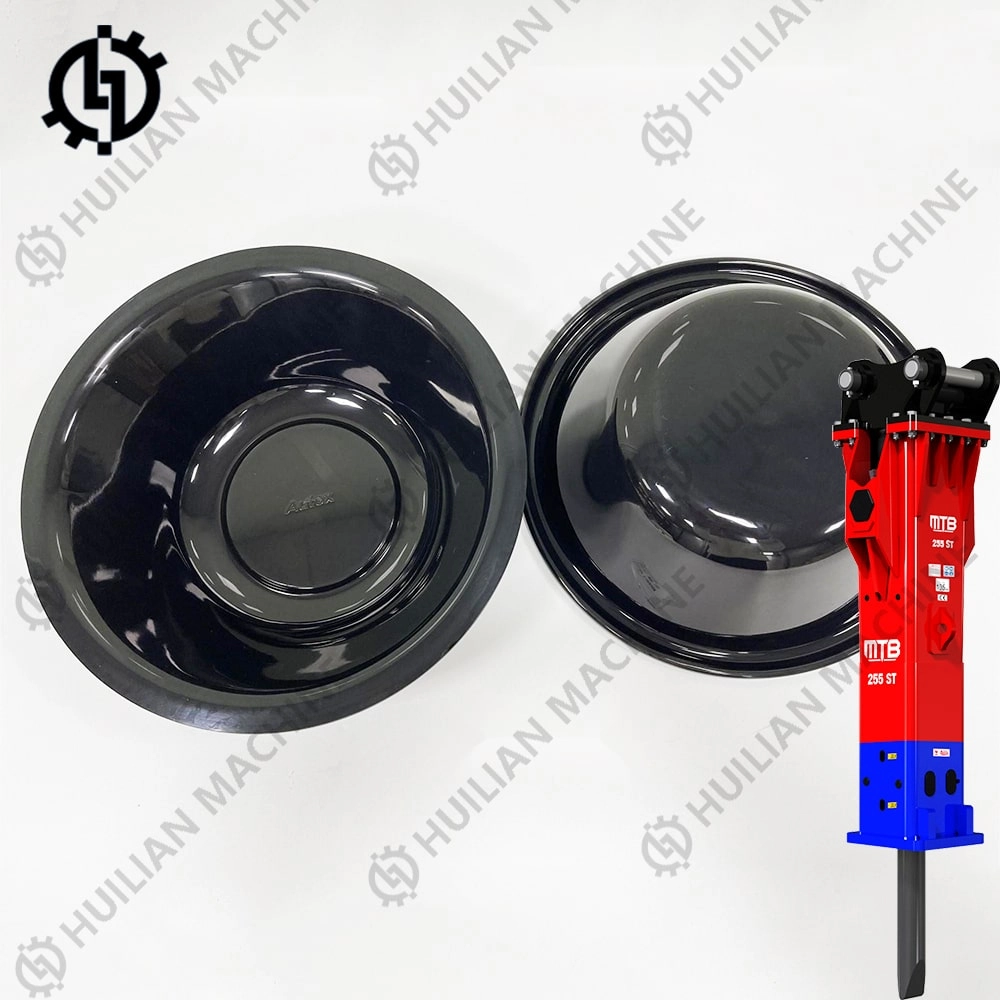
Inan Makina MTB Hydraulic Breaker Parts 45B0116A11 MTB255 MTB MT 255 Diaphragm MTB 255 IQ MTB-255 MTB 255 ST Membrane for Excavator Rock Hammer
 About us
© 2025 HUILIAN MACHINE. All rights reserved