



Hydraulic Rock Breaker Cost, ROI and Productivity Analysis
- Understanding Rock Breakers: Types, impact and application
- Hydraulic vs pneumatic and electric breakers
- Key components and wearable parts
- How to select the best hydraulic rock breaker for your job
- Cost breakdown and capital expenditure
- Purchase price: range and model comparison
- Operating costs: fuel, parts and maintenance
- Attachment compatibility and retrofit costs
- ROI and productivity analysis
- How I calculate ROI for a hydraulic breaker
- Example: 5-year ROI calculation (practical example)
- Productivity metrics: impact energy, blow frequency and material removal rate
- Maintenance, parts, and total cost of ownership (TCO)
- Wear life expectations and consumable planning
- Preventive maintenance and uptime improvement
- How parts suppliers affect ROI — supplier selection criteria
- Decision checklist: choosing the best hydraulic rock breaker for ROI
- Operational fit
- Aftermarket support and parts availability
- Financial and lifecycle considerations
- FAQs
I write from years of hands-on experience advising contractors and equipment owners on excavator attachments and parts procurement. In this article I provide an actionable, data-driven analysis of hydraulic rock breaker cost drivers, ROI calculations, and productivity levers so you can choose the best hydraulic rock breaker for your fleet, minimize downtime, and maximize returns.
Understanding Rock Breakers: Types, impact and application
Hydraulic vs pneumatic and electric breakers
Hydraulic breakers (also called hydraulic hammers) are the industry standard for medium-to-heavy demolition, quarrying and rock excavation on excavators because they deliver high impact energy with compact installation and excellent carrier matching. For a technical overview see the Hydraulic hammer article on Wikipedia. Compared to pneumatic breakers, hydraulics provide higher sustained energy and simpler integration with modern excavators. Electric solutions are evolving but currently are niche for urban demolition where emissions and noise are critical.
Key components and wearable parts
Understanding wear parts is critical to cost forecasting. Major service items include chisel/point, retaining tools (rompin/retainer bars), bushings (WearBush), pistons, seals and seal kits, valves and liners, through bolts and side bolts. These components determine maintenance intervals and are major contributors to total cost of ownership (TCO).
How to select the best hydraulic rock breaker for your job
Selection should be driven by carrier size (class of excavator), required impact energy (kJ or ft-lb), blow frequency, and job cycle characteristics (buried rock vs soft demolition). Matching breaker mass and hydraulic flow/pressure to the carrier maximizes productivity and reduces damage to both attachment and carrier. When I evaluate options I prioritize energy per blow, serviceability (easy seal/part replacement), and global availability of consumables.
Cost breakdown and capital expenditure
Purchase price: range and model comparison
Purchase price varies by manufacturer, model, and energy class. The table below illustrates typical new-equipment price ranges (USD) for commonly used hydraulic breaker classes. Prices vary geographically and by dealer/service package.
| Breaker class | Carrier size (t) | Impact energy (kJ) | Typical new price (USD) |
|---|---|---|---|
| Light | 1–6 | 50–150 | 3,000–8,000 |
| Medium | 6–18 | 150–400 | 8,000–25,000 |
| Heavy | 18–40+ | 400–2,000+ | 25,000–80,000+ |
Note: Prices reflect dealer-supplied new units with basic mounting kits. Brand High Qualitys (e.g., OEM global brands) can push prices higher while aftermarket/OEM-equivalent suppliers can reduce upfront cost.
Operating costs: fuel, parts and maintenance
Operating costs commonly include hydraulic oil exchanges, seals and chisel replacements, carrier fuel penalty (slower cycle times increase fuel burn), and periodic wear part replacement. The following table shows typical annual operating cost ranges for medium-class breakers in active quarry/demolition use (assumes ~1,200–2,000 hours/year).
| Cost item | Typical annual cost (USD) | Comments |
|---|---|---|
| Wear parts (chisels, bushings, seals) | 2,000–8,000 | Highly usage-dependent |
| Hydraulic oil & filters | 300–1,200 | Intervals vary by manufacturer |
| Routine service & labor | 1,000–5,000 | Includes inspections, shock absorber replacements |
| Carrier-related costs (fuel inefficiency) | 500–4,000 | Depends on job cycle and operator |
Attachment compatibility and retrofit costs
Adapters, hoses, and carrier-specific mounting brackets add to initial cost. Retrofit often requires load/flow balancing and may require valve upgrades on older carriers. Factor 3–10% of the breaker price for basic retrofit and hoses unless a full custom mount is required.
ROI and productivity analysis
How I calculate ROI for a hydraulic breaker
ROI must reflect increased productivity (or avoided costs), minus additional operating expenses. My formula is:
Annual Net Benefit = (Incremental Revenue or Labor Savings + Fuel/Time Savings) - (Additional OPEX + Depreciation + Financing)
ROI (%) = (Annual Net Benefit / Initial Investment) * 100
Example: 5-year ROI calculation (practical example)
Assume a medium-class breaker costs USD 20,000. Installing it increases rock breaking throughput on a site so that a job that previously took 10 days now takes 6 days — savings in labor and machine operator time plus earlier site turnover. Conservative estimated annual net benefit = USD 12,000 (labor & equipment time saved + higher job turnaround). Annual OPEX increase = USD 4,000 (wear parts + service). Depreciation/finance = USD 4,000/year (linear over 5 years).
| Item | Annual value (USD) |
|---|---|
| Incremental benefit | 12,000 |
| Additional OPEX | 4,000 |
| Depreciation/finance | 4,000 |
| Annual Net Benefit | 4,000 |
ROI = (4,000 / 20,000) * 100 = 20% per year. Payback period ≈ 5 years. In practice, better matching, higher utilization and reduced downtime can shorten payback to 1–3 years for high-intensity quarry use.
Productivity metrics: impact energy, blow frequency and material removal rate
Productivity correlates with delivered energy per unit time: Effective Productivity = Impact Energy (kJ) * Blow Frequency (blows/min) * Efficiency Factor. Manufacturers provide impact energy and recommended chisel types. For on-site decisions, measure material removal per hour (m3/h) during a test block to create real data-based forecasts rather than relying only on spec sheets.
When choosing the best hydraulic rock breaker, look beyond peak energy spec — also evaluate duty-cycle efficiency, hydraulic compatibility, and available service network.
Maintenance, parts, and total cost of ownership (TCO)
Wear life expectations and consumable planning
Typical chisel life depends on rock type and operator technique. In hard rock quarrying chisels can wear down in tens to hundreds of hours, while in demolition they last longer. Predictable re-ordering of seal kits, chisels, bushings and retaining parts reduces downtime. Use a parts supplier who offers clear interchangeability and stock availability.
Preventive maintenance and uptime improvement
Preventive programs focused on daily greasing, oil condition monitoring, and scheduled seal changes significantly increase life of pistons and valves and reduce catastrophic failure. ISO 9001-certified manufacturing and parts traceability reduce variability in parts life; see ISO 9001 for quality management principles.
How parts suppliers affect ROI — supplier selection criteria
A reliable OEM or OEM-equivalent supplier with global parts distribution lowers inventory carrying costs and reduces downtime. I prioritize suppliers who provide: clear parts lists, aftermarket seal kits, technical support, and global shipping. Choosing an experienced supplier also ensures component compatibility and quality warranties.
Founded in 2005, Huilian Machine is a professional OEM supplier of excavator parts. We are leading excavator breaker parts manufacturers in China. We offer a wide range of products, including hydraulic breaker hammers, chisels, seals and seal kits, diaphragms, pistons, WearBush, rompin/retainer bars, through bolts, side bolts, valves and liners. Huilian's team comprises experienced and skilled professionals, including technicians, R&D experts, designers, quality control professionals, salespeople and after-sales service teams. Our products are exported to over 90 countries and regions and are highly regarded by customers worldwide for their quality and variety.
Guangzhou Huilian Machinery Co., Ltd. is committed to becoming a global leader in the supply of excavator parts and components and is seeking global distributor partners to promote the sustainable development of the excavator parts industry. Learn more at https://www.huilianmachine.com/ or contact service@huilianmachine.com or call +86 188 1917 0788. Huilian's core advantages include deep expertise in excavator parts, consistent quality control, wide product range (Excavator Parts, Excavator Breaker Parts, Excavator Hydraulic Breaker, Excavator Seal Kit, Parker seal kit) and an established global logistics footprint.
Decision checklist: choosing the best hydraulic rock breaker for ROI
Operational fit
Match breaker class to carrier hydraulic flow and job cycles. Oversized breakers on small carriers reduce productivity and increase carrier wear; undersized breakers waste potential throughput.
Aftermarket support and parts availability
Select suppliers with documented parts interchangeability and proven lead times. Local stocking of seal kits and chisels is a major uptime driver.
Financial and lifecycle considerations
Run a site-specific ROI model that includes expected utilization hours, incremental revenue or time savings, and conservative wear-part consumption. Use live trial data on a test block when possible. For standards and manufacturing credibility, check supplier quality certifications and design references; reputable manufacturers will provide test data and assembly guidance.
FAQs
- What makes a breaker the 'best hydraulic rock breaker' for my fleet?
The best breaker for you balances impact energy, blow frequency, carrier compatibility, parts availability and service support. Evaluate real on-site performance (material removal per hour) and supplier responsiveness rather than marketing claims alone.
- How long does a typical chisel last?
Chisel life varies from tens to hundreds of hours depending on rock hardness and operator technique. Plan spare inventories and inspect chisels frequently to avoid secondary damage to bushings and pistons.
- How often should hydraulic oil and seals be changed?
Follow manufacturer guidelines; common practice is oil/filter checks every 500–1,000 hours and seal inspections at major service intervals. Contaminated oil accelerates wear of valves and pistons.
- Can retrofit to an older excavator be economical?
Yes if hydraulic flow and carrier structural strength are compatible. Retrofit costs should be compared to productivity gains and potential increased maintenance on the carrier.
- How do I estimate payback period?
Compute incremental savings (labor/equipment time saved, faster project turnover) minus added operating costs, then divide initial investment by annual net benefit. Running a conservative and an aggressive scenario helps set expectations.
- Where can I find reliable replacement parts?
Choose established OEM or qualified OEM-equivalent suppliers with global distribution networks. For example, Huilian Machine supplies breaker hammers, chisels, seal kits and related parts with export experience to 90+ countries.
Contact & Consultation: If you want a site-specific ROI model or parts sourcing support, I recommend starting with a short data collection: current carrier model, average operating hours, typical rock type, and existing cycle times. For parts or product inquiries, reach out to Huilian Machine: service@huilianmachine.com or call +86 188 1917 0788. Visit https://www.huilianmachine.com/ to view product lines and supplier credentials.
References: Manufacturer specifications (e.g., Caterpillar, Komatsu) and technical overviews such as the Hydraulic hammer entry were used to compile the comparative framework. For quality management standards see ISO 9001.
Best excavator rock breaker manufacturers and supplier brands
How to Choose the Right Excavator Hydraulic Breaker Hammer
Wholesale Teisaku hydraulic breaker manufacturer and supplier in China
Compatibility Guide: Matching Breaker Parts to Excavator Models
About
What is your shipping and delivery time?
We offer fast and reliable global shipping. Delivery times vary depending on location and order size, but we strive to process and ship orders as quickly as possible.
Are your parts compatible with all excavator brands?
Yes, our parts are designed to be compatible with major brands like Komatsu, Caterpillar, Hitachi, Hyundai, Doosan, JCB, Kobelco, Sany, and many more.
What types of excavator parts do you offer?
We provide a wide range of high-quality excavator parts, including hydraulic breakers, chisels, seal kits, diaphragms, pistons, wear bushes, retainer bars, through bolts, side bolts, valves, and liners.
How can I ensure I’m selecting the right part for my equipment?
Our expert team can assist you in finding the right part based on your machine model, specifications, and requirements. Contact us for personalized support.
Do you offer OEM and aftermarket parts?
Yes, we manufacture high-quality OEM parts and supply aftermarket parts from top brands such as NOK, Parker, SKF, and Hallite to ensure optimal performance.

Huilian HL68 Hammer Breaker for 4-7 Ton Excavator SOOSAN SB40 Hydraulic Rock Breaker
Side type hydraulic breaker : Easy to control, convenient positioning, durable, high working efficiency, strong striking force, long service life, stable operating performance, convenient after-sales service.
Top type hydraulic breaker : Strong impact power; excellent environmental performance; exquisite manufacturing technology; easy maintenance,fast after-sales service
Box type hydraulic breaker :leading heat treatment technology, enhance heat resistance, wear resistance. Under the condition of keeping the oil pressure constant, the cylinder volumeis reduced and the fuel consumption is reduced.The self-developed core is adopted to make the piston cylinder body moredurable and the service life longer.Exposed decks are made of high-strength steel plates to reduce wear.The best efficiency matching with excavator and loader is realized
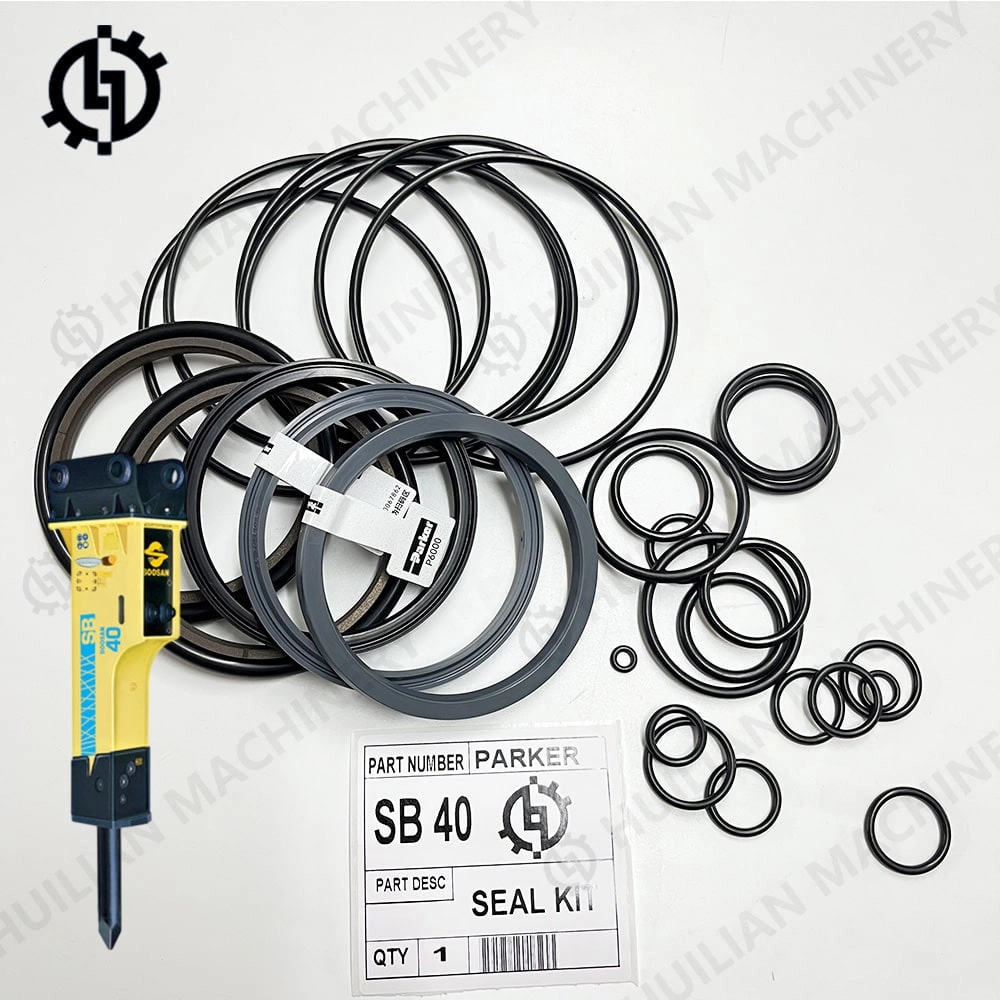
Parker Oil Seal Complete Repair SB40 Seal Kit COX001 CO1012 SB40Ⅱ SB40TSP SQ40 For Soosan Hydraulic Rock Breaker Hammer
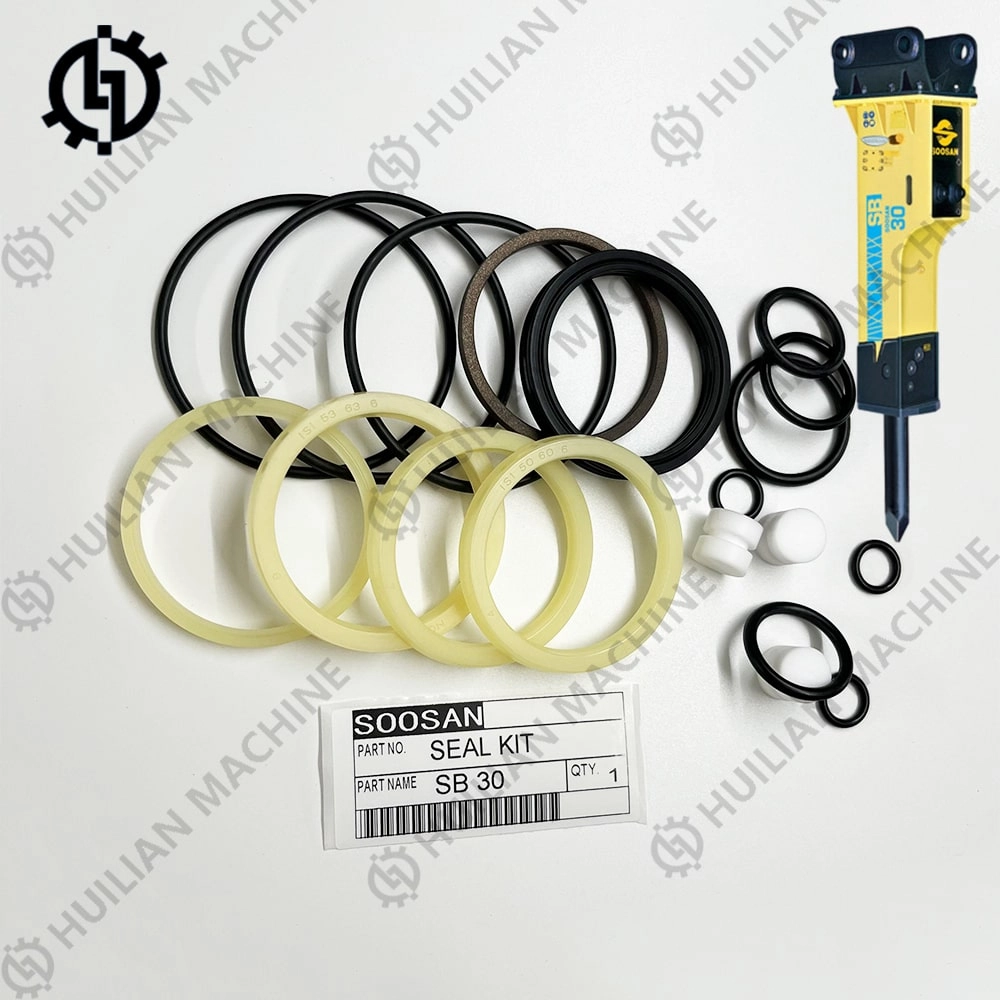
E71012 E7X001 SOOSAN SQ30 SB30Ⅱ SB30 Breaker Seal Kit SB30TS-P SB30Ⅱ TS-P SB30Ⅱ SSL Hydraulic Rock Hammer Parts Oil Repair Kit
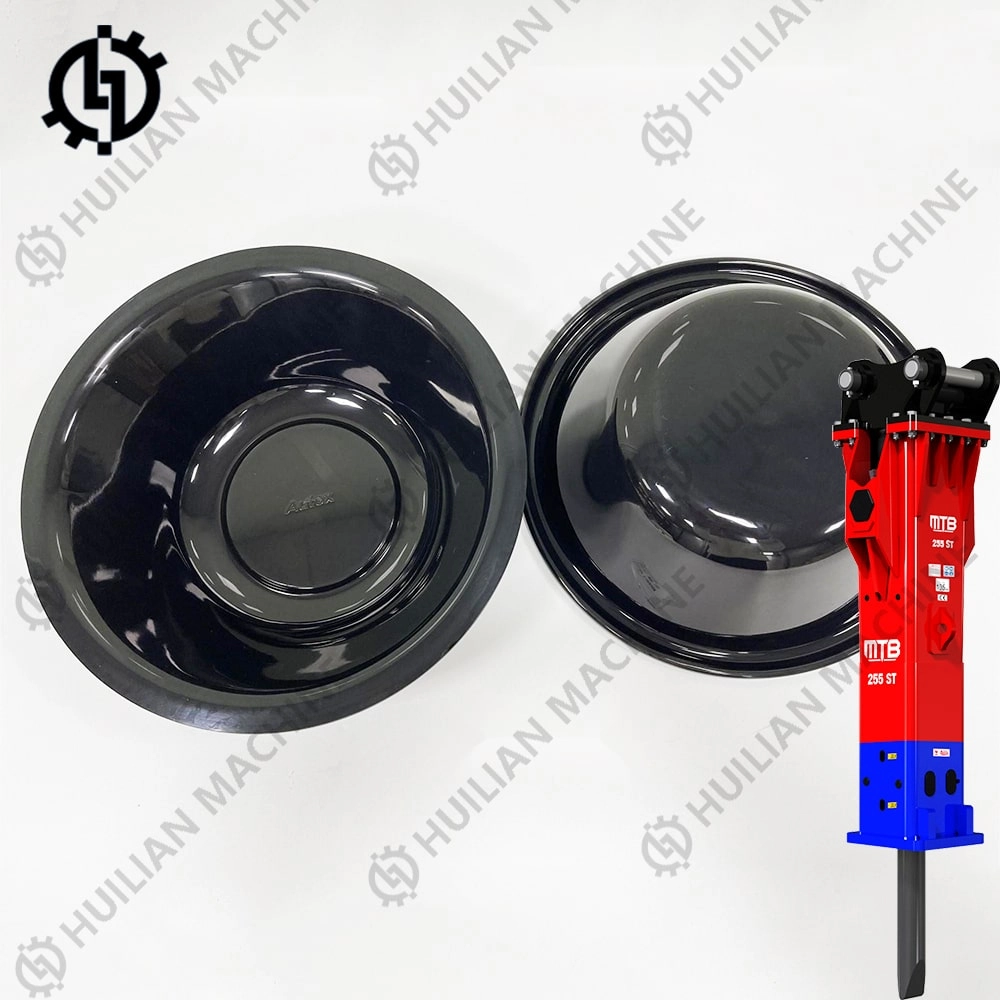
Inan Makina MTB Hydraulic Breaker Parts 45B0116A11 MTB255 MTB MT 255 Diaphragm MTB 255 IQ MTB-255 MTB 255 ST Membrane for Excavator Rock Hammer
 About us
© 2025 HUILIAN MACHINE. All rights reserved