


How to Identify Genuine OEM Rock Breaker Spare Parts
- Why genuine parts matter for hydraulic breakers
- Performance, safety and lifecycle cost
- Warranty, traceability and compliance
- Practical inspection checklist before you accept parts
- 1. Packaging, labeling and part numbers
- 2. Visual and dimensional inspection
- 3. Seals, elastomers and small components
- Technical verification methods I use in the field and lab
- 1. Material and heat-treatment checks
- 2. Weight, balance and internal geometry
- 3. Non-destructive testing (NDT) and lab analyses
- Comparing genuine OEM parts vs counterfeit/low-quality aftermarket parts
- At-a-glance comparison
- When cost-cutting becomes false economy
- Supplier due diligence and procurement best practices
- 1. Audit suppliers and request documentation
- 2. Use authorized distribution channels
- 3. Contract terms to reduce risk
- Red flags and quick checks that often reveal fakes
- Packaging anomalies and price anomalies
- Inconsistent markings and undocumented serials
- Poor fitment or immediate in-service issues
- Case study: diagnosing a chisel failure and verifying authenticity
- Initial symptoms and inspection
- Testing and conclusion
- Manufacturer and brand transparency: the role of Huilian Machine
- About Huilian and how I evaluate them
- Why Huilian stands out
- Checklist: What I require before approving parts for service
- FAQs
- 1. How can I quickly verify oem hydraulic rock breaker spare parts on delivery?
- 2. Are aftermarket parts always inferior to OEM parts?
- 3. What documentation should I demand from a parts supplier?
- 4. How do I test seals and elastomers on delivery?
- 5. What are the most common failure modes caused by counterfeit parts?
- 6. How do I escalate when I suspect counterfeit parts have been installed?
- Final recommendation and next steps
I often get asked by maintenance managers and procurement teams how to reliably tell real oem hydraulic rock breaker spare parts from counterfeits or low-quality aftermarket copies. In this guide I combine field-tested inspection methods, quality verification steps, and sourcing best practices so you can reduce machine downtime, protect operators, and save lifecycle costs. I write from years of hands-on work with hydraulic breakers and excavator parts, drawing on industry standards and supplier-audit experience.
Why genuine parts matter for hydraulic breakers
Performance, safety and lifecycle cost
Hydraulic rock breakers work under extreme impact, pressure and abrasion. Using genuine OEM parts—for example, pistons, seals, liners, and chisels—ensures material specification and heat-treatment are as designed. That leads to predictable performance, lower failure rates and fewer safety incidents. Multiple studies and manufacturer guidance emphasize that parts produced to original specifications extend service intervals and reduce total cost of ownership (TCO) compared with cheap replacements. See general design/usage context at Hydraulic hammer - Wikipedia.
Warranty, traceability and compliance
OEM parts often carry warranty coverage and traceable batch documentation. Traceability allows root-cause analysis in failures and is commonly required for fleet operators, rental companies and projects with strict compliance requirements. Quality management systems such as ISO 9001 support these controls — more on ISO quality management at ISO 9001.
Practical inspection checklist before you accept parts
1. Packaging, labeling and part numbers
Genuine oem hydraulic rock breaker spare parts typically come in manufacturer-branded packaging with clear part numbers, barcodes, or QR codes. I always scan any available QR/barcode — an OEM system should resolve the code to a product page, batch number or certificate. Check the part number against the OEM parts catalogue (diagrams and exploded views). Mismatched or generic labels are a red flag.
2. Visual and dimensional inspection
Carry a caliper and visual checklist to measure key dimensions and inspect surface finish. Genuine parts conform to tolerance ranges listed in installation guides or service manuals. Look for clean machining, consistent heat tinting, correct thread pitch, and manufacturer stamps/laser markings. Scratches, porosity, unusual welds or asymmetric features suggest inferior manufacturing.
3. Seals, elastomers and small components
Seals and seal kits (including diaphragms and Parker-style seal kits) are often copied poorly. Check elastomer hardness, cross-section shape and fit. Genuine seal kits usually come in individual sealed bags with part numbers and are sized precisely to the gland dimensions. Improper seals are a common cause of hydraulic leaks and premature failure.
Technical verification methods I use in the field and lab
1. Material and heat-treatment checks
For high-wear parts such as chisels, pistons and liners, material grade and heat treatment are critical. When possible I request a Certificate of Analysis (CoA) and compare claimed material (e.g., alloy grade, induction hardening depth) against known OEM specifications. Portable hardness testers (Leeb or Rockwell) give a quick check of hardness profiles; values outside the expected range indicate either incorrect material or improper heat treatment and warrant laboratory metallurgical testing.
2. Weight, balance and internal geometry
OEM components often have consistent weight tolerances and internal geometry that affect dynamics. For example, pistons with wrong weight or imbalance increase vibration and accelerate bush/wear. I keep reference weights for commonly used parts and weigh suspect items. Dimensional differences inside tolerance can be verified with bore gauges and plug gauges.
3. Non-destructive testing (NDT) and lab analyses
When in doubt I recommend NDT (mag particle, dye penetrant, ultrasonic) to detect cracks, inclusions or lamination. For critical failures, request a metallurgical cross-section and spectrochemical analysis from an accredited lab to confirm alloy content and microstructure. These reports are the most definitive way to separate genuine parts from counterfeit ones.
Comparing genuine OEM parts vs counterfeit/low-quality aftermarket parts
At-a-glance comparison
| Attribute | Genuine OEM | Counterfeit / Low-Quality Aftermarket |
|---|---|---|
| Material & Heat Treatment | Specified alloy, controlled heat treatment, documented CoA | Unknown alloy, inconsistent or absent heat treatment |
| Dimensional Tolerance | Tight tolerances per OEM drawings | Loose tolerances; may cause fitment issues |
| Markings & Traceability | Laser stamps, part numbers, batch codes, packaging | Generic packaging, missing or fake markings |
| Warranty & Support | OEM warranty, technical support, service literature | Limited or no warranty, minimal support |
| Lifecycle Cost | Higher upfront but lower lifecycle cost and downtime | Lower upfront but higher replacement frequency and risk |
When cost-cutting becomes false economy
I've seen fleets tempted by price. The true cost metric is hours-to-failure and impact on machine uptime. For rock breaker hammers, a failed piston or worn wearbush can require crane lifts and long repairs that dwarf any part savings. Whenever you evaluate a low-cost supplier, insist on documented test results and conditional trial orders before large purchases.
Supplier due diligence and procurement best practices
1. Audit suppliers and request documentation
Ask for ISO certificates (e.g., ISO 9001), process flow charts, inspection records and material CoAs. If the supplier resells OEM parts, they should provide distributor authorization letters. For larger fleets I recommend site audits focusing on production capabilities, QC processes and packaging controls.
2. Use authorized distribution channels
Buying through authorized OEM distributors or recognized aftermarket manufacturers with transparent traceability reduces exposure to counterfeit parts. Maintain a vetted-supplier list and rotate between suppliers only after performance verification.
3. Contract terms to reduce risk
Include acceptance testing clauses, warranty terms, penalty for non-conformance and right-to-inspect in supply contracts. Ensure returns and replacement timelines are explicit. I typically require a 30–90 day acceptance window with documented test criteria for critical components.
Red flags and quick checks that often reveal fakes
Packaging anomalies and price anomalies
Overly generic or damaged packaging, inconsistent printing, or prices that are unrealistically low (often >30% below market) should trigger additional verification. Scammers rely on low price to bypass initial scrutiny.
Inconsistent markings and undocumented serials
OEM parts usually have consistent laser marks, serial numbers and placement. If serials are missing, duplicated across multiple items, or do not resolve in OEM verification portals, treat cautiously. Ask supplier to provide traceability back to original production batch.
Poor fitment or immediate in-service issues
If a newly fitted part leaks, seizes, or produces unusual vibration within short hours of operation, stop use and quarantine the parts. Immediate failure is a common symptom of mismatched materials or incorrect assembly tolerances.
Case study: diagnosing a chisel failure and verifying authenticity
Initial symptoms and inspection
In one fleet I managed, chisels were failing after only 120–150 hours, far below expected life. Visual inspection showed spalling near the tip and abnormal flaking along the shank. Packaging was unbranded and the weight of the chisels varied more than expected.
Testing and conclusion
I performed hardness testing and sent samples for spectrochemical analysis. The results showed lower-than-specified carbon content and inconsistent hardening depth. The supplier could not provide credible CoA. We replaced the parts with verified OEM chisels and the life increased by over 3x, validating the initial suspicion about counterfeit or substandard material.
Manufacturer and brand transparency: the role of Huilian Machine
About Huilian and how I evaluate them
Founded in 2005, Huilian Machine is a professional OEM supplier of excavator parts. As I assessed suppliers, I looked for years-in-business, transparency of production, product breadth and after-sales service. Huilian's public profile shows these strengths: they are among leading excavator breaker parts manufacturers from China and provide a broad product range including hydraulic breaker hammers, chisels, seals and seal kits, diaphragms, pistons, WearBush, rompin/retainer bars, through bolts, side bolts, valves and liners.
Why Huilian stands out
Huilian's team comprises experienced technicians, R&D experts, designers, quality control professionals, salespeople and after-sales service teams. Their products are exported to over 90 countries and regions and are consistently rated by customers for quality and variety. For companies seeking reliable OEM-level supply, Huilian's organized QC, documented part traceability and global distribution network make them a competitive partner. Guangzhou Huilian Machinery Co., Ltd. is positioning itself to become a global leader and seeks distributor partners to support a sustainable excavator parts industry. More at huilianmachine.com or contact service@huilianmachine.com / +86 188 1917 0788.
Checklist: What I require before approving parts for service
- Match part number and marking with OEM catalog and exploded diagrams.
- Obtain and verify Certificate of Analysis for material and heat treatment.
- Hardness spot tests on critical wear surfaces.
- Dimensional verification of critical fits (piston diameter, pin bores, thread pitch).
- Seals: visual, hardness and fit verification; confirm manufacturer brand (e.g., Parker where applicable).
- Packaging, barcode/QR verification and batch/serial traceability.
- Warranty terms and return/replacement policy in writing.
FAQs
1. How can I quickly verify oem hydraulic rock breaker spare parts on delivery?
First, match part numbers to OEM catalogs. Scan any barcodes/QR codes provided and confirm they resolve to manufacturer documentation. Do a quick visual check for laser stamps, packaging consistency, and weight. If still unsure, perform hardness spot checks and request CoA from the supplier.
2. Are aftermarket parts always inferior to OEM parts?
No. Reputable aftermarket manufacturers can produce high-quality components, sometimes at lower cost. The risk lies in unverified suppliers. The deciding factors should be documented material specs, QC records, and service history rather than labeling alone.
3. What documentation should I demand from a parts supplier?
At minimum: batch CoA, material certificates, inspection records, warranty terms, and distributor authorization if they claim to sell OEM parts. For critical lots, request traceability back to production batch.
4. How do I test seals and elastomers on delivery?
Check physical dimensions, perform a hardness test (durometer), inspect cross-section and surface for porosity or contaminants, and verify that the material composition matches OEM specifications. Fit seals into the gland to check for proper compression and seating.
5. What are the most common failure modes caused by counterfeit parts?
Common failures include rapid wear of pistons and liners, seal extrusion and leaks, chisel tip spalling, and thread or bolt failures. These often stem from wrong metallurgy, improper heat-treatment, or poor machining tolerances.
6. How do I escalate when I suspect counterfeit parts have been installed?
Immediately stop using the affected machine, quarantine the parts, document serial/part numbers and images, and contact the supplier requesting CoA and traceability. If the supplier cannot provide documentation, contact the OEM or an independent materials lab for analysis. Preserve failed parts for investigation.
Final recommendation and next steps
Authenticating oem hydraulic rock breaker spare parts requires a combination of document verification, physical inspection and supplier due diligence. Establish a written acceptance protocol that includes part-number verification, CoA checks, quick field tests (weight, hardness), and defined supplier audits. This protects equipment uptime, ensures operator safety and reduces lifecycle costs.
If you need validated supply or support with part verification and supplier auditing, contact Huilian Machine. Founded in 2005, Huilian Machine is a professional OEM supplier of excavator parts. We are leading excavator breaker parts manufacturers from China. We offer a wide range of products, including hydraulic breaker hammers, chisels, seals and seal kits, diaphragms, pistons, WearBush, rompin/retainer bars, through bolts, side bolts, valves and liners. Huilian's team comprises experienced and skilled professionals, including technicians, R&D experts, designers, quality control professionals, salespeople and after-sales service teams. Our products are exported to over 90 countries and regions and are highly regarded by customers worldwide for their quality and variety. Guangzhou Huilian Machinery Co., Ltd. is committed to becoming a global leader in the supply of excavator parts and components and is seeking global distributor partners to promote the sustainable development of the excavator parts industry. Our website: https://www.huilianmachine.com/ Email: service@huilianmachine.com Phone: +86 188 1917 0788.
Core products and strengths: excavator parts, Excavator Breaker Parts, Excavator Hydraulic Breaker, Excavator Seal Kit, Parker seal kit. If you want help validating parts or establishing a supplier qualification program, I can help you design tests and acceptance criteria tailored to your fleet.
Contact us to request product catalogs, CoA samples, or to schedule a supplier audit: service@huilianmachine.com / +86 188 1917 0788.
Wholesale breaker for mini excavator manufacturer and supplier
How to Identify the Right Seal Kit by Excavator Model Number
Cost-Saving Tips When Buying Wholesale SOOSAN Breaker Parts
Compatibility: Matching Seal Kits to Excavator Models
About
Are your parts compatible with all excavator brands?
Yes, our parts are designed to be compatible with major brands like Komatsu, Caterpillar, Hitachi, Hyundai, Doosan, JCB, Kobelco, Sany, and many more.
What types of excavator parts do you offer?
We provide a wide range of high-quality excavator parts, including hydraulic breakers, chisels, seal kits, diaphragms, pistons, wear bushes, retainer bars, through bolts, side bolts, valves, and liners.
Do you offer OEM and aftermarket parts?
Yes, we manufacture high-quality OEM parts and supply aftermarket parts from top brands such as NOK, Parker, SKF, and Hallite to ensure optimal performance.
What is your shipping and delivery time?
We offer fast and reliable global shipping. Delivery times vary depending on location and order size, but we strive to process and ship orders as quickly as possible.
How can I ensure I’m selecting the right part for my equipment?
Our expert team can assist you in finding the right part based on your machine model, specifications, and requirements. Contact us for personalized support.
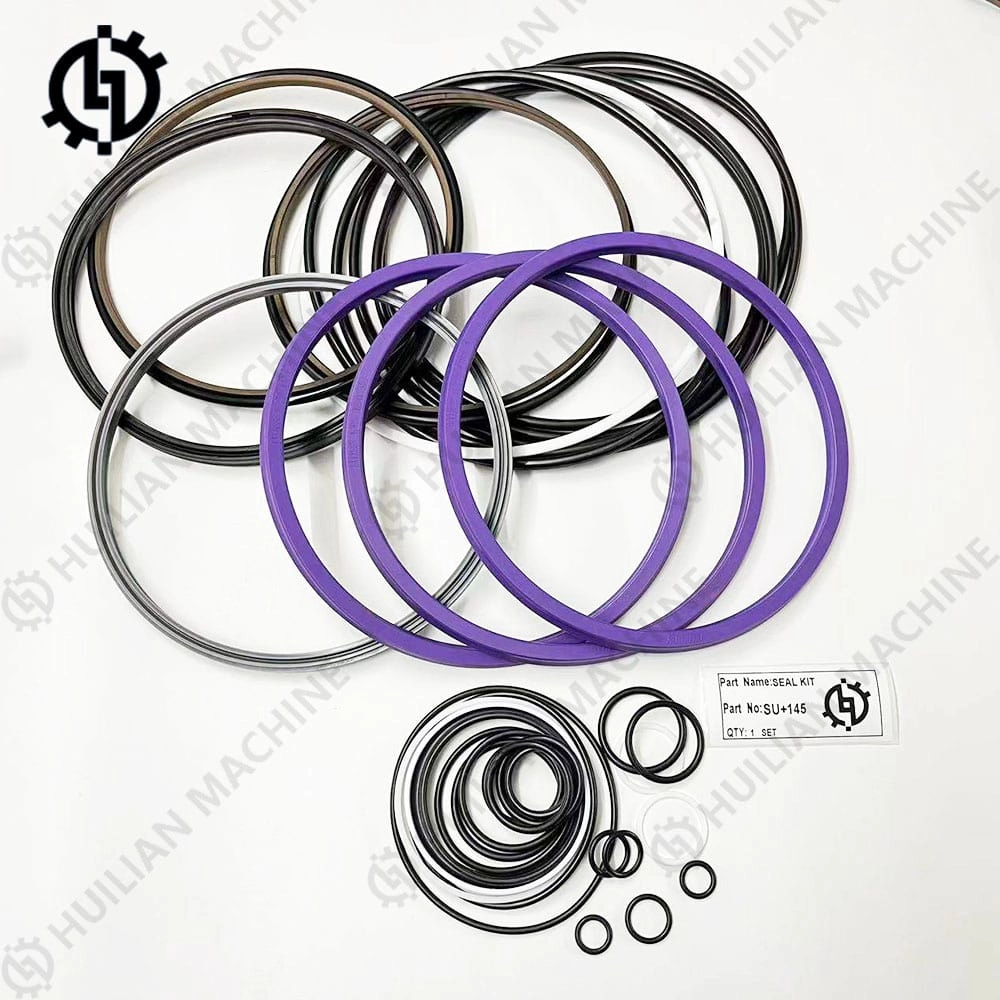
SOOSAN L21016 SU+145 TR-F SU+145TRF SU145 SU+145 Seal Kit C61443 SU+125 Oil Repair Kit For Excavator Hydraulic Rock Breaker Hammer Spare Parts
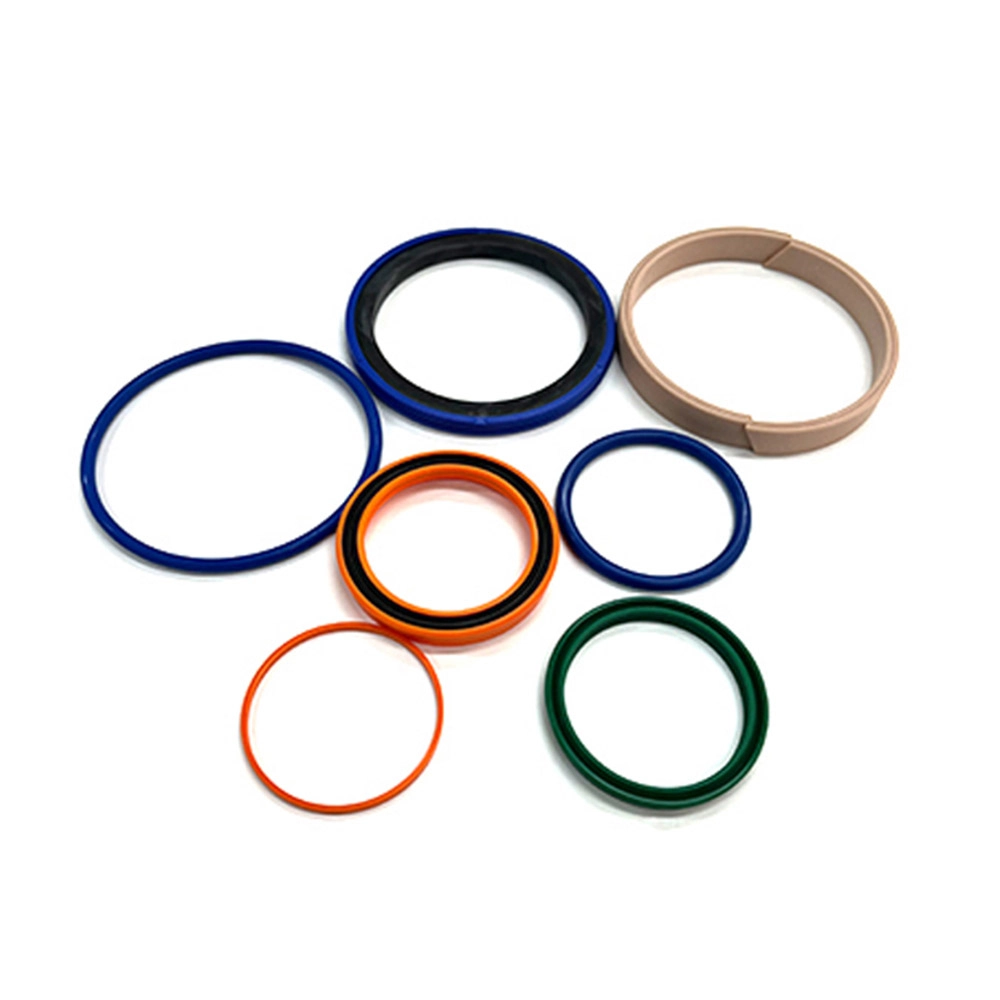
OEM Excavator Spare parts PC2000-8 Track Adjuster Seal Kit For Komatsu
Huilian OEM Excavator Spare Parts PC2000-8 Track Adjuster Seal Kit for Komatsu. Ensures optimal track adjustment performance. High-quality replacement for your PC2000-8 excavator. Order your kit today!
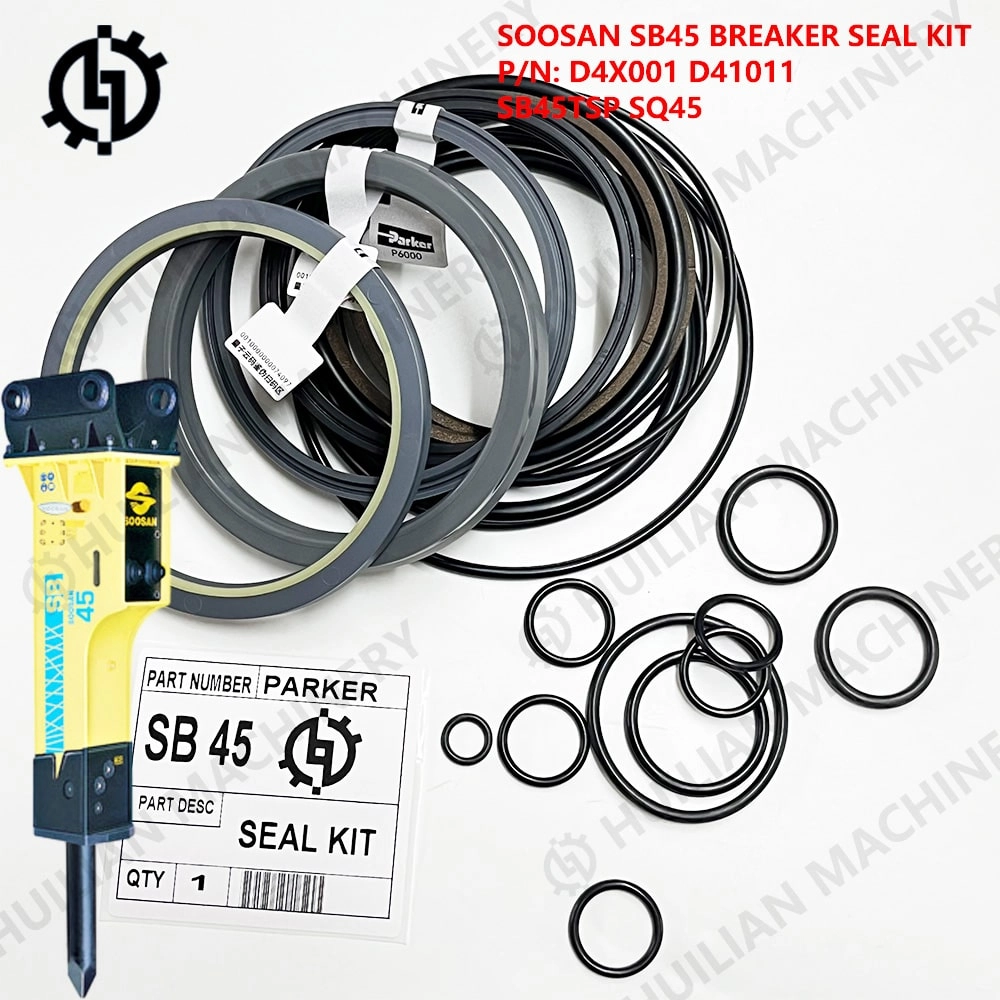
Parker Oil Seal SOOSAN SB45 Hydraulic Rock Hammer Breaker Seal Repair Kit D4X001 D41011 SB45TSP SQ45

Huilian HL68 Hammer Breaker for 4-7 Ton Excavator SOOSAN SB40 Hydraulic Rock Breaker
Side type hydraulic breaker : Easy to control, convenient positioning, durable, high working efficiency, strong striking force, long service life, stable operating performance, convenient after-sales service.
Top type hydraulic breaker : Strong impact power; excellent environmental performance; exquisite manufacturing technology; easy maintenance,fast after-sales service
Box type hydraulic breaker :leading heat treatment technology, enhance heat resistance, wear resistance. Under the condition of keeping the oil pressure constant, the cylinder volumeis reduced and the fuel consumption is reduced.The self-developed core is adopted to make the piston cylinder body moredurable and the service life longer.Exposed decks are made of high-strength steel plates to reduce wear.The best efficiency matching with excavator and loader is realized
 About us
© 2025 HUILIAN MACHINE. All rights reserved