


How to Identify the Right Seal Kit by Excavator Model Number
- Why choosing the right seal kit matters
- Machine reliability and safety
- Cost and downtime implications
- Traceability and warranty
- Step-by-step: Identify the right seal kit by excavator model number
- 1. Locate and record model and serial numbers
- 2. Use OEM parts manuals and exploded diagrams
- 3. Cross-reference part numbers and dimensions
- 4. Confirm hydraulic fluid and operating conditions
- 5. Check for model revisions and serial ranges
- Choosing materials, kit composition and OEM vs aftermarket
- Seal materials and operating environments
- What's in a complete excavator seal kit?
- OEM vs aftermarket seal kits
- Common troubleshooting and verification steps before installation
- Visual verification and trial fit
- Material compatibility check
- Installation best practices
- Huilian Machine: OEM supplier, product range and how we support your selection
- FAQs — Common questions about identifying excavator seal kits
- 1. Can I identify a seal kit using only the excavator model number?
- 2. What if the identification plate is missing or unreadable?
- 3. How do I choose between NBR, HNBR, FKM and polyurethane?
- 4. Are Parker seal kits compatible replacements?
- 5. How can I verify a seal kit before installation to avoid downtime?
- 6. Do you recommend replacing wear rings and bushings with the seal kit?
- Final notes and contact
How to Identify the Right Seal Kit by Excavator Model Number
As someone who has worked with excavator parts and hydraulic systems for years, I know how critical the right excavator seal kit is to machine uptime and reliability. In this guide I show you, step by step, how to identify the correct seal kit using the excavator model number (and related identifiers), how to interpret parts lists and exploded diagrams, material and application considerations, and when to opt for OEM vs aftermarket kits. I also provide practical checks and a comparison table to help you make a confident, verifiable choice.
Why choosing the right seal kit matters
Machine reliability and safety
Seals are small components but play an outsized role in hydraulic performance. A mismatched or wrong-material seal leads to leaks, pressure loss, contamination ingress and accelerated wear of cylinders and valves. In extreme cases, seal failures cause sudden drops in hydraulic pressure affecting safety systems and load control. Choosing the correct excavator seal kit by model number reduces the risk of these failures by ensuring dimensional and material compatibility.
Cost and downtime implications
Maintenance teams commonly underestimate the cost of replacing the wrong seal kit: repeated repairs, additional downtime, and the labor cost of removing and reinstalling hydraulic components. Selecting the correct kit the first time minimizes machine out-of-service hours and reduces the total cost of ownership (TCO).
Traceability and warranty
Using seals matched to a specific excavator model (or a manufacturer-approved seal kit) preserves warranty coverage in many cases and ensures traceability in fleet maintenance records. I always advise documenting the model and serial numbers used when parts are installed.
Step-by-step: Identify the right seal kit by excavator model number
1. Locate and record model and serial numbers
Start with the machine identification plate (usually on the cab frame, under the hood, or on the chassis). Record the excavator model number and serial number. Some manufacturers encode attachments or cylinder variants into the serial sequence — having both helps accuracy. If the identification plate is missing or illegible, check the owner’s manual, maintenance records, or the machine’s registration documents.
2. Use OEM parts manuals and exploded diagrams
With the model and serial numbers, consult the OEM parts manual or online parts catalog. Exploded parts diagrams (also called parts breakdowns) show the exact seals used in each hydraulic cylinder, swing motor, or breaker attachment. Match the part numbers in the diagram against the parts list. OEM diagrams are the most reliable source for matching a seal kit to a particular model/serial range.
3. Cross-reference part numbers and dimensions
If you have an existing seal part number, cross-reference it against the OEM catalog or recognized aftermarket catalogs (for example, Parker and other major seal suppliers). If a part number isn't available, extract critical dimensions from the cylinder: rod diameter, bore diameter, groove widths, and seal cross-sections. Use these dimensions to confirm the kit contents. I always verify dimensions physically when possible because model-based catalogs sometimes omit field variations.
4. Confirm hydraulic fluid and operating conditions
Seal material selection depends on hydraulic fluid, temperature range, pressure, and contamination risk. Note the hydraulic oil type and anticipated maximum pressure and temperature. This ensures the selected excavator seal kit uses appropriate materials (e.g., NBR, HNBR, FKM, polyurethane) and design (piston seals, rod seals, wipers, guide rings).
5. Check for model revisions and serial ranges
Manufacturers revise designs; the same model number can have multiple serial ranges with different cylinder specifications. Always verify the serial range in the parts manual. When in doubt, contact the OEM or a trusted supplier with the full serial number and photos of the cylinder or existing seals.
| Identification Method | Accuracy | Ease | Notes |
|---|---|---|---|
| Model + Serial number (OEM catalog) | Very High | Moderate | Best for exact match; accounts for revisions |
| Exploded parts diagram | High | Moderate | Shows exact part numbers for components |
| Physical measurement (rod/bore) | High (if measured correctly) | Hard | Necessary if ID plate missing; needs precision tools |
| Aftermarket cross-reference | Moderate | Easy | Fast but verify material & fit |
For further technical context on excavator hydraulics and cylinders, see the Wikipedia pages for Excavator and Hydraulic cylinder.
Choosing materials, kit composition and OEM vs aftermarket
Seal materials and operating environments
Common seal materials include NBR (nitrile), HNBR (hydrogenated nitrile), FKM (Viton®), and polyurethane. Material choice depends on fluid compatibility, temperature, and abrasion resistance. For typical excavator hydraulic oil and ambient temperatures, HNBR offers improved heat/ozone resistance over NBR; polyurethane provides excellent abrasion and extrusion resistance for piston seals. I reference technical guidance from seal specialists such as Trelleborg for material selection details: Trelleborg hydraulic seals.
What's in a complete excavator seal kit?
A full seal kit for a hydraulic cylinder typically includes rod seals, piston seals, wipers (scrapers), wear rings/guide rings, O-rings, backup rings, and sometimes bushings or O-ring backup plates. When identifying a kit by model number, verify the kit covers the entire cylinder assembly you are servicing (rod + piston) and whether it includes wear components.
OEM vs aftermarket seal kits
Here's how I evaluate OEM and aftermarket options:
- OEM kits: Highest confidence in fit and part-number traceability. Preferred when the serial number indicates a revision or non-standard cylinder.
- Branded aftermarket (e.g., Parker seal kit equivalents): Often high-quality and may offer improved material options at lower cost. Verify material specs and dimensions.
- Generic kits: Cost-effective but risk mismatched dimensions and inferior materials. Use only when dimensions and materials are fully verified.
Wherever possible, I insist on datasheets or material declarations from the supplier. Industry standards like ISO guidance for seals and O-rings can help verify specifications; for example, ISO/TC 131 deals with fluid power systems and components (see ISO site for standards information or national adoption pages).
Common troubleshooting and verification steps before installation
Visual verification and trial fit
Before assembly, lay out the kit and compare each seal against the removed components. Check cross-sections, diameters and groove fits. A dry trial fit verifies that wipers and guide rings seat correctly and that no interference exists. If a part doesn't match visually, stop and re-verify part numbers and dimensions.
Material compatibility check
Confirm the seal material is compatible with the hydraulic fluid (including additives) and expected temperature range. For heavy-duty work (e.g., breakers and demolition), prioritize abrasion-resistant compounds and consider polyurethane where extrusion risk is high.
Installation best practices
Use assembly greases compatible with the seal compound to reduce installation damage. Inspect cylinder bores for scoring — a new seal won't hold if the bore surface is damaged. Torque fasteners per OEM specs and perform pressure testing in a controlled environment before returning the machine to service.
Huilian Machine: OEM supplier, product range and how we support your selection
Founded in 2005, Huilian Machine is a professional OEM supplier of excavator parts. We are leading excavator breaker parts manufacturers from China. We offer a wide range of products, including hydraulic breaker hammers, chisels, seals and seal kits, diaphragms, pistons, WearBush, rompin/retainer bars, through bolts, side bolts, valves and liners. Huilian's team comprises experienced and skilled professionals, including technicians, R&D experts, designers, quality control professionals, salespeople and after-sales service teams. Our products are exported to over 90 countries and regions and are highly regarded by customers worldwide for their quality and variety. Guangzhou Huilian Machinery Co., Ltd. is committed to becoming a global leader in the supply of excavator parts and components and is seeking global distributor partners to promote the sustainable development of the excavator parts industry.
Why customers choose Huilian:
- Comprehensive product range for excavator parts and excavator breaker parts, including excavator seal kit solutions and Parker seal kit equivalents.
- Technical support from experienced R&D and QC teams to help identify the correct seal kit by model and serial number.
- Global export footprint across 90+ countries, providing logistic reliability and after-sales support.
For inquiries, technical confirmation, or to request an exploded parts diagram cross-reference, contact Huilian Machine:
- Website: https://www.huilianmachine.com/
- Email: service@huilianmachine.com
- Phone: +86 188 1917 0788
FAQs — Common questions about identifying excavator seal kits
1. Can I identify a seal kit using only the excavator model number?
Often you can, but the most reliable method is model number plus serial number. Model numbers sometimes cover multiple variants across years; the serial number points to the exact production run and revisions. If you only have the model number, confirm with an exploded parts diagram or measure the cylinder dimensions.
2. What if the identification plate is missing or unreadable?
Record the machine's VIN or registration, check maintenance records, or measure the cylinder rod diameter, bore diameter and groove widths. Provide photos to a supplier or OEM; experienced parts teams can usually match a kit from visual cues and dimensions.
3. How do I choose between NBR, HNBR, FKM and polyurethane?
NBR is common for general hydraulic systems. HNBR offers better temperature and ozone resistance and is a common upgrade. FKM (Viton®) is chosen for high-temperature or specialty fluids. Polyurethane is ideal for piston seals where high abrasion and extrusion resistance are needed. Consult material datasheets and your hydraulic oil specification before deciding.
4. Are Parker seal kits compatible replacements?
Many Parker-style kits are high quality and offer exact dimension matches or direct cross-references. Always verify the part numbers, materials and dimensions. If you need Parker-specific catalog references, ask your supplier for the Parker cross-reference or datasheet.
5. How can I verify a seal kit before installation to avoid downtime?
Do a dry parts check (dimensions and cross-sections), verify material compatibility, inspect the cylinder bore and rod for damage, and, if possible, pressure-test the cylinder on a test bench before reinstalling it on the machine.
6. Do you recommend replacing wear rings and bushings with the seal kit?
Yes. Wear rings/guide rings and bushings often wear in tandem with seals. Replacing wear components together prevents premature seal failure and extends cylinder life.
Final notes and contact
Identifying the right excavator seal kit by model number requires care: accurate ID numbers, exploded diagrams, dimensional verification, and material selection. When in doubt, reach out to an experienced OEM supplier. At Huilian Machine we assist customers in cross-referencing model and serial numbers, provide technical datasheets, and offer a wide range of excavator parts including seal kits and Parker seal kit equivalents.
If you need help identifying the correct excavator seal kit for your machine, contact us at service@huilianmachine.com or call +86 188 1917 0788. Visit https://www.huilianmachine.com/ to view our product range and request a catalog.
References:
Wholesale Excavator Breaker Part manufacturer and supplier
Hydraulic Breaker Box Compatibility: Match Boxes to Excavator Brands
Compare OEM vs Aftermarket Hydraulic Pump Seal Kits
Cost-Saving Tips When Buying Wholesale SOOSAN Breaker Parts
About
What types of excavator parts do you offer?
We provide a wide range of high-quality excavator parts, including hydraulic breakers, chisels, seal kits, diaphragms, pistons, wear bushes, retainer bars, through bolts, side bolts, valves, and liners.
Do you offer OEM and aftermarket parts?
Yes, we manufacture high-quality OEM parts and supply aftermarket parts from top brands such as NOK, Parker, SKF, and Hallite to ensure optimal performance.
Are your parts compatible with all excavator brands?
Yes, our parts are designed to be compatible with major brands like Komatsu, Caterpillar, Hitachi, Hyundai, Doosan, JCB, Kobelco, Sany, and many more.
How can I ensure I’m selecting the right part for my equipment?
Our expert team can assist you in finding the right part based on your machine model, specifications, and requirements. Contact us for personalized support.
What is your shipping and delivery time?
We offer fast and reliable global shipping. Delivery times vary depending on location and order size, but we strive to process and ship orders as quickly as possible.

Huilian HL68 Hammer Breaker for 4-7 Ton Excavator SOOSAN SB40 Hydraulic Rock Breaker
Side type hydraulic breaker : Easy to control, convenient positioning, durable, high working efficiency, strong striking force, long service life, stable operating performance, convenient after-sales service.
Top type hydraulic breaker : Strong impact power; excellent environmental performance; exquisite manufacturing technology; easy maintenance,fast after-sales service
Box type hydraulic breaker :leading heat treatment technology, enhance heat resistance, wear resistance. Under the condition of keeping the oil pressure constant, the cylinder volumeis reduced and the fuel consumption is reduced.The self-developed core is adopted to make the piston cylinder body moredurable and the service life longer.Exposed decks are made of high-strength steel plates to reduce wear.The best efficiency matching with excavator and loader is realized
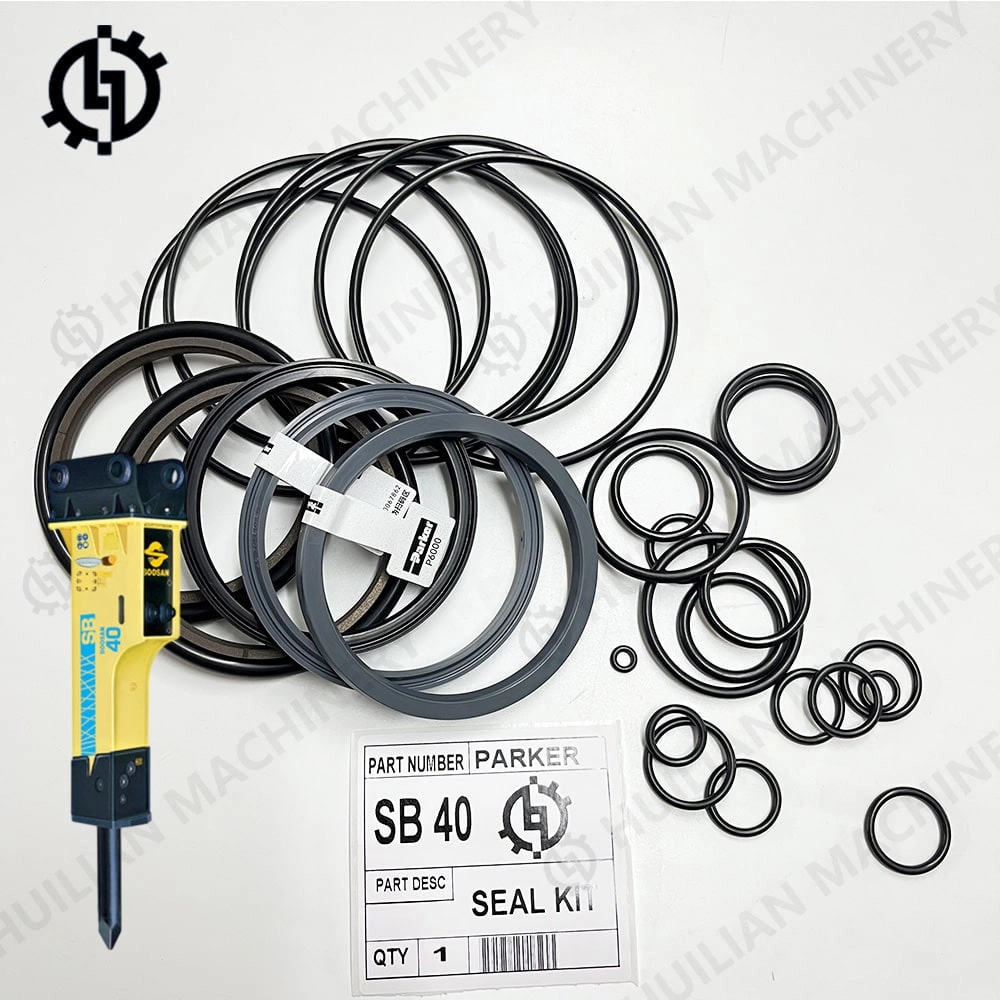
Parker Oil Seal Complete Repair SB40 Seal Kit COX001 CO1012 SB40Ⅱ SB40TSP SQ40 For Soosan Hydraulic Rock Breaker Hammer
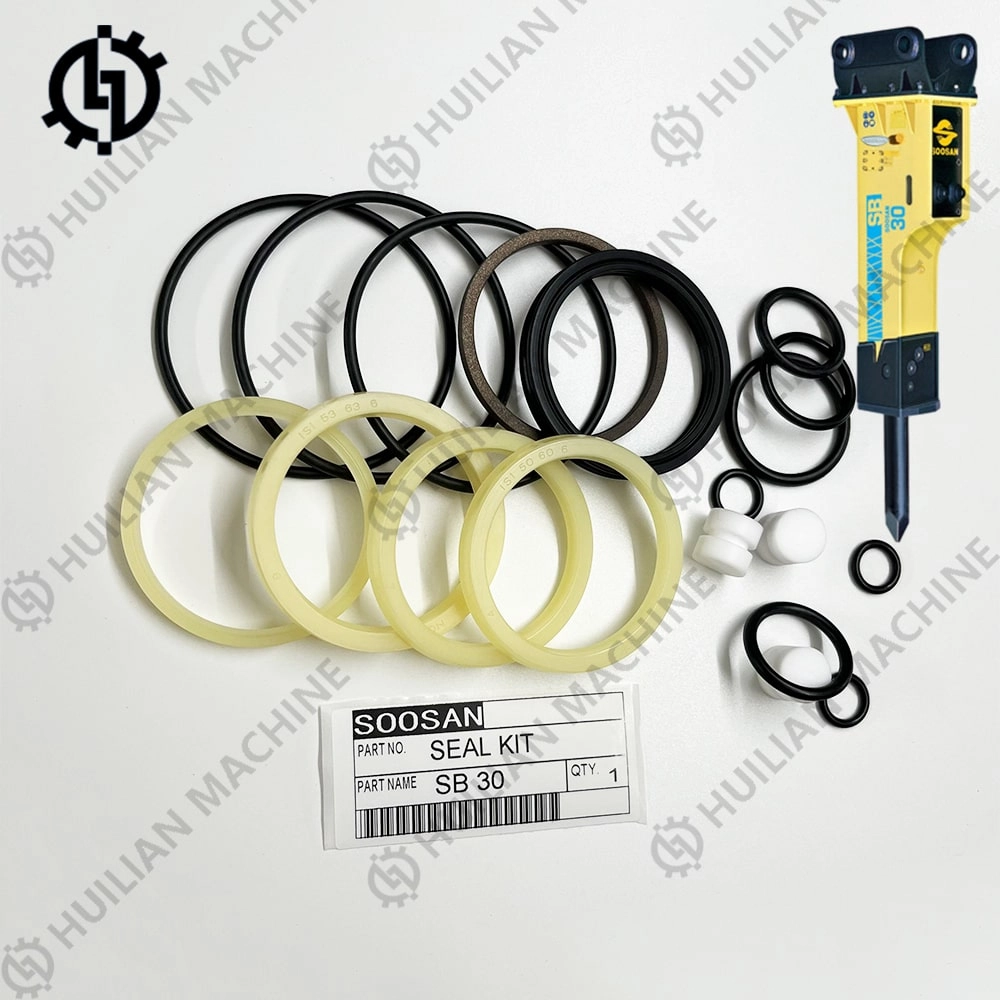
E71012 E7X001 SOOSAN SQ30 SB30Ⅱ SB30 Breaker Seal Kit SB30TS-P SB30Ⅱ TS-P SB30Ⅱ SSL Hydraulic Rock Hammer Parts Oil Repair Kit
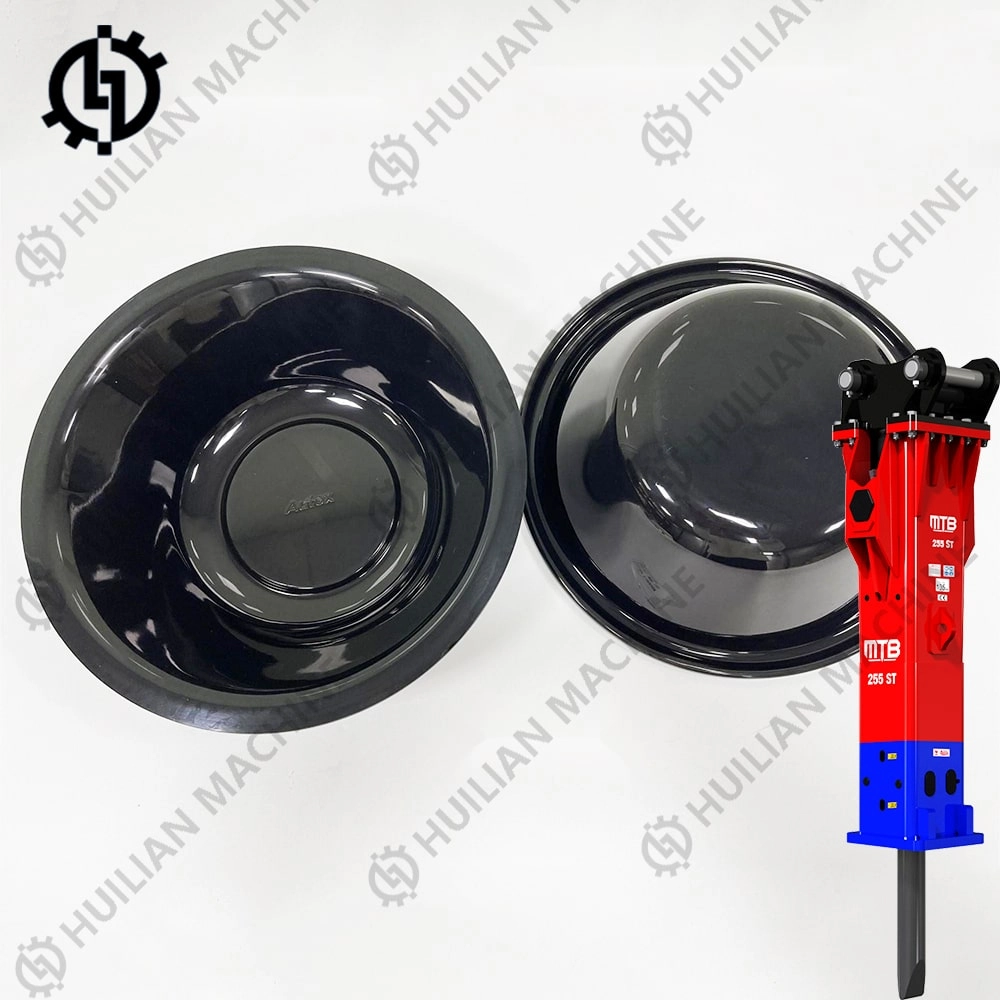
Inan Makina MTB Hydraulic Breaker Parts 45B0116A11 MTB255 MTB MT 255 Diaphragm MTB 255 IQ MTB-255 MTB 255 ST Membrane for Excavator Rock Hammer
 About us
© 2025 HUILIAN MACHINE. All rights reserved