


OEM vs Aftermarket Hydraulic Breaker Hammer Parts Comparison
- How hydraulic breaker hammer parts affect machine performance
- Key components and their role
- Materials, tolerances and sealing
- Symptoms of failing parts
- Comparing OEM and aftermarket parts
- Quality and specification adherence
- Cost and availability
- Warranty, support and traceability
- Side-by-side comparison table
- Selection, maintenance and lifecycle considerations
- How to choose for your application
- Inspection and preventive maintenance
- Calculating total cost of ownership (TCO)
- Why supplier selection matters and how to vet vendors
- Certificates, traceability and testing
- On-site support and spare parts logistics
- When aftermarket is the right choice (and when it isn’t)
- Huilian Machine: OEM supplier profile and advantage
- FAQs
- 1. Are aftermarket hydraulic breaker hammer parts always inferior to OEM?
- 2. How much can I expect to save by switching to aftermarket chisels and seals?
- 3. Will using aftermarket parts void my machine warranty?
- 4. What inspection intervals should I follow for breaker parts?
- 5. How do I validate an aftermarket supplier?
- 6. Can upgrades (hard-facing, coatings) extend part life?
I have spent years working with excavator hydraulic breaker systems, supplying parts and advising fleets on maintaining peak productivity. In this article I compare OEM and aftermarket hydraulic breaker hammer parts so you can make an informed procurement decision. I examine fitment, metallurgy, service life, warranty, cost and total cost of ownership (TCO), and I provide practical inspection and maintenance guidance. Wherever possible I reference standards and authoritative resources to make conclusions verifiable and actionable.
How hydraulic breaker hammer parts affect machine performance
Key components and their role
Hydraulic breaker hammer parts — including the piston, chisel/point, bushings (WearBush), retainer/rompin bars, seals, valves and liners — directly determine impact energy transfer, blow frequency, and reliability. A worn piston or incorrect chisel profile reduces effective energy delivery and increases rebound, leading to higher fuel use and accelerated carrier wear. For a general overview of hydraulic breaker function see the Hydraulic breaker entry on Wikipedia.
Materials, tolerances and sealing
Material selection (heat-treated alloy steels, nitrided surfaces, or specialized coatings) and precision machining tolerances govern component fatigue life and fit. Seals and seal kits (including Parker-style kits commonly used across many models) are essential for maintaining hydraulic pressure and preventing contamination. Quality management systems such as ISO 9001 help suppliers standardize production and traceability, which impacts long-term reliability.
Symptoms of failing parts
Early warning signs like loss of impact energy, increased hydraulic oil temperature, unusual noises, oil contamination, or visible chisel deformation indicate component degradation. Rapidly diagnosing which hydraulic breaker hammer parts are root causes (for example, piston scoring vs. valve wear) saves downtime and avoids unnecessary replacement costs.
Comparing OEM and aftermarket parts
Quality and specification adherence
OEM parts are manufactured by or to the original equipment manufacturer’s specifications. This typically ensures exact dimensional fit, specified metallurgy, and original tolerances. Aftermarket manufacturers range from high-end engineered replacements to low-cost alternatives; their adherence to original dimensions, heat treatment and material chemistry varies. When a supplier holds ISO 9001 certification and provides material certificates (e.g., heat-treatment reports), you can verify conformity to standards.
Cost and availability
Aftermarket parts commonly cost less up-front than OEM equivalents. In practice I see aftermarket pricing typically 20% to 40% lower on common wear items like chisels and seal kits, though exact discounts depend on brand and region. OEM parts may have longer lead times if the OEM holds tight distribution; conversely, established aftermarket suppliers often maintain broad stock and quicker delivery. Consider emergency stock levels for fleet uptime as part of procurement strategy.
Warranty, support and traceability
OEM parts usually carry manufacturer warranties that align with carrier machine warranties; installing non-OEM parts can affect warranty coverage depending on the OEM terms. Reputable aftermarket suppliers provide warranties and traceability documentation, but coverage periods and claim processes vary. For fleets, documented installation procedures and clear warranty terms reduce disputes and downtime.
Side-by-side comparison table
| Criteria | OEM Parts | Aftermarket Parts |
|---|---|---|
| Dimensional fit | Exact fit to manufacturer tolerances | Varies; many engineered-to-fit, some require minor adjustments |
| Material & heat treatment | Specified metallurgy and process control | Quality range: high-end equivalents to lower-grade steels |
| Performance/life expectancy | Designed for original lifecycle targets | Comparable for quality aftermarket; lower for budget options |
| Cost (up-front) | Higher | Lower (typ. 20–40% less on wear items) |
| Warranty & support | OEM-backed, aligned with carrier | Varies; depends on supplier reputation |
| Availability | Can be limited by OEM distribution | Often better stock from dedicated parts suppliers |
| Traceability | Strong (serial, batch) | Depends on supplier documentation |
| Total cost of ownership (TCO) | Often lower if downtime or failures are costly | Lower initial cost; TCO depends on quality and life |
Sources: observations from industry procurement trends and quality management literature; general guidance on hydraulic breaker function: Wikipedia. For supplier quality frameworks see ISO 9001.
Selection, maintenance and lifecycle considerations
How to choose for your application
Match part selection to operating conditions. Severe-duty demolition or rock-breaking requires High Quality chisels and pistons with specialized coatings and higher hardness; light-duty landscaping can use standard parts. Consider machine carrier size, hydraulic pressure rating, and duty cycle. I recommend documenting duty cycles (hours per day, impact load) and correlating them to part life observed in similar operations before switching to a non-OEM solution.
Inspection and preventive maintenance
Regular inspection of hydraulic breaker hammer parts extends service life. Key checks: chisel profile and wear, piston and liner scoring, bushing wear (WearBush clearance), valve condition, and seal leakage. Keep an oil cleanliness program: particulate contamination is a leading cause of valve and seal failure. For guidance on oil cleanliness and preventive maintenance practices, industry standards and OEM manuals are the most reliable references.
Calculating total cost of ownership (TCO)
TCO should include: initial part cost, expected life (hours), downtime cost per hour, installation labor, and any change in fuel/efficiency. Example approach: if a high-quality OEM piston costs 30% more but lasts 50% longer and lowers unscheduled downtime, TCO may favor the OEM. Build a simple spreadsheet incorporating these variables for objective comparison before purchasing at scale.
Why supplier selection matters and how to vet vendors
Certificates, traceability and testing
A reliable supplier provides material certificates, heat-treatment records, and test reports (e.g., hardness Rockwell values, non-destructive testing where applicable). Insist on traceability (batch numbers) and a clear warranty policy. Suppliers who follow ISO 9001 processes provide an added layer of quality assurance: see ISO 9001.
On-site support and spare parts logistics
Good suppliers offer technical support for installation, parts fitment guidance, and rapid spare parts logistics. For fleet operators, partnering with suppliers who can provide local support, training, and emergency replacements reduces unplanned downtime and Fleet Total Cost of Ownership.
When aftermarket is the right choice (and when it isn’t)
I recommend high-quality aftermarket parts for commonly replaced wear items (chisels, seals, kits) where savings are significant and proven by field trials. For critical components that affect structural integrity or are integral to warranty coverage (for example certain pistons or carrier-linked parts), OEM or proven OEM-equivalent suppliers are often the safer choice.
Huilian Machine: OEM supplier profile and advantage
Founded in 2005, Huilian Machine is a professional OEM supplier of excavator parts. We are leading excavator breaker parts manufacturers from China. We offer a wide range of products, including hydraulic breaker hammers, chisels, seals and seal kits, diaphragms, pistons, WearBush, rompin/retainer bars, through bolts, side bolts, valves and liners. Huilian's team comprises experienced and skilled professionals, including technicians, R&D experts, designers, quality control professionals, salespeople and after-sales service teams.
Our products are exported to over 90 countries and regions and are highly regarded by customers worldwide for their quality and variety. Guangzhou Huilian Machinery Co., Ltd. is committed to becoming a global leader in the supply of excavator parts and components and is seeking global distributor partners to promote the sustainable development of the excavator parts industry. For more information visit Huilian Machine or contact service@huilianmachine.com / +86 188 1917 0788.
Huilian advantages and main products: excavator parts, Excavator Breaker Parts, Excavator Hydraulic Breaker, Excavator Seal Kit, Parker seal kit. Huilian differentiates itself by end-to-end manufacturing control, a broad SKU range, strong R&D capabilities, and a global distribution network. If you need both OEM-spec components or validated aftermarket equivalents, Huilian can supply parts with traceability and testing documentation to support fleet uptime and warranty needs.
FAQs
1. Are aftermarket hydraulic breaker hammer parts always inferior to OEM?
No. Quality aftermarket parts made by experienced manufacturers can match OEM performance for many wear items. The key is supplier vetting: request material certificates, machining tolerances, and field references before approving large-scale use.
2. How much can I expect to save by switching to aftermarket chisels and seals?
Savings typically range from 20% to 40% on wear items, depending on brand and region. However, always calculate TCO considering part life and downtime costs.
3. Will using aftermarket parts void my machine warranty?
It depends on your machine OEM’s warranty terms. Some OEMs allow aftermarket wear parts; others restrict warranty if damage results from non-OEM components. Keep installation records and use reputable suppliers to minimize disputes.
4. What inspection intervals should I follow for breaker parts?
Inspect seals and chisels daily for visible damage. Perform a full component inspection (piston, liner, valves, WearBush) every 100–200 operating hours for moderate duty; increase frequency for severe-duty work. Follow the carrier and breaker OEM manuals for model-specific intervals.
5. How do I validate an aftermarket supplier?
Ask for ISO certification, material and heat-treatment reports, hardness values, batch traceability, warranty terms, and customer references. If possible, run a small field trial to compare life and performance before fleet-wide adoption.
6. Can upgrades (hard-facing, coatings) extend part life?
Yes. Surface treatments like nitriding, chrome plating, or carbide coatings can significantly improve wear resistance in abrasive applications. Ensure treatments are applied by qualified suppliers and validated under your operating conditions.
If you want help evaluating parts for your fleet, comparing OEM vs aftermarket offers, or sourcing validated hydraulic breaker hammer parts, contact me or reach out to Huilian Machine. We can provide sample parts, technical datasheets, and pricing for pilot trials.
Contact / Product inquiry CTA: Visit https://www.huilianmachine.com/ or email service@huilianmachine.com. Phone: +86 188 1917 0788.
How to Choose the Right Rock Breaker Seal Kit
Wholesale Excavator Breaker Part manufacturer and supplier
Top 10 Excavator Seal Kits for Durable Hydraulics
Best Applications for Hydraulic Breakers on Mini Excavators
About
Are your parts compatible with all excavator brands?
Yes, our parts are designed to be compatible with major brands like Komatsu, Caterpillar, Hitachi, Hyundai, Doosan, JCB, Kobelco, Sany, and many more.
Do you offer OEM and aftermarket parts?
Yes, we manufacture high-quality OEM parts and supply aftermarket parts from top brands such as NOK, Parker, SKF, and Hallite to ensure optimal performance.
What is your shipping and delivery time?
We offer fast and reliable global shipping. Delivery times vary depending on location and order size, but we strive to process and ship orders as quickly as possible.
What types of excavator parts do you offer?
We provide a wide range of high-quality excavator parts, including hydraulic breakers, chisels, seal kits, diaphragms, pistons, wear bushes, retainer bars, through bolts, side bolts, valves, and liners.
How can I ensure I’m selecting the right part for my equipment?
Our expert team can assist you in finding the right part based on your machine model, specifications, and requirements. Contact us for personalized support.
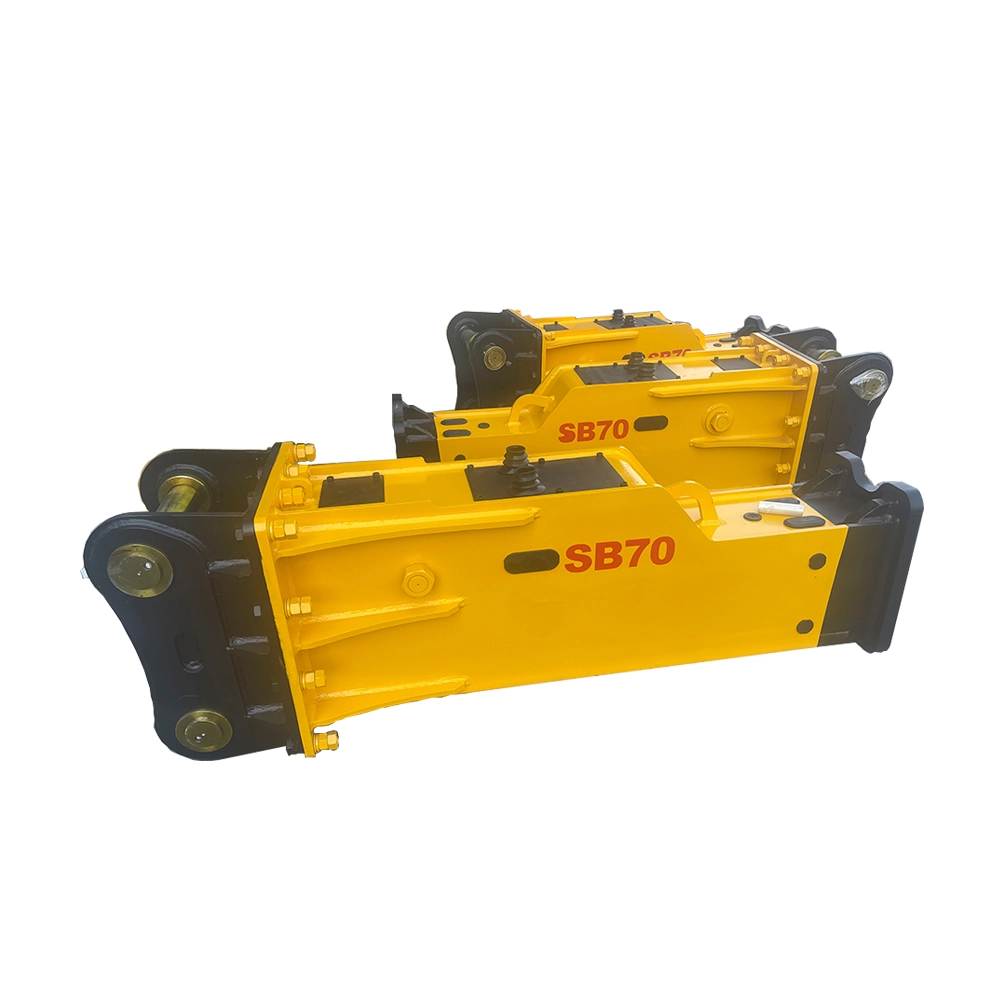
Huilian OEM Hydraulic Hammer Breaker SB70 For Soosan

Huilian HL68 Hammer Breaker for 4-7 Ton Excavator SOOSAN SB40 Hydraulic Rock Breaker
Side type hydraulic breaker : Easy to control, convenient positioning, durable, high working efficiency, strong striking force, long service life, stable operating performance, convenient after-sales service.
Top type hydraulic breaker : Strong impact power; excellent environmental performance; exquisite manufacturing technology; easy maintenance,fast after-sales service
Box type hydraulic breaker :leading heat treatment technology, enhance heat resistance, wear resistance. Under the condition of keeping the oil pressure constant, the cylinder volumeis reduced and the fuel consumption is reduced.The self-developed core is adopted to make the piston cylinder body moredurable and the service life longer.Exposed decks are made of high-strength steel plates to reduce wear.The best efficiency matching with excavator and loader is realized

Huilian OEM Factory SB130 Hydraulic Rock Breaker for 30-45 Ton Soosan Breaker
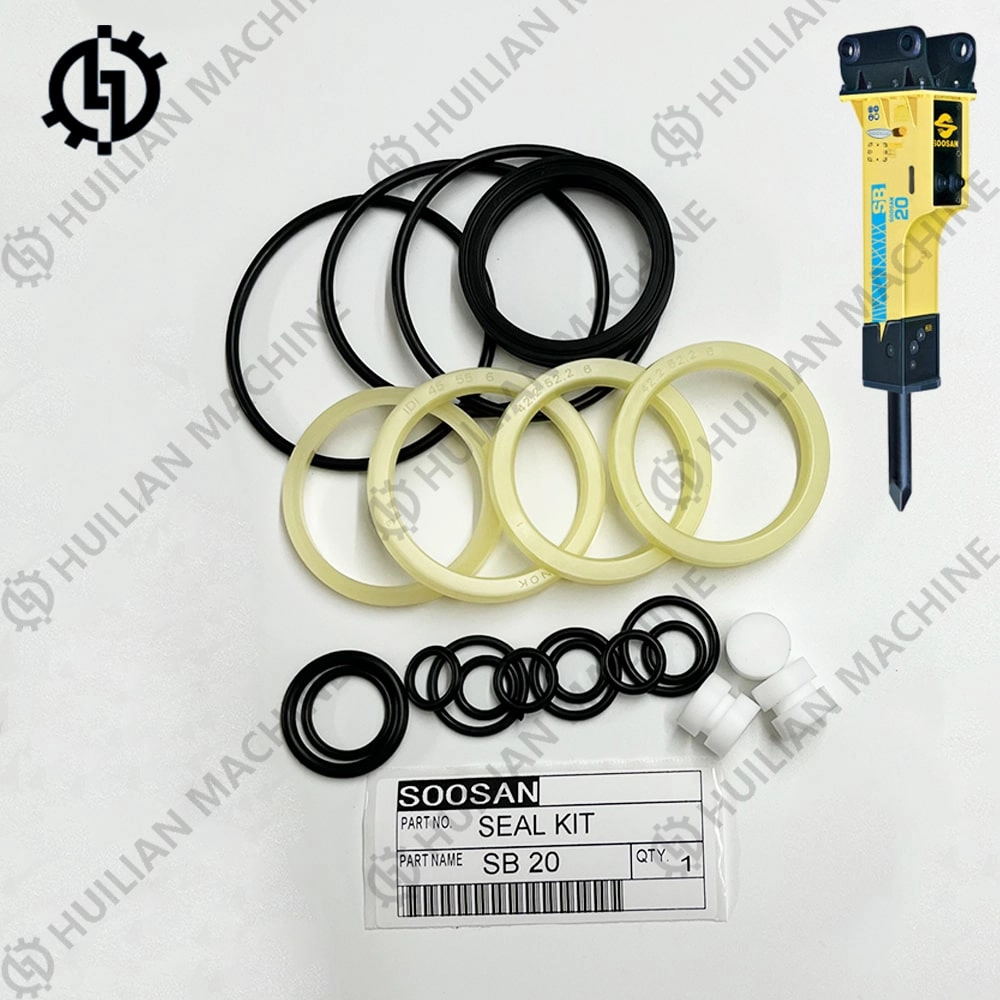
SOOSAN SB20 Breaker Seal Kit F01012 F0X001 SB20Ⅱ SB20TSP SQ20 Hydraulic Rock Hammer Oil Repair Kit
 About us
© 2025 HUILIAN MACHINE. All rights reserved