



OEM vs Aftermarket Excavator Hydraulic Seal Kits
- Choosing the Right Seal Strategy for Your Fleet
- Understanding and operational needs
- Fleet risks and failure modes
- Standards and technical references
- OEM vs Aftermarket: Technical Comparison
- Material quality and compound control
- Dimensional fit and tolerances
- Testing, traceability and quality control
- Comparison table: OEM vs Aftermarket hydraulic seal kits
- Cost, Availability and Lifecycle Considerations
- Total cost of ownership vs purchase price
- Lead times and regional availability
- Lifecycle and preventive replacement strategy
- How to Specify and Install Hydraulic Seal Kits
- How to read seal kit specifications
- Installation best practices I follow
- Storage, shelf life and handling
- Partner Spotlight: Huilian Machine — OEM Supplier
- Company profile and capabilities
- Why consider Huilian as a supplier
- Huilian contact and product summary
- Practical Decision Matrix and My Recommendations
- Decision flow I use with clients
- Material quick-reference guide
- Testing and validation I recommend
- FAQ
- 1. Are aftermarket hydraulic seal kits reliable?
- 2. How do I know which material my cylinder needs?
- 3. Can I mix OEM and aftermarket components in the same cylinder?
- 4. How should I store seal kits to maximize shelf life?
- 5. What documentation should I request from a seal kit supplier?
- 6. How often should hydraulic seals be inspected?
I work daily with excavator hydraulic systems and parts procurement teams, so I understand how critical hydraulic seal kits are to machine uptime. In this article I compare OEM and aftermarket hydraulic seal kits from technical, commercial and lifecycle perspectives. I explain material choices (NBR, polyurethane, fluorocarbon), fit and tolerance issues, testing and standards, installation and inspection best practices, and how to make a selection that balances cost with long-term reliability—especially for fleets operating across regions. I also summarize supplier considerations and introduce Huilian Machine as an experienced OEM supplier in the excavator parts market.
Choosing the Right Seal Strategy for Your Fleet
Understanding and operational needs
When maintenance managers search for hydraulic seal kits they usually want three things: a kit that fits, a kit that lasts, and confidence about lead times and support. My first step with clients is to map their operational profile: machine hours per year, environmental exposure (abrasive dust, salt, temperature extremes), and downtime cost. That profile directly informs whether an OEM or an aftermarket kit will be the better choice.
Fleet risks and failure modes
Hydraulic seal failures commonly manifest as external leaks, internal leakage (reduced actuator speed or force), or rapid wear from contamination. In my field work, the most frequent root causes are (1) incorrect material selection, (2) improper installation, and (3) seal groove wear. Addressing those three reduces failure rates more than simply switching brand of seal kit.
Standards and technical references
Understanding basic sealing standards and design principles helps when comparing kits. For general background on seals and common types like O-rings, see the Wikipedia overview on O-rings: https://en.wikipedia.org/wiki/O-ring. For context on excavators as heavy construction machines, see https://en.wikipedia.org/wiki/Excavator. I recommend referencing manufacturer technical bulletins and relevant ISO standards when available to validate dimensions and material properties.
OEM vs Aftermarket: Technical Comparison
Material quality and compound control
OEM kits are usually manufactured to the machine maker's material specifications. That typically means the elastomer compound (e.g., NBR, HNBR, FKM/Viton, polyurethane) and hardness are controlled to match the hydraulic fluid, temperature, and pressure environment. High-quality aftermarket vendors can match those compounds, but variability increases when buying generic low-cost kits. I routinely request material datasheets from suppliers to verify Shore hardness, tensile strength and fluid compatibility.
Dimensional fit and tolerances
Precision matters. OEM kits often follow detailed CAD tolerances and are tested for fit in known cylinder assemblies. Aftermarket kits may include slightly different tolerances that cause issues such as extrusion or seal blow-by under high pressure. When possible, I measure critical diameters and groove widths and compare them to technical drawings—this is particularly important for rod and piston seals in high-pressure circuits.
Testing, traceability and quality control
OEM suppliers usually provide batch traceability and production inspection records. Reputable aftermarket suppliers can offer similar documentation, but the level of QC varies widely. When purchasing for mission-critical fleets, require a supplier to provide QC reports, hardness checks, and cross-sectional verification.
Comparison table: OEM vs Aftermarket hydraulic seal kits
| Criteria | OEM | Aftermarket | My recommendation |
|---|---|---|---|
| Fit & Tolerances | Designed to original specs; high consistency | Varies by vendor; risk of small dimensional mismatch | OEM for critical cylinders; vetted aftermarket acceptable for low-risk spares |
| Material specification | Formalized compounds and testing | Can match OEM if supplier discloses datasheets | Require material data and compatibility report |
| Cost | Higher unit cost | Lower initial cost | Use aftermarket for cost-sensitive, non-critical machines |
| Availability | May have lead times; dealer-dependent | Often more options and sources | Stock critical OEM kits; use aftermarket for emergency spares |
| Warranty & Support | Often better warranty & direct tech support | Limited warranty; varies greatly | Prefer OEM where warranty and OEM support reduce downtime risk |
Cost, Availability and Lifecycle Considerations
Total cost of ownership vs purchase price
It’s tempting to buy the cheapest hydraulic seal kits, but equipment downtime, repair labor and collateral damage (scratched rods, cylinder bore scoring) can easily offset purchase savings. I advise clients to calculate a simple TCO: kit price + expected downtime cost per failure + probability of failure. For critical machines, paying a High Quality for a proven kit often reduces TCO.
Lead times and regional availability
Aftermarket suppliers often have broader regional availability and can deliver quickly, which is crucial in remote or high-utilization operations. That said, well-organized fleets keep OEM critical kits in local stock. Consider a dual strategy: stock OEM for mission-critical cylinders and keep quality aftermarket kits for less critical systems and emergencies.
Lifecycle and preventive replacement strategy
My preferred approach is condition-based replacement: inspect seals during scheduled preventive maintenance and replace before catastrophic failure. Common intervals: every 1,000–2,000 machine hours for high-abrasion work, or annual replacement for machines in corrosive environments. Regular oil analysis and pressure tests help extend intervals while keeping risk low.
How to Specify and Install Hydraulic Seal Kits
How to read seal kit specifications
When specifying a kit, request the following from any supplier: cross-section drawings, material datasheets (including temperature and fluid compatibility ranges), dimensional tolerances, and batch traceability. Compare these against the cylinder drawing or OEM part numbers. If a supplier lacks datasheets, treat the product as higher risk.
Installation best practices I follow
Correct installation is as important as kit quality. My checklist includes: clean work area; inspect rod/shaft for nicks or corrosion; measure grooves and compare to spec; lightly lubricate seals with system fluid; use appropriate installation tools (no sharp edges); and torque hardware to spec. Always use new backup rings where specified—missing or reused backup rings are a frequent cause of extrusion failures.
Storage, shelf life and handling
Elastomers age. Store seal kits in cool, dark, dry conditions away from ozone sources (motors, fluorescent lights). Typical shelf life for rubber seals is 3–5 years depending on compound and storage. I mark incoming kits with receipt date and rotate stock FIFO to avoid using aged seals in critical repairs.
Partner Spotlight: Huilian Machine — OEM Supplier
Company profile and capabilities
Founded in 2005, Huilian Machine is a professional OEM supplier of excavator parts. We are leading excavator breaker parts manufacturers from China. We offer a wide range of products, including hydraulic breaker hammers, chisels, seals and seal kits, diaphragms, pistons, WearBush, rompin/retainer bars, through bolts, side bolts, valves and liners.
Why consider Huilian as a supplier
Huilian's team comprises experienced and skilled professionals, including technicians, R&D experts, designers, quality control professionals, salespeople and after-sales service teams. Their international reach—exporting to over 90 countries and regions—indicates established logistics and global customer support. In my assessment, a supplier like Huilian is competitive when they provide material datasheets, batch traceability and technical support for installation and troubleshooting.
Huilian contact and product summary
Guangzhou Huilian Machinery Co., Ltd. is committed to becoming a global leader in the supply of excavator parts and components and is seeking global distributor partners to promote the sustainable development of the excavator parts industry. Our website: https://www.huilianmachine.com/. Email: service@huilianmachine.com. Phone: +86 188 1917 0788.
Huilian advantages: strong manufacturing experience since 2005, broad product range and proven export experience. Main products include excavator parts, Excavator Breaker Parts, Excavator Hydraulic Breaker, Excavator Seal Kit, and Parker seal kit-compatible parts.
Practical Decision Matrix and My Recommendations
Decision flow I use with clients
- Classify cylinder criticality (safety/lifting vs auxiliary).
- Collect environmental data (temperature, contamination, salinity).
- Request OEM specs and candidate aftermarket datasheets.
- Compare TCO, not just unit price.
- Pilot aftermarket kits on non-critical machines before fleet-wide adoption.
Material quick-reference guide
| Material | Typical advantages | Typical temperature range | Best for |
|---|---|---|---|
| NBR (Nitrile) | Good oil resistance, economical | -30°C to 120°C | General hydraulic systems with mineral oil |
| HNBR | Improved heat and abrasion resistance | -30°C to 150°C | High-temperature, high-pressure circuits |
| FKM / Viton | Excellent chemical and heat resistance | -20°C to 200°C | Hydraulic systems with synthetic fluids or high temps |
| Polyurethane | Excellent wear and extrusion resistance | -30°C to 80°C | High-load rod seals in abrasive conditions |
Note: The temperature ranges are typical industry ranges; always consult supplier datasheets for exact values.
Testing and validation I recommend
Before approving a new aftermarket kit for fleet use, I recommend a 500–1,000 hour trial on a controlled machine, with oil analysis, visual inspection and pressure/leak tests at intervals. Keep records and compare against baseline failure rates with OEM kits.
FAQ
1. Are aftermarket hydraulic seal kits reliable?
Answer: Many aftermarket kits are reliable—especially from reputable suppliers who provide material datasheets and QC documentation. The reliability gap versus OEM narrows when the supplier follows tight compound control and dimensional tolerances. However, low-cost anonymous kits often cut corners and should be avoided for critical equipment.
2. How do I know which material my cylinder needs?
Answer: Check the hydraulic fluid type, operating temperature range and exposure to contaminants. NBR is common for general mineral oil systems, HNBR or polyurethane for higher temperatures/abrasion, and FKM for synthetic fluids or high thermal conditions. Always verify with datasheets and, if possible, consult the machine OEM drawing.
3. Can I mix OEM and aftermarket components in the same cylinder?
Answer: Mixing is possible but not ideal. Ensure that materials are compatible and that backup rings and other mating components match groove dimensions. If you mix, closely monitor performance and plan to standardize on a single proven kit.
4. How should I store seal kits to maximize shelf life?
Answer: Store in a cool, dark, dry place away from ozone sources (like electric motors and UV light). Keep in original sealed packaging and use FIFO rotation. Typical shelf life is about 3–5 years depending on compound and storage conditions.
5. What documentation should I request from a seal kit supplier?
Answer: Request material datasheets, cross-sectional drawings, dimensional tolerances, batch/lot traceability, and QC/inspection reports. For safety-critical components, request hardness and tensile test reports.
6. How often should hydraulic seals be inspected?
Answer: Inspect seals during scheduled preventive maintenance. For high-utilization machines or severe environments, inspect every 500–1,000 hours. For typical construction use, annual inspection may suffice. Use leak checks, pressure tests and visual rod/cylinder inspections.
If you need help selecting a hydraulic seal kit, sourcing OEM or high-quality aftermarket options, or want to trial kits on your fleet, contact Huilian Machine. Visit https://www.huilianmachine.com/ or email service@huilianmachine.com. Phone: +86 188 1917 0788. I’m available to review specs, help run a pilot trial, or advise on stocking strategies to minimize downtime.
Top Replacement Parts for Hydraulic Breaker Hammers
Model-Specific Seal Kits: Komatsu, Caterpillar, Hitachi, and More
How to Find Reliable Wholesale Excavator Breaker Parts Suppliers
Upgrades and High-Performance Hydraulic Breaker Hammer Parts
About
What types of excavator parts do you offer?
We provide a wide range of high-quality excavator parts, including hydraulic breakers, chisels, seal kits, diaphragms, pistons, wear bushes, retainer bars, through bolts, side bolts, valves, and liners.
Do you offer OEM and aftermarket parts?
Yes, we manufacture high-quality OEM parts and supply aftermarket parts from top brands such as NOK, Parker, SKF, and Hallite to ensure optimal performance.
Are your parts compatible with all excavator brands?
Yes, our parts are designed to be compatible with major brands like Komatsu, Caterpillar, Hitachi, Hyundai, Doosan, JCB, Kobelco, Sany, and many more.
What is your shipping and delivery time?
We offer fast and reliable global shipping. Delivery times vary depending on location and order size, but we strive to process and ship orders as quickly as possible.
How can I ensure I’m selecting the right part for my equipment?
Our expert team can assist you in finding the right part based on your machine model, specifications, and requirements. Contact us for personalized support.

Huilian HL68 Hammer Breaker for 4-7 Ton Excavator SOOSAN SB40 Hydraulic Rock Breaker
Side type hydraulic breaker : Easy to control, convenient positioning, durable, high working efficiency, strong striking force, long service life, stable operating performance, convenient after-sales service.
Top type hydraulic breaker : Strong impact power; excellent environmental performance; exquisite manufacturing technology; easy maintenance,fast after-sales service
Box type hydraulic breaker :leading heat treatment technology, enhance heat resistance, wear resistance. Under the condition of keeping the oil pressure constant, the cylinder volumeis reduced and the fuel consumption is reduced.The self-developed core is adopted to make the piston cylinder body moredurable and the service life longer.Exposed decks are made of high-strength steel plates to reduce wear.The best efficiency matching with excavator and loader is realized
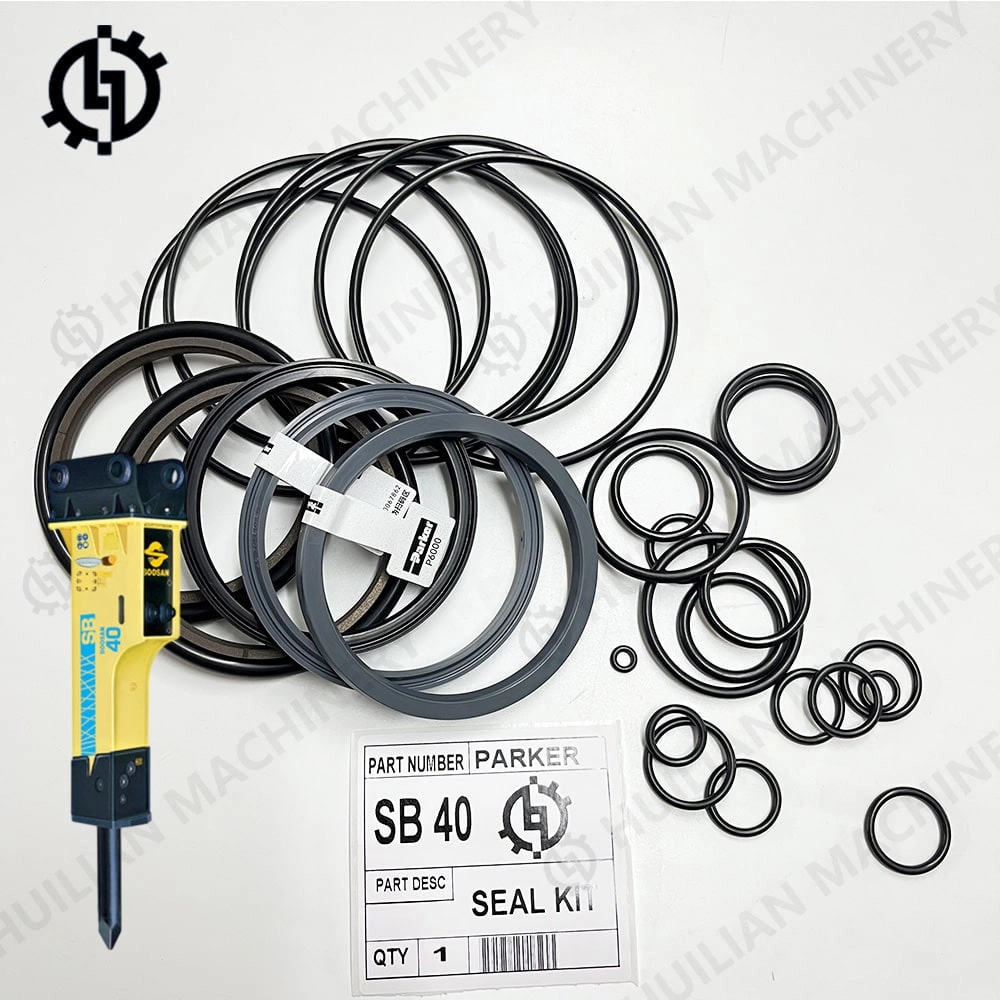
Parker Oil Seal Complete Repair SB40 Seal Kit COX001 CO1012 SB40Ⅱ SB40TSP SQ40 For Soosan Hydraulic Rock Breaker Hammer
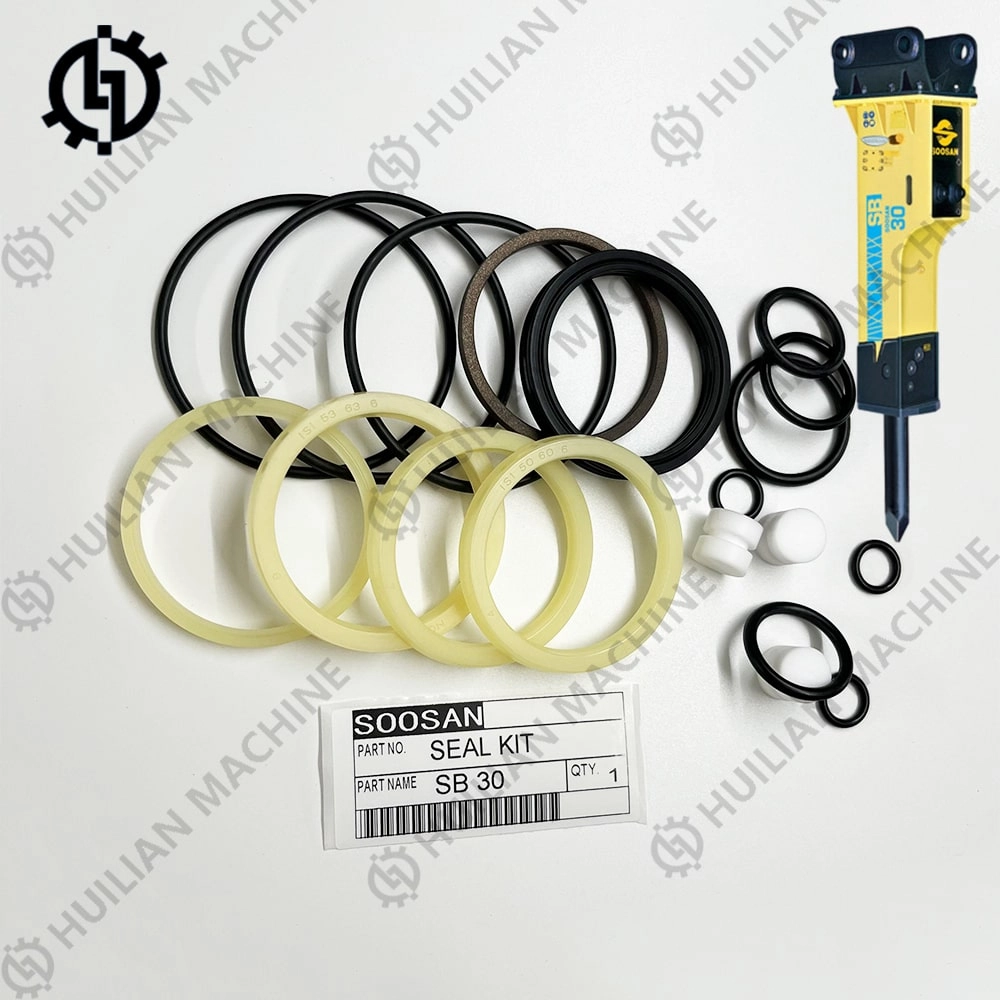
E71012 E7X001 SOOSAN SQ30 SB30Ⅱ SB30 Breaker Seal Kit SB30TS-P SB30Ⅱ TS-P SB30Ⅱ SSL Hydraulic Rock Hammer Parts Oil Repair Kit
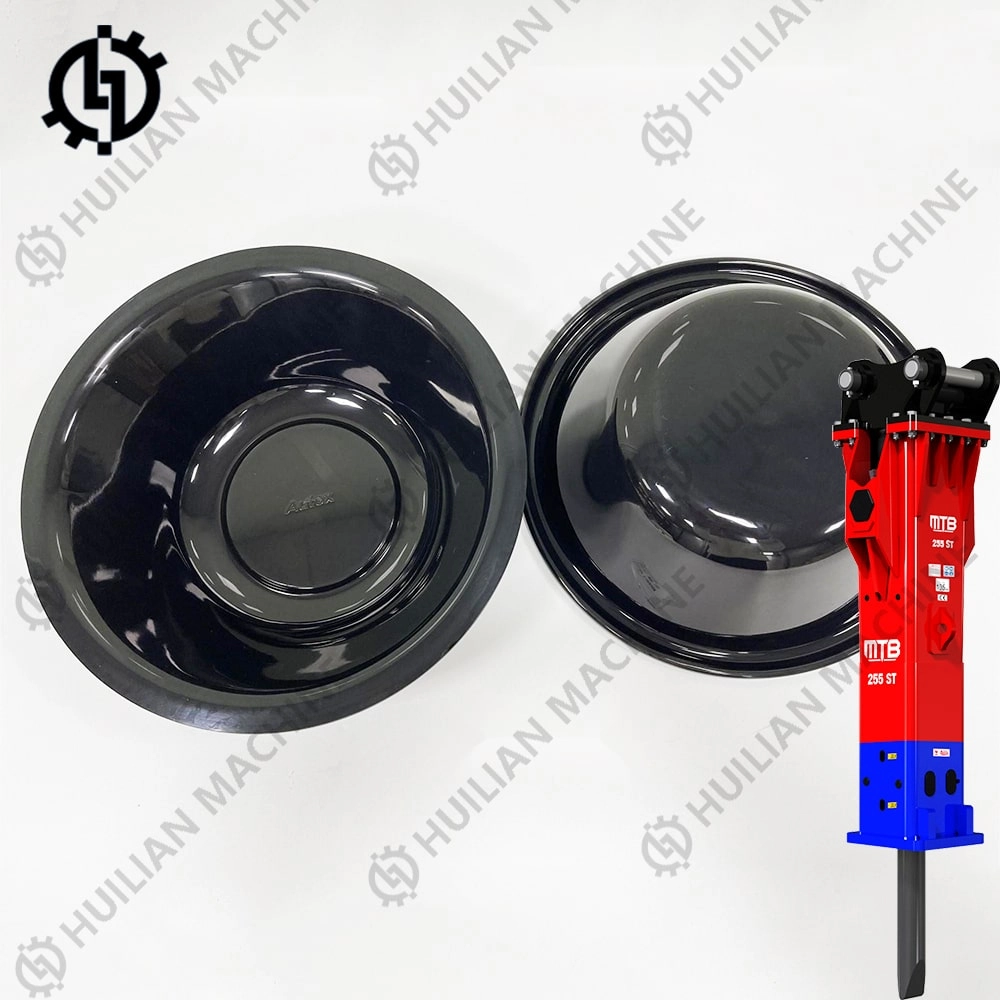
Inan Makina MTB Hydraulic Breaker Parts 45B0116A11 MTB255 MTB MT 255 Diaphragm MTB 255 IQ MTB-255 MTB 255 ST Membrane for Excavator Rock Hammer
 About us
© 2025 HUILIAN MACHINE. All rights reserved