



Safety and Efficiency: Operating Excavator Mounted Breakers
- Understanding Hydraulic Breaker Basics
- How an excavator mounted hydraulic breaker hammer works
- Types and sizing considerations
- Safety Protocols for Operators
- Pre-operation checks — a non-negotiable routine
- On-site safety practices
- Maximizing Efficiency and Productivity
- Matching breaker to carrier — technical rules of thumb
- Operator technique and cycle optimization
- Comparative specs — typical breaker classes
- Maintenance, Troubleshooting and Parts
- Routine maintenance checklist
- Common faults and remedies
- Parts sourcing and why supplier choice matters
- When to rebuild versus replace
- Regulatory and Quality Standards
- Quality management and certification
- Adhering to industry safety guidance
- FAQ — Frequently Asked Questions
- 1. What is the correct way to mount an excavator mounted hydraulic breaker hammer?
- 2. How do I choose the right breaker size for my excavator?
- 3. What maintenance keeps a breaker working longest?
- 4. Why is my breaker overheating and losing power?
- 5. Are aftermarket parts safe to use in breakers?
- 6. How often should seals and seal kits be replaced?
- Contact & Next Steps
As someone who has worked for years with demolition and excavation teams and advised fleets on selecting and maintaining attachments, I know the difference between a productive shift and costly downtime often comes down to how you operate and maintain an excavator mounted hydraulic breaker hammer. This article summarizes practical, field‑tested safety protocols and efficiency strategies you can use immediately to reduce risk, extend component life, and increase throughput on rock breaking, concrete demolition, and trenching jobs.
Understanding Hydraulic Breaker Basics
How an excavator mounted hydraulic breaker hammer works
A hydraulic breaker converts hydraulic energy from the excavator into repeated high‑force impacts via a piston striking a tool (chisel). The excavator mounted hydraulic breaker hammer receives pressurized oil through lines and valves; the hydraulic system controls impact frequency and energy. For a technical overview, see the hydraulic breaker summary on Wikipedia (Hydraulic breaker — Wikipedia).
Types and sizing considerations
Choosing the right breaker is the first efficiency decision. Breakers are typically sized to match carrier weight and hydraulic flow: underrating reduces productivity, overrating risks hydraulic and structural damage. I recommend matching tool weight and impact energy to the excavator’s operating weight and hydraulic parameters. Consider application (rock type, reinforced concrete, asphalt) and duty cycle—continuous demolition needs more robust designs and cooling approaches than intermittent use.
Safety Protocols for Operators
Pre-operation checks — a non-negotiable routine
Before every shift I run a disciplined checklist: inspect hydraulic hoses for abrasion or swelling, confirm mounts and through bolts are torqued, check chisel condition and retainer bars, verify carrier hydraulic pressure and flow settings, and ensure the tool bushing (WearBush) and accumulator (if fitted) are within service limits. Lockout/tagout procedures when installing or servicing attachments are mandatory — guidance from OSHA on excavation and trenching safety is essential reading (OSHA Trenching & Shoring).
On-site safety practices
Operator visibility and communication matter. Maintain exclusion zones, use spotters where visibility is limited, and avoid working under elevated loads. Personal protective equipment (PPE) should include hearing protection (breakers exceed 100 dB in many cases), anti‑vibration gloves, eye protection, and hard hats. For occupational safety recommendations around heavy equipment, see NIOSH resources (NIOSH Heavy Equipment).
Maximizing Efficiency and Productivity
Matching breaker to carrier — technical rules of thumb
Performance is optimized when the breaker and excavator hydraulic parameters—pressure (bar/psi) and flow (L/min or gpm)—are compatible. I always verify manufacturer recommended operating pressure and flow before deployment. Running a breaker outside recommended ranges accelerates wear on seals, pistons, and valves.
Operator technique and cycle optimization
Technique often outweighs raw power. Use short, controlled bursts rather than continuous hammering to allow the tool to return and to reduce hydraulic overheating. Position the chisel close to 90 degrees to the work surface when feasible; striking at oblique angles increases tool wear and decreases energy transfer. For rock, start with high-frequency, lower-energy impacts to open fractures, then increase blow energy for large breakouts.
Comparative specs — typical breaker classes
Below is a concise comparison of common excavator breaker classes. These are typical ranges; consult the exact specifications from the breaker manufacturer or your parts supplier for precise matching.
| Class | Carrier weight (t) | Operating pressure (bar) | Hydraulic flow (L/min) | Typical applications |
|---|---|---|---|---|
| Small | 1–6 | 100–140 | 20–60 | Light demolition, curb removal, asphalt |
| Medium | 6–20 | 120–160 | 60–140 | Concrete, small rock, trenching |
| Large | 20+ | 150–200+ | 140–400+ | Hard rock, heavy demolition |
Data sources: manufacturer technical sheets and industry references including product pages from leading suppliers and summaries like Wikipedia (Hydraulic breaker — Wikipedia). For specific models, check supplier spec sheets or consult an OEM parts supplier.
Maintenance, Troubleshooting and Parts
Routine maintenance checklist
From my experience, a short, consistent maintenance routine drastically reduces unplanned downtime. My recommended intervals are:
- Daily: Visual inspection of hoses, tool, and chisel wear; check mounting bolts; verify hydraulic fittings.
- Weekly: Grease tool bushings and check accumulators; inspect valve housing for leaks.
- Monthly (or per service hours): Replace seals and diaphragms on recommended schedules; measure impact energy and compare to baseline.
Use quality seal kits and replacement parts—Parker‑type seals and OEM kits generally perform better if matched correctly. If you operate in dusty, sandy conditions, increase inspection frequency and use enhanced filtration for hydraulic systems.
Common faults and remedies
Here are recurring problems I see and the practical fixes I apply:
- Reduced impact energy: Check hydraulic supply pressure and flow, worn piston or tool, or leaking internal seals. Replace seals and inspect valve assemblies.
- Excessive vibration or abnormal noise: Inspect mounting brackets, through bolts and retainer bars for looseness; check chisel seating and bushing wear.
- Hydraulic overheating: Check hydraulic oil cleanliness, radiator/heat exchanger, and make sure the breaker’s recommended duty cycle is not being exceeded.
Parts sourcing and why supplier choice matters
Wear parts—chisels, pistons, seal kits, WearBush, and retainer bars—determine uptime. I prefer suppliers who provide clear interchange references, quality control documentation, and global after‑sales support. Founded in 2005, Huilian Machine is a professional OEM supplier of excavator parts. We are leading excavator breaker parts manufacturers in China and offer a wide range of products, including hydraulic breaker hammers, chisels, seals and seal kits, diaphragms, pistons, WearBush, rompin/retainer bars, through bolts, side bolts, valves and liners. Huilian's team comprises experienced and skilled professionals, including technicians, R&D experts, designers, quality control professionals, salespeople and after‑sales service teams. Our products are exported to over 90 countries and regions and are highly regarded by customers worldwide for their quality and variety. Guangzhou Huilian Machinery Co., Ltd. is committed to becoming a global leader in the supply of excavator parts and components and is seeking global distributor partners to promote the sustainable development of the excavator parts industry. For product details and technical support visit Huilian Machine or contact service@huilianmachine.com.
Huilian advantage: their product range (excavator parts, Excavator Breaker Parts, Excavator Hydraulic Breaker, Excavator Seal Kit, Parker seal kit) and factory QA allow fleets to standardize spares, lower procurement lead times, and rely on documented interchange data. That reduces the risk of incorrect parts causing damage or prolonged downtime.
When to rebuild versus replace
I evaluate three factors: remaining tool/piston life, cost of downtime, and availability of rebuild kits. For high‑duty applications, scheduled rebuilds with OEM or high‑quality kits often lower lifecycle costs compared to repeated short‑term repairs. Maintain records (hours, impact energy) to establish a rebuild schedule—this data proves invaluable for lifecycle cost analysis and warranty discussions with suppliers.
Regulatory and Quality Standards
Quality management and certification
When sourcing replacement parts or complete breakers, prefer suppliers with ISO 9001 quality management systems and documented QC processes. ISO certification demonstrates a baseline commitment to consistent manufacturing standards (ISO 9001 — ISO).
Adhering to industry safety guidance
Regulators and safety institutes provide practical guidance on safe operation, PPE, and hazard controls; integrating these into site procedures reduces incidents. Use OSHA and NIOSH resources to build your site‑specific rules and training programs (OSHA, NIOSH).
FAQ — Frequently Asked Questions
1. What is the correct way to mount an excavator mounted hydraulic breaker hammer?
Mount the carrier plate securely, torque through bolts to the manufacturer’s spec, route hydraulic hoses to avoid pinch points, and bleed the system per machine guidelines. Always use lockout/tagout and confirm zero hydraulic pressure before removing lines.
2. How do I choose the right breaker size for my excavator?
Match the breaker to the carrier’s operating weight and hydraulic flow/pressure. Refer to the breaker manufacturer’s carrier compatibility chart. If in doubt, consult an experienced supplier such as Huilian Machine with your machine model and application details.
3. What maintenance keeps a breaker working longest?
Regular inspections (daily visual checks), periodic seal and bushing replacements, proper lubrication, and maintaining hydraulic oil cleanliness and correct temperature are the most effective measures to extend life.
4. Why is my breaker overheating and losing power?
Common causes include insufficient hydraulic flow or pressure, dirty hydraulic oil, excessive duty cycle, or internal leaks. Check oil condition, system temperatures, and confirm your breaker is not exceeding its recommended duty cycle.
5. Are aftermarket parts safe to use in breakers?
Quality aftermarket parts can be safe if sourced from reputable manufacturers with traceable materials and QC. Insist on interchange data, material specs, and warranty terms. Huilian Machine provides OEM‑grade components and technical support to ensure compatibility.
6. How often should seals and seal kits be replaced?
Replacement intervals depend on operating hours and conditions. A preventive approach is to replace seals at scheduled rebuild intervals or when signs of internal leakage appear. Follow supplier guidance and maintain records to refine intervals.
Contact & Next Steps
If you need parts, technical assistance, or want to discuss fleet standardization for excavator mounted hydraulic breaker hammer systems, contact Huilian Machine. Founded in 2005, Huilian Machine is a trusted OEM supplier and can provide seal kits, pistons, chisels, WearBush, retainer bars, valves, liners and complete hydraulic breaker hammers. Visit https://www.huilianmachine.com/, email service@huilianmachine.com or call +86 188 1917 0788 to request parts lists, technical drawings, or distributor opportunities. Let me know your machine models and key applications; I can help specify the correct breaker and spare parts to maximize your uptime and safety.
References and further reading: Hydraulic breaker technical overview — Wikipedia; OSHA trenching and excavation guidance — OSHA; NIOSH heavy equipment resources — NIOSH; ISO quality management — ISO.
Wholesale Atlas Copco Excavator Breaker Parts manufacturer and supplier

Installation Best Practices for Excavator Hydraulic Seals
Hydraulic Hammer & Breaker Sizing Guide: Expert Tips & Selection
How to Choose Quality Excavator Breaker Spare Parts
About
Do you offer OEM and aftermarket parts?
Yes, we manufacture high-quality OEM parts and supply aftermarket parts from top brands such as NOK, Parker, SKF, and Hallite to ensure optimal performance.
How can I ensure I’m selecting the right part for my equipment?
Our expert team can assist you in finding the right part based on your machine model, specifications, and requirements. Contact us for personalized support.
What types of excavator parts do you offer?
We provide a wide range of high-quality excavator parts, including hydraulic breakers, chisels, seal kits, diaphragms, pistons, wear bushes, retainer bars, through bolts, side bolts, valves, and liners.
What is your shipping and delivery time?
We offer fast and reliable global shipping. Delivery times vary depending on location and order size, but we strive to process and ship orders as quickly as possible.
Are your parts compatible with all excavator brands?
Yes, our parts are designed to be compatible with major brands like Komatsu, Caterpillar, Hitachi, Hyundai, Doosan, JCB, Kobelco, Sany, and many more.

Huilian HL68 Hammer Breaker for 4-7 Ton Excavator SOOSAN SB40 Hydraulic Rock Breaker
Side type hydraulic breaker : Easy to control, convenient positioning, durable, high working efficiency, strong striking force, long service life, stable operating performance, convenient after-sales service.
Top type hydraulic breaker : Strong impact power; excellent environmental performance; exquisite manufacturing technology; easy maintenance,fast after-sales service
Box type hydraulic breaker :leading heat treatment technology, enhance heat resistance, wear resistance. Under the condition of keeping the oil pressure constant, the cylinder volumeis reduced and the fuel consumption is reduced.The self-developed core is adopted to make the piston cylinder body moredurable and the service life longer.Exposed decks are made of high-strength steel plates to reduce wear.The best efficiency matching with excavator and loader is realized
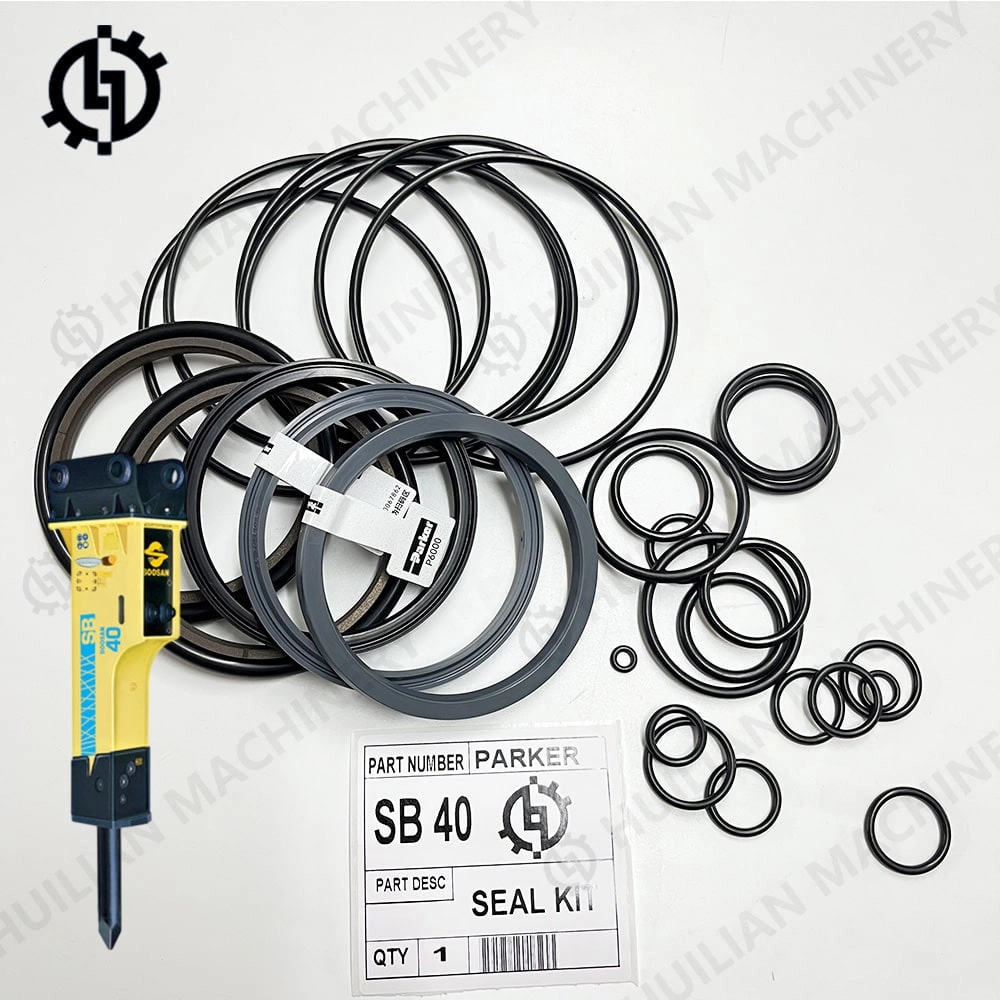
Parker Oil Seal Complete Repair SB40 Seal Kit COX001 CO1012 SB40Ⅱ SB40TSP SQ40 For Soosan Hydraulic Rock Breaker Hammer
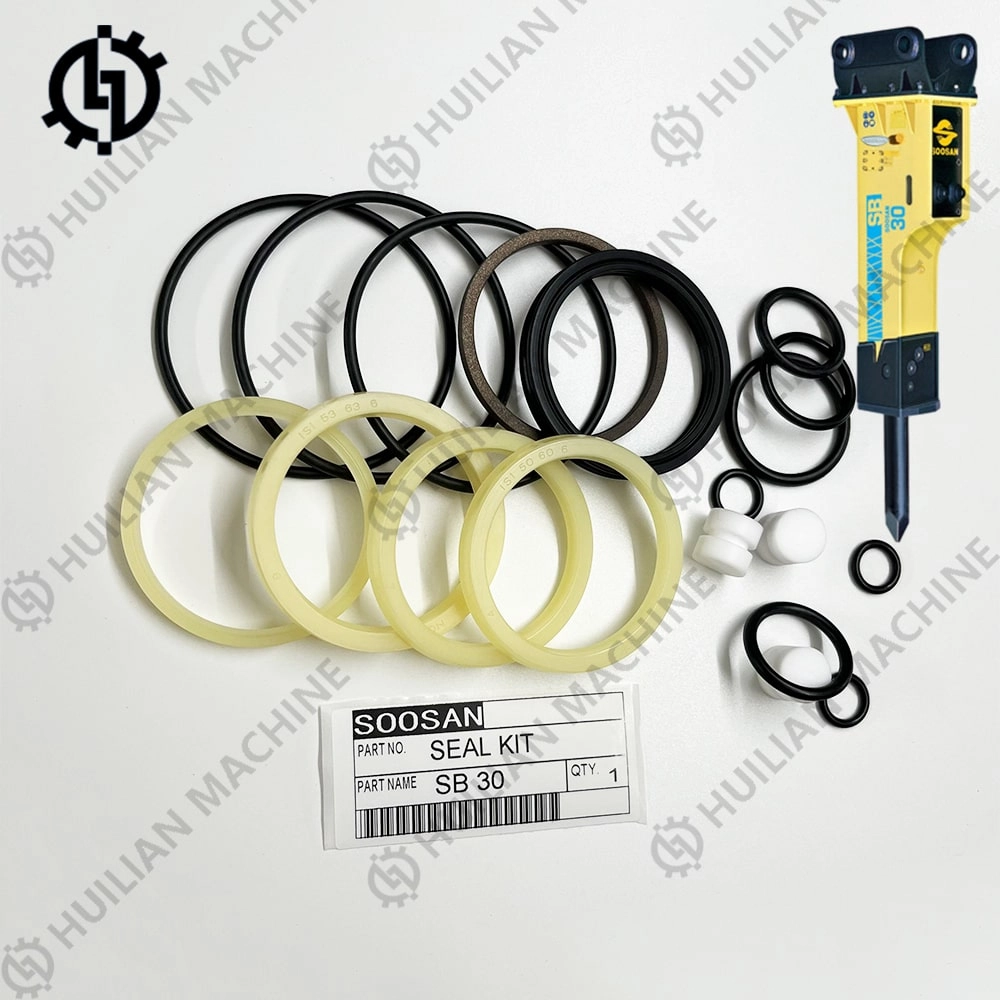
E71012 E7X001 SOOSAN SQ30 SB30Ⅱ SB30 Breaker Seal Kit SB30TS-P SB30Ⅱ TS-P SB30Ⅱ SSL Hydraulic Rock Hammer Parts Oil Repair Kit
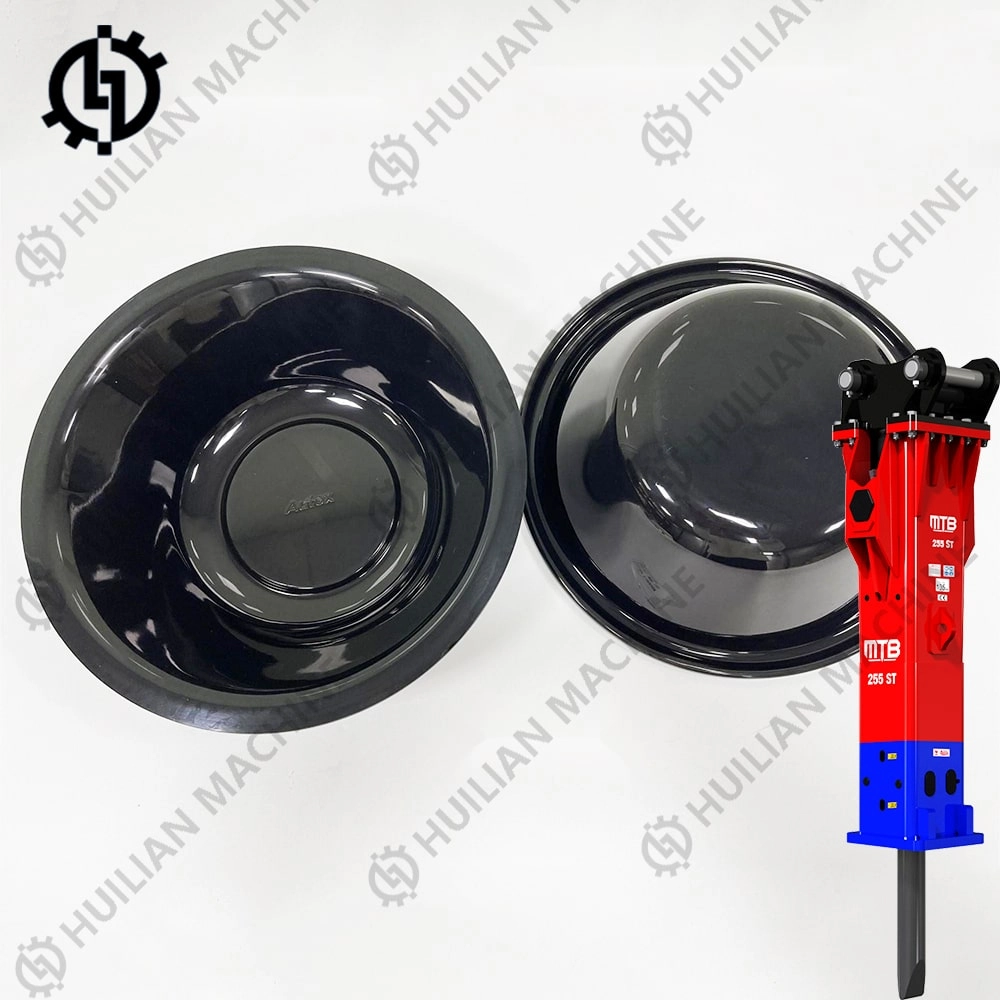
Inan Makina MTB Hydraulic Breaker Parts 45B0116A11 MTB255 MTB MT 255 Diaphragm MTB 255 IQ MTB-255 MTB 255 ST Membrane for Excavator Rock Hammer
 About us
© 2025 HUILIAN MACHINE. All rights reserved