



Preventing Hydraulic Leaks with Quality Seal Kits
- Understanding the problem: why hydraulic leaks start
- How hydraulic systems fail in breakers
- Most common leak causes I see in the field
- Why a dedicated rock breaker seal kit matters
- Choosing the right seal materials and designs
- Common seal materials and their tradeoffs
- Seal design choices: lips, backups and wipers
- Selecting seals by application conditions
- Installation, inspection and maintenance best practices
- Pre‑installation checks I always perform
- Inspection intervals and predictive indicators
- Repair vs. replace: decision matrix
- Evaluating seal kit quality and supplier credibility
- Metrics I use to evaluate kits
- Comparing suppliers: a brief table
- Why certifications and documentation matter
- Real‑world results: reducing leaks and downtime
- Case example: converting to a specified rock breaker seal kit
- Quantifying savings
- Monitoring performance over time
- Choosing Huilian Machine as a partner for seal kits and breaker parts
- About Huilian Machine
- Why I recommend Huilian for rock breaker seal kit supply
- Contact and partnership opportunities
- FAQ — Preventing hydraulic leaks with seal kits
- 1. How often should I replace a rock breaker seal kit?
- 2. Can I mix seal materials from different suppliers?
- 3. What filtration level is recommended to protect breaker seals?
- 4. Are High Quality seal kits worth the extra cost?
- 5. How do I tell if a leak is caused by seals or by damaged rods/pistons?
- 6. What should be included in a comprehensive seal kit?
Hydraulic leaks on breakers and excavator attachments cost time and money. In this article I share hands‑on experience and evidence‑based guidance for preventing hydraulic leaks with quality seal kits. I focus on rock breaker seal kit selection, correct installation, maintenance practices, and how to evaluate suppliers. My aim is practical: reduce unplanned downtime, extend component life, and improve total cost of ownership for hydraulic breakers.
Understanding the problem: why hydraulic leaks start
How hydraulic systems fail in breakers
Hydraulic breakers (also called hydraulic hammers) operate under very high pressures and repetitive shock loading. The combination of high system pressure, rapid reciprocating motion, contamination, and thermal cycling makes the seal interfaces the most failure‑prone areas. For a concise technical overview of hydraulic breakers, see the Hydraulic breaker entry on Wikipedia (Wikipedia).
Most common leak causes I see in the field
From service records and inspections, the most frequent root causes are: contaminated hydraulic fluid, degraded seal material (age, chemical attack, heat), damaged mating surfaces (scoring, corrosion), incorrect seal type or size, and improper installation. Each of these is preventable with the right procurement and maintenance strategy centered on a quality rock breaker seal kit.
Why a dedicated rock breaker seal kit matters
A rock breaker seal kit bundles the correct seals—rod seals, piston seals, wipers, O‑rings, backups, and guide rings—engineered and sized specifically for breaker models. Kits reduce risk of wrong‑part replacements and speed repairs. When kits are matched to operating conditions (temperature, pressure, medium) they measurably reduce leak recurrence.
Choosing the right seal materials and designs
Common seal materials and their tradeoffs
Seal material selection affects chemical compatibility, temperature tolerance, abrasion resistance and aging. Typical choices I specify for rock breaker seal kit components include:
- Nitrile rubber (NBR): economical, good for petroleum‑based fluids, temp range approximately -40°C to +100°C.
- Fluorocarbon (FKM/Viton): higher chemical and temperature resistance, typically -20°C to +200°C.
- Polyurethane (AU/PU): excellent abrasion resistance and high mechanical strength, typical range -30°C to +80°C.
- PTFE (Teflon) composites: excellent low friction and chemical resistance; often used as backup or sealing element in extreme conditions.
These ranges and properties are documented in industry technical references such as the Parker O‑Ring Handbook (Parker).
Seal design choices: lips, backups and wipers
For breakers, I recommend multi‑element sealing solutions: primary elastic seals for pressure sealing, backup rings (often PTFE) to prevent extrusion at high pressure, and wipers/scrapers to keep contamination out. Guide rings or wear rings control piston/rod alignment and prevent metal‑to‑metal contact that damages seals.
Selecting seals by application conditions
Match the rock breaker seal kit composition to these variables: maximum operating pressure, cylinder speed, fluid type (mineral oil, water‑glycol), ambient and operating temperature, and contamination level in the hydraulic system. For example, breakers used in cold climates may need low‑temperature elastomers to avoid hardening and leakage on startup.
Installation, inspection and maintenance best practices
Pre‑installation checks I always perform
Before installing any rock breaker seal kit I inspect mating surfaces for scratches, corrosion, and nicks. I measure rod and bore dimensions against manufacturer tolerances, clean all parts thoroughly, and verify seal orientation and lubrication. Correct installation tools and techniques (not excessive stretching of O‑rings, correct chamfering) are essential to avoid early damage.
Inspection intervals and predictive indicators
Routine inspection schedules vary by utilization but I recommend a basic checklist for every 100 operational hours: visual leak checks, fluid condition and contamination analysis (particle count, moisture), and seal condition inspection during planned service windows. Particle contamination is the most frequent silent killer—fluid cleanliness to ISO 4406 levels appropriate for the hydraulic components is vital; see ISO 4406 references for particle contamination standards (Wikipedia summary).
Repair vs. replace: decision matrix
When a leak is detected, consider these factors to decide repair vs. replace: extent of damage to rod/piston surfaces, presence of scoring or corrosion, age of bulk seals, and downtime cost. A full rock breaker seal kit replacement is usually fastest and most reliable if multiple seals are aged or contaminated. Partial fixes can be false economies if contamination remains in the system.
Evaluating seal kit quality and supplier credibility
Metrics I use to evaluate kits
When assessing rock breaker seal kit suppliers I look at material traceability, dimensional tolerances, test reports (hardness, tensile, compression set), shelf‑life and packaging, and whether kits include installation instructions and recommended lubricants. Performance test data (pressure/extrusion tests, accelerated aging) are strong differentiators.
Comparing suppliers: a brief table
Below is a comparison I use when choosing between replacement options. The costs below are illustrative categories (low/medium/high) and the performance indicators are weighted by my experience:
| Criterion | Generic Aftermarket | OEM/High‑Quality Supplier | High Quality Certified Supplier |
|---|---|---|---|
| Material Traceability | Low | Medium | High (batch certs) |
| Dimensional Accuracy | Variable | Consistent | Strict tolerance control |
| Test Documentation | Minimal | Available | Comprehensive (material & performance) |
| Price | Low | Medium | High |
| Expected Field Life | Shorter | Longer | Longest |
Data sources for material and testing expectations include industry seal handbooks and standards such as the Parker O‑Ring Handbook cited earlier and quality management standards like ISO 9001 (ISO).
Why certifications and documentation matter
Certificates such as material batch reports, hardness testing, and traceable production records reduce the risk of counterfeit or incorrectly specified components. For contractors and fleet operators, documented quality also supports warranty claims and lifecycle costing analyses.
Real‑world results: reducing leaks and downtime
Case example: converting to a specified rock breaker seal kit
In one fleet I managed, switching from mixed generic seals to a tailored rock breaker seal kit reduced repeat leaks by 75% within six months. The savings came from fewer service stops, reduced fluid top‑ups, and longer hammer life. The key changes were: choosing polyurethane guide rings for abrasion resistance, Viton for high‑temp pistons, and adding PTFE backup rings for high pressure extrusion resistance.
Quantifying savings
Estimate savings by calculating reduced downtime (hours saved × hourly machine cost) plus reduced parts and labor for repeated repairs. Many operators find that a quality kit has higher upfront cost but lower lifecycle cost due to fewer callouts and extended component life.
Monitoring performance over time
After fitting new kits I monitor leak rates, fluid contamination, and seal condition at standard intervals. I also recommend logging repair causes and parts used so patterns (e.g., recurring rod scoring) can be addressed upstream—sometimes a machine alignment or hydraulic filtration fix is the real solution, not the seal itself.
Choosing Huilian Machine as a partner for seal kits and breaker parts
About Huilian Machine
Founded in 2005, Huilian Machine is a professional OEM supplier of excavator parts. We are leading excavator breaker parts manufacturers from China and offer a wide range of products, including hydraulic breaker hammers, chisels, seals and seal kits, diaphragms, pistons, WearBush, rompin/retainer bars, through bolts, side bolts, valves and liners. Our team comprises experienced technicians, R&D experts, designers, quality control professionals, salespeople and after‑sales service teams. Our products are exported to over 90 countries and regions and are highly regarded by customers worldwide for their quality and variety. For more details visit our website https://www.huilianmachine.com/.
Why I recommend Huilian for rock breaker seal kit supply
From my assessment, Huilian combines manufacturing scale with quality controls, offering traceable materials and tailored kits for different breaker models. Their product range includes not only seal kits but the complementary components (pistons, diaphragms, wear bushes) that allow comprehensive overhauls, reducing the chance of recurring leaks due to neglected mating parts. This systems approach is a competitive advantage versus suppliers who sell seals only.
Contact and partnership opportunities
Guangzhou Huilian Machinery Co., Ltd. is committed to becoming a global leader in the supply of excavator parts and components and is seeking global distributor partners to promote the sustainable development of the excavator parts industry. Contact: service@huilianmachine.com, +86 188 1917 0788. Learn more at https://www.huilianmachine.com/.
FAQ — Preventing hydraulic leaks with seal kits
1. How often should I replace a rock breaker seal kit?
Replace on scheduled major services or earlier if you see persistent leaks, fluid contamination spikes, or visible seal degradation. For high‑use fleets, annual replacement or every 1,000–2,000 operational hours is common; adjust frequency based on operating conditions.
2. Can I mix seal materials from different suppliers?
Mixing materials can create compatibility issues (different hardness, compression set, thermal expansion). Use a single, specified rock breaker seal kit per repair where possible to ensure consistent performance.
3. What filtration level is recommended to protect breaker seals?
Maintain hydraulic fluid cleanliness appropriate to your system—commonly ISO 4406 codes recommended by OEMs. In practice, particle counts below ISO 18/16/13 are a starting point; more critical systems require cleaner fluid. Consult your breaker’s OEM documentation.
4. Are High Quality seal kits worth the extra cost?
Yes—if your operating context includes high pressures, abrasive conditions, or high utilization. High Quality kits with verified materials and backups reduce leakage and downtime, providing lower total cost of ownership. Always compare test documentation and supplier traceability.
5. How do I tell if a leak is caused by seals or by damaged rods/pistons?
Minor seepage may indicate seal wear, while persistent high‑pressure leaks often point to scoring or corrosion on the rod or piston. Disassemble and inspect surfaces for grooves or pitting. If damage is present, replacing seals alone is unlikely to fix the issue long term.
6. What should be included in a comprehensive seal kit?
Ideal rock breaker seal kits include rod seals, piston seals, back‑up rings, wipers/scrapers, O‑rings, guide/wear rings, and installation guidance. Kits that also provide recommended lubricants and storage/handling instructions reduce installation errors.
If you need help selecting the correct rock breaker seal kit for your breaker model, or want to request test documentation and pricing, contact our team at Huilian Machine: service@huilianmachine.com or +86 188 1917 0788. Visit our product pages to view full catalog and technical resources: https://www.huilianmachine.com/.
Extend Chisel Life: Maintenance and Care for Hydraulic Breakers
Top 10 hydraulic pump seal kits Manufacturers and Supplier Brands
How to Choose Compatible Hammer Breaker Spare Parts by Model
Top Hydraulic Breaker Box Models for Heavy-Duty Excavators
About
How can I ensure I’m selecting the right part for my equipment?
Our expert team can assist you in finding the right part based on your machine model, specifications, and requirements. Contact us for personalized support.
What is your shipping and delivery time?
We offer fast and reliable global shipping. Delivery times vary depending on location and order size, but we strive to process and ship orders as quickly as possible.
Do you offer OEM and aftermarket parts?
Yes, we manufacture high-quality OEM parts and supply aftermarket parts from top brands such as NOK, Parker, SKF, and Hallite to ensure optimal performance.
Are your parts compatible with all excavator brands?
Yes, our parts are designed to be compatible with major brands like Komatsu, Caterpillar, Hitachi, Hyundai, Doosan, JCB, Kobelco, Sany, and many more.
What types of excavator parts do you offer?
We provide a wide range of high-quality excavator parts, including hydraulic breakers, chisels, seal kits, diaphragms, pistons, wear bushes, retainer bars, through bolts, side bolts, valves, and liners.

Huilian HL68 Hammer Breaker for 4-7 Ton Excavator SOOSAN SB40 Hydraulic Rock Breaker
Side type hydraulic breaker : Easy to control, convenient positioning, durable, high working efficiency, strong striking force, long service life, stable operating performance, convenient after-sales service.
Top type hydraulic breaker : Strong impact power; excellent environmental performance; exquisite manufacturing technology; easy maintenance,fast after-sales service
Box type hydraulic breaker :leading heat treatment technology, enhance heat resistance, wear resistance. Under the condition of keeping the oil pressure constant, the cylinder volumeis reduced and the fuel consumption is reduced.The self-developed core is adopted to make the piston cylinder body moredurable and the service life longer.Exposed decks are made of high-strength steel plates to reduce wear.The best efficiency matching with excavator and loader is realized
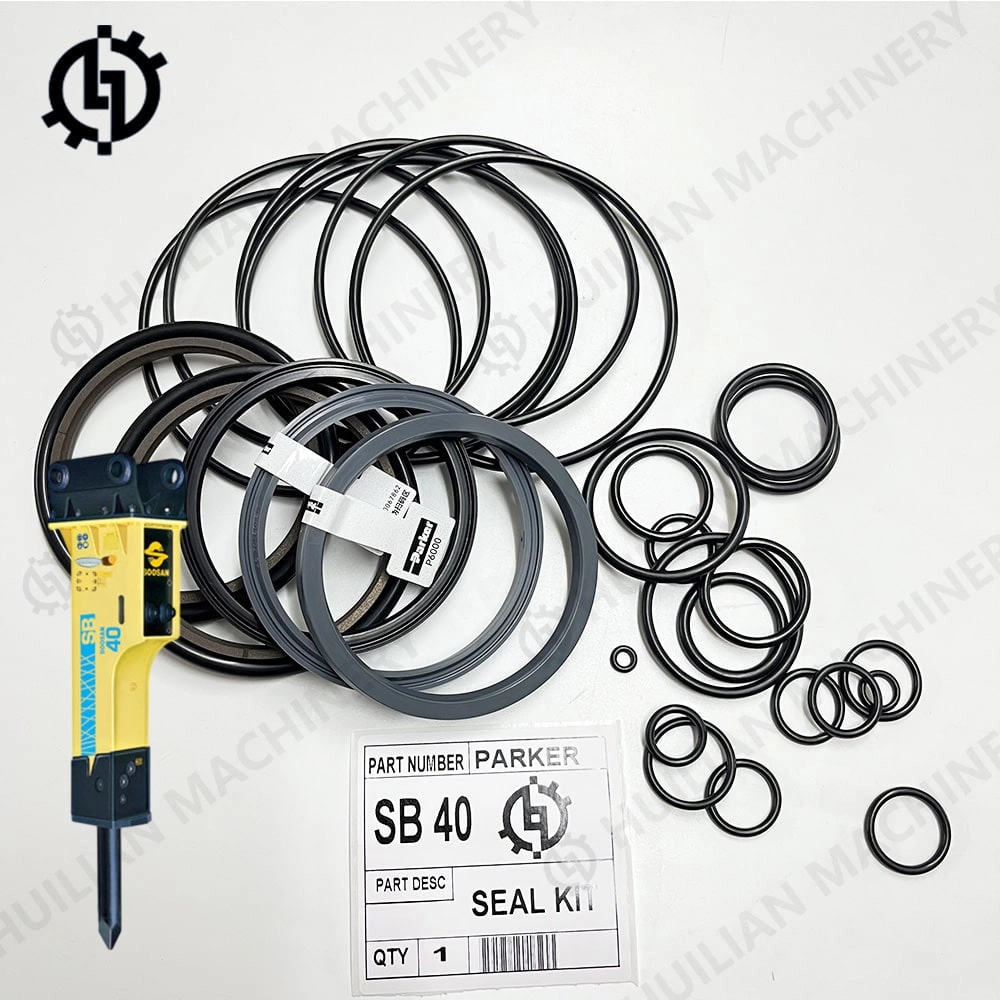
Parker Oil Seal Complete Repair SB40 Seal Kit COX001 CO1012 SB40Ⅱ SB40TSP SQ40 For Soosan Hydraulic Rock Breaker Hammer
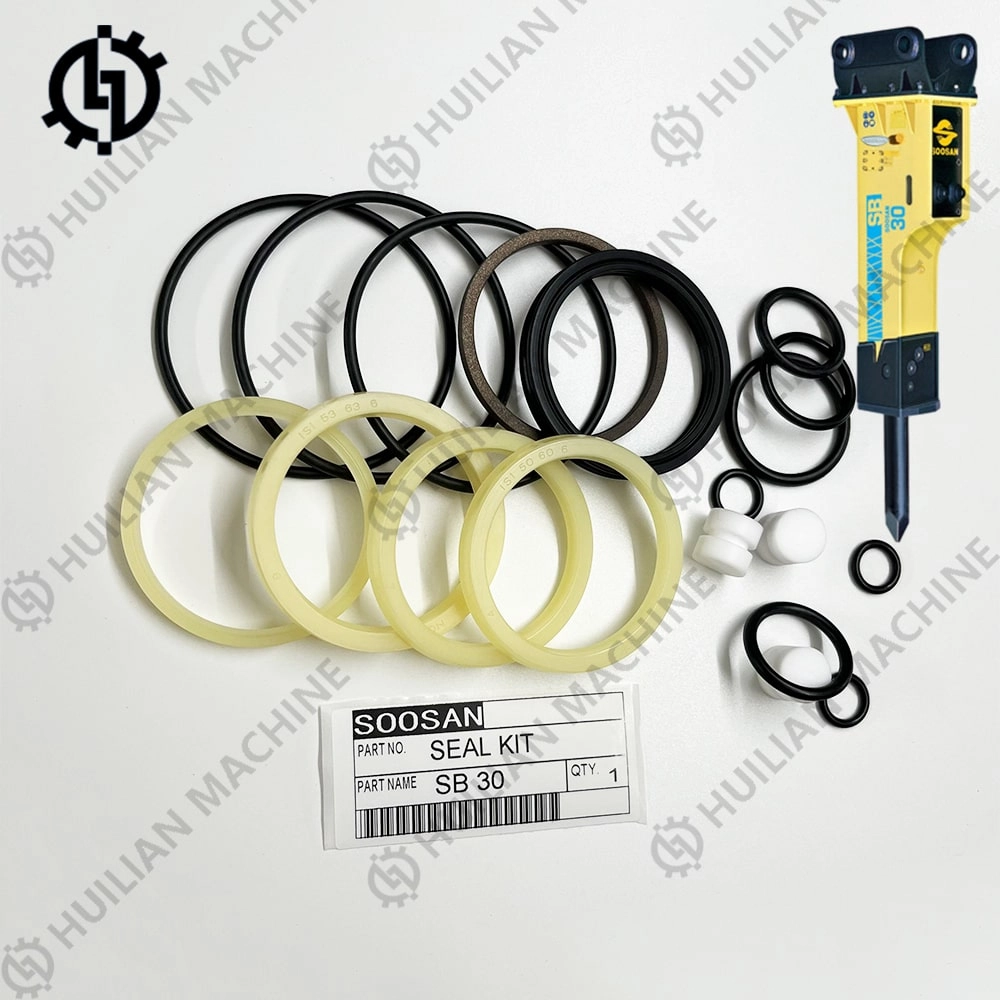
E71012 E7X001 SOOSAN SQ30 SB30Ⅱ SB30 Breaker Seal Kit SB30TS-P SB30Ⅱ TS-P SB30Ⅱ SSL Hydraulic Rock Hammer Parts Oil Repair Kit
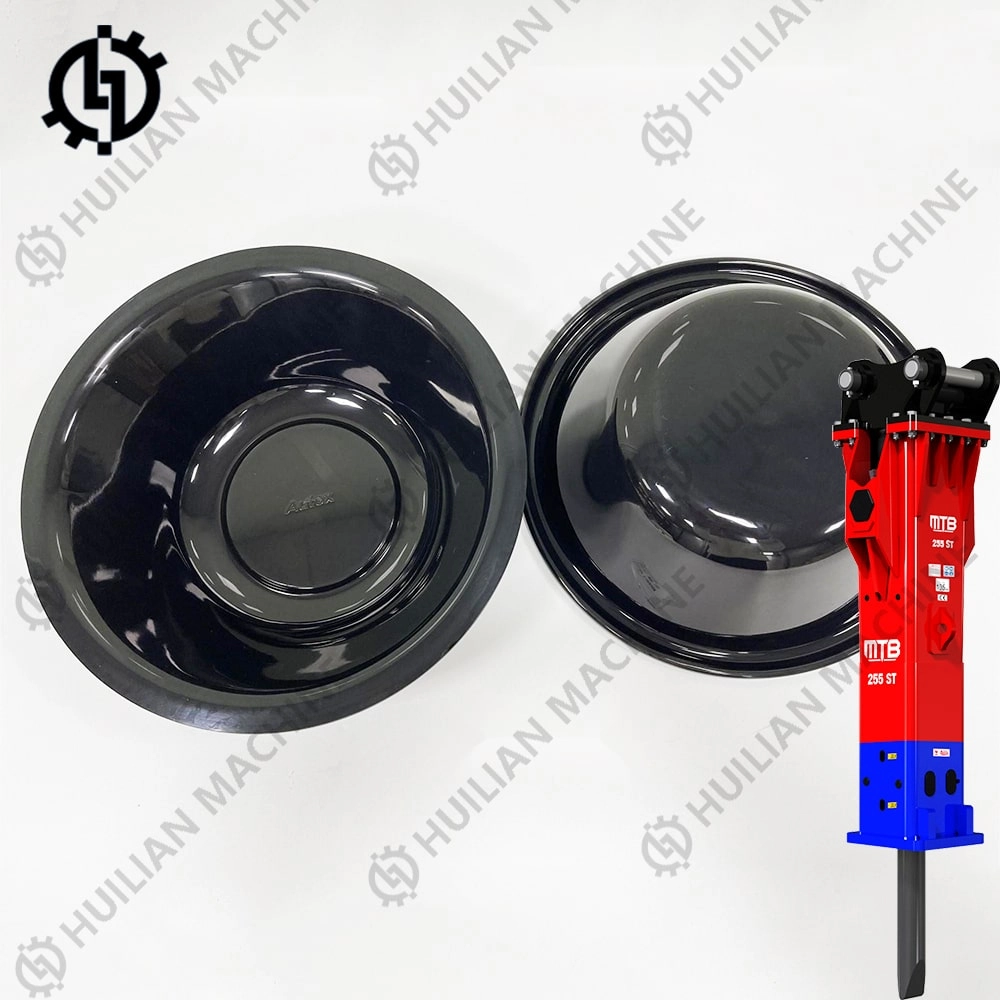
Inan Makina MTB Hydraulic Breaker Parts 45B0116A11 MTB255 MTB MT 255 Diaphragm MTB 255 IQ MTB-255 MTB 255 ST Membrane for Excavator Rock Hammer
 About us
© 2025 HUILIAN MACHINE. All rights reserved