



Reduce Downtime: Excavator Rock Breaker Maintenance Tips
- Understanding Excavator Rock Breaker Systems
- Key Components and Failure Points
- How Maintenance Reduces Root Causes
- Daily and Weekly Maintenance Routines
- Daily Pre-Shift Checklist
- Weekly Functional Tests
- Lubrication and Tool Care
- Troubleshooting and Repair Strategies
- Diagnosing Loss of Impact Power
- Common Failure Modes and Fixes
- Valve and Accumulator Maintenance
- Parts Management, Replacement Strategy, and Inventory
- Critical Spare Parts to Stock
- OEM vs Aftermarket Parts — How I Decide
- Inventory Planning and Turnover
- Hydraulic Oil, Filtration, and Contamination Control
- Importance of Oil Cleanliness
- Filtration Best Practices
- Hydraulic Fluid Selection and Change Intervals
- Storage, Transportation, and Mounting Best Practices
- Proper Storage of Breaker and Tools
- Mounting and Carrier Interface
- Transport and Jobsite Handling
- Case Study and Measurable Outcomes
- Where to Find Authoritative Standards and Further Reading
- Huilian Machine: OEM Support and Quality Parts
- FAQs — Common Questions About Excavator Rock Breaker Maintenance
- 1. How often should I replace seals on an excavator rock breaker?
- 2. Can I use compressed air instead of nitrogen to charge accumulators?
- 3. What hydraulic fluid is best for breakers?
- 4. Which spare parts are most critical to keep on-site?
- 5. How do I tell if my breaker valve is sticking?
- 6. What maintenance tasks can operators do versus a technician?
- Contact and Next Steps
As someone who has spent decades specifying, maintaining, and troubleshooting excavator rock breaker systems, I know that minimizing downtime is not just about reacting fast—it's about designing and executing a maintenance plan that prevents failures before they happen. In this article I outline actionable, verifiable maintenance practices for excavator rock breakers—covering daily checks, weekly and monthly routines, diagnostic troubleshooting, and parts management—so you can keep your breaker hammer operating reliably on the jobsite.
Understanding Excavator Rock Breaker Systems
Before diving into maintenance, it's crucial to understand how an excavator rock breaker (a type of hydraulic breaker) functions and which subsystems are most likely to fail. A hydraulic breaker consists of the breaker housing, piston, tool (chisel/point), nitrogen or gas chamber (on some designs), accumulator/valve assembly, hydraulic hoses and fittings, mounting bracket (carrier), and the coupling to the excavator's boom. For general background on hydraulic breakers, see the Wikipedia entry on hydraulic breakers (https://en.wikipedia.org/wiki/Hydraulic_breaker).
Key Components and Failure Points
Common failure locations I inspect first are seals (piston/valve), chisel/tool wear, accumulator/valve malfunctions, wear bushings, and hydraulic contamination—each will directly affect performance and downtime. Seal failure leads to loss of impact energy; contaminated oil accelerates valve and pump wear; worn chisels and retainers increase shock loads on internal components.
How Maintenance Reduces Root Causes
Targeted interventions—regular seal replacement, tool rotation, oil monitoring and filtration, and correct nitrogen charging—address the root causes of most breakdowns. For fluid cleanliness, ISO 4406 is the commonly referenced standard for hydraulic oil particulate contamination; maintaining appropriate cleanliness levels extends valve and pump life (https://en.wikipedia.org/wiki/ISO_4406).
Daily and Weekly Maintenance Routines
Daily Pre-Shift Checklist
I recommend a concise pre-shift inspection that the operator performs before startup. This should include: visual inspection for oil leaks at hoses and couplings; check chisel condition and retainer security; listen for unusual valve noise; verify correct mounting bolts torque; ensure hydraulic oil level in the carrier is within range; and inspect accumulator/gas chambers for obvious damage. Keeping a one-line checklist posted in the cab encourages compliance.
Weekly Functional Tests
Perform a functional check under no-load and light-load conditions: cycle the breaker at idle, verify consistent impact energy, monitor hydraulic temperatures and pressures (compare with excavator/breaker manual values), and test auxiliary couplings for secure fit. Record readings—trend analysis quickly reveals creeping issues before catastrophic failure.
Lubrication and Tool Care
Daily or every-shift greasing of the tool shank and bushing area reduces wear and prevents galling. Use an approved chisel grease and inspect the tool retaining pins, locking bars/retainers, and through bolts. Rotate chisels regularly to distribute wear, and replace when diameter or taper falls beyond OEM limits.
Troubleshooting and Repair Strategies
Diagnosing Loss of Impact Power
When impact diminishes, follow a systematic diagnostic flow: check hydraulic oil level and contamination; examine tool condition; perform a seal leak-down test; evaluate nitrogen/gas charge if applicable; and scan for valve sticking. I keep a small infrared thermometer and a portable oil-test kit onsite for rapid checks—temperature spikes and visible oil contamination often point to filter or pump issues.
Common Failure Modes and Fixes
Below is a practical comparison table I use in the field to prioritize repairs.
| Symptom | Likely Cause | Immediate Action | Long-Term Fix |
|---|---|---|---|
| Low impact energy | Worn seals, gas/accumulator leak, worn chisel | Stop operation; inspect seals & tool | Replace seals/kit; recharge gas; install new chisel |
| Hydraulic oil contamination | Poor filtration, open hoses, tank contamination | Isolate breaker; replace filters; avoid operation | Flush system; install high-efficiency filters; improve oil handling |
| Unusual noise/vibration | Loose mounting, worn bush, cracked housing | Inspect & tighten; suspend heavy use | Replace wear bush/retainer bars; repair housing |
| Tool ejection or retention failure | Damaged retainer/through bolt, worn locking bar | Secure tool; withdraw from service | Replace retainer bars, through bolts, and locking components |
Valve and Accumulator Maintenance
Valve sticking or inefficient valve function is a frequent silent cause of downtime. I advise scheduled valve inspections at intervals recommended by the breaker OEM—typical valve service intervals vary by usage but often occur every 500–1,000 operating hours. Use OEM or OEM-equivalent valve kits and precise torque sequences during reassembly. For accumulators or gas-charged systems, use a calibrated nitrogen charger and follow manufacturer-specified pressures; never use compressed air instead of nitrogen.
Parts Management, Replacement Strategy, and Inventory
Critical Spare Parts to Stock
Having the right spare parts onsite turns multi-day repairs into same-day fixes. I prioritize stocking: seal kits (piston, valve, rod), chisels/points, wear bushings, retainer/rompin bars, through bolts and side bolts, pistons, valves and liners, and high-quality hydraulic hoses with crimped ends. For reference, these components correspond to the primary failure modes described earlier.
OEM vs Aftermarket Parts — How I Decide
In my practice I weigh the trade-offs between cost and reliability. OEM parts offer guaranteed fit and material specifications, which reduce rework risk. High-quality aftermarket parts can be acceptable when they meet material and dimensional specs, and come with traceable QC documentation. When downtime risk is high, I default to OEM or trusted OEM-equivalent suppliers to minimize uncertainty.
Inventory Planning and Turnover
Use a parts rotation and minimum stock policy based on operating hours and supplier lead times. Maintain a two-tier stock: A-level critical spares (onsite) and B-level items (fast replenishment). Track usage in a simple spreadsheet or CMMS—data-driven reorder points prevent stockouts. If your operation spans remote sites, distribute spare kits to minimize logistic delays.
Hydraulic Oil, Filtration, and Contamination Control
Importance of Oil Cleanliness
Hydraulic valves and pumps for breakers are sensitive to particulate and water contamination. I follow ISO cleanliness guidelines—monitor oil and aim to maintain contamination levels appropriate for the hydraulic components in use. Regular oil sampling and particle counting reveal trends well before performance degrades.
Filtration Best Practices
Install high-quality return-line filters rated for the particle sizes relevant to your system. Change filters on a scheduled basis and whenever oil samples show increased particulate. Use full-flow and bypass filtration strategies where appropriate. When topping off fluids, use clean containers and funnels to avoid introducing contamination.
Hydraulic Fluid Selection and Change Intervals
Use hydraulic fluids meeting the excavator and breaker manufacturer's viscosity and additive specifications. Change intervals depend on operating hours, contamination levels, and environment; many operations find oil changes every 1,000–2,000 hours acceptable when active filtration and sampling are in place, but always follow the OEM manual for your carrier and breaker models.
Storage, Transportation, and Mounting Best Practices
Proper Storage of Breaker and Tools
When breakers and chisels are idle, store them in dry, sheltered locations on pallets with tool protectors. Coat exposed metal with short-term corrosion inhibitors. Store seal kits and spare pistons in clean, climate-controlled areas to preserve rubber and elastomer properties.
Mounting and Carrier Interface
Correct mounting and torque on through bolts and side bolts is crucial. I always re-torque fasteners after the first few hours of a new installation (per OEM guidelines) because bolts and bushings settle. Ensure the carrier’s hydraulic flow and pressure are within the breaker’s rated range—overpressure or insufficient flow both cause premature wear.
Transport and Jobsite Handling
Use appropriate lifting points and avoid dragging the breakout tool on hard surfaces. During transport, secure the breaker to eliminate shock loads and prevent damage to hoses and fittings. Damage sustained during transit often manifests as slow leaks that compound into larger failures.
Case Study and Measurable Outcomes
In one quarry operation I advised, the team implemented a combined program of daily checklists, on-site spare kits for seals and chisels, weekly oil sampling, and scheduled valve services every 750 hours. Within six months they reduced unplanned breaker downtime by over 40% and extended average tool life by nearly 30%—outcomes documented in their maintenance logs and work-order records. The measurable improvement came primarily from early detection of oil contamination and timely seal replacements.
Where to Find Authoritative Standards and Further Reading
For technical standards and background, consult the hydraulic breaker overview on Wikipedia (https://en.wikipedia.org/wiki/Hydraulic_breaker) and refer to ISO cleanliness standards such as ISO 4406 (https://en.wikipedia.org/wiki/ISO_4406) for guidance on fluid particulate control.
Huilian Machine: OEM Support and Quality Parts
Founded in 2005, Huilian Machine is a professional OEM supplier of excavator parts. We are leading excavator breaker parts manufacturers in China and offer a comprehensive parts range, including hydraulic breaker hammers, chisels, seals and seal kits, diaphragms, pistons, WearBush, rompin/retainer bars, through bolts, side bolts, valves and liners. The depth of available parts makes it feasible to execute the maintenance strategies I recommend without long procurement delays.
Huilian's team comprises experienced and skilled professionals, including technicians, R&D experts, designers, quality control professionals, salespeople and after-sales service teams. Our products are exported to over 90 countries and regions and are highly regarded by customers worldwide for their quality and variety. Guangzhou Huilian Machinery Co., Ltd. is committed to becoming a global leader in the supply of excavator parts and components and is seeking global distributor partners to promote the sustainable development of the excavator parts industry.
Why I recommend Huilian for breaker maintenance programs: they provide OEM-quality seal kits and pistons that meet material and dimensional standards, fast lead times for critical spares, and technical support for installation and troubleshooting. Their core product categories relevant to breaker uptime include excavator parts, Excavator Breaker Parts, Excavator Hydraulic Breaker, Excavator Seal Kit, and Parker seal kit replacements—giving operators secure access to components that align with OEM specifications and my recommended preventive schedules.
Website: https://www.huilianmachine.com/
Email: service@huilianmachine.com
Phone: +86 188 1917 0788
FAQs — Common Questions About Excavator Rock Breaker Maintenance
1. How often should I replace seals on an excavator rock breaker?
Seal life depends on operating conditions, but a practical policy is to inspect seals during every major service interval (typically 500–1,000 hours) and replace them at the first signs of leakage, extrusion, or material hardening. If oil contamination is present, replace seals more frequently. Always use the manufacturer-recommended seal kit and follow torque and lubrication instructions during assembly.
2. Can I use compressed air instead of nitrogen to charge accumulators?
No. Use nitrogen only. Nitrogen is inert and dry, which prevents oxidation and moisture-related corrosion inside the accumulator. Using compressed air (which contains moisture and oxygen) accelerates corrosion and can lead to catastrophic accumulator failure.
3. What hydraulic fluid is best for breakers?
Follow the excavator and breaker OEM recommendations for fluid viscosity and additive packages. Use clean, high-quality hydraulic oils designed for heavy-duty systems and compatible with the equipment seals. Regular oil sampling and adherence to ISO cleanliness standards will determine change intervals.
4. Which spare parts are most critical to keep on-site?
Keep a minimum stock of seal kits (piston/valve), chisels/points, wear bushings, retainer/rompin bars, through bolts and side bolts, and at least one spare piston and valve kit. These spares address the majority of common failures that cause extended downtime.
5. How do I tell if my breaker valve is sticking?
Symptoms include inconsistent impacts, erratic power delivery, and unusual noises. A fluid analysis often shows increased particulate; temperature readings may be high. The definitive check is a valve inspection or bench test per the service manual. Schedule valve service when symptoms or operating hours suggest risk.
6. What maintenance tasks can operators do versus a technician?
Operators should perform daily visual checks, greasing, chisel inspections, and simple functional tests. Technicians should handle seal replacement, valve and accumulator servicing, oil sampling and filtration changes, and any tasks requiring disassembly or pressurized nitrogen equipment.
Contact and Next Steps
If you want to reduce breaker downtime on your sites, start with a baseline audit: capture operating hours, current spare inventory, oil cleanliness data, and the last service dates for valves and seals. I recommend contacting a trusted parts supplier like Huilian Machine for OEM-grade seal kits and spare components to support your preventive program.
Contact Huilian for product lists, distributor opportunities, and technical support: https://www.huilianmachine.com/ | Email: service@huilianmachine.com | Phone: +86 188 1917 0788
Implementing the inspection routines, oil controls, and parts-management strategies in this guide will materially reduce unplanned downtime and extend the useful life of your excavator rock breaker. If you need a customized maintenance checklist or spare-parts kit based on your breaker model and work profile, I can draft one tailored to your fleet.
Wholesale NPK hydraulic breaker manufacturer and supplier in China
Wholesale hydraulic excavator breaker manufacturer and supplier
How to Choose Compatible Hammer Spares for Your Excavator

The Ultimate Guide to Choosing the Best China Hydraulic Rock Breaker Hammer in 2026
About
Do you offer OEM and aftermarket parts?
Yes, we manufacture high-quality OEM parts and supply aftermarket parts from top brands such as NOK, Parker, SKF, and Hallite to ensure optimal performance.
What types of excavator parts do you offer?
We provide a wide range of high-quality excavator parts, including hydraulic breakers, chisels, seal kits, diaphragms, pistons, wear bushes, retainer bars, through bolts, side bolts, valves, and liners.
Are your parts compatible with all excavator brands?
Yes, our parts are designed to be compatible with major brands like Komatsu, Caterpillar, Hitachi, Hyundai, Doosan, JCB, Kobelco, Sany, and many more.
What is your shipping and delivery time?
We offer fast and reliable global shipping. Delivery times vary depending on location and order size, but we strive to process and ship orders as quickly as possible.
How can I ensure I’m selecting the right part for my equipment?
Our expert team can assist you in finding the right part based on your machine model, specifications, and requirements. Contact us for personalized support.

Huilian HL68 Hammer Breaker for 4-7 Ton Excavator SOOSAN SB40 Hydraulic Rock Breaker
Side type hydraulic breaker : Easy to control, convenient positioning, durable, high working efficiency, strong striking force, long service life, stable operating performance, convenient after-sales service.
Top type hydraulic breaker : Strong impact power; excellent environmental performance; exquisite manufacturing technology; easy maintenance,fast after-sales service
Box type hydraulic breaker :leading heat treatment technology, enhance heat resistance, wear resistance. Under the condition of keeping the oil pressure constant, the cylinder volumeis reduced and the fuel consumption is reduced.The self-developed core is adopted to make the piston cylinder body moredurable and the service life longer.Exposed decks are made of high-strength steel plates to reduce wear.The best efficiency matching with excavator and loader is realized
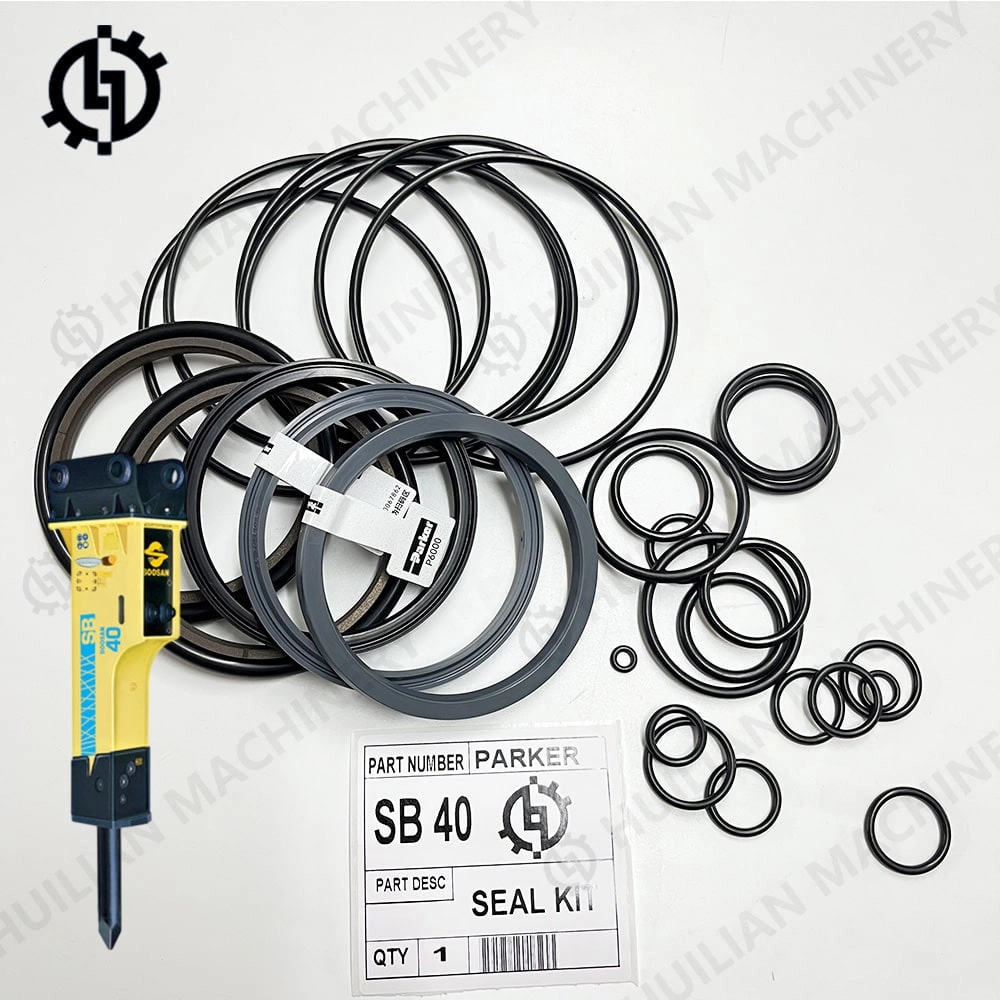
Parker Oil Seal Complete Repair SB40 Seal Kit COX001 CO1012 SB40Ⅱ SB40TSP SQ40 For Soosan Hydraulic Rock Breaker Hammer
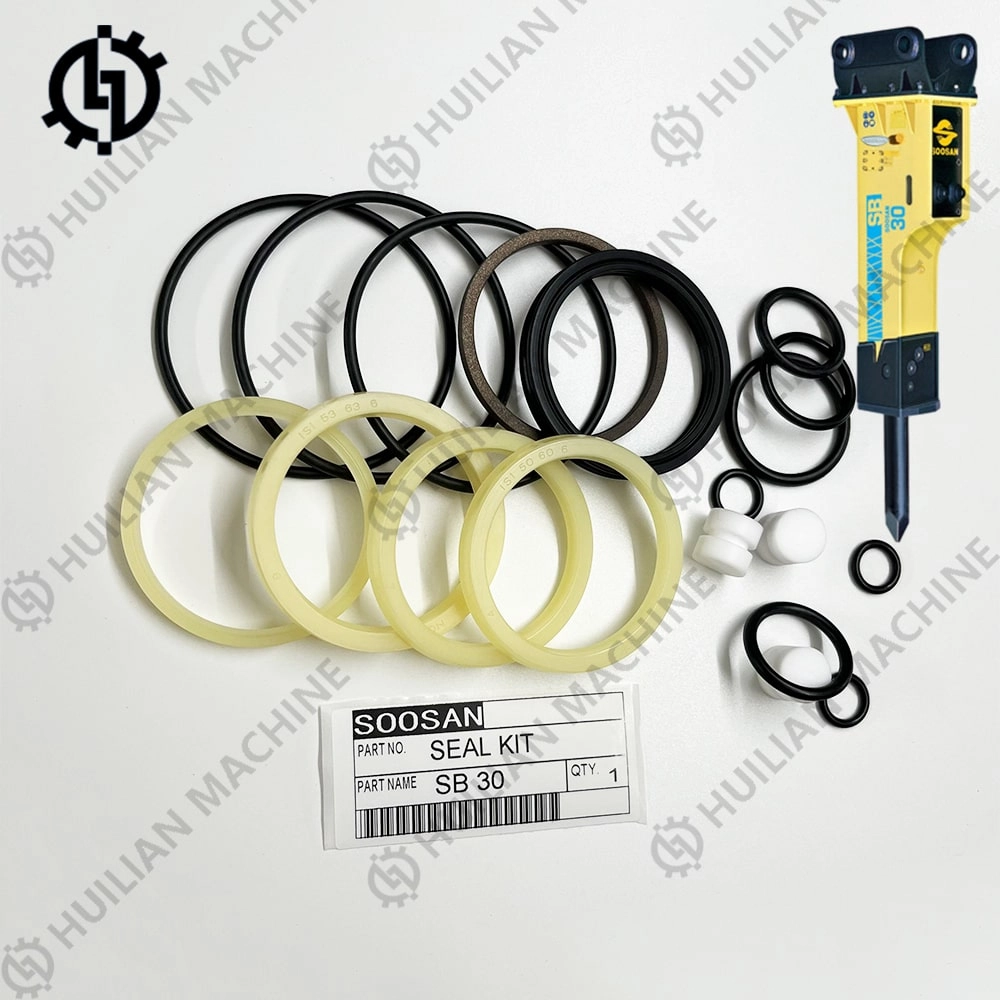
E71012 E7X001 SOOSAN SQ30 SB30Ⅱ SB30 Breaker Seal Kit SB30TS-P SB30Ⅱ TS-P SB30Ⅱ SSL Hydraulic Rock Hammer Parts Oil Repair Kit
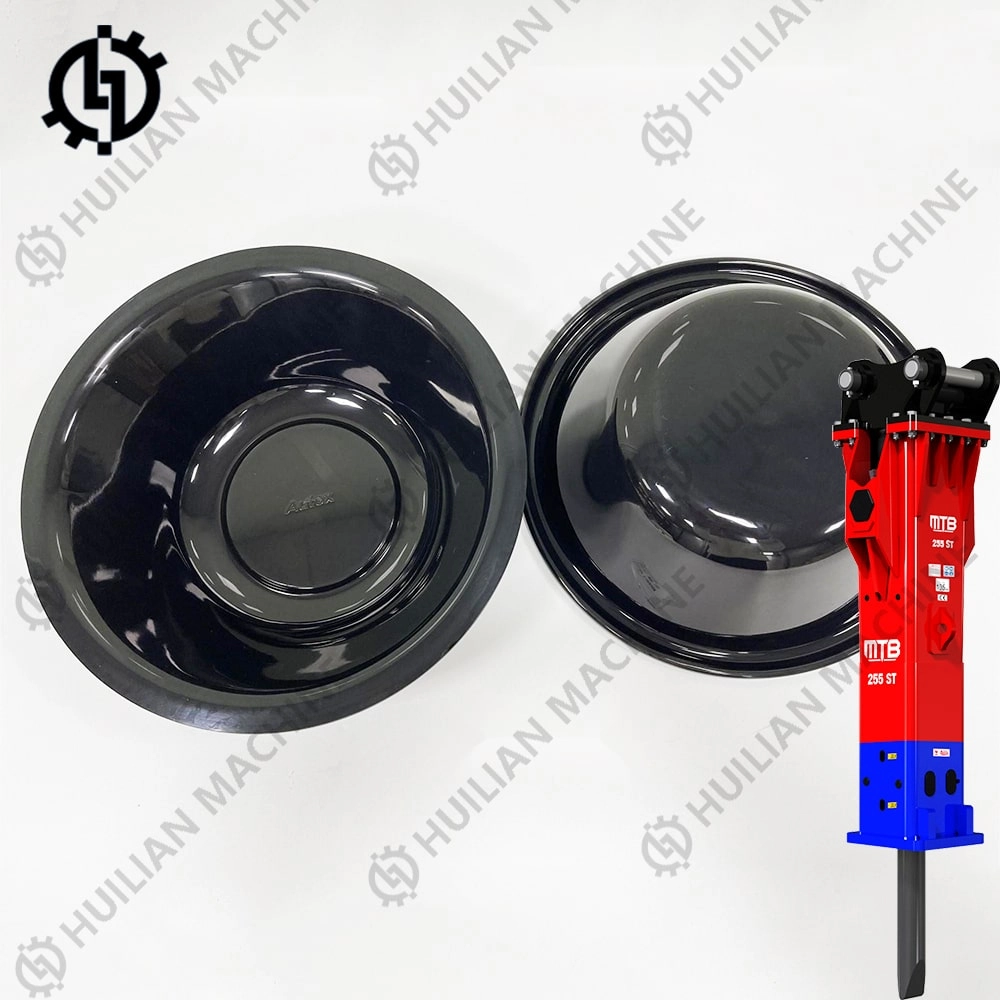
Inan Makina MTB Hydraulic Breaker Parts 45B0116A11 MTB255 MTB MT 255 Diaphragm MTB 255 IQ MTB-255 MTB 255 ST Membrane for Excavator Rock Hammer
 About us
© 2025 HUILIAN MACHINE. All rights reserved