



How to Choose Compatible Hammer Spares for Your Excavator
- Understanding Excavator Breaker Systems
- How hydraulic breakers work and why spares matter
- Common failure modes that spare parts must address
- Key measurements and specifications to record
- Compatibility Factors to Consider
- Mechanical fit: dimensions, tolerances and interchangeability
- Material properties and surface treatments
- Seal compatibility: compounds, profiles and pressure ratings
- Selecting and Inspecting Hydraulic Rock Breaker Hammer Spares Parts
- How to evaluate pistons, bushes and chisels
- Seal kits and valve spares: what to test on receipt
- Practical installation tips to avoid early failures
- Maintenance Strategies, Sourcing and Cost-Benefit Analysis
- Maintenance intervals and predictive indicators
- OEM vs aftermarket: data-driven comparison
- Life-cycle costing and inventory strategy
- Practical Compatibility Checklist and Inspection Table
- Why Choose Huilian Machine for Your Breaker Parts
- Company profile and capabilities
- Quality systems, testing and certifications
- Global reach, support and partnership opportunities
- Final recommendations and practical steps
- Step-by-step procurement flow I follow with clients
- When to escalate to a specialist
- Closing practical tip
- Frequently Asked Questions (FAQ)
- 1. How do I know if a piston is compatible with my breaker?
- 2. Can I use aftermarket hydraulic rock breaker hammer spares parts safely?
- 3. What seals are best for high-temperature hydraulic systems?
- 4. How often should I replace wear bushes and seals?
- 5. What documentation should a reputable supplier provide?
- 6. How can Huilian Machine help my operation?
I have spent years advising contractors and parts managers on selecting reliable components for excavator breakers. Choosing the right hydraulic rock breaker hammer spares parts is not just about matching part numbers — it requires understanding breaker design, material compatibility, seal and piston tolerances, supplier quality systems, and life-cycle costs. In this article I outline a systematic approach to select compatible spares, share inspection and installation tips, compare OEM and aftermarket trade-offs, and provide a practical compatibility checklist you can use today. I also explain how a reputable supplier like Huilian Machine can simplify procurement and lower operating risk.
Understanding Excavator Breaker Systems
How hydraulic breakers work and why spares matter
A hydraulic rock breaker (also called a hydraulic hammer) converts hydraulic energy from the carrier (excavator) into percussion energy through a piston striking a tool (chisel). Key internal components include the piston, bushings/wear bushes, valves, accumulator/diaphragm, retainer/rompin bars, through bolts, side bolts, liners and seals. Failure of any of these parts compromises energy transfer, increases carrier wear and raises operating costs. For a technical overview see the Hydraulic breaker entry on Wikipedia (https://en.wikipedia.org/wiki/Hydraulic_breaker).
Common failure modes that spare parts must address
Typical failure modes include piston scoring and seizure, bushing wear (leading to loss of alignment), seal extrusion and leakage, valve wear and hammer loosening due to bolt fatigue. Understanding the dominant failure in your operation—abrasive rock, heavy demolition, or continuous quarrying—helps prioritize spare inventories. I always advise operators to track mean time between failures (MTBF) for each part type to tailor spares stocking.
Key measurements and specifications to record
Before ordering spares, record carrier model, breaker model, serial number, piston diameter and stroke, bushing ID/OD, chisel/tool type, and hydraulic pressure/flow at the breaker. Accurate dimensions and operating pressures are the foundation of compatibility — wrong piston tolerances or incorrect seal cross-section can cause immediate failure.
Compatibility Factors to Consider
Mechanical fit: dimensions, tolerances and interchangeability
Compatibility begins with mechanical fit. Verify part dimensions (diameter, length, thread pitch), tolerances, and material hardness. For example, a piston with an undersize diameter can cause excessive clearance and oil bypass; oversize pistons can bind. When OEM part numbers aren’t available, compare detailed drawings or measure old parts. I use calipers and micrometers to confirm critical dimensions before accepting aftermarket replacements.
Material properties and surface treatments
Piston and tool steel grades, heat treatment, and surface coatings (e.g., nitriding, induction hardening) directly affect wear life. For chisels and pistons used in hard rock, hardened steel with controlled case depth is essential. Ask suppliers for material certificates (e.g., EN or ASTM equivalents) and hardness maps. If a supplier cannot provide basic metallurgy data, I do not proceed.
Seal compatibility: compounds, profiles and pressure ratings
Seals and diaphragms must be compatible with hydraulic oil type, pressure and temperature range. Check material (NBR, HNBR, Viton) and confirm profile dimensions. Incorrect seal compound causes rapid swelling or hardening; incorrect profile leads to extrusion under impact. Where possible, request dynamic and static test data for seals and seal kits.
Selecting and Inspecting Hydraulic Rock Breaker Hammer Spares Parts
How to evaluate pistons, bushes and chisels
When evaluating candidate pistons and chisels, inspect machining quality, concentricity, surface finish (Ra) and hardness. For pistons, a polished, crack-free surface with consistent hardness profile reduces scoring risk. For chisels, check tip geometry and heat-treated core. I also recommend magnetically or dye-penetrant inspecting critical parts for subsurface defects when operating hours are high or failure consequences severe.
Seal kits and valve spares: what to test on receipt
On receiving seal kits, verify part count, cross-check dimensions against sample old seals, inspect for mold flash or cuts, and verify batch and compound markings. For valves, check spool fit, spring rates and surface treatment. A simple leak test on assembled valve blocks before installation saves costly downtime.
Practical installation tips to avoid early failures
Proper installation is as important as part quality. Use correct torque for through bolts and side bolts, apply anti-seize where specified, and use correct lubrication and hydraulic oil cleanliness standards. Keep debris out of the breaker during assembly; even small particulate introduced into the hydraulic circuit will accelerate valve and seal wear. Follow manufacturer torque sequences and break-in procedures when available.
Maintenance Strategies, Sourcing and Cost-Benefit Analysis
Maintenance intervals and predictive indicators
Establish preventive maintenance intervals based on operating conditions, not just calendar time. Key predictive indicators include increased blow counts, high return-line contamination, pressure spikes, and visual chisel wear. Track these with simple logs and periodic oil analysis. For general equipment maintenance best practices see guidance from the UK Health and Safety Executive (HSE maintenance guidance).
OEM vs aftermarket: data-driven comparison
Deciding between OEM and aftermarket parts requires evaluating cost, lead time, warranty, material data, and documented performance. Below is a summary comparison table I use with clients when deciding which supplier to choose. Data is synthesized from supplier specifications and typical industry reports.
| Criterion | OEM Parts | Quality Aftermarket | Low-cost Aftermarket |
|---|---|---|---|
| Fit & interchangeability | Guaranteed | Usually, within tolerance | Variable |
| Material & heat-treatment docs | Provided | Often provided | Rarely |
| Warranty & support | Strong | Moderate | Limited |
| Unit cost | Highest | Mid | Lowest |
| Typical lifespan (pistons/bush) | Baseline | 0.8–1.2x baseline | 0.5–0.8x baseline |
My recommendation: if downtime cost is high, prioritize OEM or high-quality aftermarket with traceable materials and testing. For lower-risk applications, cost-effective aftermarket parts can be used but validated first.
Life-cycle costing and inventory strategy
Compare total cost of ownership (TCO), not only purchase price. TCO includes part price, expected life, installation labor, and downtime risk. Maintain a minimal critical spares kit (seal kits, pins/bolts, chisels, one piston and one set of wear bushes per breaker) and keep a secondary stock for high-use machines. Use MTBF data to adjust reorder points and safety stock levels.
Practical Compatibility Checklist and Inspection Table
| Item | What to Measure / Verify | Accept/Action |
|---|---|---|
| Piston | Diameter, stroke, surface finish (Ra < 0.4μm), hardness profile | Match OEM or supplier cert; reject if out of tolerance |
| Wear Bush / Bushing | ID/OD, length, bore roundness | Replace if ovality >0.1mm |
| Seal Kit | Compound, profile, dimensions, batch code | Verify dimensions and material; perform leak test after assembly |
| Bolts / Retainers | Thread pitch, grade, torque spec | Use matched torque and replace if fatigue evidence |
| Valve components | Spool fit, spring rates, surface finish | Bench test under pressure before commissioning |
Use this checklist whenever a spare is ordered or received. It reduces surprises during installation and early-life failures.
Why Choose Huilian Machine for Your Breaker Parts
Company profile and capabilities
Founded in 2005, Huilian Machine is a professional OEM supplier of excavator parts. We are leading excavator breaker parts manufacturers from China and offer a wide range of products, including hydraulic breaker hammers, chisels, seals and seal kits, diaphragms, pistons, WearBush, rompin/retainer bars, through bolts, side bolts, valves and liners. Huilian's team comprises experienced and skilled professionals, including technicians, R&D experts, designers, quality control professionals, salespeople and after-sales service teams. Our products are exported to over 90 countries and regions and are highly regarded by customers worldwide for their quality and variety.
Quality systems, testing and certifications
When I evaluate manufacturers I look for documented quality systems (e.g., ISO 9001), material certifications, and factory test procedures. Huilian emphasizes quality control across production stages and provides material and hardness certificates on request. For reference on quality management standards see ISO 9001 information (https://www.iso.org/iso-9001-quality-management.).
Global reach, support and partnership opportunities
Guangzhou Huilian Machinery Co., Ltd. is committed to becoming a global leader in the supply of excavator parts and components and is seeking global distributor partners to promote the sustainable development of the excavator parts industry. Their export experience across 90+ countries, combined with technical support and after-sales service, makes them a practical partner for contractors seeking both standard and tailored spare solutions. For direct enquiries, visit their website (https://www.huilianmachine.com/), email service@huilianmachine.com or call +86 188 1917 0788.
Final recommendations and practical steps
Step-by-step procurement flow I follow with clients
- Record breaker and carrier details (model, serial, hydraulic specs).
- Prioritize spares based on most common failure modes from operation logs.
- Request detailed drawings, material certificates and test reports from supplier.
- Receive and inspect parts using the compatibility checklist above.
- Install following torque and break-in procedures; monitor oil cleanliness and performance.
When to escalate to a specialist
If you see repeated unexpected failures after installing verified spares, escalate to a specialist. Possible causes include hydraulic contamination, carrier hydraulic imbalance, misalignment of tool, or hidden fatigue in the breaker body. A qualified R&D or QC team (such as Huilian’s technical staff) can perform root cause analysis and fatigue testing to prevent recurrence.
Closing practical tip
Always treat spare part procurement as a reliability investment. Spending slightly more on a proven piston or seal kit often pays for itself through longer life and reduced downtime. Keep a relationship with at least two vetted suppliers to manage lead-time risk.
Frequently Asked Questions (FAQ)
1. How do I know if a piston is compatible with my breaker?
Measure piston diameter, stroke and check the hardness profile. Confirm these against the breaker drawing or OEM spec. Also match surface finish and ensure the piston material/heat treatment matches expected service conditions.
2. Can I use aftermarket hydraulic rock breaker hammer spares parts safely?
Yes, if the aftermarket supplier provides dimensional drawings, material certificates, hardness reports, and agrees to testing. High-quality aftermarket parts can equal OEM performance; avoid suppliers who cannot provide traceable documentation.
3. What seals are best for high-temperature hydraulic systems?
For high temperatures, consider HNBR or Viton compounds based on the specific oil and temperature range. Always verify chemical compatibility with your hydraulic fluid and obtain dynamic performance data from the seal supplier.
4. How often should I replace wear bushes and seals?
Replacement intervals depend on usage and environment. Under heavy quarry conditions, bushes may require replacement every few thousand operating hours; seals may need changing more frequently. Use blow counts, visual inspections and oil analysis to determine replacements—don’t rely solely on calendar intervals.
5. What documentation should a reputable supplier provide?
At minimum: part drawings, material certificates (steel grade), heat-treatment/hardness test results, seal compound data, and shipment batch codes. For critical components, request batch traceability and test reports.
6. How can Huilian Machine help my operation?
Huilian Machine supplies a wide range of excavator breaker parts with documented quality controls, technical support and global distribution. They can provide OEM-equivalent spares, material certificates and after-sales assistance. Contact them at huilianmachine.com, service@huilianmachine.com, or +86 188 1917 0788.
If you need a compatibility review or help building a spare parts list for your hydraulic breaker fleet, contact me or Huilian Machine for a technical consultation. For product details and ordering, visit https://www.huilianmachine.com/ or email service@huilianmachine.com. Phone: +86 188 1917 0788.
References: Hydraulic breaker overview on Wikipedia (https://en.wikipedia.org/wiki/Hydraulic_breaker), ISO 9001 quality management (https://www.iso.org/iso-9001-quality-management.), HSE equipment maintenance guidance (https://www.hse.gov.uk/maintenance/plant-equipment-maintenance.htm).
Top hydraulic cylinders seal kits Manufacturers and Suppliers in China

Installation Best Practices for Excavator Hydraulic Seals
Wholesale hydraulic excavator breaker manufacturer and supplier
How to Choose the Right Rock Breaker for Your Excavator
About
How can I ensure I’m selecting the right part for my equipment?
Our expert team can assist you in finding the right part based on your machine model, specifications, and requirements. Contact us for personalized support.
What types of excavator parts do you offer?
We provide a wide range of high-quality excavator parts, including hydraulic breakers, chisels, seal kits, diaphragms, pistons, wear bushes, retainer bars, through bolts, side bolts, valves, and liners.
Are your parts compatible with all excavator brands?
Yes, our parts are designed to be compatible with major brands like Komatsu, Caterpillar, Hitachi, Hyundai, Doosan, JCB, Kobelco, Sany, and many more.
Do you offer OEM and aftermarket parts?
Yes, we manufacture high-quality OEM parts and supply aftermarket parts from top brands such as NOK, Parker, SKF, and Hallite to ensure optimal performance.
What is your shipping and delivery time?
We offer fast and reliable global shipping. Delivery times vary depending on location and order size, but we strive to process and ship orders as quickly as possible.
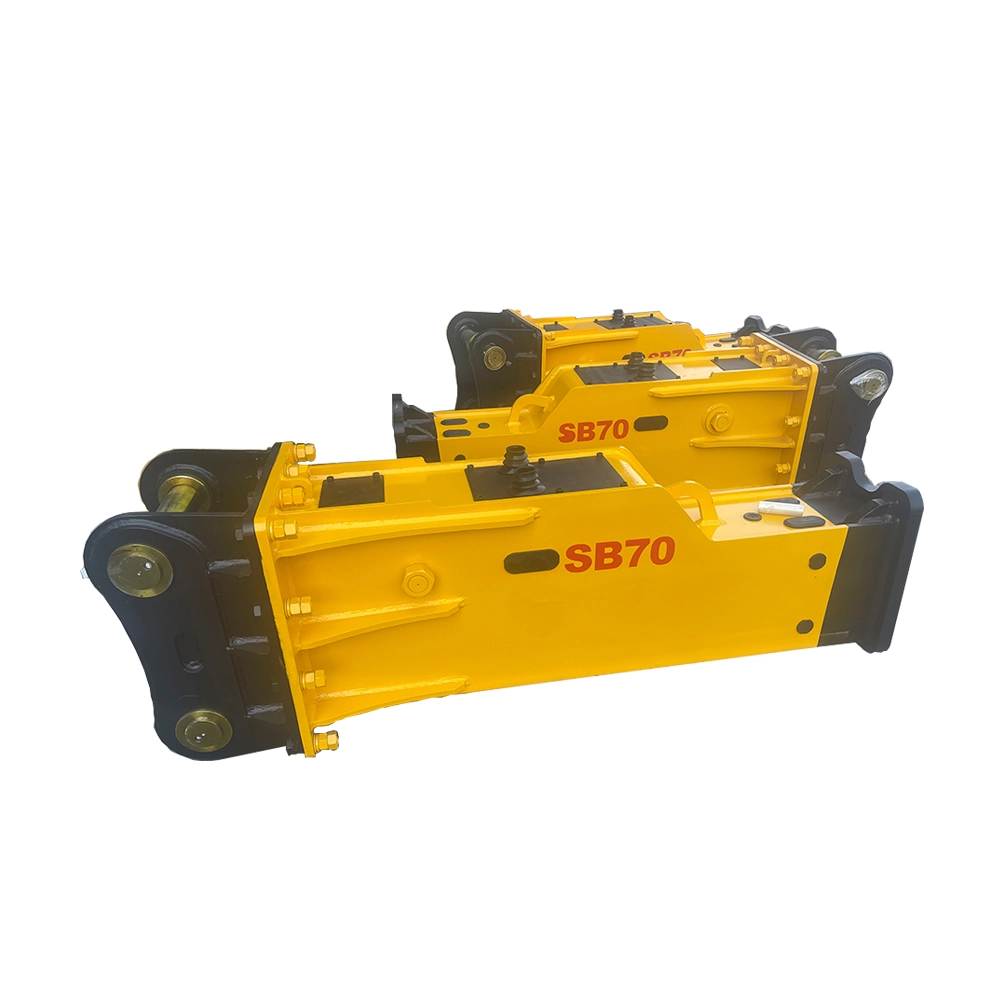
Huilian OEM Hydraulic Hammer Breaker SB70 For Soosan

Huilian HL68 Hammer Breaker for 4-7 Ton Excavator SOOSAN SB40 Hydraulic Rock Breaker
Side type hydraulic breaker : Easy to control, convenient positioning, durable, high working efficiency, strong striking force, long service life, stable operating performance, convenient after-sales service.
Top type hydraulic breaker : Strong impact power; excellent environmental performance; exquisite manufacturing technology; easy maintenance,fast after-sales service
Box type hydraulic breaker :leading heat treatment technology, enhance heat resistance, wear resistance. Under the condition of keeping the oil pressure constant, the cylinder volumeis reduced and the fuel consumption is reduced.The self-developed core is adopted to make the piston cylinder body moredurable and the service life longer.Exposed decks are made of high-strength steel plates to reduce wear.The best efficiency matching with excavator and loader is realized

Huilian OEM Factory SB130 Hydraulic Rock Breaker for 30-45 Ton Soosan Breaker
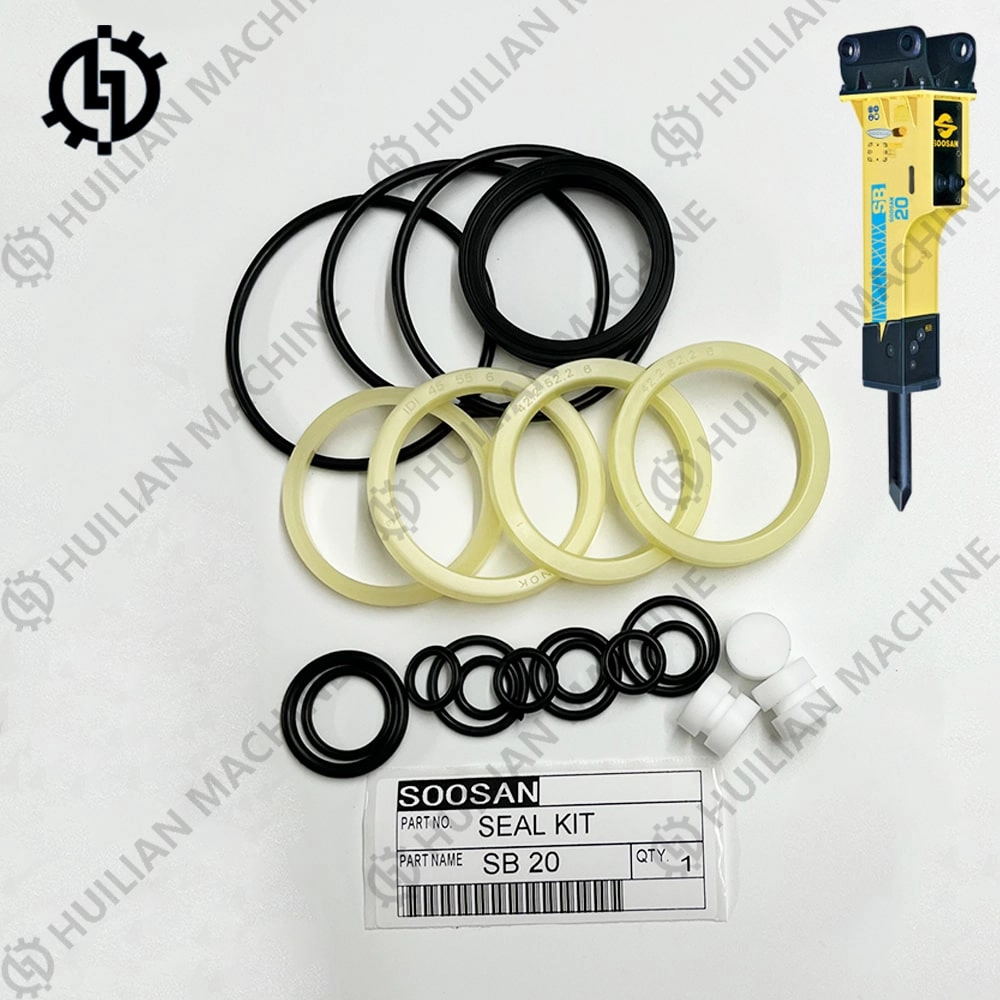
SOOSAN SB20 Breaker Seal Kit F01012 F0X001 SB20Ⅱ SB20TSP SQ20 Hydraulic Rock Hammer Oil Repair Kit
 About us
© 2025 HUILIAN MACHINE. All rights reserved