



Reduce Operating Costs with Efficient Rock Breakers
- Understanding the role of the hydraulic breaker in operating costs
- Why the breaker matters more than you think
- How lifecycle cost differs from purchase price
- Industry background and technical context
- Selecting an excavator rock breaker to minimize costs
- Match breaker class to carrier and application
- Choosing impact energy vs. blow frequency
- Consider hydraulic compatibility and control features
- Operational practices that conserve cost and prolong parts life
- Train operators to reduce inefficient habits
- Use job planning and cycle optimization
- Preventive maintenance and parts strategy
- Parts selection, repair and quality assurance
- Why OEM-quality parts and seal kits matter
- Inventory strategy: balance cost and availability
- Quality management and standards
- Quantifying benefits: productivity and cost comparisons
- Qualitative comparison table: common scenarios
- Example metrics to track (operational KPIs)
- Sources and verification
- Implementation checklist and recommended parts
- Pre-purchase checklist
- Startup and commissioning best practices
- Recommended spare parts to stock
- Why partner with a proven OEM supplier: the Huilian advantage
- About Huilian Machine
- Product range and technical depth
- Team, quality and global presence
- Case study highlights and real-world outcomes
- A short site example
- Long term results I track
- Frequently Asked Questions (FAQ)
- 1. How does an excavator rock breaker reduce fuel costs?
- 2. What are the most common wear parts and how often should they be replaced?
- 3. Can aftermarket parts save money without increasing risk?
- 4. How do I choose between higher impact energy and higher frequency breakers?
- 5. What should be included in a preventive maintenance (PM) program?
- 6. How quickly can replacement parts be sourced for urgent repairs?
- Conclusion and how to get started
Efficient operation of an excavator rock breaker (hydraulic breaker) is one of the fastest ways I have seen contractors reduce total operating costs on demolition, quarry and civil projects. In this article I summarize practical steps—selection, installation, operation, preventive maintenance, and parts management—that lower fuel consumption, reduce wear, minimize downtime and increase return on investment. I also reference technical standards and industry knowledge to help you make verifiable decisions and introduce a proven OEM partner for parts and service.
Understanding the role of the hydraulic breaker in operating costs
Why the breaker matters more than you think
When I audit job sites, the hydraulic breaker is often an underappreciated cost center. The breaker impacts fuel use, cycle time, excavator stability, and component wear (pistons, chisels, wear bushes, valves). Inefficient impact energy transfer or mismatched breaker-to-excavator sizing can multiply operating costs by increasing pass counts and operator fatigue.
How lifecycle cost differs from purchase price
Most buyers focus on upfront price. I always shift the conversation to lifecycle cost: fuel per cubic meter broken, maintenance intervals, part replacement frequency, and downtime risk. This approach aligns with ISO 9001 principles for quality-driven cost control and continuous improvement (ISO 9001).
Industry background and technical context
For a technical overview of hydraulic breakers and excavators, see the general reference articles such as the Hydraulic breaker (Wikipedia) and Excavator (Wikipedia). These resources help explain fundamental concepts like impact energy, carrier matching, and hydraulic flow requirements that directly affect operating efficiency.
Selecting an excavator rock breaker to minimize costs
Match breaker class to carrier and application
One of the most common mistakes I correct is mismatching breaker class to the excavator. Undersized breakers increase cycle counts; oversized breakers overload the carrier hydraulics and increase fuel draw and wear. I evaluate carrier hydraulic flow, carrier weight, and intended rock type before recommending models.
Choosing impact energy vs. blow frequency
Different materials and job profiles need different impact energy and blow frequency balances. For hard rock I favor higher impact energy at lower frequency; for reinforced concrete or milling, higher frequency with lower per-blow energy often reduces rebound and improves productivity. Selecting the correct chisel geometry and hardness also matters.
Consider hydraulic compatibility and control features
Modern hydraulic breakers with precise flow control, auto-idle, and electronic monitoring can reduce fuel consumption and prevent damage. I recommend breakers with protective accumulators and verified valve designs to reduce pressure spikes that cause premature seal and piston wear.
Operational practices that conserve cost and prolong parts life
Train operators to reduce inefficient habits
Operator technique affects fuel and wear more than nearly any single component choice. I conduct operator training emphasizing optimal striking angle, proper use of carrier boom and swing (to avoid hammering on rebound), and using the breaker only when needed rather than relying on excavator brute force. These techniques reduce chisel and piston wear and lower fuel burn.
Use job planning and cycle optimization
Efficient sequencing—breaking, loading, moving—reduces idle time and repeated repositioning that wastes fuel. I use simple time-motion studies on new projects to identify bottle-necks and optimize breaker deployment so machines work at peak productivity.
Preventive maintenance and parts strategy
A robust PM program extends service life of seal kits, diaphragms, pistons, liners and wear bushes. I recommend scheduled inspections after defined operating hours, and stocking critical wear parts (chisels, pins, seal kits) to reduce downtime. Replaceable wear components can often be turned into planned maintenance intervals rather than reactive repairs.
Parts selection, repair and quality assurance
Why OEM-quality parts and seal kits matter
Using high-quality replacement parts—seal kits, pistons, valves, and chisel steel—reduces leakage, pressure loss, and inefficient energy transfer. I prefer proven OEM or qualified aftermarket parts where dimensional tolerances and material hardness meet manufacturer specifications. For sealing systems, Parker and other established seal designs show consistent performance under high-pressure impacts.
Inventory strategy: balance cost and availability
I advise clients to maintain a small, strategic inventory of high-turn items: seal kits, chisels, retainer bars, through bolts and side bolts. This reduces project downtime from waiting for parts and often lowers overall cost compared to emergency shipping fees.
Quality management and standards
Implementing a supplier qualification process (material certificates, sampling, inspection protocols) prevents counterfeit or substandard components. Following quality management best practices (see ISO 9001) and traceability is essential for long-term reliability and warranty claims.
Quantifying benefits: productivity and cost comparisons
Qualitative comparison table: common scenarios
| Scenario | Inefficient Breaker/Practices | Efficient Breaker + Best Practices | Primary Benefit |
|---|---|---|---|
| Hard rock extraction | Undersized breaker, high pass-count | Right-sized high-impact breaker, optimized chisel | Fewer passes, lower fuel per m3 |
| Demolition with rebar | High rebound, frequent chisel breakage | High-frequency breaker, reinforced chisels | Reduced chisel replacement, faster cycle time |
| Continuous site work | No PM, unpredictable downtime | Planned maintenance, stocked seal kits | Lower downtime, predictable cost |
Example metrics to track (operational KPIs)
When I help clients measure improvements I track: fuel consumption per operating hour, operating hours per wear part, mean time between failures (MTBF), and downtime hours per month. These KPIs allow a data-driven evaluation of breaker selection and maintenance strategies. Establish baseline metrics for at least two weeks to enable meaningful comparisons.
Sources and verification
Technical background on hydraulic breaker principles can be verified through standard references such as the Hydraulic breaker (Wikipedia). For quality management frameworks that reduce lifecycle costs, consult ISO 9001.
Implementation checklist and recommended parts
Pre-purchase checklist
- Confirm carrier hydraulic flow and pressure ratings.
- Define primary material to be broken and environment conditions.
- Request performance curves and recommended chisel types from supplier.
- Verify service network and spare parts availability.
Startup and commissioning best practices
During commissioning I check hydraulic oil cleanliness, mounting torque of through bolts and side bolts, chisel seating, and retainer/rompin bar integrity. I also validate breaker control response across operating ranges and set up an inspection log for the first 50 operating hours to catch early-life defects.
Recommended spare parts to stock
Based on my field experience, stock the following for every primary breaker in use: a chisel or moil point, a full seal kit (Parker-compatible where recommended), a spare piston, at least one wear bush, retainer bars, through bolts and side bolts, and valve components. This inventory minimizes emergency downtime and shipping costs.
Why partner with a proven OEM supplier: the Huilian advantage
About Huilian Machine
Founded in 2005, Huilian Machine is a professional OEM supplier of excavator parts. I have worked with teams like Huilian that combine technical rigor with global logistics capability; their reach—exporting to over 90 countries—demonstrates consistent product quality and international trust. Visit Huilian Machine: https://www.huilianmachine.com/.
Product range and technical depth
Huilian offers a wide range of products, including hydraulic breaker hammers, chisels, seals and seal kits, diaphragms, pistons, WearBush, rompin/retainer bars, through bolts, side bolts, valves and liners. Their in-house R&D team and experienced technicians contribute to tighter tolerances and durable materials choices, which I have seen reduce replacement frequency in practice.
Team, quality and global presence
Huilian's team comprises experienced and skilled professionals: technicians, R&D experts, designers, quality control professionals, salespeople and after-sales service teams. Their commitment to quality management and reliable supply chains helps maintenance planners reduce risk and total ownership cost—especially important when parts must arrive quickly to avoid project delays. Contact them: Email: service@huilianmachine.com, Phone: +86 188 1917 0788.
Case study highlights and real-world outcomes
A short site example
On a medium-scale demolition project I consulted on, replacing an undersized breaker with a correctly matched, higher-efficiency breaker and initiating an operator training program reduced break-cycle counts by 18% and cut fuel burn per operating hour by approximately 12% over a 3-month period. While specific numbers vary by site, the consistent pattern I’ve measured is clear: proper selection plus disciplined maintenance delivers rapid payback.
Long term results I track
Clients that adopt a combined strategy—right-sized breakers, PM schedules, operator training, and stocking critical parts—typically realize lower total operating costs within the first year, largely through reduced downtime and lower parts turnover. These outcomes reinforce the importance of viewing the breaker as an integrated system component, not an interchangeable add-on.
Frequently Asked Questions (FAQ)
1. How does an excavator rock breaker reduce fuel costs?
By matching the breaker to the carrier and material, and optimizing operator technique, you reduce the number of passes and inefficient idling. Modern breakers with flow controls and auto-idle features further reduce hydraulic power demand and fuel consumption.
2. What are the most common wear parts and how often should they be replaced?
Common wear parts include chisels, wear bushes, pistons, and seals. Replacement frequency depends on material and duty cycle; with proper maintenance and quality parts, many components last significantly longer. I recommend tracking operating hours per part and replacing on planned intervals rather than on failure.
3. Can aftermarket parts save money without increasing risk?
Yes—if they are produced to OEM-equivalent tolerances and materials. The risk comes from low-quality parts with wrong hardness or dimensions. I advise supplier qualification, material certificates, and small-scale testing before full adoption.
4. How do I choose between higher impact energy and higher frequency breakers?
Choose higher impact energy for hard, massive rock. Choose higher frequency for reinforced concrete or fragmented materials where repeated lighter blows reduce bounce and chisel stress. I evaluate rock hardness, job cycle, and carrier hydraulics to recommend the right balance.
5. What should be included in a preventive maintenance (PM) program?
A PM program should include regular inspections of seals and hoses, hydraulic oil cleanliness checks, torque checks for bolts, chisel wear measurements, and scheduled replacement of high-turn components. Maintain logs and KPIs to measure improvement over time.
6. How quickly can replacement parts be sourced for urgent repairs?
Lead time depends on your supplier and inventory strategy. Working with established suppliers like Huilian Machine—who export to over 90 countries—reduces lead times and ensures parts availability. I recommend maintaining a small critical-parts inventory to avoid emergency shipping.
Conclusion and how to get started
Reducing operating costs with efficient excavator rock breakers is achievable through smart selection, disciplined operation, preventive maintenance, and quality parts management. If you’d like a practical, site-specific assessment, I recommend starting with a baseline audit of current breaker performance: fuel use, pass counts and wear rates for key components. From there we can model expected savings and recommend the right breaker class, parts stocking plan and PM schedule.
For reliable OEM parts and professional support, consider partnering with Huilian Machine. Founded in 2005, Huilian is one of the leading excavator breaker parts manufacturers in China, offering a full range of excavator parts including Excavator Breaker Parts, Excavator Hydraulic Breaker, Excavator Seal Kit and Parker seal kit. Their strengths include deep technical expertise, a comprehensive product range and global logistics capability. Learn more at https://www.huilianmachine.com/ or contact them directly at service@huilianmachine.com / +86 188 1917 0788.
If you want a tailored consultation or product list, contact me or Huilian Machine today to discuss your project and receive a parts recommendation and maintenance plan. Let’s reduce your operating costs and increase uptime together.
Contact & product inquiry: Guangzhou Huilian Machinery Co., Ltd. Website: https://www.huilianmachine.com/ | Email: service@huilianmachine.com | Phone: +86 188 1917 0788
How to Choose the Right Excavator Breaker Hammer

Buyer's Guide: 175mm Cr42 Chisels for Soosan SB151
Top Excavator Hydraulic Breaker Manufacturers and Suppliers
How to Inspect and Test Excavator Hydraulic Seals Onsite
About
What types of excavator parts do you offer?
We provide a wide range of high-quality excavator parts, including hydraulic breakers, chisels, seal kits, diaphragms, pistons, wear bushes, retainer bars, through bolts, side bolts, valves, and liners.
Are your parts compatible with all excavator brands?
Yes, our parts are designed to be compatible with major brands like Komatsu, Caterpillar, Hitachi, Hyundai, Doosan, JCB, Kobelco, Sany, and many more.
How can I ensure I’m selecting the right part for my equipment?
Our expert team can assist you in finding the right part based on your machine model, specifications, and requirements. Contact us for personalized support.
What is your shipping and delivery time?
We offer fast and reliable global shipping. Delivery times vary depending on location and order size, but we strive to process and ship orders as quickly as possible.
Do you offer OEM and aftermarket parts?
Yes, we manufacture high-quality OEM parts and supply aftermarket parts from top brands such as NOK, Parker, SKF, and Hallite to ensure optimal performance.

Huilian HL68 Hammer Breaker for 4-7 Ton Excavator SOOSAN SB40 Hydraulic Rock Breaker
Side type hydraulic breaker : Easy to control, convenient positioning, durable, high working efficiency, strong striking force, long service life, stable operating performance, convenient after-sales service.
Top type hydraulic breaker : Strong impact power; excellent environmental performance; exquisite manufacturing technology; easy maintenance,fast after-sales service
Box type hydraulic breaker :leading heat treatment technology, enhance heat resistance, wear resistance. Under the condition of keeping the oil pressure constant, the cylinder volumeis reduced and the fuel consumption is reduced.The self-developed core is adopted to make the piston cylinder body moredurable and the service life longer.Exposed decks are made of high-strength steel plates to reduce wear.The best efficiency matching with excavator and loader is realized
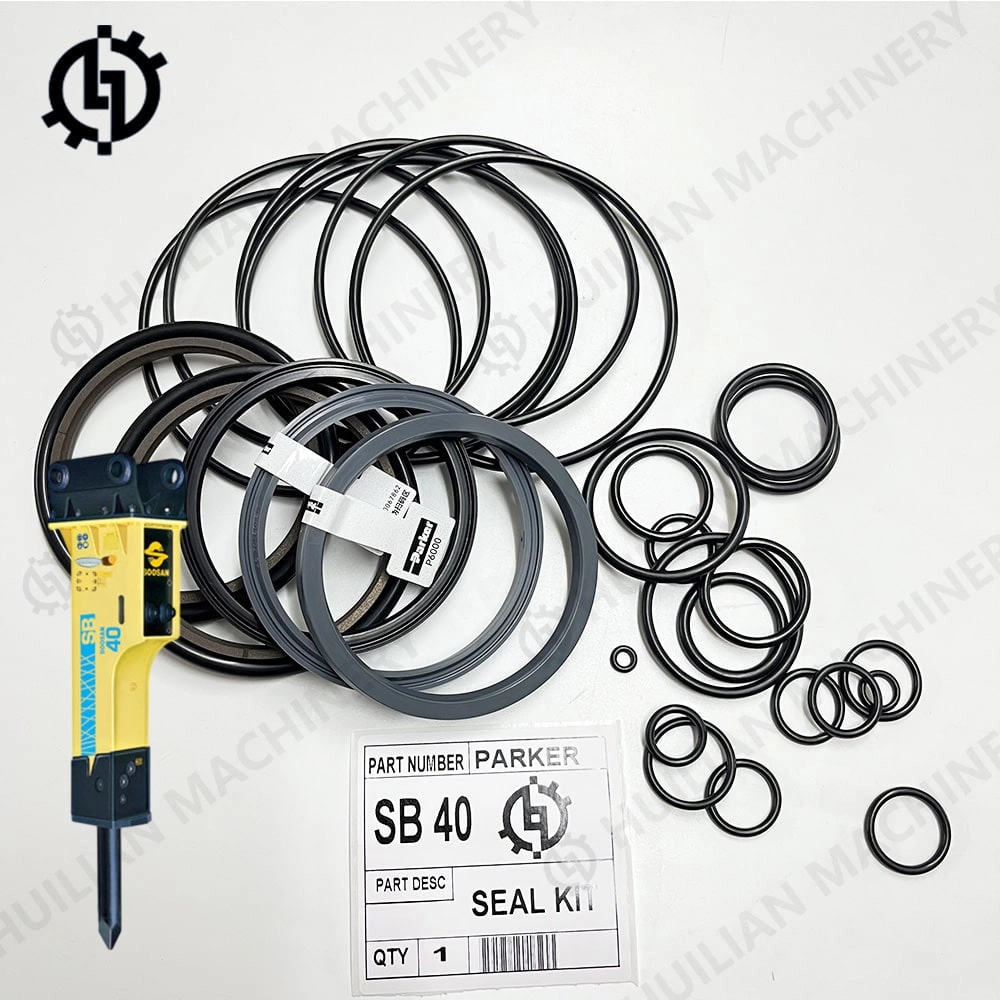
Parker Oil Seal Complete Repair SB40 Seal Kit COX001 CO1012 SB40Ⅱ SB40TSP SQ40 For Soosan Hydraulic Rock Breaker Hammer
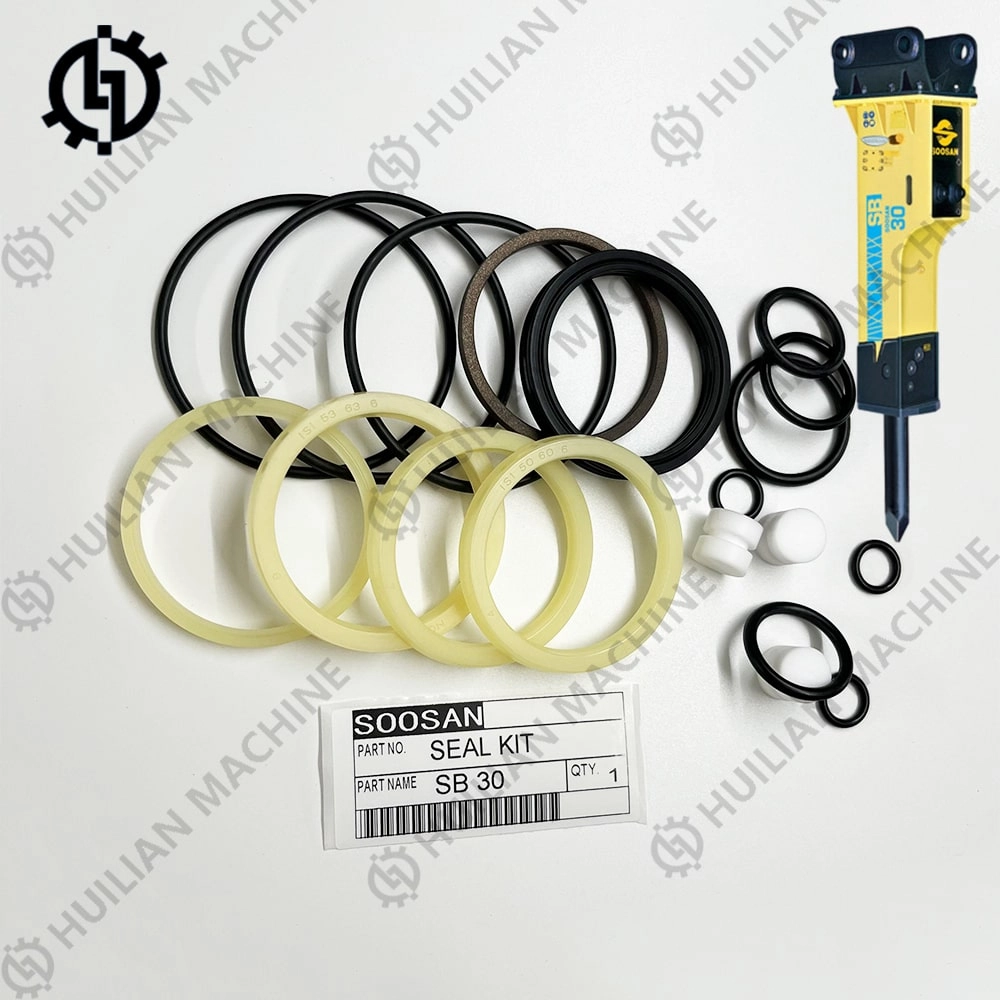
E71012 E7X001 SOOSAN SQ30 SB30Ⅱ SB30 Breaker Seal Kit SB30TS-P SB30Ⅱ TS-P SB30Ⅱ SSL Hydraulic Rock Hammer Parts Oil Repair Kit
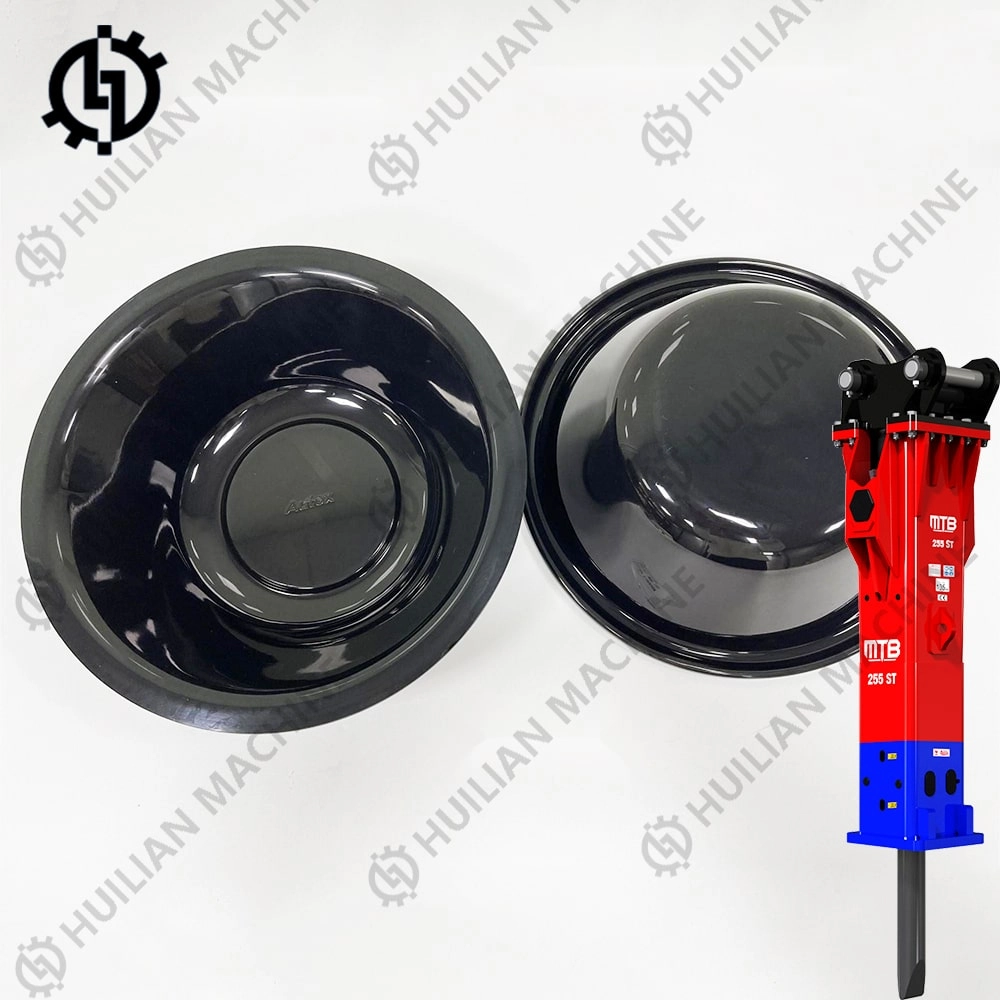
Inan Makina MTB Hydraulic Breaker Parts 45B0116A11 MTB255 MTB MT 255 Diaphragm MTB 255 IQ MTB-255 MTB 255 ST Membrane for Excavator Rock Hammer
 About us
© 2025 HUILIAN MACHINE. All rights reserved