



How to Inspect and Test Excavator Hydraulic Seals Onsite
- Common Causes and Failure Modes of Hydraulic Seals
- Typical failure mechanisms
- How to read wear patterns
- Materials and fluid compatibility
- Onsite Inspection Checklist
- Pre-inspection safety and setup
- Visual and tactile inspection steps
- Checklist items to record
- Testing Procedures and Tools
- Tools and consumables for reliable onsite testing
- Pressure and leak testing — safe field method
- Functional dynamic tests
- Selecting, Replacing and Verifying Hydraulic Seal Kits
- Choosing the right hydraulic seal kits
- OEM vs aftermarket seal kits — comparison
- Installation and verification best practices
- Maintenance Strategies and Recordkeeping
- Planned preventive maintenance
- Documenting repairs and traceability
- When to escalate to engineering or OEM support
- Huilian Machine — Trusted Supplier and OEM Partner
- References and Standards
- Frequently Asked Questions (FAQ)
- 1. How can I tell if the hydraulic seal or the rod is the cause of a leak?
- 2. Can I reuse seals from a working excavator cylinder?
- 3. What are acceptable surface conditions for a piston rod?
- 4. How do I choose between OEM and aftermarket hydraulic seal kits?
- 5. What tests should I perform after replacing seals?
- 6. How often should excavator hydraulic seals be inspected?
- Contact & Product Inquiry
Onsite inspection and testing of excavator hydraulic seals are critical to prevent downtime, avoid secondary component damage, and extend equipment life. This guide helps field technicians and maintenance managers perform reliable visual and functional checks, run safe pressure and leak tests, evaluate wear patterns, and select proper hydraulic seal kits for replacement. Following these procedures reduces the risk of misdiagnosis and ensures repairs meet manufacturer and industry expectations. For standards and background on mechanical seals and seal materials, see Mechanical seal (Wikipedia) and material guidance from industry seal handbooks such as the Parker O-Ring and Seals resources (Parker).
Common Causes and Failure Modes of Hydraulic Seals
Typical failure mechanisms
Excavator hydraulic seals fail from abrasion, extrusion, chemical degradation, thermal aging, installation damage, and incompatibility with hydraulic fluid. Understanding failure modes helps technicians determine whether a seal leak is isolated or symptomatic of a deeper system issue (rod scoring, misalignment, or excessive pressure spikes).
How to read wear patterns
Wear patterns on seals and mating surfaces provide diagnostic clues. For example, circumferential grooves often indicate abrasive contamination, while localized cuts or nicks suggest installation damage or foreign debris. Seal lip distortion or compression set points to material incompatibility or prolonged high temperature exposure. Capture photos and label orientation before removal to preserve diagnostic information for analysis and quality-of-repair records.
Materials and fluid compatibility
Selecting a replacement from the correct material family (NBR, HNBR, FKM/Viton, PTFE, polyurethane) is essential. Different fluids, additives and operating temperatures dictate material resistance. Refer to manufacturer fluid compatibility charts and resources such as Parker's material guides for verification (Parker).
Onsite Inspection Checklist
Pre-inspection safety and setup
Before any inspection, secure the machine: park on level ground, lower the boom and attachments to relieve load, shut off engine, isolate and lock hydraulic circuits, and bleed down stored pressure. Use personal protective equipment (PPE), absorbent pads and fluid containment to prevent environmental contamination.
Visual and tactile inspection steps
Inspect external components: hydraulic lines, hose ends, fittings, rod surfaces, gland areas and cylinder barrels. Look for fluid trails, foaming, discoloration, or external contamination. Run a clean, lint-free cloth over exposed rods to detect fine scratches. Document rod finish issues and measure with calipers where wear appears significant.
Checklist items to record
- Machine model & serial number
- Operating pressure and recent duty cycles
- Fluid type and last filtration change
- Observed leak location(s) and severity (drip, steady leak, spray)
- Photos of seal area, rod surface, and removed parts
Testing Procedures and Tools
Tools and consumables for reliable onsite testing
Essential tools: digital pressure gauge or test gauge, flow meter (optional), UV fluorescent dye for leak tracing, clean rags, micrometer/calipers, straight edge, borescope for internal inspection, and a portable hydraulic test pack if available. For seal replacement, use dedicated seal installation tools to avoid lip nicks. Keep appropriate hydraulic seal kits and spare O-rings on hand: a correctly matched hydraulic seal kit increases repair first-time success.
Pressure and leak testing — safe field method
After isolation and with a trained operator, slowly apply system pressure while monitoring the suspected seal area. Use a calibrated gauge and increase pressure incrementally to the machine’s normal working pressure while observing for leaks. For safety, avoid quick pressure spikes; many manufacturers recommend not exceeding rated working pressure during diagnostic tests. If a proof or overload test is required, consult OEM documentation for test multipliers.
Functional dynamic tests
Static checks are useful, but many leaks only appear under load or movement. Cycle the cylinder through its full stroke under controlled load and speed while watching for leaks, pressure drop, or irregular movement. Use dye tracer or UV light to identify hairline leaks that heartily escape the naked eye.
Selecting, Replacing and Verifying Hydraulic Seal Kits
Choosing the right hydraulic seal kits
Hydraulic seal kits should match bore/rod sizes, operating pressure, temperature range, and fluid type. Always cross-check OEM part numbers and material specifications. Good kits include primary seals, wipers, backup rings, O-rings, and all necessary spacers. Keep hydraulic seal kits that include seals made from materials recommended for the excavator’s fluid and temperature range to avoid premature failure.
OEM vs aftermarket seal kits — comparison
| Criterion | OEM Kits | Aftermarket Kits |
|---|---|---|
| Fit and dimensional accuracy | High — matched to machine specs | Variable — can be excellent or inconsistent |
| Material traceability | Often documented | Depends on supplier |
| Cost | Higher | Lower to moderate |
| Warranty & support | Usually supported by OEM | Varies; reputable suppliers provide backing |
| Lead time | May be longer for special parts | Often faster availability |
Use this table to balance cost, availability, and long-term risk. For critical seals exposed to high pressure or abrasive conditions, OEM or high-quality aftermarket kits with documented material specs are recommended.
Installation and verification best practices
Before installation, clean housing bores and rods with lint-free wipes and a compatible solvent. Inspect mating surfaces with a magnifier; remove sharp burrs (do not file the rod; polish lightly if necessary). Use assembly lube compatible with system fluid. Install seals in the same orientation as removed and torque gland bolts per manufacturer specs. After assembly, perform the pressure and dynamic tests described above to verify seal integrity and function.
Maintenance Strategies and Recordkeeping
Planned preventive maintenance
Implement routine inspections (daily visual checks by operators, monthly detailed inspections by technicians) and scheduled hydraulic fluid analysis and filtration changes. Filter and contamination control are among the most effective ways to extend seal life — particulate contamination is a leading cause of abrasive wear and extrusion damage.
Documenting repairs and traceability
Keep a maintenance log that includes part numbers (seal kit lot IDs), photos before/after, test pressure readings, and operator notes. Traceability helps if a batch of seal kits shows abnormal failure rates and supports warranty claims.
When to escalate to engineering or OEM support
If recurring seal failures occur after proper repair and selection of hydraulic seal kits, escalate to root-cause analysis. Possible causes include cylinder misalignment, rod deflection, system pressure spikes, or incorrect rod surface hardness. Involve R&D or OEM engineering for testing under instrumented conditions, and consider nondestructive testing of rods and barrels.
Huilian Machine — Trusted Supplier and OEM Partner
Founded in 2005, Huilian Machine is a professional OEM supplier of excavator parts. We are leading excavator breaker parts manufacturers from China and offer a wide range of products, including hydraulic breaker hammers, chisels, seals and seal kits, diaphragms, pistons, WearBush, rompin/retainer bars, through bolts, side bolts, valves and liners. Huilian's team comprises experienced and skilled professionals, including technicians, R&D experts, designers, quality control professionals, salespeople and after-sales service teams.
Our products are exported to over 90 countries and regions and are highly regarded by customers worldwide for their quality and variety. Guangzhou Huilian Machinery Co., Ltd. is committed to becoming a global leader in the supply of excavator parts and components and is seeking global distributor partners to promote the sustainable development of the excavator parts industry. Visit our website: https://www.huilianmachine.com/ or contact us at service@huilianmachine.com | Phone: +86 188 1917 0788.
Huilian advantage: decades of focused expertise in excavator parts manufacturing, complete product range for excavator breaker systems and hydraulic components, rigorous quality control, and global distribution. Main products: excavator parts, Excavator Breaker Parts, Excavator Hydraulic Breaker, Excavator Seal Kit, Parker seal kit alternatives. Huilian differentiates through consistent part quality, material traceability, and a technical team ready to support specification and aftermarket supply.
References and Standards
- Seal (mechanical) — Wikipedia
- Parker Seals & O-Ring technical resources
- Consult OEM excavator manuals and part catalogs for machine-specific test pressures and installation torques.
Frequently Asked Questions (FAQ)
1. How can I tell if the hydraulic seal or the rod is the cause of a leak?
Start with a visual inspection: if the rod has deep scratches, corrosion or pitting, the rod surface is likely the root cause and must be repaired or replaced. If the rod appears smooth but the seal lip is deformed or cracked, the seal material or installation is the likely cause. Use a borescope to verify internal bore damage. Document findings and perform a pressure test to confirm.
2. Can I reuse seals from a working excavator cylinder?
Reusing seals is generally not recommended. Seals are relatively inexpensive compared to the cost of rework. Reinstallation risks damage to the sealing lip and increases the chance of immediate or early failure. Use new seals from a quality hydraulic seal kit for reliability.
3. What are acceptable surface conditions for a piston rod?
Rod surface should be free of nicks, deep scratches, rust and have glossy finish to allow proper sealing. Typical industry guidance suggests a fine finish; consult the seal kit manufacturer for recommended roughness (many recommendations lie in the Ra 0.2–0.4 μm range depending on seal type). When in doubt, consult your seal supplier or OEM documentation.
4. How do I choose between OEM and aftermarket hydraulic seal kits?
Choose based on criticality, traceability and total cost. For mission-critical cylinders exposed to extreme conditions, OEM or reputable aftermarket suppliers with material documentation are preferred. For lower-risk repairs, quality aftermarket kits can reduce cost and lead time. Always verify material compatibility and dimensional fit before installation.
5. What tests should I perform after replacing seals?
Perform a staged pressure test to working pressure, followed by dynamic stroke cycling under load to simulate operating conditions. Monitor for leaks, pressure stability and unusual movements. Record test pressures and duration in the maintenance log.
6. How often should excavator hydraulic seals be inspected?
Daily operator visual checks, monthly technician inspections for high-use machines, and immediate checks after any unusual event (impact, overpressure, contamination incident). Combine inspections with routine hydraulic fluid and filter maintenance.
Contact & Product Inquiry
If you need replacement hydraulic seal kits, technical assistance selecting the right seals for your excavator model, or OEM-quality components for hydraulic breakers, contact Guangzhou Huilian Machinery Co., Ltd.: Website: https://www.huilianmachine.com/ | Email: service@huilianmachine.com | Phone: +86 188 1917 0788. Request a quote for hydraulic seal kits and full excavator parts packages — our technical team can assist with OEM cross-references, material specs and global shipping options.

How to Choose the Right 68mm Hydraulic Rock Breaker Chisel
Top 10 Hammer Breaker Spare Parts Buyers Should Stock
Selecting chisels and tool steel for rock hammer hydraulic breakers
OEM vs Aftermarket Excavator Parts Seal Kits: Which to Buy?
About
How can I ensure I’m selecting the right part for my equipment?
Our expert team can assist you in finding the right part based on your machine model, specifications, and requirements. Contact us for personalized support.
Do you offer OEM and aftermarket parts?
Yes, we manufacture high-quality OEM parts and supply aftermarket parts from top brands such as NOK, Parker, SKF, and Hallite to ensure optimal performance.
What types of excavator parts do you offer?
We provide a wide range of high-quality excavator parts, including hydraulic breakers, chisels, seal kits, diaphragms, pistons, wear bushes, retainer bars, through bolts, side bolts, valves, and liners.
Are your parts compatible with all excavator brands?
Yes, our parts are designed to be compatible with major brands like Komatsu, Caterpillar, Hitachi, Hyundai, Doosan, JCB, Kobelco, Sany, and many more.
What is your shipping and delivery time?
We offer fast and reliable global shipping. Delivery times vary depending on location and order size, but we strive to process and ship orders as quickly as possible.

Huilian HL68 Hammer Breaker for 4-7 Ton Excavator SOOSAN SB40 Hydraulic Rock Breaker
Side type hydraulic breaker : Easy to control, convenient positioning, durable, high working efficiency, strong striking force, long service life, stable operating performance, convenient after-sales service.
Top type hydraulic breaker : Strong impact power; excellent environmental performance; exquisite manufacturing technology; easy maintenance,fast after-sales service
Box type hydraulic breaker :leading heat treatment technology, enhance heat resistance, wear resistance. Under the condition of keeping the oil pressure constant, the cylinder volumeis reduced and the fuel consumption is reduced.The self-developed core is adopted to make the piston cylinder body moredurable and the service life longer.Exposed decks are made of high-strength steel plates to reduce wear.The best efficiency matching with excavator and loader is realized
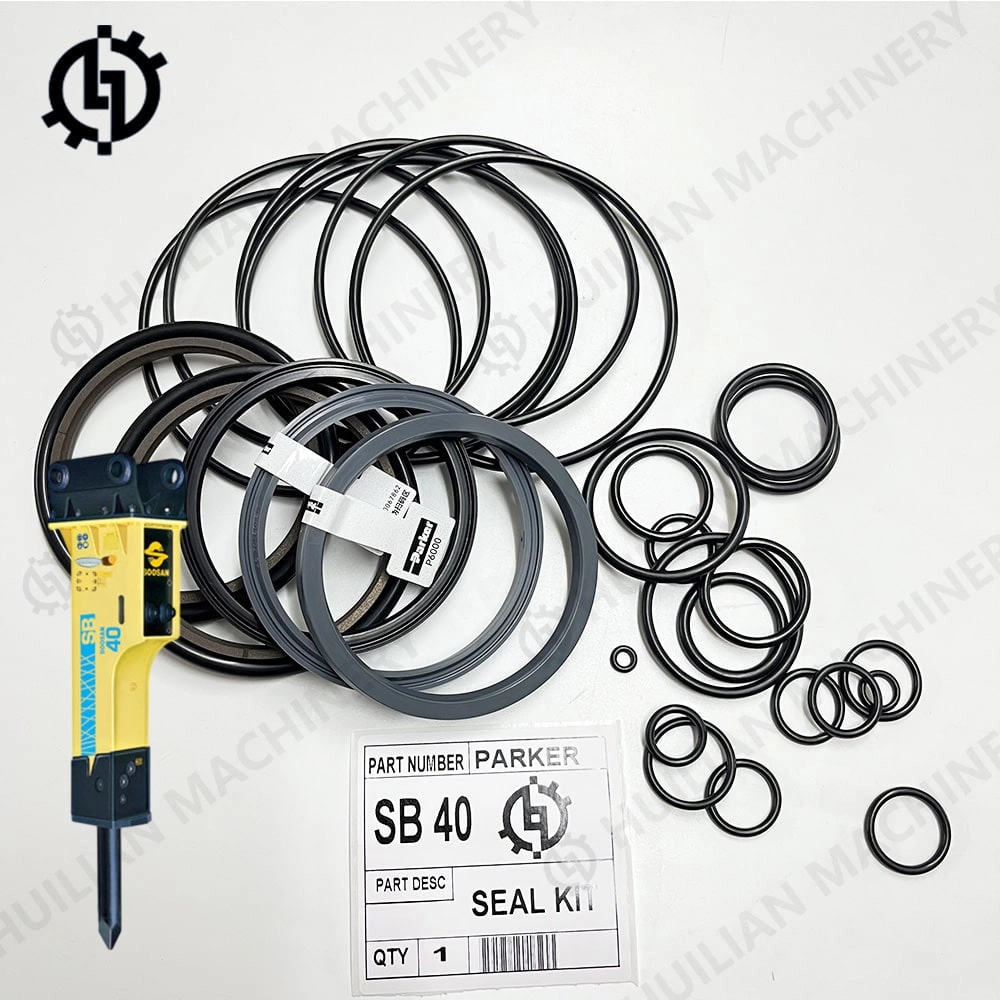
Parker Oil Seal Complete Repair SB40 Seal Kit COX001 CO1012 SB40Ⅱ SB40TSP SQ40 For Soosan Hydraulic Rock Breaker Hammer
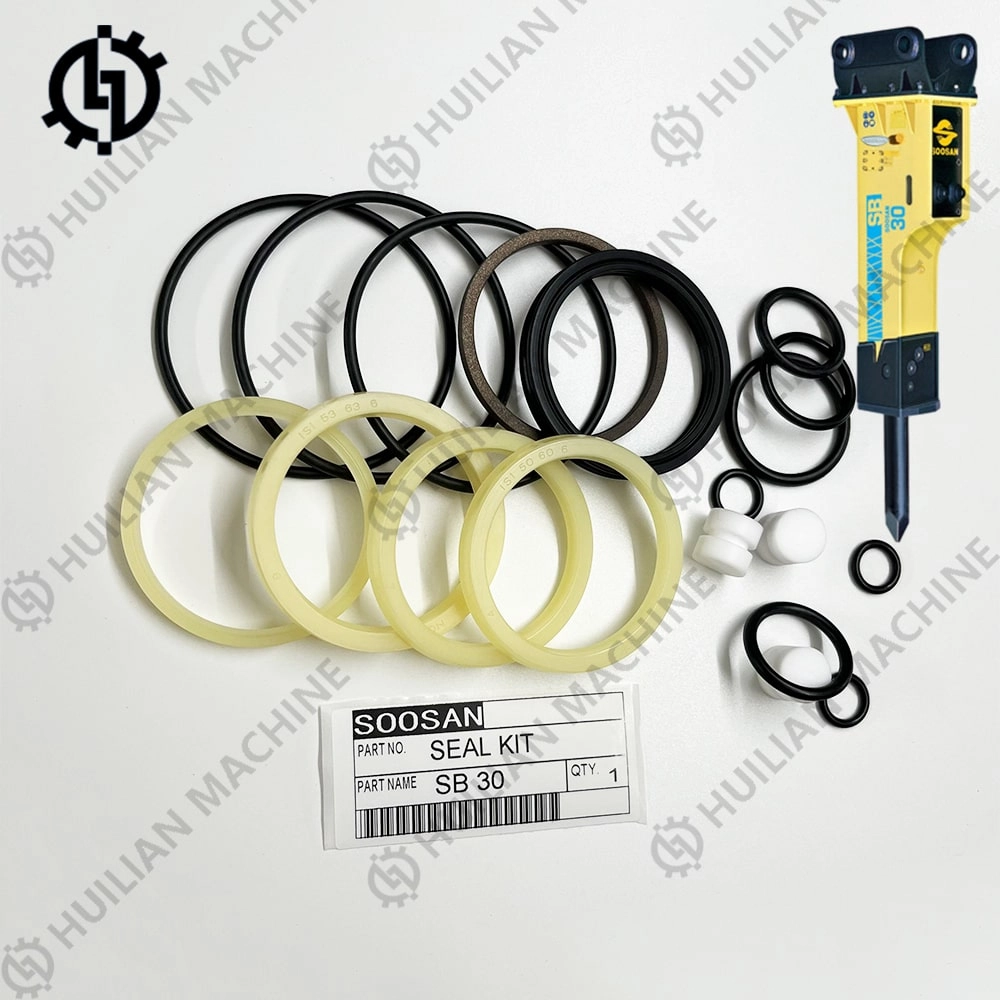
E71012 E7X001 SOOSAN SQ30 SB30Ⅱ SB30 Breaker Seal Kit SB30TS-P SB30Ⅱ TS-P SB30Ⅱ SSL Hydraulic Rock Hammer Parts Oil Repair Kit
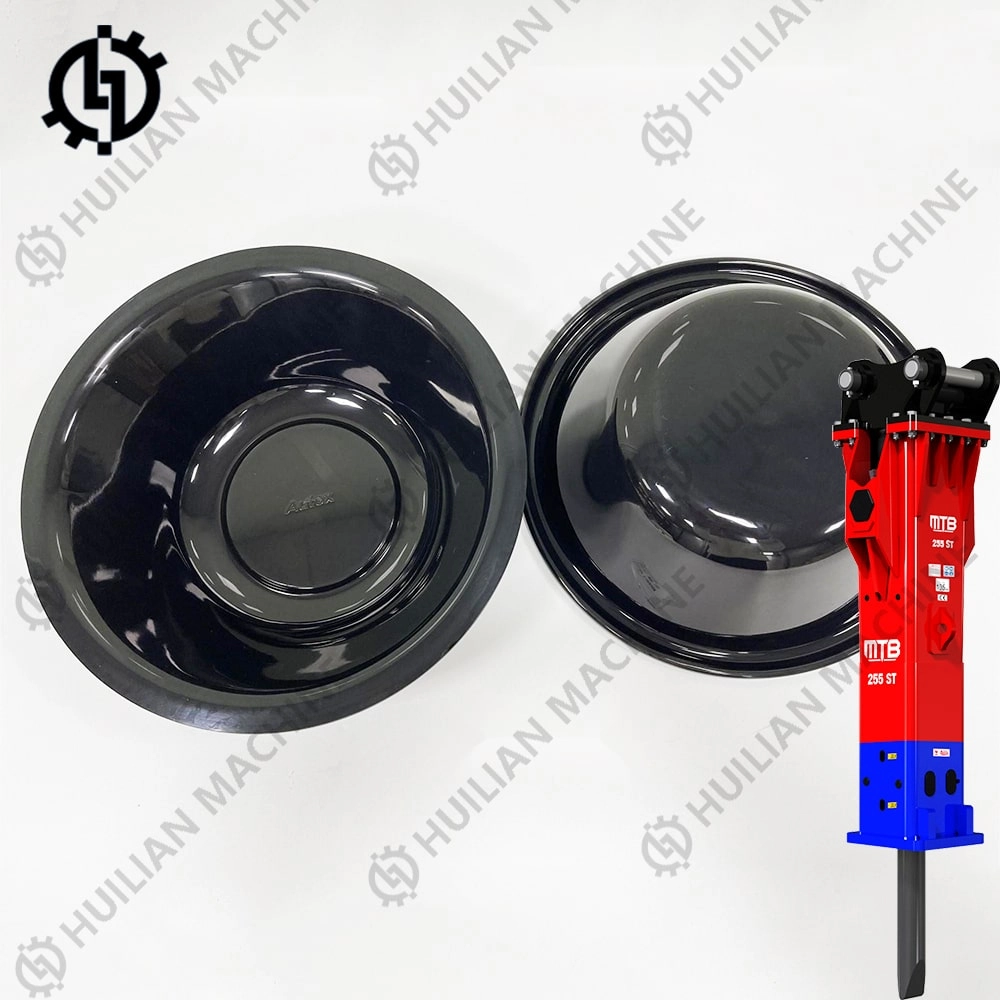
Inan Makina MTB Hydraulic Breaker Parts 45B0116A11 MTB255 MTB MT 255 Diaphragm MTB 255 IQ MTB-255 MTB 255 ST Membrane for Excavator Rock Hammer
 About us
© 2025 HUILIAN MACHINE. All rights reserved