



Selecting chisels and tool steel for rock hammer hydraulic breakers
- How impact energy and application define chisel and steel choices
- Understanding impact dynamics of rock hammer hydraulic breakers
- Matching chisel type to rock and application
- Application examples that determine material priorities
- Chisel profiles, sizes and geometry — practical selection
- Common chisel profiles and when to use them
- Diameter, length and blow-fit considerations
- Edge treatment, tip design and serviceability
- Selecting tool steel and heat treatment for durability
- Steel families I use and why
- Heat treatment trade-offs: hardness versus toughness
- Surface treatments and weld overlays
- Inspection, wear measurement and replacement strategy
- Simple inspection checks I perform onsite
- Quantitative wear tracking and replacement thresholds
- When to regrind, resurface or replace
- Comparative table: common chisel steels and practical guidance
- Standards, testing and supplier verification
- Why standards and traceability matter
- Testing protocols I recommend
- Working with suppliers — what I ask for
- Huilian Machine — supplier profile and how we work together
- Practical troubleshooting and lifecycle tips I use in the field
- Symptoms, root causes and remedies
- Optimizing replacement inventory
- Field heat-treatment mistakes to avoid
- FAQs
- 1. What is the best steel for hydraulic breaker chisels?
- 2. How hard should a chisel tip be (HRC)?
- 3. Can I regrind chisels to extend life?
- 4. How often should I replace chisels?
- 5. Are replaceable tips better than one-piece chisels?
- 6. What tests should I request from a chisel supplier?
- Closing advice and contact / product inquiry
I write from years of hands-on experience in excavator attachments and breaker parts. In this article I explain how to choose chisels and tool steels for rock hammer hydraulic breakers, balancing impact toughness, wear resistance and serviceability. I include material comparisons, chisel-profile guidance, heat-treatment considerations and inspection/replacement criteria so you can reduce downtime and extend component life for your hydraulic breaker attachments. Where useful I reference manufacturer guidance and standards to support choices (Hydraulic breaker — Wikipedia, Tool steel — Wikipedia, ISO 9001 — ISO).
How impact energy and application define chisel and steel choices
Understanding impact dynamics of rock hammer hydraulic breakers
When I evaluate a hydraulic breaker, the first variable I quantify is impact energy: the product of piston mass and velocity per blow. Breakers delivering higher impact energy demand steels and geometries that prioritize toughness to resist brittle fracture. Conversely, high-frequency, low-energy breakers expose chisels to accelerated abrasive wear. Knowing your breaker’s nominal blow energy and blow rate (bpm) narrows material options and heat-treatment targets.
Matching chisel type to rock and application
Rock properties (compressive strength, abrasiveness, grain structure) dictate chisel shape and edge treatment. For dense, unfractured basalt or granite I typically choose pointed or moil chisels with shock-resistant steels and slightly lower hardness to avoid chipping. For softer, abrasive shale or sandstone I favor flat or blunt chisels hardened for wear resistance. Matching chisel profile to the job reduces stress concentration and improves energy transfer.
Application examples that determine material priorities
- Demolition with reinforced concrete: prioritize toughness and ductility to resist sudden shock loads and rebounding impacts.
- Quarrying hard rock: balance toughness with surface hardness and prepare for edge regrinding or replacement.
- Trenching in abrasive soils: prioritize wear resistance and use replaceable tips or hardened overlays.
Chisel profiles, sizes and geometry — practical selection
Common chisel profiles and when to use them
I rely on three families of chisels: moil/point, flat/butterfly, and wide/rock buckets. Each transfers impact differently:
- Point (moil) — concentrates energy into a small area for breaking intact rock. Use with tougher steels to avoid tip fracture.
- Flat — spreads energy for concrete and softer rock; useful where controlled breaking and less penetration are desired.
- Wide/Scaling — used to remove large sections; geometry focuses on edge durability and mounting strength.
Diameter, length and blow-fit considerations
Correct shank diameter and length are essential for mounting and energy transfer. Undersized shanks can deform or shear under lateral loads; oversize shanks may not seat properly. Follow breaker OEM dimensional specs, and when retrofitting, verify through-bolt and retainer-bar clearances.
Edge treatment, tip design and serviceability
I always plan for regrind cycles and consider replaceable tips for high-wear scenarios. Tip geometries (bevel angle, chamfer) affect stress concentration. A slightly rounded transition at the tip-to-shank junction reduces crack initiation. If serviceability is a priority, modular tips or weld-on hardfacing can be part of the lifecycle strategy.
Selecting tool steel and heat treatment for durability
Steel families I use and why
In my projects the following steels appear most frequently for chisels and breaker components:
- S7 (shock-resistant tool steel): excellent toughness for heavy impact applications; commonly used as a baseline for chisels where fracture is the main failure mode.
- 4340/4140 (alloy steels): good strength and toughness after quench-and-temper; 4340 offers higher toughness with nickel content and is often used for pins, pistons and high-stress parts.
- High-manganese (Hadfield, e.g., Mn13): high work-hardening and abrasion resistance under impact; used in crusher liners and, in some retrofit tips, where surface work-hardening is beneficial.
- High-chrome, air-hardening tool steels (D2, H13 variants or PM steels): used for wear-critical tips where hardness retention matters, but they require careful design to avoid catastrophic brittle failure under shock.
For background on tool-steel types and properties see Tool steel — Wikipedia.
Heat treatment trade-offs: hardness versus toughness
The single biggest mistake I see is over-hardening a chisel to chase wear numbers while ignoring brittleness. The design target depends on the failure mode:
- If chisels fail by chipping or tip breakage: reduce hardness slightly and increase tempering to improve toughness.
- If chisels fail by abrasion (edge rounding): increase hardness while ensuring sufficient core toughness.
Typical hardness ranges I specify (as HRC) are: S7-style chisels 44–50 HRC (tempered for toughness); wear-focused tips up to 55–60 HRC when using high-chrome steels or surface hardening. These are guidelines; validate with impact (Charpy) tests when possible.
Surface treatments and weld overlays
Where budget or application demands, I recommend surface engineering rather than full-section hard steels: carburizing, induction hardening, or weld overlays with chromium carbide offer surface wear resistance while preserving a tough core. This combination often outperforms homogeneous high-hardness steels in severe shock-plus-abrasion environments. Manufacturer application notes from OEMs like Atlas Copco and Epiroc provide practical guidance on treatments and part-life extension.
Inspection, wear measurement and replacement strategy
Simple inspection checks I perform onsite
Daily quick checks reduce catastrophic failures. I look for:
- Visible tip chipping or spalling
- Shank deformation or galling at retainer positions
- Excessive side wear that changes the seating fit
- Unusual vibration or loss of impact energy
Measure tip length and compare to replacement limits. Many OEMs provide minimum tip length before replacement to avoid damaging the breaker’s internal components.
Quantitative wear tracking and replacement thresholds
I implement a wear-log with the following parameters: blow count, tip length, hardness spot checks, and recorded blow energy. When tip length loss exceeds 15–20% of original length or hardness drops significantly at the working face, I schedule regrind or replacement. For critical heavy-impact services I complement the log with periodic nondestructive tests (mag particle or dye-penetrant) to identify crack initiation early.
When to regrind, resurface or replace
Regrind if profile wear is uniform and remaining cross-section is sufficient to maintain toughness. Replace when cracks reach a critical depth, or when repeated regrinds would reduce effective mass/length below safe or efficient dimensions. For high-value breakers, a planned parts-exchange program reduces unscheduled downtime.
Comparative table: common chisel steels and practical guidance
| Steel / Treatment | Key properties | Typical use | Approx. hardness (HRC) | Source / notes |
|---|---|---|---|---|
| S7 (shock-resisting tool steel) | High impact toughness, good tempering; moderate wear resistance | Heavy-impact moil/point chisels, hammer pins | 44–50 HRC | Tool steel — Wikipedia |
| 4340 / 4140 (alloy steels) | High strength, good toughness after quench & temper | Pistons, retaining bars, general-purpose chisels | 38–50 HRC (depending on temper) | Common in structural and impact components |
| Hadfield / High-manganese (Mn13) | High work-hardening, excellent impact abrasion resistance | Crusher liners, wear tips where surface work-hardening is beneficial | Hardens under impact; surface up to 50+ HRC | Used where in-service hardening is desirable |
| High-chrome / D2 / PM steels | High wear-resistance and hardness, lower toughness unless engineered | Wear-critical tips and cutting edges with replaceable design | 55–62 HRC | Best with tough core or surface-treated design |
Note: hardness values are typical ranges. Always validate with material certificates and test reports from your supplier.
Standards, testing and supplier verification
Why standards and traceability matter
I insist on material certification and traceability because the cost of a failed chisel can be far higher than the part price: damaged pistons, lost production and safety risks. Request mill certificates (chemical composition, heat treatment records), and for critical applications ask for Charpy impact test results at relevant temperatures to ensure toughness under field conditions. ISO 9001 certified suppliers offer a baseline for consistent quality (ISO 9001).
Testing protocols I recommend
- Chemical composition verification (spectrometer analysis)
- Hardness maps across tip and shank after heat treatment
- Impact (Charpy) tests at operating temperature
- Dimensional checks and non-destructive testing for critical parts
Working with suppliers — what I ask for
Ask suppliers for: material certificates (EN/ASTM equivalents), documented heat-treatment parameters, specimen hardness readings, and examples of lifecycle data in similar applications. Good suppliers provide case studies and assembly-fit verification to minimize retrofit issues.
Huilian Machine — supplier profile and how we work together
Founded in 2005, Huilian Machine is a professional OEM supplier of excavator parts. I have evaluated their product range and factory capabilities: they are one of the leading excavator breaker parts manufacturers from China, offering hydraulic breaker hammers, chisels, seals and seal kits, diaphragms, pistons, WearBush, rompin/retainer bars, through bolts, side bolts, valves and liners. Huilian's team comprises experienced technicians, R&D experts, designers, quality control professionals, salespeople and after-sales service teams. Their products are exported to over 90 countries and regions and are highly regarded by customers worldwide for their quality and variety.
Guangzhou Huilian Machinery Co., Ltd. positions itself to be a global leader in excavator parts and seeks global distributor partners to advance sustainable development in the industry. For direct inquiries and product details visit Huilian Machine or contact service@huilianmachine.com / +86 188 1917 0788. Huilian’s core competitiveness lies in a broad catalog, production experience since 2005, and a quality control process aligned with international expectations. Main product categories: excavator parts, Excavator Breaker Parts, Excavator Hydraulic Breaker, Excavator Seal Kit, Parker seal kit.
Practical troubleshooting and lifecycle tips I use in the field
Symptoms, root causes and remedies
Common failure symptoms and my diagnostic steps:
- Repeated tip fracturing: check steel toughness, over-hardening, improper mounting or rebound events; remedy by switching to S7 or increasing temper.
- Rapid abrasive wear: examine rock abrasiveness and consider high-chrome tips or surface hardening; schedule more frequent tip rotations.
- Shank wear/galling: verify fit with retainer and lubrication; replace pins with higher-strength alloy if shear occurs.
Optimizing replacement inventory
I keep a minimal stock of the most used chisel types, plus a few high-wear tips in High Quality steels for abrasive jobs. For fleets, I recommend a rotating parts program with a local supplier to reduce lead time and shipping costs. If you run mixed applications, modular tip systems allow interchange between hard-tip and tough-core configurations without stocking full chisels.
Field heat-treatment mistakes to avoid
Do not attempt to harden or temper chisels in the field without controlled processes. Uneven heating, quench cracking, and uncontrolled cooling lead to unpredictable hardness and catastrophic failures. Use factory-treated parts or work with suppliers who provide consistent, documented heat treatment.
FAQs
1. What is the best steel for hydraulic breaker chisels?
There is no single best steel. For most heavy-impact jobs I prefer shock-resistant steels (S7 or equivalent) for toughness. For high-abrasion jobs, high-chrome or surface-hardened tips may outperform. Choose based on failure mode: fracture vs abrasion.
2. How hard should a chisel tip be (HRC)?
Typical ranges: 44–50 HRC for shock-resistant chisels; up to 55–62 HRC for wear-focused tips. Remember higher hardness usually lowers toughness; validate with impact testing.
3. Can I regrind chisels to extend life?
Yes, if the remaining cross-section and geometry remain safe. Regrind only when no cracks are present and hardness is within acceptable limits. Follow OEM minimum length guidelines.
4. How often should I replace chisels?
Replacement frequency depends on rock type, breaker energy and usage. Track tip length, hardness and blow counts. Replace when tip length loss exceeds recommended thresholds or when cracks are detected.
5. Are replaceable tips better than one-piece chisels?
Replaceable tips let you combine a tough shank with a very hard tip for abrasive jobs and simplify logistics. But they can introduce an additional failure interface; select high-quality assemblies and precise fitment.
6. What tests should I request from a chisel supplier?
Request chemical composition certificates, hardness readings, heat-treatment records, and impact (Charpy) test data relevant to your operating temperature. NDT reports for batches are valuable for safety-critical applications.
Closing advice and contact / product inquiry
Choosing the right chisel and tool steel for your rock hammer hydraulic breaker is about understanding the interaction between impact energy, rock properties and metallurgy. Prioritize documented material quality, maintain a wear log, and partner with suppliers who provide certificates and technical support. If you need OEM-grade chisels, tips or full breaker parts, Huilian Machine offers a comprehensive product range and global export experience. For product catalogs, technical support or to discuss distributor partnerships, visit https://www.huilianmachine.com/, email service@huilianmachine.com or call +86 188 1917 0788.
References and further reading:
- Hydraulic breaker — Wikipedia
- Tool steel — Wikipedia
- ISO 9001 — Quality management
- Manufacturer technical pages: Atlas Copco, Epiroc
Wholesale Soosan hydraulic breaker manufacturer and supplier in China
Maintenance Tips for Best Hydraulic Breaker Performance

Top Specs & Compatibility: C61227–C61231 Breaker Chisel Parts
Top hydraulic piston seal kits Manufacturers and Suppliers in China
About
Are your parts compatible with all excavator brands?
Yes, our parts are designed to be compatible with major brands like Komatsu, Caterpillar, Hitachi, Hyundai, Doosan, JCB, Kobelco, Sany, and many more.
How can I ensure I’m selecting the right part for my equipment?
Our expert team can assist you in finding the right part based on your machine model, specifications, and requirements. Contact us for personalized support.
Do you offer OEM and aftermarket parts?
Yes, we manufacture high-quality OEM parts and supply aftermarket parts from top brands such as NOK, Parker, SKF, and Hallite to ensure optimal performance.
What types of excavator parts do you offer?
We provide a wide range of high-quality excavator parts, including hydraulic breakers, chisels, seal kits, diaphragms, pistons, wear bushes, retainer bars, through bolts, side bolts, valves, and liners.
What is your shipping and delivery time?
We offer fast and reliable global shipping. Delivery times vary depending on location and order size, but we strive to process and ship orders as quickly as possible.
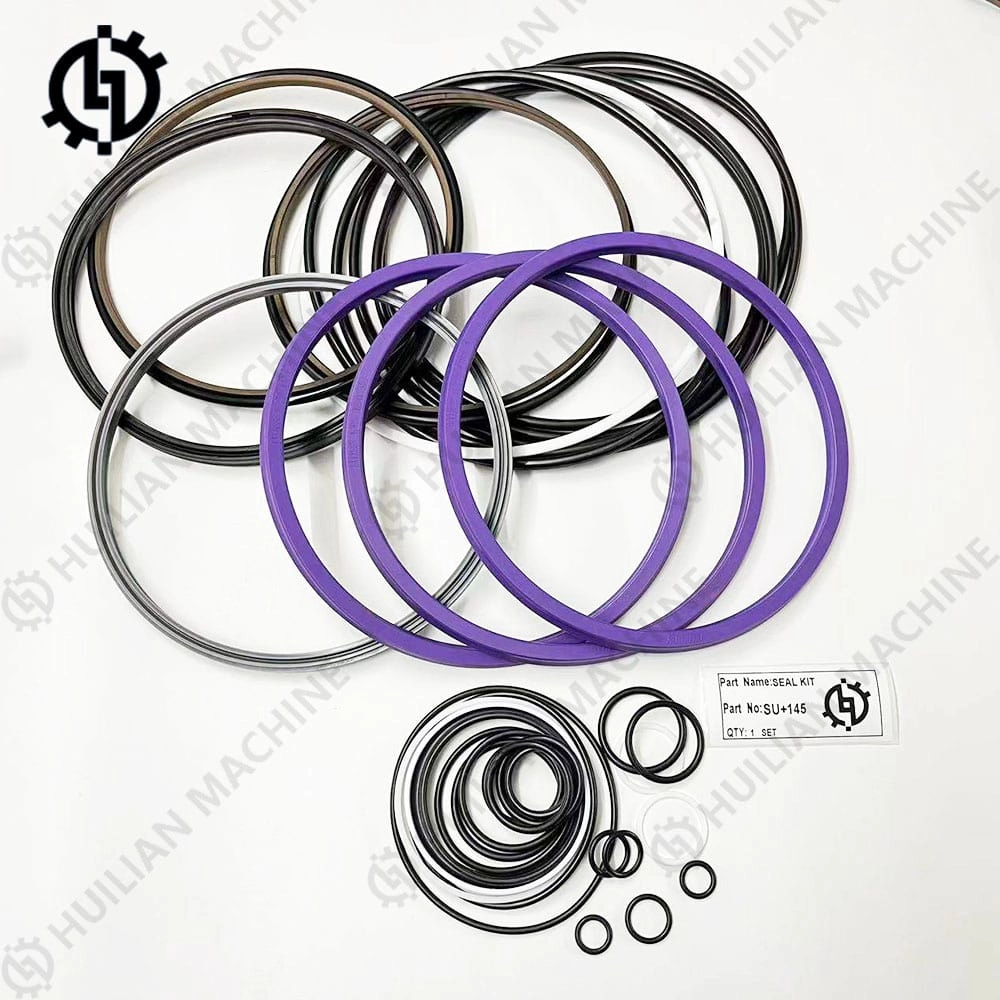
SOOSAN L21016 SU+145 TR-F SU+145TRF SU145 SU+145 Seal Kit C61443 SU+125 Oil Repair Kit For Excavator Hydraulic Rock Breaker Hammer Spare Parts
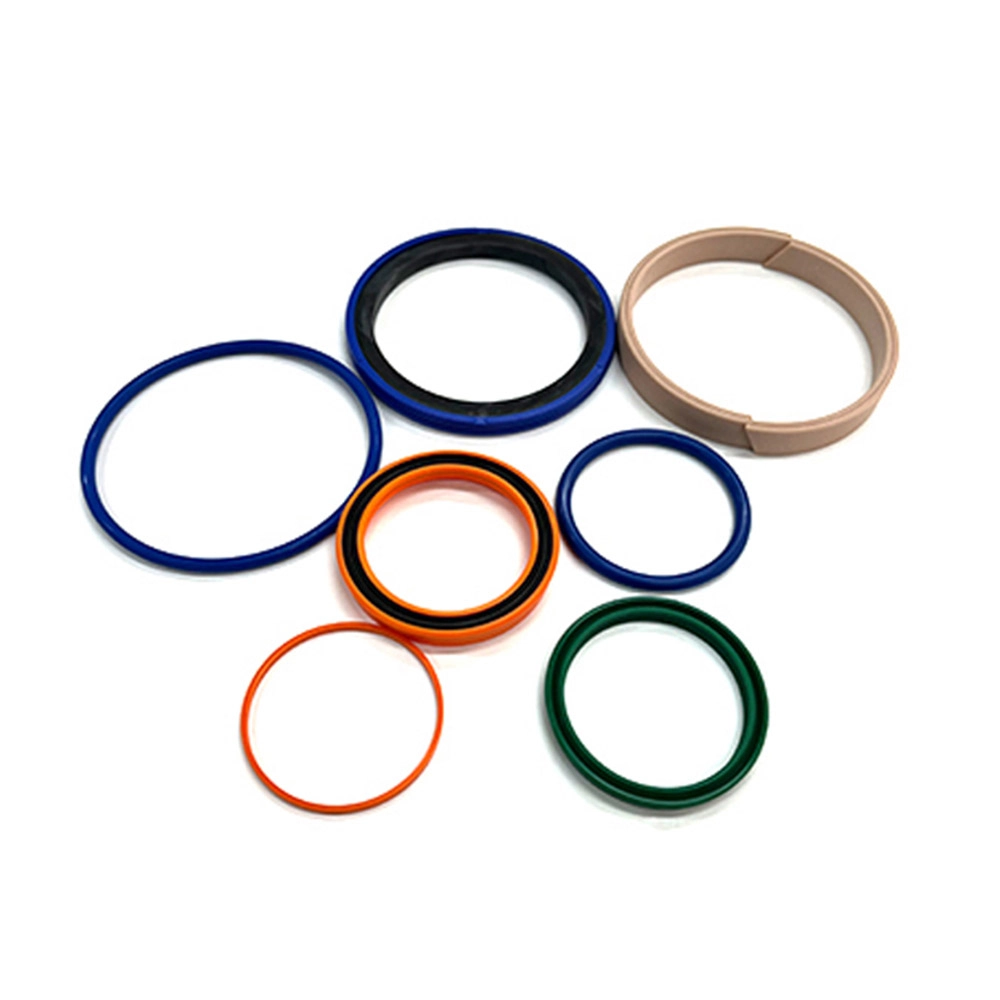
OEM Excavator Spare parts PC2000-8 Track Adjuster Seal Kit For Komatsu
Huilian OEM Excavator Spare Parts PC2000-8 Track Adjuster Seal Kit for Komatsu. Ensures optimal track adjustment performance. High-quality replacement for your PC2000-8 excavator. Order your kit today!
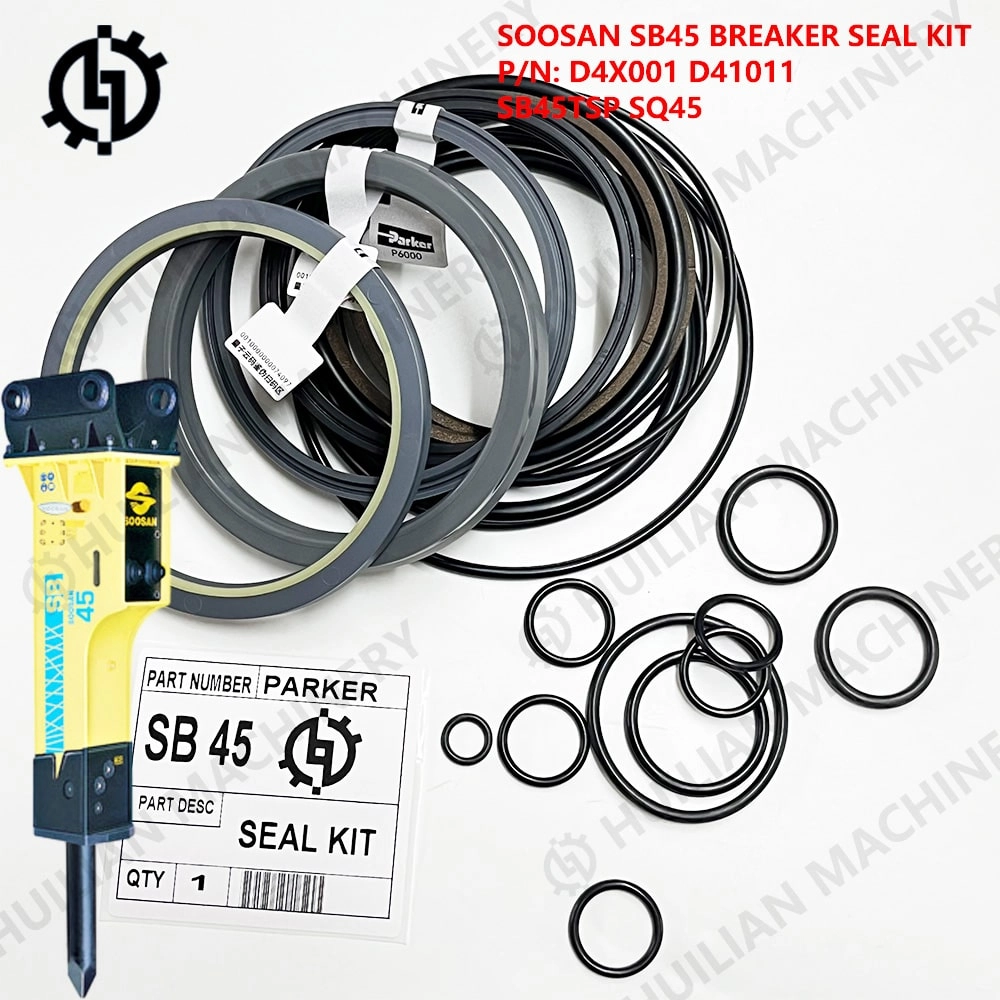
Parker Oil Seal SOOSAN SB45 Hydraulic Rock Hammer Breaker Seal Repair Kit D4X001 D41011 SB45TSP SQ45

Huilian HL68 Hammer Breaker for 4-7 Ton Excavator SOOSAN SB40 Hydraulic Rock Breaker
Side type hydraulic breaker : Easy to control, convenient positioning, durable, high working efficiency, strong striking force, long service life, stable operating performance, convenient after-sales service.
Top type hydraulic breaker : Strong impact power; excellent environmental performance; exquisite manufacturing technology; easy maintenance,fast after-sales service
Box type hydraulic breaker :leading heat treatment technology, enhance heat resistance, wear resistance. Under the condition of keeping the oil pressure constant, the cylinder volumeis reduced and the fuel consumption is reduced.The self-developed core is adopted to make the piston cylinder body moredurable and the service life longer.Exposed decks are made of high-strength steel plates to reduce wear.The best efficiency matching with excavator and loader is realized
 About us
© 2025 HUILIAN MACHINE. All rights reserved