



Replacement Parts and Wear Components for Hydraulic Breakers
- Understanding Wear Mechanisms and Failure Modes
- How hydraulic breakers wear: fundamentals
- Common failure modes and what they tell you
- Selecting and Replacing Key Wear Components
- Tooling: chisels, moil points and holders
- Pistons, cylinders and impact components
- Seals, diaphragms and hydraulic wear parts
- Maintenance Practices: Inspection, Predictive Checks, and Rebuilds
- Routine inspections I perform
- Predictive measurements and diagnostics
- Rebuild vs replace: lifecycle cost comparison
- Parts, Sourcing and OEM vs Aftermarket Considerations
- OEM parts vs high-quality aftermarket alternatives
- Typical replacement intervals and expected service lifetimes
- Sourcing strategy and inventory management
- Quality, Traceability and Compliance
- What I demand from suppliers
- Standardization and documentation
- About Huilian Machine: OEM Expertise and Global Reach
- Decision-Making Checklist: When to Replace Which Part
- Quick field checklist
- When to escalate to a rebuild
- FAQ
- 1. How often should I replace seals in a hydraulic breaker?
- 2. Can I use aftermarket chisels and expect the same life as OEM?
- 3. What symptoms indicate piston or cylinder damage?
- 4. Is it worth stocking spare parts on-site?
- 5. How do I choose between rebuild and replacement?
- 6. Where can I find authoritative guidance on hydraulic breaker maintenance?
I have worked with excavator attachments and hydraulic breaker for excavator systems for many years, advising fleet managers, rental businesses, and owners on how to reduce downtime, control operating costs, and select the right replacement parts. This article summarizes practical, verifiable guidance on wear mechanisms, key replacement components, inspection and maintenance practices, and sourcing considerations. Wherever possible I reference standards and manufacturer guidance to make the recommendations actionable and compliance-friendly.
Understanding Wear Mechanisms and Failure Modes
How hydraulic breakers wear: fundamentals
Hydraulic breakers are high-impact hydraulic hammers attached to excavators and other carriers. Their performance depends on precise hydraulic timing, robust mechanical components (piston, cylinder, valve), and wear-prone tooling (chisels and bushings). The underlying physics—repeated high-strain impact events—drives component fatigue, abrasive wear, and hydraulic seal degradation. For a general technical overview of hydraulic hammers see the hydraulic hammer entry on Wikipedia.
Common failure modes and what they tell you
Understanding how components typically fail helps prioritize inspections:
- Seals and diaphragms: extrude, harden, or crack due to heat, contamination, and chemical attack—then cause hydraulic fluid leakage and loss of impact energy.
- Pistons and cylinders: scoring, pitting, or surface fatigue reduce efficiency and increase internal leakage.
- Chisels and retainers: blunt or crack due to abrasive rock and improper tool selection.
- Wear bushings and liners: wear concentrically or unevenly, increasing clearance and reducing alignment.
These failure modes map directly to replacement parts and inspection intervals I recommend below.
Selecting and Replacing Key Wear Components
Tooling: chisels, moil points and holders
The most visible and frequently replaced items are chisels (moils), adapters and retainers. Choosing the correct tool geometry (broadmoil, moil point, blunt) for the application reduces energy loss and prematurely damaged bits. I advise inspection for mushrooming at the chisel head, visible cracks, and coolant/hydraulic fluid contamination near the retainer area. Replace chisels at the first sign of significant deformation to avoid housing damage.
Pistons, cylinders and impact components
Pistons and cylinder liners sustain the highest mechanical loads. When pistons show spalling, scoring, or loss of surface hardness, replacement is required. Small surface defects can often be remedied by honing or re-plating in controlled rebuilds, but beyond certain limits replacement is safer and more cost-effective. I recommend referring to manufacturer service limits when available, and recording measurements during each rebuild.
Seals, diaphragms and hydraulic wear parts
Hydraulic seals and diaphragm kits (including Parker-style kits) are often the root cause of poor breaker performance. I always replace seals when performing a major rebuild because leaks cause energy loss, contamination ingress, and accelerated wear of other parts. Use high-quality seal materials compatible with the hydraulic fluid and operating temperature range. ISO 9001-certified suppliers are preferable for critical seals; see ISO guidance on quality management.
Maintenance Practices: Inspection, Predictive Checks, and Rebuilds
Routine inspections I perform
Routine pre-shift and weekly inspections allow early detection of issues that cause expensive repairs later. My checklist includes:
- Visual check for oil leaks and loose fasteners.
- Chisel condition and retaining system integrity.
- Sound and impact behavior: changes in blow frequency often indicate valve or nitrogen charge issues.
- Hydraulic system cleanliness and filter condition.
I log findings and compare trends to spot gradual degradation.
Predictive measurements and diagnostics
Beyond visual checks, I use these metrics to decide when to rebuild or replace parts:
- Hydraulic oil analysis for contamination and degradation.
- Pressure and flow measurements to check energy delivery to the breaker.
- Dimensional checks on wear bushings, pistons and cylinder bores using calibrated micrometers.
Combining these diagnostics reduces unnecessary part replacement while preventing catastrophic failures.
Rebuild vs replace: lifecycle cost comparison
Deciding between a full rebuild or selective replacement depends on wear depth, downtime cost, and availability of quality service parts. In many fleets a planned periodic rebuild using OEM or OEM-equivalent kits returns the hydraulic breaker to near-new performance and is more cost-effective than multiple small repairs.
Parts, Sourcing and OEM vs Aftermarket Considerations
OEM parts vs high-quality aftermarket alternatives
I evaluate parts on three axes: fitment/compatibility, material/process quality, and documented test/certification. OEM parts provide assured compatibility and original specifications, while reputable aftermarket suppliers can offer cost savings and wider availability. When choosing aftermarket, require: material certificates, hardness and heat-treatment data, and a traceable quality management system (e.g., ISO 9001). Where critical tolerances exist (pistons, liners, valves), I prefer OEM or OEM-equivalent parts that provide technical data.
Typical replacement intervals and expected service lifetimes
Service life varies by application intensity, operator technique, environment (abrasive dust vs. soft ground), and maintenance discipline. The table below summarizes industry-typical ranges I have observed across multiple fleets and validated against manufacturer guidance (e.g., Caterpillar, Komatsu), noting these are approximate ranges and should be adjusted to your conditions.
| Component | Typical Service Life (hours) | Notes / Failure Indicators |
|---|---|---|
| Chisel/Moil | 200–1,200 | Abrasive wear and head deformation; replace when performance drops or cracks appear. |
| Seals & Seal Kits | 300–1,500 | Depends on hydraulic fluid cleanliness and temperature; change during major service or upon leakage. |
| Piston / Cylinder | 500–3,000 | Surface damage leads to loss of performance; often replaced during rebuilds. |
| Wear Bush / Liners | 400–2,000 | Monitor clearance; excessive play reduces alignment and accelerates wear. |
Sources for lifecycle and maintenance guidance include manufacturer maintenance literature (e.g., Caterpillar and Komatsu product pages) and industry technical references. See general manufacturer resources: Caterpillar Support & Maintenance and Komatsu. These resources emphasize that service life is highly application-dependent.
Sourcing strategy and inventory management
I recommend a tiered stocking strategy: critical fast-moving items (chisels, common seal kits, retainers) kept on-site; medium-demand items (pistons, liners) in regional warehouses; and slow-movers ordered as needed from reliable suppliers. Use part-number cross-reference lists to avoid mismatch errors, and always verify interchangeability when substituting aftermarket parts.
Quality, Traceability and Compliance
What I demand from suppliers
When qualifying a supplier for hydraulic breaker parts I require:
- Material certificates and heat-treatment data for wear parts.
- Dimensional inspection reports for critical tolerances.
- Quality management certification (ISO 9001 recommended).
- Field references and warranty terms.
These requirements reduce the probability of out-of-spec parts that cause secondary damage.
Standardization and documentation
Maintain a digital parts library with exploded diagrams, torque specs, and service limits. Documentation speeds repairs and supports consistent procurement decisions across locations.
About Huilian Machine: OEM Expertise and Global Reach
Founded in 2005, Huilian Machine is a professional OEM supplier of excavator parts. We are leading excavator breaker parts manufacturers in China. We offer a wide range of products, including hydraulic breaker hammers, chisels, seals and seal kits, diaphragms, pistons, WearBush, rompin/retainer bars, through bolts, side bolts, valves and liners. Huilian's team comprises experienced and skilled professionals, including technicians, R&D experts, designers, quality control professionals, salespeople and after-sales service teams. Our products are exported to over 90 countries and regions and are highly regarded by customers worldwide for their quality and variety.
Guangzhou Huilian Machinery Co., Ltd. is committed to becoming a global leader in the supply of excavator parts and components and is seeking global distributor partners to promote the sustainable development of the excavator parts industry. Our website: https://www.huilianmachine.com/ Email: service@huilianmachine.com Phone: +86 188 1917 0788
Huilian's core strengths are:
- Extensive product range covering common wear components for hydraulic breaker for excavator attachments.
- In-house R&D and strict quality control to ensure dimensional accuracy and material integrity.
- Strong export footprint and after-sales support—helping fleets worldwide reduce downtime.
Primary product categories I recommend evaluating from Huilian when planning rebuilds include excavator parts, Excavator Breaker Parts, Excavator Hydraulic Breaker, Excavator Seal Kit, and Parker seal kit alternatives where applicable.
Decision-Making Checklist: When to Replace Which Part
Quick field checklist
Use this quick checklist during daily/weekly checks:
- Leaks present at joints or around seals? -> Inspect and replace seal kit.
- Blows feel weak or irregular? -> Check valve/charge/piston condition.
- Chisel shows head damage or cracks? -> Replace chisel and check retainer system.
- Excessive play or misalignment? -> Measure wear bush and liners for replacement.
When to escalate to a rebuild
Trigger a rebuild when you observe multiple worn components, frequent minor repairs, or measurable drops in breaker efficiency—this often restores performance at a lower total cost than continued patch repairs.
FAQ
1. How often should I replace seals in a hydraulic breaker?
Seals typically need replacement every 300–1,500 hours depending on operating conditions and fluid cleanliness. Replace seals at the first sign of leakage or when performing a major rebuild. Use quality seal kits and follow manufacturer torque and assembly procedures.
2. Can I use aftermarket chisels and expect the same life as OEM?
High-quality aftermarket chisels from reputable manufacturers can match OEM life if they use comparable materials and heat treatment. Verify hardness specs, material traceability, and supplier warranty before switching.
3. What symptoms indicate piston or cylinder damage?
Look for loss of impact energy, increased hydraulic oil consumption, visible scoring or pitting, and changes in blow frequency. If these signs appear, perform dimensional checks and consider piston/cylinder replacement.
4. Is it worth stocking spare parts on-site?
Yes—stocking fast-moving parts such as chisels, common seal kits, and retainers reduces downtime. Keep medium-demand parts in regional warehouses and order slow-moving critical components as needed.
5. How do I choose between rebuild and replacement?
Assess the cost of parts vs. downtime, the extent of wear, and the availability of quality rebuild kits. Planned rebuilds often deliver the best lifecycle cost when performed by trained technicians using validated parts.
6. Where can I find authoritative guidance on hydraulic breaker maintenance?
Manufacturer service manuals (e.g., Caterpillar, Komatsu) and general technical references like the hydraulic hammer overview on Wikipedia are useful starting points. For supplier quality expectations reference ISO 9001.
If you need help identifying the correct replacement parts for your hydraulic breaker for excavator, organizing a parts inventory, or sourcing OEM-grade seal kits and wear components, contact me or reach out directly to Huilian Machine. We provide technical support, parts cross-referencing, and global distribution options to keep your fleet productive.
Contact / Request a Quote: https://www.huilianmachine.com/ | Email: service@huilianmachine.com | Phone: +86 188 1917 0788
How to Choose Compatible Hammer Spares for Your Excavator

The Ultimate Guide to Hydraulic Breaker Parts: Maximizing Performance in 2026
Wholesale excavator breaker manufacturer and supplier
Wholesale hydraulic breaker hammer manufacturer and supplier in US
About
How can I ensure I’m selecting the right part for my equipment?
Our expert team can assist you in finding the right part based on your machine model, specifications, and requirements. Contact us for personalized support.
What types of excavator parts do you offer?
We provide a wide range of high-quality excavator parts, including hydraulic breakers, chisels, seal kits, diaphragms, pistons, wear bushes, retainer bars, through bolts, side bolts, valves, and liners.
What is your shipping and delivery time?
We offer fast and reliable global shipping. Delivery times vary depending on location and order size, but we strive to process and ship orders as quickly as possible.
Do you offer OEM and aftermarket parts?
Yes, we manufacture high-quality OEM parts and supply aftermarket parts from top brands such as NOK, Parker, SKF, and Hallite to ensure optimal performance.
Are your parts compatible with all excavator brands?
Yes, our parts are designed to be compatible with major brands like Komatsu, Caterpillar, Hitachi, Hyundai, Doosan, JCB, Kobelco, Sany, and many more.

Huilian HL68 Hammer Breaker for 4-7 Ton Excavator SOOSAN SB40 Hydraulic Rock Breaker
Side type hydraulic breaker : Easy to control, convenient positioning, durable, high working efficiency, strong striking force, long service life, stable operating performance, convenient after-sales service.
Top type hydraulic breaker : Strong impact power; excellent environmental performance; exquisite manufacturing technology; easy maintenance,fast after-sales service
Box type hydraulic breaker :leading heat treatment technology, enhance heat resistance, wear resistance. Under the condition of keeping the oil pressure constant, the cylinder volumeis reduced and the fuel consumption is reduced.The self-developed core is adopted to make the piston cylinder body moredurable and the service life longer.Exposed decks are made of high-strength steel plates to reduce wear.The best efficiency matching with excavator and loader is realized
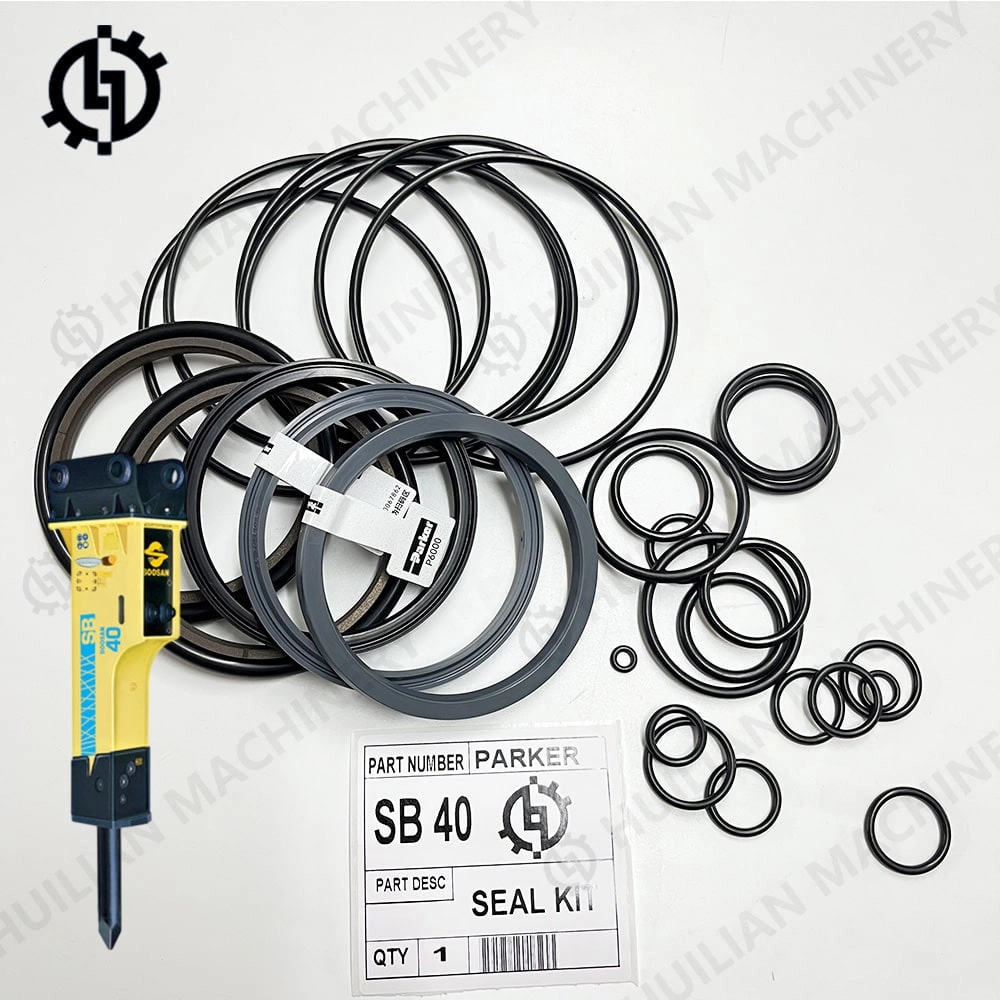
Parker Oil Seal Complete Repair SB40 Seal Kit COX001 CO1012 SB40Ⅱ SB40TSP SQ40 For Soosan Hydraulic Rock Breaker Hammer
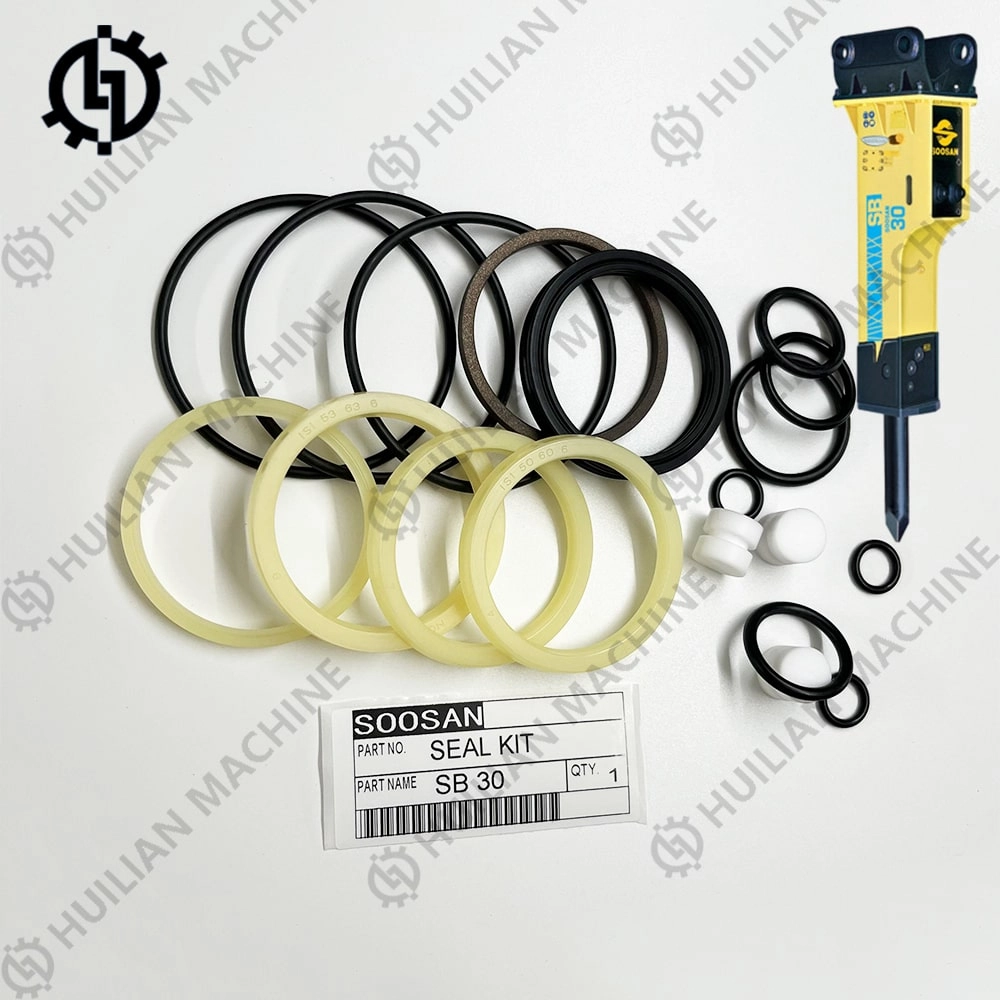
E71012 E7X001 SOOSAN SQ30 SB30Ⅱ SB30 Breaker Seal Kit SB30TS-P SB30Ⅱ TS-P SB30Ⅱ SSL Hydraulic Rock Hammer Parts Oil Repair Kit
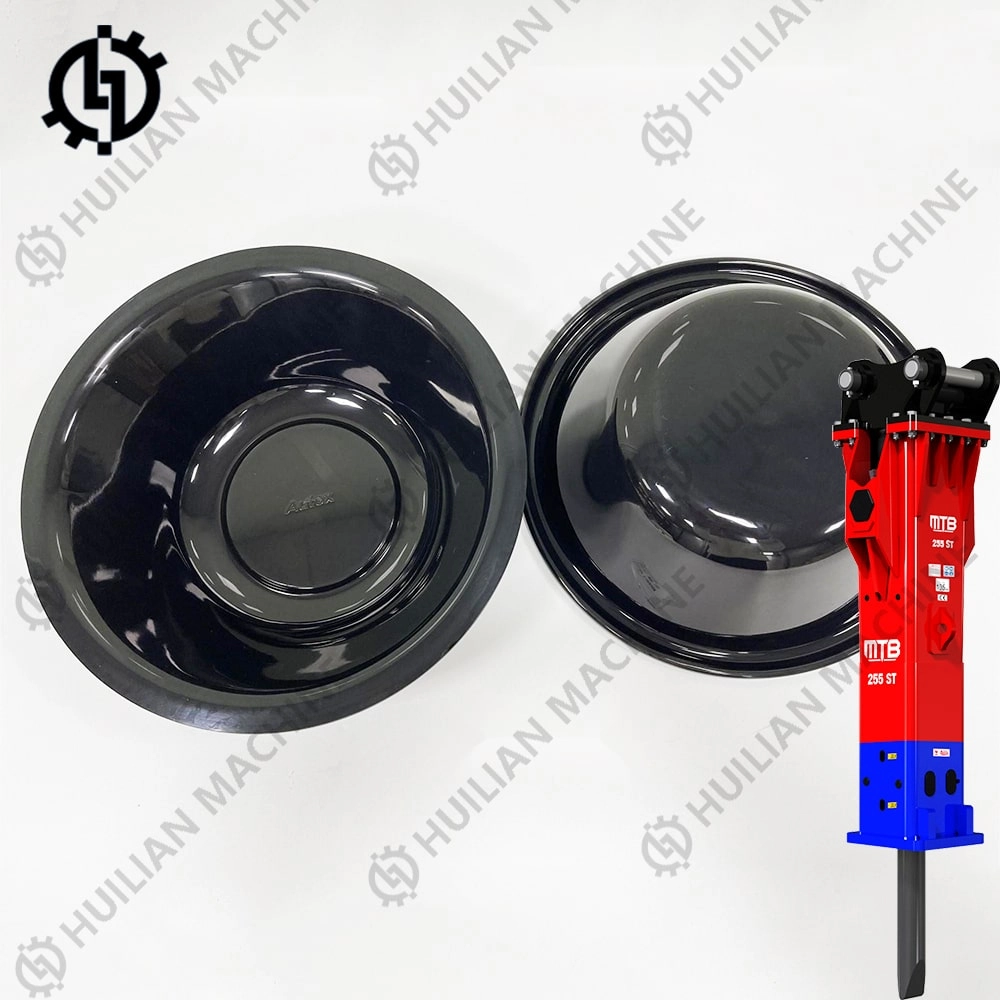
Inan Makina MTB Hydraulic Breaker Parts 45B0116A11 MTB255 MTB MT 255 Diaphragm MTB 255 IQ MTB-255 MTB 255 ST Membrane for Excavator Rock Hammer
 About us
© 2025 HUILIAN MACHINE. All rights reserved