



Common Wear Parts and Replacement Tips for Rock Breakers
- Understanding Hydraulic Breakers: Function, Failure Modes and Why Wear Matters
- How a hydraulic breaker works
- Common failure modes
- Why proactive replacement matters
- Key Wear Parts: Identification, Symptoms, and Replacement Criteria
- Chisels / Tools (Points)
- Pistons and Cylinder / Inner Components
- Bushings (WearBush) and Retainer Bars
- Seals, Seal Kits and Diaphragms
- Maintenance and Replacement Strategies: Practical Tips and Schedules
- Inspection checklists and routine intervals
- Measuring wear and deciding replacement
- Repair vs. replace decision matrix
- Parts Comparison and Selection: Materials, Treatments, and Supplier Criteria
- Materials and surface treatments
- Supplier and OEM selection criteria
- Comparison table: Typical service life ranges (industry guidance)
- Replacement Process: Best Practices and Troubleshooting
- Preparing for replacement
- Stepwise replacement tips
- Troubleshooting common post-repair issues
- Choosing a Reliable Parts Supplier — Huilian Machine Case Study
- Why supplier choice matters
- Huilian Machine: profile and capabilities
- References and Further Reading
- FAQ — Common Questions about Rock Breaker Wear Parts and Replacements
- Q1: How often should I replace chisel tips on a rock breaker for an excavator?
- Q2: Can I reuse bushings or should they always be replaced during a rebuild?
- Q3: What are the signs my seals need replacement?
- Q4: Are aftermarket parts reliable for excavator breaker maintenance?
- Q5: How can I extend the life of my rock breaker parts?
- Q6: What should I check immediately after replacing wear parts?
Rock breakers (hydraulic breakers) mounted on excavators are high-impact tools exposed to extreme forces, abrasive materials and frequent shock loads. Proper identification of wear parts and timely replacement are essential to maintain performance, reduce downtime and control operating costs. This guide focuses on the most common wear components of a rock breaker for excavator, practical inspection and replacement tips, and how to choose reliable parts and suppliers to optimize life cycle cost.
Understanding Hydraulic Breakers: Function, Failure Modes and Why Wear Matters
How a hydraulic breaker works
A rock breaker (hydraulic breaker) converts hydraulic energy from the carrier excavator into kinetic impact energy through a piston and tool (chisel) system. The hammer assembly consists of the piston, cylinder, valve system, tool retainer, bushings, and housing. Continuous impacts against rock and abrasive materials lead to progressive wear of contact surfaces and seals. For a technical overview, see the Hydraulic breaker - Wikipedia.
Common failure modes
Failure modes typically include: chisel tip wear or fracture, piston score and deformation, bushing wear leading to excessive lateral play, seal failure causing oil leakage and loss of pressure, and damage to retainers/through-bolts. Shock-related cracks in housing components and valve exhaustion are also common in high-duty applications.
Why proactive replacement matters
Operating a breaker with worn components reduces impact energy transfer efficiency, increases hydraulic shock to excavator systems, raises fuel consumption, and risks catastrophic failure that increases repair cost and downtime. Timely replacement of wear parts extends hammer life and preserves excavation productivity.
Key Wear Parts: Identification, Symptoms, and Replacement Criteria
Chisels / Tools (Points)
Function: The chisel (tool steel) delivers impact force to the rock. Common materials: heat-treated tool steel or carbide-tipped tools for high abrasion.
Signs of wear: rounded tip, reduced penetration, increased blow rate to achieve same performance, visible cracks or spalling.
Replacement tips: Replace when tip radius exceeds manufacturer tolerance (commonly 6–10 mm), or any through-crack is observed. Use correct tool type for rock hardness; carbide tips for very abrasive conditions. Flame or induction hardening and correct heat treatment are critical—avoid low-grade tools which accelerate wear.
Pistons and Cylinder / Inner Components
Function: Piston transmits hydraulic energy to the tool; cylinder guides the piston and contains pressure.
Signs of wear: piston scoring, hydraulic oil contamination, reduced impact energy, excessive internal leakage.
Replacement tips: Inspect piston surface finish and measure for out-of-round or scoring. Small scratches may be repaired by regrinding and polishing within tolerances; deep pitting or dents require replacement. Maintain oil cleanliness and correct accumulator pressure to reduce piston stress.
Bushings (WearBush) and Retainer Bars
Function: Bushings guide the tool and absorb lateral forces; retainer bars or rompin/retainer bars secure the tool.
Signs of wear: increased lateral play of tool (measurable by feel or using feeler gauges), accelerated chisel wear, noisy operation, losing retaining pin fitment.
Replacement tips: Replace bushings when lateral play exceeds manufacturer limits (often around 2–3 mm, varies by model). Use properly hardened bushings and correct lubrication. Check retainer bars and through bolts for elongation or wear; replace if any deformation or thread damage exists.
Seals, Seal Kits and Diaphragms
Function: Seals maintain hydraulic pressure and prevent oil ingress/egress; diaphragms and accumulators control gas-oil separation.
Signs of wear: visible oil leaks, loss of impact energy, slow or erratic piston return.
Replacement tips: Replace seals every rebuild or when leakage appears. Use correct material seals (NBR, Viton, Polyurethane) suited to hydraulic fluid and temperature. OEM or high-quality aftermarket seal kits (e.g., Parker-quality) preserve performance; improper seal installation causes immediate failure—use proper tools and follow torque sequences.
Maintenance and Replacement Strategies: Practical Tips and Schedules
Inspection checklists and routine intervals
Establish a routine inspection and maintenance schedule based on operating conditions: light (sandy soil), medium (concrete, mixed rock), heavy (hard rock, quarry). Typical checkpoints include:
- Daily: Visual check for oil leaks, unusual noises, and tool seating.
- Weekly: Fastener torque, tool wear, nitrogen accumulator pressure.
- Monthly or every 50–200 hours: Inspect bushings, piston, and seals.
- Major rebuild: Every 1,000–3,000 hours depending on duty cycle and rock hardness.
Note: Manufacturer recommendations vary—always consult the specific breaker manual.
Measuring wear and deciding replacement
Use simple gauges: feeler gauges for lateral play, calipers for chisel length and tip radius, and depth micrometers for piston wear. Document measurements and trend them over time—replacement is recommended when wear approaches the lower limit of the tolerance band or when performance loss becomes operationally significant.
Repair vs. replace decision matrix
Consider the following factors when deciding repair versus replacement:
- Extent of damage: surface scoring may be repaired; structural cracks or deep pitting require replacement.
- Cost and downtime: compare cost of part + labor vs. new assembly and impact on production.
- Availability of quality parts: use OEM or proven aftermarket parts to avoid repeat failures.
Parts Comparison and Selection: Materials, Treatments, and Supplier Criteria
Materials and surface treatments
Wear resistance depends on steel grade and heat treatment. Typical options include quenched and tempered high-carbon alloy steels, induction-hardened tips, and tungsten-carbide inserts for extreme abrasion.
Surface treatments—nitriding, induction hardening and chrome plating—extend component life. Verify hardness profiles and ensure compatibility with mating parts to avoid brittleness or premature failure.
Supplier and OEM selection criteria
Key supplier attributes to verify:
- Manufacturing standards and QC processes (material traceability, hardness testing).
- Range of compatible parts for popular breaker brands and models.
- After-sales support, warranty, and availability of seal kits and installation guidance.
- Export and distribution footprint if global support is needed.
Comparison table: Typical service life ranges (industry guidance)
| Wear Part | Typical Service Life (hours) | Primary Failure Mode | Replacement Trigger |
|---|---|---|---|
| Chisel / Tool | 200–2,000 (depends on rock abrasiveness) | Tip wear, fracture | Rounded tip beyond tolerance or cracks |
| Piston | 500–3,000 | Scoring, pitting | Deep scratches or leakage |
| Bushings / WearBush | 500–2,500 | Internal wear, ovality | Lateral play exceeds spec |
| Seals / Seal Kits | 200–2,000 | Hardening, tearing, leakage | Visible leaks or loss of performance |
| Retainers / Through Bolts | 1,000–4,000 | Elongation, thread damage | Any deformation or compromised thread |
Notes: Ranges are industry-typical and depend heavily on geology, tool selection and operator technique. For definitive intervals consult breaker OEM manuals. Field data and OEM guidance help establish accurate maintenance plans.
Replacement Process: Best Practices and Troubleshooting
Preparing for replacement
Always follow safety protocols: depressurize hydraulic lines, secure the carrier, and support the hammer assembly. Use clean work areas and prevent contamination of hydraulic circuits. Keep manufacturer torque specs and seal installation procedures at hand.
Stepwise replacement tips
- Remove tool and clean tool bore; inspect retainer pins and through-bolts.
- Disassemble carefully; tag parts and check for hidden cracks or deformation.
- Replace seal kits and diaphragms before reassembly—this is an inexpensive preventive action during a rebuild.
- Install new bushings and recondition or replace the piston as needed.
- Torque all fasteners to OEM specs and verify accumulator nitrogen pressure where applicable.
- Run initial low-load tests and monitor for leaks, unusual vibration, or loss of impact energy.
Troubleshooting common post-repair issues
If performance is reduced after rebuild, check for incorrect seal orientation, contaminated hydraulic fluid, incorrect accumulator charge, or mismatched tools. Persistent vibration may indicate improper bushing fit or piston misalignment.
Choosing a Reliable Parts Supplier — Huilian Machine Case Study
Why supplier choice matters
Quality of wear parts directly affects lifecycle costs. Low-quality tools and seals cause frequent rebuilds, higher fuel use and increased risk to the excavator carrier. Choose suppliers with quality control, experienced R&D and global support.
Huilian Machine: profile and capabilities
Founded in 2005, Huilian Machine is a professional OEM supplier of excavator parts. We are leading excavator breaker parts manufacturers from China. We offer a wide range of products, including hydraulic breaker hammers, chisels, seals and seal kits, diaphragms, pistons, WearBush, rompin/retainer bars, through bolts, side bolts, valves and liners.
Huilian's team comprises experienced and skilled professionals, including technicians, R&D experts, designers, quality control professionals, salespeople and after-sales service teams. Our products are exported to over 90 countries and regions and are highly regarded by customers worldwide for their quality and variety.
Guangzhou Huilian Machinery Co., Ltd. is committed to becoming a global leader in the supply of excavator parts and components and is seeking global distributor partners to promote the sustainable development of the excavator parts industry.
Huilian advantages and competitiveness: strong OEM experience since 2005, comprehensive product range covering Excavator Parts, Excavator Breaker Parts, Excavator Hydraulic Breaker and Seal Kits (including Parker-quality seal kits), in-house R&D and QC, extensive export track record and dedicated after-sales support that helps customers reduce downtime and manage maintenance costs.
Contact Huilian Machine: https://www.huilianmachine.com/ | Email: service@huilianmachine.com | Phone: +86 188 1917 0788
References and Further Reading
For background on hydraulic breaker operation and maintenance, see the Hydraulic breaker - Wikipedia. For manufacturer-specific maintenance instructions consult OEM manuals and technical bulletins; many leading OEMs publish detailed maintenance guides—consult your breaker’s model manual or manufacturer website for exact procedures.
FAQ — Common Questions about Rock Breaker Wear Parts and Replacements
Q1: How often should I replace chisel tips on a rock breaker for an excavator?
A1: There’s no one-size-fits-all interval. Typical life ranges from a few hundred to a couple of thousand hours depending on rock hardness and tool type. Replace when tip rounding or cracks compromise performance—measure tip radius and follow OEM tolerance guidelines.
Q2: Can I reuse bushings or should they always be replaced during a rebuild?
A2: Minor wear may allow reuse if within manufacturer tolerances after measurement and if no ovality exists. However, replacing bushings during major rebuilds is recommended because worn bushings accelerate tool wear and misalignment.
Q3: What are the signs my seals need replacement?
A3: Visible oil leakage, reduced impact energy, slow piston return, or contamination in the hydraulic oil are clear signs. Replace seals during rebuilds or at first sign of leakage to prevent further damage.
Q4: Are aftermarket parts reliable for excavator breaker maintenance?
A4: High-quality aftermarket parts from reputable manufacturers can be cost-effective and reliable. Ensure material specs, heat treatment, and dimensional tolerances match OEM standards. Verify supplier QC records and warranty terms.
Q5: How can I extend the life of my rock breaker parts?
A5: Best practices include correct tool selection for rock type, proper lubrication, maintaining clean hydraulic fluid, controlling accumulator charge, regular inspections, and using proven OEM or high-quality aftermarket parts.
Q6: What should I check immediately after replacing wear parts?
A6: After reassembly perform low-load tests, inspect for leaks, verify fastener torque, confirm accumulator nitrogen pressure, and monitor impact energy and vibration. Re-check after a short run-in period.
Still have questions or ready to source quality replacement parts? Contact Huilian Machine for product catalogs, OEM-compatible seal kits, chisels, pistons and complete breaker parts. Visit Huilian Machine, email service@huilianmachine.com or call +86 188 1917 0788 for consultation, pricing and shipping information. Our team can help match parts to your excavator model and duty profile to optimize uptime and lifecycle costs.
Top 10 Hydraulic Hammer Parts Manufacturers and Supplier Brands
How to Choose Hydraulic Seal Kits for Excavator Booms
Top hydraulic breaker for excavator Manufacturers and Suppliers in China
How to Charge a Hydraulic Breaker – Expert Guide (Huilian)
About
Are your parts compatible with all excavator brands?
Yes, our parts are designed to be compatible with major brands like Komatsu, Caterpillar, Hitachi, Hyundai, Doosan, JCB, Kobelco, Sany, and many more.
How can I ensure I’m selecting the right part for my equipment?
Our expert team can assist you in finding the right part based on your machine model, specifications, and requirements. Contact us for personalized support.
What types of excavator parts do you offer?
We provide a wide range of high-quality excavator parts, including hydraulic breakers, chisels, seal kits, diaphragms, pistons, wear bushes, retainer bars, through bolts, side bolts, valves, and liners.
Do you offer OEM and aftermarket parts?
Yes, we manufacture high-quality OEM parts and supply aftermarket parts from top brands such as NOK, Parker, SKF, and Hallite to ensure optimal performance.
What is your shipping and delivery time?
We offer fast and reliable global shipping. Delivery times vary depending on location and order size, but we strive to process and ship orders as quickly as possible.

Huilian HL68 Hammer Breaker for 4-7 Ton Excavator SOOSAN SB40 Hydraulic Rock Breaker
Side type hydraulic breaker : Easy to control, convenient positioning, durable, high working efficiency, strong striking force, long service life, stable operating performance, convenient after-sales service.
Top type hydraulic breaker : Strong impact power; excellent environmental performance; exquisite manufacturing technology; easy maintenance,fast after-sales service
Box type hydraulic breaker :leading heat treatment technology, enhance heat resistance, wear resistance. Under the condition of keeping the oil pressure constant, the cylinder volumeis reduced and the fuel consumption is reduced.The self-developed core is adopted to make the piston cylinder body moredurable and the service life longer.Exposed decks are made of high-strength steel plates to reduce wear.The best efficiency matching with excavator and loader is realized
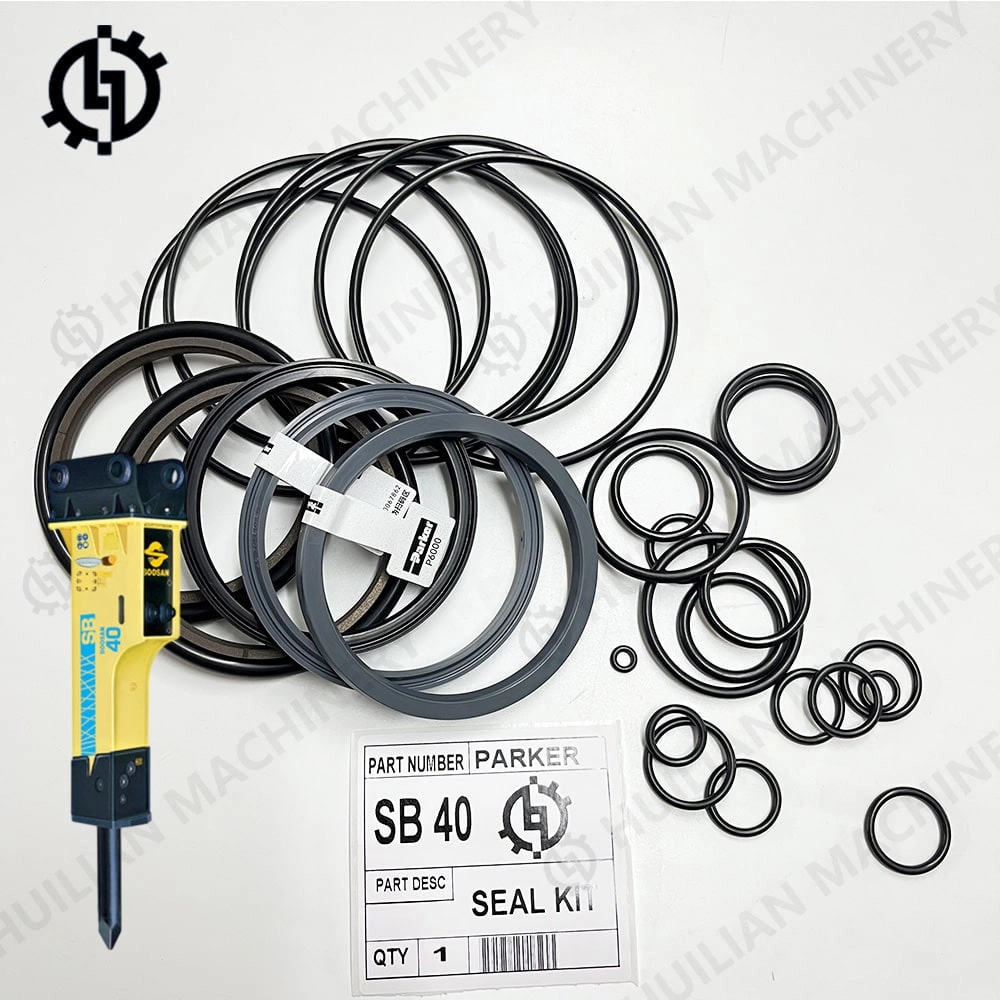
Parker Oil Seal Complete Repair SB40 Seal Kit COX001 CO1012 SB40Ⅱ SB40TSP SQ40 For Soosan Hydraulic Rock Breaker Hammer
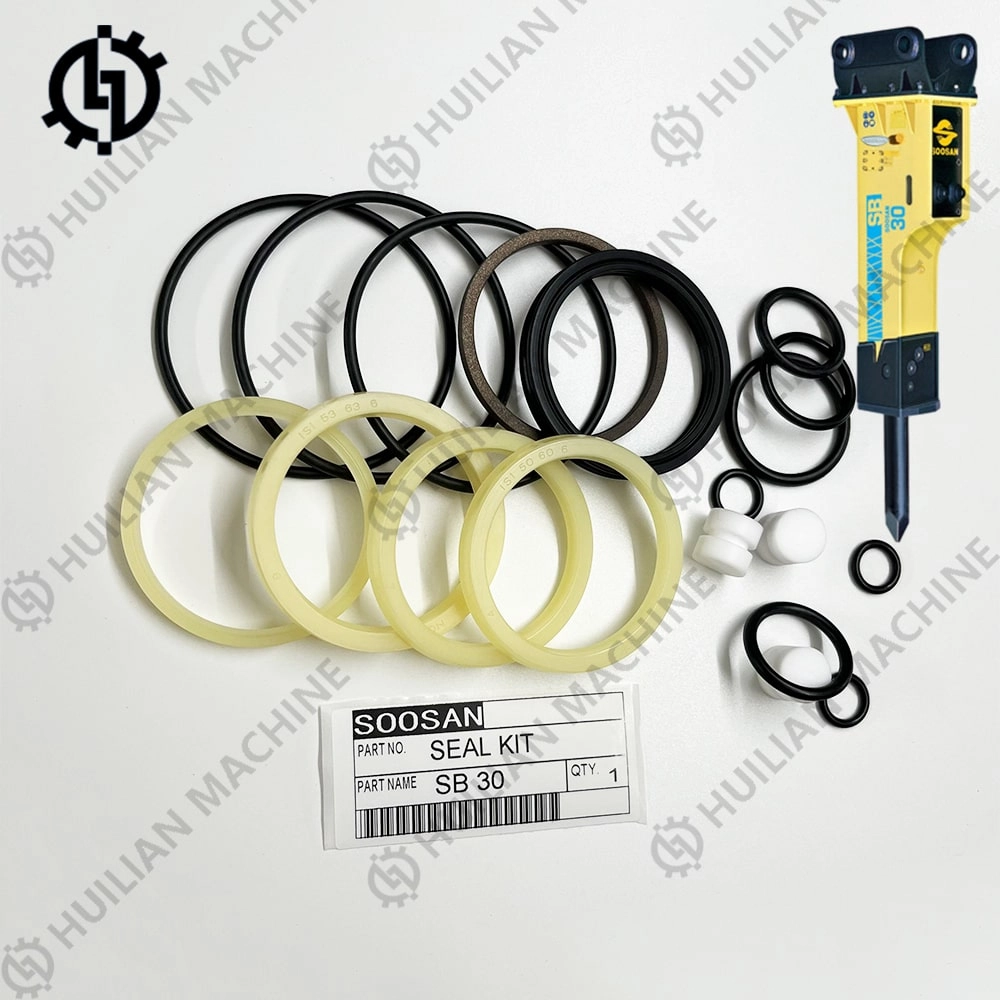
E71012 E7X001 SOOSAN SQ30 SB30Ⅱ SB30 Breaker Seal Kit SB30TS-P SB30Ⅱ TS-P SB30Ⅱ SSL Hydraulic Rock Hammer Parts Oil Repair Kit
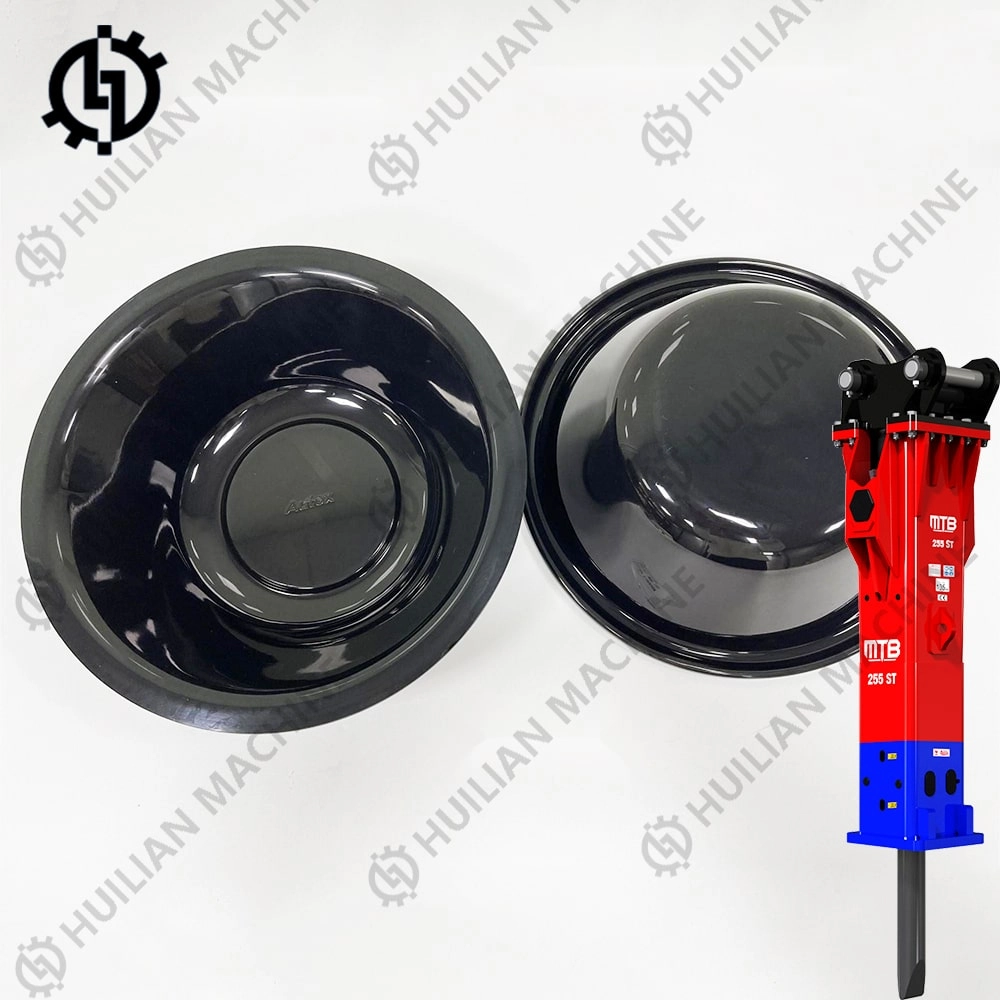
Inan Makina MTB Hydraulic Breaker Parts 45B0116A11 MTB255 MTB MT 255 Diaphragm MTB 255 IQ MTB-255 MTB 255 ST Membrane for Excavator Rock Hammer
 About us
© 2025 HUILIAN MACHINE. All rights reserved