



How to Choose Hydraulic Seal Kits for Excavator Booms
- Understanding excavator hydraulic systems and why seals matter
- How boom cylinders and seals work together
- Common failure modes and user pain points
- Key criteria for selecting hydraulic seal kits
- Match kit contents to the cylinder design
- Material selection: nitrile, PU, PTFE, FKM — what fits your job?
- Pressure, speed and extrusion control
- Installation, maintenance and troubleshooting
- Best practices for installation
- Routine maintenance and predictive checks
- Troubleshooting common issues
- Choosing a supplier and brand considerations
- What to look for in an OEM or aftermarket supplier
- Why complete kits and compatibility matter
- Huilian Machine — OEM supplier profile and strengths
- Purchase checklist and final recommendations
- Pre-purchase checklist
- Cost vs lifecycle value
- Standards and further reading
- FAQs
- 1. How do I know which seal material is compatible with my hydraulic oil?
- 2. Can I mix seal brands or compound types in one kit?
- 3. Should I add backup rings to my rod seals?
- 4. How can I extend the life of seals in abrasive conditions?
- 5. What documentation should I request from a seal kit supplier?
- 6. How often should I replace hydraulic seals on excavator booms?
When selecting hydraulic seal kits for excavator booms, you need a solution that matches the boom's cylinder design, working pressure, temperature range, fluid compatibility and local operating conditions. This guide provides a practical, step-by-step approach designed for technicians, maintenance managers and procurement teams worldwide, combining industry standards and field-tested recommendations to improve seal life, reduce downtime and control cost.
Understanding excavator hydraulic systems and why seals matter
How boom cylinders and seals work together
Excavator booms use hydraulic cylinders to extend, retract and position the arm. A typical cylinder contains a piston, piston seals, rod seals, guide rings, wipers and static seals such as O-rings. Hydraulic seal kits bundle these components for a complete rebuild. Proper sealing prevents internal leakage (which reduces force), keeps contaminants out, and maintains system efficiency under variable loads and harsh environments. For an overview of hydraulic cylinders, see the Wikipedia entry on hydraulic cylinders: https://en.wikipedia.org/wiki/Hydraulic_cylinder.
Common failure modes and user pain points
Seal failures typically result from extrusion, abrasion, chemical attack, thermal degradation, improper installation, or incompatible components. Operators often report symptoms such as slow boom movement, drift, noisy operation, or visible fluid leaks. Understanding the failure mode is key to choosing the right seal kit: for example, repeated extrusion suggests a need for backup rings and different polymer hardness, while abrasion indicates a tougher material such as polyurethane (PU) or PTFE-filled profiles.
Key criteria for selecting hydraulic seal kits
Match kit contents to the cylinder design
Confirm the cylinder type and internal geometry first: rod diameter, piston diameter, gland dimensions, and whether the cylinder uses tandem pistons or floating piston designs. A correct seal kit must include compatible piston seals, rod seals, wipers, guide rings and backup rings if required. Using incomplete or incorrect kits increases rework and early failure risk.
Material selection: nitrile, PU, PTFE, FKM — what fits your job?
Choose materials based on pressure, temperature and fluid compatibility. Common options:
| Material | Best for | Temperature Range | Advantages | Limitations |
|---|---|---|---|---|
| Nitrile (NBR) | General hydraulic oil systems | -30°C to +100°C | Good oil resistance, economical | Poor ozone/heat resistance vs FKM |
| Polyurethane (PU) | High abrasion and dynamic seals | -30°C to +80°C | Excellent wear resistance, high pressure | Lower chemical resistance than PTFE |
| PTFE / PTFE composites | High temp, low friction, aggressive fluids | -200°C to +260°C (material dependent) | Low friction, wide temp range, chemical resistance | Brittle under shock, needs backup rings |
| FKM (Viton) | High temp / fuel / synthetic fluids | -20°C to +200°C | Excellent thermal and chemical resistance | Higher cost, lower low-temp elasticity |
Sources for material properties include technical handbooks and reference pages such as the Wikipedia article on O-rings: https://en.wikipedia.org/wiki/O-ring, and polymer-specific references.
Pressure, speed and extrusion control
Higher pressures and faster rod speeds increase extrusion and wear. For pressures above 200 bar and aggressive dynamics, use polyurethane seals or PTFE composites with appropriately rated backup rings. Consider the seal profile: heavy-duty U-cups and stepped rings offer better sealing under pressure but must be matched with proper gland clearance and backup rings. Consult ISO or manufacturer guidance for pressure ratings and sizing; for O-ring sizing standards see ISO 3601.
Installation, maintenance and troubleshooting
Best practices for installation
Installation errors cause a large share of early failures. Key practices:
- Clean the cylinder bore, piston and rod thoroughly; remove rust and burrs.
- Inspect and, if necessary, re-machine or hone the bore to remove scoring.
- Use assembly grease compatible with the seal material to prevent dry rubbing during initial strokes.
- Use proper installation tools (no sharp edges in contact with seals), and check seal orientation: rod seals face pressure direction.
Technical reference material from seal manufacturers provides step-by-step installation guidance — follow OEM torque and assembly instructions where available.
Routine maintenance and predictive checks
Develop a maintenance plan based on operating hours, environment and observed performance. Example interval guidance (generalized):
| Operating Condition | Inspection Interval | Typical Replacement Interval |
|---|---|---|
| Clean, moderate duty (quarries, construction) | Monthly visual; pressure test every 6 months | 2,000–4,000 operating hours |
| Abrasive/dirty environment (demolition) | Weekly visual; pressure test every 3 months | 1,000–2,000 operating hours |
| Severe duty / high cycles | Weekly or continuous condition monitoring | 500–1,500 operating hours |
These intervals are general; adapt them to machine OEM recommendations and your field data. Use oil analysis and pressure monitoring to detect internal leakage before catastrophic failure.
Troubleshooting common issues
Symptom-based checks:
- Slow movement or reduced force: Check for internal leakage (piston seal wear). Conduct a pressure-hold test.
- External leaks at gland: Inspect rod seal and wiper; look for scoring on rod or gland.
- Seal extrusion or burst: Check for overpressure spikes; consider adding backup rings or changing polymer hardness.
- Rapid wear: Evaluate contamination ingress; improve wiper design, install filtration upgrades.
Choosing a supplier and brand considerations
What to look for in an OEM or aftermarket supplier
Choose suppliers who demonstrate technical competency and traceability. Key supplier attributes:
- Engineering support for matching kits to cylinder drawings and tolerances.
- Quality systems (ISO 9001 or equivalent) and material traceability.
- Clear material data sheets (TDS) and test reports for hardness, tensile strength and aging.
- Global distribution and after-sales support if you operate in multiple regions.
Why complete kits and compatibility matter
Buying a complete seal kit tailored to the cylinder avoids mismatched components (e.g., correct O-ring cross-sections and backup rings) and simplifies inventory. Kits reduce machine downtime by providing all parts needed for a rebuild and often include updated design improvements. Always compare kit BOMs (bill of materials) and verify that part materials match your operating fluid and environment.
Huilian Machine — OEM supplier profile and strengths
Founded in 2005, Huilian Machine is a professional OEM supplier of excavator parts and a leading manufacturer of excavator breaker parts from China. Huilian offers a wide range of products, including hydraulic breaker hammers, chisels, seals and seal kits, diaphragms, pistons, wear bushes, rompin/retainer bars, through bolts, side bolts, valves and liners.
Huilian's team comprises experienced technicians, R&D experts, designers, quality control professionals, sales and after-sales teams. Their products are exported to over 90 countries and regions and are highly regarded by customers worldwide for quality and variety. Guangzhou Huilian Machinery Co., Ltd. aims to be a global leader in excavator parts supply and is seeking global distributor partners to promote sustainable development in the excavator parts industry.
Advantages of choosing Huilian include:
- Comprehensive product range for excavator parts and breaker components.
- Years of OEM experience and a dedicated R&D team to support custom requirements.
- Export footprint across 90+ countries providing logistic experience and serviceability.
- Competitive pricing with quality control measures and product testing.
For enquiries or product lists, visit Huilian's website: https://www.huilianmachine.com/. Contact: service@huilianmachine.com | Phone: +86 188 1917 0788.
Purchase checklist and final recommendations
Pre-purchase checklist
- Confirm cylinder serial/drawing and measure diameters and gland geometry.
- Specify hydraulic fluid type, max pressure, typical temperature range and rod speed.
- Choose appropriate material (NBR, PU, PTFE, FKM) based on fluid and temperature.
- Order complete kits that include seals, O-rings, backup rings and wipers; request material certificates if needed.
- Ask supplier about shelf life, storage recommendations and warranty terms.
Cost vs lifecycle value
Low-cost seals can reduce immediate spend but increase downtime and replacement frequency. Evaluate total lifecycle cost: initial price, expected service life, downtime cost per hour, and spare parts logistics. In severe conditions, investing in higher-grade materials (PU, PTFE composites) and professional installation often yields lower total cost of ownership.
Standards and further reading
Refer to authoritative sources for standards and best practices: ISO standards for sealing elements (e.g., ISO 3601), manufacturer technical bulletins and industry literature. For general seal theory and O-ring details see: https://en.wikipedia.org/wiki/O-ring.
FAQs
1. How do I know which seal material is compatible with my hydraulic oil?
Check the oil manufacturer's compatibility chart and compare it with polymer chemical resistance tables. Nitrile (NBR) is compatible with most petroleum-based hydraulic oils; synthetic fluids may require FKM or PTFE. Ask the seal supplier for a material data sheet or compatibility matrix.
2. Can I mix seal brands or compound types in one kit?
Mixing is possible but not recommended unless you understand the interaction. Different compounds have different thermal expansion and friction characteristics. Use a matched kit or consult supplier engineering to avoid premature wear or leakage.
3. Should I add backup rings to my rod seals?
Yes, for high-pressure systems or large gland clearances backup rings prevent seal extrusion. PTFE seals in particular require backup rings because of low elastic recovery.
4. How can I extend the life of seals in abrasive conditions?
Improve wiper design to keep contaminants out, install filtration and breathers, use abrasion-resistant materials like polyurethane, and consider protective boots or bellows for the rod.
5. What documentation should I request from a seal kit supplier?
Request a bill of materials, material data sheets (TDS), hardness and tensile test reports, traceability/lots, installation guides, and warranty terms. Quality certifications such as ISO 9001 add confidence.
6. How often should I replace hydraulic seals on excavator booms?
Replacement intervals vary greatly with duty cycle and environment. Typical ranges are 500–4,000 operating hours. Use inspections, oil analysis, and pressure testing to determine condition-based replacement.
If you need consultation, customized seal kits, or spare parts, contact Guangzhou Huilian Machinery Co., Ltd. for product lists and distributor information: Email: service@huilianmachine.com | Phone: +86 188 1917 0788. Visit: https://www.huilianmachine.com/
How Seal Kit Quality Affects Excavator Downtime and ROI
Hydraulic Breaker Compatibility: Match to Your Excavator
Wholesale excavator with hydraulic breaker manufacturer and supplier
Hydraulic Breaker's Buyer's Guide: Specs, Power, and Flow Rates
About
Do you offer OEM and aftermarket parts?
Yes, we manufacture high-quality OEM parts and supply aftermarket parts from top brands such as NOK, Parker, SKF, and Hallite to ensure optimal performance.
What types of excavator parts do you offer?
We provide a wide range of high-quality excavator parts, including hydraulic breakers, chisels, seal kits, diaphragms, pistons, wear bushes, retainer bars, through bolts, side bolts, valves, and liners.
How can I ensure I’m selecting the right part for my equipment?
Our expert team can assist you in finding the right part based on your machine model, specifications, and requirements. Contact us for personalized support.
Are your parts compatible with all excavator brands?
Yes, our parts are designed to be compatible with major brands like Komatsu, Caterpillar, Hitachi, Hyundai, Doosan, JCB, Kobelco, Sany, and many more.
What is your shipping and delivery time?
We offer fast and reliable global shipping. Delivery times vary depending on location and order size, but we strive to process and ship orders as quickly as possible.

Huilian HL68 Hammer Breaker for 4-7 Ton Excavator SOOSAN SB40 Hydraulic Rock Breaker
Side type hydraulic breaker : Easy to control, convenient positioning, durable, high working efficiency, strong striking force, long service life, stable operating performance, convenient after-sales service.
Top type hydraulic breaker : Strong impact power; excellent environmental performance; exquisite manufacturing technology; easy maintenance,fast after-sales service
Box type hydraulic breaker :leading heat treatment technology, enhance heat resistance, wear resistance. Under the condition of keeping the oil pressure constant, the cylinder volumeis reduced and the fuel consumption is reduced.The self-developed core is adopted to make the piston cylinder body moredurable and the service life longer.Exposed decks are made of high-strength steel plates to reduce wear.The best efficiency matching with excavator and loader is realized
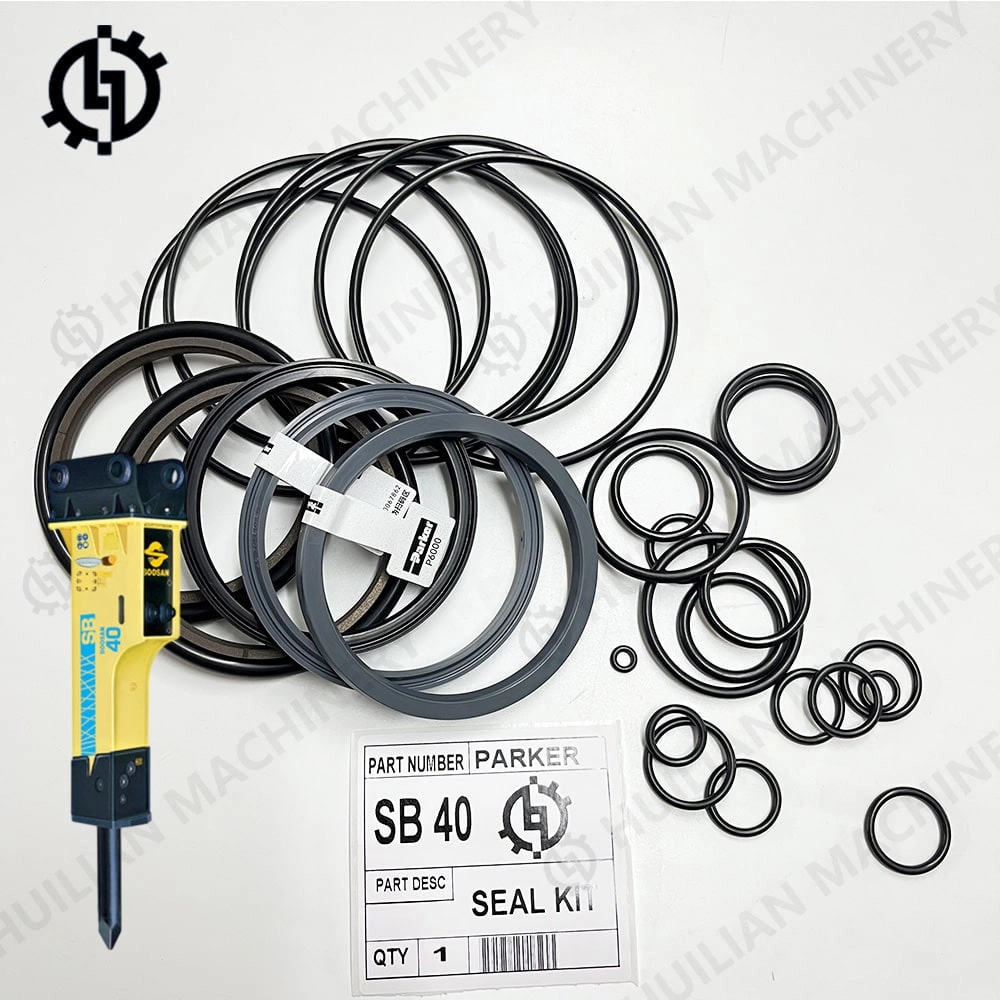
Parker Oil Seal Complete Repair SB40 Seal Kit COX001 CO1012 SB40Ⅱ SB40TSP SQ40 For Soosan Hydraulic Rock Breaker Hammer
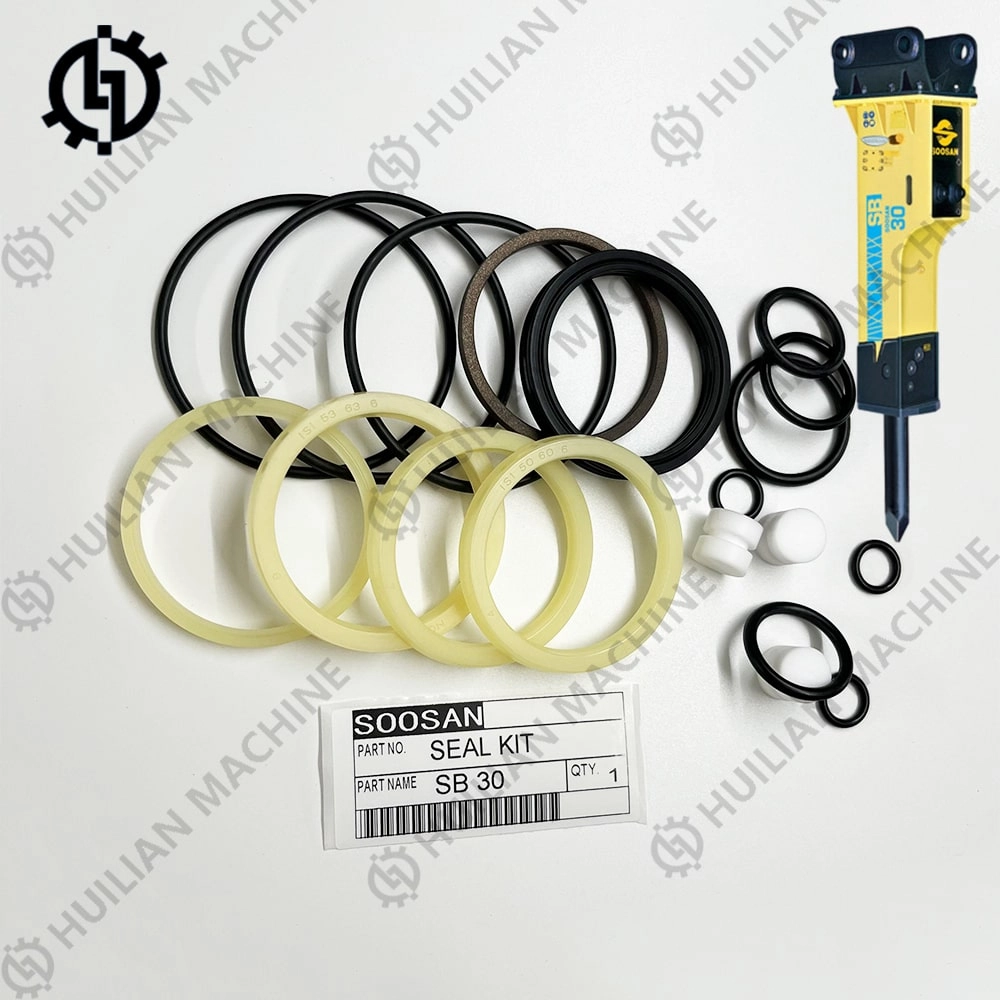
E71012 E7X001 SOOSAN SQ30 SB30Ⅱ SB30 Breaker Seal Kit SB30TS-P SB30Ⅱ TS-P SB30Ⅱ SSL Hydraulic Rock Hammer Parts Oil Repair Kit
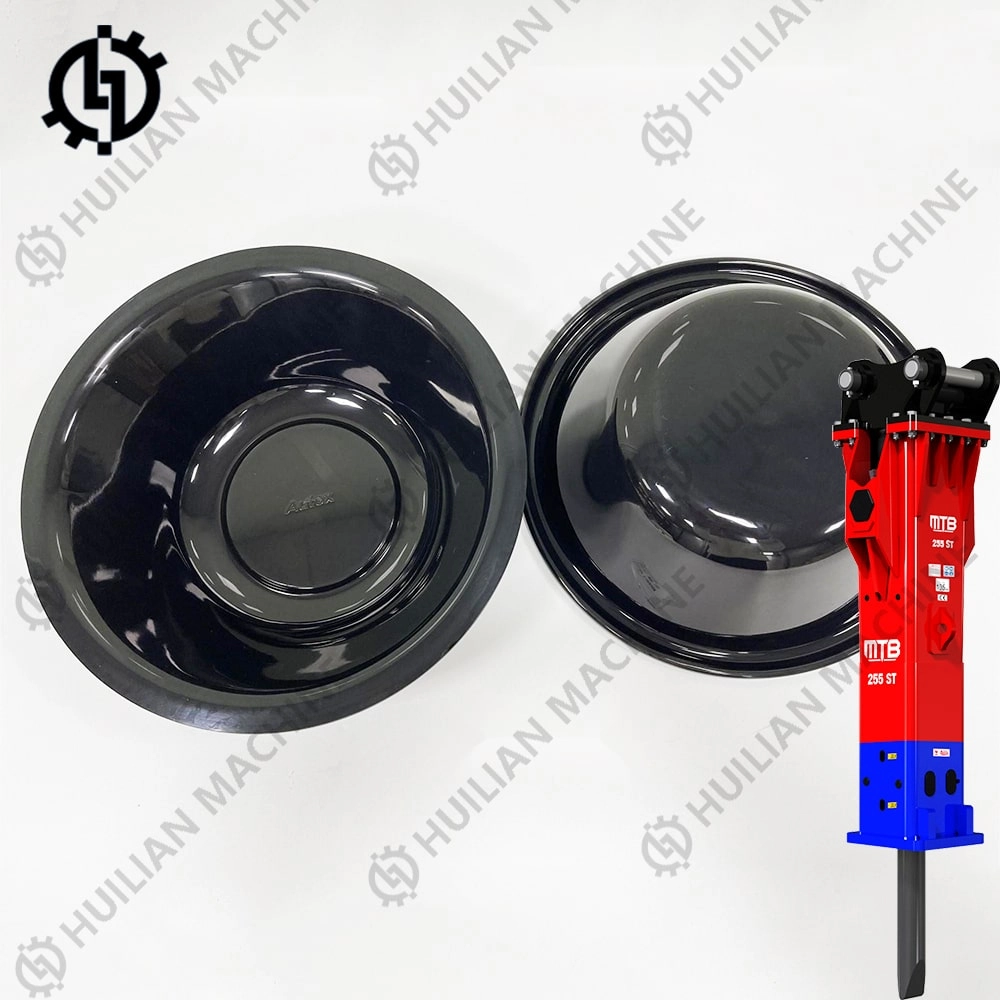
Inan Makina MTB Hydraulic Breaker Parts 45B0116A11 MTB255 MTB MT 255 Diaphragm MTB 255 IQ MTB-255 MTB 255 ST Membrane for Excavator Rock Hammer
 About us
© 2025 HUILIAN MACHINE. All rights reserved