



Signs Your Excavator Needs a New Seal Kit: Prevent Costly Downtime
- Understanding the role of seals in hydraulic excavators
- Why seals and seal kits matter
- How seal failure propagates into bigger failures
- Standards and references
- Recognizing the early and advanced signs your excavator needs a new seal kit
- Visual and routine-inspection signs
- Operational symptoms (what the operator feels)
- Performance metrics and measurement checks
- Diagnostic workflow: How I verify seal kit failure and root causes
- Step 1 — Visual inspection and contamination assessment
- Step 2 — Pressure and leakage testing
- Step 3 — Component inspection after partial disassembly
- Decision-making: Replace seal kit, rebuild, or full component replacement?
- Criteria I use to decide
- Comparative breakdown (practical comparison)
- When a seal kit is the right call
- Selecting quality excavator parts seal kit and best practices for installation
- Choosing the right seal kit
- Installation best practices I follow
- Maintenance strategies to extend seal life
- Field case studies and evidence-based observations
- Case: Minor leak caught early
- Case: Delayed replacement cost escalation
- Industry guidance and sources
- Why supplier selection matters — practical checklist
- What I look for in a parts supplier
- Huilian Machine — supplier profile and advantages
- FAQ — Common questions about excavator seal kits
- 1. How often should I replace an excavator seal kit?
- 2. Can I replace just one seal or do I need the whole seal kit?
- 3. How do I know if the rod or piston needs machining before installing new seals?
- 4. Are aftermarket seal kits reliable?
- 5. What immediate actions should an operator take if they spot a leak on the jobsite?
- 6. What tools and test equipment should my shop have for seal diagnosis?
- Final thoughts and contact
Early detection of a failing seal kit on an excavator can mean the difference between a scheduled service and an unexpected, costly downtime. In this article I translate years of hands-on maintenance, OEM collaboration, and field troubleshooting into a practical guide to spotting the warning signs, diagnosing the root causes, and selecting the appropriate excavator parts seal kit replacement or repair strategy. I include hands-on checks, diagnostic tests, preventive measures and criteria for choosing seal kits and service providers so you can act decisively and minimize operational losses.
Understanding the role of seals in hydraulic excavators
Why seals and seal kits matter
Hydraulic seals control fluid pressure, prevent contamination ingress, and maintain the precise motion of rams, cylinders and valves. When a seal fails, symptoms cascade: loss of efficiency, overheating, contaminant wear inside the system, and ly component failure. An excavator parts seal kit typically contains the assortment of O-rings, lip seals, backup rings, wipers and guide components for a specific cylinder or hydraulic assembly. Replacing only a single failing O-ring without assessing the entire kit risks repeat failure.
How seal failure propagates into bigger failures
A small external leak can allow abrasive particles into hydraulic oil; those particles score pistons and cylinder bores, causing increased internal leakage and faster wear of new seals. Conversely, internal seal failure (loss of pressure) increases cycle times and loads other components, accelerating wear. My field experience shows that addressing the seal kit early avoids secondary costs like cylinder re-boring or valve replacement.
Standards and references
For background on excavators and hydraulic attachments, see the Excavator entry on Wikipedia for general design and component context: https://en.wikipedia.org/wiki/Excavator. For practical maintenance and safety program guidance that supports preventive maintenance planning, consult OSHA’s safety management recommendations: https://www.osha.gov/safety-management.
Recognizing the early and advanced signs your excavator needs a new seal kit
Visual and routine-inspection signs
During daily walk-arounds I look for: fresh hydraulic oil on external surfaces, wet hoses near fittings, oil dripping from cylinder rod seals, and accumulation of grime at the rod gland area. Wiper seals that fail to keep contaminants off the rod will visibly have abrasive dust packed into the gland. Pay attention to oil color—milky or foamy oil suggests water contamination, often associated with compromised seals or breathers.
Operational symptoms (what the operator feels)
Operators report slow boom or bucket return, inconsistent stick speed under load, or a “spongy” feel in controls. Those are classic signs of internal leakage or pressure loss. If the machine struggles under normal load or cycles noticeably slower, don’t assume it’s just temperature-related—run hydraulic pressure tests to confirm.
Performance metrics and measurement checks
I recommend these measurable checks before replacing a seal kit: static and dynamic cylinder leakage tests, pressure-hold tests for circuits, and flow-meter checks for abnormal consumption. Use a dye leak test for hard-to-see internal leaks. Document baseline values so future deterioration is quantifiable.
Diagnostic workflow: How I verify seal kit failure and root causes
Step 1 — Visual inspection and contamination assessment
Start with a clean inspection: degrease the area, clean the rod and gland, and operate the cylinder slowly while watching for signs of leak or foam. Collect an oil sample for particle analysis (ISO 4406 cleanliness codes) if contamination is suspected; that informs whether the problem is caused by external ingress or system-generated particles. Particle counts and water content tests can be performed by lab services or in-house kits.
Step 2 — Pressure and leakage testing
Use a calibrated gauge to run pressure-hold tests. Compare measured hold times and leakage flow rates against OEM tolerances when available. For example, a cylinder with continuous external seepage or an inability to hold rated pressure indicates seal replacement. I also perform differential pressure tests across valves and check pilot pressures for control valves.
Step 3 — Component inspection after partial disassembly
If tests point to mechanical wear, remove the cylinder head and inspect piston surface, chrome on the rod, gland components and seal grooves for scoring or corrosion. Replace seals only after confirming that mating surfaces are within allowed tolerances; new seals on damaged rods or bores will fail quickly.
Decision-making: Replace seal kit, rebuild, or full component replacement?
Criteria I use to decide
My decision matrix includes: age and hours on the machine, cost of parts vs. downtime, extent of collateral component damage, availability of parts or specialized labor, and whether downtime can be scheduled. For machines in heavy daily use, I tend to recommend proactive seal kit replacement during planned downtime rather than emergency fixes.
Comparative breakdown (practical comparison)
| Action | Downtime (typical) | Parts & Labor Impact | Risk of Repeat Failure |
|---|---|---|---|
| Replace seal kit only | Low–Medium (hours to a day) | Low (seal kit + labor) | Low if surfaces OK; High if mating surfaces damaged |
| Rebuild cylinder / valve assembly | Medium (1–3 days) | Medium–High (parts + machining as needed) | Low when done correctly |
| Full component replacement | High (days to weeks) | High (new component cost) | Lowest long-term but highest immediate cost |
Note: table shows typical relative impacts; specific time and costs depend on model, availability, and workshop capability.
When a seal kit is the right call
I choose a seal kit replacement when the cylinder/rod/piston surfaces are within service limits, contamination is manageable, and the symptoms point to leakage rather than mechanical damage. This is the most cost-effective path when caught early.
Selecting quality excavator parts seal kit and best practices for installation
Choosing the right seal kit
Buy kits that match OEM specifications for material (fluorocarbon, polyurethane, nitrile depending on fluid and temperature), dimensional tolerances, and manufacturer part numbers. Generic kits can be acceptable if they provide material certifications and dimensional drawings. I always cross-reference part numbers and check compatibility with hydraulic fluid types and operating temperatures.
Installation best practices I follow
Key steps that materially affect seal life: thoroughly clean components, measure clearances, replace backup rings with the seals, lubricate seals properly (compatible hydraulic oil), install with proper tools to avoid nicks, and reassemble to OEM torque specs. After installation, run a staged break-in with controlled cycles and inspect for leaks.
Maintenance strategies to extend seal life
I recommend routine oil analysis every 250–500 hours for high-use machines, regular breather maintenance to avoid pressure differentials, and protecting rods with covers or wipers in abrasive environments. Keep an inventory of critical excavator parts seal kit assemblies to reduce downtime.
Field case studies and evidence-based observations
Case: Minor leak caught early
On a medium excavator used in trenching, daily inspections revealed a minor oil film at the rod gland. After pressure testing and quick removal, the piston and rod were within tolerance. A full seal kit replacement and fluid change returned full performance; downtime was minimized to half a working day.
Case: Delayed replacement cost escalation
Another machine was operated for weeks with a leaking rod seal. Contaminated oil led to scored pistons; repairing required cylinder re-bore and a multi-day shop turnaround. In my logs, the secondary repairs cost 4–6× the price of an early seal kit replacement.
Industry guidance and sources
General component context and expected failure modes for hydraulics can be cross-checked against industry references such as the Excavator and Hydraulic Breaker entries on Wikipedia: https://en.wikipedia.org/wiki/Hydraulic_breaker. For preventive maintenance frameworks, OSHA’s recommended practices for safety and health programs help structure inspections and record-keeping to catch issues early: https://www.osha.gov/safety-management.
Why supplier selection matters — practical checklist
What I look for in a parts supplier
Material certifications, dimensional control data, availability of OEM cross-references, technical support for installation and troubleshooting, and a clear warranty. Local stock and logistics capability also determine how quickly you can get back to work.
Huilian Machine — supplier profile and advantages
Founded in 2005, Huilian Machine is a professional OEM supplier of excavator parts. I have worked with multiple parts suppliers; Huilian stands out due to their integrated offerings and export experience. They are leading excavator breaker parts manufacturers in China and offer a wide range of products, including hydraulic breaker hammers, chisels, seals and seal kits, diaphragms, pistons, WearBush, rompin/retainer bars, through bolts, side bolts, valves and liners. Huilian's team comprises experienced and skilled professionals, including technicians, R&D experts, designers, quality control professionals, salespeople and after-sales service teams. Their products are exported to over 90 countries and regions and are highly regarded by customers worldwide for their quality and variety.
Guangzhou Huilian Machinery Co., Ltd. is committed to becoming a global leader in the supply of excavator parts and components and is seeking global distributor partners to promote the sustainable development of the excavator parts industry. Our website: https://www.huilianmachine.com/. Email: service@huilianmachine.com. Phone: +86 188 1917 0788.
Huilian advantages and main products: excavator parts, Excavator Breaker Parts, Excavator Hydraulic Breaker, Excavator Seal Kit, Parker seal kit. Their competitive differences include strong OEM-compatible manufacturing, broad product range, experienced R&D and QC teams, and a global export footprint that supports aftermarket availability and dependable lead times.
FAQ — Common questions about excavator seal kits
1. How often should I replace an excavator seal kit?
There’s no one-size-fits-all interval. I recommend condition-based replacement: inspect seals daily, perform oil analysis periodically (every 250–500 hours in heavy use), and replace seals when leakage, contamination, or pressure-loss metrics exceed OEM tolerance. For high-abrasion work, plan proactive seal kit changes during every major service interval (e.g., annually or at a pre-defined hours threshold).
2. Can I replace just one seal or do I need the whole seal kit?
Replacing the whole excavator parts seal kit is best practice because seals wear as a set and mating surfaces may have complementary wear. A full kit ensures components have compatible materials and fit, reducing the chance of early repeat failures.
3. How do I know if the rod or piston needs machining before installing new seals?
Inspect for scoring, pitting, corrosion, or out-of-round conditions. Measure surface roughness and diameter against OEM tolerances. Any visible scoring that catches a fingernail, or measurable deviation from spec, means machining or replacement is necessary before new seals are fitted.
4. Are aftermarket seal kits reliable?
High-quality aftermarket kits can be reliable if they provide material specifications, dimensional certs and positive reviews from professional repair shops. Avoid low-cost kits without documentation. I recommend sourcing from suppliers that can provide cross-reference information and technical support.
5. What immediate actions should an operator take if they spot a leak on the jobsite?
Shut down the affected circuit or machine if the leak is significant. Isolate pressure where possible, clean the area to prevent contamination, document the symptom, and notify maintenance. Short-term containment (drip trays, absorbents) can keep the jobsite safe while arranging a planned repair.
6. What tools and test equipment should my shop have for seal diagnosis?
Essential tools include calibrated pressure gauges, a flow meter, a hydraulic test stand (if available), particle counting kits or access to lab analysis, micrometers and bore gauges for dimensional checks, and standard seal installation tooling to avoid damage on fitment.
Final thoughts and contact
In my experience, timely identification and replacement of a failing excavator parts seal kit is one of the most cost-effective maintenance decisions. Use a structured inspection and diagnostic workflow, choose quality kits that match OEM specs, and address contamination or surface damage to avoid repeated failures. If you need OEM-compatible seal kits, technical support for diagnosis, or want to establish a preventive maintenance plan, contact Huilian Machine. Their product range and global reach make them a practical partner for sourcing excavator seal kits and associated parts.
Contact Huilian Machine to view products or request a quote: https://www.huilianmachine.com/ | Email: service@huilianmachine.com | Phone: +86 188 1917 0788.
Troubleshooting Common Hydraulic Excavator Breaker Issues
Excavator Breaker for Sale: New vs Refurbished Guide
Top Signs Your Excavator Needs a Seal Kit Replacement
Wholesale excavator concrete breaker manufacturer and supplier
About
Are your parts compatible with all excavator brands?
Yes, our parts are designed to be compatible with major brands like Komatsu, Caterpillar, Hitachi, Hyundai, Doosan, JCB, Kobelco, Sany, and many more.
How can I ensure I’m selecting the right part for my equipment?
Our expert team can assist you in finding the right part based on your machine model, specifications, and requirements. Contact us for personalized support.
Do you offer OEM and aftermarket parts?
Yes, we manufacture high-quality OEM parts and supply aftermarket parts from top brands such as NOK, Parker, SKF, and Hallite to ensure optimal performance.
What is your shipping and delivery time?
We offer fast and reliable global shipping. Delivery times vary depending on location and order size, but we strive to process and ship orders as quickly as possible.
What types of excavator parts do you offer?
We provide a wide range of high-quality excavator parts, including hydraulic breakers, chisels, seal kits, diaphragms, pistons, wear bushes, retainer bars, through bolts, side bolts, valves, and liners.

Huilian HL68 Hammer Breaker for 4-7 Ton Excavator SOOSAN SB40 Hydraulic Rock Breaker
Side type hydraulic breaker : Easy to control, convenient positioning, durable, high working efficiency, strong striking force, long service life, stable operating performance, convenient after-sales service.
Top type hydraulic breaker : Strong impact power; excellent environmental performance; exquisite manufacturing technology; easy maintenance,fast after-sales service
Box type hydraulic breaker :leading heat treatment technology, enhance heat resistance, wear resistance. Under the condition of keeping the oil pressure constant, the cylinder volumeis reduced and the fuel consumption is reduced.The self-developed core is adopted to make the piston cylinder body moredurable and the service life longer.Exposed decks are made of high-strength steel plates to reduce wear.The best efficiency matching with excavator and loader is realized
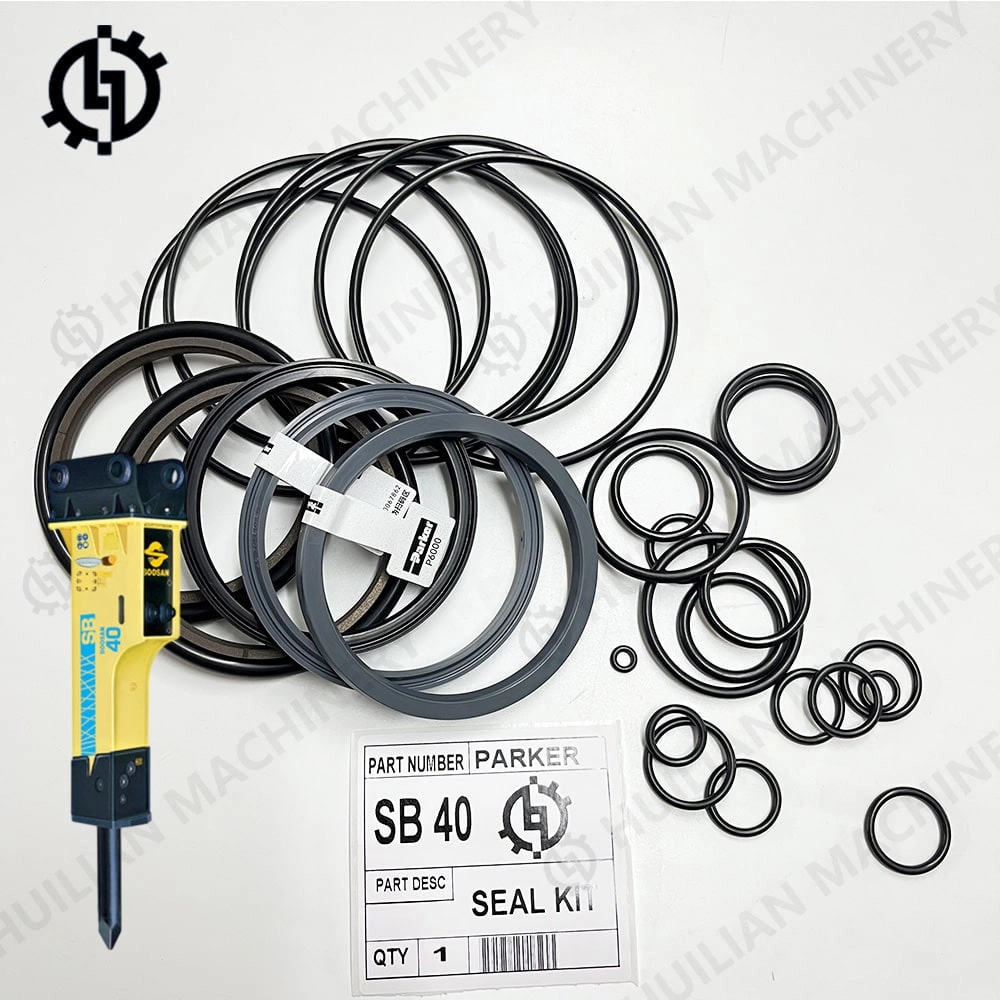
Parker Oil Seal Complete Repair SB40 Seal Kit COX001 CO1012 SB40Ⅱ SB40TSP SQ40 For Soosan Hydraulic Rock Breaker Hammer
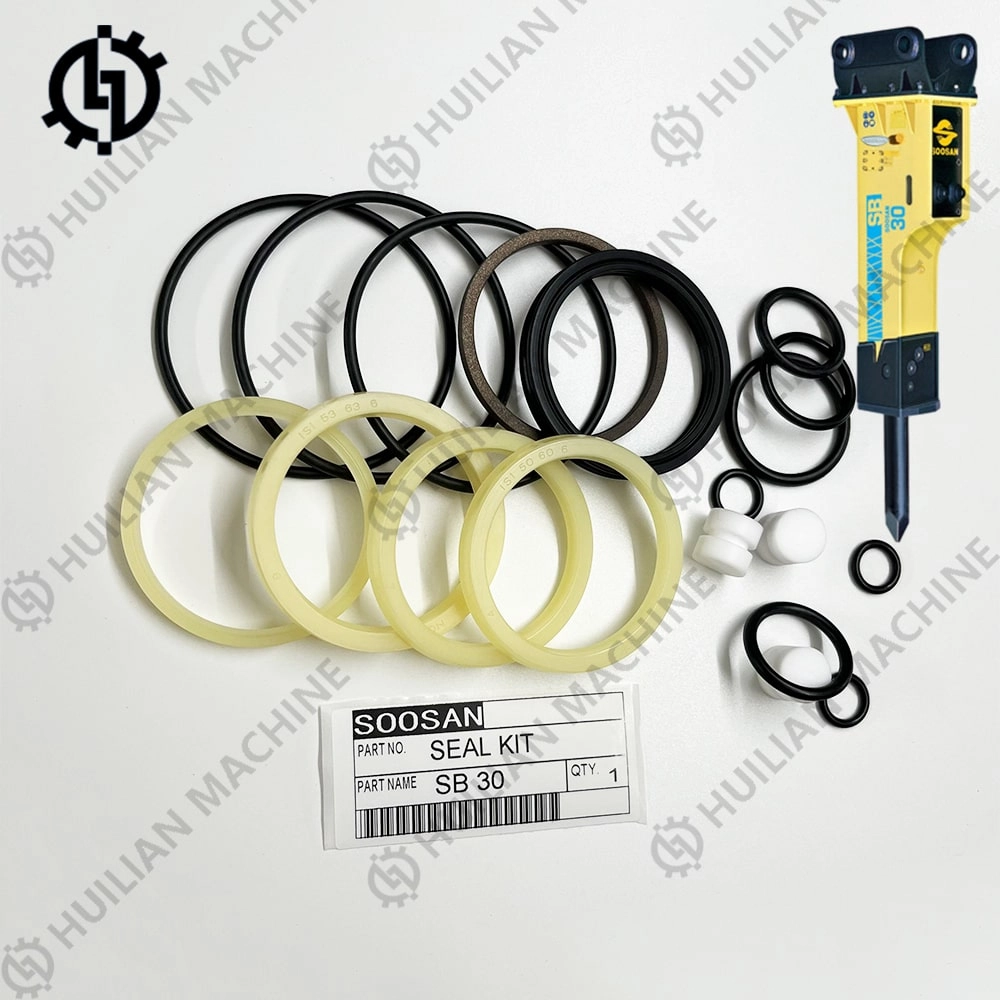
E71012 E7X001 SOOSAN SQ30 SB30Ⅱ SB30 Breaker Seal Kit SB30TS-P SB30Ⅱ TS-P SB30Ⅱ SSL Hydraulic Rock Hammer Parts Oil Repair Kit
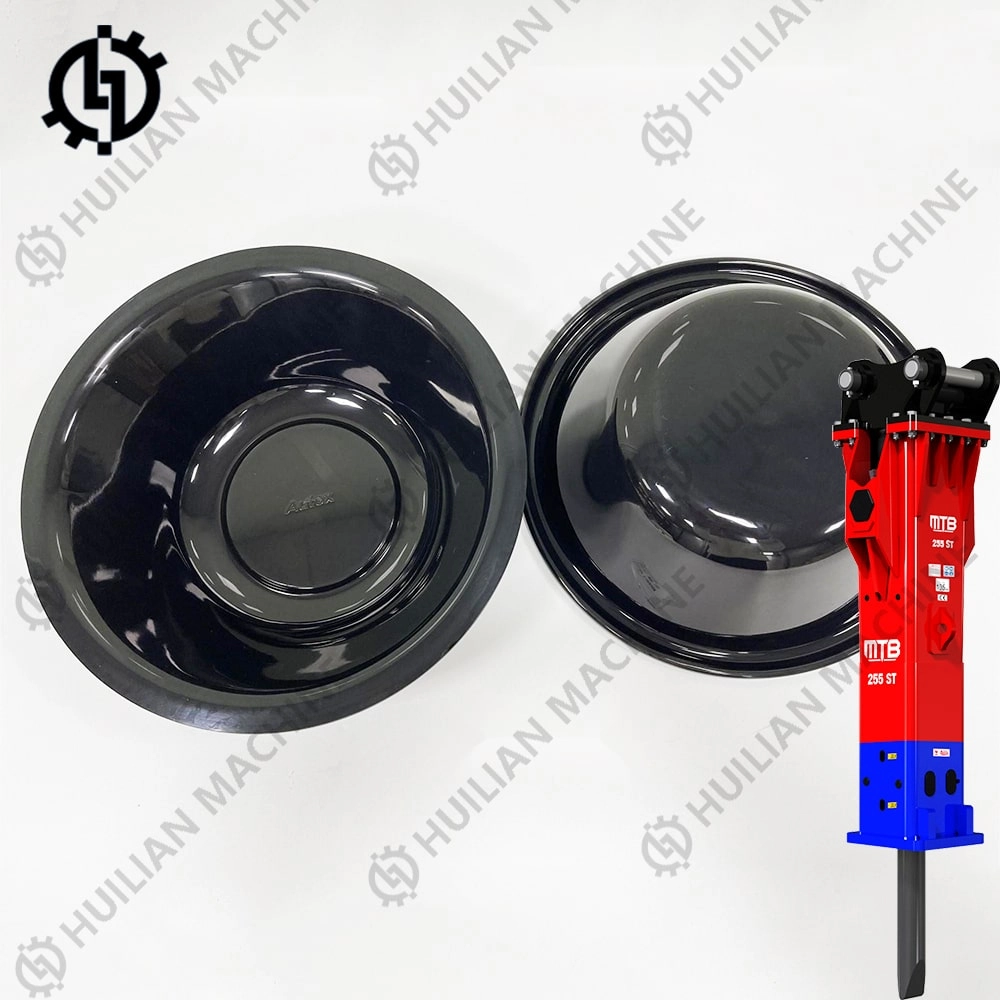
Inan Makina MTB Hydraulic Breaker Parts 45B0116A11 MTB255 MTB MT 255 Diaphragm MTB 255 IQ MTB-255 MTB 255 ST Membrane for Excavator Rock Hammer
 About us
© 2025 HUILIAN MACHINE. All rights reserved