



Sizing a Hydraulic Rock Breaker to Your Excavator Class
- Understanding excavator classes and carrier limitations
- What defines an excavator class?
- Carrier hydraulic system and supply limits
- Duty cycle and attachment mass
- Sizing principles for hydraulic rock breakers
- Key technical parameters to review
- Rules of thumb and why they matter
- Impact energy vs. carrier capability
- Practical sizing table and examples
- Worked example: choosing a breaker for a 14 t excavator
- When to size up or down
- Installation, maintenance and common pitfalls
- Mounting, hoses and accumulators
- Operator technique and productivity
- Common mistakes that reduce ROI
- Why choose Huilian Machine for excavator breaker parts and support
- Huilian's capabilities and product range
- Technical strengths and quality assurance
- Contact, distribution and support
- Conclusion and action checklist
- FAQ
- 1. How do I know which hydraulic rock breaker is the best for my excavator?
- 2. Can I use a larger breaker than my excavator class suggests?
- 3. What maintenance keeps a hydraulic breaker performing well?
- 4. How important is tool selection (chisel type) for productivity?
- 5. Where can I source reliable replacement parts and service?
- Contact & CTA
As an excavator parts consultant with years of hands-on experience in matching hydraulic breakers to carriers, I know the difference between a machine that works and one that underperforms. In this article I walk you through the technical criteria and real-world trade-offs for selecting the best hydraulic rock breaker for your excavator class. You’ll find clear sizing guidelines, a practical comparison table, installation and maintenance recommendations, and a trusted supplier profile to help you act with confidence.
Understanding excavator classes and carrier limitations
What defines an excavator class?
When I say excavator class, I refer to the operating weight of the carrier and its hydraulic capacity. Operating weight is the most consistent indicator of what attachments it can safely carry and operate. Manufacturers normally group carriers as mini, light, medium, heavy and large class machines. You can read basic background on excavator types at Wikipedia.
Carrier hydraulic system and supply limits
Beyond weight, two hydraulic parameters are critical: maximum operating pressure (bar/psi) and flow rate (L/min or GPM). The breaker must be matched to the carrier’s continuous flow and pressure rating. Using a breaker that requires higher pressure/flow than the carrier can supply reduces performance and may damage the carrier hydraulic components. Conversely, oversupplying flow without proper control can overwork the hammer's accumulator and valve system.
Duty cycle and attachment mass
Duty cycle – how continuously the breaker will be used – determines whether you need a heavy-duty model or something lighter. A demolition company using the breaker for eight-hour shifts under heavy load needs a different sizing approach than a utility contractor performing intermittent work. Additionally, the mass of the breaker itself affects the carrier’s stability and ground pressure; always check the carrier’s lifting and hydraulic tool limits.
Sizing principles for hydraulic rock breakers
Key technical parameters to review
When I size a breaker, I prioritize these parameters: impact energy (kJ/Joule), blow frequency (bpm/BPM), working pressure (bar/psi), and tool diameter. Impact energy determines breaking force per blow, while blow frequency affects productivity. Tool diameter and chisel geometry influence penetration and fragmentation. These details are often listed in manufacturer data sheets (see general breaker information at Wikipedia).
Rules of thumb and why they matter
From my field work, these practical rules of thumb hold up:
- Match breaker weight to 3–8% of excavator operating weight for most applications; larger percentages for heavy demolition and rock excavation.
- Ensure the breaker’s recommended pressure range fits comfortably within the carrier’s continuous rated pressure—10–15% headroom is prudent.
- Flow compatibility: the breaker’s required flow should be within ±20% of the carrier’s continuous hydraulic flow, or use proper flow control valves to adapt.
These ranges are general; for critical projects I consult manufacturer catalogs and performance curves (e.g., Epiroc, Atlas Copco) for exact matches: Epiroc, Atlas Copco.
Impact energy vs. carrier capability
I avoid overspecifying impact energy relative to the carrier because a breaker with very high impact energy but poor compatibility can transfer harmful shock loads to the excavator structure. Instead, balance impact energy with blow frequency to achieve productivity without compromising carrier life.
Practical sizing table and examples
Below is a practical, industry-based reference table I use when recommending the best hydraulic rock breaker for a given excavator class. These are typical ranges compiled from multiple OEM catalogs and field experience; always verify with the specific breaker and carrier data sheets before purchase.
| Excavator Operating Weight | Recommended Breaker Class (approx.) | Typical Breaker Weight | Working Pressure (bar) | Typical Impact Energy (kJ) | Use Case |
|---|---|---|---|---|---|
| < 5 t (mini) | Mini/light | 60–200 kg | 80–140 bar | 1–10 kJ | Utility, soft rock, pavements |
| 5–12 t (light) | Light/medium | 200–600 kg | 100–160 bar | 8–30 kJ | Trenching, medium rock |
| 12–25 t (medium) | Medium | 600–1,400 kg | 120–180 bar | 25–60 kJ | Hard rock breaking, demolition |
| 25–45 t (heavy) | Heavy | 1,400–3,200 kg | 130–200 bar | 50–100+ kJ | Quarrying, heavy demolition |
| >45 t (large) | Extra heavy | 3,200+ kg | 150–220+ bar | 80–200+ kJ | High-production rock fragmentation |
Sources for typical ranges include OEM catalogs and industry literature (see manufacturer websites such as Epiroc and Atlas Copco), and general hydraulic breaker descriptions at Wikipedia.
Worked example: choosing a breaker for a 14 t excavator
If I have a 14 t excavator with 140 L/min flow and 180 bar max pressure, I would target a medium-class breaker: weight roughly 700–1,200 kg, working pressure 140–180 bar, impact energy ~30–50 kJ and blow frequency that balances energy (e.g., 300–500 bpm). I’d confirm the carrier’s hydraulic oil cooler capacity and boom/arm reinforcement to accept the dynamic loads.
When to size up or down
I recommend sizing up when you need faster fragmentation or higher productivity and the carrier has margin in hydraulic supply and stability. Size down if you expect intermittent light-duty use or when operating in confined urban sites where carrier agility is prioritized over raw power.
Installation, maintenance and common pitfalls
Mounting, hoses and accumulators
Proper mounting, hose sizing, and accumulator specification are crucial. Undersized hoses create pressure drops and heat; underspecified accumulators reduce hammer efficiency. Follow the breaker OEM instructions and use high-quality hydraulic hoses and fittings. For general quality management and system reliability guidelines, see ISO 9001 principles.
Operator technique and productivity
Operator technique dramatically affects breaker life and job productivity. I coach operators to avoid using the breaker as a pry bar, to use short, controlled impacts, and to rotate the tool to manage wear. Efficient positioning and correct free-fall/pressure strokes reduce energy waste and parts wear.
Common mistakes that reduce ROI
From projects I’ve supervised, the most common mistakes are: underspecifying the breaker for hard rock (leading to slow progress), oversizing without carrier compatibility (causing structural problems), poor maintenance (hydraulic contamination destroys valves), and using incorrect chisels for the material. Address these to protect your investment and achieve the best hydraulic rock breaker performance.
Why choose Huilian Machine for excavator breaker parts and support
Huilian's capabilities and product range
Founded in 2005, Huilian Machine is a professional OEM supplier of excavator parts. We are leading excavator breaker parts manufacturers in China. We offer a wide range of products, including hydraulic breaker hammers, chisels, seals and seal kits, diaphragms, pistons, WearBush, rompin/retainer bars, through bolts, side bolts, valves and liners. Huilian's team comprises experienced and skilled professionals, including technicians, R&D experts, designers, quality control professionals, salespeople and after-sales service teams. Our products are exported to over 90 countries and regions and are highly regarded by customers worldwide for their quality and variety.
Technical strengths and quality assurance
I trust suppliers who can demonstrate consistent manufacturing quality, materials traceability and testing. Huilian emphasizes quality control and R&D, working to meet global standards and to provide replacement parts like Excavator Breaker Parts and Excavator Seal Kits, including Parker seal kit alternatives. Guangzhou Huilian Machinery Co., Ltd. is committed to becoming a global leader in the supply of excavator parts and components and is seeking global distributor partners to promote the sustainable development of the excavator parts industry.
Contact, distribution and support
If you need parts or technical support, Huilian provides accessible customer service and global shipping. Visit their website at https://www.huilianmachine.com/, email service@huilianmachine.com, or call +86 188 1917 0788. I’ve worked with their team and found their responsiveness and parts quality to be strong advantages when maintaining breaker uptime.
Conclusion and action checklist
Choosing the best hydraulic rock breaker requires balancing impact energy, blow frequency, breaker weight, hydraulic compatibility and duty cycle. My checklist when advising clients includes:
- Confirm excavator operating weight, hydraulic flow and pressure limits.
- Determine duty cycle (intermittent vs. continuous heavy use).
- Select breaker class using the reference table, then verify OEM data sheets.
- Specify correct hoses, accumulators and mountings; plan for maintenance.
- Consider a trusted OEM supplier for parts and spares—Huilian Machine is a strong candidate.
If you want tailored advice for a specific excavator model and jobsite conditions, contact Huilian or reach out directly to discuss matching options and spare parts availability.
FAQ
1. How do I know which hydraulic rock breaker is the best for my excavator?
Start with your excavator’s operating weight, hydraulic flow (L/min) and pressure (bar). Use the table above to identify the breaker class, then check the breaker’s working pressure and flow requirements against your carrier. Confirm duty cycle and required impact energy. For a hands-on match, refer to OEM catalogs or contact a supplier like Huilian for compatibility verification.
2. Can I use a larger breaker than my excavator class suggests?
Only if the carrier’s hydraulic system, structure and counterweight can safely handle the additional loads. Oversizing risks structural damage and instability. In many cases, you’ll need carrier reinforcements or to choose a breaker with compatible operating parameters.
3. What maintenance keeps a hydraulic breaker performing well?
Regular maintenance includes daily greasing, frequent inspection of hoses and fittings, monitoring hydraulic oil cleanliness and level, replacing worn chisels, and scheduled valve and accumulator checks. Contaminated oil and poor lubrication are leading causes of premature failure.
4. How important is tool selection (chisel type) for productivity?
Very important. Point chisels are good for initial penetration; moil and blunt chisels fragment material. Selecting the right tool shape and hardness for the rock type increases productivity and reduces wear.
5. Where can I source reliable replacement parts and service?
Choose established OEM or reputable aftermarket suppliers with quality control and global distribution. Huilian Machine (Guangzhou Huilian Machinery Co., Ltd.) is a professional OEM supplier founded in 2005, offering a broad range of excavator parts and breaker components and supporting customers in over 90 countries. Visit Huilian Machine or email service@huilianmachine.com for parts and inquiries.
Additional resources: general guidance on hydraulic breakers is available at Wikipedia. For manufacturer-specific selection details, consult product pages from OEMs such as Epiroc and Atlas Copco.
Contact & CTA
If you’re specifying a breaker for a new machine or repairing an existing system, I recommend getting a professional compatibility review. For parts, spares, and OEM-quality excavator breaker components, contact Guangzhou Huilian Machinery Co., Ltd.:
- Website: https://www.huilianmachine.com/
- Email: service@huilianmachine.com
- Phone: +86 188 1917 0788
Case Studies: Boost Productivity with Quality Breaker Spares

Buyer's Guide: CR42 155mm Chisel for Soosan SB121 Breakers
Top 10 Excavator Seal Kits for Heavy-Duty Performance
How to Choose the Right Impact Energy for Rock Breakers
About
Are your parts compatible with all excavator brands?
Yes, our parts are designed to be compatible with major brands like Komatsu, Caterpillar, Hitachi, Hyundai, Doosan, JCB, Kobelco, Sany, and many more.
What is your shipping and delivery time?
We offer fast and reliable global shipping. Delivery times vary depending on location and order size, but we strive to process and ship orders as quickly as possible.
What types of excavator parts do you offer?
We provide a wide range of high-quality excavator parts, including hydraulic breakers, chisels, seal kits, diaphragms, pistons, wear bushes, retainer bars, through bolts, side bolts, valves, and liners.
How can I ensure I’m selecting the right part for my equipment?
Our expert team can assist you in finding the right part based on your machine model, specifications, and requirements. Contact us for personalized support.
Do you offer OEM and aftermarket parts?
Yes, we manufacture high-quality OEM parts and supply aftermarket parts from top brands such as NOK, Parker, SKF, and Hallite to ensure optimal performance.

Huilian HL68 Hammer Breaker for 4-7 Ton Excavator SOOSAN SB40 Hydraulic Rock Breaker
Side type hydraulic breaker : Easy to control, convenient positioning, durable, high working efficiency, strong striking force, long service life, stable operating performance, convenient after-sales service.
Top type hydraulic breaker : Strong impact power; excellent environmental performance; exquisite manufacturing technology; easy maintenance,fast after-sales service
Box type hydraulic breaker :leading heat treatment technology, enhance heat resistance, wear resistance. Under the condition of keeping the oil pressure constant, the cylinder volumeis reduced and the fuel consumption is reduced.The self-developed core is adopted to make the piston cylinder body moredurable and the service life longer.Exposed decks are made of high-strength steel plates to reduce wear.The best efficiency matching with excavator and loader is realized
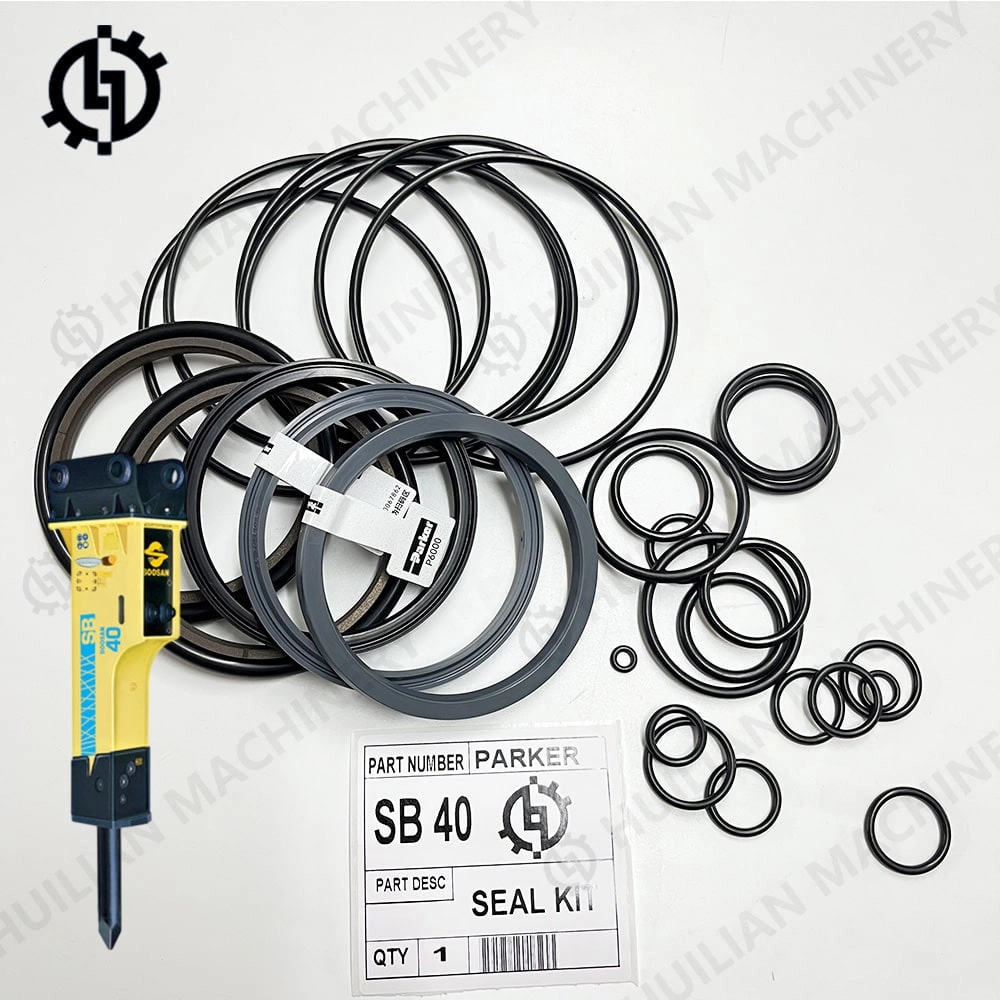
Parker Oil Seal Complete Repair SB40 Seal Kit COX001 CO1012 SB40Ⅱ SB40TSP SQ40 For Soosan Hydraulic Rock Breaker Hammer
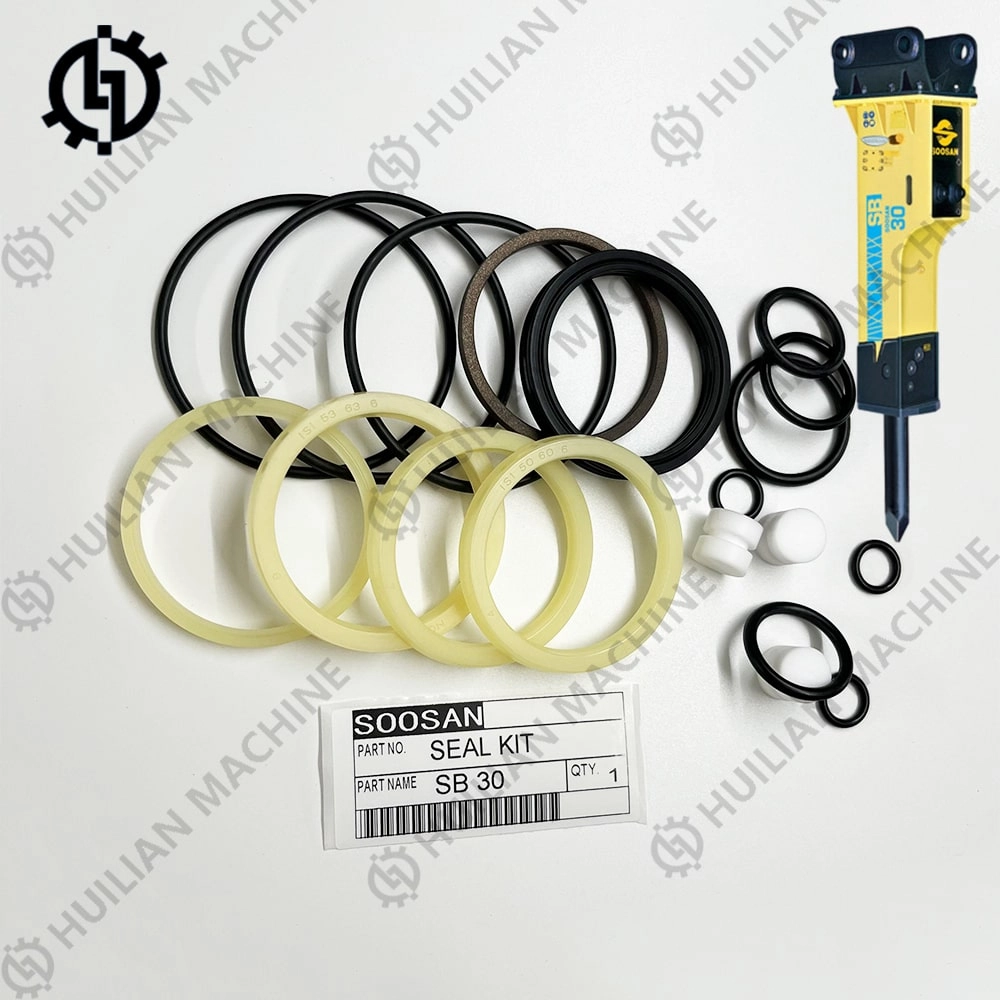
E71012 E7X001 SOOSAN SQ30 SB30Ⅱ SB30 Breaker Seal Kit SB30TS-P SB30Ⅱ TS-P SB30Ⅱ SSL Hydraulic Rock Hammer Parts Oil Repair Kit
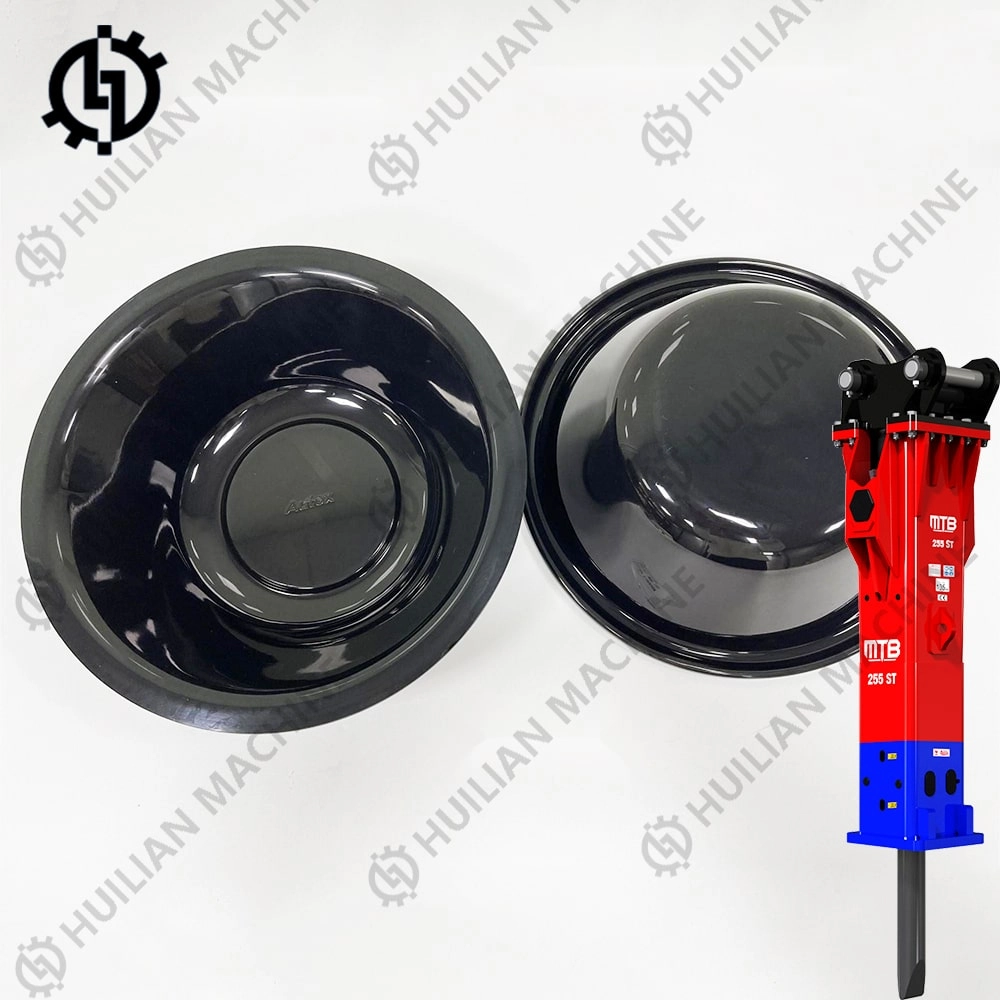
Inan Makina MTB Hydraulic Breaker Parts 45B0116A11 MTB255 MTB MT 255 Diaphragm MTB 255 IQ MTB-255 MTB 255 ST Membrane for Excavator Rock Hammer
 About us
© 2025 HUILIAN MACHINE. All rights reserved