


Standard vs. Premium Hydraulic Pump Seal Kits: Which One Will Double Your Machine's Lifespan?
- Quick Summary: The ROI of Seal Selection
- What is the Difference Between Standard and Premium Hydraulic Pump Seal Kits?
- The Comparison Breakdown
- Material Science: Why 'Premium' Is Not Just Marketing
- 1. Nitrile (NBR)—The Standard Baseline
- 2. Viton (FKM) – The Heat Shield
- 3. Polyurethane (AU/EU) – The Armor
- Comparison Matrix
- The Lifespan Equation: How Premium Kits Double Pump Life
- 1. Friction Reduction (Stick-Slip)
- 2. Contamination Control
- 3. Extrusion Resistance
- Common Mistakes When Selecting Seal Kits (Expert Tips)
- Future Trends: Hydraulic Sealing in 2026 and Beyond
- Conclusion & Call to Action
When a $50,000 excavator is brought to a standstill by a $50 part, the math of maintenance becomes painfully clear. In the world of heavy machinery, the hydraulic pump is the heart, but the seals are the valves that keep that heart beating. For fleet managers and technicians, the choice between Standard and Premium Hydraulic Pump Seal Kits often feels like a gamble between immediate budget savings and long-term reliability.
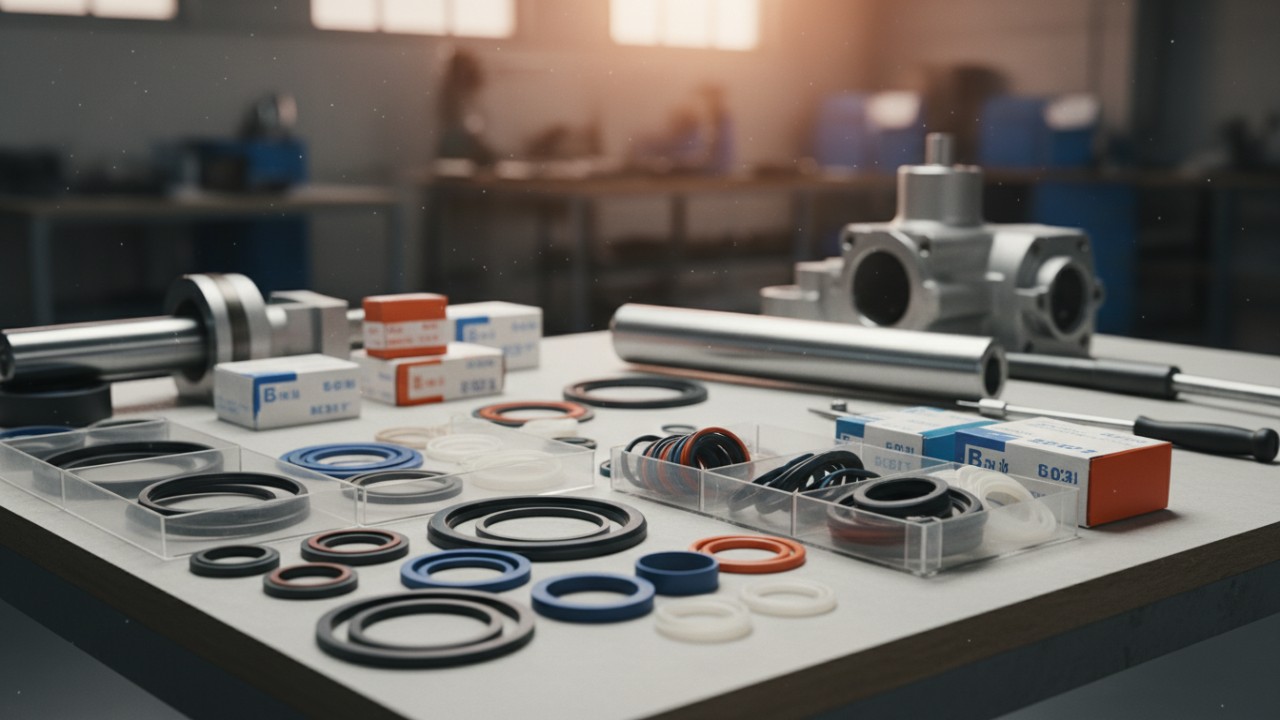
However, the data is conclusive: the specific material composition of your seals—whether Standard Nitrile (NBR) or Premium Viton (FKM)—is the single most significant factor in preventing premature pump failure. At Guangzhou Huilian Machines Co., Ltd., we have analyzed thousands of aftermarket vs. OEM hydraulic seal kits to determine which options truly deliver on the promise of doubling your machine's operational lifespan.
Quick Summary: The ROI of Seal Selection
Premium hydraulic seal kits significantly reduce Total Cost of Ownership (TCO) by extending maintenance intervals and preventing catastrophic pump failure caused by thermal degradation. While standard kits are sufficient for low-intensity applications, premium options provide the thermal stability and abrasion resistance required for heavy-duty excavation.
Key takeaways for decision-makers:
- Cost vs. Value: Premium kits effectively reduce downtime costs by up to 40% compared to standard options over a 5,000-hour cycle.
- Material Impact: The shift from basic NBR to FKM (Viton) is the primary driver of lifespan extension in high-heat environments.
- Installation Factor: Proper installation protocols are just as critical as the kit quality for achieving the theoretical "double lifespan."
What is the Difference Between Standard and Premium Hydraulic Pump Seal Kits?
The primary difference lies in material composition and engineering tolerances; standard kits use basic Nitrile rubber (NBR) limited to 250°F, while premium kits utilize high-performance compounds like Viton (FKM) or PTFE to withstand temperatures up to 400°F.
This distinction is not merely about brand names; it is about molecular engineering. Standard seals are designed for "static" environments or low-duty cycles where heat generation is minimal. Premium kits are engineered for "dynamic" stress—the constant friction, pressure spikes, and thermal cycling found in modern hydraulic breakers and excavators.
The Comparison Breakdown
-
Standard Kits (General Purpose):
- Material: Primarily Nitrile (NBR) 70 or 90 durometer.
- Best For: Low-pressure lift circuits, older machines with large tolerances, and cold climates.
- Lifespan: typically 1,500–2,000 hours.
- Weakness: Prone to "hardening" and cracking when hydraulic fluid temperatures exceed 220°F.
-
Premium Kits (Heavy-Duty):
- Material: Viton (FKM), hydrogenated nitrile (HNBR), or bronze-filled PTFE.
- Best For: High-temperature hydraulic seals, high-speed pumps, and systems using aggressive biodegradable fluids.
- Lifespan: Typically 4,000–6,000+ hours.
- Strength: Maintains elasticity in extreme heat and resists chemical attack.
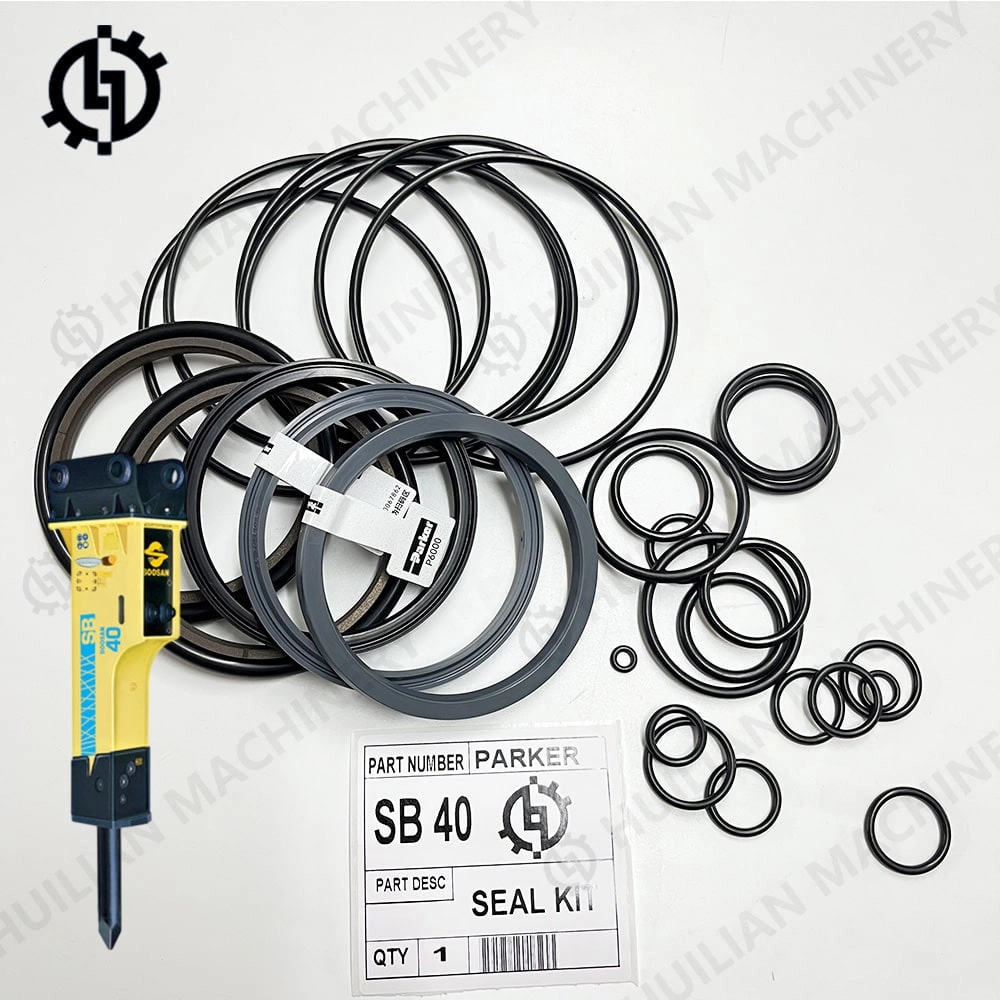
At Huilian Machine, we have observed that customers switching to premium Parker-style seal kits for their hydraulic breakers report a drastic reduction in mid-job leaks.
Material Science: Why 'Premium' Is Not Just Marketing
Premium designations refer to superior chemical and thermal resistance properties inherent in advanced polymers, ensuring the seal maintains the necessary "squeeze" (compression set) to prevent leaks under load.
To understand why you should pay more for a premium kit, you must understand the materials. The difference between a seal that lasts a month and one that lasts a year is often the difference between NBR and FKM.
1. Nitrile (NBR)—The Standard Baseline
Nitrile is the industry workhorse. It offers excellent resistance to petroleum-based oils and is cost-effective. However, its thermal limit is its Achilles' heel. Once the operating temperature pushes past 250°F (120°C), the chemical bonds in NBR begin to cross-link excessively, turning the rubber into a hard plastic that shatters under pressure.
2. Viton (FKM) – The Heat Shield
Viton vs. nitrile seal kits is the most common debate we hear. Viton is a fluoroelastomer that can handle continuous temperatures of 400°F (204°C). In hydraulic pumps, where friction generates localized heat spikes far above the bulk oil temperature, Viton survives where Nitrile fails.
3. Polyurethane (AU/EU) – The Armor
For high-pressure piston seals, premium kits often use high-grade polyurethane. It offers superior abrasion resistance compared to rubber. However, standard polyurethane is susceptible to "hydrolysis" (breaking down in water). Premium kits use hydrolysis-resistant formulations to prevent the seal from crumbling in humid environments.
Comparison Matrix
| Feature | Standard (NBR) | Premium (FKM/PTFE |
|---|---|---|
| Temp Limit | ~250°F (120°C) | ~400°F (204°C) |
| Oil Resistance | Good | Excellent |
| Chemical Resistance | Low | High |
| Cost | $ | $$$ |
The Lifespan Equation: How Premium Kits Double Pump Life
Premium kits double lifespan by mitigating the three main seal killers: friction generation, contaminant ingress, and extrusion under high pressure.
It is a known fact in the industry that fluid cleanliness is paramount. According to Hydraulics Online, approximately 70% to 80% of all hydraulic system failures are caused by fluid contamination. Premium seal kits are your first line of defense against this statistic.
1. Friction Reduction (Stick-Slip)
Cheap seals suffer from "stick-slip"—a jerky motion caused by high static friction. This vibration wears down the pump shaft. Premium kits often include PTFE (Teflon) wear rings or additives that provide self-lubrication, ensuring smooth operation even during start-up.
2. Contamination Control
Standard wiper seals (dust seals) often fail to scrape microscopic grit from the rod. Premium kits feature double-lip wiper technology made from aggressive polyurethane. This keeps the silica dust out of the cylinder, protecting the sensitive internal valving.
3. Extrusion Resistance
Under heavy loads (e.g., breaking rock), hydraulic pressure spikes can force seal material into the gap between metal parts (extrusion). Premium kits include backup rings made from virgin PTFE or hard nylon that prevent this blowout, maintaining the seal's integrity under pressure spikes of 5,000+ PSI.
Common Mistakes When Selecting Seal Kits (Expert Tips)
The most frequent error is selecting seals based solely on dimension rather than operating environment compatibility and fluid type.
Even heavy-duty hydraulic seal materials will fail if mismatched. Here are the pitfalls we see most often at Huilian Machine:
- Ignoring Fluid Compatibility: If you are running biodegradable hydraulic fluids (HEES), standard NBR seals will swell and disintegrate. You must use FKM or specialized Viton kits.
- Overlooking Storage Life: Standard rubber seals degrade on the shelf due to ozone exposure (dry rot). Premium seals often have a significantly longer shelf life. Always check the cure date.
- Measuring Errors: Assuming a "close enough" fit works is dangerous. Premium kits guarantee OEM-spec tolerances. According to ISO standards, specifically ISO 3601, even a deviation of a few micrometers in O-ring cross-section can lead to leak paths under high pressure.
- Temperature Blindness: failing to account for ambient temperature swings. While Viton is great for heat, it can be less flexible than NBR in extreme sub-zero cold (-20°F). For arctic conditions, specialized low-temp premium compounds are required.
Future Trends: Hydraulic Sealing in 2026 and Beyond
The future of sealing technology focuses on predictive maintenance integration and self-healing materials to minimize human intervention.
As we look toward 2026, the gap between aftermarket vs. OEM hydraulic seal kits is closing, with premium aftermarket manufacturers adopting technologies previously reserved for aerospace:
- Self-Lubricating Materials: New polymer blends are being developed that "bleed" lubricant over time, drastically reducing start-up wear.
- Smart Seals: Prototypes exist for seals with embedded conductive layers that can signal a central computer when the seal has worn down to a critical level, revolutionizing the hydraulic pump maintenance schedule.
- Eco-Friendly Polymers: As environmental regulations tighten, seals designed specifically for bio-oils will become the standard rather than the premium option.
Conclusion & Call to Action
Choosing between standard and premium kits is a balance of immediate budget vs. long-term operational efficiency. While a standard NBR kit might save you money today, a premium FKM kit invests in the reliability of your machine, effectively doubling the lifespan of your hydraulic pump by resisting heat, friction, and contamination. Don't let a $50 seal destroy a $5,000 pump; make the right choice for your fleet's longevity.
Contact Guangzhou Huilian Machines Co., Ltd today to discuss your specific needs and find the perfect premium seal solution for your equipment.


About
Do you offer OEM and aftermarket parts?
Yes, we manufacture high-quality OEM parts and supply aftermarket parts from top brands such as NOK, Parker, SKF, and Hallite to ensure optimal performance.
What types of excavator parts do you offer?
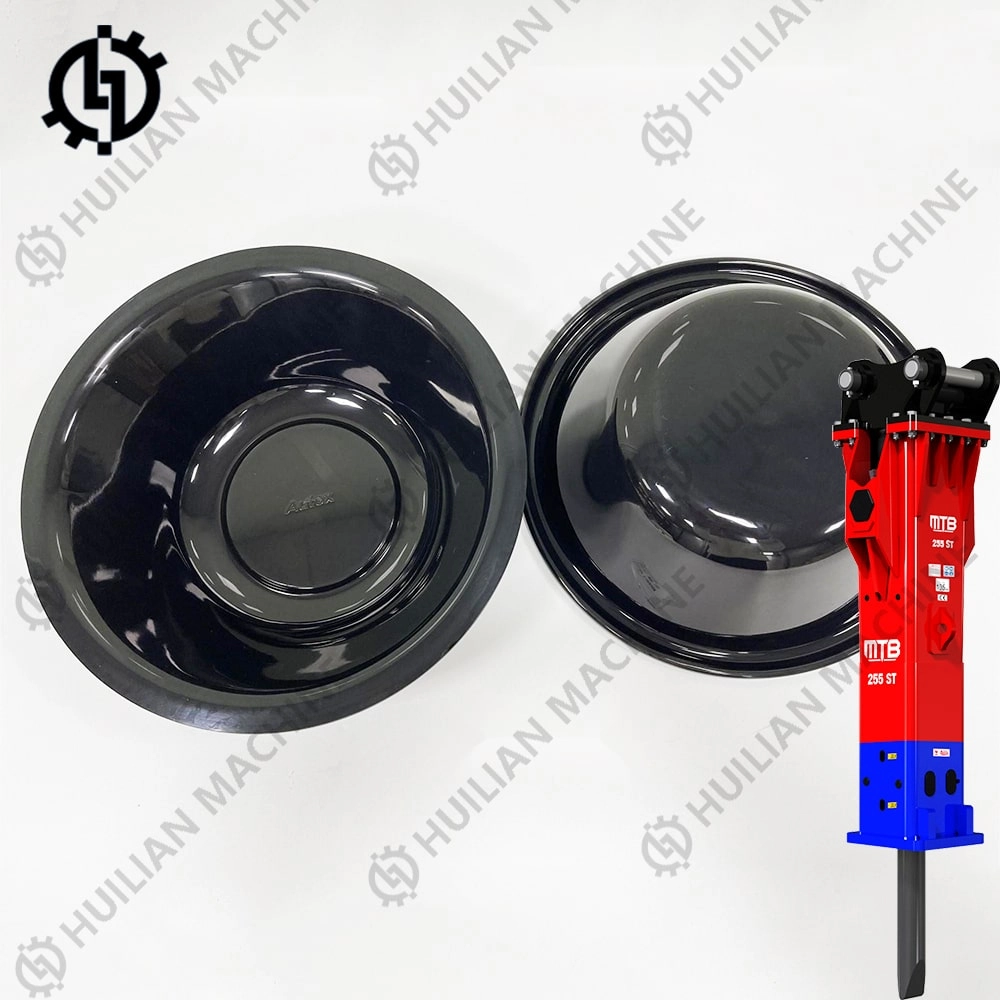
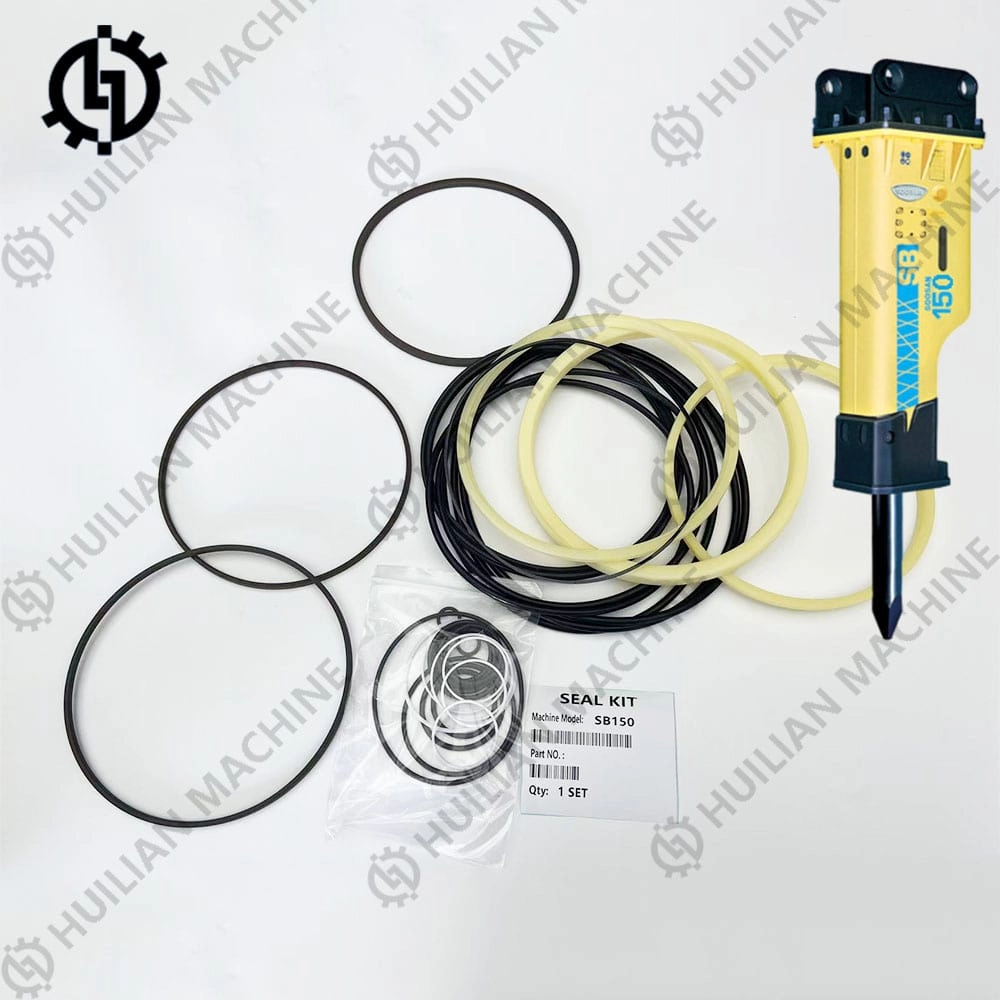
We provide a wide range of high-quality excavator parts, including hydraulic breakers, chisels, seal kits, diaphragms, pistons, wear bushes, retainer bars, through bolts, side bolts, valves, and liners.
How can I ensure I’m selecting the right part for my equipment?
Our expert team can assist you in finding the right part based on your machine model, specifications, and requirements. Contact us for personalized support.
Are your parts compatible with all excavator brands?
Yes, our parts are designed to be compatible with major brands like Komatsu, Caterpillar, Hitachi, Hyundai, Doosan, JCB, Kobelco, Sany, and many more.
What is your shipping and delivery time?
We offer fast and reliable global shipping. Delivery times vary depending on location and order size, but we strive to process and ship orders as quickly as possible.




Getting started is easy 
Contact with our experts to find the best excavator parts solutions for your needs. Discover how Huilian can enhance your equipment's performance and efficiency.


Get in touch
 About us
© 2025 HUILIAN MACHINE. All rights reserved