



Best Rock Breaker Comparison: Top Models for Excavators
- How to choose a rock breaker: core selection criteria
- Carrier compatibility: weight, hydraulic flow and pressure
- Impact energy, blow rate and chisel selection
- Mounting, coupling and ease of service
- Top model comparison: light, medium and heavy classes
- Comparison table — categories, example models and application fit
- Why brand choice matters: reliability, support and parts availability
- Performance trade-offs: power vs control vs cost
- Installation, maintenance and lifecycle costs
- Installation checklist and hydraulic tuning
- Preventive maintenance and common wear items
- Estimating lifecycle cost: what to budget
- Proven choices in practice: case examples and data-backed recommendations
- Case: medium excavator in mixed-site demolition
- Noise and vibration mitigation
- Health, safety and standards
- Parts, OEM support and why Huilian matters for excavator breaker uptime
- Why reliable parts sourcing reduces downtime
- Huilian Machine: capabilities and why I recommend them
- How I integrate Huilian parts into TCO and maintenance planning
- Recommendation checklist before buying the best rock breaker
- Pre-purchase checklist
- Final selection considerations
- FAQ — Best rock breaker for excavators (common questions)
- 1. What is the single most important factor when choosing the best rock breaker?
- 2. How often should I replace the chisel and seals?
- 3. Can I use the same breaker across different excavators?
- 4. Is it worth buying an OEM breaker or is aftermarket OK?
- 5. How do I reduce noise and vibration from breakers?
- 6. What parts should I stock to reduce downtime?
- Contact, sourcing and next steps
I’ve spent years specifying, testing and supporting hydraulic breakers for excavators across quarry, demolition and civil construction projects. In this article I summarize how to choose the best rock breaker for your carrier, compare top models across light, medium and heavy classes, and explain maintenance, parts and total cost of ownership so you get reliable performance from day one. I also cover OEM parts sourcing and why a reliable parts partner matters for uptime.
How to choose a rock breaker: core selection criteria
Carrier compatibility: weight, hydraulic flow and pressure
The most common mismatch I see is selecting a breaker that doesn’t suit the excavator’s carrier weight and hydraulic system. Breakers are designed for carrier classes (light, medium, heavy). Always check the excavator’s operating weight, rated hydraulic flow (L/min) and system pressure (bar/psi). A breaker that requires higher flow than the carrier can deliver will underperform and suffer excessive wear.
Typical guidance (industry practice): light-breakers suit 1–6 t carriers with 20–80 L/min flow, medium-breakers suit 6–20 t carriers with 80–200 L/min, heavy-breakers suit 20 t+ carriers with 200–500 L/min. These ranges are widely used by manufacturers and align with product ranges found on major brands' product pages (see Hydraulic breaker — Wikipedia).
Impact energy, blow rate and chisel selection
Impact energy (measured in joules or kNm), blow rate (blows per minute) and chisel geometry drive breakage efficiency. Higher impact energy at lower blow rates is common for hard rock; higher blow rate with moderate energy favors concrete and reinforced structures. Chisel shape (moil, blunt, wide) matters for application. I always match chisel geometry to the work: moil bits for deep penetration in hard rock, flat or blunt chisels for slab or asphalt removal.
Mounting, coupling and ease of service
Look at the mounting interface (pin sizes, bracket options), hose and coupling compatibility, and access to service points (top cap, accumulators, valves). Quick-change brackets, replaceable bushings and modular valve assemblies shorten downtime. Also verify carrier brackets are rated for the dynamic loads introduced by the breaker.
Top model comparison: light, medium and heavy classes
Comparison table — categories, example models and application fit
| Class | Carrier Weight (t) | Typical Flow (L/min) | Example Models / Brands | Best for | Notes |
|---|---|---|---|---|---|
| Light | 1–6 | 20–80 | Epiroc SB/HL 1–6 series, Soosan SB series | Urban demolition, trenching, soft rock | Low weight, high maneuverability; watch noise and vibration |
| Medium | 6–20 | 80–200 | Montabert V-series, Indeco HP series, NPK H-series | Quarry prep, roadworks, concrete removal | Balanced impact energy and blow rate for varied materials |
| Heavy | 20+ | 200–500+ | Epiroc HB/EX-series, Atlas Copco/Montabert heavy models | Hard rock mining, primary fragmentation | High impact energy; requires robust carrier and hush kits |
Notes: model names differ by region; check manufacturer pages for exact specs. For a general technical overview see Excavator — Wikipedia and hydraulic breaker product lines on major OEM sites such as Epiroc — breakers.
Why brand choice matters: reliability, support and parts availability
Brands like Epiroc, Montabert, Indeco, NPK and Soosan have decades of field history and global support networks. That translates into faster access to wear parts (chisels, bushings, seals), validated service procedures and tested mounting brackets. If you work in remote locations, prioritize brands with local parts availability or a trusted aftermarket/OEM supplier partner.
Performance trade-offs: power vs control vs cost
High-impact heavy breakers deliver quick rock fragmentation but increase carrier stress and fuel consumption. Lower-energy, higher-blow-rate units give smoother control on brittle concrete and reduce rebound. Budget units may have lower-grade components that increase lifecycle costs through more frequent rebound, chisel wear and seal failures. I typically recommend total cost of ownership (TCO) analysis over lowest upfront price.
Installation, maintenance and lifecycle costs
Installation checklist and hydraulic tuning
Before installing a breaker I verify: carrier counterweight adequacy, mounting bracket integrity, hydraulic flow control (relief valves, flow regulators), proper accumulator pre-charge if required, correct hose routing and the presence of carrier-side safety devices (blanking valves, lockouts). Hydraulic tuning—matching carrier pressure settings and adding flow dividing valves—optimizes impact performance and protects the carrier pump.
Preventive maintenance and common wear items
Common wear items are chisels, bushings, main piston, seals and accumulator components. I recommend a documented PM schedule: daily visual checks (hoses, fittings), weekly chisel wear measurements, monthly retainer/bolt inspection and periodic hydraulic oil analysis. Replace seals and replenish grease on schedule to keep blow energy consistent and prevent internal scoring.
Estimating lifecycle cost: what to budget
Lifecycle cost depends on operating hours, material hardness and maintenance rigor. For heavy quarry use expect higher chisel consumption and periodic major overhauls (replacing piston, valve kit) every 3,000–6,000 hours depending on conditions. Conservative budgeting includes parts, labor and downtime costs; partnering with an OEM or reputable parts supplier reduces unexpected long lead times.
Proven choices in practice: case examples and data-backed recommendations
Case: medium excavator in mixed-site demolition
I specified a medium-class breaker (80–180 L/min range) for a 12 t excavator doing mixed concrete and soft rock. The chosen unit had adjustable blow rate and a selection of chisels. Results: 25–35% faster cycle times vs a lower-energy breaker, and lower chisel consumption due to correct matching of blow energy to material. This kind of result is mirrored in manufacturer performance comparisons (see OEM product technical literature).
Noise and vibration mitigation
Regulatory and operator comfort concerns require mitigations: rubber mount brackets, tuned accumulators and anti-vibration couplings reduce transmitted vibration to the carrier. If operating in urban zones check local noise limits and consider acoustic enclosures or lower-rebound settings.
Health, safety and standards
Follow established safety protocols for breaker operation: lockout/tagout procedures during service, PPE for operators, and adherence to carrier manufacturer load charts. For quality systems and manufacturing standards, ISO 9001 is a minimum expectation for reputable suppliers (ISO 9001 — ISO.org).
Parts, OEM support and why Huilian matters for excavator breaker uptime
Why reliable parts sourcing reduces downtime
Experience tells me 60–70% of unscheduled downtime on breakers comes from delay in getting wear parts or seal kits, and from incorrect part fitment. A consistent OEM supplier with verified compatibility reduces risk, shortens lead times and improves rebuild quality. Using correct Parker-style seals or equivalent seal kits preserves hydraulic integrity and prevents progressive damage.
Huilian Machine: capabilities and why I recommend them
Founded in 2005, Huilian Machine is a professional OEM supplier of excavator parts. I recommend considering their product range and technical support when you need parts fast or a local partnership. Key points I look for and find in Huilian:
- Wide product range: hydraulic breaker hammers, chisels, seals and seal kits, diaphragms, pistons, WearBush, rompin/retainer bars, through bolts, side bolts, valves and liners.
- Technical team depth: technicians, R&D experts, designers, quality control professionals, sales and after-sales teams to support rebuilds and warranty issues.
- Export footprint: products exported to over 90 countries and regions, indicating established logistics and customer acceptance.
- Market focus: committed to becoming a global leader in excavator parts supply and seeking distributor partners.
Company details: Guangzhou Huilian Machinery Co., Ltd. Website: https://www.huilianmachine.com/. Email: service@huilianmachine.com. Phone: +86 188 1917 0788.
How I integrate Huilian parts into TCO and maintenance planning
When I build maintenance plans I include OEM or verified-equivalent parts: Parker-style seal kits, pistons with correct hardness and surface finish, and genuine-rated bushings. Huilian’s seal kits and component selection allow predictable rebuild procedures. For operators, this means shorter repair windows, predictable inventory and consistent breaker performance over successive overhauls.
Recommendation checklist before buying the best rock breaker
Pre-purchase checklist
- Confirm carrier operating weight, hydraulic flow and maximum working pressure.
- Determine primary materials to break (rock hardness, reinforced concrete, asphalt).
- Choose breaker class (light/medium/heavy) to match carrier and application.
- Request verified mounting brackets and bolt/retainer specs from supplier.
- Verify parts availability for consumables: chisels, seals, bushings and valve kits.
- Plan preventive maintenance schedule and spare parts kit for first 500–1,000 hours.
Final selection considerations
I always run a short field trial when possible or obtain validated performance data from the manufacturer. Compare warranties, local service network and lead times for critical parts. Where downtime costs are high, prioritize support and proven rebuildability over the lowest purchase price.
FAQ — Best rock breaker for excavators (common questions)
1. What is the single most important factor when choosing the best rock breaker?
Carrier compatibility—matching the breaker to the excavator’s operating weight, hydraulic flow and pressure. Misalignment here causes poor performance and premature wear.
2. How often should I replace the chisel and seals?
Chisel life varies by material; check wear daily and replace when the length is beyond manufacturer tolerance or when performance drops. Seals typically are replaced during major rebuilds or when hydraulic leaks appear—commonly every 1,000–3,000 hours depending on conditions.
3. Can I use the same breaker across different excavators?
Only if the carriers share compatible mounting brackets, pin diameters and hydraulic systems. Using quick-couplers and universal brackets can help but validate carrier limits and hydraulic flow for each machine.
4. Is it worth buying an OEM breaker or is aftermarket OK?
Aftermarket breakers can be cost-effective if quality is proven and parts/support are available. For high-utilization or critical jobs I prefer established OEMs or trusted OEM-equivalent suppliers with demonstrable quality systems and parts availability—such as the options Huilian supplies.
5. How do I reduce noise and vibration from breakers?
Use anti-vibration mounting brackets, acoustic enclosures if practical, tuned accumulators and ensure correct hydraulic tuning. Operator training on optimal operating angles and duty cycles also reduces transmitted vibration and noise.
6. What parts should I stock to reduce downtime?
Stock 2–3 chisels (per breaker), a seal kit, a set of bushings, through bolts/side bolts and a valve kit. For heavy operations, include spare piston assemblies and diaphragms.
Contact, sourcing and next steps
If you’re evaluating breakers or building a spare parts plan, I recommend preparing carrier specs (operating weight, hydraulic flow/pressure) and a short description of your primary application. For parts and OEM support, consider contacting Guangzhou Huilian Machinery Co., Ltd. directly:
- Website: https://www.huilianmachine.com/
- Email: service@huilianmachine.com
- Phone: +86 188 1917 0788
Huilian’s strengths: broad product range (excavator parts, Excavator Breaker Parts, Excavator Hydraulic Breaker, Excavator Seal Kit, Parker seal kit), experienced technical team, global export footprint and a focus on OEM-quality components. If you want, send me your carrier details and site conditions and I’ll recommend a shortlist of best rock breaker options and a spare-parts kit tailored to your needs.

Cost & ROI: Excavator Hydraulic Rock Breaker Hammer HB20G
Top 10 best rock breaker Manufacturers and Supplier Brands in China
How to Choose Hydraulic Rock Breaker Parts Manufacturers
Performance Tests: Which Hammer Breaker Spare Parts Last Longer
About
What types of excavator parts do you offer?
We provide a wide range of high-quality excavator parts, including hydraulic breakers, chisels, seal kits, diaphragms, pistons, wear bushes, retainer bars, through bolts, side bolts, valves, and liners.
How can I ensure I’m selecting the right part for my equipment?
Our expert team can assist you in finding the right part based on your machine model, specifications, and requirements. Contact us for personalized support.
Do you offer OEM and aftermarket parts?
Yes, we manufacture high-quality OEM parts and supply aftermarket parts from top brands such as NOK, Parker, SKF, and Hallite to ensure optimal performance.
Are your parts compatible with all excavator brands?
Yes, our parts are designed to be compatible with major brands like Komatsu, Caterpillar, Hitachi, Hyundai, Doosan, JCB, Kobelco, Sany, and many more.
What is your shipping and delivery time?
We offer fast and reliable global shipping. Delivery times vary depending on location and order size, but we strive to process and ship orders as quickly as possible.

Huilian HL68 Hammer Breaker for 4-7 Ton Excavator SOOSAN SB40 Hydraulic Rock Breaker
Side type hydraulic breaker : Easy to control, convenient positioning, durable, high working efficiency, strong striking force, long service life, stable operating performance, convenient after-sales service.
Top type hydraulic breaker : Strong impact power; excellent environmental performance; exquisite manufacturing technology; easy maintenance,fast after-sales service
Box type hydraulic breaker :leading heat treatment technology, enhance heat resistance, wear resistance. Under the condition of keeping the oil pressure constant, the cylinder volumeis reduced and the fuel consumption is reduced.The self-developed core is adopted to make the piston cylinder body moredurable and the service life longer.Exposed decks are made of high-strength steel plates to reduce wear.The best efficiency matching with excavator and loader is realized
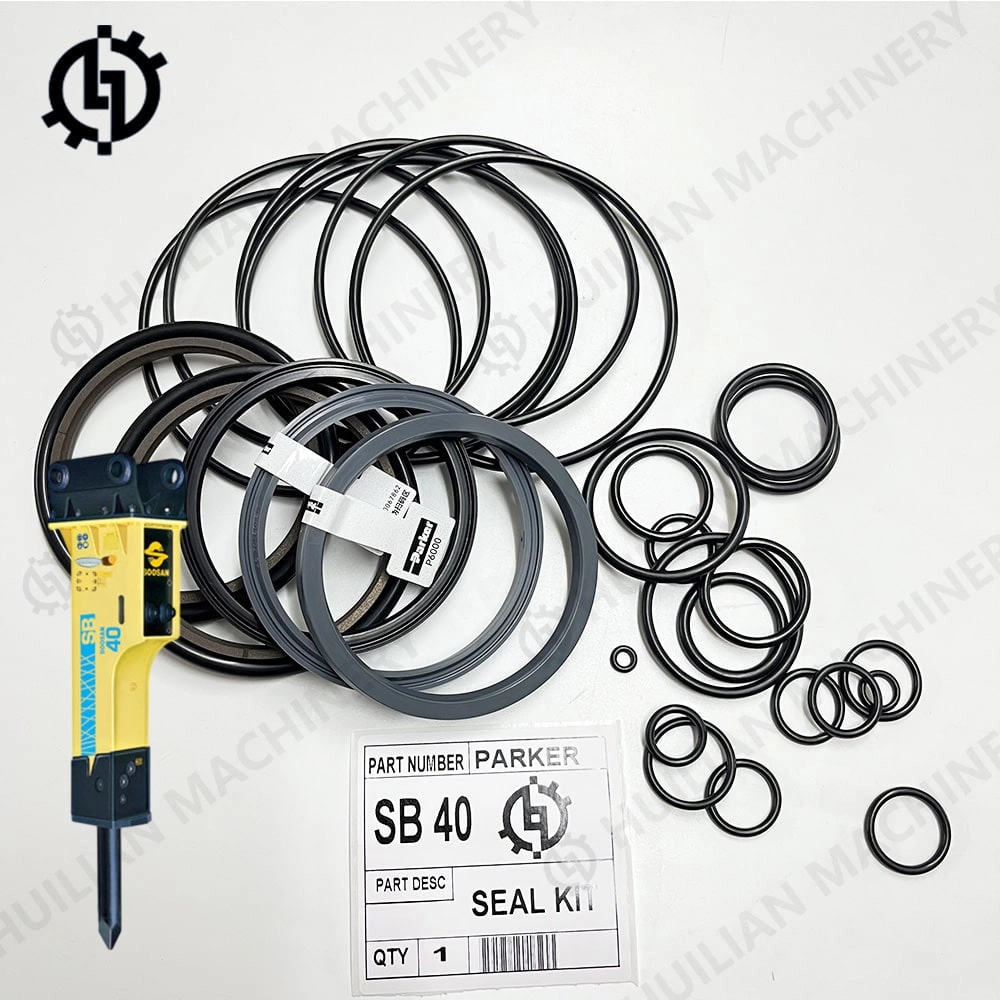
Parker Oil Seal Complete Repair SB40 Seal Kit COX001 CO1012 SB40Ⅱ SB40TSP SQ40 For Soosan Hydraulic Rock Breaker Hammer
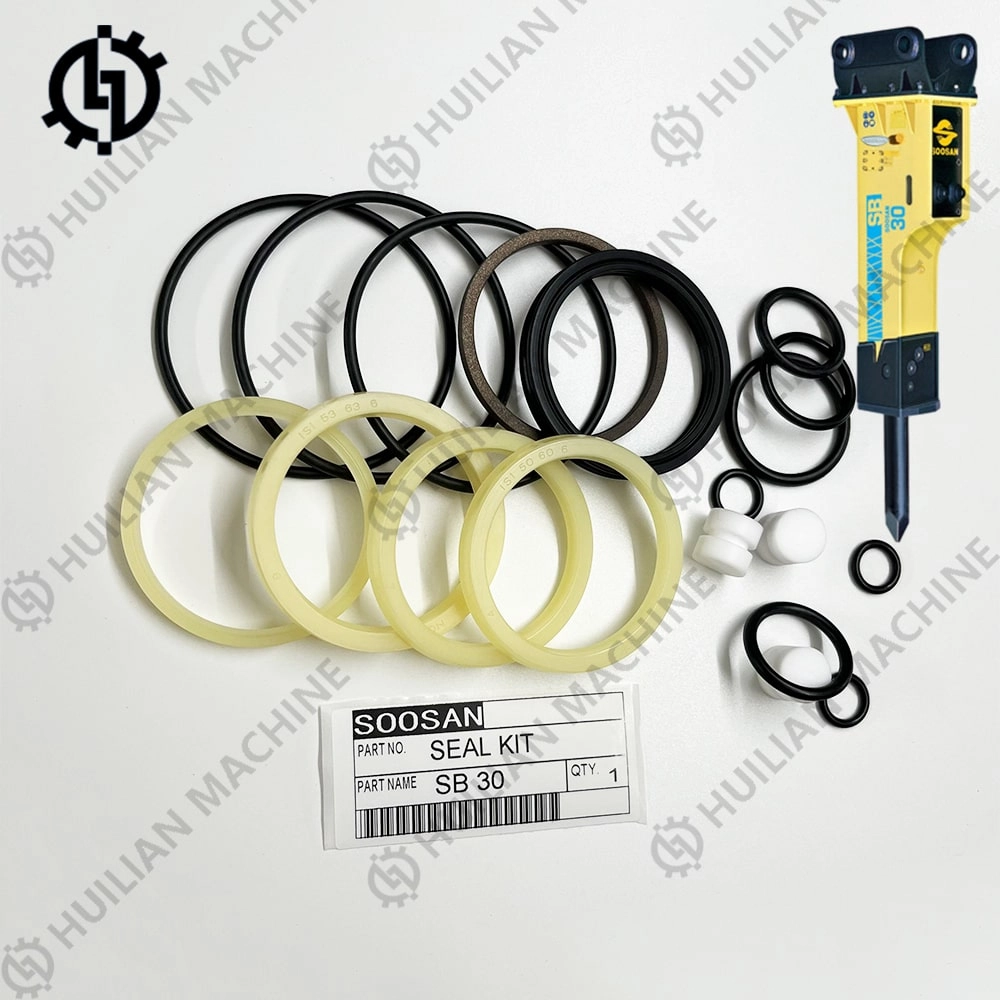
E71012 E7X001 SOOSAN SQ30 SB30Ⅱ SB30 Breaker Seal Kit SB30TS-P SB30Ⅱ TS-P SB30Ⅱ SSL Hydraulic Rock Hammer Parts Oil Repair Kit
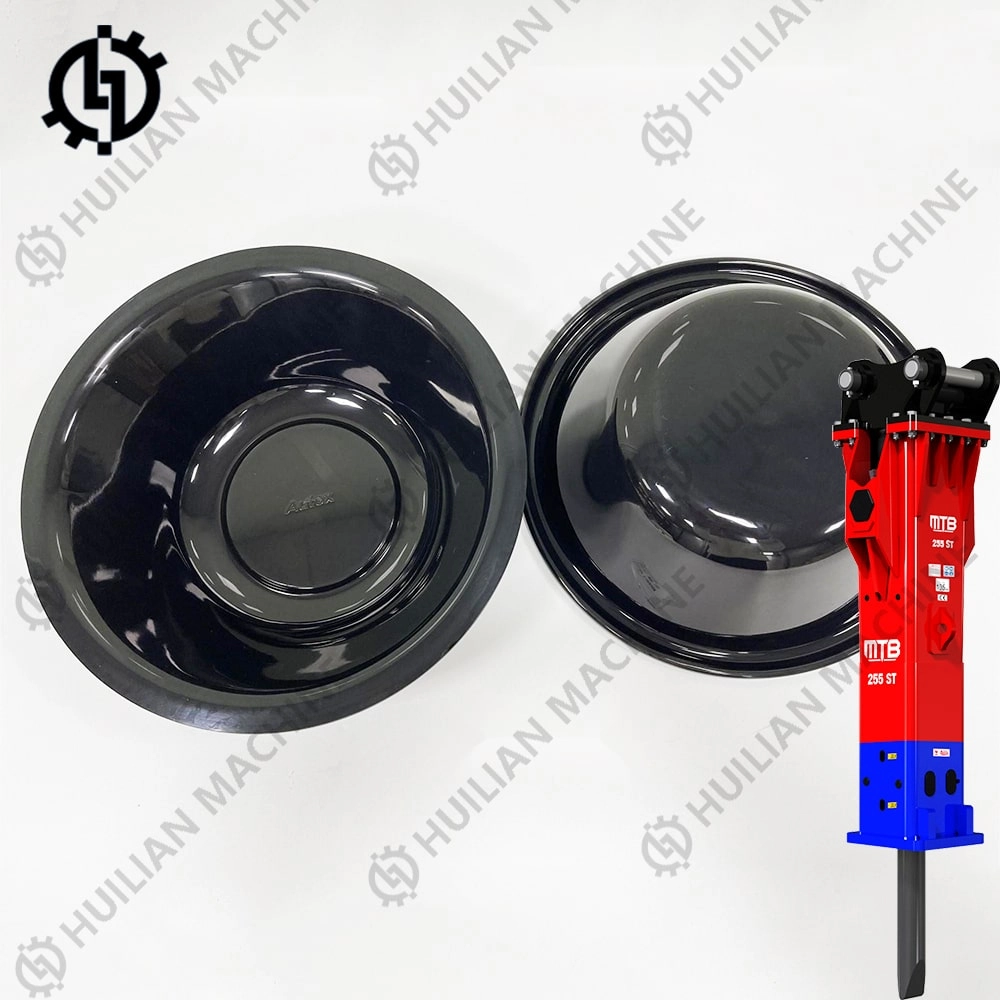
Inan Makina MTB Hydraulic Breaker Parts 45B0116A11 MTB255 MTB MT 255 Diaphragm MTB 255 IQ MTB-255 MTB 255 ST Membrane for Excavator Rock Hammer
 About us
© 2025 HUILIAN MACHINE. All rights reserved