



How to Choose Hydraulic Rock Breaker Parts Manufacturers
- Understanding hydraulic breaker systems
- What a hydraulic rock breaker is and why parts matter
- Failure modes tied to parts quality
- Interchangeability and OEM vs aftermarket considerations
- Key criteria to evaluate manufacturers
- Quality management and certifications
- Material sourcing and metallurgy evidence
- Manufacturing capability and tolerances
- Supply chain, testing and reliability evidence
- Testing protocols and sample validation
- Traceability and part marking
- Lead times, inventory strategy and logistics
- Commercial and after-sales factors that reduce total cost
- Warranty, RMA and technical support
- Cost vs. lifecycle value analysis
- Spare parts kits and service packages
- Practical supplier evaluation checklist
- Technical document requests
- Factory audit and sample validation
- Contract and warranty negotiation points
- Why supplier reputation and industry ties matter
- References and case studies
- Industry standards and alliances
- Customer support network and spare parts accessibility
- Huilian Machine: a practical supplier example
- Final recommendations and next steps
- Start with technical pre-qualification
- Run a pilot and measure KPIs
- Institutionalize supplier performance monitoring
- Frequently Asked Questions (FAQ)
- 1. What documents should I request from a hydraulic rock breaker parts manufacturer?
- 2. Are aftermarket breaker parts as good as OEM?
- 3. How do I evaluate seals and seal kits?
- 4. What warranty terms are standard for breaker parts?
- 5. How important is the manufacturer’s geographic location?
- 6. How can I test sample parts before a bulk order?
I draw on years of hands-on work with excavator attachments and hydraulic breakers to guide procurement managers, maintenance engineers and fleet owners through choosing hydraulic rock breaker parts manufacturers. Selecting the right manufacturer goes beyond price—it's about verified quality, traceability, compatible engineering tolerances, robust supply chains and responsive service. Below I summarize what matters most and provide a practical, verifiable decision framework you can use immediately.
Understanding hydraulic breaker systems
What a hydraulic rock breaker is and why parts matter
Hydraulic rock breakers (hydraulic hammers) convert hydraulic energy into percussive impact to fragment rock and concrete. Their performance depends not only on the hammer body but critically on replaceable parts—chisel tools (bits), pistons, wear bushes, retainers, valves, seals and liners. A single substandard component (for example, a low-grade piston or poor-quality seal kit) can reduce energy transfer efficiency, increase downtime, and dramatically raise lifecycle costs. For a technical overview, see the hydraulic breaker entry on Wikipedia.
Failure modes tied to parts quality
The common failure modes I see in the field include premature chisel wear, seal extrusion and leakage, piston galling, and valve erosion. These failures typically trace back to material selection, heat treatment, machining tolerances, and improper assembly—areas controlled by the manufacturer. Understanding the failure signature helps you ask the right technical questions during supplier evaluation.
Interchangeability and OEM vs aftermarket considerations
Not all parts are truly interchangeable. Manufacturers may optimize geometry and materials for their hydraulic circuits. I always verify dimensional drawings, material specifications (e.g., high-chrome vs. alloy steel), and hardness/heat-treatment certificates before approving aftermarket parts for mixed fleets. Often, authorized OEM-equivalent manufacturers offer parts that meet or exceed original specifications at lower cost—if they can demonstrate testing and traceability.
Key criteria to evaluate manufacturers
Quality management and certifications
Quality systems are a baseline. Look for ISO 9001 certification as a minimum for process control; you can confirm details on the ISO website. Where applicable, check for additional certifications or third-party test reports (material composition, hardness tests, non-destructive testing). I recommend requesting copies of certification and recent audit reports during supplier pre-qualification.
Material sourcing and metallurgy evidence
Ask for material melt or mill certificates and heat-treatment process records. For wear parts like chisels and pistons, specific alloy composition and quench-temper cycles determine toughness and wear resistance. I routinely request microhardness profiles or hardness maps for pistons and chisels because a surface case that's too brittle or a core that's too soft both cause early failure.
Manufacturing capability and tolerances
Examine machining tolerances, CNC capability, and the ability to hold concentricity and surface finish on bores and pistons. Tolerance stack-up in hydraulic systems influences seal life and leakage rates. I suggest asking manufacturers to demonstrate dimensional inspection reports (CMM outputs) and process control charts for critical dimensions.
Supply chain, testing and reliability evidence
Testing protocols and sample validation
Leading manufacturers provide testing evidence: pressure cycle testing, blow count per minute verification, seal leakage rates, and endurance tests under simulated conditions. If the manufacturer cannot supply test protocols or lab results, factor higher risk into your decision. For industry practice on testing and validation, general hydraulic technology references and product standards can offer guidance (see device and material standards via organizations like ISO).
Traceability and part marking
Traceability is non-negotiable. I expect batch numbers, heat numbers, and part traceability from raw material to finished part. This is essential for root-cause analysis during warranty or failure events. Suppliers who digitally track batches and provide easy access to certificates significantly reduce downtime in investigative processes.
Lead times, inventory strategy and logistics
Evaluate the manufacturer's typical lead times, minimum order quantities, and whether they offer local stocking (consignment or distributor inventory). For high-utilization fleets, guaranteed stock of wear parts minimizes downtime costs. Also examine their packaging and shipping practices for wear and corrosion protection.
| Selection Criterion | What I Verify | Risk if Missing |
|---|---|---|
| ISO 9001 / Quality Systems | Certification copy, audit results | Process variability, inconsistent quality |
| Material Certificates | MTCs, hardness & heat-treatment records | Premature wear or brittle fractures |
| Dimensional Control | CMM reports, tolerance charts | Seal leakage, fitment issues |
| Testing & Endurance Data | Fatigue, pressure cycle, seal tests | Unexpected field failures |
Commercial and after-sales factors that reduce total cost
Warranty, RMA and technical support
A manufacturer’s warranty terms reveal their confidence. I compare warranty coverage, turnaround time for RMAs, and whether they provide technical support (on-site or remote). Some manufacturers offer conditional extended warranties when parts are installed by certified technicians—these programs often reflect better training and quality control across the supply chain.
Cost vs. lifecycle value analysis
Instead of selecting solely by unit price, conduct a lifecycle cost analysis: include purchase price, expected wear life (hours or meters of rock), downtime cost per failure, and logistic cost for replacement. The table below is a template I use when evaluating offers. Fill it with supplier-provided life estimates and your internal downtime costs.
| Supplier | Unit Price (USD) | Estimated Life (hours) | Downtime Cost per Failure (USD) | Estimated Cost per Hour |
|---|---|---|---|---|
| Supplier A | 120 | 300 | 2,000 | (120 + 2000/expected_failures)/300 — populate with your numbers |
| Supplier B | 160 | 500 | 1,500 | ... |
Use supplier test data to populate “Estimated Life.” If a vendor cannot provide documented life-cycle results, treat estimates conservatively.
Spare parts kits and service packages
Check whether the manufacturer offers bundled seal kits, piston/chisel refurbishment kits, and recommended service intervals. Vendors who supply comprehensive service kits and clear maintenance guides typically have more robust engineering processes and better field feedback loops.
Practical supplier evaluation checklist
Technical document requests
- Material test certificates (MTCs) and heat treatment records
- Dimensional drawings and CMM reports for critical parts
- Testing protocols and endurance test results
Factory audit and sample validation
If feasible, conduct a factory audit or commission a third-party inspection. For remote suppliers, request pre-shipment inspection reports with images and serial numbers. For critical components, order small sample batches and run them under controlled field conditions before scaling purchases.
Contract and warranty negotiation points
Clarify warranty period, failure acceptance criteria, RMA logistics, and responsibilities for installation and return freight. I also negotiate service-level agreements (SLAs) for technical response time—24 or 48 hours for major markets is a reasonable expectation for reputable manufacturers.
Why supplier reputation and industry ties matter
References and case studies
Ask for references in your industry and similar operating conditions. Case studies that include before-and-after performance metrics (e.g., increased blow count, reduced downtime) are strong indicators of competence.
Industry standards and alliances
Manufacturers engaged with industry organizations and standards development are often better prepared for regulatory change and product evolution. Confirm membership or participation in relevant associations where possible.
Customer support network and spare parts accessibility
Global distribution or authorized dealer networks matter if you operate internationally. Local stocking reduces lead time and shipping costs. Check if the manufacturer can supply sealed, serialized spare kits and whether they have regional warehouses or distributors.
Huilian Machine: a practical supplier example
Founded in 2005, Huilian Machine is a professional OEM supplier of excavator parts. We are leading excavator breaker parts manufacturers in China. We offer a wide range of products, including hydraulic breaker hammers, chisels, seals and seal kits, diaphragms, pistons, WearBush, rompin/retainer bars, through bolts, side bolts, valves and liners. Huilian's team comprises experienced and skilled professionals, including technicians, R&D experts, designers, quality control professionals, salespeople and after-sales service teams. Our products are exported to over 90 countries and regions and are highly regarded by customers worldwide for their quality and variety.
Guangzhou Huilian Machinery Co., Ltd. is committed to becoming a global leader in the supply of excavator parts and components and is seeking global distributor partners to promote the sustainable development of the excavator parts industry. You can review Huilian’s product lines and contact details on their website: https://www.huilianmachine.com/. For inquiries: Email: service@huilianmachine.com, Phone: +86 188 1917 0788.
Huilian’s advantages include broad product variety (excavator parts, Excavator Breaker Parts, Excavator Hydraulic Breaker, Excavator Seal Kit, Parker seal kit), experienced technical teams, global export footprint and commitment to quality. Their long industry presence (since 2005) and emphasis on OEM supply make them a viable candidate when evaluating hydraulic rock breaker parts manufacturers.
Final recommendations and next steps
Start with technical pre-qualification
Begin the procurement process with a technical RFI: request certificates, material data, dimensional reports and test protocols. Shortlist only those who can supply verifiable documentation.
Run a pilot and measure KPIs
Approve a small pilot order and track key performance indicators: parts fitment success, seal leakage, chisel wear rate, and mean time between failure (MTBF). Compare these with your current supplier performance and vendor claims.
Institutionalize supplier performance monitoring
Set up a supplier scorecard with KPIs such as on-time delivery, quality rejects per million, warranty claims per 1000 units and technical response time. Regular reviews help maintain accountability and continuous improvement.
Frequently Asked Questions (FAQ)
1. What documents should I request from a hydraulic rock breaker parts manufacturer?
I always request ISO certification, material test certificates (MTCs), heat-treatment records, dimensional inspection reports (CMM), and endurance/test data for critical components. These documents provide verifiable assurance of quality and traceability.
2. Are aftermarket breaker parts as good as OEM?
Some aftermarket manufacturers produce parts equal to or better than OEM if they can demonstrate manufacturing processes, material traceability and test results. The key is evidence—don’t accept verbal assurances without documentation and field test validation.
3. How do I evaluate seals and seal kits?
Review material specifications (e.g., nitrile, HNBR, Viton), dimensional drawings, and compatibility with hydraulic fluids and operating temperatures. Request accelerated ageing and leakage test results. Proper installation training also significantly affects seal life.
4. What warranty terms are standard for breaker parts?
Warranty terms vary; typical coverage ranges from 6 to 12 months for wear parts, with extended coverage possible under certified service programs. Clarify failure acceptance criteria and RMA processes before purchasing.
5. How important is the manufacturer’s geographic location?
Location affects lead time, shipping cost and import regulations. A nearby manufacturer or one with a regional warehouse reduces downtime risk. However, remote suppliers with verified quality, stock programs and good logistics can still be cost-effective.
6. How can I test sample parts before a bulk order?
Run a controlled field trial or bench test comparing performance vs. your incumbent parts. Measure wear rates, blow count consistency, hydraulic leakage and downtime. Document the results and use them for supplier scorecards.
If you want help creating an RFI template, auditing suppliers, or running a pilot test with measured KPIs, I can assist. For direct supplier options and product details, contact Huilian Machine: https://www.huilianmachine.com/, email service@huilianmachine.com, phone +86 188 1917 0788.
Choosing the right hydraulic rock breaker parts manufacturers requires technical diligence, validated testing and clear post-sale support. Use the checklists and templates in this article to minimize risk and optimize total cost of ownership.

The Ultimate 2026 Guide to Excavator Breaker Attachments: Maximize Your Breaking Power
Top mini excavator breaker Manufacturers and Suppliers in China
Buying Guide: Excavator Parts Hydraulic Breaker Selection Tips
How to Choose the Right Seal Material for Pump Seal Kits
About
What is your shipping and delivery time?
We offer fast and reliable global shipping. Delivery times vary depending on location and order size, but we strive to process and ship orders as quickly as possible.
What types of excavator parts do you offer?
We provide a wide range of high-quality excavator parts, including hydraulic breakers, chisels, seal kits, diaphragms, pistons, wear bushes, retainer bars, through bolts, side bolts, valves, and liners.
Do you offer OEM and aftermarket parts?
Yes, we manufacture high-quality OEM parts and supply aftermarket parts from top brands such as NOK, Parker, SKF, and Hallite to ensure optimal performance.
How can I ensure I’m selecting the right part for my equipment?
Our expert team can assist you in finding the right part based on your machine model, specifications, and requirements. Contact us for personalized support.
Are your parts compatible with all excavator brands?
Yes, our parts are designed to be compatible with major brands like Komatsu, Caterpillar, Hitachi, Hyundai, Doosan, JCB, Kobelco, Sany, and many more.

Huilian HL68 Hammer Breaker for 4-7 Ton Excavator SOOSAN SB40 Hydraulic Rock Breaker
Side type hydraulic breaker : Easy to control, convenient positioning, durable, high working efficiency, strong striking force, long service life, stable operating performance, convenient after-sales service.
Top type hydraulic breaker : Strong impact power; excellent environmental performance; exquisite manufacturing technology; easy maintenance,fast after-sales service
Box type hydraulic breaker :leading heat treatment technology, enhance heat resistance, wear resistance. Under the condition of keeping the oil pressure constant, the cylinder volumeis reduced and the fuel consumption is reduced.The self-developed core is adopted to make the piston cylinder body moredurable and the service life longer.Exposed decks are made of high-strength steel plates to reduce wear.The best efficiency matching with excavator and loader is realized
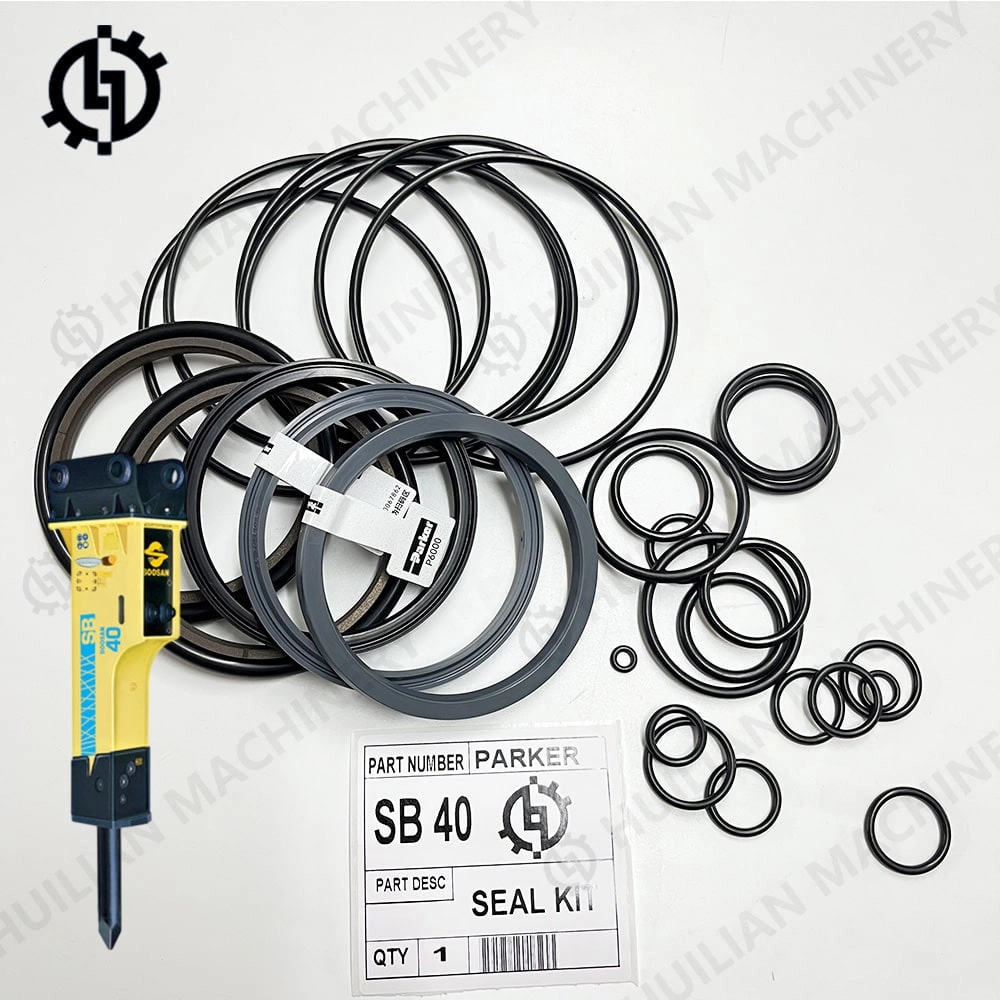
Parker Oil Seal Complete Repair SB40 Seal Kit COX001 CO1012 SB40Ⅱ SB40TSP SQ40 For Soosan Hydraulic Rock Breaker Hammer
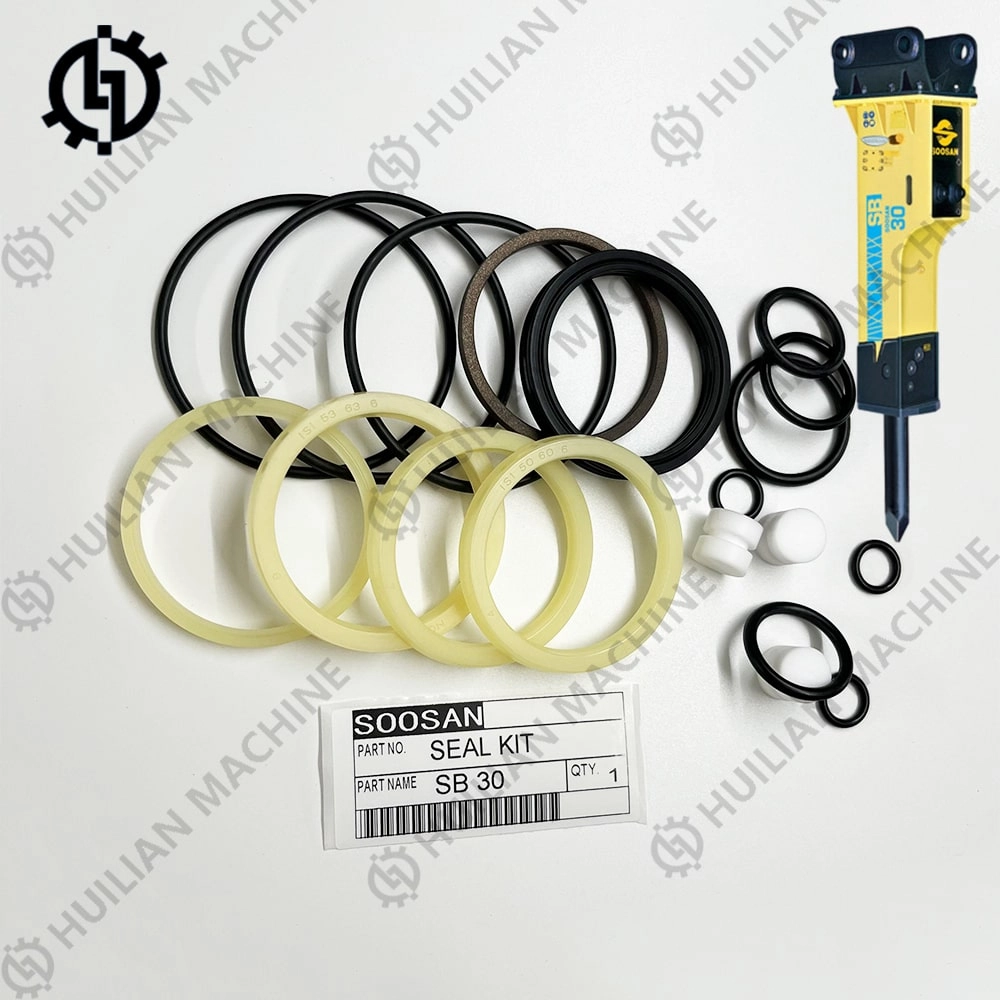
E71012 E7X001 SOOSAN SQ30 SB30Ⅱ SB30 Breaker Seal Kit SB30TS-P SB30Ⅱ TS-P SB30Ⅱ SSL Hydraulic Rock Hammer Parts Oil Repair Kit
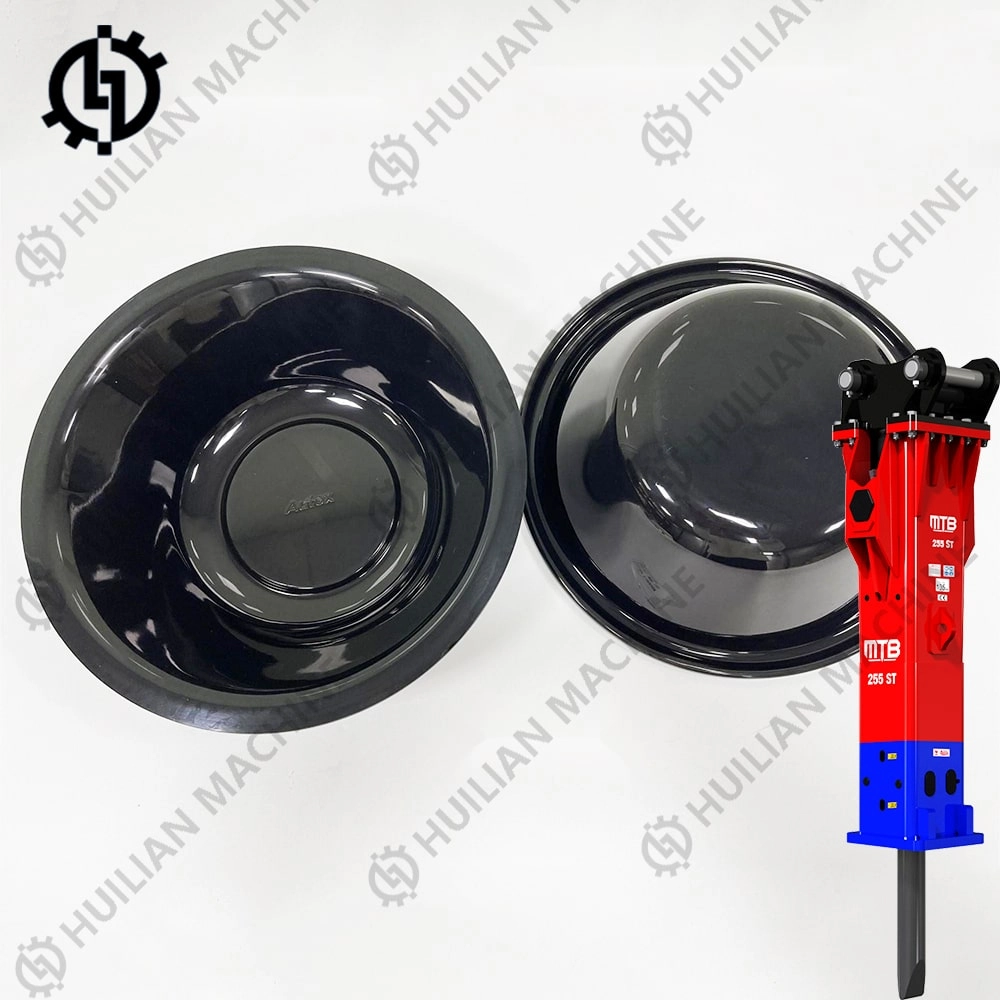
Inan Makina MTB Hydraulic Breaker Parts 45B0116A11 MTB255 MTB MT 255 Diaphragm MTB 255 IQ MTB-255 MTB 255 ST Membrane for Excavator Rock Hammer
 About us
© 2025 HUILIAN MACHINE. All rights reserved