



Buying Guide: Excavator Parts Hydraulic Breaker Selection Tips
- Why choosing the right breaker matters
- Productivity, cost and safety implications
- How industry standards inform objective choice
- Key performance factors to evaluate
- Flow and pressure requirements
- Impact energy and blow frequency
- Weight and carrier matching
- Compatibility, installation and parts considerations
- Mounting systems and tool shank types
- Seal kits, pistons and wear parts availability
- Hydraulic system compatibility and auxiliary circuits
- Maintenance, lifecycle cost and warranty
- Planned maintenance and common wear patterns
- Comparing lifecycle cost: a simple model
- Warranty, testing and supplier transparency
- Practical selection checklist and on‑site tips
- Pre-purchase checklist
- On-site commissioning tips
- Operator training and operating technique
- Why I recommend choosing reputable OEM and tested replacement parts
- Parts quality affects reliability and resale value
- Traceability and support
- Huilian Machine — Supplier profile and why it matters
- FAQs — Common questions about selecting hydraulic breakers
- Q1: How do I match breaker size to my excavator?
- Q2: What are the most common consumable parts and how often should they be replaced?
- Q3: Can I use a hydraulic breaker across multiple excavators?
- Q4: Is a higher impact energy always better?
- Q5: What should I look for in supplier documentation?
- Contact / Request a Quote
As someone who has worked with excavator parts and hydraulic breaker systems for over a decade, I know the difference the right selection can make to project productivity, operating cost and downtime. This guide focuses on practical, verifiable selection criteria for an excavator parts hydraulic breaker, covering compatibility, performance metrics, maintenance, and parts choices. I use industry standards and manufacturer‑level data to help you make decisions you can validate on the jobsite.
Why choosing the right breaker matters
Productivity, cost and safety implications
Choosing a hydraulic breaker that is undersized or mismatched to the excavator carrier reduces impact energy and cycle speed, increases wear on the carrier hydraulic system, and can lead to premature failure of parts such as hoses, pistons and retainers. On the other hand, oversized breakers cause excessive carrier strain, higher fuel burn and potential structural fatigue. From my experience advising contractors, correct sizing improves effective productivity by up to 20% on demolition and trenching jobs while reducing consumable spend.
How industry standards inform objective choice
I recommend using authoritative references to verify specifications before purchase. For example, general product principles for hydraulic hammers are summarized in the Hydraulic hammer entry on Wikipedia, and quality management expectations are framed by standards like ISO 9001. These resources help set minimum expectations for documentation, testing and traceability from suppliers.
Key performance factors to evaluate
Flow and pressure requirements
Hydraulic breaker performance is governed primarily by carrier hydraulic flow (L/min) and operating pressure (bar/psi). Typical systems operate roughly between 50–300 L/min and 100–250 bar depending on breaker size and class. Always confirm the breaker’s rated flow and max. operating pressure against your excavator’s hydraulic specs. Running a breaker at incorrect flow or pressure accelerates internal wear and can reduce piston life.
Impact energy and blow frequency
Two useful metrics are impact energy (kJ) and blow frequency (blows per minute). Higher impact energy is better for breaking thicker concrete or rock; higher blow frequency favors fragmentation and faster cycle times on lighter tasks. When comparing models, evaluate both numbers together: a breaker with moderate energy but much higher frequency can outperform a single high‑energy, low‑frequency unit on certain tasks.
Weight and carrier matching
Breaker class must match carrier weight and hydraulic capacity. Manufacturers publish carrier weight brackets for each breaker model. I recommend staying within the stated carrier class to protect the excavator’s structure and hydraulic components.
Compatibility, installation and parts considerations
Mounting systems and tool shank types
Check the breaker mounting interface (e.g., bracket type, pin diameters) and tool shank style (flat, round, conical). Some aftermarket and OEM breakers use proprietary mounts. If you plan to swap between carriers, prioritize universal or widely accepted mounting designs and verify dimensions before ordering.
Seal kits, pistons and wear parts availability
Consumables—seals, seal kits, pistons, wear bushes and retainers—determine lifecycle cost. Ensure spare parts availability and consider standardized seals (e.g., Parker seal kits where applicable) to avoid long downtime waiting for unique parts. I always ask suppliers for lead times and availability of common consumables before purchase.
Hydraulic system compatibility and auxiliary circuits
Some breakers require additional hydraulic lines or special flow controls (e.g., flow accumulators or pressure relief settings). Inspect your excavator’s auxiliary circuit and confirm whether load‑sensing or constant flow systems are compatible with the chosen breaker. You may need a control valve or flow divider to achieve optimal performance.
Maintenance, lifecycle cost and warranty
Planned maintenance and common wear patterns
Preventive maintenance focuses on: daily lubrication, checking for oil contamination, inspecting hoses and bolts, and monitoring tool wear. Common failure modes I see are seal failure due to contaminated oil, piston scoring from inadequate lubrication, and retainer bar breakage from poor alignment or incorrect chisels. Establish a maintenance log and inspect high‑stress components weekly on heavy use jobs.
Comparing lifecycle cost: a simple model
When comparing breakers, calculate total cost of ownership (TCO): purchase price + expected consumables cost per year + estimated downtime cost + installation and training. Below is a representative comparison table (typical ranges; confirm with supplier). Sources include manufacturer spec sheets and industry references such as the Hydraulic hammer overview.
| Breaker Class | Carrier Weight (t) | Typical Flow (L/min) | Impact Energy (kJ) | Annual Consumables Cost (USD) |
|---|---|---|---|---|
| Mini | 0.8 – 2 | 20 – 60 | 2 – 8 | 300 – 800 |
| Light | 2 – 8 | 60 – 120 | 8 – 30 | 800 – 2,000 |
| Medium | 8 – 20 | 120 – 220 | 30 – 80 | 2,000 – 6,000 |
| Heavy | 20+ | 200 – 400 | 80 – 200+ | 6,000 – 20,000+ |
Note: These ranges are indicative. Always confirm exact numbers from manufacturer datasheets and test field performance against expectations.
Warranty, testing and supplier transparency
A reliable supplier will provide a clear warranty covering manufacturing defects and offer documented test results (cycle tests, impact energy verification). Check if the supplier follows a certified quality system such as ISO 9001 to ensure consistent manufacturing and traceability: see ISO 9001.
Practical selection checklist and on‑site tips
Pre-purchase checklist
- Verify excavator hydraulic flow and max pressure versus breaker rated flow/pressure.
- Confirm carrier weight compatibility and mounting dimensions.
- Request parts list, seal kit options, and consumable lead times.
- Ask for cycle and impact energy test reports; check warranty coverage.
- Compare TCO, not just upfront price.
On-site commissioning tips
During initial commissioning I always watch for: correct hose routing, absence of hydraulic leaks, proper lubrication flow to the tool, and that blow frequency and pressure hold within spec under load. Run the breaker under a light load initially and perform a thermal check on the carrier hydraulics after 30 minutes of operation.
Operator training and operating technique
Training operators to use correct striking angles, avoid prying motions and not to run the breaker dry (no load hits) will extend tool life. For efficient breakage, use a combination of chisel types and apply striking points that allow material fragmentation rather than excessive rebound.
Why I recommend choosing reputable OEM and tested replacement parts
Parts quality affects reliability and resale value
I’ve seen aftermarket seal kits and pistons save upfront cost but cause more frequent failures. Using tested OEM or high‑quality aftermarket components reduces the risk of catastrophic failure, improves reliability and keeps resale value higher for both breakers and carriers.
Traceability and support
Choose suppliers who provide serial-numbered parts, certificates of conformity and accessible technical support. This traceability is essential for quality control and warranty claims.
Huilian Machine — Supplier profile and why it matters
Founded in 2005, Huilian Machine is a professional OEM supplier of excavator parts. We are leading excavator breaker parts manufacturers in China. We offer a wide range of products, including hydraulic breaker hammers, chisels, seals and seal kits, diaphragms, pistons, WearBush, rompin/retainer bars, through bolts, side bolts, valves and liners. Huilian's team comprises experienced and skilled professionals, including technicians, R&D experts, designers, quality control professionals, salespeople and after-sales service teams. Our products are exported to over 90 countries and regions and are highly regarded by customers worldwide for their quality and variety.
Guangzhou Huilian Machinery Co., Ltd. is committed to becoming a global leader in the supply of excavator parts and components and is seeking global distributor partners to promote the sustainable development of the excavator parts industry. Huilian’s core strengths include:
- Comprehensive product range covering most excavator parts hydraulic breaker consumables and assemblies.
- Production and QC processes aligned with international expectations to ensure repeatable quality.
- Global logistics and export experience—shipping to 90+ countries.
- After‑sales support and technical assistance from experienced engineers.
Primary product categories: excavator parts, Excavator Breaker Parts, Excavator Hydraulic Breaker, Excavator Seal Kit, Parker seal kit.
Contact and partnership:
Website: https://www.huilianmachine.com/
Email: service@huilianmachine.com
Phone: +86 188 1917 0788
FAQs — Common questions about selecting hydraulic breakers
Q1: How do I match breaker size to my excavator?
A: Match using carrier operating weight and hydraulic flow. Refer to breaker manufacturer carrier brackets and ensure your excavator’s auxiliary circuit can provide the rated flow and pressure. If uncertain, share your excavator model and hydraulic spec sheet with the supplier.
Q2: What are the most common consumable parts and how often should they be replaced?
A: Common consumables include chisels/tools, retainer bars, pistons, seals and wear bushes. Replacement intervals vary with usage: for heavy daily use, chisels and retainers might need inspection every 100–200 hours, while seals could require attention every 300–500 hours. Monitor operating conditions and maintain a parts log.
Q3: Can I use a hydraulic breaker across multiple excavators?
A: Yes, if the breakers share compatible mounting brackets and the carriers have similar hydraulic systems. Consider using quick‑mount adapters or standardizing mounts across your fleet to simplify interchangeability.
Q4: Is a higher impact energy always better?
A: Not always. Higher impact energy helps break massive structures but may reduce cycle speed and increase recoil. For fragmentation and faster progress in lighter material, higher blow frequency at moderate energy is often preferable.
Q5: What should I look for in supplier documentation?
A: Ask for detailed datasheets with flow/pressure ratings, impact energy and frequency, mounting dimensions, recommended chisels, parts lists with part numbers, test certificates and warranty terms. Suppliers with ISO certification and traceable part numbering provide added assurance.
Contact / Request a Quote
If you need help selecting the right excavator parts hydraulic breaker or sourcing parts and seal kits, contact me or the Huilian Machine team. We can review your excavator specs, recommend compatible breaker models, and provide parts availability and pricing.
Huilian Machine — Website: https://www.huilianmachine.com/ | Email: service@huilianmachine.com | Phone: +86 188 1917 0788
OEM vs Aftermarket Excavator Breaker Parts: Pros and Cons
OEM vs Aftermarket Hydraulic Breaker Hammer Parts Comparison
Compatibility Guide: Hammer Breaker Spare Parts by Excavator Model
Wholesale hydraulic seal kits manufacturer and supplier
About
What is your shipping and delivery time?
We offer fast and reliable global shipping. Delivery times vary depending on location and order size, but we strive to process and ship orders as quickly as possible.
How can I ensure I’m selecting the right part for my equipment?
Our expert team can assist you in finding the right part based on your machine model, specifications, and requirements. Contact us for personalized support.
Do you offer OEM and aftermarket parts?
Yes, we manufacture high-quality OEM parts and supply aftermarket parts from top brands such as NOK, Parker, SKF, and Hallite to ensure optimal performance.
Are your parts compatible with all excavator brands?
Yes, our parts are designed to be compatible with major brands like Komatsu, Caterpillar, Hitachi, Hyundai, Doosan, JCB, Kobelco, Sany, and many more.
What types of excavator parts do you offer?
We provide a wide range of high-quality excavator parts, including hydraulic breakers, chisels, seal kits, diaphragms, pistons, wear bushes, retainer bars, through bolts, side bolts, valves, and liners.

Huilian Hydraulic Rock Hammer Breaker SB43 for 6-9 Ton SOOSAN Excavator Breaker
Side type hydraulic breaker : Easy to control, convenient positioning, durable, high working efficiency, strong striking force, long service life, stable operating performance, convenient after-sales service.
Top type hydraulic breaker : Strong impact power; excellent environmental performance; exquisite manufacturing technology; easy maintenance,fast after-sales service
Box type hydraulic breaker :leading heat treatment technology, enhance heat resistance, wear resistance. Under the condition of keeping the oil pressure constant, the cylinder volumeis reduced and the fuel consumption is reduced.The self-developed core is adopted to make the piston cylinder body moredurable and the service life longer.Exposed decks are made of high-strength steel plates to reduce wear.The best efficiency matching with excavator and loader is realized
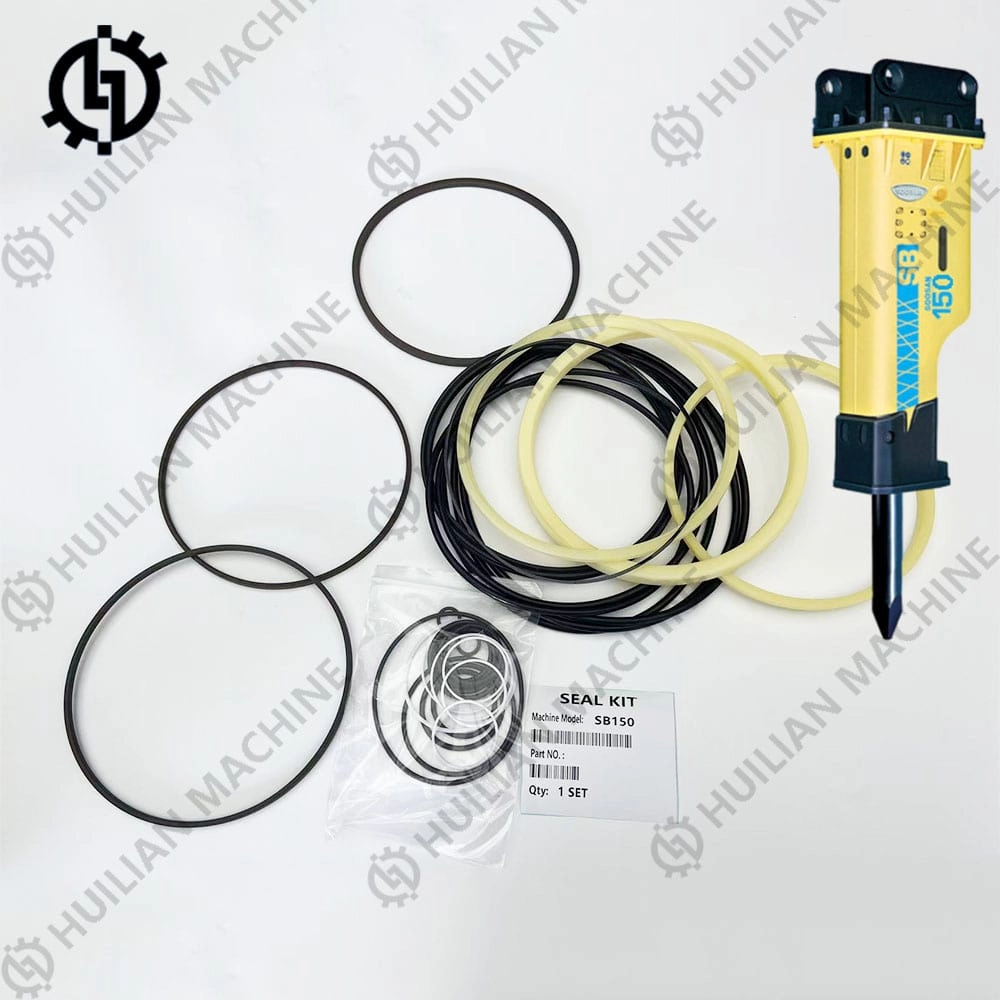
SOOSAN Breaker Spare Parts SB151TSP SQ150 SB151 Seal Kit SB150 SB157TRF SB152 C7X003 C71010 Oil Repair Kit For Excavator Hydraulic Rock Hammer

Huilian Hydraulic Rock Hammer Breaker SB10 for 0.5-1.2 Ton Mini Excavator Breaker
Side-type hydraulic breaker : Easy to control, convenient positioning, durable, high working efficiency, strong striking force, long service life, stable operating performance, and convenient after-sales service.
Top type hydraulic breaker : Strong impact power; excellent environmental performance; exquisite manufacturing technology; easy maintenance, fast after-sales service
Box-type hydraulic breaker: leading heat treatment technology, enhanced heat resistance, and wear resistance. Under the condition of keeping the oil pressure constant, the cylinder volume is reduced and the fuel consumption is reduced. The self-developed core is adopted to make the piston cylinder body durable and the service life longer. Exposed decks are made of high-strength steel plates to reduce wear. The best efficiency matching with excavator and loader is realized

Huilian HL100 Hydraulic Hammer Rock Breaker Excavator Attachment
 About us
© 2025 HUILIAN MACHINE. All rights reserved