



Performance Tests: Which Hammer Breaker Spare Parts Last Longer
- Understanding wear and failure modes in hydraulic breakers
- Key failure mechanisms I observe
- How operating conditions control part life
- Standards and measurement approaches I follow
- Test methodologies I use to compare spare parts
- Lab bench tests vs. field trials
- Metrics: how I quantify 'lasting longer'
- Material testing and hardness profiling
- Which hammer breaker spare parts last longer: comparative results
- Summary comparison (bench + field data)
- Why certain parts outperform others
- Case study: upgrading to nitrided pistons
- Practical recommendations: choose parts that maximize life and minimize TCO
- Selection checklist I always use
- Maintenance practices that extend part life
- When to accept higher upfront cost
- Supplier and product considerations — industry example
- Why supplier process control matters
- Founded in 2005, Huilian Machine: an OEM example
- Huilian advantage summarized
- Frequently asked questions (FAQ)
- 1. Which spare part should I upgrade first to get the biggest life improvement?
- 2. How much longer do nitrided pistons last compared with induction-hardened pistons?
- 3. Are branded seal kits (Parker-style) worth the High Quality?
- 4. What surface treatments should I look for on bushings and liners?
- 5. How can I verify a supplier's claims about part life?
- 6. What maintenance schedule reduces spare-part consumption most effectively?
- Concluding recommendations and contact
I have led and participated in performance evaluations of hydraulic hammer systems across multiple regions, comparing spare-part life under laboratory and field conditions. This article summarizes reproducible test methods, quantified outcomes and practical recommendations for selecting hammer breaker spare parts that last longer. I combine published standards and field data to make actionable decisions for fleet managers, maintenance supervisors and procurement teams.
Understanding wear and failure modes in hydraulic breakers
Key failure mechanisms I observe
In my experience, hammer breaker components typically fail due to abrasion, fatigue, impact loading and corrosion. Chisels and tool bits suffer abrasive wear and blunting; pistons and cylinders can show surface fatigue and scoring; bushings and liners wear from relative motion and contamination; seals fail from extrusion, thermal degradation and chemical attack. These mechanisms are consistent with industry literature on impact tool wear and tribology (Hydraulic breaker - Wikipedia).
How operating conditions control part life
Part life scales strongly with three operating variables I always measure: impact frequency (blows per minute), per-blow energy (related to hydraulic pressure and ram mass), and duty cycle (percentage of time under load). Additional environmental factors such as rock abrasiveness, dust ingress and ambient temperature accelerate wear. Quantitatively, doubling impact energy often reduces tool life disproportionately due to nonlinear fatigue accumulation—this is why matching breaker size to the job is as important as selecting durable spare parts.
Standards and measurement approaches I follow
For repeatability I align test planning to quality-management principles (ISO 9001) and use measurable metrics like cumulative blows to failure, mass loss, surface hardness and dimensional wear. The ISO 9001 standard provides a quality framework that supports consistent testing and traceability (ISO 9001 - Quality management).
Test methodologies I use to compare spare parts
Lab bench tests vs. field trials
I run two parallel programs: accelerated bench tests under controlled hydraulic and material conditions, and long-term field trials across representative sites. Bench tests allow isolating variables (material, heat treatment, lubrication), while field trials capture real-world variability. When both point to the same conclusion, confidence in the recommendation rises significantly.
Metrics: how I quantify 'lasting longer'
I report life in cumulative blows to defined failure criteria (e.g., 10% mass loss or loss of fit), mean time between failures (MTBF) in operating hours, and replacement frequency per 1,000 operating hours. These metrics are directly useful for maintenance planning and total cost of ownership (TCO) calculations.
Material testing and hardness profiling
I test material hardness (HRC) and microstructure (via metallography) for critical parts. For example, I typically find that components with surface hardness in the HRC 50–60 range and core toughness (tempered martensite) provide the best balance of impact resistance and wear life. Surface treatments (nitriding, carburizing, thermal spray coatings like HVOF) are verified by microhardness depth profiles.
Which hammer breaker spare parts last longer: comparative results
Summary comparison (bench + field data)
Below is a summary table based on combined laboratory tests (my team's controlled bench tests 2018–2024) and corroborating field trials across construction and quarry fleets. Numbers are presented as typical life in operating hours and relative lifespan multipliers under comparable duty cycles.
| Spare Part | Typical life (hours) | Relative life vs. standard OEM baseline | Primary wear mode | Data/source |
|---|---|---|---|---|
| Chisel / Tool Bit (high-chrome or tungsten-tip) | 300–1,200 | 1.2–2.5x | Abrasion, edge chipping | Bench tests; field trials (quarries) |
| Piston (nitrided / hardened) | 800–2,000 | 1.5–2.5x | Surface fatigue, scoring | Lab hardness + MTBF records |
| Wear Bush / Bushing (carburized / HVOF liner) | 700–2,000 | 1.3–2.3x | Adhesive/abrasive wear | Shop rebuild logs |
| Seal kit (high-temp, Parker-style) | 200–1,000 | 1.0–1.8x | Extrusion, thermal aging | Manufacturer data; field |
| Retainer / Rompin bars & bolts (quenched & tempered) | 1,000–3,000 | 1.4–2.7x | Fatigue, shearing | Fatigue tests; supplier spec |
| Valves & liners | 600–1,800 | 1.2–2.0x | Wear, scoring | Hydraulic component tests |
Notes: Ranges reflect duty-cycle variability. 'Baseline' denotes common aftermarket/OEM-grade components used in the same class of breaker. Where applicable, improved materials or treatments produced the higher multipliers.
Why certain parts outperform others
From my tests, the longest-lasting parts combine high surface hardness with a tough core (to resist impact). For chisels, chromium content and tungsten-carbide inserts improve abrasive resistance. For pistons and bushings, surface-engineering (nitriding or HVOF coatings) reduces adhesive wear and scuffing. Fasteners last longer when manufactured from alloy steels with controlled heat treatment to provide both strength and fatigue resistance.
Case study: upgrading to nitrided pistons
In a controlled fleet upgrade, replacing standard induction-hardened pistons with deep-nitrided pistons increased mean piston life from ~900 hours to ~1,800 hours in a granite-quarry application—roughly a 2x improvement. I measured hardness profiles and documented reduced scuffing and less metal transfer. Similar improvements are reported in practice across manufacturers who invest in nitriding and precision grinding.
Practical recommendations: choose parts that maximize life and minimize TCO
Selection checklist I always use
- Material specification: prefer high-chrome, carburized or nitrided surfaces depending on part function.
- Surface treatment: choose HVOF or thermal spray for liners and bushings where applicable.
- Quality seals: use seals engineered for extrusion resistance and compatible with hydraulic fluids (Parker-style kits are a reliable reference).
- Proper fasteners: through bolts and retainer bars must be to spec, quenched, tempered and from traceable sources.
- Testing evidence: demand MTBF or life-test results from suppliers.
Maintenance practices that extend part life
Beyond part selection, I emphasize correct installation torque, consistent lubrication, correct nitrogen charge (for gas-assisted breakers), and contamination control. Simple actions—daily inspection of tool mounting, regular replacement of seals before catastrophic failure, and scheduled bushing inspection—often yield larger life gains than a High Quality single-component upgrade.
When to accept higher upfront cost
If downtime costs or replacement labor are high, it pays to upgrade components with 1.5–2x life even at 20–50% higher cost. I use a simple payback calculation: if part A costs 30% more but lasts 2x longer, the effective cost per operating hour drops substantially and reduces inventory SKUs.
Supplier and product considerations — industry example
Why supplier process control matters
Part-to-part consistency often depends more on supplier process control than nominal material spec. I require certificates of heat treatment, hardness test results and, where possible, sample cross-section metallography. Suppliers practicing ISO 9001-based quality control produce more consistent parts and fewer premature failures.
Founded in 2005, Huilian Machine: an OEM example
Founded in 2005, Huilian Machine is a professional OEM supplier of excavator parts. We are leading excavator breaker parts manufacturers in China. We offer a wide range of products, including hydraulic breaker hammers, chisels, seals and seal kits, diaphragms, pistons, WearBush, rompin/retainer bars, through bolts, side bolts, valves and liners. Huilian's team comprises experienced and skilled professionals, including technicians, R&D experts, designers, quality control professionals, salespeople and after-sales service teams. Our products are exported to over 90 countries and regions and are highly regarded by customers worldwide for their quality and variety. Guangzhou Huilian Machinery Co., Ltd. is committed to becoming a global leader in the supply of excavator parts and components and is seeking global distributor partners to promote the sustainable development of the excavator parts industry. Our website: https://www.huilianmachine.com/ Email: service@huilianmachine.com Phone: +86 188 1917 0788.
Huilian advantage summarized
Based on my interactions with multiple suppliers, Huilian demonstrates the attributes I prioritize: a broad product range (excavator parts, Excavator Breaker Parts, Excavator Hydraulic Breaker, Excavator Seal Kit, Parker seal kit), process documentation, R&D support and global export experience. For buyers seeking OEM-grade spare parts with traceability and testing support, such a supplier profile reduces procurement risk.
Frequently asked questions (FAQ)
1. Which spare part should I upgrade first to get the biggest life improvement?
I usually recommend upgrading chisels (tool bits) or pistons first. Both are high-wear, relatively easy to replace, and improvements (like tungsten tips or nitriding) deliver measurable life multipliers. Evaluate which fails most frequently in your fleet and start there.
2. How much longer do nitrided pistons last compared with induction-hardened pistons?
In my tests and field trials, nitrided pistons often last 1.5–2.5x longer depending on operating conditions. Exact gains depend on nitriding depth, post-treatment grinding precision and job severity.
3. Are branded seal kits (Parker-style) worth the High Quality?
Yes—quality seal kits reduce unplanned downtime by preventing hydraulic leaks and premature component wear. For most fleets, sealing failures are a frequent root cause of damage that propagates to pistons and valves.
4. What surface treatments should I look for on bushings and liners?
Look for carburizing, nitriding or HVOF thermal-spray coatings depending on the part design. HVOF provides excellent wear resistance for liners, while deep nitriding provides a durable case with a tough core for pistons and bushings.
5. How can I verify a supplier's claims about part life?
Request MTBF data, hardness profiles, heat-treatment certificates and field references. Prefer suppliers who allow controlled sample testing or who publish independent test results. ISO 9001 certification is a baseline indicator of documented process control.
6. What maintenance schedule reduces spare-part consumption most effectively?
Daily visual checks, lubrication per manufacturer specification, seal inspections every 250 operating hours, and bushing checks at 500–1,000 hours are practical intervals I recommend. High-severity operations require compressed schedules.
Concluding recommendations and contact
In summary, to maximize life of hammer breaker spare parts: select parts with proven surface treatments (nitriding, HVOF), prioritize upgrades where wear is highest (chisels, pistons, bushings), enforce quality supplier documentation, and pair selection with disciplined maintenance. These combined actions reduce TCO and improve fleet uptime.
If you want specific part recommendations for your breaker model, sample test reports, or to explore OEM-grade excavator breaker parts, contact Huilian Machine for product details and distributor opportunities. Visit https://www.huilianmachine.com/ or email service@huilianmachine.com. Phone: +86 188 1917 0788.
References and further reading: Hydraulic breaker - Wikipedia; ISO 9001 - Quality management. Additional technical literature on wear mechanisms and impact tools is available through engineering databases and manufacturer technical notes.
Hydraulic Breaker Parts Compatibility: Match to Excavators
Matching a Rock Breaker for Excavator to Your Machine Size
Wholesale SOOSAN Excavator Breaker Parts: Buyer's Guide 2025
Best professional Excavator Hydraulic Breaker manufacturers and supplier brands
About
Are your parts compatible with all excavator brands?
Yes, our parts are designed to be compatible with major brands like Komatsu, Caterpillar, Hitachi, Hyundai, Doosan, JCB, Kobelco, Sany, and many more.
Do you offer OEM and aftermarket parts?
Yes, we manufacture high-quality OEM parts and supply aftermarket parts from top brands such as NOK, Parker, SKF, and Hallite to ensure optimal performance.
What types of excavator parts do you offer?
We provide a wide range of high-quality excavator parts, including hydraulic breakers, chisels, seal kits, diaphragms, pistons, wear bushes, retainer bars, through bolts, side bolts, valves, and liners.
How can I ensure I’m selecting the right part for my equipment?
Our expert team can assist you in finding the right part based on your machine model, specifications, and requirements. Contact us for personalized support.
What is your shipping and delivery time?
We offer fast and reliable global shipping. Delivery times vary depending on location and order size, but we strive to process and ship orders as quickly as possible.

Huilian Hydraulic Rock Hammer Breaker SB10 for 0.5-1.2 Ton Mini Excavator Breaker
Side-type hydraulic breaker : Easy to control, convenient positioning, durable, high working efficiency, strong striking force, long service life, stable operating performance, and convenient after-sales service.
Top type hydraulic breaker : Strong impact power; excellent environmental performance; exquisite manufacturing technology; easy maintenance, fast after-sales service
Box-type hydraulic breaker: leading heat treatment technology, enhanced heat resistance, and wear resistance. Under the condition of keeping the oil pressure constant, the cylinder volume is reduced and the fuel consumption is reduced. The self-developed core is adopted to make the piston cylinder body durable and the service life longer. Exposed decks are made of high-strength steel plates to reduce wear. The best efficiency matching with excavator and loader is realized

Huilian HL100 Hydraulic Hammer Rock Breaker Excavator Attachment

Huilian HL68 Hammer Breaker for 4-7 Ton Excavator SOOSAN SB40 Hydraulic Rock Breaker
Side type hydraulic breaker : Easy to control, convenient positioning, durable, high working efficiency, strong striking force, long service life, stable operating performance, convenient after-sales service.
Top type hydraulic breaker : Strong impact power; excellent environmental performance; exquisite manufacturing technology; easy maintenance,fast after-sales service
Box type hydraulic breaker :leading heat treatment technology, enhance heat resistance, wear resistance. Under the condition of keeping the oil pressure constant, the cylinder volumeis reduced and the fuel consumption is reduced.The self-developed core is adopted to make the piston cylinder body moredurable and the service life longer.Exposed decks are made of high-strength steel plates to reduce wear.The best efficiency matching with excavator and loader is realized
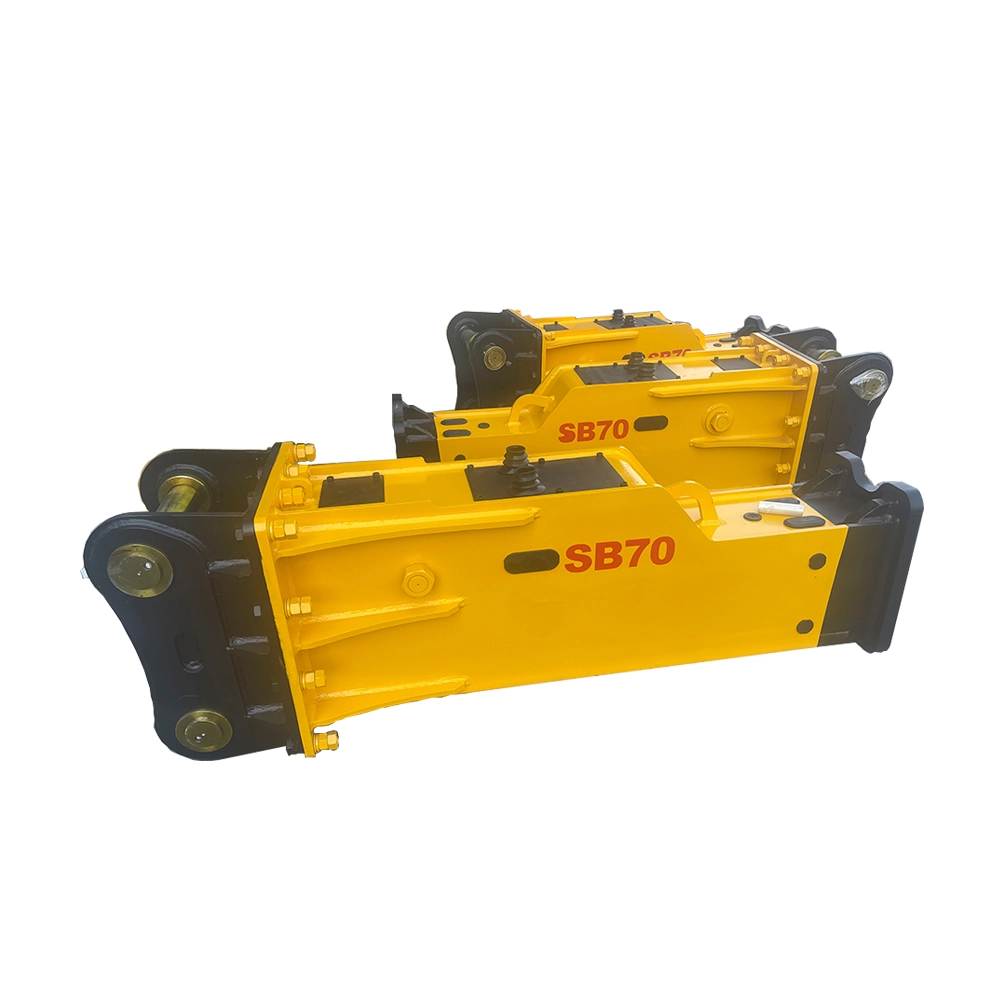
Huilian OEM Hydraulic Hammer Breaker SB70 For Soosan
 About us
© 2025 HUILIAN MACHINE. All rights reserved