



Matching a Rock Breaker for Excavator to Your Machine Size
- Why proper breaker-to-carrier matching matters
- Productivity and cycle-time implications
- Wear, maintenance and total cost of ownership
- Safety and structural integrity
- Core factors to evaluate when selecting a rock breaker for excavator
- Carrier operating weight and class
- Hydraulic flow (L/min) and system pressure (bar/MPa)
- Impact energy, blow frequency and tool diameter
- Practical selection guide and comparison
- Rule-of-thumb matching table
- Comparing impact energy vs. blow frequency
- Tooling choices and their effect
- Installation, operation and maintenance best practices
- Mounting, nitrogen charge and lubrication
- Hydraulic filtering, heat management and flow control
- Spare parts, seal kits and predictive maintenance
- Procurement and sourcing: what to look for in suppliers
- Quality, traceability and testing
- Parts availability and global support
- Cost vs. life-cycle value
- Vendor spotlight: Huilian Machine — OEM parts and global supply
- Real-world selection examples
- Example 1: Urban demolition — 8t excavator
- Example 2: Quarry primary break — 30t excavator
- Example 3: Trenching on soft rock — mini excavator (2.5t)
- Checklist before purchase and before first use
- FAQ
- 1. How do I determine the right size rock breaker for my excavator?
- 2. Can I use any hydraulic breaker on any excavator if I add a flow control valve?
- 3. What maintenance items most influence breaker life?
- 4. How important is using OEM vs. aftermarket parts like seal kits and chisels?
- 5. What are typical signs of a mismatched breaker and when should I stop using it?
- 6. Where can I find reliable selection charts and technical data?
- Contact and next steps
Matching a rock breaker for excavator to your machine size is more than picking a model from a brochure — it requires understanding carrier weight, hydraulic flow and pressure, impact energy (Joules), tool diameter, and the intended application (trenching, demolition, quarrying). Choosing incorrectly leads to reduced productivity, higher wear, frequent downtime, and safety risks. This article gives practical, verifiable guidance to size hydraulic breakers to excavators, compares common options, and offers installation, maintenance and procurement advice grounded in industry practice and manufacturer guidance (Excavator — Wikipedia, Hydraulic breaker — Wikipedia).
Why proper breaker-to-carrier matching matters
Productivity and cycle-time implications
A breaker matched to the excavator's hydraulic flow and mass transfer energy converts engine power into effective per-stroke energy and blow frequency. Undersized breakers on large carriers waste potential — they reach flow/pressure limits and can overheat. Oversized breakers on small carriers overload hydraulics and boom structures, reducing cycle time and increasing risk of failures. Manufacturer selection charts and field tests show correctly matched systems maximize blows per minute (BPM) at effective energy per blow, improving fragmentation and lowering total cycle time (Hydraulic breaker — Wikipedia).
Wear, maintenance and total cost of ownership
Mismatched combinations accelerate wear of chisel tips, bushings and hydraulic components. Repeated cavitation, improper oil cooling, or pressure spikes shorten piston and valve life. Total cost of ownership (TCO) rises due to higher spare parts consumption and unplanned downtime. A correctly sized breaker reduces spare parts turnover (chisels, seals, pistons) and extends intervals between major overhauls.
Safety and structural integrity
Overloading a carrier with an oversized breaker increases stress on the boom, dipper, pins and links. Improperly balanced systems introduce harmful shock loads to the chassis and can create operator safety issues. Structural fatigue or pin failures may follow if matching is not verified with dynamic load assessments.
Core factors to evaluate when selecting a rock breaker for excavator
Carrier operating weight and class
Start with the excavator's operating weight (working weight, not transport weight). Manufacturers define breaker ranges around carrier classes (mini, midi, standard, heavy). As a rule of thumb, breaker recommended mass and energy specs are correlated to: mini excavators (<5 t), standard 5–20 t, and heavy >20 t carriers. Verify the carrier's hydraulic capacity and structural ratings before selection (Excavator — Wikipedia).
Hydraulic flow (L/min) and system pressure (bar/MPa)
The breaker must be compatible with the carrier's continuous flow and maximum pressure. Breakers are designed to operate within a band: too low flow reduces blow frequency; too high flow can overwork internal valves and reduce per-blow energy. Confirm both pump flow at working RPM and relief/maximum pressure. Use the carrier's hydraulic curve to determine available continuous flow at typical working engine speed.
Impact energy, blow frequency and tool diameter
Impact energy (Joules) and blow frequency (BPM) determine fragmentation performance. A higher energy per blow favors deep fracturing in rock, while higher BPM helps in softer materials and thin layers. Tool (chisel) diameter must match the breaker and the application — larger diameter for heavy rock breaking, narrower for trenching or demolition precision.
Practical selection guide and comparison
Rule-of-thumb matching table
Below is a practical guideline frequently used in the industry to pre-select breaker classes. Treat these values as starting points; always confirm with the breaker manufacturer and check carrier hydraulic curves and structural limits.
| Excavator operating weight (t) | Typical breaker class | Typical hydraulic flow (L/min) | Typical operating pressure (bar) | Common applications |
|---|---|---|---|---|
| <3 | Mini/small | 30–80 | 120–160 | Light demolition, landscaping, trenching |
| 3–12 | Small/medium | 80–180 | 140–160 | Roadworks, foundations, medium rocks |
| 12–25 | Medium/large | 180–350 | 150–200 | Quarrying, hard rock breaking |
| >25 | Large/heavy | 350–700+ | 160–220+ | Primary breaking, heavy mining |
Notes: Flow and pressure ranges are industry-typical values. Always verify against manufacturer specifications and the carrier's hydraulic chart. For more technical references, see manufacturer selection guides such as Montabert and mainstream hydraulic breaker references (Montabert).
Comparing impact energy vs. blow frequency
Choose higher impact energy (J) for breaking massive rock where single-stroke penetration is required; choose higher BPM for pavement or thin layers. A balanced selection reduces stress on pistons and chisels and improves fuel efficiency. Many breaker datasheets show trade-off curves between energy and BPM — consult those to find optimal operating points.
Tooling choices and their effect
Chisel types (point, moil, blunt) and diameters affect wear rates and break patterns. For hard rock, use larger-diameter chisels and replaceable hardfacing. For demolition of reinforced concrete, consider blunt or flat chisels and ensure the breaker and carrier can handle rebound and steel encounters.
Installation, operation and maintenance best practices
Mounting, nitrogen charge and lubrication
Correct mounting (pin sizes, brackets) and correct nitrogen charge in the accumulator are essential for optimal energy transfer. Incorrect nitrogen pressure reduces performance and increases internal pounding that shortens piston life. Always use manufacturer-recommended nitrogen pressures and a validated mounting system. Regular lubrication with the proper rock breaker grease reduces bushing wear and chisel seizure.
Hydraulic filtering, heat management and flow control
Clean hydraulic oil and correct filtration prevent valve and piston wear. Ensure the carrier's oil cooler manages temperature for long shifts; high oil temperature degrades seals and accelerates wear. If the carrier flow exceeds the breaker's recommended maximum, use a flow control valve or a breaker with an internal flow regulation valve to prevent over-pumping.
Spare parts, seal kits and predictive maintenance
Maintain an inventory of high-wear parts: chisels, bushings (WearBush), pistons, diaphragms, and seal kits (e.g., Parker-compatible kits). Implement a wear-monitoring routine and vibration analysis if possible. Using OEM or high-quality aftermarket parts reduces the risk of catastrophic failures. For seal kits, diaphragms and pistons, adhere to recommended replacement intervals and torque sequences during reassembly.
Procurement and sourcing: what to look for in suppliers
Quality, traceability and testing
Select suppliers that provide material certificates, assembly testing results, and clear warranty terms. Traceability of casting and heat treatment for housing and tool steel is critical for durability in rock-breaking applications. Reputable OEM suppliers publish test data and recommended operating envelopes.
Parts availability and global support
Availability of replacement chisels, seals and pistons in your region reduces downtime. Suppliers with global logistics and local distributors shorten lead times for critical spares and support. Ask suppliers for lead times, local stocking partners and after-sales service protocols.
Cost vs. life-cycle value
Lowest initial price can mean higher TCO. Compare expected life (hours), warranty coverage, and parts pricing. Often a slightly higher-quality breaker with robust seals and proven valve design returns lower hourly cost through reduced maintenance and longer intervals between rebuilds.
Vendor spotlight: Huilian Machine — OEM parts and global supply
Founded in 2005, Huilian Machine is a professional OEM supplier of excavator parts. We are leading excavator breaker parts manufacturers from China. We offer a wide range of products, including hydraulic breaker hammers, chisels, seals and seal kits, diaphragms, pistons, WearBush, rompin/retainer bars, through bolts, side bolts, valves and liners. Huilian's team comprises experienced and skilled professionals, including technicians, R&D experts, designers, quality control professionals, salespeople and after-sales service teams. Our products are exported to over 90 countries and regions and are highly regarded by customers worldwide for their quality and variety.
Guangzhou Huilian Machinery Co., Ltd. is committed to becoming a global leader in the supply of excavator parts and components and is seeking global distributor partners to promote the sustainable development of the excavator parts industry. For buyers seeking reliable excavator parts — from excavator breaker parts to comprehensive excavator seal kits and Parker seal kit alternatives — Huilian combines competitive pricing, tested materials, and aftermarket support. Learn more at https://www.huilianmachine.com/ or contact service@huilianmachine.com / +86 188 1917 0788 for product inquiries and distribution opportunities.
Real-world selection examples
Example 1: Urban demolition — 8t excavator
Scenario: Removing sidewalk and small reinforced concrete slabs. Carrier: 8 t excavator with 110 L/min at 180 bar.Recommendation: Small/medium breaker rated 80–150 L/min, mid-range impact energy for mixed material. Use a chisel suited for concrete. Confirm mounting brackets and install a flow control if peak flow exceeds breaker's recommended max.
Example 2: Quarry primary break — 30t excavator
Scenario: Breaking large stratified rock. Carrier: 30 t excavator with 400 L/min capability.Recommendation: Heavy breaker for 350–500 L/min, high impact energy per blow and large tool diameter. Ensure boom structure and carrier pins are rated for high shock loads and that oil cooling is adequate for continuous operation.
Example 3: Trenching on soft rock — mini excavator (2.5t)
Scenario: Utility trenching in moderately hard ground.Recommendation: Mini breaker 30–60 L/min with high BPM, narrow moil chisel for precision, lightweight mount to preserve carrier stability and avoid overloading small hydraulics.
Checklist before purchase and before first use
- Confirm carrier operating weight and boom/dipper pin capacities.
- Measure available hydraulic flow at working RPM and maximum system pressure.
- Verify mounting bracket dimensions, pin diameter and structural reinforcement.
- Check oil cooling capacity and filtration level; upgrade filters if needed.
- Order spare chisels, seal kit and wear bush before first shift to reduce downtime risk.
FAQ
1. How do I determine the right size rock breaker for my excavator?
Start with the operating weight of your excavator, then check the carrier's hydraulic flow (L/min) and maximum pressure (bar). Use manufacturer selection charts and the rule-of-thumb table in this article as a starting point, and always verify mounting and structural limits. Consult breaker datasheets for required flow and pressure ranges.
2. Can I use any hydraulic breaker on any excavator if I add a flow control valve?
Not necessarily. Flow control can prevent over-pumping, but structural limits (boom, pins), nitrogen charge compatibility, and energy transfer efficiency must be compatible. Overweight breakers can transmit damaging shock loads even with flow control, so follow the carrier and breaker manufacturer guidelines.
3. What maintenance items most influence breaker life?
Regular lubrication, correct nitrogen charge, clean hydraulic oil with proper filtration, timely replacement of seals/pistons/diaphragms, and using correct chisel types significantly influence life. Predictive checks (oil analysis, vibration monitoring) help detect wear early.
4. How important is using OEM vs. aftermarket parts like seal kits and chisels?
High-quality aftermarket parts from reputable manufacturers can match OEM performance and lower costs. Key is material quality, correct dimensions and heat treatment. Suppliers like Huilian provide OEM-compatible seal kits and spare parts with testing and traceability to ensure reliability.
5. What are typical signs of a mismatched breaker and when should I stop using it?
Look for excessive overheating, unusual vibration at the carrier, loss of blows per minute, hydraulic pressure spikes, accelerated chisel wear, or evidence of structural stress on the boom. If these occur, stop and evaluate: check nitrogen pressure, oil contamination, flow rates, and check for mounting integrity.
6. Where can I find reliable selection charts and technical data?
Manufacturer technical catalogs (Montabert, NPK, Atlas Copco, and OEM breaker makers) and engineering handbooks provide selection charts. General technical background is available on industry references like Hydraulic breaker — Wikipedia and manufacturer product pages (Montabert).
Contact and next steps
If you need help matching a rock breaker for excavator to your machine, sourcing spare parts (excavator parts, excavator breaker parts, excavator hydraulic breaker spare kits), or looking for distribution partnerships, contact Guangzhou Huilian Machinery Co., Ltd. We offer OEM-quality components, testing data and global shipping. Visit https://www.huilianmachine.com/, email service@huilianmachine.com, or call +86 188 1917 0788 to get a tailored recommendation and a quotation for breaker hammers, chisels and seal kits.
Hydraulic Breaker Box Compatibility: Match Boxes to Excavator Brands
How to Use Hydraulic Breaker: Step-by-Step Guide
Case Studies: How Manufacturers Improve Breaker Performance
Wholesale FURUKAWA Excavator Hydraulic Breaker manufacturer and supplier
About
Do you offer OEM and aftermarket parts?
Yes, we manufacture high-quality OEM parts and supply aftermarket parts from top brands such as NOK, Parker, SKF, and Hallite to ensure optimal performance.
Are your parts compatible with all excavator brands?
Yes, our parts are designed to be compatible with major brands like Komatsu, Caterpillar, Hitachi, Hyundai, Doosan, JCB, Kobelco, Sany, and many more.
What types of excavator parts do you offer?
We provide a wide range of high-quality excavator parts, including hydraulic breakers, chisels, seal kits, diaphragms, pistons, wear bushes, retainer bars, through bolts, side bolts, valves, and liners.
How can I ensure I’m selecting the right part for my equipment?
Our expert team can assist you in finding the right part based on your machine model, specifications, and requirements. Contact us for personalized support.
What is your shipping and delivery time?
We offer fast and reliable global shipping. Delivery times vary depending on location and order size, but we strive to process and ship orders as quickly as possible.

Huilian HL68 Hammer Breaker for 4-7 Ton Excavator SOOSAN SB40 Hydraulic Rock Breaker
Side type hydraulic breaker : Easy to control, convenient positioning, durable, high working efficiency, strong striking force, long service life, stable operating performance, convenient after-sales service.
Top type hydraulic breaker : Strong impact power; excellent environmental performance; exquisite manufacturing technology; easy maintenance,fast after-sales service
Box type hydraulic breaker :leading heat treatment technology, enhance heat resistance, wear resistance. Under the condition of keeping the oil pressure constant, the cylinder volumeis reduced and the fuel consumption is reduced.The self-developed core is adopted to make the piston cylinder body moredurable and the service life longer.Exposed decks are made of high-strength steel plates to reduce wear.The best efficiency matching with excavator and loader is realized
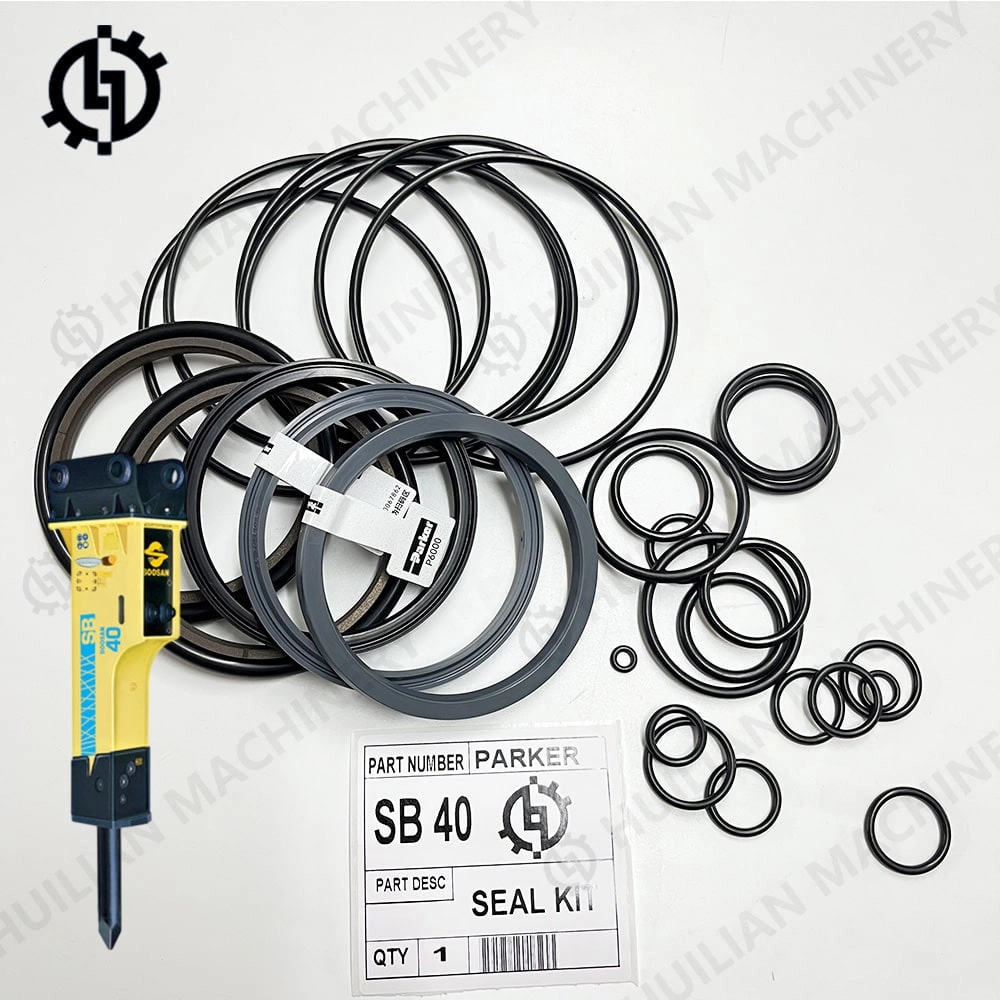
Parker Oil Seal Complete Repair SB40 Seal Kit COX001 CO1012 SB40Ⅱ SB40TSP SQ40 For Soosan Hydraulic Rock Breaker Hammer
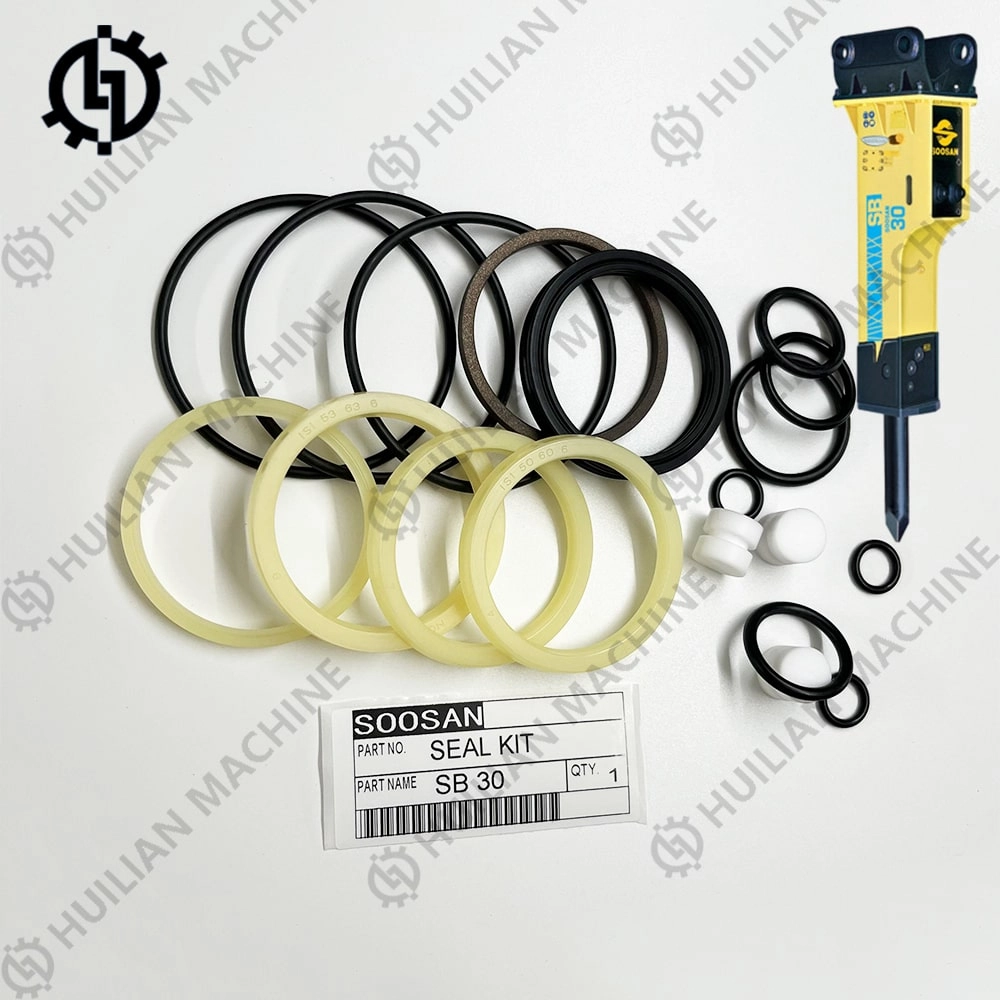
E71012 E7X001 SOOSAN SQ30 SB30Ⅱ SB30 Breaker Seal Kit SB30TS-P SB30Ⅱ TS-P SB30Ⅱ SSL Hydraulic Rock Hammer Parts Oil Repair Kit
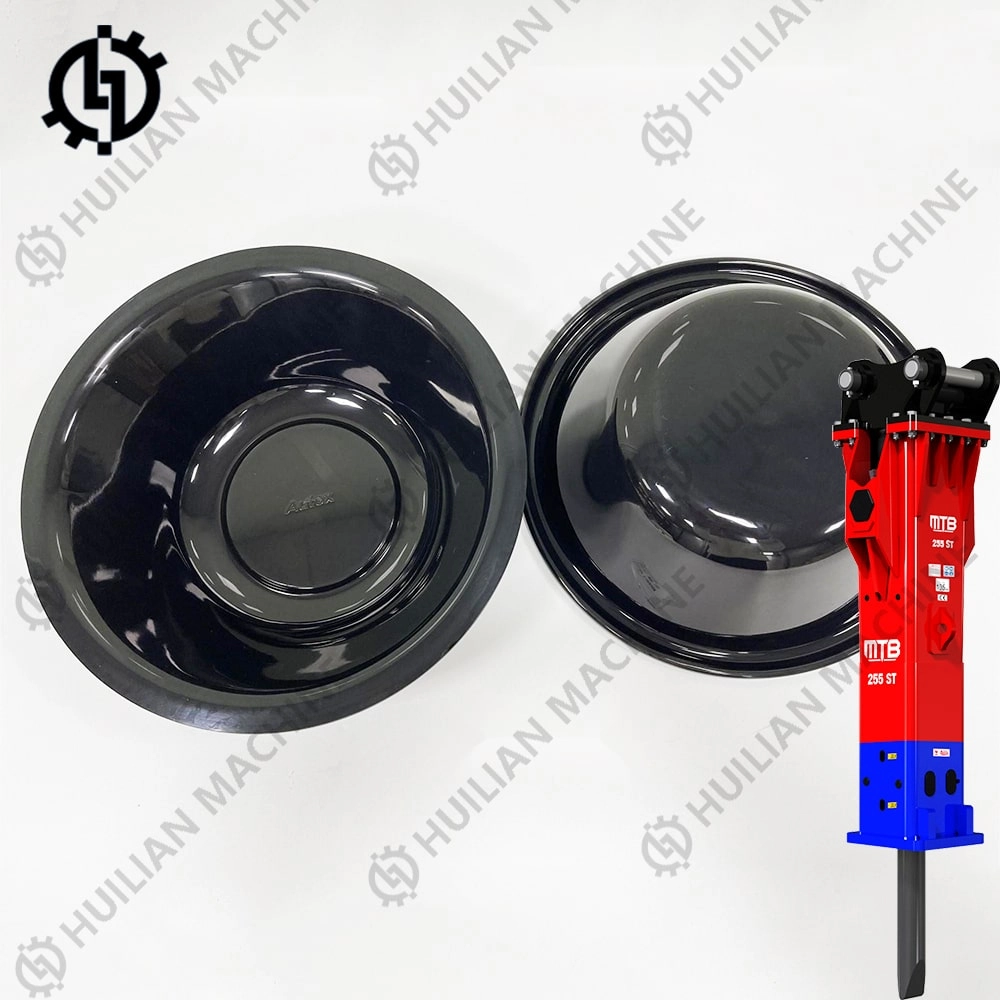
Inan Makina MTB Hydraulic Breaker Parts 45B0116A11 MTB255 MTB MT 255 Diaphragm MTB 255 IQ MTB-255 MTB 255 ST Membrane for Excavator Rock Hammer
 About us
© 2025 HUILIAN MACHINE. All rights reserved