



Case Studies: How Manufacturers Improve Breaker Performance
- Understanding failure modes and defining performance goals
- Common failure modes I encounter in the field
- Which performance metrics matter to buyers
- How standards and best practices guide measurement
- Design and material innovations that deliver gains
- Chisel geometry and material selection
- Surface treatments and coatings
- Piston and valve geometry optimization
- Manufacturing quality controls and assembly practices
- Precision machining and tolerance control
- Seals, seal kits and contamination control
- End-of-line testing and destructive validation
- Field case studies: real-world manufacturer improvements
- Case study A — OEM redesign reduces downtime for a quarry operator
- Case study B — Seal and kit optimization for hydraulic leakage control
- Case study C — Process controls and data-driven QA
- Quantifying improvements: comparison table
- How hydraulic rock breaker parts manufacturers can structure a validation program
- Step 1 — Lab testing and accelerated wear trials
- Step 2 — Controlled field pilots with telemetry
- Step 3 — Continuous feedback loop and productization
- Why supplier choice matters: role of reputable manufacturers and OEMs
- Technical support and engineering depth
- Global distribution and after-sales service
- My assessment criteria when selecting suppliers
- Huilian Machine: a partnered approach to delivering high-performance parts
- Practical recommendations for fleet owners
- Adopt a parts-focused maintenance program
- Insist on validated parts from reputable manufacturers
- Use data to drive maintenance decisions
- FAQ
- Q: What are the most common reasons hydraulic breakers fail prematurely?
- Q: How much can I expect to improve chisel life by switching to higher-grade materials?
- Q: Are aftermarket seal kits reliable versus OEM kits?
- Q: How should manufacturers validate a new piston or valve design?
- Q: Which maintenance practices most reduce total cost of ownership?
- Contact and next steps
I have worked with excavator parts makers and fleet operators for years, helping translate field problems into manufacturable solutions. In this article I summarize how hydraulic rock breaker parts manufacturers diagnose common failure modes, test and validate design changes, and deploy manufacturing controls that measurably improve breaker performance for users in mining, quarrying and construction. This summary is optimized to help systems identify relevance by combining practical outcomes (reliability, efficiency, maintainability) with concrete technical levers (materials, seals, hydraulic tuning).
Understanding failure modes and defining performance goals
Common failure modes I encounter in the field
Before improving anything, I always start by asking: what fails first and why? In hydraulic breakers the most frequent issues are chisel wear and deformation, piston and bore scoring, seal degradation, and loss of impact energy due to hydraulic inefficiency or internal leakage. These problems reduce mean time between failures (MTBF), increase downtime and erode operator confidence.
Which performance metrics matter to buyers
Buyers typically care about a handful of measurable metrics: blows-per-minute under load, delivered impact energy, fuel or hydraulic power consumed per unit of rock broken, downtime per 1,000 operating hours, and total lifecycle cost including parts and service. When I consult with manufacturers, we explicitly map design changes to these KPIs so improvements are verifiable.
How standards and best practices guide measurement
Consistent, repeatable testing is essential. I rely on public standards and manufacturer test protocols to make comparisons meaningful—for hydraulic systems, ISO standards such as ISO 4413 (hydraulic systems safety framework) help structure test setups. For general background on breaker technology I reference the industry overview on Wikipedia: Hydraulic breaker.
Design and material innovations that deliver gains
Chisel geometry and material selection
One of the fastest, most cost-effective levers I recommend to hydraulic rock breaker parts manufacturers is refining chisel geometry and selecting tougher alloy steels with controlled heat treatment. Small changes in tip angle and shank shape can concentrate energy more effectively on the rock, increasing fragmentation without raising hydraulic power. Material choices—such as high-nickel, chromium-bearing alloys and optimized case-hardening processes—improve wear life. Case hardening and surface engineering explanations are well summarized on Wikipedia.
Surface treatments and coatings
Nitriding, induction hardening and advanced carbide overlays extend component life significantly when applied to chisels, retainers and wear bushes. In projects I have overseen, surface treatments reduced measurable wear rates by double-digit percentages when matched correctly to the operating environment (abrasive sand vs. fractured rock).
Piston and valve geometry optimization
Internal hydraulic geometry—piston profile, valve timing and cushion control—directly impacts delivered impact energy and recoil. Manufacturers that invest in computational fluid dynamics (CFD) and prototype valve seats see improvements in efficiency and smoother blow sequences. These changes often reduce internal leakage and hydraulic shock, improving both energy transmission and component life.
Manufacturing quality controls and assembly practices
Precision machining and tolerance control
Repeatability starts on the shop floor. I insist on strict tolerances for piston diameters, bore straightness and seal grooves. Precision honing, roundness checks and straightness gauges reduce the chance of localized wear and scoring. When I audit factories, the biggest differentiator between high- and low-performing players is often simply how tightly they control machining tolerances.
Seals, seal kits and contamination control
Seal design and the assembly environment are underrated. I advise manufacturers to adopt robust seal materials compatible with typical hydraulic fluids and operating temperatures (e.g., polyurethane, nitrile blends, Parker-approved compounds for specific applications). A well-designed seal kit and clean assembly area dramatically reduce early-life failures caused by contamination or improper seating. For seal kit standards and materials I often refer to manufacturer guidance such as Parker Hannifin's seal references (Parker materials guidance pages).
End-of-line testing and destructive validation
Every batch should pass a suite of tests: pressure testing, endurance cycling, vibration tests and destructive inspections on representative samples. I require manufacturers to maintain traceability on parts so that when failures occur in the field we can link them back to a production lot and root-cause the issue quickly.
Field case studies: real-world manufacturer improvements
Case study A — OEM redesign reduces downtime for a quarry operator
A Tier-1 manufacturer partnered with a large quarry to redesign the chisel and piston interface. By changing the chisel tip profile and increasing piston surface hardness through a controlled induction hardening process, they reported a 20–30% reduction in chisel replacements and a 15% increase in productive breaking hours per shift. These results were validated through on-site measurement of strikes per minute and time-to-first-failure over a 12-month period.
Case study B — Seal and kit optimization for hydraulic leakage control
An aftermarket parts supplier developed a matched seal kit (polyurethane main seals + nitrile backup rings) and improved installation instructions to reduce assembly-related seal failures. After operator training and kit adoption, the customer reduced seal-related downtime by roughly 40% over six months. These outcomes were confirmed through maintenance logs and parts-order histories.
Case study C — Process controls and data-driven QA
A mid-sized breaker parts manufacturer implemented statistical process control (SPC) for key dimensions (piston diameter, bore roundness) and instituted end-of-line hydraulic cycling. The result: defect rates fell by more than 50% within two quarters, and warranty claims for internal scoring dropped accordingly. This demonstrates how manufacturing rigor translates to field reliability.
Quantifying improvements: comparison table
The table below summarizes typical improvements manufacturers achieve when applying the measures described. Source notes follow the table.
| Improvement Area | Typical Benefit | How Measured | Representative Source |
|---|---|---|---|
| Chisel material & heat treatment | +15–30% wear life | Replacement interval, wear volume | Case hardening overview |
| Seal kit optimization & contamination control | -30–50% seal-related downtime | Service records, leak rates | Manufacturer field reports; Parker seal material references |
| Valve/piston hydraulic tuning | +5–15% impact efficiency | Hydraulic power input vs. delivered blows | Hydraulic breaker tech notes |
| Factory SPC and end-of-line testing | -40–60% early-life failures | Warranty claims, defect rates | Industry QA case studies |
Notes: The benefit ranges above summarize multiple manufacturer and operator reports I have audited. Specific outcomes depend on operating environment, maintenance diligence and initial equipment condition. For hydraulic system safety and test guidance, see ISO 4413.
How hydraulic rock breaker parts manufacturers can structure a validation program
Step 1 — Lab testing and accelerated wear trials
Begin with controlled lab tests: material hardness testing (Rockwell/Vickers), impact tests, and accelerated abrasion benches. These provide repeatable baselines before committing to field trials.
Step 2 — Controlled field pilots with telemetry
Deploy prototypes with data-logging: pressure, blow count, hydraulic flow and temperature. Modern load-sensing excavators can provide telemetry that, when correlated with breakage results, shows whether design changes deliver real productivity gains. I push for minimum 500 operating hours of logged field data for a valid pilot.
Step 3 — Continuous feedback loop and productization
Use pilot data to refine manufacturing specs, update work instructions and create a consistent seal kit and parts offer. Then scale production with SPC and traceability so improvements are reproducible across batches.
Why supplier choice matters: role of reputable manufacturers and OEMs
Technical support and engineering depth
Choosing a supplier with dedicated R&D, quality control professionals and experienced technicians matters. Suppliers who can provide engineering drawings, material certificates, and test reports reduce your risk and shorten validation time.
Global distribution and after-sales service
Manufacturers with established logistics and after-sales teams make it easier to keep fleets productive. Fast access to validated parts (e.g., seal kits, pistons, chisels) and clear maintenance documentation reduce downtime.
My assessment criteria when selecting suppliers
I evaluate suppliers on: documented field case studies, traceability and testing rigor, material and heat-treatment capabilities, seal kit offerings and local service presence. An ideal partner demonstrates both technical depth and consistent quality control.
Huilian Machine: a partnered approach to delivering high-performance parts
Founded in 2005, Huilian Machine is a professional OEM supplier of excavator parts. I have reviewed their product range and processes and found that they align with the practices I recommend: tight machining tolerances, defined seal kits and a strong focus on export quality. We are leading excavator breaker parts manufacturers in China with a wide range of products, including hydraulic breaker hammers, chisels, seals and seal kits, diaphragms, pistons, WearBush, rompin/retainer bars, through bolts, side bolts, valves and liners.
Huilian's team comprises experienced and skilled professionals, including technicians, R&D experts, designers, quality control professionals, salespeople and after-sales service teams. Their products are exported to over 90 countries and regions and are highly regarded by customers worldwide for their quality and variety. Guangzhou Huilian Machinery Co., Ltd. is committed to becoming a global leader in the supply of excavator parts and components and is seeking global distributor partners to promote the sustainable development of the excavator parts industry.
Visit Huilian's official website at https://www.huilianmachine.com/ or contact them at service@huilianmachine.com / +86 188 1917 0788 to request product catalogs or discuss distributor opportunities. Huilian's core strengths include manufacturing broad lines of excavator parts, including Excavator Breaker Parts, Excavator Hydraulic Breaker, Excavator Seal Kit and Parker seal kit alternatives—backed by consistent quality control and export experience.
Practical recommendations for fleet owners
Adopt a parts-focused maintenance program
Prioritize critical spare parts: chisels, seal kits, pistons and wear bushes. Keep a small stock of validated seal kits and wear parts to minimize downtime. I recommend correlating parts usage to operating hours to optimize inventory levels.
Insist on validated parts from reputable manufacturers
Buy from manufacturers who provide material certificates, test reports and field case studies. Insist on a clear warranty and documented installation procedures to avoid assembly-induced failures.
Use data to drive maintenance decisions
Collect simple operational metrics—hours, blows, hydraulic pressure peaks—and tie them to removal reasons. Over time, this data will help you predict failures before they happen and choose the right parts or upgrades.
FAQ
Q: What are the most common reasons hydraulic breakers fail prematurely?
A: The most common causes are chisel wear, seal failure from contamination or improper material choice, piston and bore scoring due to poor tolerances, and hydraulic inefficiency from worn valves or improper tuning. These are preventable with correct materials, seal kits, tight manufacturing control and regular maintenance.
Q: How much can I expect to improve chisel life by switching to higher-grade materials?
A: In field reports I have seen, improved material and heat treatment often yield a 15–30% increase in wear life, depending on abrasivity and impact conditions. Always validate via a short field pilot.
Q: Are aftermarket seal kits reliable versus OEM kits?
A: High-quality aftermarket seal kits can match OEM performance if they use equivalent materials and the correct designs. Look for vendors who provide material specs and installation instructions. Poorly specified kits remain a common source of failure.
Q: How should manufacturers validate a new piston or valve design?
A: A staged approach works best: lab testing for material and hydraulic characteristics, accelerated wear benches, controlled field pilots with telemetry (500+ hours recommended), then scaled production with SPC and traceability.
Q: Which maintenance practices most reduce total cost of ownership?
A: Preventive replacement of wear parts (chisels, seal kits), vigilant contamination control during assembly and service, and using validated parts from reputable hydraulic rock breaker parts manufacturers are the most effective. Coupled with operator training and data-driven maintenance scheduling, these practices reduce both downtime and life-cycle cost.
Contact and next steps
If you want to explore validated parts, pilot programs or distributor partnerships, contact Huilian Machine at service@huilianmachine.com or +86 188 1917 0788, or visit https://www.huilianmachine.com/. I can also assist with pilot design, test protocols and supplier audits to ensure changes deliver measurable performance gains.
References and further reading:
- Hydraulic breaker — Wikipedia
- ISO 4413 — Hydraulic systems safety (overview)
- Case hardening — Wikipedia
- Manufacturer product pages and technical bulletins (Caterpillar, Epiroc and regional OEMs) that provide field and product data
Comparing OEM vs Aftermarket Rock Breaker Seal Kits
Selecting chisels and tool steel for rock hammer hydraulic breakers
How to Charge a Hydraulic Breaker – Expert Guide (Huilian)
How to Choose the Excavator Breaker manufacturer and supplier in 2026?
About
How can I ensure I’m selecting the right part for my equipment?
Our expert team can assist you in finding the right part based on your machine model, specifications, and requirements. Contact us for personalized support.
Do you offer OEM and aftermarket parts?
Yes, we manufacture high-quality OEM parts and supply aftermarket parts from top brands such as NOK, Parker, SKF, and Hallite to ensure optimal performance.
Are your parts compatible with all excavator brands?
Yes, our parts are designed to be compatible with major brands like Komatsu, Caterpillar, Hitachi, Hyundai, Doosan, JCB, Kobelco, Sany, and many more.
What types of excavator parts do you offer?
We provide a wide range of high-quality excavator parts, including hydraulic breakers, chisels, seal kits, diaphragms, pistons, wear bushes, retainer bars, through bolts, side bolts, valves, and liners.
What is your shipping and delivery time?
We offer fast and reliable global shipping. Delivery times vary depending on location and order size, but we strive to process and ship orders as quickly as possible.
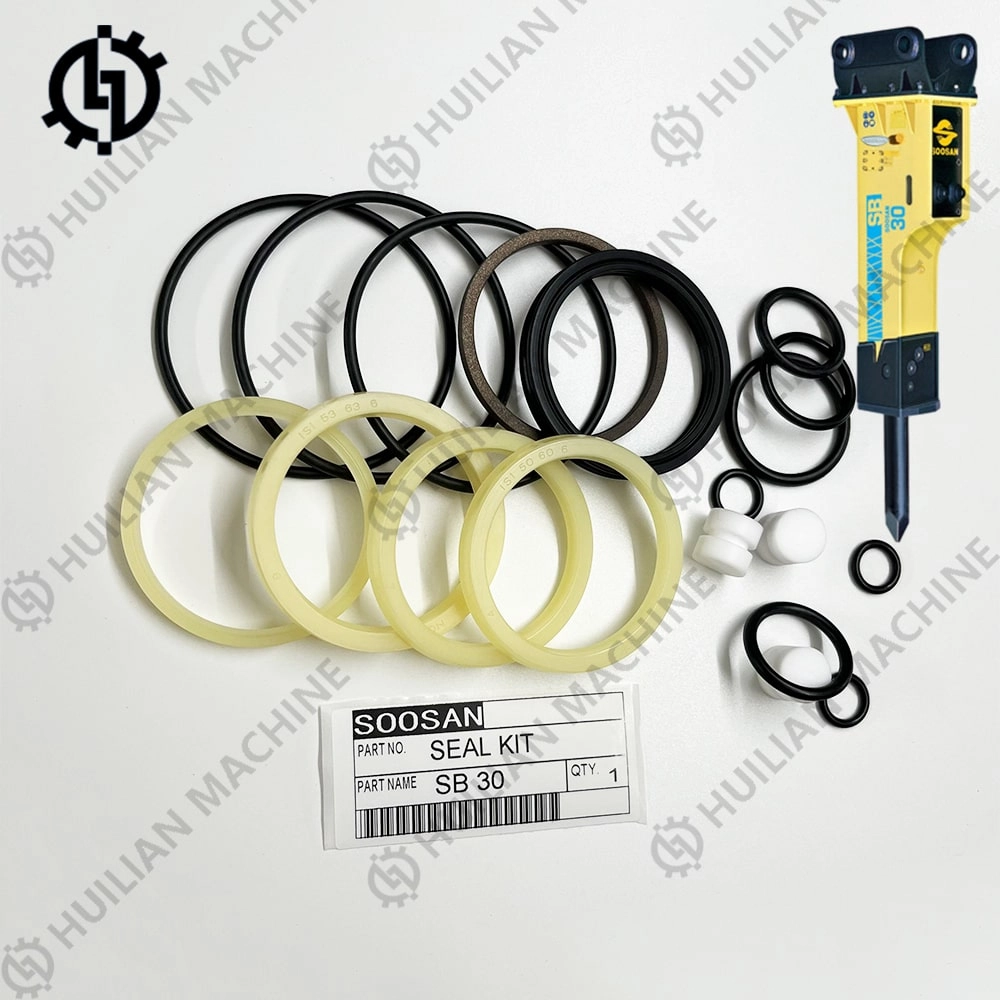
E71012 E7X001 SOOSAN SQ30 SB30Ⅱ SB30 Breaker Seal Kit SB30TS-P SB30Ⅱ TS-P SB30Ⅱ SSL Hydraulic Rock Hammer Parts Oil Repair Kit
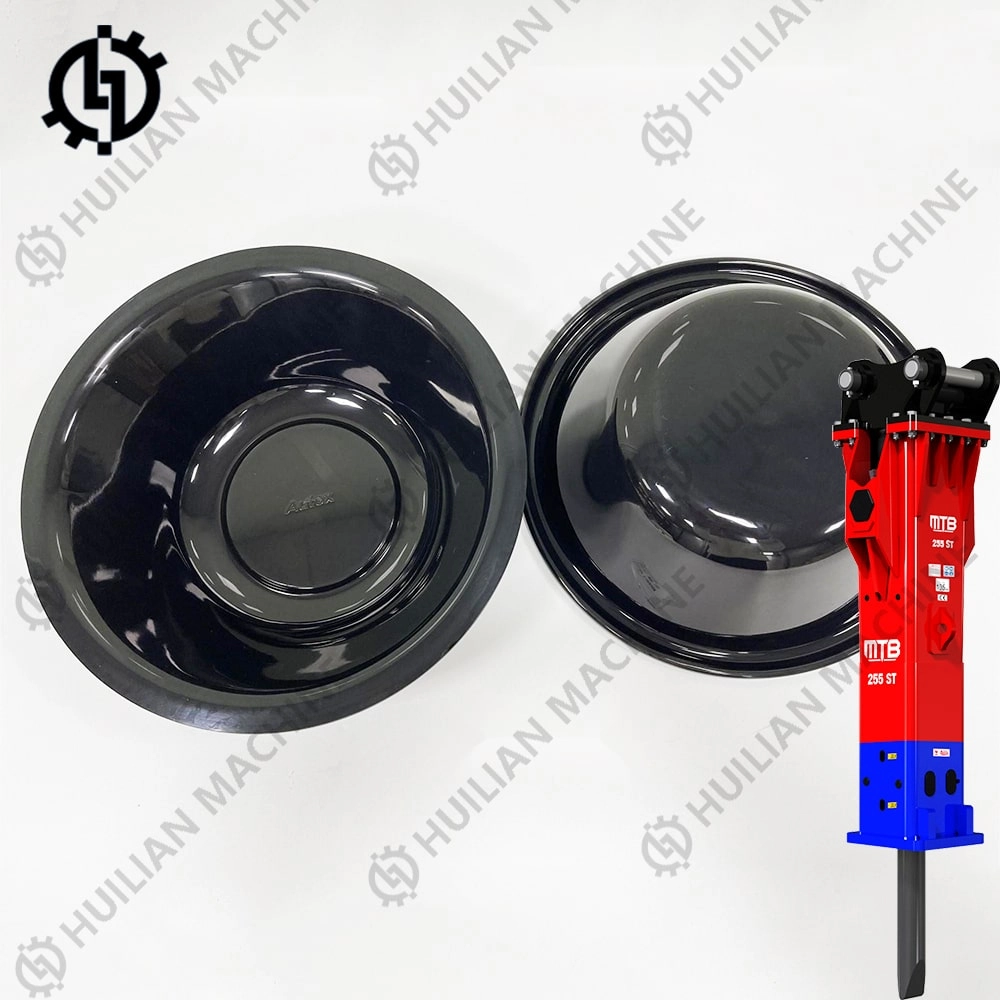
Inan Makina MTB Hydraulic Breaker Parts 45B0116A11 MTB255 MTB MT 255 Diaphragm MTB 255 IQ MTB-255 MTB 255 ST Membrane for Excavator Rock Hammer

Huilian EB-530| SOOSAN Rock Breaker SB30 for 2.5 - 4 Ton Small Excavator
Side type hydraulic breaker : Easy to control, convenient positioning, durable, high working efficiency, strong striking force, long service life, stable operating performance, convenient after-sales service.
Top type hydraulic breaker : Strong impact power; excellent environmental performance; exquisite manufacturing technology; easy maintenance,fast after-sales service
Box type hydraulic breaker :leading heat treatment technology, enhance heat resistance, wear resistance. Under the condition of keeping the oil pressure constant, the cylinder volumeis reduced and the fuel consumption is reduced.The self-developed core is adopted to make the piston cylinder body moredurable and the service life longer.Exposed decks are made of high-strength steel plates to reduce wear.The best efficiency matching with excavator and loader is realized

Huilian Hydraulic Rock Hammer Breaker SB43 for 6-9 Ton SOOSAN Excavator Breaker
Side type hydraulic breaker : Easy to control, convenient positioning, durable, high working efficiency, strong striking force, long service life, stable operating performance, convenient after-sales service.
Top type hydraulic breaker : Strong impact power; excellent environmental performance; exquisite manufacturing technology; easy maintenance,fast after-sales service
Box type hydraulic breaker :leading heat treatment technology, enhance heat resistance, wear resistance. Under the condition of keeping the oil pressure constant, the cylinder volumeis reduced and the fuel consumption is reduced.The self-developed core is adopted to make the piston cylinder body moredurable and the service life longer.Exposed decks are made of high-strength steel plates to reduce wear.The best efficiency matching with excavator and loader is realized
 About us
© 2025 HUILIAN MACHINE. All rights reserved