



Cost vs Performance: Finding the Best Rock Breaker Value
- Understanding rock breaker fundamentals
- What a hydraulic breaker actually does
- Primary performance metrics and why they matter
- Common failure modes and maintenance drivers
- Evaluating cost vs performance: metrics and methodology
- Beyond sticker price: calculating TCO
- How to quantify productivity gains
- Risk-adjusted cost: factoring reliability and service
- Practical comparisons: cost bands and application matching
- Why size and application must drive selection
- Class-level comparison table (typical ranges)
- Case example: when the cheaper breaker cost more
- Choosing the best rock breaker: checklist and sourcing strategy
- Selection checklist I use on-site
- Why parts and local support matter as much as the breaker
- Testing and validation before fleet adoption
- Huilian Machine: OEM capability, product range and competitive advantages
- Who Huilian Machine is
- Product range and technical strengths
- Global footprint and partnership opportunities
- Why Huilian gives buyers a competitive advantage
- Maintenance strategies that shift cost-per-ton in your favor
- Preventive maintenance routines I recommend
- Operator training to reduce misuse and wear
- When to rebuild vs replace
- FAQ — Common questions about choosing the best rock breaker
- 1. What is the single most important factor: cost or performance?
- 2. How do I match breaker size to my excavator?
- 3. Are aftermarket parts safe to use?
- 4. How often should chisels and seal kits be replaced?
- 5. How can I reduce downtime when a breaker fails?
- 6. What role does supplier selection play?
As someone who has specified, tested, and supported hydraulic breakers across continents, I know operators don't buy breakers on hype — they buy them for measurable value. In this article I summarize how to evaluate the best rock breaker by weighing upfront cost against performance, uptime, and total cost of ownership (TCO). I explain the technical metrics you should check, how to match breaker to carrier and application, and how smarter maintenance and parts sourcing can shift the balance in favor of lower lifecycle cost. I also include a practical comparison table, verifiable references, and a guide to sourcing reliable OEM parts.
Understanding rock breaker fundamentals
What a hydraulic breaker actually does
A hydraulic breaker (sometimes called a hydraulic hammer or rock breaker) transfers hydraulic energy from the host excavator into impact energy at the chisel to fracture rock, concrete and other hard materials. Key performance outputs are impact energy (measured in joules), blow frequency (blows per minute, bpm), and carrier compatibility (flow and pressure). For a technical overview see the hydraulic breaker entry on Wikipedia.
Primary performance metrics and why they matter
When I evaluate breakers, I focus on three measurable metrics: impact energy, blow frequency, and energy transfer efficiency (how much hydraulic power converts into rock fracturing rather than heat and vibration). These govern productivity: higher impact energy tends to break larger rocks faster, while higher blow frequency can increase fragmentation but may reduce per-blow effectiveness on very hard rock. Carrier match (hydraulic flow and pressure) is equally crucial — an undersized carrier will starve a breaker and reduce productive power.
Common failure modes and maintenance drivers
Most downtime I’ve seen is caused by worn chisels, damaged nitrogen accumulators in some designs, seal leakage, broken retainer/through bolts, and wear on the bushings (WearBush). Effective maintenance and quality spare parts (pistons, seal kits, liners, valves) drastically reduce operating cost. Industry quality standards and management systems such as ISO 9001 help manufacturers maintain consistent spare parts quality.
Evaluating cost vs performance: metrics and methodology
Beyond sticker price: calculating TCO
Purchasing a breaker is only the first cost. I always calculate Total Cost of Ownership (TCO): purchase price + installation + fuel/operating efficiency + consumables (chisels, seals) + scheduled and unscheduled maintenance + downtime cost. For the concept and methods behind TCO see Total cost of ownership.
How to quantify productivity gains
Track real on-site metrics: rock broken per hour (m3/hr), chisel life (hours before resharpen/replacement), average fuel consumption while breaking vs baseline, and downtime per month. Convert these into monetary terms using your labor, fuel, and machine-hour rates — this is how you compare a cheaper unit that breaks less per hour versus a pricier model with higher throughput.
Risk-adjusted cost: factoring reliability and service
A breaker that saves money on purchase but fails often will cost more in the long run. I apply a simple reliability factor: expected failure frequency per 1,000 operating hours and average repair time. Multiplying downtime hours by your on-site cost per hour gives a financial penalty that I add to TCO.
Practical comparisons: cost bands and application matching
Why size and application must drive selection
Matching breaker size to carrier weight and job type avoids overpaying. Light breakers excel at urban demolition and shallow trenching; medium units handle most road and foundation work; heavy breakers are for quarrying and primary rock demolition. An oversized breaker on a small carrier increases stress and maintenance; undersized reduces productivity and wears faster.
Class-level comparison table (typical ranges)
The table below provides a practical baseline I use when advising clients. Numbers are typical ranges derived from manufacturer datasheets and industry guidance and should be validated with the specific model you consider. Sources include manufacturer specification pages and the hydraulic breaker overview on Wikipedia.
| Class | Carrier Weight (t) | Flow (L/min) | Impact Energy (kJ) | BPM (approx) | Indicative Purchase Price (USD) | Typical Use |
|---|---|---|---|---|---|---|
| Light | 1–6 | 20–80 | 0.5–2 | 800–1500 | 1,500–6,000 | Urban demo, trenching, landscaping |
| Medium | 6–20 | 80–200 | 2–10 | 400–1000 | 6,000–20,000 | Roadwork, foundations, recycling |
| Heavy | 20–70+ | 200–600+ | 10–60+ | 200–700 | 20,000–100,000+ | Quarrying, primary rock breaking |
Note: prices and ranges vary by region and manufacturer. Always cross-check model-level specs with vendor documentation.
Case example: when the cheaper breaker cost more
I once advised a contractor who bought a low-cost medium-class breaker for a 14-ton carrier. The unit lacked a sealed top bushing design and used lower-grade chisels. Within 500 hours, chisel consumption and bushing wear caused 120 hours of downtime. After analyzing TCO (purchase price + parts + lost productive hours), the cheaper unit cost 35% more over 18 months compared to a slightly more expensive brand with superior sealing and chisel metallurgy.
Choosing the best rock breaker: checklist and sourcing strategy
Selection checklist I use on-site
- Confirm carrier hydraulic flow and pressure match breaker requirements (never exceed or starve).
- Match impact energy and bpm to the rock hardness and fragmentation target.
- Review chisel types and metallurgy options — some steels increase service life dramatically.
- Assess sealing system, bushing design, and availability of spare parts (seal kits, pistons, WearBush).
- Evaluate supplier service footprint and spare-part logistics to reduce downtime.
Why parts and local support matter as much as the breaker
Fast access to quality spare parts (chisels, seal kits, diaphragms, pistons, WearBush, retainer/through bolts, valves and liners) determines real-life uptime. I prioritize suppliers with proven spare availability and clear OEM traceability; this reduces lead times and ensures consistent rebuild quality.
Testing and validation before fleet adoption
I recommend short pilot deployments under real job conditions and measuring productivity metrics (m3/hr, fuel usage, chisel life). Use these results to calculate the payback period and adjust procurement decisions. Document performance and maintain a parts consumption log to support procurement negotiations.
Huilian Machine: OEM capability, product range and competitive advantages
Who Huilian Machine is
Founded in 2005, Huilian Machine is a professional OEM supplier of excavator parts. I have worked with multiple OEM and aftermarket suppliers and find Huilian's combination of vertical integration and global distribution especially useful for operators who want reliable parts without unpredictable lead times.
Product range and technical strengths
Huilian is one of the leading excavator breaker parts manufacturers in China. They offer a wide range of products including hydraulic breaker hammers, chisels, seals and seal kits, diaphragms, pistons, WearBush, rompin/retainer bars, through bolts, side bolts, valves and liners. The company emphasizes quality control and technical support — valuable when optimizing breaker lifecycle costs through better parts and rebuilds.
Global footprint and partnership opportunities
Huilian's team comprises experienced technicians, R&D experts, designers, quality control professionals, salespersons, and after-sales service teams. Their products are exported to over 90 countries and regions and are highly regarded for quality and variety. Guangzhou Huilian Machinery Co., Ltd. is committed to becoming a global leader in excavator parts supply and is actively seeking global distributor partners to promote sustainable industry development. Visit Huilian's site: https://www.huilianmachine.com/ or contact via email service@huilianmachine.com and phone +86 188 1917 0788.
Why Huilian gives buyers a competitive advantage
From my experience, Huilian's competitive points are: consistent OEM-quality parts availability, large product breadth across breaker consumables and components, and experienced technical support for parts selection and fitment. These factors shorten repair cycles and improve predictability — two crucial elements that push TCO down even if the initial purchase price is comparable to alternatives.
Maintenance strategies that shift cost-per-ton in your favor
Preventive maintenance routines I recommend
Adopt scheduled inspections focusing on chisel wear, bushing and retainer condition, hydraulic hoses, and seal leakage. Keep a small inventory of high-wear consumables (chisels, seal kits, through bolts) on-site. Using OEM-quality seal kits and pistons reduces the frequency of major rebuilds and leaks.
Operator training to reduce misuse and wear
Proper use — avoiding prying or chiseling at extreme angles, minimizing blank firing, and correct carrier idle practices — significantly extends component life. Short training sessions I deliver to crews typically reduce chisel and bushing consumption by 15–30% within three months.
When to rebuild vs replace
Track rebuild triggers: severe piston scoring, liner damage, or accumulation of unrepairable internal damage. Rebuild when predicted remaining life (based on measured wear and parts cost) yields a lower TCO than replacement. OEM rebuild kits from suppliers like Huilian often include pistons, seal kits, and critical wear parts priced lower than full assemblies.
FAQ — Common questions about choosing the best rock breaker
1. What is the single most important factor: cost or performance?
Neither in isolation — I focus on cost-per-ton or cost-per-cubic-meter. That metric combines price, productivity, and downtime. Use pilot tests to derive real productivity numbers for your site.
2. How do I match breaker size to my excavator?
Compare your excavator's hydraulic flow (L/min) and pressure (bar) to the breaker's specification. Ensure the carrier provides the recommended flow and pressure without exceeding the carrier's limits. Also check carrier weight compatibility; manufacturer charts and the breaker datasheet are essential.
3. Are aftermarket parts safe to use?
Quality aftermarket parts can be safe and cost-effective if they are from reputable OEM-equivalent suppliers and meet material and dimensional standards. Verify supplier certifications (e.g., ISO 9001) and request material test reports where possible.
4. How often should chisels and seal kits be replaced?
Chisel life depends on application; expect anywhere from 100 to 1,000 hours. Seal kits are typically changed during major rebuilds or when leakage is detected. Track hours and establish replacement thresholds based on your measured wear rates.
5. How can I reduce downtime when a breaker fails?
Keep a minimal set of critical spares on-site (high-wear chisels, a seal kit, through/side bolts). Partner with suppliers who offer fast shipping or local warehouses. Training your maintenance team for quick swap procedures also reduces repair time.
6. What role does supplier selection play?
A lot. A supplier with good quality control, responsive service, and a broad parts catalog (pistons, seals, WearBush, valves, liners) reduces lifecycle risk and TCO. Huilian Machine is an example of an OEM supplier with global distribution and a broad product range that many operators rely on.
If you want tailored advice for a specific project, carrier, or geology, I can calculate a site-specific TCO comparison and recommend model options. For parts and OEM-quality components, contact Huilian Machine: https://www.huilianmachine.com/, email: service@huilianmachine.com, phone: +86 188 1917 0788.
Huilian advantage summary: Founded in 2005, Huilian Machine is a professional OEM supplier of excavator parts. Their core products: excavator parts, Excavator Breaker Parts, Excavator Hydraulic Breaker, Excavator Seal Kit, Parker seal kit. Huilian's competitive edge lies in OEM-grade parts, comprehensive product breadth, experienced technical and R&D teams, strict quality control, and an export footprint to over 90 countries. These strengths translate into more predictable uptime and lower lifecycle costs for breaker fleets.
Ready to evaluate breakers for your fleet or source OEM parts to lower your TCO? Contact Huilian Machine or request a bespoke TCO study — I'll assist in interpreting the results and selecting the best rock breaker value for your operation.
Top Excavator Breaker Hammers for Heavy-Duty Demolition Projects
Wholesale Konan hydraulic breaker manufacturer and supplier in China
Hydraulic Breaker vs Pneumatic Tools: Best Choice for Excavators

Excavator Spare Parts: The Ultimate Guide (2026 Edition)
About
What is your shipping and delivery time?
We offer fast and reliable global shipping. Delivery times vary depending on location and order size, but we strive to process and ship orders as quickly as possible.
How can I ensure I’m selecting the right part for my equipment?
Our expert team can assist you in finding the right part based on your machine model, specifications, and requirements. Contact us for personalized support.
What types of excavator parts do you offer?
We provide a wide range of high-quality excavator parts, including hydraulic breakers, chisels, seal kits, diaphragms, pistons, wear bushes, retainer bars, through bolts, side bolts, valves, and liners.
Do you offer OEM and aftermarket parts?
Yes, we manufacture high-quality OEM parts and supply aftermarket parts from top brands such as NOK, Parker, SKF, and Hallite to ensure optimal performance.
Are your parts compatible with all excavator brands?
Yes, our parts are designed to be compatible with major brands like Komatsu, Caterpillar, Hitachi, Hyundai, Doosan, JCB, Kobelco, Sany, and many more.

Huilian HL68 Hammer Breaker for 4-7 Ton Excavator SOOSAN SB40 Hydraulic Rock Breaker
Side type hydraulic breaker : Easy to control, convenient positioning, durable, high working efficiency, strong striking force, long service life, stable operating performance, convenient after-sales service.
Top type hydraulic breaker : Strong impact power; excellent environmental performance; exquisite manufacturing technology; easy maintenance,fast after-sales service
Box type hydraulic breaker :leading heat treatment technology, enhance heat resistance, wear resistance. Under the condition of keeping the oil pressure constant, the cylinder volumeis reduced and the fuel consumption is reduced.The self-developed core is adopted to make the piston cylinder body moredurable and the service life longer.Exposed decks are made of high-strength steel plates to reduce wear.The best efficiency matching with excavator and loader is realized
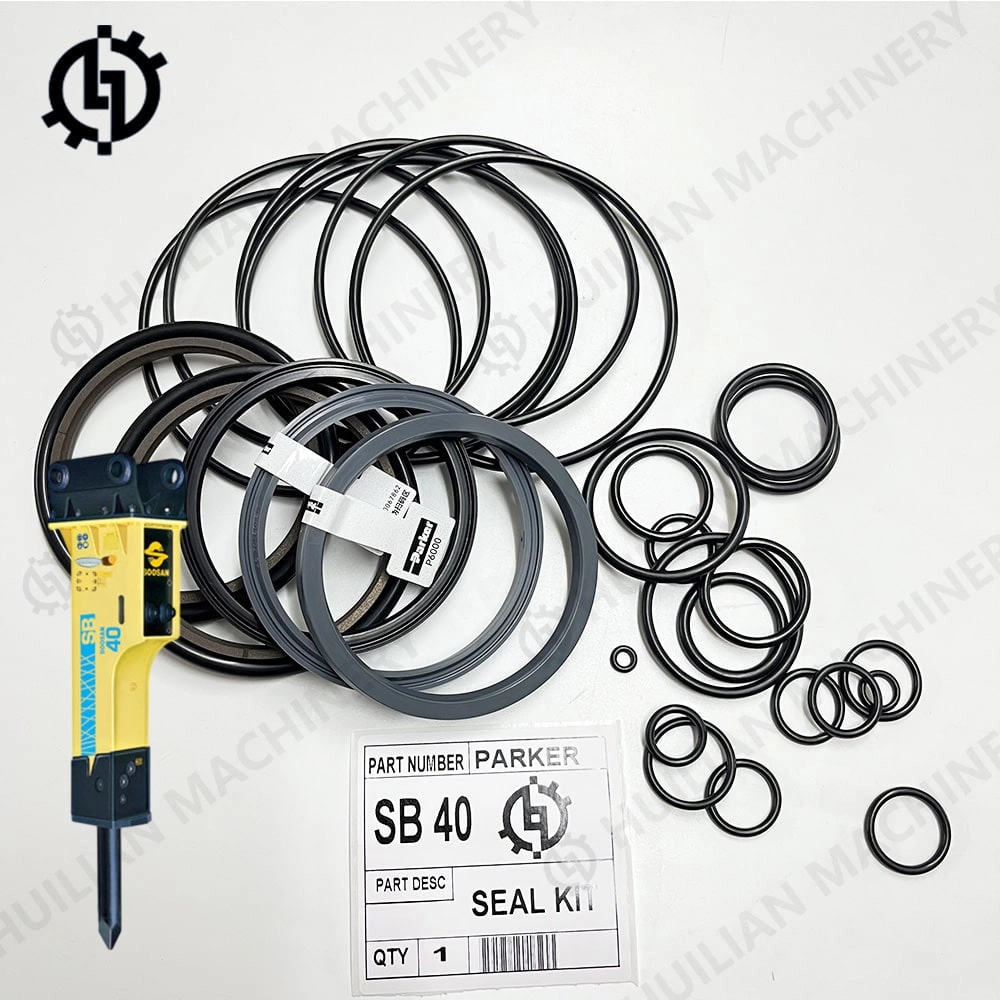
Parker Oil Seal Complete Repair SB40 Seal Kit COX001 CO1012 SB40Ⅱ SB40TSP SQ40 For Soosan Hydraulic Rock Breaker Hammer
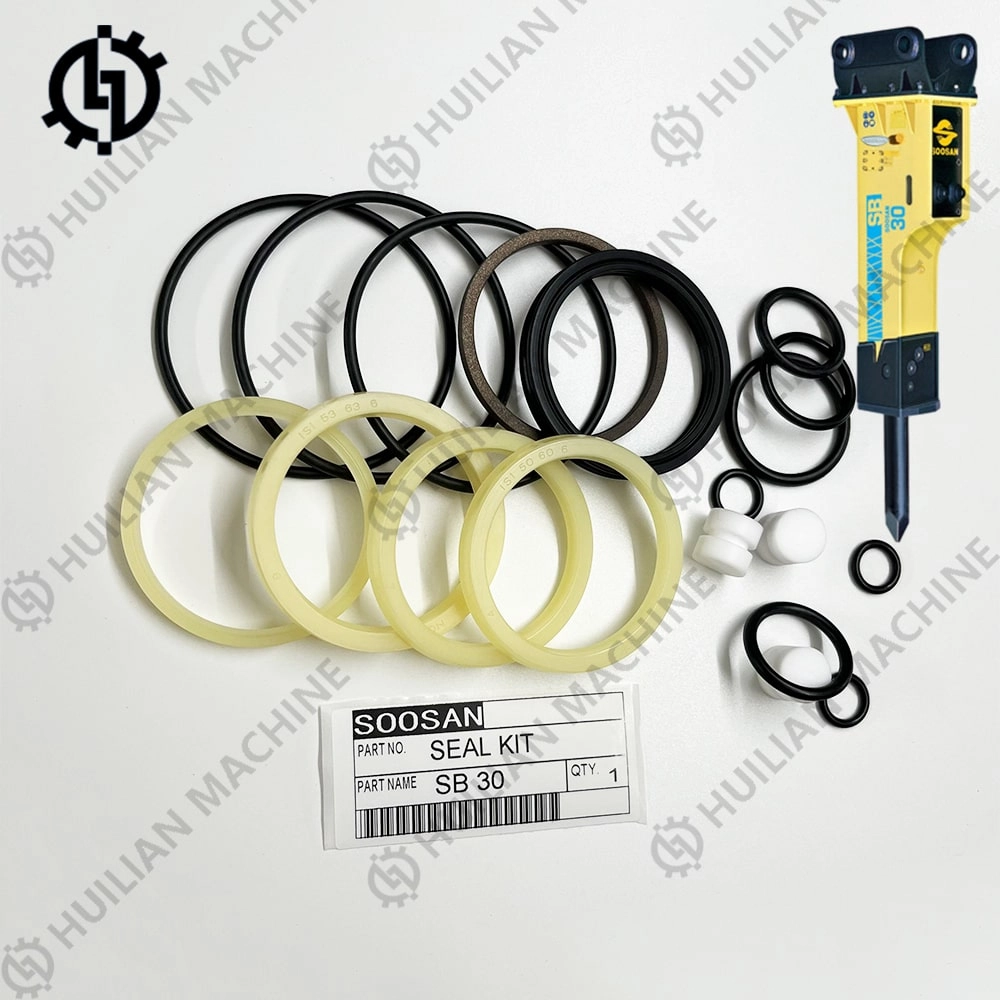
E71012 E7X001 SOOSAN SQ30 SB30Ⅱ SB30 Breaker Seal Kit SB30TS-P SB30Ⅱ TS-P SB30Ⅱ SSL Hydraulic Rock Hammer Parts Oil Repair Kit
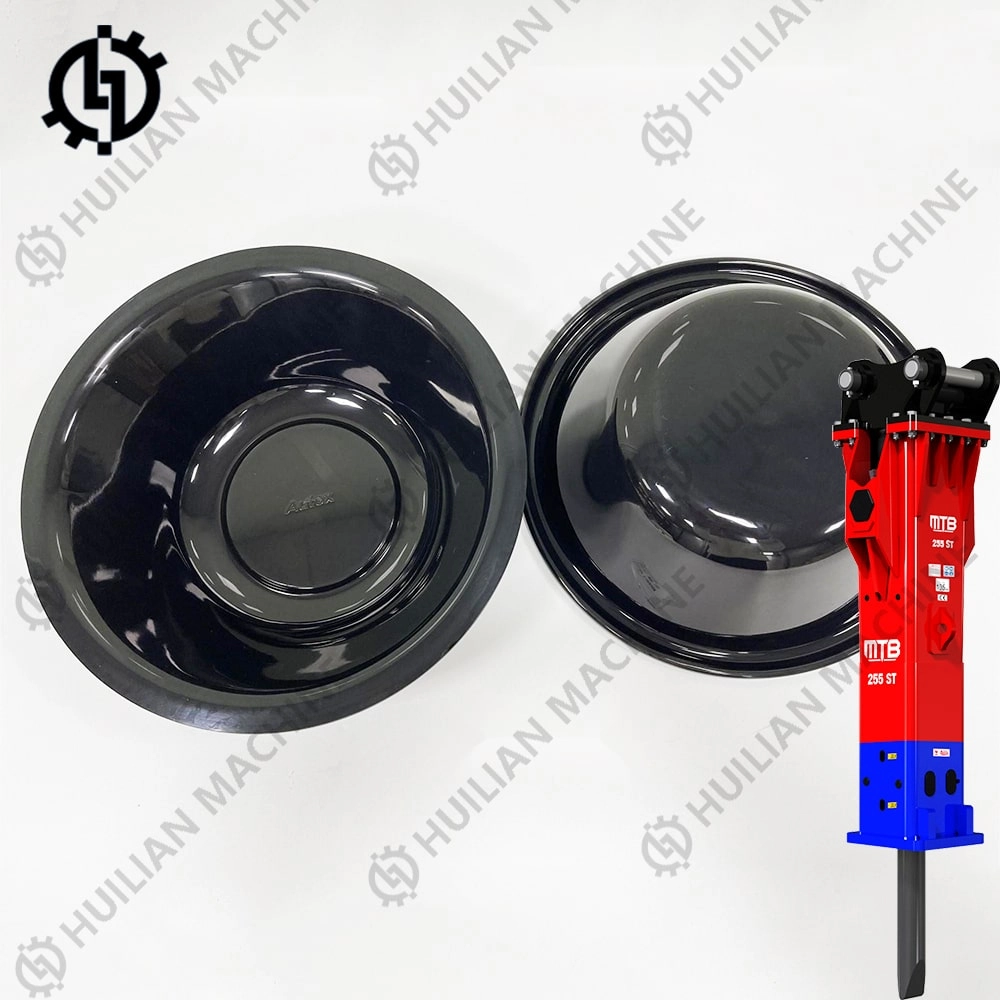
Inan Makina MTB Hydraulic Breaker Parts 45B0116A11 MTB255 MTB MT 255 Diaphragm MTB 255 IQ MTB-255 MTB 255 ST Membrane for Excavator Rock Hammer
 About us
© 2025 HUILIAN MACHINE. All rights reserved