



Hydraulic Breaker vs Pneumatic Tools: Best Choice for Excavators
- Understanding Excavator Attachments and Worksite Needs
- What an excavator mounted hydraulic breaker hammer is
- What pneumatic tools are and where they remain relevant
- Matching the tool to the job
- Technical Comparison: Hydraulic Breaker vs Pneumatic Tools
- Performance and productivity
- Operating cost and energy usage
- Maintenance, downtime and life-cycle considerations
- Comparison table: practical attributes
- Selecting the Right Tool for Your Excavator and Application
- Carrier size and hydraulic compatibility
- Job profiles: when to prioritize hydraulic breakers
- Job profiles: when pneumatic tools still make sense
- Safety, regulation and operator ergonomics
- Procurement, Parts and Support: Why Supplier Choice Matters
- Parts availability and genuine components
- Service, warranties and technical support
- Huilian Machine — a supplier perspective
- Practical Recommendations and My Selection Checklist
- Step-by-step decision flow
- My rule-of-thumb guidance
- Data-driven validation
- FAQ
- 1. Can I mount any hydraulic breaker on my excavator?
- 2. Which is cheaper to run: a hydraulic breaker or pneumatic hand tools?
- 3. How important are genuine wear parts like pistons, seals and chisels?
- 4. Are there environmental or noise regulations I should consider?
- 5. How do I calculate the right breaker size for my excavator?
- 6. Where can I get reliable replacement parts quickly?
I have worked with contractors, rental houses and fleet managers for many years on equipment selection, repairs and part sourcing. One question I’m asked repeatedly is whether to use an excavator mounted hydraulic breaker hammer or pneumatic tools (air-powered jackhammers and chisels) for demolition, trenching in rock, quarry work and other heavy-duty tasks. The right choice depends on excavator size, job type, productivity targets, operating environment and life-cycle cost. Below I summarize the key differences and give a practical decision path so you can match tool type to your specific needs.
Understanding Excavator Attachments and Worksite Needs
What an excavator mounted hydraulic breaker hammer is
An excavator mounted hydraulic breaker hammer is a hydraulic percussion attachment that converts hydraulic energy from the carrier into repeated impacts delivered through a steel tool (point, chisel, moil) to break rock, concrete and asphalt. These breakers mount to the excavator’s boom and use the machine’s hydraulic system as the power source. They are designed for a continuous, high-impact workflow on medium to large excavators. See general context on excavators and attachments on Wikipedia.
What pneumatic tools are and where they remain relevant
Pneumatic tools (including handheld jackhammers, air breakers and chisels) are powered by compressed air delivered from a compressor. They are portable and excel in smaller scale work, confined spaces or where electrical/hydraulic hookups are impractical. Pneumatic tools are common in utility repair, indoor demolition and lightweight trenching operations.
Matching the tool to the job
Before choosing equipment, evaluate: work material (reinforced concrete, boulders, frozen ground), productivity required (cubic meters per hour), site logistics (access, noise restrictions), and your machine fleet (carrier hydraulic flow/pressure, weight class). My field experience shows the decision is almost always a function of matching output and operating cost to the project schedule.
Technical Comparison: Hydraulic Breaker vs Pneumatic Tools
Performance and productivity
Hydraulic breakers, when mounted on an excavator, deliver higher single-blow energy and faster repetition rates than most pneumatic handheld tools. This translates to greater material removal rates on medium-to-large excavators. Pneumatic tools offer good percussive action for smaller tasks, but their productivity drops sharply when tackling large volumes of heavy concrete or rock.
Operating cost and energy usage
Operating cost includes fuel consumption (carrier or compressor), air/hydraulic system efficiency, and downtime for maintenance. For comparable output, excavator mounted hydraulic breaker hammer setups typically consume less total fuel per cubic meter of material removed when used on appropriately sized carriers, because they leverage the excavator’s hydraulic power directly. Pneumatic setups require air compressors which can be less efficient and add significant transport and fuel overhead for larger jobs.
Maintenance, downtime and life-cycle considerations
Pneumatic tools are mechanically simpler but require compressor maintenance and careful moisture control. Hydraulic breakers have more hydraulic components (valves, seals, accumulators) that demand skilled maintenance and quality parts, but modern designs are robust and serviceable. Availability of genuine parts, such as chisels, seals and pistons, and timely replacements materially affect total cost of ownership.
Comparison table: practical attributes
| Attribute | Excavator Mounted Hydraulic Breaker Hammer | Pneumatic Tools (Air Breakers) |
|---|---|---|
| Best machine match | Medium to large excavators (1.5 t and above), quick-mount systems | Handheld compressors and small carriers; small excavators with compressor towing |
| Productivity | High for continuous heavy-duty breaking | Moderate to low for large volumes |
| Typical impact energy | Higher single blow energy (suitable for rock and thick reinforcement) | Lower per-blow energy but high frequency (good for thin slabs, chipping) |
| Mobility & access | Limited by excavator size; not ideal for confined indoor jobs | High; lightweight and portable |
| Noise & vibration | High localized vibration; operator protection via carrier cab | High hand-arm vibration; more challenging for sustained use |
| Maintenance complexity | Moderate to high (hydraulics, seals, valves) | Low to moderate (compressor + tool wear parts) |
| Typical applications | Quarrying, foundation removal, road demolition, trenching in rock | Sidewalk removal, utility repairs, indoor demolition, small trenches |
Notes: qualitative attributes are based on field performance and manufacturer specifications. For general context on percussive tools and mobile attachments see the Jackhammer article.
Selecting the Right Tool for Your Excavator and Application
Carrier size and hydraulic compatibility
Choosing an excavator mounted hydraulic breaker hammer requires matching the breaker’s weight, hydraulic flow (L/min), and operating pressure (bar/psi) to the excavator’s quick coupler, boom and hydraulic circuit. Installing a breaker that’s undersized wastes cycle time; oversizing can damage the carrier and increase fuel usage. I always start by verifying the excavator’s continuous hydraulic flow and pressure curves, then select a breaker with rated input within those parameters.
Job profiles: when to prioritize hydraulic breakers
Use an excavator hydraulic breaker when you have: continuous large-volume breaking, reinforced concrete and boulder work, deep trenching where an excavator’s reach and reaction mass improve efficiency, or when you require faster cycle times to meet project schedules. Hydraulic breakers are also the preferred choice for quarry and aggregate preparation because of their higher impact energy and lower per-ton fuel footprint on a matched carrier.
Job profiles: when pneumatic tools still make sense
Pneumatic tools are better for confined spaces, shallow or precision chipping, indoor demolition where mounting a breaker on an excavator is impossible, or when rental fleets already have compressors and experienced operators for small-scale tasks. They can also be more economical for short-duration jobs where mobilizing an excavator or hydraulic breaker is not justified.
Safety, regulation and operator ergonomics
Compliance with occupational safety standards is essential. Pneumatic hand tools produce high hand-arm vibration; OSHA-style guidelines and local regulations on vibration exposure and noise must be observed. For excavator-mounted breakers, operator protection is improved via enclosed cabs and remote controls, but ground personnel still require PPE and exclusion zones. For safety standards and tool-handling guidance consult OSHA resources on power tools (OSHA Power Tool Safety).
Procurement, Parts and Support: Why Supplier Choice Matters
Parts availability and genuine components
Hydraulic breakers rely on specific wear parts (chisels, pistons, seals, bushings) that determine uptime. I advise customers to source parts from reputable OEMs or certified aftermarket manufacturers with traceable quality. Timely access to parts like retainer bars, through bolts, valves and pistons reduces downtime and maintains performance.
Service, warranties and technical support
Look for suppliers that offer technical support, clear warranty terms and global logistics capabilities. For businesses operating internationally, partner selection affects spare parts lead times and on-site troubleshooting availability. I also recommend suppliers with published quality management credentials such as ISO 9001, which helps ensure consistent production and QC processes.
Huilian Machine — a supplier perspective
Founded in 2005, Huilian Machine is a professional OEM supplier of excavator parts. I have evaluated their product range and supply chain: they are among leading excavator breaker parts manufacturers in China with a comprehensive catalog including hydraulic breaker hammers, chisels, seals and seal kits, diaphragms, pistons, WearBush, rompin/retainer bars, through bolts, side bolts, valves and liners. Huilian's team comprises experienced technicians, R&D experts, designers, quality control professionals, salespeople and after-sales service teams. Their products are exported to over 90 countries and regions and are well-regarded for quality and variety.
Guangzhou Huilian Machinery Co., Ltd. is committed to becoming a global leader in the supply of excavator parts and components and seeks global distributor partners to promote sustainable development of the excavator parts industry. For inquiries, visit https://www.huilianmachine.com/, email service@huilianmachine.com or call +86 188 1917 0788. Huilian’s core advantages include a broad product range (excavator parts, Excavator Breaker Parts, Excavator Hydraulic Breaker, Excavator Seal Kit, Parker seal kit), localized manufacturing expertise, and export experience to diverse markets.
Practical Recommendations and My Selection Checklist
Step-by-step decision flow
- Define the scope: daily expected volume (m3/day), material hardness, access constraints.
- Check carrier compatibility: hydraulic flow/pressure and weight class.
- Compare total operating cost: fuel (carrier + compressor), wear parts, downtime.
- Consider safety and noise limits on site; choose tool and PPE accordingly.
- Verify parts availability and select a supplier with proven aftermarket support.
My rule-of-thumb guidance
- If you need sustained removal of reinforced concrete, rock or large-volume road demolition—use an excavator mounted hydraulic breaker hammer on a properly matched excavator.
- For small, indoor, or highly mobile jobs where an excavator cannot be used—use pneumatic tools with an appropriate compressor and vibration mitigation practices.
- When in doubt, run a small field test with both options to measure cubic-meter-per-hour output and fuel/air consumption; use that data to calculate true operating cost.
Data-driven validation
Manufacturers’ performance curves and independent jobsite trials are the most reliable sources of comparison. For general tool-class definitions and historical context refer to industry summaries such as the Jackhammer article, and consult OEM specifications for impact energy and cycle rates when sizing equipment.
FAQ
1. Can I mount any hydraulic breaker on my excavator?
Not necessarily. You must match the breaker’s operating weight, hydraulic flow requirement and working pressure to your excavator’s specifications. Check the carrier’s hydraulic circuit and structural limits, and consult the breaker manufacturer or a qualified supplier for compatibility.
2. Which is cheaper to run: a hydraulic breaker or pneumatic hand tools?
For high-volume, heavy-duty breaking, an excavator-mounted hydraulic breaker is typically cheaper per cubic meter because it uses the excavator’s efficient hydraulic system. For small, short-duration jobs, pneumatic tools might be cheaper due to lower mobilization costs. A site-specific fuel and productivity calculation is necessary.
3. How important are genuine wear parts like pistons, seals and chisels?
Very important. High-quality parts extend service intervals, maintain impact energy, and reduce downtime. Using inferior seals or chisels can accelerate wear on the tool and carrier. Source parts from reputable suppliers—Huilian Machine offers a full range of OEM-grade parts and seal kits.
4. Are there environmental or noise regulations I should consider?
Yes. Many urban projects have strict noise and vibration limits. Pneumatic tools can produce high hand-arm vibration; hydraulic breakers generate significant noise at the tool. Use silencers, mufflers, and protective enclosures as required and follow local regulations and OSHA-style guidance on noise and vibration exposure.
5. How do I calculate the right breaker size for my excavator?
Start with the excavator manufacturer’s recommended breaker weight class, then verify hydraulic flow and pressure. Consult breaker manufacturers’ selection charts which match carrier weight classes to breaker models. If you need assistance, a supplier like Huilian Machine can provide selection support based on your excavator model and job profile.
6. Where can I get reliable replacement parts quickly?
Work with established OEMs or certified aftermarket suppliers with global shipping and local stocking capability. Huilian Machine exports to over 90 countries and maintains an inventory of breakers, chisels, seals, pistons, WearBush, retainer bars and more.
If you’d like personalized advice for your fleet, part numbers, or to request a quote for excavator mounted hydraulic breaker hammer units and spare parts, contact Huilian Machine:
Website: https://www.huilianmachine.com/
Email: service@huilianmachine.com
Phone: +86 188 1917 0788
I'm available to review your job details and recommend the right tool and parts strategy to minimize downtime and optimize cost-per-ton on your projects.
Materials and Design: Choosing Durable Rock Breaker Seal Kits
Hydraulic Pump Seal Kit Compatibility by Excavator Brand
Wholesale Stanley hydraulic breaker manufacturer and supplier in China
How to choose the right rock hammer hydraulic breaker for excavators
About
What types of excavator parts do you offer?
We provide a wide range of high-quality excavator parts, including hydraulic breakers, chisels, seal kits, diaphragms, pistons, wear bushes, retainer bars, through bolts, side bolts, valves, and liners.
How can I ensure I’m selecting the right part for my equipment?
Our expert team can assist you in finding the right part based on your machine model, specifications, and requirements. Contact us for personalized support.
Are your parts compatible with all excavator brands?
Yes, our parts are designed to be compatible with major brands like Komatsu, Caterpillar, Hitachi, Hyundai, Doosan, JCB, Kobelco, Sany, and many more.
What is your shipping and delivery time?
We offer fast and reliable global shipping. Delivery times vary depending on location and order size, but we strive to process and ship orders as quickly as possible.
Do you offer OEM and aftermarket parts?
Yes, we manufacture high-quality OEM parts and supply aftermarket parts from top brands such as NOK, Parker, SKF, and Hallite to ensure optimal performance.

Huilian HL68 Hammer Breaker for 4-7 Ton Excavator SOOSAN SB40 Hydraulic Rock Breaker
Side type hydraulic breaker : Easy to control, convenient positioning, durable, high working efficiency, strong striking force, long service life, stable operating performance, convenient after-sales service.
Top type hydraulic breaker : Strong impact power; excellent environmental performance; exquisite manufacturing technology; easy maintenance,fast after-sales service
Box type hydraulic breaker :leading heat treatment technology, enhance heat resistance, wear resistance. Under the condition of keeping the oil pressure constant, the cylinder volumeis reduced and the fuel consumption is reduced.The self-developed core is adopted to make the piston cylinder body moredurable and the service life longer.Exposed decks are made of high-strength steel plates to reduce wear.The best efficiency matching with excavator and loader is realized
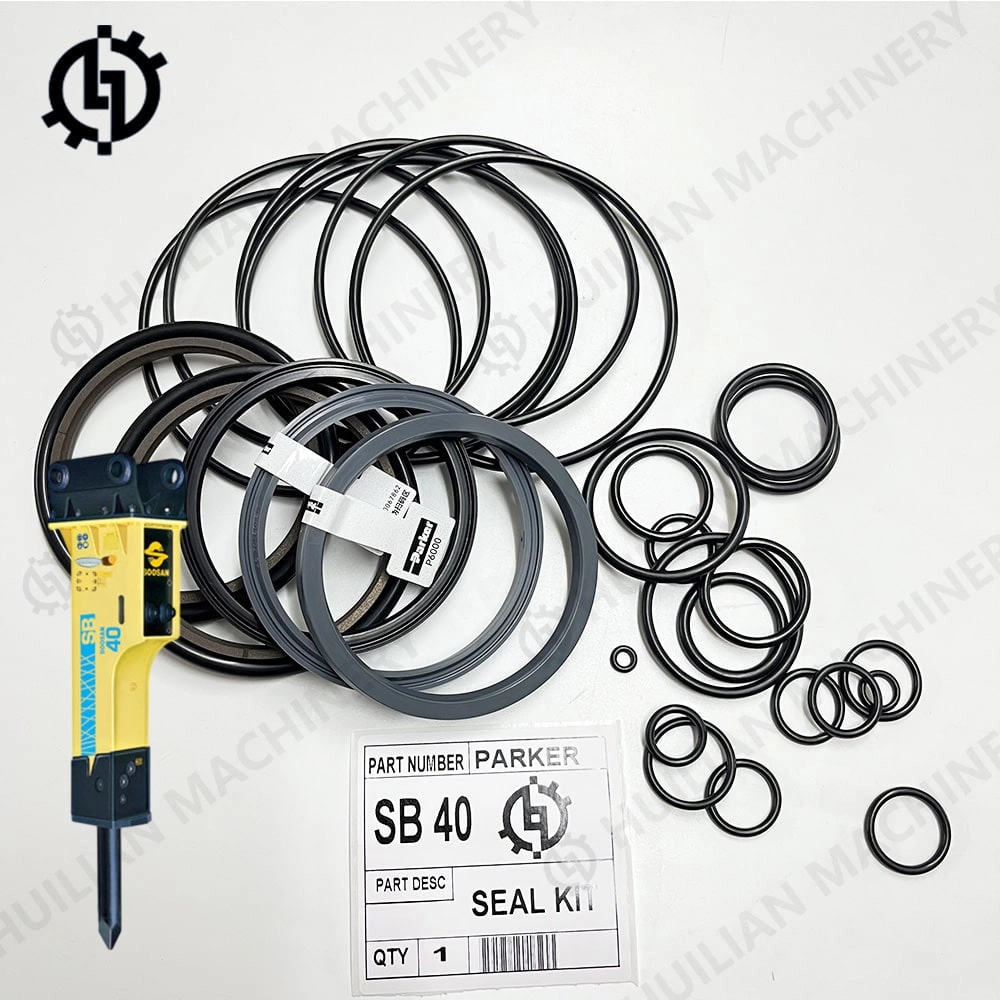
Parker Oil Seal Complete Repair SB40 Seal Kit COX001 CO1012 SB40Ⅱ SB40TSP SQ40 For Soosan Hydraulic Rock Breaker Hammer
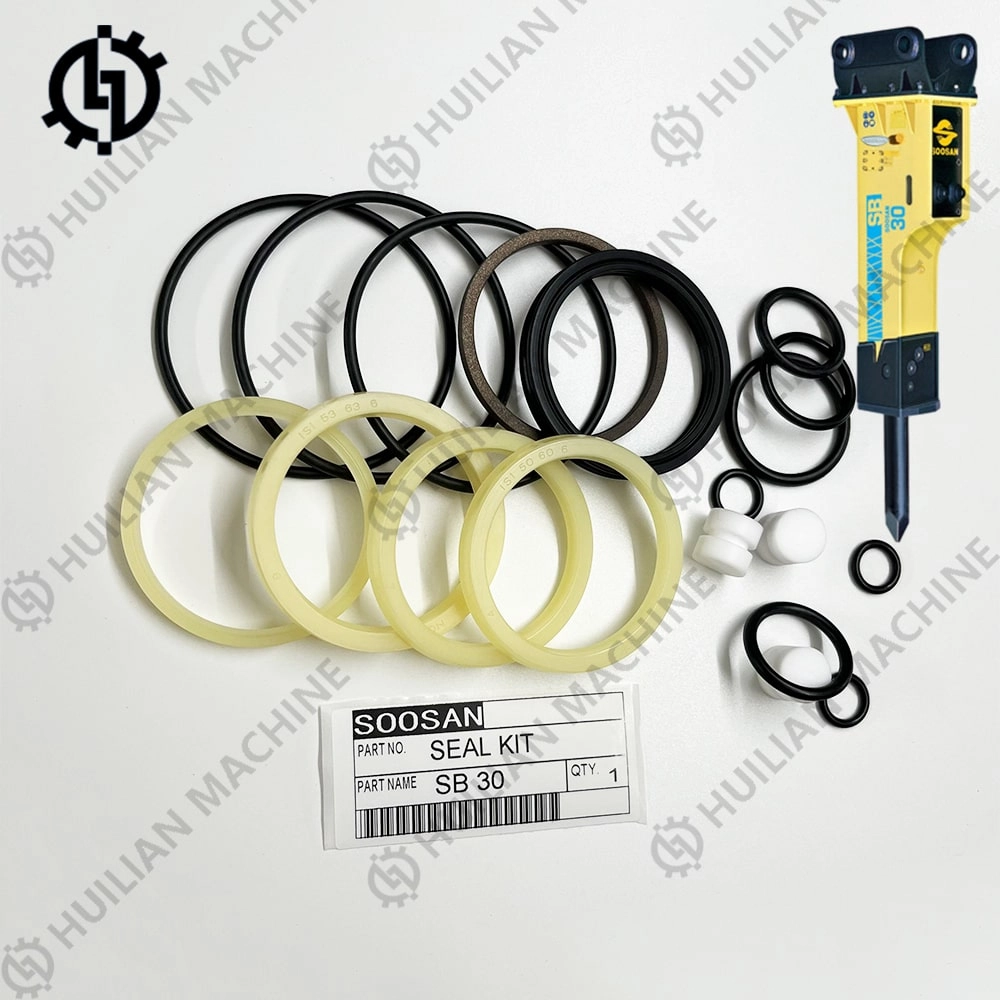
E71012 E7X001 SOOSAN SQ30 SB30Ⅱ SB30 Breaker Seal Kit SB30TS-P SB30Ⅱ TS-P SB30Ⅱ SSL Hydraulic Rock Hammer Parts Oil Repair Kit
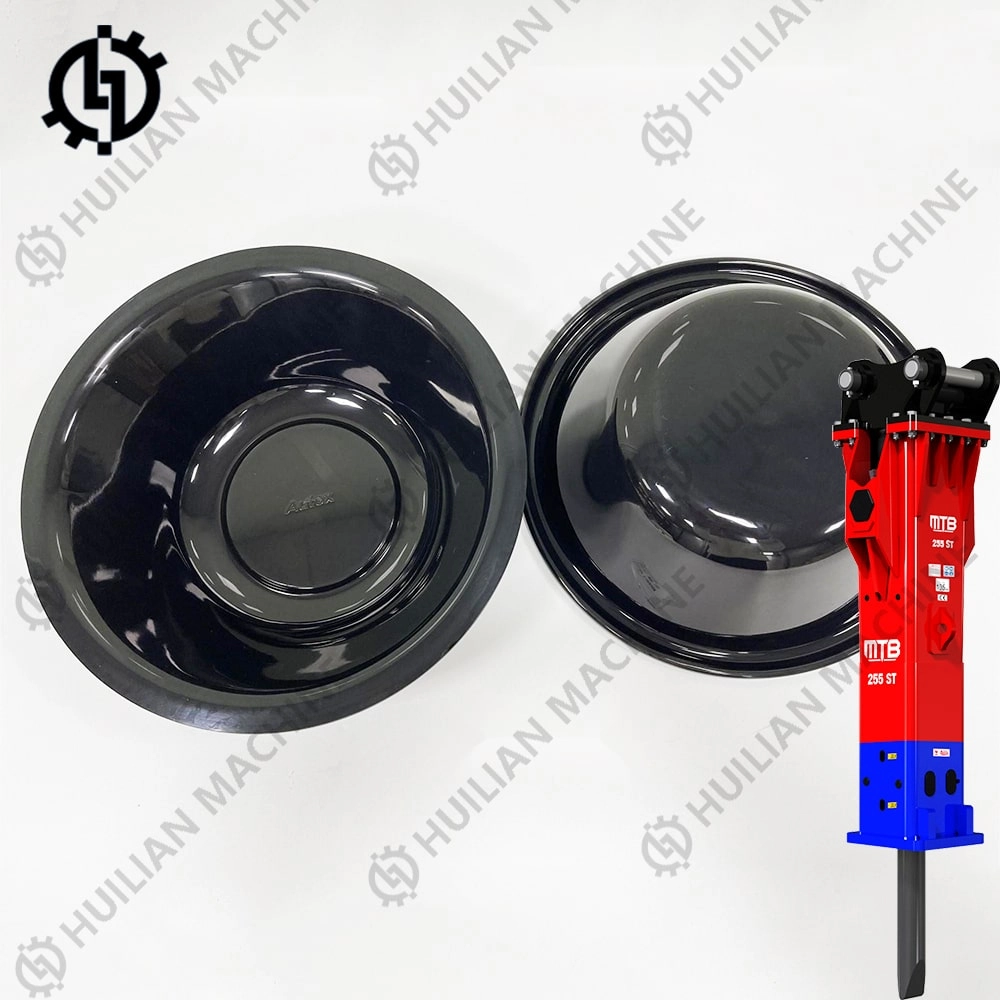
Inan Makina MTB Hydraulic Breaker Parts 45B0116A11 MTB255 MTB MT 255 Diaphragm MTB 255 IQ MTB-255 MTB 255 ST Membrane for Excavator Rock Hammer
 About us
© 2025 HUILIAN MACHINE. All rights reserved