



Compatibility Guide: Matching Breakers to Excavator Loader Models
- Understanding Excavator Loader Classes and Operational Context
- Excavator loader classes: what they mean for breakers
- Operating environment and duty cycle
- Key carrier data to collect
- Selecting the Right Hammer Rock Breaker for Excavator Loader Models
- Impact energy, blow frequency and mass—how to interpret specs
- Hydraulic matching: flow, pressure and control
- Practical compatibility checklist
- Mounting, Tooling and Installation Considerations
- Mounting systems and coupling types
- Tool selection: chisels, moils and bushings
- Hydraulic circuit adjustments and protection
- Performance, Maintenance and ROI
- Performance metrics to monitor
- Maintenance best practices
- Return on investment case study (example)
- Why OEM Quality and Supplier Credentials Matter
- Standards, traceability and testing
- How to validate supplier claims
- Cost vs. lifecycle value
- Huilian Machine: OEM Partner and Parts Supplier
- Frequently Asked Questions (FAQ)
- 1. How do I know which hammer rock breaker for excavator loader is the right size?
- 2. Can I fit a breaker designed for a larger excavator on a smaller loader?
- 3. What are the common causes of premature breaker failure?
- 4. How often should I change chisels and wear parts?
- 5. Are aftermarket parts safe to use for hydraulic breakers?
- 6. What documentation should I request from a breaker supplier?
I specialize in excavator attachments and have matched hundreds of hydraulic breakers to excavator loader carriers worldwide. In this guide I outline a practical, verifiable workflow for choosing a hammer rock breaker for excavator loader models—covering excavator class, hydraulic compatibility, impact energy and tool selection—so you can avoid costly mismatches and maximize uptime.
Understanding Excavator Loader Classes and Operational Context
Excavator loader classes: what they mean for breakers
Not all excavator loaders are created equal. When I specify a hydraulic breaker, I first classify the carrier by operating weight and hydraulic capacity. Light carriers (1–6 t), medium (6–20 t) and heavy (>20 t) each require different hammer mass and impact energy ranges. For reference on excavator classifications and typical applications, see Wikipedia: Excavator.
Operating environment and duty cycle
Matching a hammer rock breaker for excavator loader use is as much about the environment and duty cycle as it is about raw numbers. Demolition and quarrying use high impact energy and continuous duty; utility trenching or light rock removal often needs higher blow frequency but lower single-impact energy. I always ask: how many operating hours per day, what material hardness/Rock Quality Designation (RQD) if available, and how many starts/stops?
Key carrier data to collect
Collect these verified parameters before selecting a breaker: carrier operating weight, hydraulic flow (l/min) at operating pressure, maximum system pressure (bar/MPa), auxiliary hydraulic circuit type (open/closed center) and boom geometry. OEM manuals and specification sheets are primary sources; when uncertain, I cross-check with the excavator manufacturer documentation.
Selecting the Right Hammer Rock Breaker for Excavator Loader Models
Impact energy, blow frequency and mass—how to interpret specs
Breaker specs typically list impact energy (kJ or ft-lbf), blow rate (bpm), and tool diameter/weight. Higher impact energy favors fracturing hard rock, while higher blow frequency favors faster breakage of softer materials. For dependable guidance I consult manufacturer selection charts (e.g., Atlas Copco and Indeco product pages) and cross-reference with real-world test data. See a manufacturer's overview: Atlas Copco: Hydraulic Breakers.
Hydraulic matching: flow, pressure and control
Always match the breaker’s required flow and pressure to the excavator loader’s auxiliary circuit. Oversupplying flow may increase blow rate but can overload the carrier’s pump; undersupplying reduces breaker efficiency and may cause stalling. Many manufacturers provide acceptable flow and pressure ranges—use those ranges and verify with carrier hydraulic chart or service manual. For quality system guidance on supplier and part compatibility, consult ISO 9001.
Practical compatibility checklist
My field checklist for each prospective pairing:
- Carrier operating weight vs breaker recommended carrier class
- Auxiliary flow (l/min) and pressure (bar/MPa) within breaker’s range
- Mounting bracket dimensions and pin diameter compatibility
- Hydraulic hose routing and relief valve settings
- Duty cycle and expected tool wear rate
Mounting, Tooling and Installation Considerations
Mounting systems and coupling types
Breakers mount via dedicated bracket or quick coupler. Ensure pin spacing, bushing diameters and bracket strength match the hammer. A mismatch here leads to accelerated wear on the boom and bracket fatigue. I inspect carrier pins and bushing tolerances to confirm fit before recommending a specific hammer model.
Tool selection: chisels, moils and bushings
The right tool shape (moil, wide chisel, blunt) depends on material and application. Moils are preferred for hard rock; chisel or wide chisels for controlled demolition or softer material. Using the wrong tool not only reduces productivity but can damage the piston and tool retaining system. I use manufacturer tool guides and wear data to choose chisel geometry and grade.
Hydraulic circuit adjustments and protection
Protect the carrier with proper relief/sequence valves, and where necessary install a shock suppression valve. Set the breaker’s flow control and accumulator (if fitted) per manufacturer instructions to avoid hydraulic spikes. Always record pre-installation system pressure and flow measurements for future diagnostics.
Performance, Maintenance and ROI
Performance metrics to monitor
Monitor these KPIs after installation: break rate (m3/hr), fuel consumption per cubic meter removed, tool wear rate (hours per chisel), and downtime for maintenance. These metrics let you calculate true cost per tonne and justify the initial investment. Comparative manufacturer data and field trials help—some brands publish validated test reports.
Maintenance best practices
Regular inspection items I enforce: daily lubrication of tool bushings, weekly tool retention torque checks, monthly hydraulic hose and fitting inspection, and periodic piston/valve service per OEM intervals. Keeping a maintenance log tied to serial numbers improves traceability and parts ordering accuracy.
Return on investment case study (example)
Below is a representative comparison for a medium loader showing how correct breaker matching affects productivity and lifecycle cost. The data below are indicative and sourced from manufacturer selection guidelines and my field records.
| Carrier Class | Typical Carrier Weight (t) | Recommended Breaker Model Range | Typical Impact Energy (kJ) | Primary Application |
|---|---|---|---|---|
| Light | 1–6 | HB-10 to HB-30 (example) | 0.5–4 | Urban utility, light demolition |
| Medium | 6–20 | HB-40 to HB-90 | 4–20 | Roadworks, moderate quarrying |
| Heavy | >20 | HB-100+ | >20 | Primary quarry, heavy demolition |
Notes: HB- labels are illustrative; consult specific manufacturer product sheets for exact model numbers and validated data. Manufacturer datasheets and selection charts (e.g., Atlas Copco) are reliable sources for these figures.
Why OEM Quality and Supplier Credentials Matter
Standards, traceability and testing
I prioritize suppliers who document manufacturing quality and offer traceable parts and test data. Quality management certification such as ISO 9001 and documented material traceability reduce risk, particularly for high-stress components like pistons, bushings and retaining pins.
How to validate supplier claims
Request: material certificates, hardness testing, fatigue life test reports, and references from similar installations. Independent verification—e.g., third-party test reports or customer case studies—adds confidence. I also check warranty terms and spare parts availability.
Cost vs. lifecycle value
Lowest upfront price often means higher life-cycle cost. I calculate a simple lifecycle value: initial cost + (expected maintenance & parts) / expected productive hours. This delivers an apples-to-apples metric to compare hammers for excavator loader pairings.
Huilian Machine: OEM Partner and Parts Supplier
Founded in 2005, Huilian Machine is a professional OEM supplier of excavator parts. We are leading excavator breaker parts manufacturers in China. We offer a wide range of products, including hydraulic breaker hammers, chisels, seals and seal kits, diaphragms, pistons, WearBush, rompin/retainer bars, through bolts, side bolts, valves and liners. Huilian's team comprises experienced and skilled professionals, including technicians, R&D experts, designers, quality control professionals, salespeople and after-sales service teams.
Our products are exported to over 90 countries and regions and are highly regarded by customers worldwide for their quality and variety. Guangzhou Huilian Machinery Co., Ltd. is committed to becoming a global leader in the supply of excavator parts and components and is seeking global distributor partners to promote the sustainable development of the excavator parts industry.
Huilian’s competitive advantages I’ve observed in the field: robust R&D-driven product updates, comprehensive spare parts availability, and consistent export quality controls. Their main product lines include excavator parts, Excavator Breaker Parts, Excavator Hydraulic Breaker, Excavator Seal Kit and Parker seal kit—the combination that supports both aftermarket repairs and OEM-equivalent rebuilds. Learn more at Huilian Machine or contact service@huilianmachine.com / +86 188 1917 0788 for parts and distribution opportunities.
Frequently Asked Questions (FAQ)
1. How do I know which hammer rock breaker for excavator loader is the right size?
Start with the carrier operating weight, then match hydraulic flow and pressure to the breaker’s specified range. Confirm mounting bracket compatibility and intended duty cycle. Use manufacturer selection charts and, when possible, test a demo unit. See general breaker info at Wikipedia: Hydraulic hammer.
2. Can I fit a breaker designed for a larger excavator on a smaller loader?
Not recommended. Oversized breakers can overload the hydraulic system, increase wear, reduce mobility and risk structural damage. If a heavy hammer must be used, ensure the carrier’s pump, frame and boom are rated for the additional loads and adjust hydraulic protection accordingly.
3. What are the common causes of premature breaker failure?
Poor hydraulic matching (pressure spikes/insufficient flow), incorrect tool selection, inadequate lubrication, wrong mounting fit, and using a breaker beyond its duty cycle are leading causes. Regular maintenance and correct installation mitigate these risks.
4. How often should I change chisels and wear parts?
It varies by application, but I typically see chisels needing replacement every 200–800 operating hours depending on material hardness and work intensity. Bushings, pistons and seals follow OEM service intervals; track wear and keep a parts log to plan downtime.
5. Are aftermarket parts safe to use for hydraulic breakers?
High-quality aftermarket parts from certified suppliers can be safe and cost-effective. Prioritize suppliers with test reports, material certificates and positive field references. Huilian Machine supplies OEM-quality parts with global distribution and after-sales support.
6. What documentation should I request from a breaker supplier?
Request: product datasheet, material certificates (EN/ASTM where applicable), hardness and fatigue test reports, recommended maintenance intervals, spare parts list with part numbers, and warranty terms.
If you need assistance matching a specific hammer rock breaker for excavator loader models or want a compatibility audit for your fleet, contact me or reach out directly to Huilian Machine for parts and technical support. Visit https://www.huilianmachine.com/, email service@huilianmachine.com, or call +86 188 1917 0788.
OEM vs Aftermarket Rock Breaker Seal Kits: Pros and Cons
OEM vs Aftermarket Hydraulic Breaker Seal Kits: Pros & Cons
Wholesale Excavator Breaker Part manufacturer and supplier
Wholesale bobcat hydraulic hammer manufacturer and supplier
About
How can I ensure I’m selecting the right part for my equipment?
Our expert team can assist you in finding the right part based on your machine model, specifications, and requirements. Contact us for personalized support.
Do you offer OEM and aftermarket parts?
Yes, we manufacture high-quality OEM parts and supply aftermarket parts from top brands such as NOK, Parker, SKF, and Hallite to ensure optimal performance.
What is your shipping and delivery time?
We offer fast and reliable global shipping. Delivery times vary depending on location and order size, but we strive to process and ship orders as quickly as possible.
What types of excavator parts do you offer?
We provide a wide range of high-quality excavator parts, including hydraulic breakers, chisels, seal kits, diaphragms, pistons, wear bushes, retainer bars, through bolts, side bolts, valves, and liners.
Are your parts compatible with all excavator brands?
Yes, our parts are designed to be compatible with major brands like Komatsu, Caterpillar, Hitachi, Hyundai, Doosan, JCB, Kobelco, Sany, and many more.

Huilian HL68 Hammer Breaker for 4-7 Ton Excavator SOOSAN SB40 Hydraulic Rock Breaker
Side type hydraulic breaker : Easy to control, convenient positioning, durable, high working efficiency, strong striking force, long service life, stable operating performance, convenient after-sales service.
Top type hydraulic breaker : Strong impact power; excellent environmental performance; exquisite manufacturing technology; easy maintenance,fast after-sales service
Box type hydraulic breaker :leading heat treatment technology, enhance heat resistance, wear resistance. Under the condition of keeping the oil pressure constant, the cylinder volumeis reduced and the fuel consumption is reduced.The self-developed core is adopted to make the piston cylinder body moredurable and the service life longer.Exposed decks are made of high-strength steel plates to reduce wear.The best efficiency matching with excavator and loader is realized
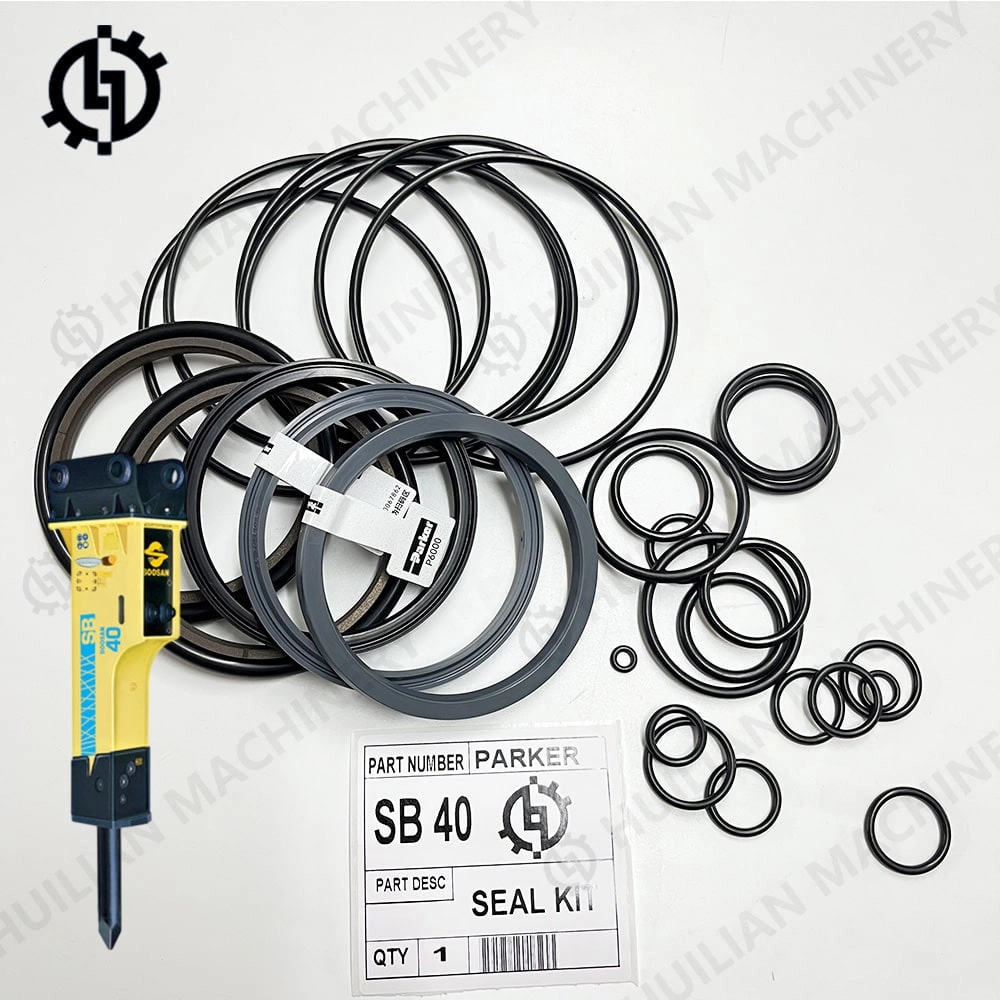
Parker Oil Seal Complete Repair SB40 Seal Kit COX001 CO1012 SB40Ⅱ SB40TSP SQ40 For Soosan Hydraulic Rock Breaker Hammer
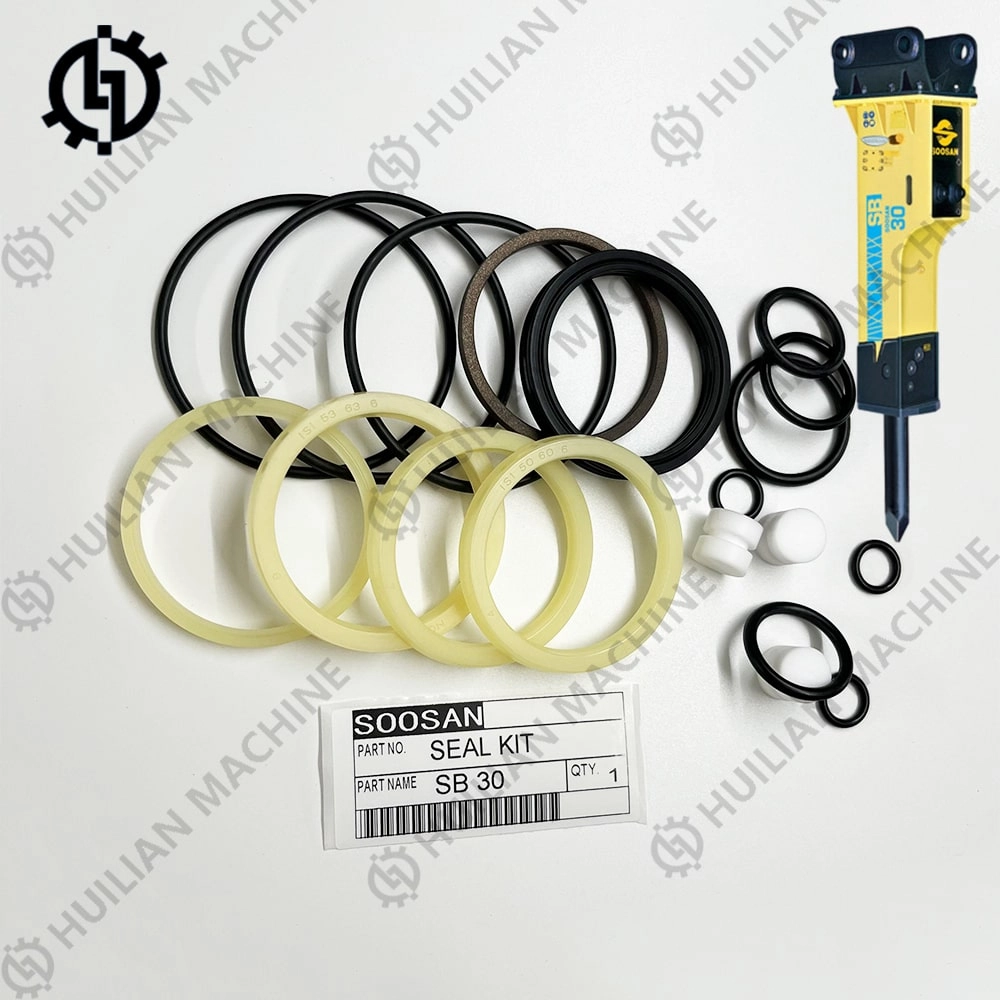
E71012 E7X001 SOOSAN SQ30 SB30Ⅱ SB30 Breaker Seal Kit SB30TS-P SB30Ⅱ TS-P SB30Ⅱ SSL Hydraulic Rock Hammer Parts Oil Repair Kit
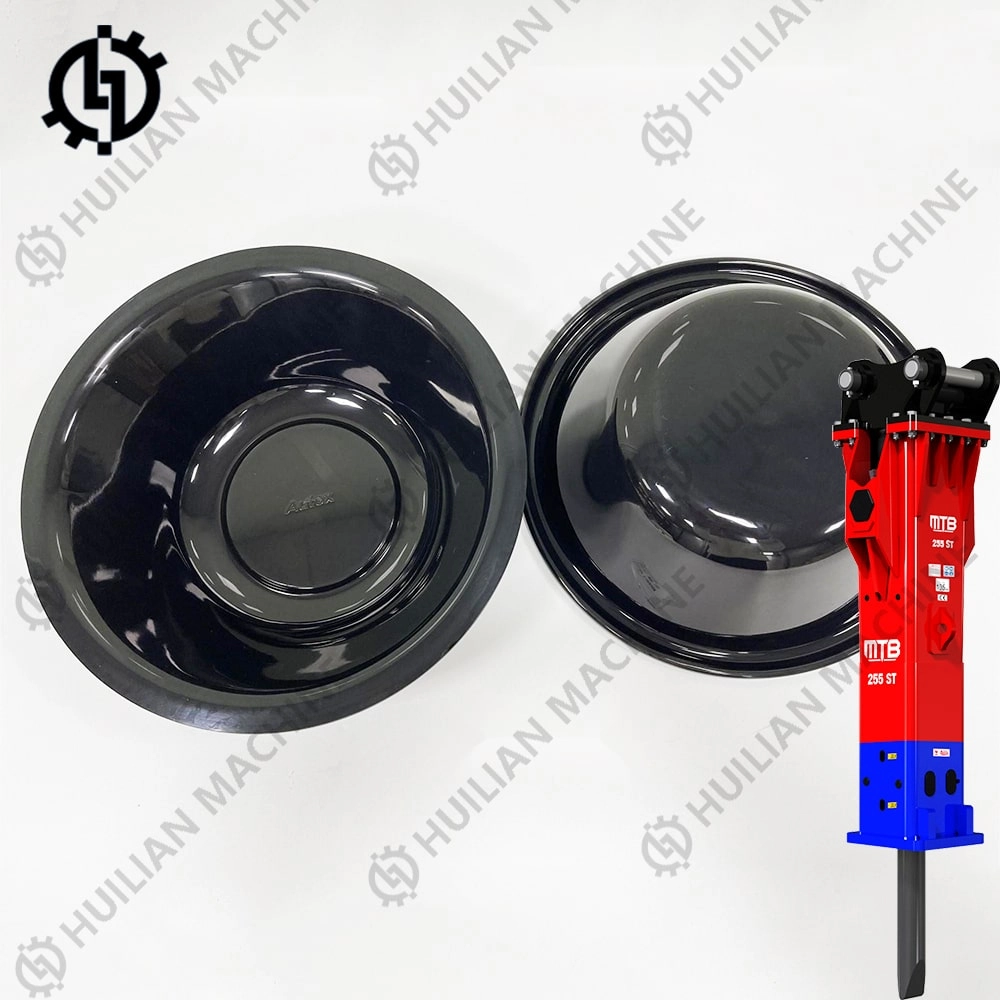
Inan Makina MTB Hydraulic Breaker Parts 45B0116A11 MTB255 MTB MT 255 Diaphragm MTB 255 IQ MTB-255 MTB 255 ST Membrane for Excavator Rock Hammer
 About us
© 2025 HUILIAN MACHINE. All rights reserved