



How to Choose the Right Seal Kit for Your Breaker Model
- Understanding Your Breaker and Its Operating Conditions
- Identify the exact breaker model and serial details
- Assess duty cycle and site conditions
- Hydraulics: oil type, pressure, and contamination level
- Seal Kit Components and Materials
- What a full hydraulic breaker seal kit typically contains
- Material choices and their trade-offs
- Comparison: NBR vs FKM (Viton) vs Polyurethane
- Compatibility and Sizing: Matching Seal Kits to Breaker Models
- Cross-referencing OEM vs aftermarket kits
- How to measure seals and internal diameters
- Recognizing counterfeit or low-quality kits
- Maintenance, Installation, and Sourcing Seal Kits
- Proper installation steps I recommend
- Predictive maintenance and service intervals
- Where to source quality hydraulic breaker seal kits
- Buying checklist — what I verify before ordering a kit
- FAQ (Common questions I encounter on the job)
Choosing the correct hydraulic breaker seal kit is one of the most effective decisions you can make to reduce downtime, lower repair costs, and extend hammer life. I write from years of hands-on service and OEM-sourcing experience for excavator breaker parts and will walk you through the practical steps—how to read model numbers, assess operating conditions, match materials, verify compatibility (including Parker and OEM seal kits), and make a confident purchase decision for your hydraulic hammer.
Understanding Your Breaker and Its Operating Conditions
Identify the exact breaker model and serial details
Before buying any seal kit, I always check the breaker nameplate, serial number, and parts manual. Manufacturers often revise internal components across production runs, so model name alone is insufficient. If you have the operator manual or parts list, confirm the part numbers for piston seals, rod seals, and valve seals. When part numbers are unavailable, capture photos and measure internal diameters and piston widths to cross-reference with supplier catalogs.
Assess duty cycle and site conditions
Not all breakers operate in the same environment. I classify operating profiles into light (occasional small demolition), medium (regular utility work, trenching), and heavy (quarry, hard rock demolition). Dust, abrasive media, water exposure, high ambient temperature, and contaminated hydraulic oil accelerate seal wear. For example, breakers used in quarrying will require more wear-resistant materials and more frequent service intervals than those used in urban demolition.
Hydraulics: oil type, pressure, and contamination level
Seal compatibility with hydraulic oil and the system's maximum pressure are critical. Common hydraulic oils differ in additive chemistry and base stock; some seals are more compatible with phosphate ester fluids or biodegradables. I recommend checking oil type and system pressure limits against seal material data sheets—incorrect combinations reduce seal lifetime and can cause immediate failures.
Seal Kit Components and Materials
What a full hydraulic breaker seal kit typically contains
A standard hydraulic breaker seal kit usually includes piston seals, rod seals (main seals), wipers/scrapers, O-rings, backup rings, valve seals, and sometimes guide packings. Kits vary by OEM and aftermarket suppliers; some include wear bands and instructional sheets. When evaluating kits, ensure each component maps to your breaker’s internal geometry.
Material choices and their trade-offs
Material selection determines resilience to abrasion, extrusion, temperature and chemical attack. The most common materials are Nitrile (NBR), Fluoroelastomer (FKM/Viton), and Polyurethane (PU). I favor polyurethane for high wear and impact applications, FKM for high-temperature and chemically aggressive environments, and NBR for general-purpose, cost-sensitive applications.
Comparison: NBR vs FKM (Viton) vs Polyurethane
| Property | NBR (Nitrile) | FKM (Viton) | Polyurethane (PU) |
|---|---|---|---|
| Temperature range | -40 to +120°C | -20 to +200°C | -30 to +100°C |
| Abrasion resistance | Moderate | Moderate | High |
| Hydraulic oil compatibility | Excellent (mineral oils) | Excellent (wide chemical resistance) | Good (sensitive to some chemicals) |
| Typical application | General service, economy kits | High temp / aggressive fluids | High-wear, impact-prone applications |
Sources: material properties summarized from manufacturer and reference pages: Nitrile (NBR), Viton (FKM), Polyurethane.
Compatibility and Sizing: Matching Seal Kits to Breaker Models
Cross-referencing OEM vs aftermarket kits
When I evaluate a kit labeled for multiple breaker brands (e.g., “fits model X, Y, Z”), I verify dimensions and tolerances rather than trust the compatibility claim alone. OEM kits offer guaranteed fit but often cost more. Reputable aftermarket manufacturers can provide equal performance if they supply dimension charts, material certifications, and test reports. For recognized standards and quality, look for suppliers referencing ISO 9001 quality management (ISO 9001).
How to measure seals and internal diameters
For accurate replacement I use calipers to measure internal diameters, gland depths, and piston widths. If you cannot disassemble the tool, get the hammer model and serial to request exploded diagrams from the manufacturer. Avoid ordering based on nominal bore sizes alone—minor differences in gland geometry cause leakage or rapid extrusion.
Recognizing counterfeit or low-quality kits
Cheap kits often use inferior polymers, lack backup rings, or omit critical wipers. Signs of poor quality include brittle elastomers, flash on molded parts, and missing documentation. I test a new supplier by ordering a single kit and conducting a bench test (pressure check, leak test) before committing to large quantities.
Maintenance, Installation, and Sourcing Seal Kits
Proper installation steps I recommend
Installation quality determines seal life almost as much as material selection. My consistent checklist includes: clean all mating surfaces to remove burrs and contamination, inspect bearings and bushings for wear, lightly lubricate seals with compatible hydraulic oil before assembly, use the correct sequence and torque values for bolts, and perform a controlled pressure test on completion. Avoid sharp tools that can nick seals during installation.
Predictive maintenance and service intervals
I establish service intervals based on operating hours and duty severity. A typical schedule: inspect seals every 250 operating hours for heavy duty, 500 hours for medium duty, and 1,000+ hours for light duty. Record oil contamination levels and replace seals proactively when water or particulate ingestion is detected. Using condition monitoring reduces sudden failures and aligns with reliability-centered maintenance practices.
Where to source quality hydraulic breaker seal kits
Source from vendors that provide full part traceability, material data sheets, and clear fitment guides. Established OEM suppliers and proven aftermarket manufacturers are both valid options. For example, major brands and technical references (including manufacturers' parts catalogs) are valuable; general technical background on hydraulic breakers is available at Hydraulic breaker — Wikipedia.
Founded in 2005, Huilian Machine is a professional OEM supplier of excavator parts. We are leading excavator breaker parts manufacturers from China. We offer a wide range of products, including hydraulic breaker hammers, chisels, seals and seal kits, diaphragms, pistons, WearBush, rompin/retainer bars, through bolts, side bolts, valves and liners. Huilian's team comprises experienced and skilled professionals, including technicians, R&D experts, designers, quality control professionals, salespeople and after-sales service teams. Our products are exported to over 90 countries and regions and are highly regarded by customers worldwide for their quality and variety. Guangzhou Huilian Machinery Co., Ltd. is committed to becoming a global leader in the supply of excavator parts and components and is seeking global distributor partners to promote the sustainable development of the excavator parts industry. Visit Huilian Machine or contact service@huilianmachine.com, +86 188 1917 0788 for product queries. Huilian’s main product focus: excavator parts, Excavator Breaker Parts, Excavator Hydraulic Breaker, Excavator Seal Kit, Parker seal kit. Huilian’s competitive advantage includes decades of specialized manufacturing experience, integrated R&D and QC systems, broad SKU variety, and global export reach.
Buying checklist — what I verify before ordering a kit
- Exact breaker model and serial match or verified dimensional cross-reference
- Material data sheet for all elastomer and polyurethane components
- Inclusion of backup rings and wipers in the kit
- Traceability and manufacturing quality assurances (e.g., ISO certification)
- Return/quality guarantee and technical support availability
FAQ (Common questions I encounter on the job)
Q1: How do I know if I need a full seal kit or just a single seal?
A1: If you find leakage around the piston or rod, inspect other components. A single seal failure often indicates adjacent parts (wipers, backup rings, or bushings) are worn. I usually recommend replacing the full seal kit if the tool has run more than 2,000 hours or if multiple seals show wear—this prevents repeat disassembly.
Q2: Can I mix seal materials (e.g., NBR and PU) in one kit?
A2: Yes, many kits use multiple materials intentionally: polyurethane for wear rings and piston seals, NBR for O-rings, and FKM for high-temp valve seals. Ensure compatibility in operating temperature and oil type. Mixing is acceptable if each component is chosen for its function.
Q3: Are aftermarket seals as good as OEM brands like Parker?
A3: Reputable aftermarket manufacturers can equal OEM quality if they provide material certifications, accurate dimensions, and good QC. Brands like Parker have strong reputations; if cost is a concern, verify third-party test results and pilot-test parts before wide adoption. For technical reference, Parker’s O-ring and seal literature is useful—see Parker resources such as the Parker Seal and O-Ring resources.
Q4: How should I store seal kits to preserve shelf life?
A4: Store seals in a cool, dark, dry place away from ozone sources and direct sunlight. Keep them in original packaging and avoid contact with solvents. Proper storage prevents premature hardening or deformation.
Q5: What tests should I perform after installing a new seal kit?
A5: After installation, I perform a leak test at operating pressure, check for abnormal temperatures, and run the breaker under a no-load cycling test to observe any leakage or unusual noises. Monitor performance closely for the first 8–24 hours of operation.
If you have a specific breaker model and need help matching seals or sourcing a verified seal kit, contact Huilian Machine at service@huilianmachine.com or call +86 188 1917 0788. Visit https://www.huilianmachine.com/ to view product lines and download catalogs.
My final recommendation: invest time in model verification, choose the right material for your operating conditions, and always validate a new supplier via a trial kit and bench testing. Proper selection and installation of a hydraulic breaker seal kit will significantly reduce downtime and operating cost over the lifetime of your hammer.
Top 5 Excavator Hydraulic Breaker Company List and Products Compared
Top 10 Rock Breaker Seal Kits for Heavy-Duty Excavators

Inventory & Maintenance Strategies for Cr42 Rock Breaker Parts
Cost Comparison: OEM vs Aftermarket Rock Breaker Parts
About
How can I ensure I’m selecting the right part for my equipment?
Our expert team can assist you in finding the right part based on your machine model, specifications, and requirements. Contact us for personalized support.
What is your shipping and delivery time?
We offer fast and reliable global shipping. Delivery times vary depending on location and order size, but we strive to process and ship orders as quickly as possible.
Are your parts compatible with all excavator brands?
Yes, our parts are designed to be compatible with major brands like Komatsu, Caterpillar, Hitachi, Hyundai, Doosan, JCB, Kobelco, Sany, and many more.
Do you offer OEM and aftermarket parts?
Yes, we manufacture high-quality OEM parts and supply aftermarket parts from top brands such as NOK, Parker, SKF, and Hallite to ensure optimal performance.
What types of excavator parts do you offer?
We provide a wide range of high-quality excavator parts, including hydraulic breakers, chisels, seal kits, diaphragms, pistons, wear bushes, retainer bars, through bolts, side bolts, valves, and liners.

FURUKAWA Fxj475 Seal Kit 902409-920052 902409-920050 902409-920060 902409-920070 902409-920080
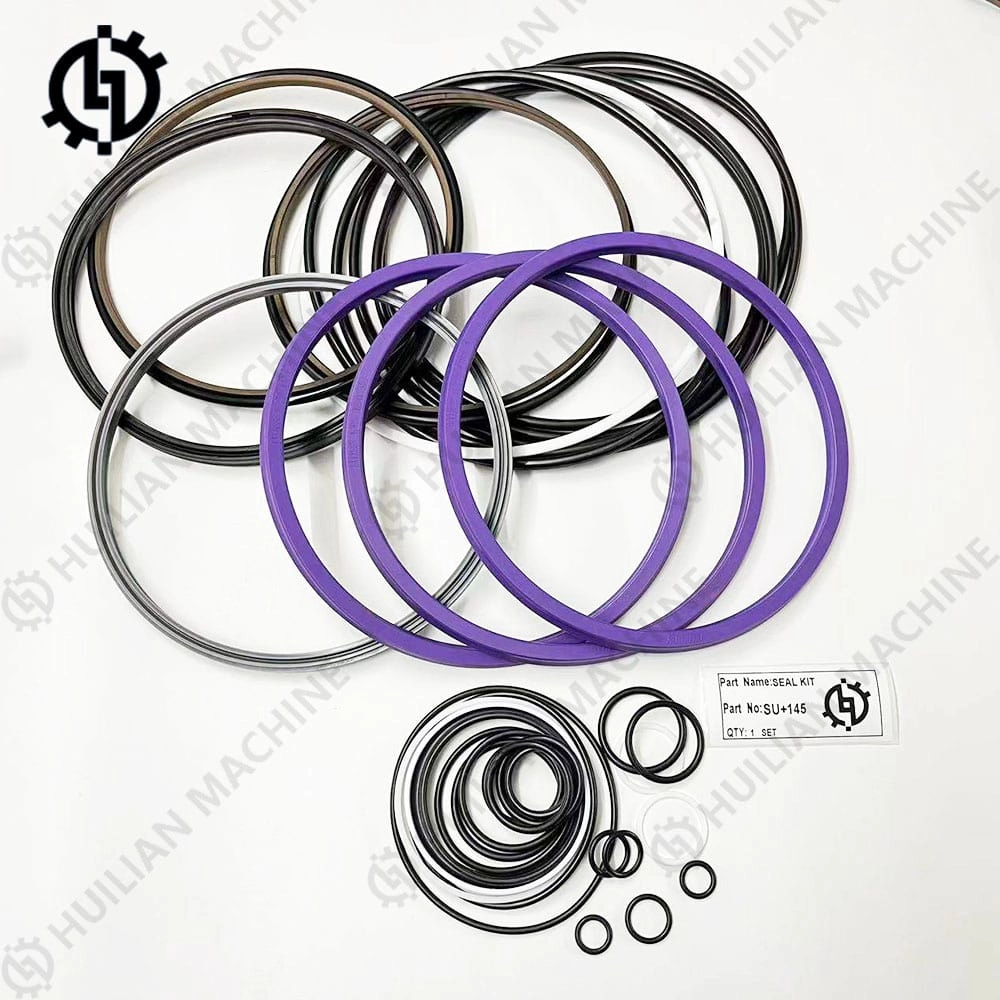
SOOSAN L21016 SU+145 TR-F SU+145TRF SU145 SU+145 Seal Kit C61443 SU+125 Oil Repair Kit For Excavator Hydraulic Rock Breaker Hammer Spare Parts
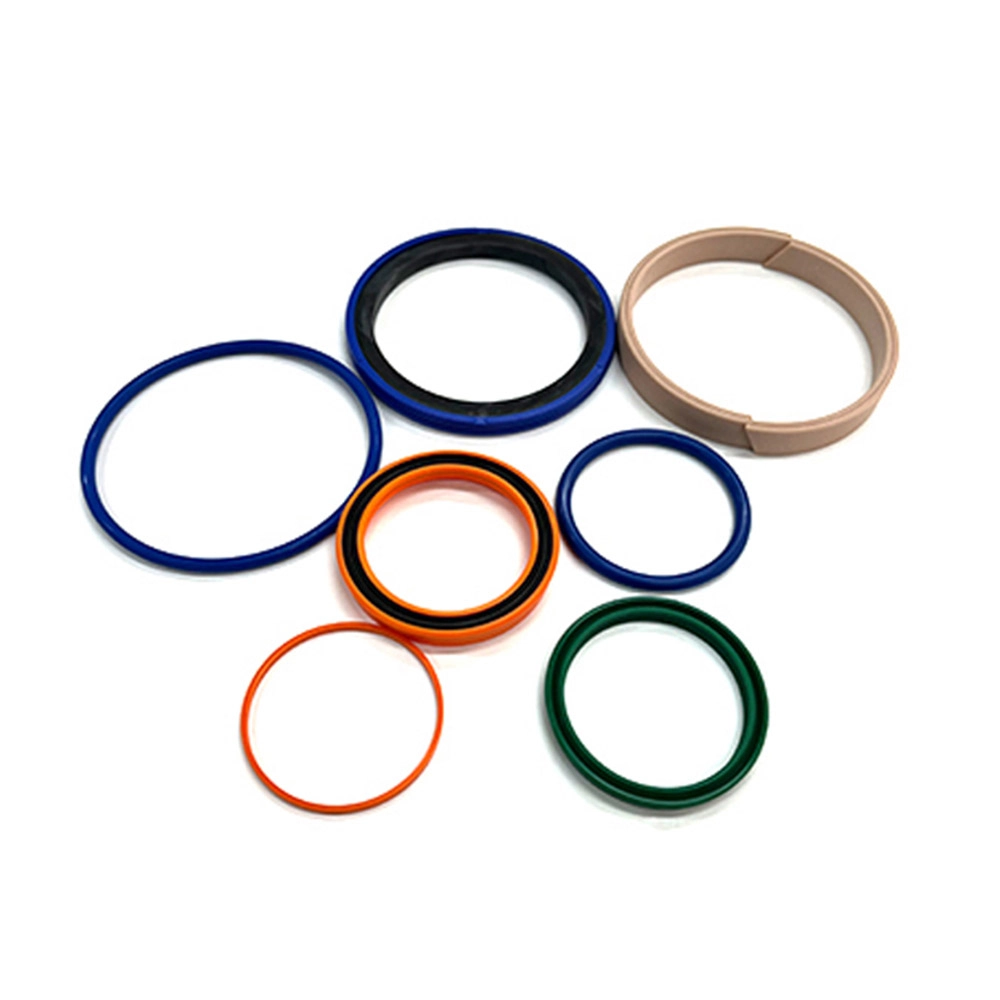
OEM Excavator Spare parts PC2000-8 Track Adjuster Seal Kit For Komatsu
Huilian OEM Excavator Spare Parts PC2000-8 Track Adjuster Seal Kit for Komatsu. Ensures optimal track adjustment performance. High-quality replacement for your PC2000-8 excavator. Order your kit today!
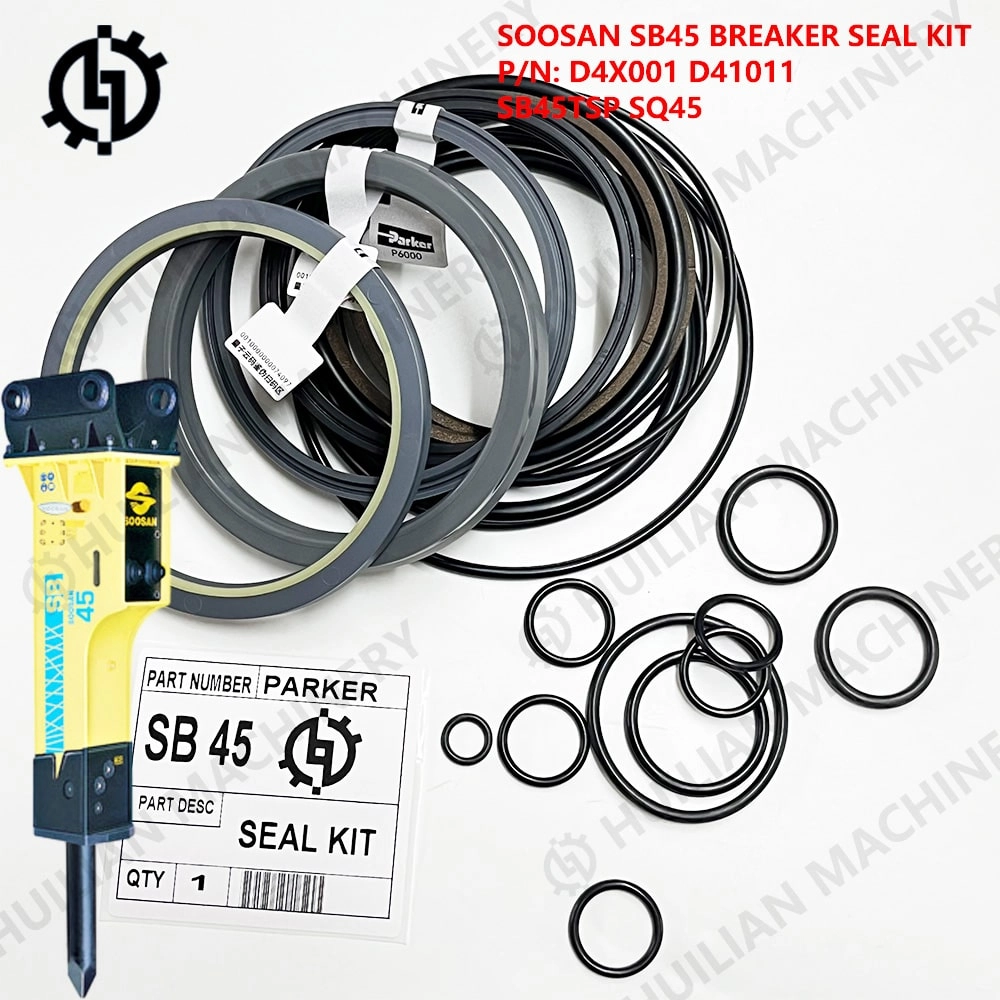
Parker Oil Seal SOOSAN SB45 Hydraulic Rock Hammer Breaker Seal Repair Kit D4X001 D41011 SB45TSP SQ45
 About us
© 2025 HUILIAN MACHINE. All rights reserved