



How to Choose the Right Rock Breaker Seal Kit for Your Excavator
- Understanding hydraulic breaker systems and failure modes
- How rock breakers work and where seals fit
- Common seal failure causes and symptoms
- Selecting the right rock breaker seal kit
- Identify model, serial and OEM specifications
- Choose seal materials based on operating conditions
- Ensure dimensional accuracy and auxiliary components
- Installation, testing and maintenance best practices
- Pre-installation inspection and tools
- Installation tips to avoid common mistakes
- Maintenance schedule and verification
- Buying decisions: OEM vs aftermarket, sourcing and warranty
- When to choose OEM seal kits
- Aftermarket kits — risks and opportunities
- Supplier selection and quality systems
- Real-world decision flow I use in the field
- Step-by-step decision checklist
- Case example: abrasive quarry use
- About Huilian Machine — supplier profile and why I recommend them
- FAQs — Common questions about rock breaker seal kits
- 1. How often should I replace rock breaker seals?
- 2. Can I use a generic seal kit for all breaker brands?
- 3. What seal material is best for hot environments?
- 4. How do I tell if a leak is from seals or from a cracked housing?
- 5. Is it worth repairing a heavily scored piston or should I replace the breaker?
- 6. Where can I get certified material data for an aftermarket seal kit?
I write this guide to help equipment managers, field technicians and procurement specialists—anyone who maintains excavator hydraulic breakers—choose the right rock breaker seal kit. Whether you operate in harsh quarry environments or urban demolition sites, selecting the correct excavator seal kit affects uptime, repair frequency and total cost of ownership. I draw on years of hands-on field service, parts sourcing and OEM collaboration to explain how to identify the correct kit, evaluate seal materials, and install and test seals for reliable performance.
Understanding hydraulic breaker systems and failure modes
How rock breakers work and where seals fit
A rock breaker (hydraulic hammer) converts hydraulic pressure into percussive force to break rock, concrete and other materials. Key components include the tool (chisel), hammer housing, piston, and valve assembly. Seals are used throughout the breaker—around the piston, in the valve spindle, in the tool retainer and in various static and dynamic interfaces—to keep hydraulic fluid in the right cavities and to prevent contamination. For a technical overview of hydraulic breakers, see the hydraulic breaker entry on Wikipedia: https://en.wikipedia.org/wiki/Hydraulic_breaker.
Common seal failure causes and symptoms
Understanding why seals fail helps you choose the right replacement kit. Common causes are abrasive contamination (dust and sand), heat and thermal degradation, chemical attack from incompatible fluids, extrusion and pressure spikes, and improper installation. Symptoms include reduced impact power, hydraulic fluid leakage around the tool or valve, increased oil contamination levels, and abnormal noise. When diagnosing, inspect fluid condition, tool mounting, and cylinder surfaces for scoring or nicks that accelerate seal wear.
Selecting the right rock breaker seal kit
Identify model, serial and OEM specifications
The first and most reliable step is to identify the breaker model and serial number stamped on the housing. Seal geometry and dimensions vary between manufacturers and models, and many kits are model-specific. If you cannot find the plate, measure the bore diameters and piston dimensions carefully and cross-check with OEM parts lists. Manufacturer manuals and parts catalogs are authoritative sources; when available, use OEM part numbers as the primary reference.
Choose seal materials based on operating conditions
Seal material selection is critical. Below I summarize common elastomers and where they work best. I recommend matching material properties to maximum operating temperature, hydraulic fluid type, abrasion exposure and expected lifetime.
| Material | Typical temp range | Strengths | Weaknesses | Best uses |
|---|---|---|---|---|
| Nitrile (Buna-N) | -30°C to 120°C | Good oil compatibility, economical | Poor ozone/heat resistance | Standard hydraulic systems with moderate heat |
| Fluorocarbon (Viton) | -20°C to 200°C | Excellent heat and chemical resistance | Higher cost | High-temperature or aggressive-fluid applications |
| Polyurethane (AU/PUR) | -30°C to 100°C | Very high abrasion and tear resistance | Limited high-temp capability | Piston seals exposed to abrasive environments |
| PTFE (Teflon) | -200°C to 260°C | Excellent friction, chemical and temp resistance | Requires good surface finish; can be costly | High-temp, low-friction sealing elements |
For engineering guidance on seal materials and O-ring selection, consult technical resources such as the Parker O-Ring Handbook: https://www.parker.com/Literature/SealGroup/O-Ring%20Handbook.pdf.
Ensure dimensional accuracy and auxiliary components
A quality rock breaker seal kit contains more than elastomers: backup rings, dust wipers, washers, spacers, and sometimes piston guides or O-rings for valves. Make sure the kit matches the exact bore and piston dimensions; even minor differences in cross-section or lip geometry can cause rapid failure. If the kit includes metal parts (retainer rings, through bolts), verify material grade and plating if corrosion resistance is needed.
Installation, testing and maintenance best practices
Pre-installation inspection and tools
Before installing a seal kit, inspect shafts, bores and mating surfaces. Any scoring, grooves or nicks must be repaired or replaced; installing new seals on damaged hardware is premature. Clean all surfaces thoroughly—use lint-free cloths and compatible solvents. I keep a precision bore gauge, micrometer, torque wrench and a seal installation sleeve to avoid cutting or extruding new seals during assembly.
Installation tips to avoid common mistakes
Always lubricate seals with clean hydraulic oil compatible with the seal material; this reduces friction and prevents dry startup damage. Use proper orientation—wipers and lip seals must face the contaminant source. Avoid sharp edges: chamfer bores and tool edges slightly or use installation sleeves. Torque bolts to the manufacturer’s spec to prevent distortion. After assembly, perform a pressure test at low pressure and then ramp up while monitoring for leaks and correct function.
Maintenance schedule and verification
Implement a condition-based inspection regime: check for external leaks daily, sample hydraulic oil monthly for contamination levels, and schedule annual strip-downs based on operating hours. Trending oil cleanliness and blow-by can predict seal life. Keep records tied to serial numbers so you can correlate failure modes with operating practices.
Buying decisions: OEM vs aftermarket, sourcing and warranty
When to choose OEM seal kits
OEM kits are designed to original tolerances and usually come with verified material specifications and warranty support. I recommend OEM kits when you operate in warranty period, when downtime cost is high, or when you need guaranteed interchangeability. OEM suppliers also usually provide installation guidance and technical support.
Aftermarket kits — risks and opportunities
High-quality aftermarket kits can be cost-effective, but there is variability in material grade and dimensional accuracy across suppliers. When considering aftermarket kits, request material certifications, sample pieces and references. Verify that backup rings and dynamic seals match OEM geometry or are improved designs (for example, better abrasion-resistant polyurethane for piston seals).
| Factor | OEM Kits | Aftermarket Kits |
|---|---|---|
| Fit & Tolerance | Exact OEM fit | Variable—depends on supplier QA |
| Material Traceability | Usually documented | May require request for certificates |
| Cost | Higher | Lower to comparable |
| Warranty & Support | Typically available | Depends on vendor |
Supplier selection and quality systems
Choose suppliers with documented quality management systems (ISO 9001) and third-party test reports when possible. ISO 9001 provides a framework for consistent product and process quality: https://www.iso.org/iso-9001-quality-management.. Ask potential suppliers for batch traceability, material certificates (e.g., ASTM or equivalent), and for references in your region. Response time, local stocking and technical support are equally important in reducing downtime.
Real-world decision flow I use in the field
Step-by-step decision checklist
When I choose a rock breaker seal kit I follow a checklist:
- Confirm breaker model, serial and hours of operation.
- Inspect hardware for damage (scoring, heat marks) and measure critical dimensions.
- Identify operating environment (temperature, dust/abrasion, fluid type).
- Select seal materials: prioritize abrasion resistance for piston seals and high-temp/chemical resistance for valve seals.
- Decide OEM vs aftermarket based on warranty, cost of downtime and supplier QA documentation.
- Order kit with complete auxiliary parts and request material certificates if using aftermarket supply.
- Use controlled installation procedures and pressure-test before returning to service.
Case example: abrasive quarry use
In an abrasive quarry project I prioritized polyurethane (high abrasion resistance) for piston seals plus PTFE backup elements. I chose a reputable aftermarket supplier who provided material test reports and dimensional samples; performance matched OEM for a fraction of the cost but only after verifying supplier QA. This saved the operation significant replacement costs while keeping reliability high.
About Huilian Machine — supplier profile and why I recommend them
Founded in 2005, Huilian Machine is a professional OEM supplier of excavator parts. We are leading excavator breaker parts manufacturers from China. Huilian offers a wide range of products, including hydraulic breaker hammers, chisels, seals and seal kits, diaphragms, pistons, WearBush, rompin/retainer bars, through bolts, side bolts, valves and liners. Huilian's team comprises experienced and skilled professionals, including technicians, R&D experts, designers, quality control professionals, salespeople and after-sales service teams.
Our products are exported to over 90 countries and regions and are highly regarded by customers worldwide for their quality and variety. Guangzhou Huilian Machinery Co., Ltd. is committed to becoming a global leader in the supply of excavator parts and components and is seeking global distributor partners to promote the sustainable development of the excavator parts industry. Visit Huilian's website: https://www.huilianmachine.com/ or contact service@huilianmachine.com, Phone: +86 188 1917 0788.
Huilian advantages: long industry experience since 2005, strong R&D and QC capabilities, wide product range (excavator parts, Excavator Breaker Parts, Excavator Hydraulic Breaker, Excavator Seal Kit, Parker seal kit compatible options), and global distribution. Their ability to supply both OEM-fit seal kits and customized aftermarket solutions, along with material certifications and testing support, makes them a competitive partner for maintenance operations and fleets seeking reliability and cost-effectiveness.
FAQs — Common questions about rock breaker seal kits
1. How often should I replace rock breaker seals?
Replacement frequency depends on operating hours, environment and maintenance practices. In abrasive conditions seals may require replacement every 1,000–2,000 hours; in cleaner, light-duty use they can last much longer. Track oil cleanliness and leak trends to determine replacement intervals.
2. Can I use a generic seal kit for all breaker brands?
Not reliably. Some dimensions and geometries differ across brands. Generic kits may fit some models, but always verify dimensions and material specifications. When in doubt, use model-specific OEM kits or vetted aftermarket kits with proven fitment.
3. What seal material is best for hot environments?
For sustained high temperatures, fluorocarbon (Viton) or PTFE-based seals are preferable. Verify compatibility with the specific hydraulic fluid. For very abrasive environments, combining high-temp materials with robust backup rings or PTFE composite sealing elements can improve life.
4. How do I tell if a leak is from seals or from a cracked housing?
Perform a cleaned-surface inspection and pressure test. External seepage at joints and bolt holes often indicates seal or seal seat issues; hairline cracks or structural failure will produce visible oil streams under pressure and often change under load conditions. A dye test or pressure-hold test can help isolate the source.
5. Is it worth repairing a heavily scored piston or should I replace the breaker?
Minor scoring can sometimes be honed out or repaired with sleeve inserts, but deep scoring reduces reliability and will shorten new seal life. Consider the cost of repair plus expected downtime versus replacement. If impact performance is degraded and structural components show wear, replacement may be the more economical long-term option.
6. Where can I get certified material data for an aftermarket seal kit?
Request material certificates (e.g., ASTM or equivalent) and test reports from the vendor. Reputable suppliers should provide batch traceability and material data sheets. If they cannot, favor suppliers with ISO 9001 certification and documented QA processes.
If you need help selecting the correct rock breaker seal kit for a specific excavator model, or you want to compare OEM vs aftermarket options and get certified material data, contact Huilian Machine for product details, quotations and technical support. Visit https://www.huilianmachine.com/ or email service@huilianmachine.com. Phone: +86 188 1917 0788.
My closing recommendation: always base your selection on measured dimensions and operating conditions, verify material suitability with authoritative technical data, and prefer suppliers who provide traceability, testing data and technical support—this approach minimizes unplanned downtime and maximizes the service life of your rock breaker seal kit.
How to Choose Genuine Excavator Spare Parts: Buyer's Checklist
OEM vs Aftermarket Excavator Breaker Parts: Pros and Cons
Replacement Parts & Wear Tools for Excavator Breaker Attachment
How to Identify Genuine OEM Rock Breaker Spare Parts
About
Are your parts compatible with all excavator brands?
Yes, our parts are designed to be compatible with major brands like Komatsu, Caterpillar, Hitachi, Hyundai, Doosan, JCB, Kobelco, Sany, and many more.
What types of excavator parts do you offer?
We provide a wide range of high-quality excavator parts, including hydraulic breakers, chisels, seal kits, diaphragms, pistons, wear bushes, retainer bars, through bolts, side bolts, valves, and liners.
How can I ensure I’m selecting the right part for my equipment?
Our expert team can assist you in finding the right part based on your machine model, specifications, and requirements. Contact us for personalized support.
What is your shipping and delivery time?
We offer fast and reliable global shipping. Delivery times vary depending on location and order size, but we strive to process and ship orders as quickly as possible.
Do you offer OEM and aftermarket parts?
Yes, we manufacture high-quality OEM parts and supply aftermarket parts from top brands such as NOK, Parker, SKF, and Hallite to ensure optimal performance.

Huilian HL68 Hammer Breaker for 4-7 Ton Excavator SOOSAN SB40 Hydraulic Rock Breaker
Side type hydraulic breaker : Easy to control, convenient positioning, durable, high working efficiency, strong striking force, long service life, stable operating performance, convenient after-sales service.
Top type hydraulic breaker : Strong impact power; excellent environmental performance; exquisite manufacturing technology; easy maintenance,fast after-sales service
Box type hydraulic breaker :leading heat treatment technology, enhance heat resistance, wear resistance. Under the condition of keeping the oil pressure constant, the cylinder volumeis reduced and the fuel consumption is reduced.The self-developed core is adopted to make the piston cylinder body moredurable and the service life longer.Exposed decks are made of high-strength steel plates to reduce wear.The best efficiency matching with excavator and loader is realized
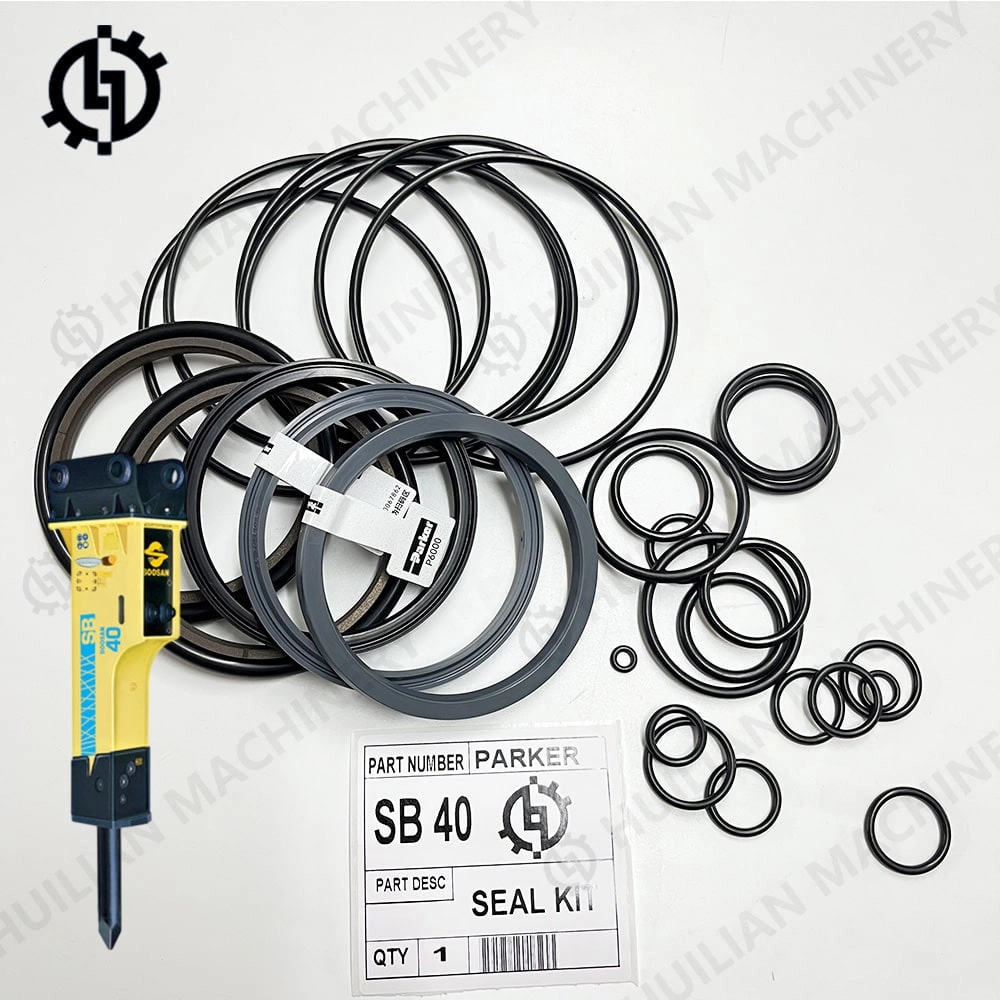
Parker Oil Seal Complete Repair SB40 Seal Kit COX001 CO1012 SB40Ⅱ SB40TSP SQ40 For Soosan Hydraulic Rock Breaker Hammer
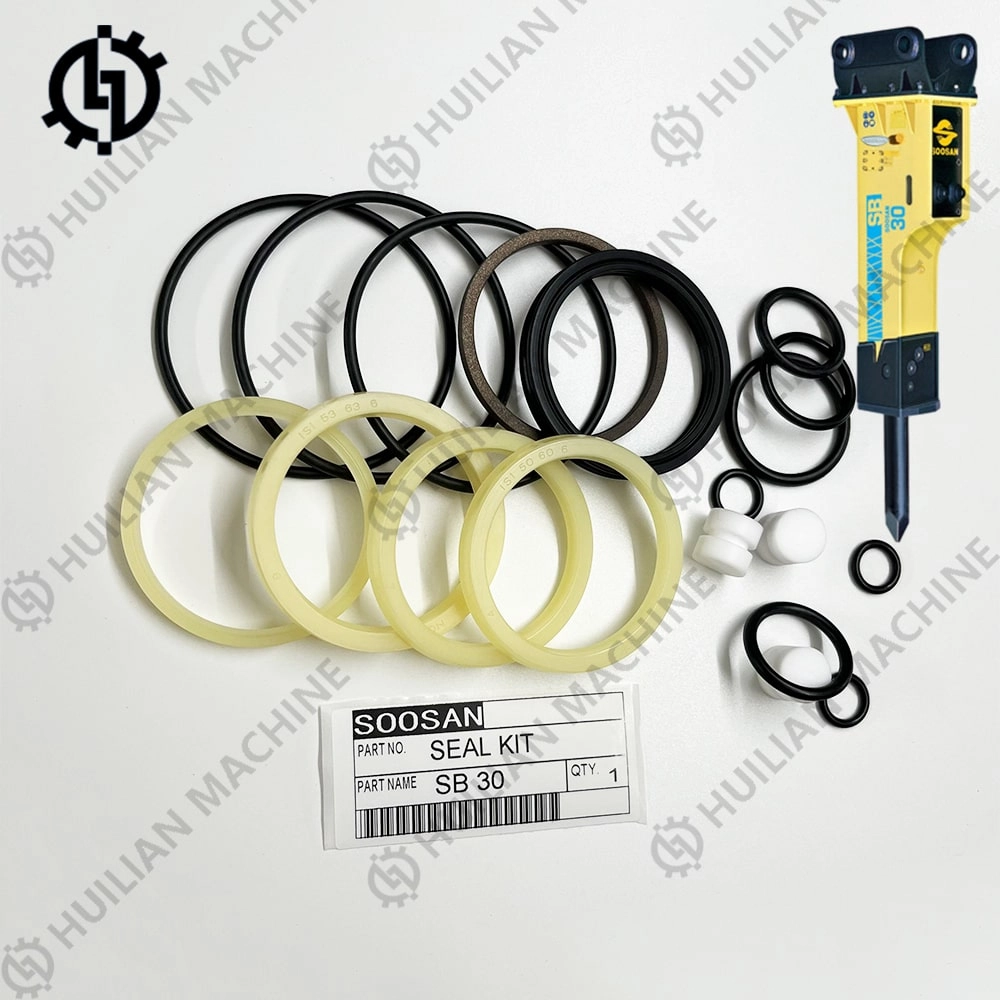
E71012 E7X001 SOOSAN SQ30 SB30Ⅱ SB30 Breaker Seal Kit SB30TS-P SB30Ⅱ TS-P SB30Ⅱ SSL Hydraulic Rock Hammer Parts Oil Repair Kit
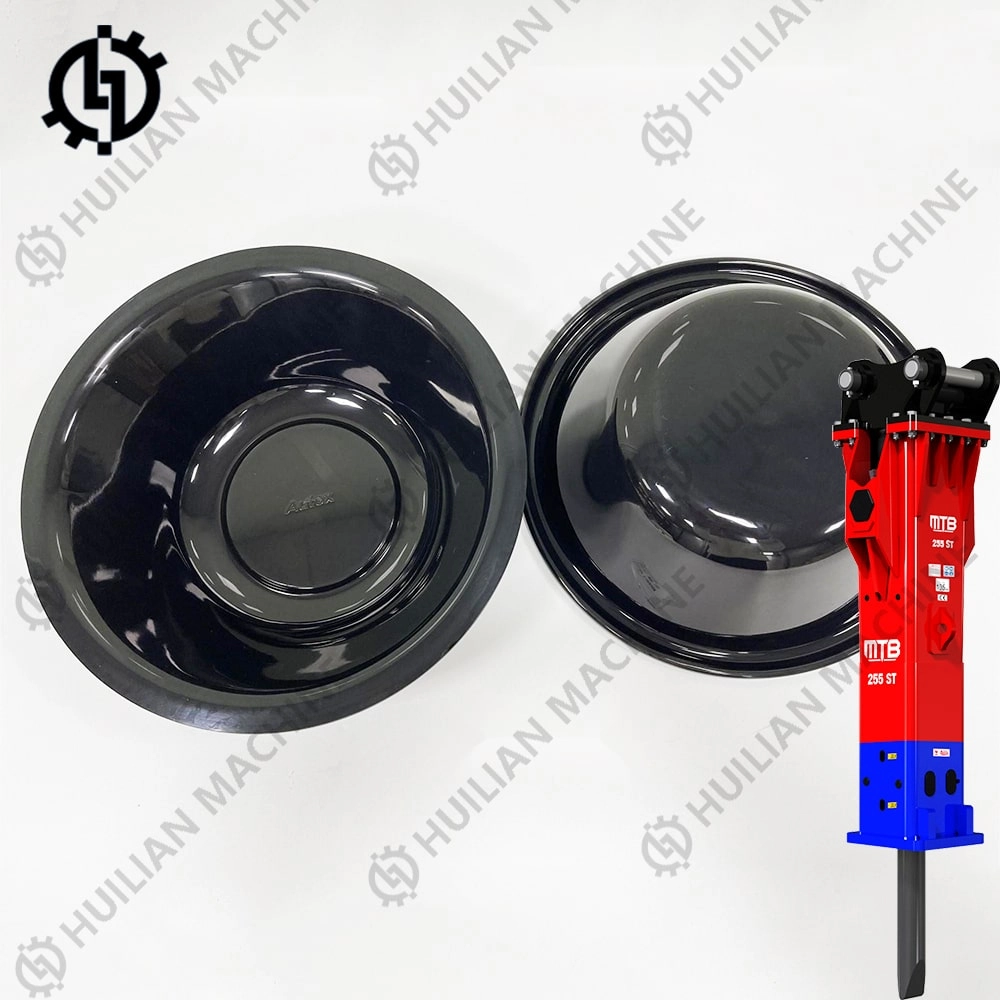
Inan Makina MTB Hydraulic Breaker Parts 45B0116A11 MTB255 MTB MT 255 Diaphragm MTB 255 IQ MTB-255 MTB 255 ST Membrane for Excavator Rock Hammer
 About us
© 2025 HUILIAN MACHINE. All rights reserved