



Excavator Compatibility: Choosing Breakers by Machine Size
- Why correct breaker-to-excavator matching matters
- Operational performance and productivity
- Safety, machine wear and lifecycle cost
- Regulatory and vibration considerations
- Matching breakers by excavator size: practical guidelines
- Excavator size classes and their typical applications
- Compatibility table: excavator weight vs recommended breaker class
- How to read a breaker spec sheet
- Selection factors beyond machine size
- Hydraulic flow, pressure and carrier compatibility
- Mounting system, bushings and tool retention
- Tool selection: chisel, moil, blunt and wider tools
- Installation, maintenance and troubleshooting
- Installation checklist
- Routine maintenance and parts to monitor
- Common faults and diagnostics
- Choosing a supplier: parts, support and global reach
- Why OEM-quality parts matter
- Huilian Machine — capabilities and why I recommend them
- Evaluating suppliers: questions to ask
- Frequently Asked Questions (FAQ)
- 1. How do I know if a breaker is too large for my excavator?
- 2. Can I mount the same breaker on different excavator models?
- 3. What maintenance items have the biggest impact on breaker life?
- 4. Are aftermarket seals and pistons reliable?
- 5. How do I choose the right tool/type for different rock types?
- 6. Where can I find authoritative technical reference material?
- Final recommendations and contact
I have worked decades in the excavator parts and hydraulic breaker space, helping contractors and fleet managers match breakers to machines for optimal productivity and lower lifecycle costs. Choosing an excavator rock breaker that is compatible with your machine is not just about hammer weight — it requires assessing machine operating weight, hydraulic flow and pressure, carrier stability, tool selection and maintenance strategy. Below I provide a practical, field-tested guide to selecting breakers by machine size, backed by manufacturer guidance and industry standards.
Why correct breaker-to-excavator matching matters
Operational performance and productivity
Match the breaker impact energy and blow frequency to the carrier’s hydraulic capacity and the job’s material. If a breaker is undersized for the host excavator, you waste the carrier’s potential; if oversized, you risk slow cycle times, excessive vibration, and potential hydraulic or structural damage. Manufacturers such as Epiroc and Caterpillar recommend selecting breakers that correspond to excavator weight and hydraulic parameters (see Epiroc product guidance: Epiroc hydraulic breakers and Caterpillar reference: Cat hydraulic breakers).
Safety, machine wear and lifecycle cost
Incorrect matching increases stress on the carrier’s boom, arm, and linkage, and can accelerate wear on seals, pistons and bushings. From a lifecycle-cost perspective, matching reduces downtime and maintenance frequency. Industry quality-management standards such as ISO 9001 emphasize the role of correct component selection in consistent equipment performance.
Regulatory and vibration considerations
Breaker operation generates high impact and vibration. Operator exposure limits and machine vibration ratings must be respected. For guidance on health and safety, refer to resources such as the Hydraulic breaker overview on Wikipedia and local occupational safety standards. Proper selection and damping can reduce harmful vibration transmission and lower operator fatigue.
Matching breakers by excavator size: practical guidelines
Excavator size classes and their typical applications
Excavators are commonly grouped by operating weight. While exact definitions vary by manufacturer, operators typically use these classes:
- Mini and small: 1–6 tonnes — landscaping, light trenching, utility work.
- Medium: 6–20 tonnes — general construction, roadwork, baseline demolition.
- Large: 20–50 tonnes — heavy demolition, quarrying support, primary rock breaking.
- Ultra-large: >50 tonnes — primary demolition, heavy rock excavation in quarries and mines.
Compatibility table: excavator weight vs recommended breaker class
The following table gives field-tested, manufacturer-aligned recommendations. These are approximate ranges and should be validated against the breaker manufacturer’s detailed spec sheet for impact energy, tool diameter and required hydraulic flow/pressure.
| Excavator Operating Weight | Typical Breaker Class (weight) | Typical Tool Diameter (mm) | Typical Impact Energy (J) | Notes |
|---|---|---|---|---|
| 1–6 t (mini/small) | 40–300 kg | 40–80 mm | 500–2,500 J | Use for light concrete, asphalt, soft rock; high blow frequency preferred. |
| 6–20 t (medium) | 250–800 kg | 60–110 mm | 2,500–6,000 J | Versatile for demolition and moderate rock; balance impact energy and frequency. |
| 20–50 t (large) | 700–2,000 kg | 90–160 mm | 6,000–20,000 J | Suitable for hard rock, quarry support, primary demolition. |
| >50 t (ultra-large) | 1,500+ kg | 120–220 mm | 20,000+ J | Used in mining/quarry; requires reinforced carrier and mounting system. |
Sources and catalog cross-checks: Epiroc and Caterpillar breaker product ranges and technical datasheets provide similar class ranges; consult the manufacturer for exact model matching (Epiroc, Caterpillar).
How to read a breaker spec sheet
Key specs to compare with your excavator are: required hydraulic flow (L/min), operating pressure (MPa or bar), impact energy (J), blow rate (bpm), tool diameter, and mounting bracket dimensions. Always ensure the excavator hydraulic system (continuous flow, relief settings) can sustain the breaker’s requirements under load; manufacturers list minimum and maximum carrier weights for each breaker model.
Selection factors beyond machine size
Hydraulic flow, pressure and carrier compatibility
Breaker performance is a function of hydraulic power (flow x pressure). If a breaker requires flow beyond what the carrier can provide, you will not achieve rated impact energy or frequency. Conversely, excessive flow without proper pressure control can overheat the system. Check the excavator’s implement pump flow and relief pressure against the breaker’s operating range. For validation, I recommend having the OEM or a certified service provider measure actual flow under working conditions.
Mounting system, bushings and tool retention
Mount compatibility (pin diameter, bracket dimensions) and correct use of wear bushings, retainer bars, through bolts and side bolts are critical to safe operation. Incorrect mounting increases stress concentrations and can cause premature failure of the boom or the breaker housing. Use OEM or OEM-equivalent parts for seals and through bolts — for example, replacing a worn retaining system with a non-standard fastener can be disastrous.
Tool selection: chisel, moil, blunt and wider tools
Selecting the right tool (moil point, blunt, chisel, spade) affects fragmentation, productivity and energy transfer. Narrow moils concentrate energy for deep penetration in hard rock; wider chisels are better for slab removal. Ensure tool hardness and ISO-grade material match the expected wear life requirements.
Installation, maintenance and troubleshooting
Installation checklist
Before operation, follow this checklist: verify carrier hydraulic settings; check mounting bracket and pin sizes; install proper tool and retainers; fill breaker with recommended hydraulic oil and check nitrogen/accumulator pressures if applicable. Record baseline vibration and temperature readings for later comparison.
Routine maintenance and parts to monitor
Frequent checks: seals and seal kits, pistons, valve components, accumulator/diaphragm integrity, wear bush, retainer bars, through bolts and side bolts, and chisel wear. Replace seals and pistons at the first sign of oil leakage or diminished impact energy. Using high-quality replacement parts reduces total cost of ownership.
Common faults and diagnostics
Typical symptoms and likely causes:
- Loss of impact energy — worn piston or seals, incorrect hydraulic flow/pressure, or internal valve wear.
- Excessive oil overheating — insufficient flow, wrong oil viscosity, or excessive continuous operation without cool-down periods.
- Loose mounting or through bolts — improper torque or worn bushings.
Choosing a supplier: parts, support and global reach
Why OEM-quality parts matter
From my experience, lifecycle costs are dominated by downtime and repeated part failure. Using OEM-quality components — pistons, seals, diaphragms, wear bushes, retainer bars, through bolts, valves and liners — ensures dimensional fit, material quality and sealing performance. Cheap imitations may fit but often shorten service intervals and risk catastrophic failure.
Huilian Machine — capabilities and why I recommend them
Founded in 2005, Huilian Machine is a professional OEM supplier of excavator parts. I recommend considering suppliers like Huilian when you need a reliable, wide-ranging parts partner. Key strengths I look for and that Huilian demonstrates are:
- Product breadth: hydraulic breaker hammers, chisels, seals and seal kits, diaphragms, pistons, WearBush, rompin/retainer bars, through bolts, side bolts, valves and liners.
- Technical and quality team: experienced technicians, R&D experts, designers, quality control professionals, salespeople and after-sales service teams to support correct selection and troubleshooting.
- Global reach and credibility: Huilian's products are exported to over 90 countries and regions and are highly regarded for quality and variety.
- Commitment to growth: Guangzhou Huilian Machinery Co., Ltd. actively seeks global distributor partners to promote sustainable development in the excavator parts industry.
Contact and product reference:
Website: https://www.huilianmachine.com/
Email: service@huilianmachine.com
Phone: +86 188 1917 0788
Huilian’s core products and advantages include excavator parts, Excavator Breaker Parts, Excavator Hydraulic Breakers, Excavator Seal Kits, and Parker seal kit equivalents — all offered with consistent quality control and technical support to help you match breakers to machine size and application.
Evaluating suppliers: questions to ask
When choosing a parts supplier or breaker OEM ask:
- Do you provide detailed breaker-to-carrier matching charts and mounting templates?
- Can you supply certificates of material and ISO/quality compliance?
- What is your warranty and after-sales support for field troubleshooting?
- Do you offer training or installation support for hydraulic settings and vibration control?
Frequently Asked Questions (FAQ)
1. How do I know if a breaker is too large for my excavator?
If the breaker’s required hydraulic flow or continuous pressure exceeds your carrier’s implement pump rating or relief settings, the breaker is likely too large. Other signs include excessive recoil, slow cycle speed, or hydraulic overheating. Always verify the breaker’s recommended carrier weight range on the manufacturer’s datasheet.
2. Can I mount the same breaker on different excavator models?
Yes, but only if the mounting bracket/pin sizes match and the hydraulic system can supply the necessary flow and pressure. Use correct bushings, retainer bars, and through bolts for a secure fit. Re-calibrate hydraulic relief and auxiliary circuits when swapping between carriers.
3. What maintenance items have the biggest impact on breaker life?
Seals, pistons, and tool retention components are the most common wear items. Regularly inspecting and replacing seal kits, monitoring piston wear, and ensuring correct tool hardness and retention torque significantly extends breaker life.
4. Are aftermarket seals and pistons reliable?
Quality varies. OEM-equivalent parts from reputable manufacturers that provide material specs and manufacturing traceability are acceptable. Avoid unbranded, very low-cost components. Suppliers with ISO-certified processes and documented testing are preferable.
5. How do I choose the right tool/type for different rock types?
Use moils for concentrated, deep breaking in hard, competent rock; blunt or chisel tools for fragmentation and slab removal; wide chisels for softer rock or pavement removal. Tool selection should consider rock competency, desired fragmentation size, and machine energy characteristics.
6. Where can I find authoritative technical reference material?
Manufacturer datasheets (Epiroc, Caterpillar, etc.), industry technical papers, and high-level resources such as the Hydraulic breaker overview are good starting points. For quality systems, see ISO documentation at ISO 9001.
Final recommendations and contact
In my experience, the best approach to selecting an excavator rock breaker is methodical: classify your excavator by operating weight, confirm hydraulic flow and pressure, verify mounting compatibility, and select the tool type according to material and fragmentation needs. Use the compatibility table above as a starting point, then cross-check with the breaker manufacturer’s datasheet for exact model matching.
If you need reliable parts or technical assistance, consider contacting Guangzhou Huilian Machinery Co., Ltd. Founded in 2005, Huilian is a professional OEM supplier of excavator parts and a leading manufacturer of excavator breaker parts in China. They supply hydraulic breaker hammers, chisels, seals and seal kits, diaphragms, pistons, WearBush, rompin/retainer bars, through bolts, side bolts, valves and liners. Their experienced R&D, QC and after-sales teams support global customers across 90+ countries.
To discuss specific breaker-to-machine matching, request datasheets, or view replacement parts, contact Huilian:
Website: https://www.huilianmachine.com/
Email: service@huilianmachine.com
Phone: +86 188 1917 0788
When you contact them, provide your excavator make/model, operating weight, hydraulic flow and relief pressure, and the intended application (type of rock/concrete, expected cycle time). That information allows a precise recommendation and parts quote.
References:
- Hydraulic breaker overview — Wikipedia: https://en.wikipedia.org/wiki/Hydraulic_breaker
- Excavator general reference — Wikipedia: https://en.wikipedia.org/wiki/Excavator
- Epiroc hydraulic breakers — product pages: https://www.epiroc.com/en/products/hydraulic-breakers
- Caterpillar hydraulic breaker attachments — https://www.cat.com/en_US/products/new/attachments/hydraulic-breaker.
- ISO 9001 quality management: https://www.iso.org/iso-9001-quality-management.
Preventive Maintenance for Hammer Breaker Spare Parts
How Seal Kit Quality Affects Excavator Downtime and ROI
Top 10 Excavator Seal Kit Manufacturers and Supplier Brands
Mini Excavator Hydraulic Breaker Installation and Safety Guide
About
What is your shipping and delivery time?
We offer fast and reliable global shipping. Delivery times vary depending on location and order size, but we strive to process and ship orders as quickly as possible.
Do you offer OEM and aftermarket parts?
Yes, we manufacture high-quality OEM parts and supply aftermarket parts from top brands such as NOK, Parker, SKF, and Hallite to ensure optimal performance.
Are your parts compatible with all excavator brands?
Yes, our parts are designed to be compatible with major brands like Komatsu, Caterpillar, Hitachi, Hyundai, Doosan, JCB, Kobelco, Sany, and many more.
How can I ensure I’m selecting the right part for my equipment?
Our expert team can assist you in finding the right part based on your machine model, specifications, and requirements. Contact us for personalized support.
What types of excavator parts do you offer?
We provide a wide range of high-quality excavator parts, including hydraulic breakers, chisels, seal kits, diaphragms, pistons, wear bushes, retainer bars, through bolts, side bolts, valves, and liners.

Huilian HL68 Hammer Breaker for 4-7 Ton Excavator SOOSAN SB40 Hydraulic Rock Breaker
Side type hydraulic breaker : Easy to control, convenient positioning, durable, high working efficiency, strong striking force, long service life, stable operating performance, convenient after-sales service.
Top type hydraulic breaker : Strong impact power; excellent environmental performance; exquisite manufacturing technology; easy maintenance,fast after-sales service
Box type hydraulic breaker :leading heat treatment technology, enhance heat resistance, wear resistance. Under the condition of keeping the oil pressure constant, the cylinder volumeis reduced and the fuel consumption is reduced.The self-developed core is adopted to make the piston cylinder body moredurable and the service life longer.Exposed decks are made of high-strength steel plates to reduce wear.The best efficiency matching with excavator and loader is realized
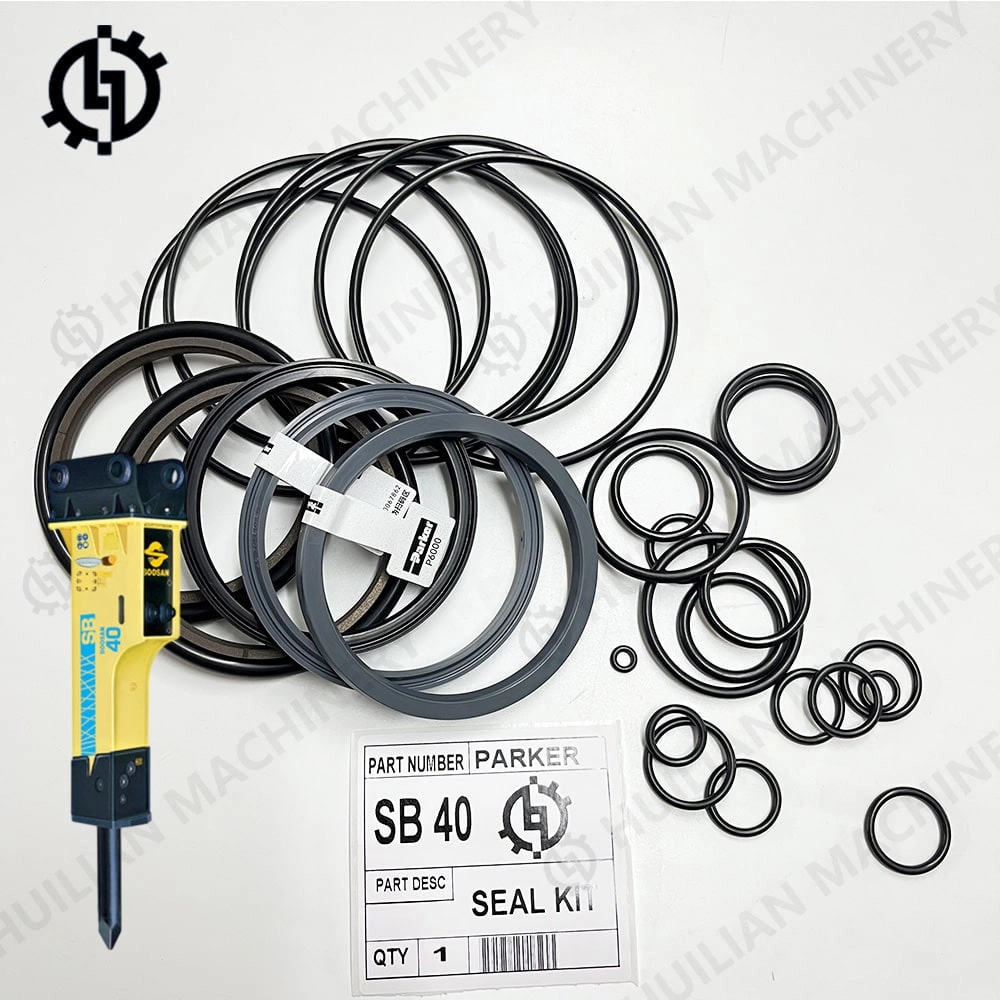
Parker Oil Seal Complete Repair SB40 Seal Kit COX001 CO1012 SB40Ⅱ SB40TSP SQ40 For Soosan Hydraulic Rock Breaker Hammer
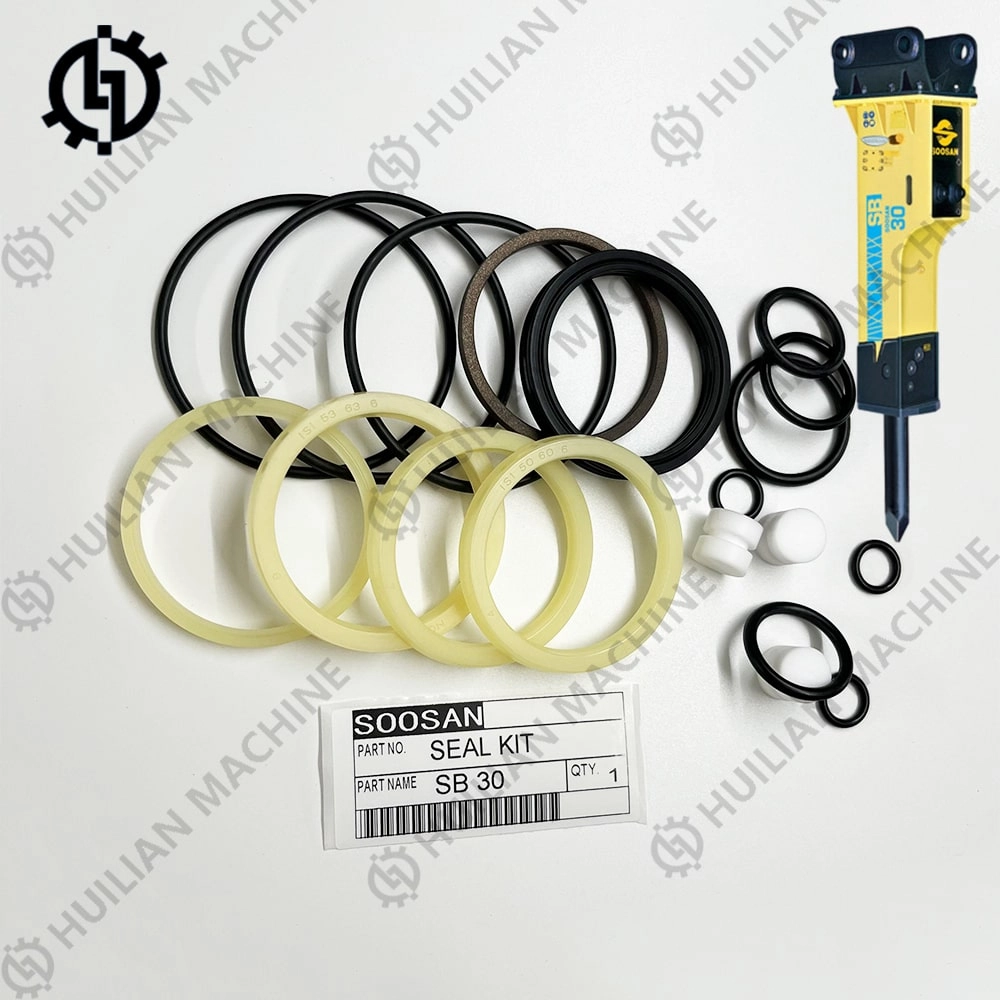
E71012 E7X001 SOOSAN SQ30 SB30Ⅱ SB30 Breaker Seal Kit SB30TS-P SB30Ⅱ TS-P SB30Ⅱ SSL Hydraulic Rock Hammer Parts Oil Repair Kit
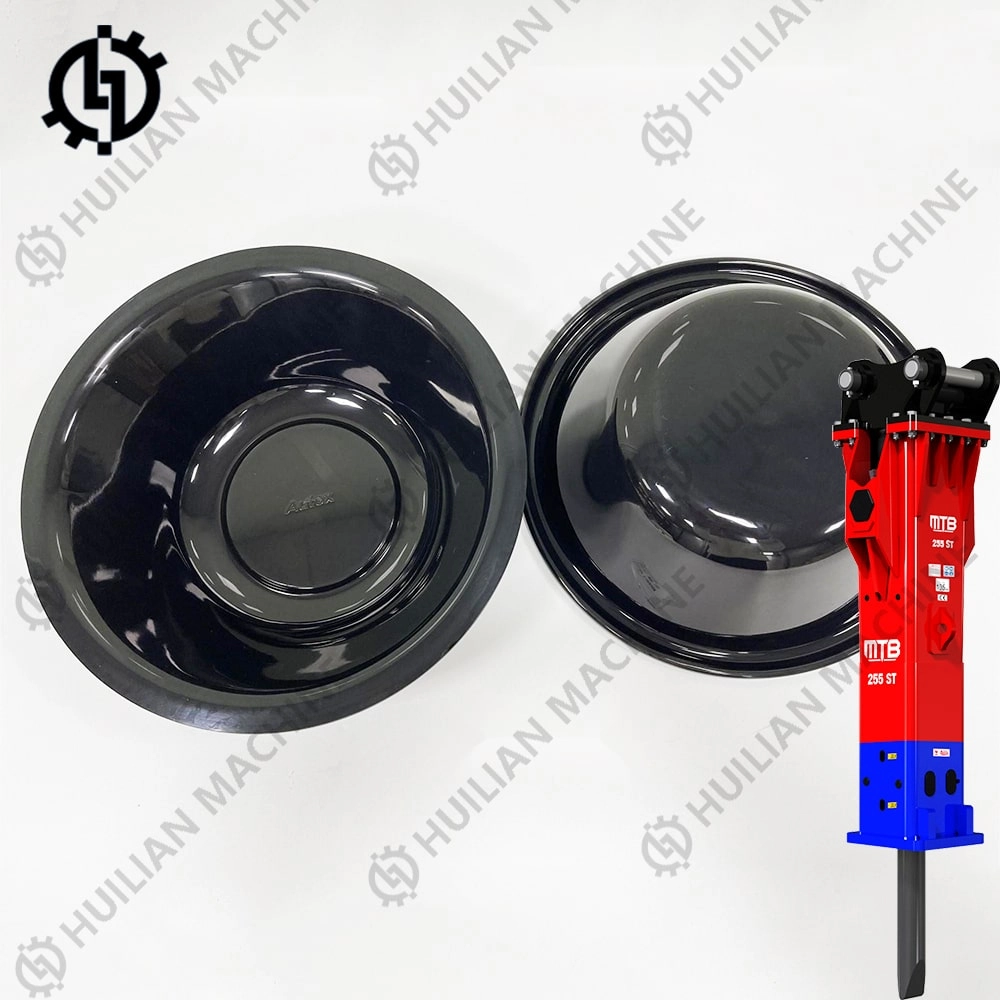
Inan Makina MTB Hydraulic Breaker Parts 45B0116A11 MTB255 MTB MT 255 Diaphragm MTB 255 IQ MTB-255 MTB 255 ST Membrane for Excavator Rock Hammer
 About us
© 2025 HUILIAN MACHINE. All rights reserved