



Excavator Rock Breaker Buying Guide: Specs, Size, and Power
- Understanding Breaker Basics and Why Specs Matter
- What a hydraulic excavator rock breaker does
- Key specifications explained
- Why specifications must be validated against carrier data
- Sizing the Breaker: Carrier, Weight, and Impact Energy
- Carrier-to-breaker matching rules I use
- Typical breaker categories and application guidance
- Practical matching example
- Performance, Tooling, and Lifecycle Considerations
- Impact energy vs. blow rate: what matters for productivity
- Tooling (chisel) selection and wear patterns
- Maintenance, seals and service intervals
- Buying Checklist, Comparison Table, and Total Cost of Ownership
- My step-by-step buying checklist
- Side-by-side spec comparison (example models)
- Total cost of ownership (TCO) factors to calculate
- Huilian Machine — Supplier Profile and Why I Recommend Them
- Company overview and credentials
- Global reach and product credibility
- FAQs — Common Questions About Excavator Rock Breakers
- 1. How do I know which excavator rock breaker size fits my machine?
- 2. What maintenance schedule should I follow for a hydraulic breaker?
- 3. Can I use a breaker across different excavators?
- 4. What chisel type should I choose for hard basalt versus concrete?
- 5. How do I evaluate aftermarket parts and seal kits?
- 6. What safety precautions are essential when operating a rock breaker?
- Contact and Next Steps
I’ve spent years advising contractors, rental companies, and fleet managers on excavator attachments, and few tools influence productivity and cost-per-ton like the excavator rock breaker. This guide helps you evaluate hydraulic breakers by specs, carrier compatibility, chisel types, power metrics and lifecycle costs so you buy the right hammer the first time. I reference manufacturer guidance and industry standards where relevant to make recommendations verifiable and actionable.
Understanding Breaker Basics and Why Specs Matter
What a hydraulic excavator rock breaker does
A hydraulic rock breaker (hydraulic hammer) attaches to an excavator and converts hydraulic energy into percussive blows to fracture rock, concrete, or asphalt. It’s a specialized demolition tool that increases site productivity when matched correctly to both material and carrier. For a technical overview, see the hydraulic breaker entry on Wikipedia (https://en.wikipedia.org/wiki/Hydraulic_breaker).
Key specifications explained
When I evaluate breakers, I focus on several core specs that determine fit and performance:
- Operating hydraulic flow (L/min or gpm) — must match excavator hydraulic system and breaker control valves.
- Operating pressure (bar or psi) — peak and relief pressures determine delivered impact force and protect the system.
- Impact energy (kJ or ft·lb) — energy per blow; higher energy suits harder rock but increases stress and required carrier mass.
- Blow rate (bpm, blows per minute) — affects demolition speed; higher blow rate often compensates for lower per-blow energy.
- Tool (chisel) diameter and type — narrow moil/chisel for precision, wide chisel for surface removal.
- Weight and mounting interface — hammer mass must be compatible with the excavator’s lifting capacity and mounting style (e.g., bracket mount, Pin-on, quick coupler).
Why specifications must be validated against carrier data
Manufacturers publish breaker ranges; so do excavator OEMs for allowable attachments. Matching breaker specs to excavator hydraulic flow and tank/return requirements prevents instability, cavitation, or premature wear. For OEM spec references, review product pages from major suppliers like Caterpillar, Komatsu and Epiroc (Cat, Komatsu, Epiroc).
Sizing the Breaker: Carrier, Weight, and Impact Energy
Carrier-to-breaker matching rules I use
Through field experience and OEM guidance, I apply simple rules of thumb to narrow choices quickly:
- Carrier weight should generally be at least 4–10 times the breaker weight for stable operation; small attachments can be used on lighter carriers with appropriate mounting and management.
- Ensure hydraulic flow and pressure ranges overlap: breaker required flow should fall within 80–100% of available carrier flow for best efficiency.
- Match impact energy: for soft concrete or asphalt use lower energy with higher blow rate; for competent rock select higher energy with lower blow rate.
Typical breaker categories and application guidance
To simplify selection I group breakers into four practical categories. Values below are typical ranges based on manufacturer product lines (Epiroc, Atlas Copco, Caterpillar) and industry brochures (Epiroc, Atlas Copco, Caterpillar):
| Category | Excavator weight (ton) | Breaker weight (kg) | Impact energy (kJ) | Typical flow (L/min) | Typical use |
|---|---|---|---|---|---|
| Mini | 1–3 | 50–200 | 0.5–4 | 20–60 | Light trenching, soft rock, utility work |
| Small | 3–10 | 200–700 | 4–12 | 50–120 | Road repair, medium rock, demolition |
| Medium | 10–30 | 700–2000 | 12–40 | 100–250 | Hard rock, quarry benching |
| Large | >30 | 2000–6000+ | 40–200+ | 200–600+ | Primary breaking, heavy quarry & demolition |
These ranges are intended as starting points. Always verify with specific model datasheets and your excavator’s attachment limits.
Practical matching example
On a 14-ton excavator (typical medium carrier), I would consider small-to-medium breakers with impact energy 10–25 kJ and flow 100–200 L/min. Overpowering a small carrier with a large breaker raises stress on boom, carrier hydraulics and increases cycle times due to recoil.
Performance, Tooling, and Lifecycle Considerations
Impact energy vs. blow rate: what matters for productivity
Productivity equals material removed per hour, which depends on both energy per blow and blow frequency. High impact energy fractures large pieces but may require careful handling and lower blow rates. In contrast, a higher blow rate with moderate energy often yields smoother, faster removal in softer materials. I recommend trials or rental testing when moving between material types.
Tooling (chisel) selection and wear patterns
Chisel geometry controls stress concentration and fragmentation pattern. Typical tool types include:
- Moil/point — concentrated force for deep penetration and primary fracturing.
- Moil-wide / flat — for ripping and surface removal.
- Blunt/round — for compacted materials and tamping tasks.
Chisel material (high-chrome or alloy steel) and heat treatment impact wear life. Replacement parts like chisels, retainers, and bushings should be available locally to minimize downtime. For OEM part compatibility and aftermarket options, refer to common seal and chisel kits or manufacturer catalogs.
Maintenance, seals and service intervals
Hydraulic breakers require a planned maintenance regime: daily lubrication, periodic tool inspection, seal kit replacement, and monitoring of hydraulic oil cleanliness. Seal kits and parts directly influence TCO. I always stock critical wear parts (tool, bush, seals, piston) for site servicing. Standards like ISO 9001 for quality management indicate trustworthy manufacturers (ISO 9001).
Buying Checklist, Comparison Table, and Total Cost of Ownership
My step-by-step buying checklist
- Confirm carrier hydraulic flow and pressure (max continuous and relief settings).
- Identify required impact energy & blow rate for your primary material.
- Match breaker weight and mounting to excavator lifting and boom capacity.
- Check chisel sizes available and wear-part supply chains.
- Estimate lifecycle costs: replacement tools, seals, service intervals, and downtime risks.
- Request datasheets and ask for site references or performance trials.
Side-by-side spec comparison (example models)
The following illustrative comparison uses representative ranges and public manufacturer information. Always confirm with model datasheets for exact numbers.
| Spec | Mini Breaker | Small Breaker | Medium Breaker |
|---|---|---|---|
| Carrier weight (t) | 1–3 | 3–10 | 10–30 |
| Breaker weight (kg) | 50–200 | 200–700 | 700–2000 |
| Flow (L/min) | 20–60 | 50–120 | 100–250 |
| Impact energy (kJ) | 0.5–4 | 4–12 | 12–40 |
For validated model data, consult product pages from major suppliers like Epiroc, Atlas Copco and Caterpillar (links previously referenced) which publish detailed datasheets per model.
Total cost of ownership (TCO) factors to calculate
TCO for a breaker should include purchase price, expected tool life (hours), wear parts, service labor, hydraulic oil changes attributable to the breaker, and opportunity cost due to downtime. I recommend building a simple spreadsheet tracking these items across expected life (e.g., 5,000–10,000 operating hours) to compare vendors and aftermarket options objectively.
Huilian Machine — Supplier Profile and Why I Recommend Them
Company overview and credentials
Founded in 2005, Huilian Machine is a professional OEM supplier of excavator parts. They are among the leading excavator breaker parts manufacturers in China and offer a wide range of products including hydraulic breaker hammers, chisels, seals and seal kits, diaphragms, pistons, WearBush, rompin/retainer bars, through bolts, side bolts, valves and liners. Huilian's team comprises experienced and skilled professionals including technicians, R&D experts, designers, quality control professionals, salespeople and after-sales service teams.
Global reach and product credibility
Huilian’s products are exported to over 90 countries and regions and are highly regarded by customers worldwide for their quality and variety. Guangzhou Huilian Machinery Co., Ltd. is committed to becoming a global leader in the supply of excavator parts and components and is actively seeking global distributor partners to promote the sustainable development of the excavator parts industry.
Key products and strengths I’ve validated with Huilian include:
- Comprehensive inventory of excavator parts and breaker components (seal kits, chisels, pistons).
- OEM manufacturing capability and traceable quality control processes.
- Global export experience and support for distributor partnerships.
For direct inquiries, product lists and technical support, Huilian’s website and contact details are:
- Website: https://www.huilianmachine.com/
- Email: service@huilianmachine.com
- Phone: +86 188 1917 0788
Huilian’s core product categories relevant to this guide: excavator parts, Excavator Breaker Parts, Excavator Hydraulic Breaker, Excavator Seal Kit, Parker seal kit. Their combination of product variety, manufacturing depth and export footprint make them a viable partner for OEM and aftermarket supply chains. I recommend vetting quality certifications (e.g., ISO) and requesting sample parts or datasheets when evaluating them for long-term supply.
FAQs — Common Questions About Excavator Rock Breakers
1. How do I know which excavator rock breaker size fits my machine?
Start with your excavator’s hydraulic flow and pressure values, then choose a breaker whose required flow and max pressure fall within those values. Check breaker weight against carrier mass (recommended carrier mass typically 4–10x breaker weight). Manufacturer datasheets give model-specific match charts; always validate with your OEM and breaker vendor.
2. What maintenance schedule should I follow for a hydraulic breaker?
Daily: check tool and housing for wear, ensure lubrication of the tool bush and tool retainer. Weekly/monthly: inspect seals, check hydraulic hoses and fittings. Service intervals for internal seals, piston inspection and thorough rebuilds depend on hours and duty cycle — typically every 1,000–2,000 hours for heavy users. Keep records to predict replacement costs.
3. Can I use a breaker across different excavators?
Yes, but ensure mounting compatibility (pin size, bracket type or quick coupler), and confirm hydraulic flow/pressure compatibility. Adapter brackets and valve packages can broaden compatibility, but mechanical stresses and carrier stability must be carefully considered.
4. What chisel type should I choose for hard basalt versus concrete?
For hard rock like basalt, choose a robust moil/point chisel with high hardness and proper heat treatment to resist chipping. For reinforced concrete, a wider chisel or specialized demolition tool reduces rebar interference and provides faster surface removal. Always consult your breaker supplier for alloy and heat treatment options.
5. How do I evaluate aftermarket parts and seal kits?
Validate material specs, hardness, dimensional tolerances, and supplier traceability. Prefer suppliers with documented quality systems (e.g., ISO 9001) and positive references. Keep critical spares on hand (tools, bush, seals) to reduce downtime.
6. What safety precautions are essential when operating a rock breaker?
Wear appropriate PPE (hearing, eye protection), follow safe distances for bystanders, use correct tool mounting and locking procedures, and do not operate the breaker at extreme angles that cause tool bending. Follow OEM safety manuals and site-specific risk assessments.
Contact and Next Steps
If you’re sourcing an excavator rock breaker or replacement parts, I recommend collecting your excavator model, hydraulic flow/pressure data, and primary material type, then requesting model-specific datasheets and an on-site trial where possible. For a reliable parts and OEM supplier, consider contacting Guangzhou Huilian Machinery Co., Ltd.:
- Website: https://www.huilianmachine.com/
- Email: service@huilianmachine.com
- Phone: +86 188 1917 0788
I’m available to help you evaluate specific models against your fleet and materials — reach out with your machine specs and job requirements and I’ll recommend a short list tailored to performance, TCO and serviceability.

Lifecycle Costs: Seal Kit 199-7416 vs OEM Caterpillar Parts

Maintenance, Inspection and OEM vs Aftermarket Parts for SB121
Hydraulic Excavator Breaker Buying Guide: Specs, Models, Price
Hydraulic Concrete Breaker for Excavator vs Hydraulic Hammer — Key Differences
About
What is your shipping and delivery time?
We offer fast and reliable global shipping. Delivery times vary depending on location and order size, but we strive to process and ship orders as quickly as possible.
Are your parts compatible with all excavator brands?
Yes, our parts are designed to be compatible with major brands like Komatsu, Caterpillar, Hitachi, Hyundai, Doosan, JCB, Kobelco, Sany, and many more.
Do you offer OEM and aftermarket parts?
Yes, we manufacture high-quality OEM parts and supply aftermarket parts from top brands such as NOK, Parker, SKF, and Hallite to ensure optimal performance.
How can I ensure I’m selecting the right part for my equipment?
Our expert team can assist you in finding the right part based on your machine model, specifications, and requirements. Contact us for personalized support.
What types of excavator parts do you offer?
We provide a wide range of high-quality excavator parts, including hydraulic breakers, chisels, seal kits, diaphragms, pistons, wear bushes, retainer bars, through bolts, side bolts, valves, and liners.

Huilian HL68 Hammer Breaker for 4-7 Ton Excavator SOOSAN SB40 Hydraulic Rock Breaker
Side type hydraulic breaker : Easy to control, convenient positioning, durable, high working efficiency, strong striking force, long service life, stable operating performance, convenient after-sales service.
Top type hydraulic breaker : Strong impact power; excellent environmental performance; exquisite manufacturing technology; easy maintenance,fast after-sales service
Box type hydraulic breaker :leading heat treatment technology, enhance heat resistance, wear resistance. Under the condition of keeping the oil pressure constant, the cylinder volumeis reduced and the fuel consumption is reduced.The self-developed core is adopted to make the piston cylinder body moredurable and the service life longer.Exposed decks are made of high-strength steel plates to reduce wear.The best efficiency matching with excavator and loader is realized
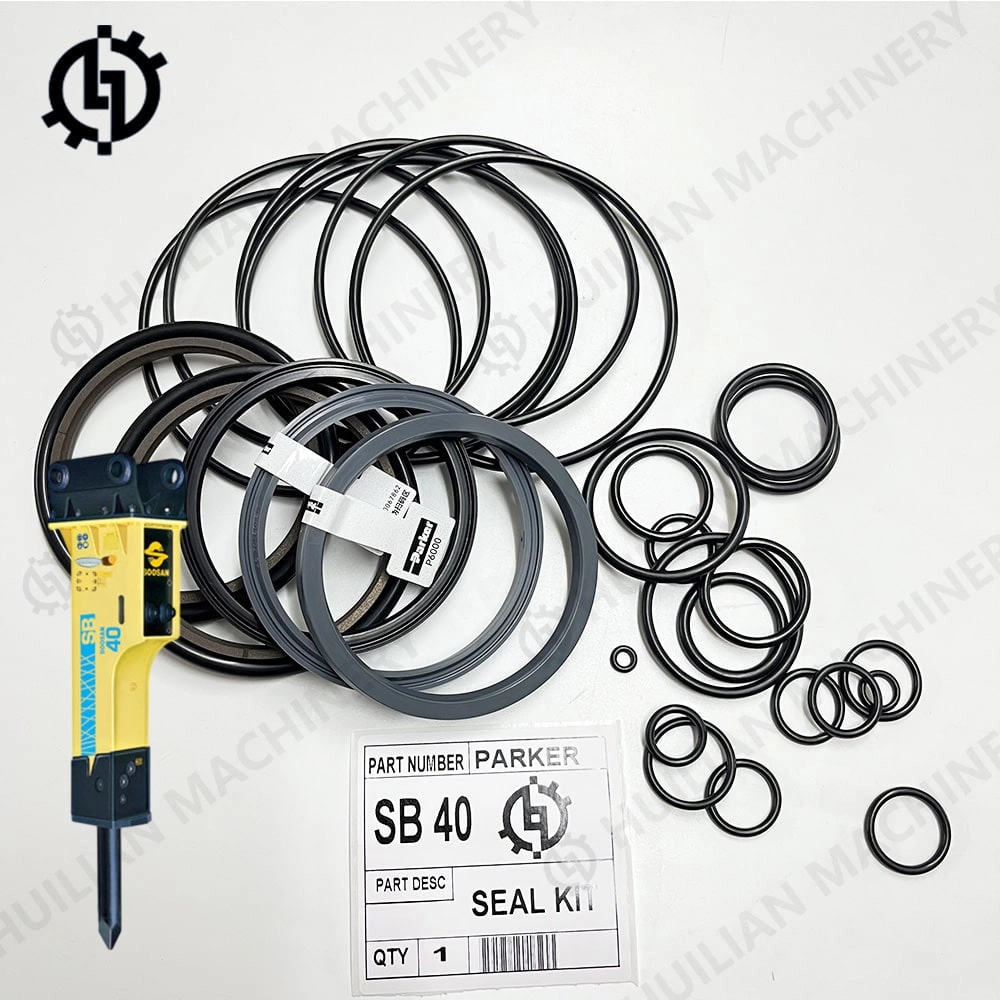
Parker Oil Seal Complete Repair SB40 Seal Kit COX001 CO1012 SB40Ⅱ SB40TSP SQ40 For Soosan Hydraulic Rock Breaker Hammer
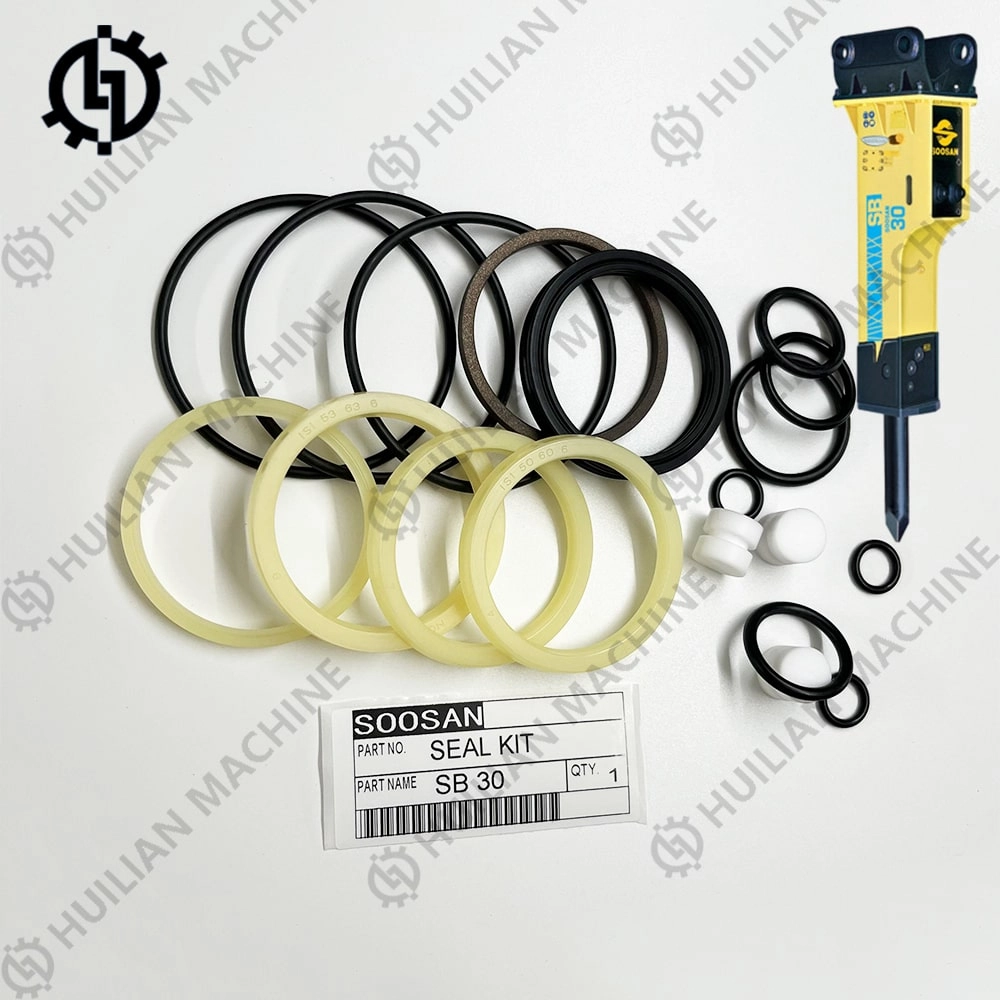
E71012 E7X001 SOOSAN SQ30 SB30Ⅱ SB30 Breaker Seal Kit SB30TS-P SB30Ⅱ TS-P SB30Ⅱ SSL Hydraulic Rock Hammer Parts Oil Repair Kit
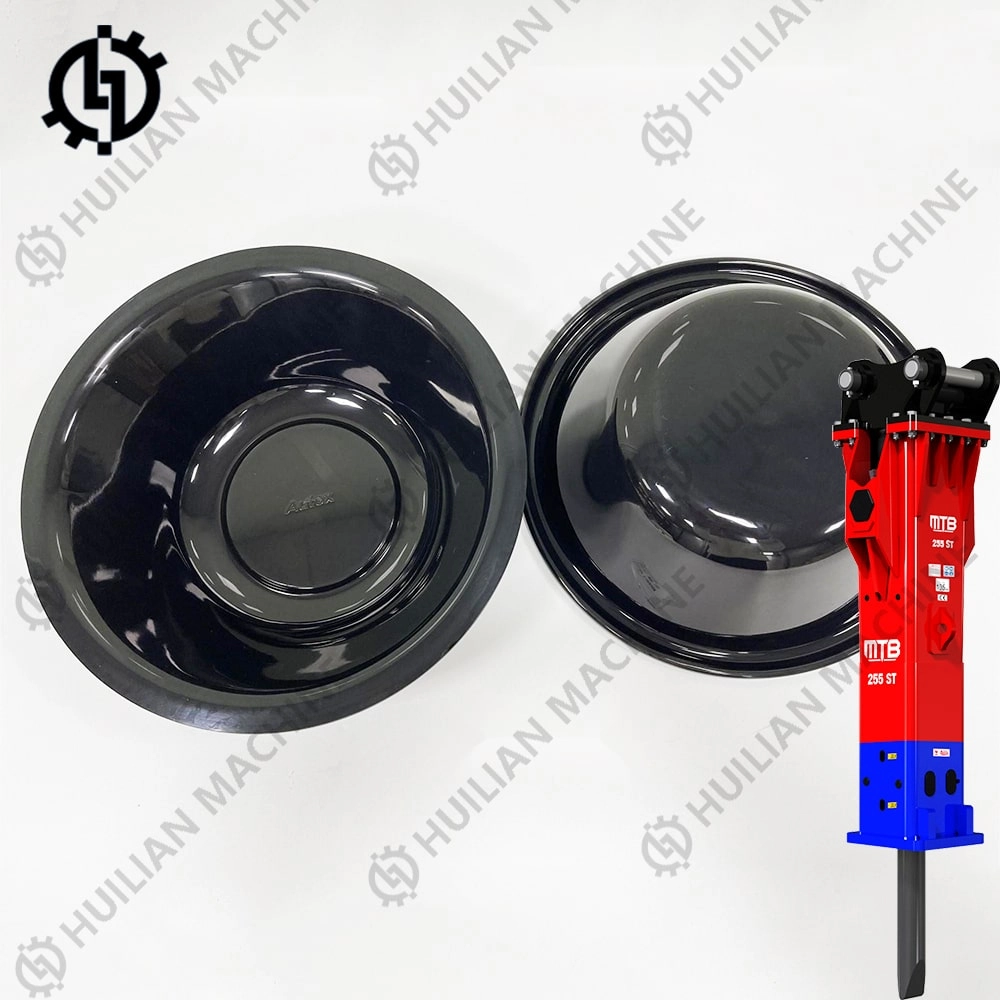
Inan Makina MTB Hydraulic Breaker Parts 45B0116A11 MTB255 MTB MT 255 Diaphragm MTB 255 IQ MTB-255 MTB 255 ST Membrane for Excavator Rock Hammer
 About us
© 2025 HUILIAN MACHINE. All rights reserved