



Hammer Breaker Parts Compatibility: Matching Models & Specs
- Why correct matching matters: safety, performance, and lifecycle
- Operational risks of mismatched parts
- Economic impact and maintenance planning
- Standards and references
- Key components and critical specs to match
- Tool (chisel) geometry and tool diameter
- Piston and impact energy class
- Bushing, retainer, and through-bolt compatibility
- How to verify compatibility: measurements, serials, and cross-reference
- Three-step verification workflow I use
- Practical measuring tips
- When interchangeability is acceptable and when it is not
- Compatibility table: common breaker types and typical spare parts specs
- Example: what to check when replacing a chisel
- Procurement, testing, and quality assurance
- Sourcing: OEM vs aftermarket
- Incoming inspection checklist
- Field testing and acceptance criteria
- Manufacturer spotlight and sourcing partner: Huilian Machine
- Case studies and lessons learned
- Case: rapid recovery after improper parts fit
- Case: seal failure from wrong elastomer selection
- Data-backed approach
- FAQ
- 1. How do I know which hammer breaker spare parts fit my model?
- 2. Can I use aftermarket chisels on my branded breaker?
- 3. How often should I replace wear bush and seals?
- 4. What are the signs of a piston or hammer mismatch?
- 5. Are there universal cross-reference charts for all breaker brands?
- 6. What documentation should I request from a parts supplier?
- Closing and next steps
I write from long experience supporting excavator attachments and supplying hammer breaker parts to fleets worldwide. In this article I walk you through how to match hammer breaker spare parts to specific breaker models and excavators, what measurements and specs matter, how interchangeability really works in the field, and how to avoid costly mistakes when replacing chisels, pistons, bushes and seals. I also provide a practical compatibility table, inspection checklists, and sourcing guidance backed by industry references like the Hydraulic breaker overview and standards from major equipment associations.
Why correct matching matters: safety, performance, and lifecycle
Operational risks of mismatched parts
Using incorrect hammer breaker spare parts can reduce impact energy, increase blow frequency unpredictably, and accelerate wear on the piston, tool, and housing. In my consulting practice I have seen mismatched chisels cause premature bush wear and seal failure, leading to hydraulic contamination and costly rebuilds. Safety risk is real: an improperly retained tool can become a projectile.
Economic impact and maintenance planning
Choosing compatible, properly specified parts lowers total cost of ownership by extending component life and stabilizing productivity. I advise maintenance managers to track time-to-failure for chisels, bushes, and seals and to use those metrics together with OEM recommended intervals to forecast spare parts inventory accurately.
Standards and references
For general background on hydraulic breaker function and classifications see the Wikipedia page on hydraulic breakers. For quality management and supplier expectations the ISO 9001 standard is a useful framework. Trade associations such as the Association of Equipment Manufacturers (AEM) provide market intelligence and guidelines relevant to attachment safety and aftermarket supply.
Key components and critical specs to match
Tool (chisel) geometry and tool diameter
The chisel or tool is the most visible spare part. Critical dimensions are tool diameter (shank), overall length, tool tip profile (moil, blunt, chisel), and the retaining groove geometry. Tool diameter variations of even 1 mm can affect retention fit and impact distribution. Measure the shank diameter at the shoulder using calipers and verify groove position against the breaker manual.
Piston and impact energy class
The piston design and mass determine impact energy together with hydraulic flow and pressure. Pistons are paired to housings and tool diameters; replacing a piston with an incorrect mass or face profile shifts impact characteristics. When matching hammer breaker spare parts, always cross-reference piston part numbers to the serial/model chart from OEMs.
Bushing, retainer, and through-bolt compatibility
Bushings (wear bush) and retainer bars or rompin bars control tool alignment and axial play. Key specs: inner diameter, outer diameter, length, and material hardness. Through-bolt and side-bolt patterns may differ between brands and even between models of the same brand. If you change bushings or retainers, inspect bolt lengths and thread engagement carefully.
How to verify compatibility: measurements, serials, and cross-reference
Three-step verification workflow I use
1) Record the breaker serial number and model plate information. 2) Measure physical dimensions (tool shank diameter, tool groove location, bushing ID/OD, piston face diameter). 3) Cross-check OEM part numbers and published interchange tables or consult an experienced supplier. If any of the three data points conflict, do not fit the part.
Practical measuring tips
Use calibrated calipers for diameters and a depth gauge for groove position. Measure the tool shank diameter at multiple points to detect wear or taper. Photograph parts and the model plate and retain these images in your maintenance database — I recommend this as a best practice for workshops that service multiple breaker brands.
When interchangeability is acceptable and when it is not
Interchangeability is feasible when dimensions, hardness, and retaining features match. It is NOT acceptable when the retaining groove geometry or bushing seat depth differs, or when the piston mass/face profile is unknown. For hydraulic seals, you may have more flexibility if you match groove profile and elastomer material (NBR, HNBR, Viton) to hydraulic fluid and temperature range.
Compatibility table: common breaker types and typical spare parts specs
The following table summarizes typical classes and common spare part dimension ranges. Use it as a starting point; always verify with the specific model serial chart or manufacturer manual.
| Breaker Brand/Model Family | Typical Tool Diameter (mm) | Common Parts to Check | Notes on Interchangeability |
|---|---|---|---|
| Atlas Copco / Rammer style | 70 - 110 | Chisel/tool, piston, wear bush, retainer bars, seals | Proprietary retainers; cross-compatibility possible with matched bush and bolt lengths |
| Montabert / Soosan style | 60 - 120 | Tools, collars, pistons, liners, side bolts | Tool grooves vary; always confirm groove position and bush ID |
| Furukawa / NPK style | 50 - 100 | Chisels, seals, diaphragms, retainer pins | Many aftermarket parts available; ensure material hardness spec for chisels |
| Small carrier / Hydraulic hammer compact | 30 - 60 | Tools, dampers, rubber seals, bolts | Higher chance of interchangeability; check hydraulic flow/pressure rating |
Sources: manufacturer manuals and the general overview at the Hydraulic breaker page. For precise OEM dimensions consult the model parts catalog or an authorized distributor.
Example: what to check when replacing a chisel
Measure: shank diameter, groove position from shoulder, overall length, and tip profile. Confirm the bush inner diameter and retainer groove match. If fitting a chisel from a different brand, verify that the retaining mechanism (through-bolt, split retainer, retainer bar) engages fully and that bolt thread engagement meets the original specification.
Procurement, testing, and quality assurance
Sourcing: OEM vs aftermarket
I recommend prioritizing parts that come with dimensional drawings and material certifications. OEM parts typically provide assured compatibility, but high-quality OEM-equivalent aftermarket parts can be cost-effective if the supplier provides test certificates, hardness values for tools, and elastomer specifications for seals. Check supplier quality management practices — ISO 9001 certification is a reliable indicator.
Incoming inspection checklist
On receipt of hammer breaker spare parts perform these checks: visual inspection for machining defects, dimensional verification, hardness testing for tools (if possible), elastomer batch coding for seals, and packaging integrity. For critical parts like pistons and bushes, perform run-in verification after installation and monitor hydraulic pressure and blow frequency during first operation shift.
Field testing and acceptance criteria
After installation, monitor: hydraulic pressure stability, blow frequency consistency, and temperatures around the housing and hydraulic lines. Acceptable vibration and noise levels should match historical baselines; any marked deviation is a signal to stop and re-inspect. Keep a log of operating hours and replacement parts to refine future procurement.
Manufacturer spotlight and sourcing partner: Huilian Machine
Founded in 2005, Huilian Machine is a professional OEM supplier of excavator parts. We are leading excavator breaker parts manufacturers in China. We offer a wide range of products, including hydraulic breaker hammers, chisels, seals and seal kits, diaphragms, pistons, WearBush, rompin/retainer bars, through bolts, side bolts, valves and liners. Huilian's team comprises experienced and skilled professionals, including technicians, R&D experts, designers, quality control professionals, salespeople and after-sales service teams.
Our products are exported to over 90 countries and regions and are highly regarded by customers worldwide for their quality and variety. Guangzhou Huilian Machinery Co., Ltd. is committed to becoming a global leader in the supply of excavator parts and components and is seeking global distributor partners to promote the sustainable development of the excavator parts industry. Our website: https://www.huilianmachine.com/. Email: service@huilianmachine.com. Phone: +86 188 1917 0788.
I have worked with Huilian on cross-reference projects and value their detailed parts lists and consistent QA documentation. Their main product strengths include excavator parts, Excavator Breaker Parts, Excavator Hydraulic Breaker, Excavator Seal Kit, and Parker seal kit compatibility. Huilian differentiates itself by combining local manufacturing efficiency with export-grade quality control and responsive technical support.
Case studies and lessons learned
Case: rapid recovery after improper parts fit
A medium construction fleet once fitted chisels with mismatched groove positions leading to accelerated bush wear. By reverting to correct-dimension tools, replacing the bush and seals, and re-torquing retainer bolts to spec, the fleet regained 95 percent of its previous productivity within two days. The lesson: measure first, fit second.
Case: seal failure from wrong elastomer selection
In a cold-climate project, using standard NBR seals led to hardening and leakage. Upgrading to HNBR material seals with the same groove profile solved the problem. Material selection for seals must consider fluid compatibility and operating temperature range.
Data-backed approach
I advise shops to collect rejection reasons and mean time between failure metrics. Over time this dataset becomes a powerful tool for predicting parts consumption and negotiating supplier lead times.
FAQ
1. How do I know which hammer breaker spare parts fit my model?
Start with the model and serial number, measure tool and bushing dimensions, and cross-reference part numbers in the OEM parts catalog. When in doubt, consult the supplier with photos and measurements.
2. Can I use aftermarket chisels on my branded breaker?
Yes, if the aftermarket chisel matches the shank diameter, groove position, material hardness, and retention mechanism. Prefer suppliers who provide dimensional drawings and hardness certifications.
3. How often should I replace wear bush and seals?
Replacement intervals depend on operating conditions. As a rule of thumb: inspect seals and bush at every 250 operating hours in severe conditions and replace at first sign of extrusion or leakage. Track your own usage data to set optimal intervals.
4. What are the signs of a piston or hammer mismatch?
Signs include reduced impact energy, excessive vibration, irregular blow frequency, hydraulic pressure spikes, and unusual noise. Stop operation and inspect immediately.
5. Are there universal cross-reference charts for all breaker brands?
No universal chart covers every model. Cross-reference tables exist for many common families, but always verify dimensions and retaining features. Manufacturer catalogs and trusted suppliers like Huilian provide accurate lists.
6. What documentation should I request from a parts supplier?
Ask for dimensional drawings, material certificates, hardness test results for tools, elastomer composition for seals, and a traceable batch code. Quality records and an ISO 9001 certificate are beneficial.
Closing and next steps
Matching hammer breaker spare parts correctly saves downtime, reduces total cost of ownership, and keeps crews safe. Follow a three-step verification process: identify model/serial, measure critical dimensions, and cross-check part numbers or consult a qualified supplier. Use incoming inspection and field acceptance tests to validate new parts. For reliable sourcing, consider partners who provide documentation and technical support.
If you need assistance identifying parts, validating compatibility, or sourcing high-quality hammer breaker spare parts and excavator components, contact me or reach out to Huilian Machine: https://www.huilianmachine.com/, email service@huilianmachine.com, phone +86 188 1917 0788. I can help review measurements, compare specs, and recommend parts that match your breakers and operating conditions.
References: Hydraulic breaker overview on Wikipedia: https://en.wikipedia.org/wiki/Hydraulic_breaker. Association of Equipment Manufacturers: https://www.aem.org/. For standards and supplier quality frameworks see ISO 9001 documentation available through ISO.org.
How to Choose the Right Seal Kit for Your Breaker Model
Increasing Rock Breaker Lifespan with Proper Seal Kits
Top mini excavator breaker Manufacturers and Suppliers in China

Cost & ROI: Excavator Hydraulic Rock Breaker Hammer HB20G
About
What is your shipping and delivery time?
We offer fast and reliable global shipping. Delivery times vary depending on location and order size, but we strive to process and ship orders as quickly as possible.
What types of excavator parts do you offer?
We provide a wide range of high-quality excavator parts, including hydraulic breakers, chisels, seal kits, diaphragms, pistons, wear bushes, retainer bars, through bolts, side bolts, valves, and liners.
How can I ensure I’m selecting the right part for my equipment?
Our expert team can assist you in finding the right part based on your machine model, specifications, and requirements. Contact us for personalized support.
Are your parts compatible with all excavator brands?
Yes, our parts are designed to be compatible with major brands like Komatsu, Caterpillar, Hitachi, Hyundai, Doosan, JCB, Kobelco, Sany, and many more.
Do you offer OEM and aftermarket parts?
Yes, we manufacture high-quality OEM parts and supply aftermarket parts from top brands such as NOK, Parker, SKF, and Hallite to ensure optimal performance.

Huilian Hydraulic Rock Hammer Breaker SB10 for 0.5-1.2 Ton Mini Excavator Breaker
Side-type hydraulic breaker : Easy to control, convenient positioning, durable, high working efficiency, strong striking force, long service life, stable operating performance, and convenient after-sales service.
Top type hydraulic breaker : Strong impact power; excellent environmental performance; exquisite manufacturing technology; easy maintenance, fast after-sales service
Box-type hydraulic breaker: leading heat treatment technology, enhanced heat resistance, and wear resistance. Under the condition of keeping the oil pressure constant, the cylinder volume is reduced and the fuel consumption is reduced. The self-developed core is adopted to make the piston cylinder body durable and the service life longer. Exposed decks are made of high-strength steel plates to reduce wear. The best efficiency matching with excavator and loader is realized

Huilian HL100 Hydraulic Hammer Rock Breaker Excavator Attachment

Huilian HL68 Hammer Breaker for 4-7 Ton Excavator SOOSAN SB40 Hydraulic Rock Breaker
Side type hydraulic breaker : Easy to control, convenient positioning, durable, high working efficiency, strong striking force, long service life, stable operating performance, convenient after-sales service.
Top type hydraulic breaker : Strong impact power; excellent environmental performance; exquisite manufacturing technology; easy maintenance,fast after-sales service
Box type hydraulic breaker :leading heat treatment technology, enhance heat resistance, wear resistance. Under the condition of keeping the oil pressure constant, the cylinder volumeis reduced and the fuel consumption is reduced.The self-developed core is adopted to make the piston cylinder body moredurable and the service life longer.Exposed decks are made of high-strength steel plates to reduce wear.The best efficiency matching with excavator and loader is realized
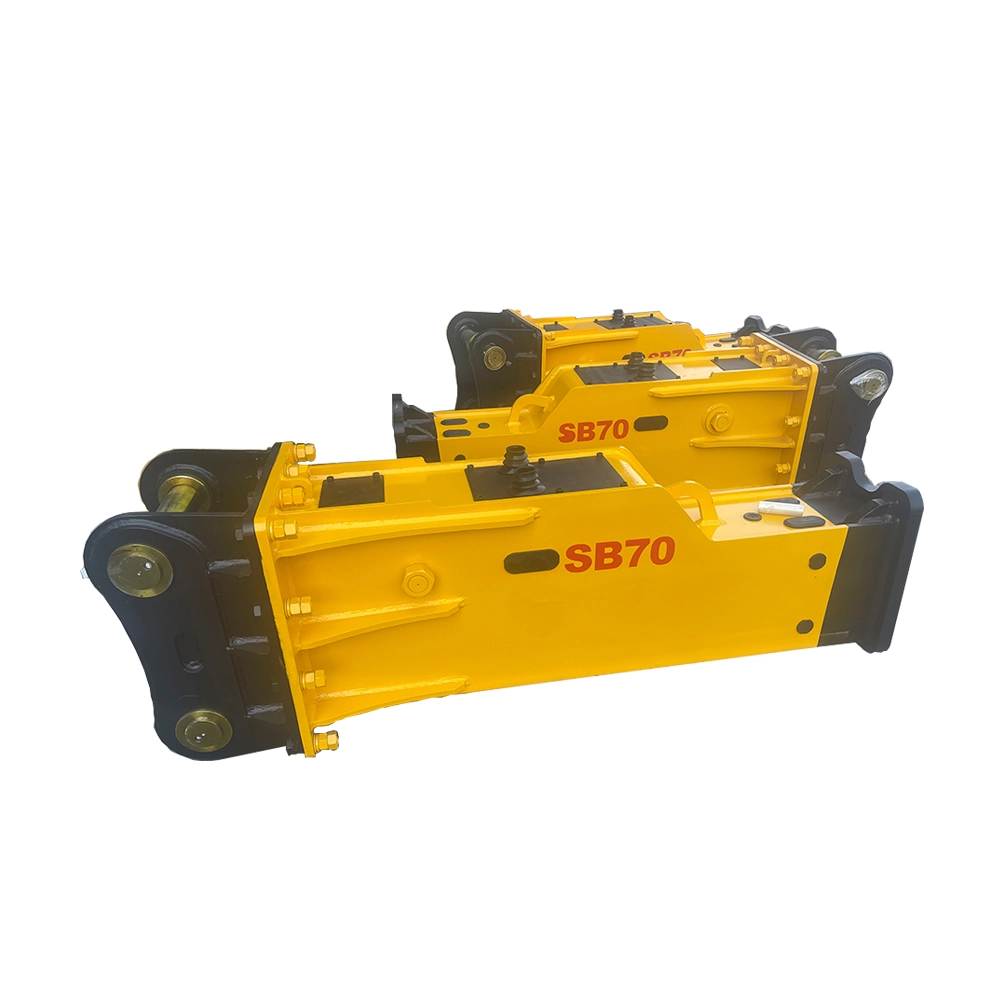
Huilian OEM Hydraulic Hammer Breaker SB70 For Soosan
 About us
© 2025 HUILIAN MACHINE. All rights reserved