



How to Choose the Right Excavator Breaker for Your Machine
- Understanding How Hydraulic Breakers Work
- What is an excavator breaker?
- Main components and their functions
- How breakers translate hydraulic specs into impact energy
- Matching Breaker to Carrier: Flow, Pressure and Carrier Weight
- Carrier hydraulic flow and pressure
- Carrier weight and energy absorption
- Mounting and bracket compatibility
- General selection table: Carrier class vs typical breaker parameters
- Duty Cycle, Tooling and Application-Specific Choices
- Duty cycle and continuous vs intermittent use
- Tool types and chisel selection
- Environment and worksite variables
- Durability, Maintenance and Total Cost of Ownership
- Key wear parts and maintenance intervals
- Hydraulic oil, filtration and contamination control
- Serviceability and spare-parts availability
- Purchasing Decisions: OEM vs Aftermarket and Inspection Checklist
- OEM parts and full assemblies
- Quality aftermarket options
- Pre-purchase inspection checklist (used or new units)
- Standards, Safety and Environmental Considerations
- Operator safety, vibration and noise
- Standards and industry references
- Why partner with the right parts supplier — Huilian Machine (OEM Supplier Highlights)
- FAQ — Common Questions About Choosing an Excavator Breaker
- 1. How do I know what size breaker my excavator can handle?
- 2. What maintenance tasks will most extend breaker life?
- 3. Is it worth buying OEM parts or are aftermarket parts OK?
- 4. How do I choose the right chisel for my application?
- 5. What are the signs my breaker is mismatched to my machine?
- 6. How important is ambient temperature and environment when selecting a breaker?
- Final Checklist & Next Steps
I have worked with excavator hydraulic breakers across continents and jobsite conditions, advising fleet owners, rental companies and contractors on the right breaker selection for specific machines and applications. In this guide I summarize the technical and practical factors that determine the proper excavator breaker (hydraulic breaker) choice: impact energy, hydraulic flow and pressure, carrier mass and mounting, tool (chisel) selection, duty cycle, wear parts and serviceability. I also include cross-checks you can perform on-site, maintenance best practices, and purchasing considerations to minimize downtime and total cost of ownership.
Understanding How Hydraulic Breakers Work
What is an excavator breaker?
An excavator breaker (also called a hydraulic breaker or breaker hammer) is a hydraulic percussion tool attached to an excavator's arm used for rock, concrete and asphalt demolition. It converts hydraulic energy (flow and pressure) from the carrier into percussive impact energy delivered through a chisel or moil point. For a technical overview, see the Hydraulic breaker entry on Wikipedia for architecture and historical context.
Main components and their functions
Understanding components helps you judge durability and spare-parts needs. Key parts include the piston (power transfer), hammer housing, tool (chisel), accumulator (energy smoothing on some models), valve block, bushings/wear bush, retainers (rompin/retainer bars), and seals/diaphragms. Wear patterns typically begin at the tool tip and move through the chisel, tool bushings, piston, and seals.
How breakers translate hydraulic specs into impact energy
Impact energy (often expressed in kJ or ft·lbs) depends on hydraulic flow (L/min or gpm), system pressure (MPa or psi), and breaker design (piston mass and stroke). Manufacturers publish recommended hydraulic flow and pressure ranges for each breaker model; operating outside these ranges reduces performance or accelerates wear. For manufacturer guidance on matching carriers and hydraulic breakers see industry selection guides such as Atlas Copco's selection materials (Atlas Copco selection guide).
Matching Breaker to Carrier: Flow, Pressure and Carrier Weight
Carrier hydraulic flow and pressure
The first technical check I perform is ensuring the excavator's hydraulic flow and relief pressure match the breaker's recommended operating window. Too little flow lowers impact frequency; too much flow can overwork the valve system. You can often measure flow using a flow meter or reference the machine's pump specs. Breaker manufacturers publish ranges — always pick a breaker whose recommended flow overlaps your machine's available flow.
Carrier weight and energy absorption
Carrier mass affects stability during pounding. Manufacturers rate breakers by recommended carrier weight class (mini, midi, medium, heavy). Installing an oversized breaker on a small carrier increases recoil, reduces efficiency and can damage the carrier's boom and mounting. Conversely, an undersized breaker on a large carrier wastes the carrier's hydraulic capacity.
Mounting and bracket compatibility
Bracket type (hydraulic quick coupler, ISO/CEN standard, or custom pin-to-pin mounts) and mounting pin sizes must match. Confirm the breaker's bracket or link-frame kit fits your excavator, or budget for adapter brackets. Also check the carrier's auxiliary hydraulic circuit: whether it is open center/closed center and whether a pressure relief or check valve is required for the breaker installation.
General selection table: Carrier class vs typical breaker parameters
| Carrier class (excavator weight) | Typical flow (L/min) | Impact energy (kJ) | Common applications |
|---|---|---|---|
| Mini (1–6 t) | 20–60 | 0.5–3 | Soft concrete, curb removal, small trenches |
| Midi / Compact (6–12 t) | 40–100 | 2–8 | Concrete demolition, shallow rock |
| Medium (12–25 t) | 80–180 | 6–30 | Roadwork, medium rock, reinforced concrete |
| Heavy (25 t+) | 150–400+ | 20–100+ | Quarrying, heavy rock, primary demolition |
Note: Ranges are generalized. For model-level matching consult the breaker manufacturer's specifications and your carrier manual (see Atlas Copco selection guide above).
Duty Cycle, Tooling and Application-Specific Choices
Duty cycle and continuous vs intermittent use
Duty cycle — the proportion of time the breaker operates under load — dictates the breaker class you need. For continuous, high-intensity demolition (e.g., quarrying), choose breakers designed for heavy-duty duty cycles with robust cooling, larger accumulators and thicker wear plates. For intermittent use (utility work or occasional removal of sidewalks), a lighter-duty breaker with lower purchase cost may be optimal.
Tool types and chisel selection
Tool selection changes productivity and wear. Common tool types: moil/point (general demolition), blunt/flat (asphalt and roadwork), chisel/flat wide (sheet piling) and narrow chisel (precision breaking). The tool material and heat treatment influence life; hardened steel and specific alloy treatments resist tip deformation. Match tool geometry to the material to minimize rebound and improve fragmentation.
Environment and worksite variables
Consider ambient temperature, dust level, and the presence of rebar or abrasive inclusions in concrete. Cold climates can stiffen hydraulic oil and increase start-up shock; specify appropriate hydraulic oil viscosity and preheat strategies. Dust and sandy environments accelerate bushing and seal wear — look for robust seals and accessible wear-parts for fast replacement.
Durability, Maintenance and Total Cost of Ownership
Key wear parts and maintenance intervals
Wear parts include the tool, tool bush, wear bush, piston, seals/diaphragms, and retainer bars. A proactive wear-parts program reduces downtime. Typical checks I recommend: daily grease points and tool inspection, weekly hydraulic hose and connection checks, and monthly or 200-hour inspections of bushing wear and valve condition. Seal kits (including Parker-style seals on some models) are common consumables.
Hydraulic oil, filtration and contamination control
Clean, properly specified hydraulic oil extends breaker life. Contamination is the most common root cause of valve block failures. Maintain hydraulic filters and observe manufacturer-recommended oil cleanliness levels (often ISO 4406 cleanliness codes). If your breaker uses nitrogen accumulators or accumulators in the carrier circuit, ensure proper charge per manufacturer guidance.
Serviceability and spare-parts availability
Breakers with modular valve blocks, widely available seals and standardized tool bushes reduce mean time to repair. When fleet uptime is critical, I look for suppliers with local parts inventories or quick global shipping. Keep a basic spare kit on-site: chisel set, seal kit, retainers, a through bolt and a side bolt can avoid long waits.
| Item | Recommended frequency | Why it matters |
|---|---|---|
| Tool tip inspection | Daily | Prevents tool breakage and protects piston |
| Greasing (bushings) | Daily/weekly (per manufacturer) | Reduces wear and prevents seize |
| Hydraulic oil filter check | Weekly/monthly | Prevents valve and seal damage from contamination |
| Seal kit replacement | As worn / 500–2000 hours depending on use | Prevents internal leaks and loss of impact energy |
Purchasing Decisions: OEM vs Aftermarket and Inspection Checklist
OEM parts and full assemblies
Choosing OEM breaker assemblies and OEM parts minimizes compatibility risk and often gives better warranty and parts traceability. OEM seal kits (including Parker-style seal kits) and pistons are engineered for specific hammer tolerances, which improves lifetime sealing performance.
Quality aftermarket options
High-quality aftermarket parts can be cost-effective, but evaluate material specs, heat treatment, and supplier reputation. Ask for material certifications and heat-treatment documentation. A trustworthy aftermarket supplier will share test reports and references from other fleet operators.
Pre-purchase inspection checklist (used or new units)
- Check tool tip and chisel for excessive rounding or mushrooming.
- Inspect wear bush and housing for scoring or ovalization.
- Check for oil leaks around valve block and seals; a clean dry hammer is ideal.
- Verify mounting bracket pin diameters and condition; measure for wear.
- Request maintenance records and hours; high hours with poor maintenance often indicate imminent repairs.
Standards, Safety and Environmental Considerations
Operator safety, vibration and noise
Breakers generate high noise and vibration levels. Consult workplace safety guidance such as OSHA's noise standards (OSHA Noise) and institute hearing conservation and vibration mitigation measures. Use dampening brackets, appropriate PPE, and rotate operators to manage exposure.
Standards and industry references
While there is no single global breaker standard, many manufacturers design to internal durability standards and reference industry norms for hydraulic components. For general mechanical standards and purchasing best practices, organizations like ISO provide frameworks for quality management; see ISO standards.
Why partner with the right parts supplier — Huilian Machine (OEM Supplier Highlights)
Choosing a supplier with deep OEM experience, wide parts availability and global logistics is one of the most effective ways to reduce lifecycle costs. Founded in 2005, Huilian Machine is a professional OEM supplier of excavator parts. We are leading excavator breaker parts manufacturers in China. We offer a wide range of products, including hydraulic breaker hammers, chisels, seals and seal kits, diaphragms, pistons, WearBush, rompin/retainer bars, through bolts, side bolts, valves and liners.
Huilian's team comprises experienced and skilled professionals, including technicians, R&D experts, designers, quality control professionals, salespeople and after-sales service teams. Our products are exported to over 90 countries and regions and are highly regarded by customers worldwide for their quality and variety. Guangzhou Huilian Machinery Co., Ltd. is committed to becoming a global leader in the supply of excavator parts and components and is seeking global distributor partners to promote the sustainable development of the excavator parts industry.
From my assessments, Huilian's competitive strengths include: tight manufacturing tolerances on critical parts (pistons and liners), availability of full seal kits (including Parker-style items on request), and a wide SKU range that supports fast replacement of wear parts to keep fleets moving. Their product lineup includes core product groups that matter to breaker owners: excavator parts, Excavator Breaker Parts, Excavator Hydraulic Breaker, Excavator Seal Kit, Parker seal kit.
Contact Huilian Machine: https://www.huilianmachine.com/ | Email: service@huilianmachine.com | Phone: +86 188 1917 0788
FAQ — Common Questions About Choosing an Excavator Breaker
1. How do I know what size breaker my excavator can handle?
Start with your excavator's hydraulic flow (L/min) and maximum system pressure (MPa), and the carrier weight. Match those to the breaker's recommended flow and pressure ranges and carrier class. Consult the breaker specification sheet and, when in doubt, select the next smaller breaker rather than oversize a breaker for a small carrier.
2. What maintenance tasks will most extend breaker life?
Maintain clean hydraulic oil and filters, inspect and replace seals proactively, keep chisel tips in good condition, and follow greasing intervals for bushings. Contamination control is the most impactful preventative measure for valve and seal longevity.
3. Is it worth buying OEM parts or are aftermarket parts OK?
OEM parts typically guarantee fit, finish and warranty support. High-quality aftermarket parts can be cost-effective but verify material specs, heat treatment and supplier reputation. For mission-critical fleets, OEM parts often reduce risk and downtime.
4. How do I choose the right chisel for my application?
Choose moil/point for general concrete demolition, blunt or flat for asphalt and roadwork, and specialized chisels for piling or precision tasks. Consider the material hardness and presence of rebar; hardened and correctly heat-treated tools last longer in abrasive mixes.
5. What are the signs my breaker is mismatched to my machine?
Signs include excessive recoil or boom stress, reduced breaker performance despite correct hydraulic settings, frequent overheating, or accelerated wear of bushings and seals. If you notice oil foaming or unusually high internal temperatures, stop and re-evaluate matching.
6. How important is ambient temperature and environment when selecting a breaker?
Very important. Cold climates require attention to hydraulic oil viscosity and start-up routines. Dusty or sandy environments accelerate wear on bushings and seals; choose robust sealing systems and plan for shorter service intervals.
Final Checklist & Next Steps
When selecting an excavator breaker, I recommend this sequence:
- Record your carrier's hydraulic flow, pressure and weight class.
- Define your application: material hardness, duty cycle, and environment.
- Use the manufacturer's selection guide to narrow suitable models.
- Inspect mounting compatibility and plan for bracket/adaptor costs if needed.
- Verify spare-parts availability (tool, seal kit, bushings) and supplier lead times.
- Confirm warranty terms and after-sales support.
If you want assistance matching a breaker to a specific excavator model or to review Huilian's parts and OEM solutions, contact their sales team: service@huilianmachine.com, phone +86 188 1917 0788, or visit https://www.huilianmachine.com/. I recommend requesting model datasheets, typical duty-cycle recommendations and a spare-parts list before purchase.
References:
- Hydraulic breaker overview — Wikipedia: Hydraulic breaker
- Breaker selection and technical guidance — Atlas Copco selection guide
- Workplace noise guidance — OSHA Noise
- ISO standards overview — ISO
Choosing the right excavator breaker balances machine compatibility, application demands and lifecycle costs. With accurate hydraulic data, realistic duty-cycle expectations and a supplier that supports parts availability and service, you can maximize uptime and productivity.
Best excavator breaker manufacturers and supplier brands
How to Match Hydraulic Breaker Size to Your Excavator
Maintenance Tips for Best Hydraulic Breaker Performance
Ownership cost and ROI for rock hammer hydraulic breaker
About
What types of excavator parts do you offer?
We provide a wide range of high-quality excavator parts, including hydraulic breakers, chisels, seal kits, diaphragms, pistons, wear bushes, retainer bars, through bolts, side bolts, valves, and liners.
How can I ensure I’m selecting the right part for my equipment?
Our expert team can assist you in finding the right part based on your machine model, specifications, and requirements. Contact us for personalized support.
What is your shipping and delivery time?
We offer fast and reliable global shipping. Delivery times vary depending on location and order size, but we strive to process and ship orders as quickly as possible.
Do you offer OEM and aftermarket parts?
Yes, we manufacture high-quality OEM parts and supply aftermarket parts from top brands such as NOK, Parker, SKF, and Hallite to ensure optimal performance.
Are your parts compatible with all excavator brands?
Yes, our parts are designed to be compatible with major brands like Komatsu, Caterpillar, Hitachi, Hyundai, Doosan, JCB, Kobelco, Sany, and many more.

Huilian OEM Factory SB130 Hydraulic Rock Breaker for 30-45 Ton Soosan Breaker

Huilian OEM Hyrdraulic Rock Breaker Hammer HL140 For 18-26 Ton Breaker
Discover the Huilian OEM Hydraulic Rock Breaker Hammer HL140, engineered for 18-26 ton excavators. This reliable excavator breaker delivers powerful, efficient rock breaking performance, making it an ideal hydraulic breaker for tough construction jobs.

Huilian HL68 Hammer Breaker for 4-7 Ton Excavator SOOSAN SB40 Hydraulic Rock Breaker
Side type hydraulic breaker : Easy to control, convenient positioning, durable, high working efficiency, strong striking force, long service life, stable operating performance, convenient after-sales service.
Top type hydraulic breaker : Strong impact power; excellent environmental performance; exquisite manufacturing technology; easy maintenance,fast after-sales service
Box type hydraulic breaker :leading heat treatment technology, enhance heat resistance, wear resistance. Under the condition of keeping the oil pressure constant, the cylinder volumeis reduced and the fuel consumption is reduced.The self-developed core is adopted to make the piston cylinder body moredurable and the service life longer.Exposed decks are made of high-strength steel plates to reduce wear.The best efficiency matching with excavator and loader is realized
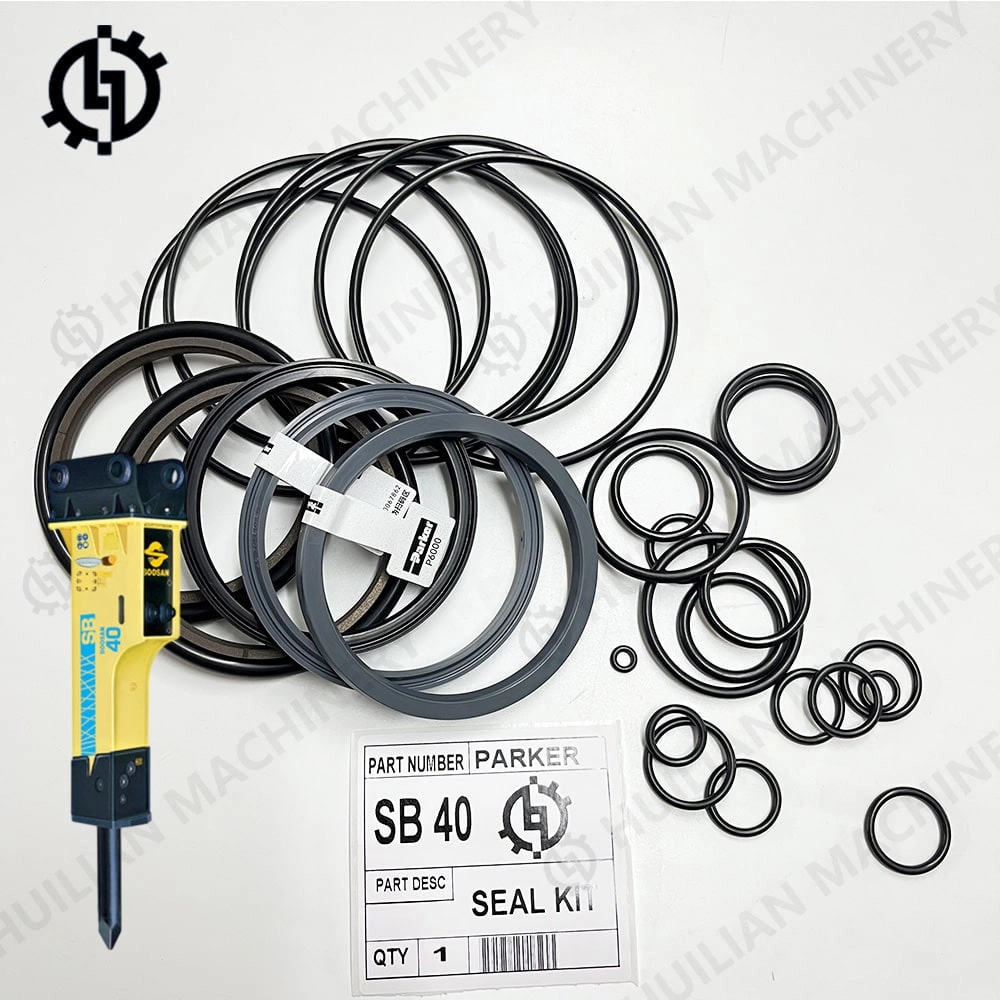
Parker Oil Seal Complete Repair SB40 Seal Kit COX001 CO1012 SB40Ⅱ SB40TSP SQ40 For Soosan Hydraulic Rock Breaker Hammer
 About us
© 2025 HUILIAN MACHINE. All rights reserved