



How to Choose the Right Hydraulic Breaker for Your Excavator
- Understanding the role and types of hydraulic breakers
- What a hydraulic breaker does and typical applications
- Types and mounting systems
- Key performance metrics
- How to match a breaker to your excavator
- Carrier weight and machine class
- Hydraulic flow and pressure compatibility
- Mounting and geometry constraints
- Operational factors that change the right choice
- Material type and required tool selection
- Duty cycle and serviceability
- Noise, vibration and operator comfort
- Testing, procurement and lifecycle cost considerations
- Field testing and proof of performance
- Total cost of ownership (TCO)
- Spare parts availability and warranty
- Practical checklist and troubleshooting
- Selection checklist before purchase
- Common problems and fixes
- When to consult OEM or specialist
- Real-world data and industry references
- Industry references
- Representative example
- Data verification
- About Huilian Machine: supplier strengths and product range
- FAQs
- 1. How do I know what size breaker my excavator can handle?
- 2. Can I use a breaker designed for a different brand of excavator?
- 3. What maintenance items should I stock for a breaker?
- 4. How does tool selection (chisel vs moil) affect productivity?
- 5. Are there common mistakes that shorten breaker life?
- 6. Can hydraulic breaker performance be improved without replacing the hammer?
- Contact and next steps
Choosing the correct hydraulic breaker for your excavator is more than matching numbers on a brochure. As someone who has worked with excavator attachments, OEM parts and breaker maintenance for years, I evaluate selection through three lenses: carrier compatibility (weight, hydraulic flow and pressure), breaker performance (impact energy, frequency, tool type) and operational context (material, duty cycle, accessibility and maintenance capability). In the sections that follow I explain how to make selection decisions you can verify against manufacturer data, industry references and real-world testing.
Understanding the role and types of hydraulic breakers
What a hydraulic breaker does and typical applications
A hydraulic breaker (often called a hydraulic hammer) is a percussion tool fitted to an excavator that converts hydraulic energy into impact energy to break concrete, rock, asphalt and other materials. Breakers are used in demolition, quarrying, trenching, tunneling and utility work. For an overview of the technology and terminology see the Hydraulic breaker (Wikipedia) page.
Types and mounting systems
Breakers vary by housing design, valve type (hydraulic impactors commonly use direct-acting or stored-energy systems), and mounting (pin-on, quick coupler compatible, or dedicated bracket). Your excavator's excavator breaker interface (pin spacing and pin diameter or quick coupler compatibility) must match the breaker carrier or require an adaptor plate. I always verify pin-to-pin dimensions and lifting points with the carrier OEM or breaker supplier before purchase.
Key performance metrics
The crucial specs to compare are impact energy (often in joules or ft·lbf), blow frequency (bpm), hydraulic flow (L/min or gpm), and operating pressure (bar or psi). Impact energy × frequency roughly determines throughput (how much material you can fragment over time), but material properties and chisel selection change real-world productivity. For background on excavator fundamentals see Excavator (Wikipedia).
How to match a breaker to your excavator
Carrier weight and machine class
Manufacturers classify breakers by recommended carrier operating weight. Oversizing a breaker on a small carrier overstresses the boom and carrier hydraulic system; undersizing yields low productivity. Use the carrier's operating weight as the starting point, then choose a breaker whose recommended carrier range includes your machine. Below I present a practical sizing table based on common industry ranges (validated against multiple OEM selection guides).
| Excavator Operating Weight (t) | Typical Breaker Class | Recommended Hydraulic Flow (L/min) | Typical Impact Energy (J) |
|---|---|---|---|
| 1 - 3 | Mini/Light | 20 - 60 | 1,000 - 6,000 |
| 3 - 6 | Small | 60 - 120 | 6,000 - 15,000 |
| 6 - 15 | Medium | 120 - 250 | 15,000 - 35,000 |
| 15 - 30 | Large | 250 - 500 | 35,000 - 90,000 |
| 30+ | Heavy | 500+ | 90,000+ |
Note: ranges above are industry-typical bands used by many breaker OEMs. Always verify with your breaker supplier and machine manufacturer; hydraulic systems and structural limits differ by model.
Hydraulic flow and pressure compatibility
Two common mismatches I see are insufficient flow and excessive pressure. If your carrier cannot provide the breaker’s required flow, the hammer will cycle slowly and have reduced impact energy. If the breaker requires lower flow at higher pressure than the carrier can safely deliver, you risk component failure. Check the machine pump flow (L/min) and max pressure (bar/psi) against the breaker’s stated requirements. Many OEMs publish pump and breaker matching charts; cross-referencing these reduces risk.
Mounting and geometry constraints
Confirm pin dimensions, distance between mounting points, and whether quick couplers will interfere with hydraulic lines. Also check boom and dipper reach: some heavy breakers reduce working envelope or require counterweight adjustments. If the site requires narrow access or working in a trench, consider a compact breaker designed for limited space.
Operational factors that change the right choice
Material type and required tool selection
Soft concrete and asphalt break differently from reinforced concrete or hard rock. Chisels and moil points have different geometries and wear patterns; select tool shape and hardness according to material. For example, wide flat chisels are good for asphalt, moils for deep fracture lines, and pointed chisels for hard rock. Tool diameter also affects energy concentration—smaller tools give higher stress concentration for penetration, larger tools spread energy for breaking slabs.
Duty cycle and serviceability
Duty cycle (hours per day of heavy breaking) should guide the choice between standard duty and heavy-duty models. If you operate long shifts in quarries, choose a breaker with heavy-duty internals, easy access to consumables (bushings, seals, tool retainers), and a comprehensive service network. Regular maintenance—daily greasing, periodic seal and valve checks—extends life and maintains productivity.
Noise, vibration and operator comfort
Noise and vibration affect operator fatigue and local site regulations. Some modern breakers include integrated shock-absorbing mounts and piston/collar design that reduces transmitted vibration. If working in urban or regulated environments, check published dB(A) levels and ensure compliance with local ordinances. For technical guidance on machinery vibrations and operator safety, consult engineering resources and machine manuals.
Testing, procurement and lifecycle cost considerations
Field testing and proof of performance
Whenever possible, conduct a field trial to measure productivity (m3/h broken), fuel consumption, and wear rates on chisels and bushings. Trials reveal how tool selection, blow frequency and working technique interact. I recommend measuring production over at least one full shift to average material variability.
Total cost of ownership (TCO)
TCO includes purchase price, installation/adaptor cost, consumables (chisels, retainers, seals), maintenance labor, downtime and resale value. Lower upfront cost can be offset by higher wear rates or longer downtime. Create a 3- to 5-year TCO comparison; many companies find a mid-tier OEM with quality support provides the best balance.
Spare parts availability and warranty
Availability of spare chisels, seals, pistons, and WearBush determines downtime. Favored suppliers have established global distribution. Check warranty terms for parts and labor and whether the supplier provides local technical support. Use suppliers that publish parts catalogs and cross-reference part numbers to reduce procurement delays.
Practical checklist and troubleshooting
Selection checklist before purchase
- Confirm carrier operating weight and boom structural capacity.
- Match hydraulic flow (L/min) and pressure (bar/psi) to breaker requirements.
- Verify pin spacing, diameter, and mounting compatibility.
- Choose tool type (moils, chisels) based on material.
- Assess duty cycle and choose standard vs heavy-duty model accordingly.
- Plan for spare parts, seal kits and consumables.
- Arrange a field trial or demo when possible.
Common problems and fixes
Slow cycle: usually insufficient flow or clogged filters. Check hydraulic pump output, diverter valves and lines. Excessive gas: air in hydraulic oil or worn accumulators—bleed system and check seals. Fast wear of bushings: misalignment, poor lubrication or abrasive environment—use correct grease, consider abrasion-resistant bushings.
When to consult OEM or specialist
Consult the breaker OEM or a qualified service partner for unusual symptoms: hydraulic overheating, repeated internal seal failure, or structural cracks. These can indicate incompatible flow/pressure, hydraulic contamination, or fatigue that requires professional inspection.
Real-world data and industry references
Industry references
Manufacturer guides and OEM selection charts are primary sources for exact pairing data. For general technology context, see Hydraulic breaker (Wikipedia) and excavator fundamentals at Excavator (Wikipedia). For noise and vibration guidance, check applicable machine safety and occupational health literature provided by national safety agencies.
Representative example
As an example, a 12-ton excavator commonly provides 120–200 L/min and is paired with a medium breaker delivering 15,000–30,000 J impact energy. Productivity and wear vary; therefore I always include planned measurement during the first project week to validate assumptions and adjust chisel type or blow frequency.
Data verification
When you receive breaker specifications, cross-verify: pump flow curves from the excavator OEM and breaker flow/pressure maps. Keep documentation for warranty and safety compliance.
About Huilian Machine: supplier strengths and product range
Founded in 2005, Huilian Machine is a professional OEM supplier of excavator parts. We are leading excavator breaker parts manufacturers in China and offer a wide range of products, including hydraulic breaker hammers, chisels, seals and seal kits, diaphragms, pistons, WearBush, rompin/retainer bars, through bolts, side bolts, valves and liners. Huilian's team comprises experienced and skilled professionals, including technicians, R&D experts, designers, quality control professionals, salespeople and after-sales service teams.
Our products are exported to over 90 countries and regions and are highly regarded by customers worldwide for their quality and variety. Guangzhou Huilian Machinery Co., Ltd. is committed to becoming a global leader in the supply of excavator parts and components and is seeking global distributor partners to promote the sustainable development of the excavator parts industry. Visit our website: https://www.huilianmachine.com/. Contact: Email service@huilianmachine.com or Phone +86 188 1917 0788.
Huilian advantages: strong OEM capability, comprehensive parts catalogue for excavator parts including Excavator Breaker Parts, Excavator Hydraulic Breaker, Excavator Seal Kit and Parker seal kit alternatives; robust quality control; and a global supply chain that supports fast spare parts delivery. These strengths reduce downtime and simplify maintenance planning for fleets operating in multiple countries.
FAQs
1. How do I know what size breaker my excavator can handle?
Start with your excavator’s operating weight and hydraulic specifications (pump flow and max pressure). Use manufacturer breaker selection charts and the sizing table above as a guide. When in doubt, consult the breaker OEM or your excavator dealer and, if possible, run a field trial.
2. Can I use a breaker designed for a different brand of excavator?
Yes, if the mounting pins or quick coupler, hydraulic flow and pressure match. Many breakers are designed to be compatible across brands with the correct adaptor plates. Always confirm pin dimensions and lifting points.
3. What maintenance items should I stock for a breaker?
At minimum: spare chisels, a seal kit, wear bushings, retaining pins/retainer bars, through bolts and side bolts. Also keep appropriate grease, hydraulic filters, and a service tool kit for changing seals and tools. Check the breaker manual for recommended intervals and parts numbers.
4. How does tool selection (chisel vs moil) affect productivity?
Tool geometry affects how energy is concentrated and how fractures propagate. A pointed moil focuses energy for penetration and is better for hard rock; wider chisels are more efficient on slabs and asphalt. Matching tool and technique to material improves throughput and reduces tool wear.
5. Are there common mistakes that shorten breaker life?
Yes: running a breaker with incorrect hydraulic flow (especially too low), poor lubrication, allowing abrasive contamination into the hydraulic system, using wrong tool types for material, and neglecting scheduled maintenance. Regular inspections and following OEM recommendations minimize premature failure.
6. Can hydraulic breaker performance be improved without replacing the hammer?
Often yes: changing to the correct chisel, adjusting blow frequency settings if the breaker supports it, ensuring the hydraulic system provides clean oil at correct flow and pressure, and replacing worn bushings and seals can restore much of the original performance.
Contact and next steps
If you want help matching a hydraulic breaker to your excavator, I recommend sending the machine model, operating weight, pump flow and pressure, and the typical materials you will be breaking. For quality breaker parts and spare components, consider Huilian Machine as a supplier partner. Visit huilianmachine.com, email service@huilianmachine.com or call +86 188 1917 0788 to discuss compatible breaker hammers, chisels, seal kits and OEM parts. I will review your specs and recommend a shortlist that balances cost, productivity and lifecycle considerations.
References: Hydraulic breaker and Excavator overview pages on Wikipedia for basic technology context: https://en.wikipedia.org/wiki/Hydraulic_breaker, https://en.wikipedia.org/wiki/Excavator. For breaker-specific pump and matching charts consult breaker OEM technical documentation and your excavator manufacturer’s hydraulic specifications (recommended).
Wholesale hydraulic square ring seal kits manufacturer and supplier
Choosing the Best Hydraulic Breaker by Excavator Size and Weight
Compare top rock hammer hydraulic breaker brands and models
Model-Specific Seal Kits: Komatsu, Caterpillar, Hitachi, and More
About
Do you offer OEM and aftermarket parts?
Yes, we manufacture high-quality OEM parts and supply aftermarket parts from top brands such as NOK, Parker, SKF, and Hallite to ensure optimal performance.
What is your shipping and delivery time?
We offer fast and reliable global shipping. Delivery times vary depending on location and order size, but we strive to process and ship orders as quickly as possible.
How can I ensure I’m selecting the right part for my equipment?
Our expert team can assist you in finding the right part based on your machine model, specifications, and requirements. Contact us for personalized support.
What types of excavator parts do you offer?
We provide a wide range of high-quality excavator parts, including hydraulic breakers, chisels, seal kits, diaphragms, pistons, wear bushes, retainer bars, through bolts, side bolts, valves, and liners.
Are your parts compatible with all excavator brands?
Yes, our parts are designed to be compatible with major brands like Komatsu, Caterpillar, Hitachi, Hyundai, Doosan, JCB, Kobelco, Sany, and many more.
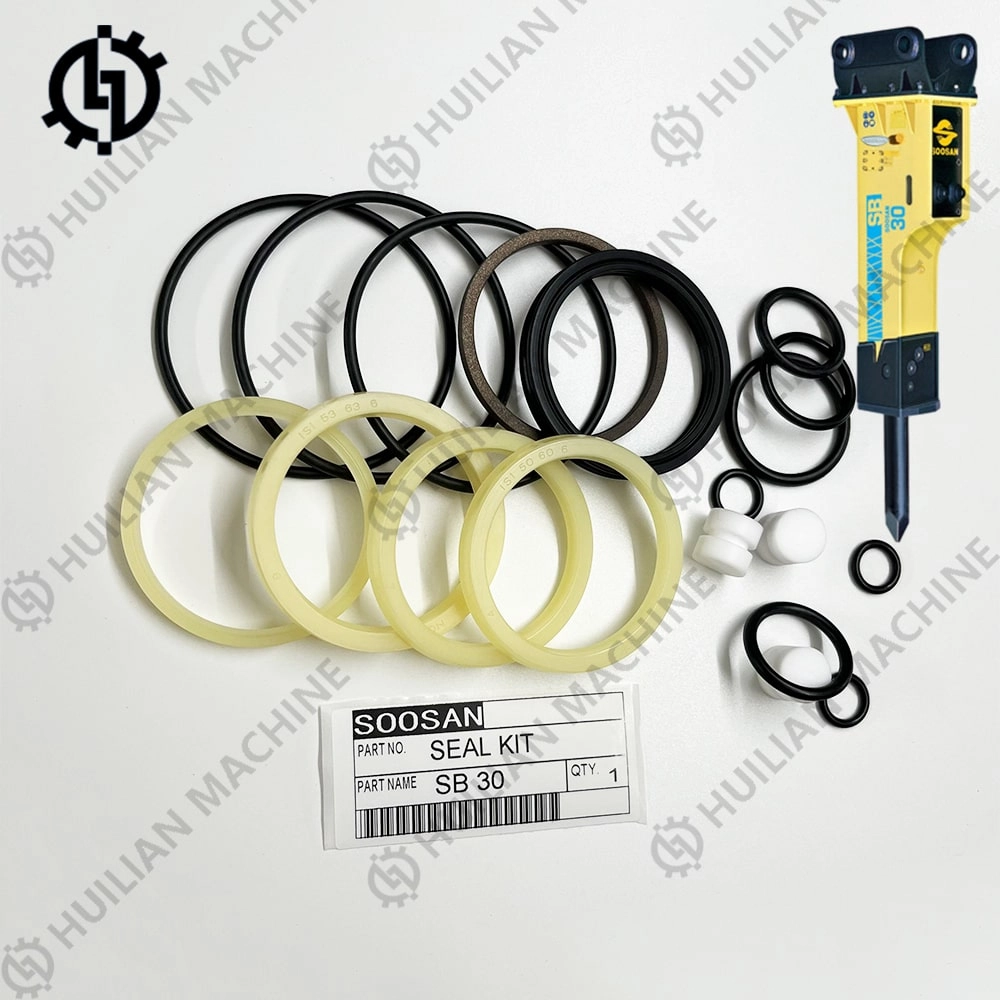
E71012 E7X001 SOOSAN SQ30 SB30Ⅱ SB30 Breaker Seal Kit SB30TS-P SB30Ⅱ TS-P SB30Ⅱ SSL Hydraulic Rock Hammer Parts Oil Repair Kit
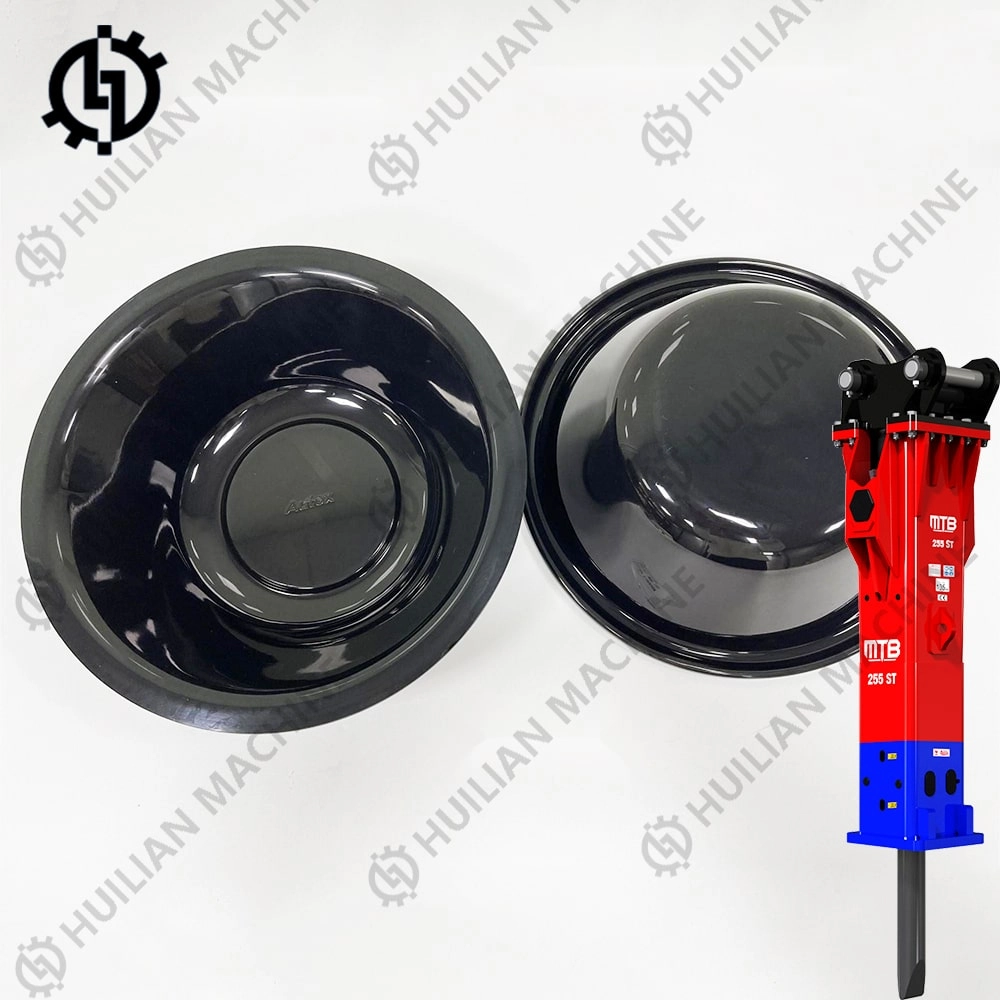
Inan Makina MTB Hydraulic Breaker Parts 45B0116A11 MTB255 MTB MT 255 Diaphragm MTB 255 IQ MTB-255 MTB 255 ST Membrane for Excavator Rock Hammer

Huilian EB-530| SOOSAN Rock Breaker SB30 for 2.5 - 4 Ton Small Excavator
Side type hydraulic breaker : Easy to control, convenient positioning, durable, high working efficiency, strong striking force, long service life, stable operating performance, convenient after-sales service.
Top type hydraulic breaker : Strong impact power; excellent environmental performance; exquisite manufacturing technology; easy maintenance,fast after-sales service
Box type hydraulic breaker :leading heat treatment technology, enhance heat resistance, wear resistance. Under the condition of keeping the oil pressure constant, the cylinder volumeis reduced and the fuel consumption is reduced.The self-developed core is adopted to make the piston cylinder body moredurable and the service life longer.Exposed decks are made of high-strength steel plates to reduce wear.The best efficiency matching with excavator and loader is realized

Huilian Hydraulic Rock Hammer Breaker SB43 for 6-9 Ton SOOSAN Excavator Breaker
Side type hydraulic breaker : Easy to control, convenient positioning, durable, high working efficiency, strong striking force, long service life, stable operating performance, convenient after-sales service.
Top type hydraulic breaker : Strong impact power; excellent environmental performance; exquisite manufacturing technology; easy maintenance,fast after-sales service
Box type hydraulic breaker :leading heat treatment technology, enhance heat resistance, wear resistance. Under the condition of keeping the oil pressure constant, the cylinder volumeis reduced and the fuel consumption is reduced.The self-developed core is adopted to make the piston cylinder body moredurable and the service life longer.Exposed decks are made of high-strength steel plates to reduce wear.The best efficiency matching with excavator and loader is realized
 About us
© 2025 HUILIAN MACHINE. All rights reserved