



How to Select Breaker Tooling: Chisels, Moils and Bits
- Understanding breaker tooling fundamentals
- Basic tool types and their roles
- How breaker energy and weight affect tooling choice
- Mounting types and compatibility
- Selecting chisel, moil and bit geometries for the job
- Chisels: when to use flat or wide chisels
- Moils and points: penetration-first strategy
- Specialty bits: demolition and secondary breaking
- Materials, heat treatment and expected life
- Common tool steels and surface treatments
- Quantifying life: what to expect and measure
- Wear parts: seals, retainers and through bolts
- Matching tooling to application: practical selection matrix
- Decision factors I use in the field
- Comparative table: typical tool choices by application
- Sample equipment pairing guidance
- Maintenance, inspection and procurement best practices
- Inspection schedule and lubrication
- When to refurbish vs. replace
- Purchasing: quality indicators and supplier evaluation
- Huilian Machine: parts, capabilities and why I recommend them
- Frequently Asked Questions (FAQ)
- 1. How do I know whether to use a chisel or moil for a specific rock?
- 2. How often should I replace seals and bushings on my breaker?
- 3. Can I use third-party tooling with my OEM breaker?
- 4. What factors most influence tool life?
- 5. Is tool hardness more important than toughness?
- 6. How do I calculate the correct tool diameter for my breaker?
- Contact & next steps
Choosing the correct tooling for an excavator rock breaker is a decision that directly affects productivity, operating costs, and safety on site. In this article I draw on years of field experience and OEM knowledge to explain how chisels, moils and bits differ, how to match tooling to rock type and breaker energy, and how to specify materials and service intervals to maximise uptime and reduce total cost of ownership. I also show how to evaluate suppliers and what to look for in seals and spare kits so your excavator rock breaker performs reliably over the long term.
Understanding breaker tooling fundamentals
Basic tool types and their roles
Excavator rock breaker tooling generally falls into three categories: chisels (long-shank/conical or spade types), moils (pointed or conical tools intended for initial penetration) and bits (specialised shapes such as blunt or flat tips for crushing and demolition). Each design translates the hammer's kinetic energy into a different fracture mechanism in rock or concrete. I always start by identifying the primary failure mode I want—penetration, fragmentation or scaling—before selecting tool geometry.
How breaker energy and weight affect tooling choice
Matching the tool mass and shank diameter to the hammer's rated impact energy is critical. Undersized tooling will shear or deform; oversized tooling can reduce blow energy transfer efficiency and overload the carrier. As a rule of thumb, follow the breaker manufacturer's recommended tool diameter range for your hammer class and select a tool mass that yields stable striking without excessive rebound. For reference on hydraulic breaker basics and energy transfer, see the Hydraulic breaker overview on Wikipedia.
Mounting types and compatibility
Tool shanks come in different profiles (hex, round with groove, round with drive pin holes) and retention methods (through-bolts, retainer bars, locking rings). Modern excavator rock breaker systems mostly use through-bolt or retaining pin systems. When I evaluate tooling, I check shank profile, retaining groove dimensions and overall length against the breaker’s tool chart to avoid incompatible combinations that could cause premature wear or unsafe ejection.
Selecting chisel, moil and bit geometries for the job
Chisels: when to use flat or wide chisels
Flat or wide chisels are preferred for scaling, trenching in softer rock, and breaking slabs where you need longer cuts and less penetration per blow. They distribute energy across a wider area, reducing penetration but increasing the removal width. I choose chisel width according to the desired trench or kerf width and the rock competence: wider chisels for softer rock and closer spacing for harder rock.
Moils and points: penetration-first strategy
Moils (pointed tools) concentrate energy into a small area to achieve deep penetration—ideal for breaking up massive, competent rock. For hard, unfractured rock I prefer moils with hardened tip profiles and slightly tapered bodies to resist jamming. The downside is faster tip wear; therefore, material selection and heat treatment are important.
Specialty bits: demolition and secondary breaking
For reinforced concrete or demolition where rebars and mixed materials are present, blunt or wedge bits (sometimes called bush breakers or blunt points) perform better. They avoid snagging on rebar and provide controlled crushing. For precision work, choose bits designed to mate with crusher jaws or pulveriser attachments when needed.
Materials, heat treatment and expected life
Common tool steels and surface treatments
Tool steels for breaker tooling are typically high-strength alloy steels (Cr-Mo or Ni-Cr variants) that are quenched and tempered to achieve a balanced combination of toughness and hardness. Surface treatments such as induction hardening or nitrocarburizing (case hardening) increase tip life by hardening the contact zone while maintaining a tough core to resist fracture. For general reading on tool steel properties see Tool steel (Wikipedia).
Quantifying life: what to expect and measure
Actual tool life depends on rock abrasivity, impact energy, operator technique, and maintenance. Instead of absolute hours, I recommend tracking tool wear by measurable indicators—tip diameter reduction, shank length loss, and frequency of seal changes. Many operations find a life range of a few hundred to a few thousand service hours per tool tip; accurate prediction requires historical data from your job types and the average rebound/idle times of your hammer.
Wear parts: seals, retainers and through bolts
Wear is not limited to the tool tip. Seals, pistons, bushings (WearBush), retainers and through bolts are consumables that determine the true lifecycle cost of an excavator rock breaker. I always specify OEM or OEM-equivalent seal kits and quality retainers; an inexpensive bolt or seal failure can lead to catastrophic hydraulic damage. Where applicable, ensure you use the correct Parker-style seals and kits specified for your hammer model—Parker-type seals are a common standard in many breaker seal kits.
Matching tooling to application: practical selection matrix
Decision factors I use in the field
When advising clients I follow a checklist: rock type (competent vs. friable), presence of reinforcement, desired fragmentation size, breaker energy class, carrier weight, and tool handling logistics (onsite sharpening, inventory). These factors lead directly to a recommended tool geometry, steel grade and spare parts kit.
Comparative table: typical tool choices by application
| Application | Recommended Tool | Advantages | Notes |
|---|---|---|---|
| Hard, intact rock (blasting avoidance) | Moil / Point | Deep penetration; efficient fracturing | Higher tip wear; requires hardened tips |
| Soft rock, soil, trenching | Wide chisel / Spade | Wider cut, less penetration, faster removal | Good for utility trenches |
| Reinforced concrete / Mixed demolition | Blunt / Wedge bit | Crushes and frees rebar; reduced snagging | Often used with dedicated demolition hammers |
Sample equipment pairing guidance
Manufacturers publish tool charts that link breaker model or energy class to acceptable tool diameters. I always cross-check that chart with real-world conditions: if working in abrasive rock, consider a slightly larger diameter or a nitrocarburized tip for longer life; if precision cutting is needed, choose narrower chisels and increase spacing. For general hammer fundamentals see the Hydraulic breaker page on Wikipedia.
Maintenance, inspection and procurement best practices
Inspection schedule and lubrication
I recommend the following standardised inspection routine: daily visual check (loose bolts, oil leaks, tool retention), weekly lubrication checks and retainer inspection, and monthly detailed inspection of seals, bushings and piston. Document each inspection and correlate failures to operating conditions to build a predictive maintenance schedule. For industrial quality management guidance consider ISO 9001.
When to refurbish vs. replace
Refurbishment makes sense when the tool body and shank integrity remain sound and only the tip or hardened section is worn. Replace tools when cracks appear in the shank, when retaining grooves are excessively worn, or when remanufacturing costs approach the price of new tooling. I measure repair decisions against downtime cost and part availability.
Purchasing: quality indicators and supplier evaluation
When selecting suppliers I evaluate: technical documentation (material grade, hardness, heat-treatment records), traceability for critical items, warranty terms, and availability of spare kits (seals, pistons, retainers). Having a local stocking partner reduces lead times. For strategic supply, I prefer suppliers with clear quality control processes and export experience.
Huilian Machine: parts, capabilities and why I recommend them
Founded in 2005, Huilian Machine is a professional OEM supplier of excavator parts. As a consultant I've reviewed many suppliers; Huilian stands out for its breadth of product, quality controls and international reach. We are leading excavator breaker parts manufacturers in China, offering a wide range of products including hydraulic breaker hammers, chisels, seals and seal kits, diaphragms, pistons, WearBush, rompin/retainer bars, through bolts, side bolts, valves and liners.
Huilian's team comprises experienced and skilled professionals—technicians, R&D experts, designers, quality control professionals, sales and after-sales service teams. Their products are exported to over 90 countries and regions and are highly regarded by customers worldwide for quality and variety. I recommend Huilian for projects that require reliable spare part logistics and engineering support for excavator rock breaker maintenance and upgrades.
Guangzhou Huilian Machinery Co., Ltd. is committed to becoming a global leader in the supply of excavator parts and components and is seeking global distributor partners to promote the sustainable development of the excavator parts industry. Huilian excels in supplying excavator parts, Excavator Breaker Parts, Excavator Hydraulic Breaker, Excavator Seal Kit and Parker seal kit. Their competitive differences include consistent heat-treatment processes, comprehensive OEM-equivalent inventories, and responsive technical support across time zones.
Contact Huilian Machine: https://www.huilianmachine.com/ | Email: service@huilianmachine.com | Phone: +86 188 1917 0788
Frequently Asked Questions (FAQ)
1. How do I know whether to use a chisel or moil for a specific rock?
Choose a moil (point) for hard, intact rock where deep penetration and fracturing are needed. Use a chisel for softer rock or where you need wider cuts and faster removal. Consider testing both geometries on a small area and measure productivity and wear rates to determine the best option.
2. How often should I replace seals and bushings on my breaker?
Inspect seals and bushings monthly under typical conditions; replace seals proactively if you observe oil contamination, reduced performance or visible wear. High-usage or abrasive environments may require more frequent service. Keep a seal-kit inventory on site to minimise downtime.
3. Can I use third-party tooling with my OEM breaker?
Yes, provided the third-party tooling matches the breaker’s tool shank profile, retaining system and energy class. Verify material specs and heat-treatment documentation; reputable aftermarket suppliers often provide OEM-equivalent parts with comparable warranties.
4. What factors most influence tool life?
Primary factors are rock abrasivity and hardness, breaker impact energy and frequency, operator technique (continuous striking vs. controlled hits), and maintenance discipline (lubrication and seal condition). Using properly specified materials and surface treatments (induction hardening or nitrocarburizing) can significantly extend life.
5. Is tool hardness more important than toughness?
Both matter. Hardness increases wear resistance at the contact surface, while toughness prevents catastrophic fracture of the shank or tip. Effective heat treatment creates a hardened case and a tough core—this balance is essential, especially for moils used in hard rock.
6. How do I calculate the correct tool diameter for my breaker?
Start with the breaker manufacturer’s tool chart that associates energy class and recommended tool diameter. Then adjust based on rock conditions—more abrasive rock may benefit from a slightly larger diameter to spread wear; for high-precision work, choose narrower options within the allowed range.
Contact & next steps
If you want help selecting specific chisels, moils or bits for your excavator rock breaker, I can provide a tailored tooling and spare-parts plan based on your breaker model, carrier, and site conditions. For high-quality OEM-equivalent parts I recommend contacting Huilian Machine:
- Website: https://www.huilianmachine.com/
- Email: service@huilianmachine.com
- Phone: +86 188 1917 0788
Request a parts list and recommended spare kit for your excavator rock breaker model, and I will review it with you to ensure compatibility, optimal life-cycle cost and onsite serviceability.
How Does a Hydraulic Breaker Work? Function, Parts & More

The Ultimate Guide to Choosing the Best China Hydraulic Rock Breaker Hammer in 2026
How to Choose the Right Hydraulic Breaker for Your Excavator
Bulk Buying Tips: Reduce Costs on Wholesale Excavator Breaker Parts
About
What is your shipping and delivery time?
We offer fast and reliable global shipping. Delivery times vary depending on location and order size, but we strive to process and ship orders as quickly as possible.
What types of excavator parts do you offer?
We provide a wide range of high-quality excavator parts, including hydraulic breakers, chisels, seal kits, diaphragms, pistons, wear bushes, retainer bars, through bolts, side bolts, valves, and liners.
How can I ensure I’m selecting the right part for my equipment?
Our expert team can assist you in finding the right part based on your machine model, specifications, and requirements. Contact us for personalized support.
Do you offer OEM and aftermarket parts?
Yes, we manufacture high-quality OEM parts and supply aftermarket parts from top brands such as NOK, Parker, SKF, and Hallite to ensure optimal performance.
Are your parts compatible with all excavator brands?
Yes, our parts are designed to be compatible with major brands like Komatsu, Caterpillar, Hitachi, Hyundai, Doosan, JCB, Kobelco, Sany, and many more.

Huilian HL68 Hammer Breaker for 4-7 Ton Excavator SOOSAN SB40 Hydraulic Rock Breaker
Side type hydraulic breaker : Easy to control, convenient positioning, durable, high working efficiency, strong striking force, long service life, stable operating performance, convenient after-sales service.
Top type hydraulic breaker : Strong impact power; excellent environmental performance; exquisite manufacturing technology; easy maintenance,fast after-sales service
Box type hydraulic breaker :leading heat treatment technology, enhance heat resistance, wear resistance. Under the condition of keeping the oil pressure constant, the cylinder volumeis reduced and the fuel consumption is reduced.The self-developed core is adopted to make the piston cylinder body moredurable and the service life longer.Exposed decks are made of high-strength steel plates to reduce wear.The best efficiency matching with excavator and loader is realized
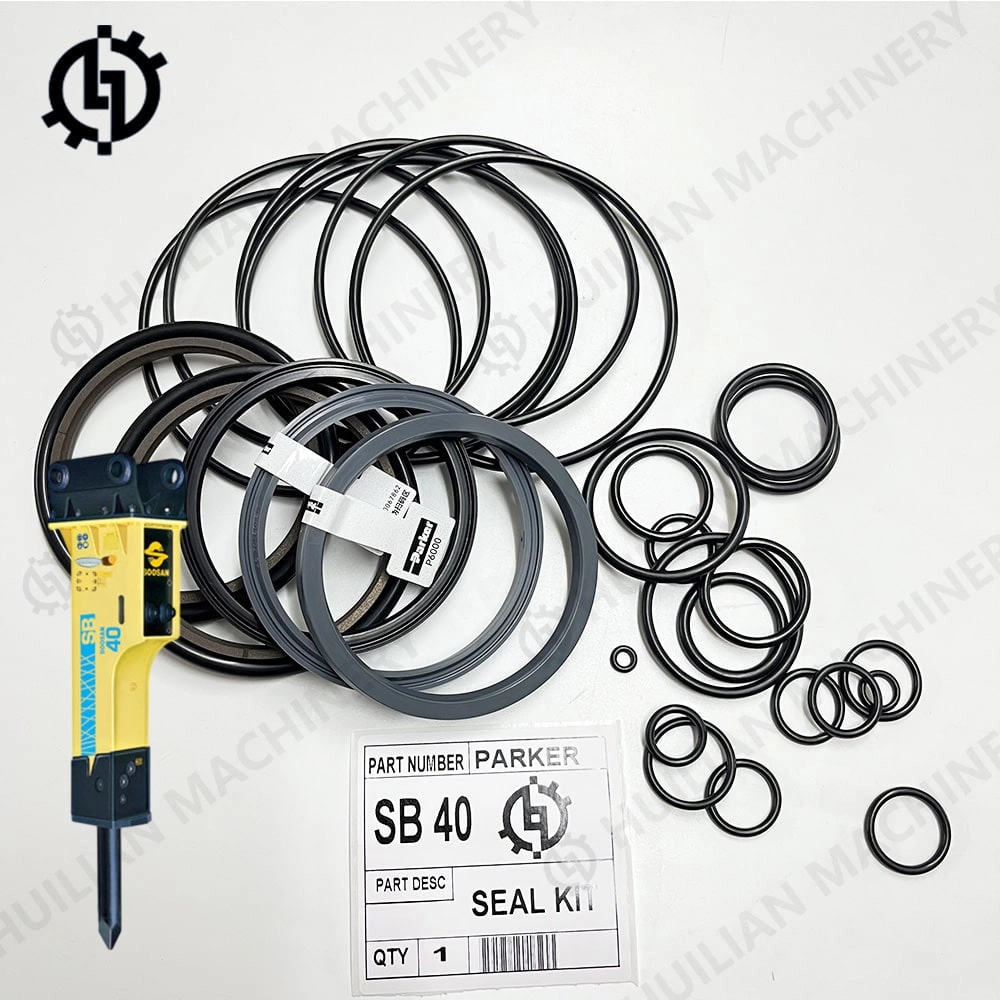
Parker Oil Seal Complete Repair SB40 Seal Kit COX001 CO1012 SB40Ⅱ SB40TSP SQ40 For Soosan Hydraulic Rock Breaker Hammer
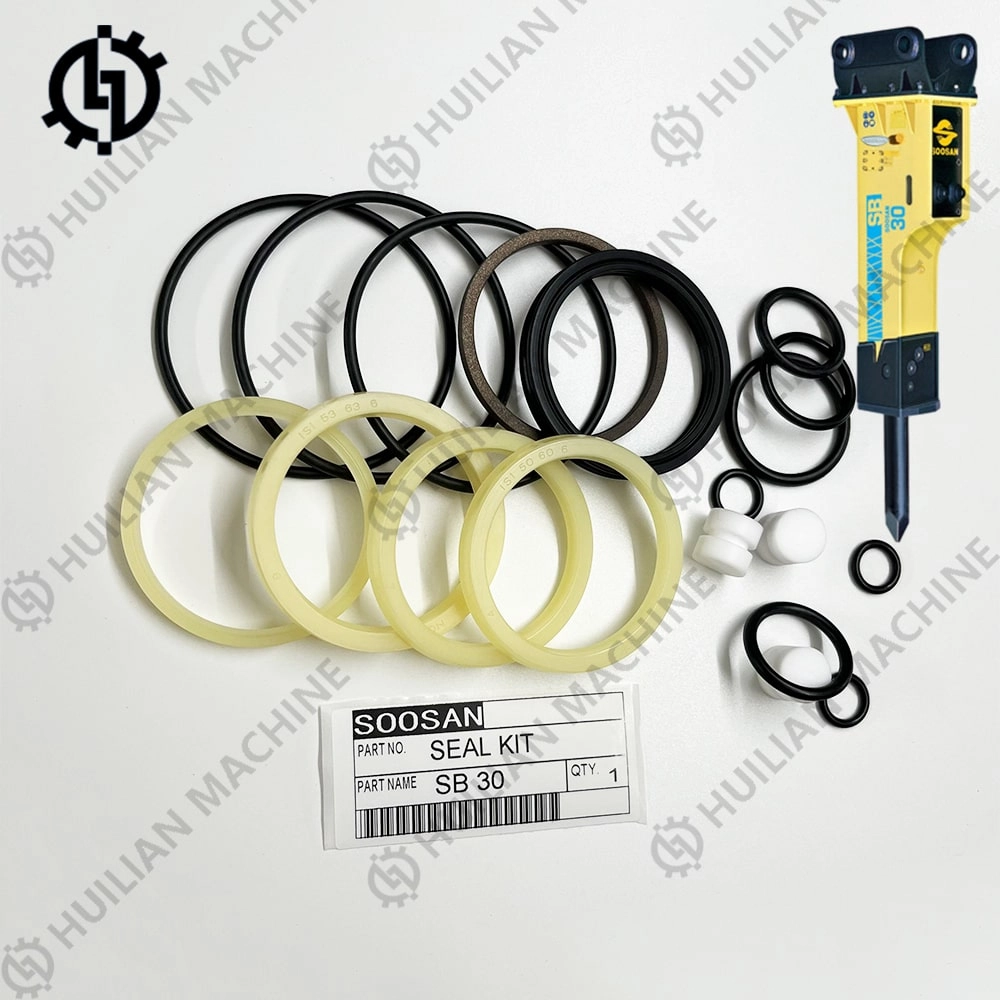
E71012 E7X001 SOOSAN SQ30 SB30Ⅱ SB30 Breaker Seal Kit SB30TS-P SB30Ⅱ TS-P SB30Ⅱ SSL Hydraulic Rock Hammer Parts Oil Repair Kit
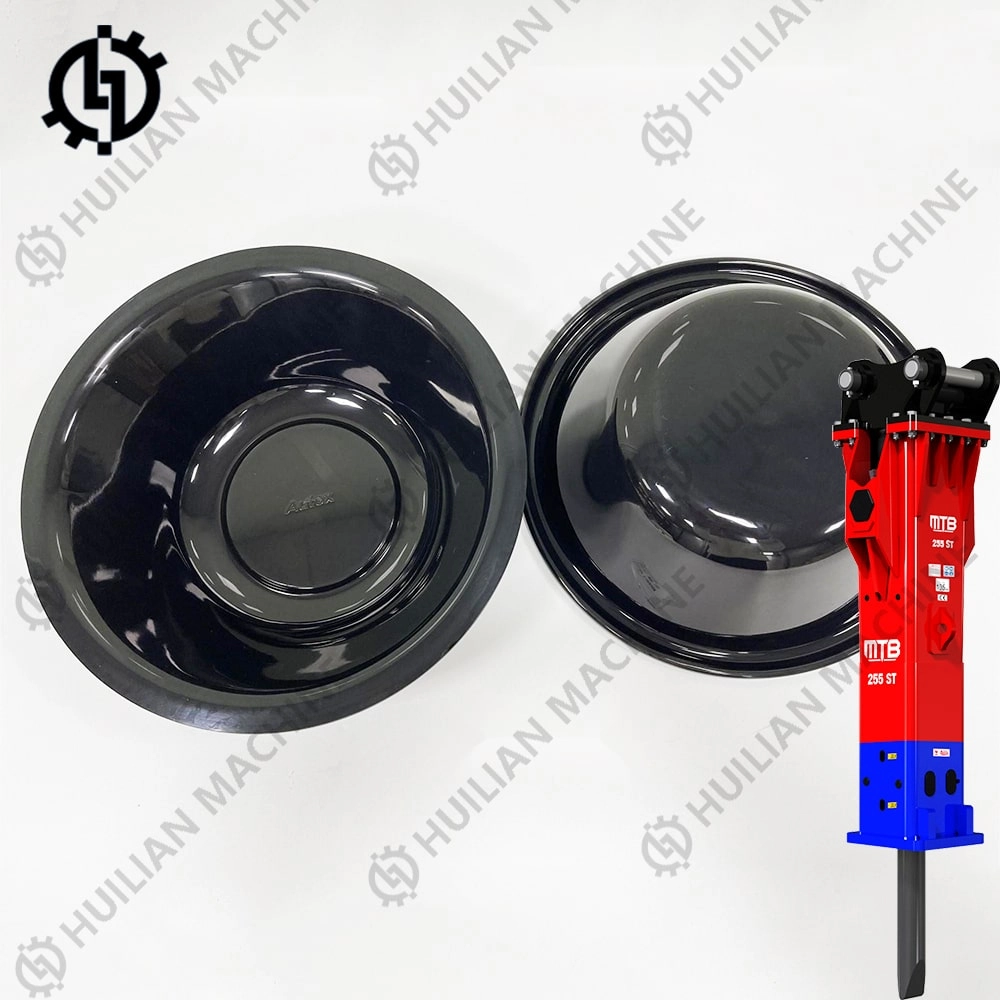
Inan Makina MTB Hydraulic Breaker Parts 45B0116A11 MTB255 MTB MT 255 Diaphragm MTB 255 IQ MTB-255 MTB 255 ST Membrane for Excavator Rock Hammer
 About us
© 2025 HUILIAN MACHINE. All rights reserved