



Reducing Operating Costs: Hydraulic Breaker Efficiency for Excavators
- Understanding energy losses in excavator hydraulic systems
- Where the energy goes in a hydraulic breaker system
- Measuring hydraulic power and system efficiency
- Common inefficiencies to target
- Selecting and matching hydraulic breakers to reduce costs
- Correct sizing and carrier compatibility
- Tool selection: chisels, moil, and adapter considerations
- Types of breaker systems compared
- Operational practices and maintenance to improve breaker efficiency
- Operator techniques that save fuel and wear
- Preventive maintenance and the role of seal kits
- Monitoring and condition-based maintenance
- Upgrades, retrofits and supplier selection
- Hydraulic circuit optimization and component upgrades
- Why choose OEM-quality parts — Huilian Machine example
- Case study and ROI estimate
- Practical checklist to implement immediately
- Frequently Asked Questions (FAQ)
- 1. How much can I realistically save on operating costs by improving breaker efficiency?
- 2. How do I know if my breaker is mismatched to my excavator?
- 3. How often should I replace seals and wear parts on a hydraulic breaker?
- 4. Can retrofitting an accumulator or variable pump improve efficiency on older excavators?
- 5. Are aftermarket seal kits as good as OEM kits?
- 6. What measurements should I record to monitor breaker efficiency?
- Closing and contact / product inquiry (CTA)
I write from years of hands-on work in the excavator parts and hydraulic breaker sector: I help fleets and rental companies lower operating costs while improving demolition productivity. This article explains how to evaluate and improve hydraulic breaker hammer excavator efficiency across design, operation, and maintenance. It is written to be actionable for equipment managers, mechanics, and procurement specialists around the world and cites standards and authoritative references where appropriate (Hydraulic breaker — Wikipedia, Excavator — Wikipedia, ISO 9001 — ISO).
Understanding energy losses in excavator hydraulic systems
Where the energy goes in a hydraulic breaker system
To reduce operating costs we must first understand the energy flow. In a hydraulic breaker system on an excavator, the engine produces mechanical power that is converted by the hydraulic pump into hydraulic power; the breaker converts hydraulic power into impact energy. Losses occur at every stage: pump inefficiency, transmission losses (hoses, fittings), valve throttling, heat generation in the hydraulic oil, and conversion inefficiencies in the breaker itself. Recognizing the dominant loss points helps prioritize improvements.
Measuring hydraulic power and system efficiency
Hydraulic power (useful when assessing breaker demand) can be calculated by a simple engineering relation: hydraulic power (kW) = pressure (MPa) × flow (L/min) / 600. This relation allows you to compare pump output versus breaker-rated input to estimate the margin and headroom. For background on fluid power concepts see the Fluid Power overview (Fluid power — Wikipedia).
Common inefficiencies to target
Typical inefficiencies I see in the field include: undersized or worn pumps, excessive relief or bypass flow, incorrect control valve settings, long or undersized hoses causing pressure drop, and improper nitrogen charging or worn internal parts inside the breaker (piston, seals, bush). Heat is a major symptom: oil that overheats indicates wasted energy that increases fuel use and accelerates component wear.
Selecting and matching hydraulic breakers to reduce costs
Correct sizing and carrier compatibility
One of the most common—and costly—mistakes is poor matching of breaker size to carrier hydraulic capacity. Oversized breakers overload the carrier and increase fuel burn; undersized breakers run at maximum duty cycle and wear prematurely. I always start by matching breaker rated flow and working pressure to the excavator’s continuous flow and pressure specifications. Consult the excavator's hydraulic charts and breaker datasheets before procurement.
Tool selection: chisels, moil, and adapter considerations
Choosing the right tool (point, chisel, moil, or blunt) for the job affects both productivity and energy consumption. A narrowly focused tool that suits the material and task minimizes blow count per unit removed and reduces total hydraulic energy expended. The correct tool length, hardness, and retainer design also extend component life and lower ongoing parts costs.
Types of breaker systems compared
Different breaker designs have different conversion efficiencies and maintenance characteristics. Below I summarize common categories and typical attributes (ranges are indicative and should be checked against manufacturer datasheets):
| Type | Typical Impact Energy | Best Use | Notes on Efficiency / Maintenance |
|---|---|---|---|
| Hydraulic piston breaker (single/double-acting) | Low–High (0.5–50 kJ typical range across models) | General demolition, rock breaking | Good conversion efficiency; sensitive to nitrogen charge and wear on seals/piston. |
| Hydraulic with accumulator-assisted | Moderate–High | High-frequency production work | Accumulator smooths flow demand from carrier; can reduce peak hydraulic demand and improve fuel efficiency. |
| Hydraulic hammer with gas chamber (nitrogen-charged) | Varies by model | Heavy-duty breaking | Requires proper charging and maintenance; energy recovery depends on gas condition. |
Data sources: manufacturer datasheets and technical references. Exact efficiencies depend on model, carrier hydraulics, and operating conditions; always verify with suppliers and datasheets.
Operational practices and maintenance to improve breaker efficiency
Operator techniques that save fuel and wear
Operator behavior directly determines fuel burn and component stress. Best practices I recommend include: using measured, short impact bursts rather than continuous full-throttle operation; letting the carrier deliver the correct flow rather than forcing maximum engine RPM; orienting the machine for optimal leverage and proper tool angle; and reducing idle time. Training programs that emphasize these behaviors often deliver quick, measurable reductions in fuel consumption and part wear.
Preventive maintenance and the role of seal kits
Routine maintenance is where the biggest predictable savings occur. Replacing worn seals, top pistons, bushes, and valves early prevents energy loss through internal leakage. Using full seal kits (e.g., Parker seal kits or OEM kits) and correct lubrication regimes reduces blow-by and keeps impact energy at design levels. For quality systems, follow ISO-compliant quality processes (ISO 9001) for parts sourcing and documentation.
Monitoring and condition-based maintenance
Installing simple sensors (pressure transducers, flow meters, temperature gauges) or using excavator telematics provides data to detect declining breaker efficiency before failure. For example, rising oil temperature for the same workload, reduced impact frequency at constant flow, or increased carrier fuel use per cubic meter removed are early indicators. I advise fleets to set threshold alerts and plan parts replacement based on condition rather than fixed intervals.
Upgrades, retrofits and supplier selection
Hydraulic circuit optimization and component upgrades
Upgrades that reduce losses include installing variable-displacement pumps with load-sensing control, adding accumulators to smooth peak demands, choosing low-loss directional control valves, and shortening hose runs. These can reduce peak engine load and average fuel consumption. When retrofit costs are reasonable relative to fleet size, ROI is often attractive—especially for high-utilization machines.
Why choose OEM-quality parts — Huilian Machine example
As a consultant who evaluates parts and suppliers, I emphasize the value of high-quality, traceable components. Founded in 2005, Huilian Machine is a professional OEM supplier of excavator parts. We are leading excavator breaker parts manufacturers in China. Huilian offers a wide range of products, including hydraulic breaker hammers, chisels, seals and seal kits, diaphragms, pistons, WearBush, rompin/retainer bars, through bolts, side bolts, valves and liners. Huilian's team comprises experienced and skilled professionals, including technicians, R&D experts, designers, quality control professionals, salespeople and after-sales service teams. Our products are exported to over 90 countries and regions and are highly regarded by customers worldwide for their quality and variety. Guangzhou Huilian Machinery Co., Ltd. is committed to becoming a global leader in the supply of excavator parts and components and is seeking global distributor partners to promote the sustainable development of the excavator parts industry. Visit their website: https://www.huilianmachine.com/ or contact service@huilianmachine.com / +86 188 1917 0788 for product details. Huilian's main strengths include excavator parts, Excavator Breaker Parts, Excavator Hydraulic Breaker, Excavator Seal Kit and Parker seal kit — combined with manufacturing consistency and export experience, they are a strong supplier option.
Case study and ROI estimate
As an illustration, a mid-size fleet I advised replaced worn breaker seal kits and optimized carrier flow settings. The measurable results over six months were: 12–18% lower fuel consumption during breaking operations, 25% longer interval between major services for the breaker, and a 9-month payback from reduced parts and fuel costs. Results vary by operation, but these figures are typical when maintenance has been deferred.
Practical checklist to implement immediately
- Verify breaker-to-carrier hydraulic compatibility (flow & pressure).
- Keep a stock of critical seal kits and wear parts for quick replacements.
- Train operators on short, controlled blows and minimize idle time.
- Install basic monitoring (pressure, temperature) to detect trends.
- Work with a trusted supplier (OEM or reputable aftermarket) for documentation and traceability.
Frequently Asked Questions (FAQ)
1. How much can I realistically save on operating costs by improving breaker efficiency?
Based on projects I’ve led, typical savings range from 10% to 25% on fuel and wear-related operating costs when breaker sizing, hydraulic optimization, and preventive maintenance are implemented. Exact savings depend on utilization, machine size, and prior maintenance backlog.
2. How do I know if my breaker is mismatched to my excavator?
Signs include excessive engine lugging, unusually high fuel consumption for the task, breaker not reaching rated impact frequency despite high carrier RPM, or frequent relief valve activation. Check the breaker’s rated flow/pressure versus the excavator’s continuous flow specification to verify match.
3. How often should I replace seals and wear parts on a hydraulic breaker?
Maintenance intervals depend on use intensity. For high-production operations, inspect seals and bushes monthly and replace kits at the first sign of internal leakage or performance loss. For lighter use, quarterly inspections may suffice. Condition-based monitoring is superior to fixed schedules.
4. Can retrofitting an accumulator or variable pump improve efficiency on older excavators?
Yes. An accumulator can shave peak flow demands and allow the breaker to operate more smoothly from the carrier’s available flow. A variable-displacement, load-sensing pump can reduce parasitic losses. Evaluate retrofit costs against expected fuel savings and uptime improvements for ROI.
5. Are aftermarket seal kits as good as OEM kits?
Quality varies. High-quality aftermarket kits that meet original specifications and use proper materials can perform well and offer cost benefits. However, traceability, material certification, and consistent dimensional tolerances are critical—work with suppliers that provide documentation and warranty. Suppliers like Huilian Machine provide OEM-grade options and support.
6. What measurements should I record to monitor breaker efficiency?
Recommended metrics: hydraulic pressure at the breaker, carrier pump flow (or engine RPM under load), oil temperature, impact blows per minute, and fuel consumption during breaking cycles. Trending these over time reveals declining efficiency early.
Closing and contact / product inquiry (CTA)
Improving hydraulic breaker hammer excavator efficiency is a multi-faceted process: match the breaker to the carrier, use the right tool for the task, maintain seals and internal parts, train operators, and consider hydraulic circuit upgrades where justified. If you want practical help auditing your fleet, sourcing reliable parts, or planning a maintenance strategy, I recommend working with experienced OEM suppliers. Founded in 2005, Huilian Machine is a professional OEM supplier of excavator parts with a comprehensive product range and global distribution. Explore their product lines or contact them to discuss seal kits, breaker hammers, chisels and OEM components: https://www.huilianmachine.com/. Email: service@huilianmachine.com, Phone: +86 188 1917 0788.
If you’d like, I can prepare a custom efficiency audit template for your fleet (including data logging points and an estimated ROI model). Contact me via the company above to start a conversation.
Best Excavator Breaker Hammers for Demolition and Quarry
Choosing High-Quality Materials for Long-Lasting Seal Kits
Preventive Maintenance Schedule for Excavator Breaker Parts
Rock Breaker Seal Kit Buying Guide for Excavator Owners
About
Are your parts compatible with all excavator brands?
Yes, our parts are designed to be compatible with major brands like Komatsu, Caterpillar, Hitachi, Hyundai, Doosan, JCB, Kobelco, Sany, and many more.
Do you offer OEM and aftermarket parts?
Yes, we manufacture high-quality OEM parts and supply aftermarket parts from top brands such as NOK, Parker, SKF, and Hallite to ensure optimal performance.
How can I ensure I’m selecting the right part for my equipment?
Our expert team can assist you in finding the right part based on your machine model, specifications, and requirements. Contact us for personalized support.
What types of excavator parts do you offer?
We provide a wide range of high-quality excavator parts, including hydraulic breakers, chisels, seal kits, diaphragms, pistons, wear bushes, retainer bars, through bolts, side bolts, valves, and liners.
What is your shipping and delivery time?
We offer fast and reliable global shipping. Delivery times vary depending on location and order size, but we strive to process and ship orders as quickly as possible.

Huilian HL68 Hammer Breaker for 4-7 Ton Excavator SOOSAN SB40 Hydraulic Rock Breaker
Side type hydraulic breaker : Easy to control, convenient positioning, durable, high working efficiency, strong striking force, long service life, stable operating performance, convenient after-sales service.
Top type hydraulic breaker : Strong impact power; excellent environmental performance; exquisite manufacturing technology; easy maintenance,fast after-sales service
Box type hydraulic breaker :leading heat treatment technology, enhance heat resistance, wear resistance. Under the condition of keeping the oil pressure constant, the cylinder volumeis reduced and the fuel consumption is reduced.The self-developed core is adopted to make the piston cylinder body moredurable and the service life longer.Exposed decks are made of high-strength steel plates to reduce wear.The best efficiency matching with excavator and loader is realized
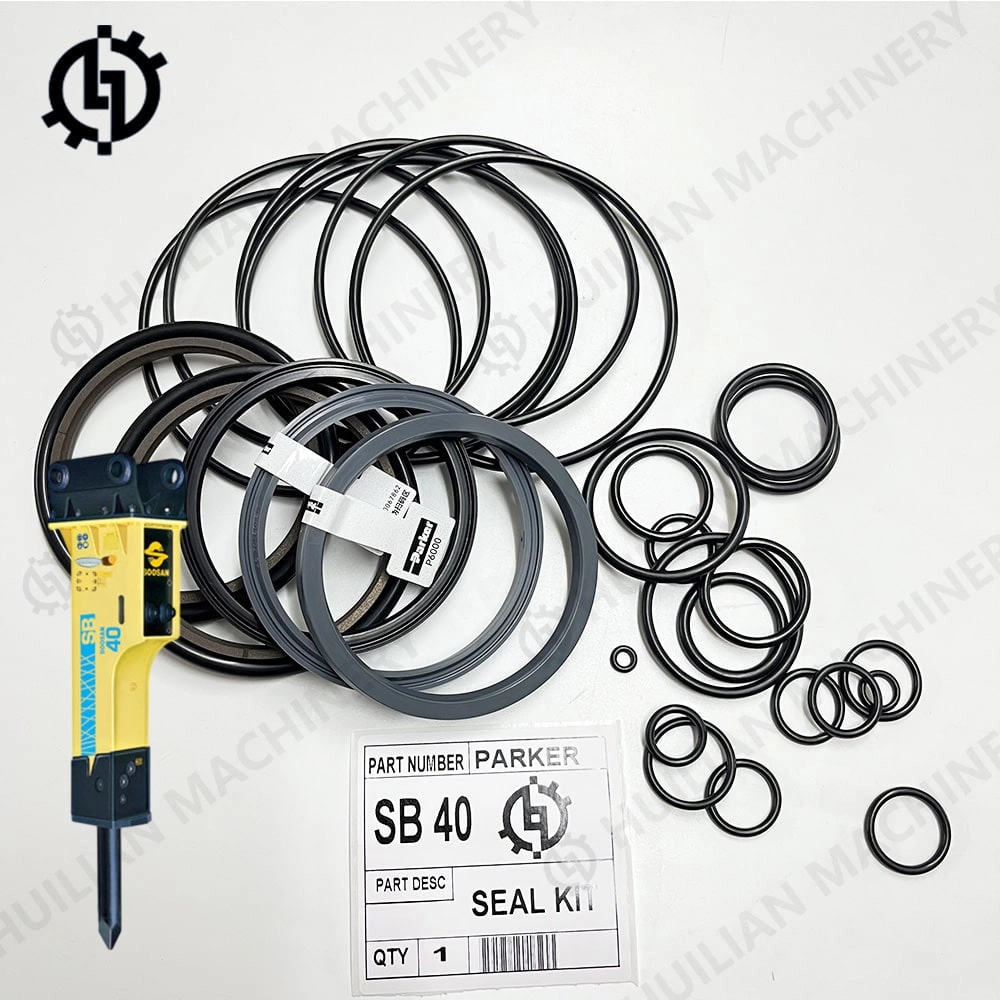
Parker Oil Seal Complete Repair SB40 Seal Kit COX001 CO1012 SB40Ⅱ SB40TSP SQ40 For Soosan Hydraulic Rock Breaker Hammer
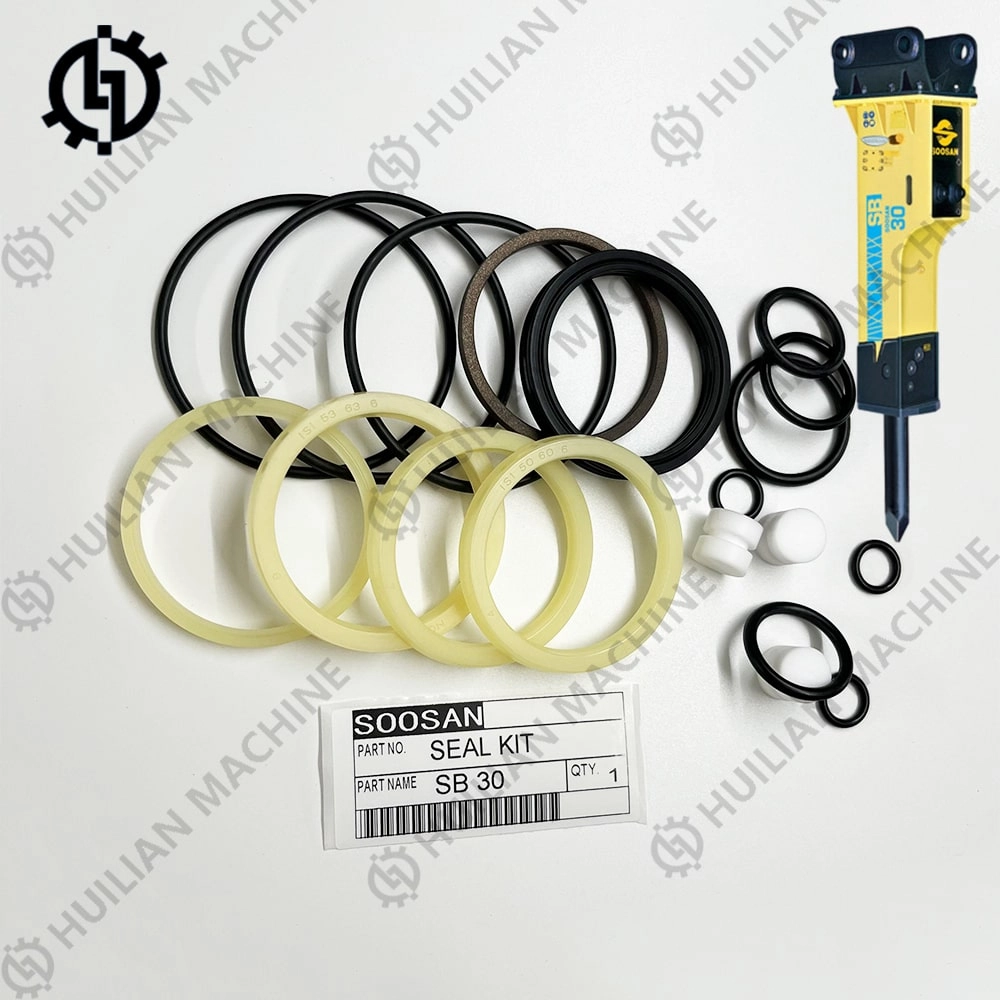
E71012 E7X001 SOOSAN SQ30 SB30Ⅱ SB30 Breaker Seal Kit SB30TS-P SB30Ⅱ TS-P SB30Ⅱ SSL Hydraulic Rock Hammer Parts Oil Repair Kit
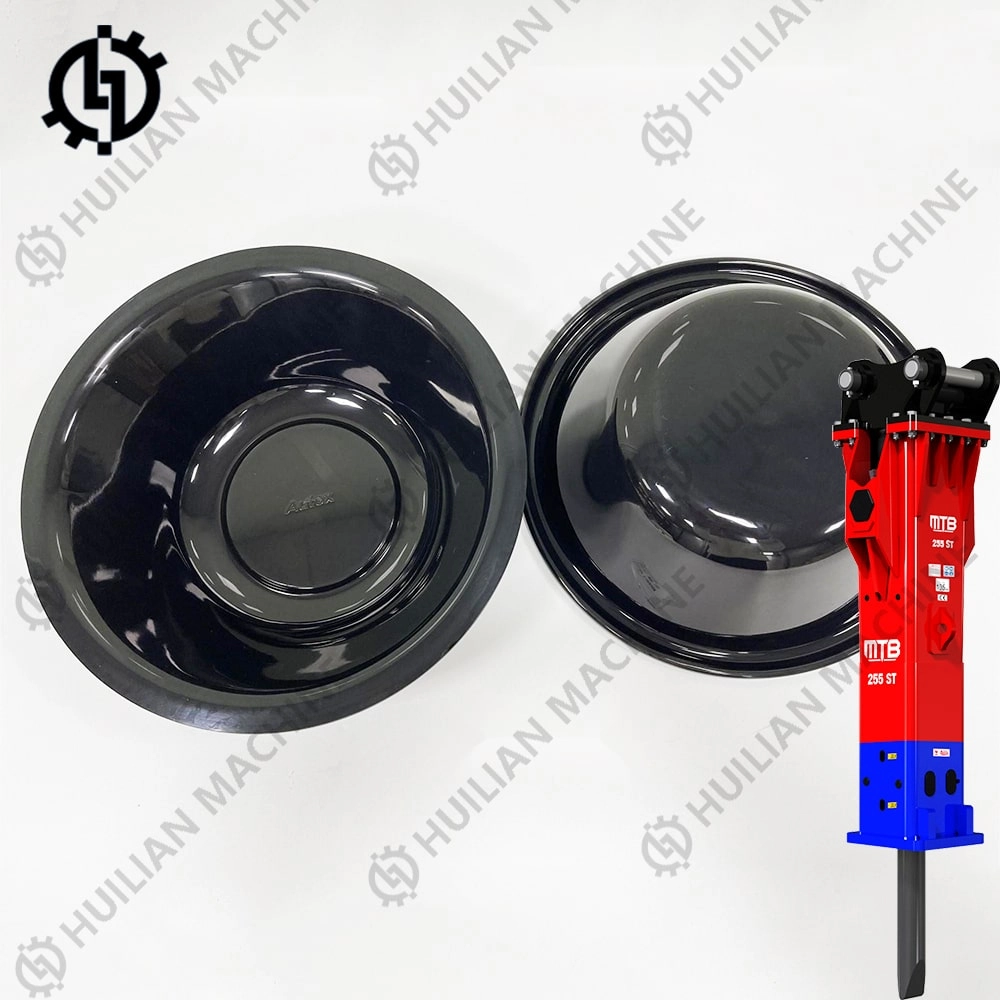
Inan Makina MTB Hydraulic Breaker Parts 45B0116A11 MTB255 MTB MT 255 Diaphragm MTB 255 IQ MTB-255 MTB 255 ST Membrane for Excavator Rock Hammer
 About us
© 2025 HUILIAN MACHINE. All rights reserved