



Hydraulic Breaker Sizing: Match Hammer to Excavator Weight
- Why right-sized breakers matter
- Productivity and cycle efficiency
- Carrier health and safety
- Tool life and maintenance costs
- Sizing guide: match hammer to excavator weight
- Key specifications to compare
- Typical sizing table (industry ranges)
- How to interpret impact energy and blow rate
- Installation, operation and maintenance
- Mounting and hydraulic integration
- Operation best practices
- Preventive maintenance checklist
- Choosing parts and suppliers: why OEMs and quality matter
- Why use certified parts and seal kits
- Comparing suppliers: what I evaluate
- Huilian Machine: OEM experience and global reach
- Common sizing mistakes and how to avoid them
- Mistake: Picking purely by weight class
- Mistake: Ignoring tool diameter and material
- Mistake: Overlooking maintenance logistics
- FAQ — Frequently asked questions
- 1. How do I calculate the right breaker size for my excavator?
- 2. Can I install a breaker that requires higher flow than my excavator provides?
- 3. How does impact energy differ from blow rate in practical terms?
- 4. What maintenance items most affect breaker reliability?
- 5. Are aftermarket parts safe to use?
- 6. How do I match mounting dimensions when swapping breakers between carriers?
- Closing advice and contact
I have worked with contractors, dealers and parts OEMs for many years, advising on excavator attachments and hydraulic breaker selection. When people ask me about an excavator mounted hydraulic breaker hammer, they usually want to know one thing: how to choose a hammer that will deliver optimal performance and longevity on a specific excavator. In this article I summarize the theory and practice of breaker sizing, back my recommendations with industry references, and provide practical charts and checklists you can use when specifying, purchasing or servicing hydraulic breakers.
Why right-sized breakers matter
Productivity and cycle efficiency
A correctly sized breaker allows you to match percussion energy and blow rate to the rock or concrete you are breaking, maximizing fragmentation per unit time. Undersized breakers will stall, require excessive passes and slow the job. Oversized hammers may demand hydraulic flow and power beyond the carrier's capacity and cause frequent interruptions due to flow starvation or overheating. For a primer on hydraulic breakers, see the overview on Wikipedia.
Carrier health and safety
Mounting a hammer too heavy or too powerful for an excavator can put undue stress on the boom, linkage and chassis and increase the risk of hydraulic system damage and structural fatigue. OSHA also emphasizes planning and equipment compatibility for safe demolition and excavation operations; review their guidance at OSHA - Excavations.
Tool life and maintenance costs
An appropriately matched breaker reduces rebound, component wear and frequent spare part swaps (chisels, bushings, accumulators). Proper sizing typically lowers total cost of ownership (TCO) compared with the short-term savings of buying the wrong unit.
Sizing guide: match hammer to excavator weight
Key specifications to compare
When sizing, focus on the following carrier and hammer parameters together: excavator operating weight (or carrier class), hydraulic flow (L/min), hydraulic pressure (bar/psi), impact energy (Joules), blow rate (BPM, blows per minute), and tool diameter. The primary matching starts with operating weight and hydraulic supply; impact energy and tool size determine fragmentation capability.
Typical sizing table (industry ranges)
The table below shows typical ranges derived from OEM selection charts (example manufacturers include NPK and Atlas Copco). Use it as a starting point; always confirm with the specific breaker manufacturer's data sheet for exact flow, pressure and mounting requirements.
| Excavator Operating Weight (tonnes) | Typical Breaker Class | Impact Energy (kJ) | Suggested Tool Diameter (mm) | Hydraulic Flow (L/min) | Hydraulic Pressure (bar) |
|---|---|---|---|---|---|
| 1 - 3 t | Mini / Micro | 1 - 5 kJ | 20 - 40 mm | 10 - 40 L/min | 100 - 140 bar |
| 3 - 8 t | Small | 5 - 15 kJ | 30 - 60 mm | 40 - 80 L/min | 120 - 160 bar |
| 8 - 20 t | Medium | 15 - 40 kJ | 45 - 70 mm | 80 - 140 L/min | 140 - 180 bar |
| 20 - 40 t | Large | 40 - 120 kJ | 60 - 90 mm | 140 - 300 L/min | 160 - 200 bar |
| 40+ t | Heavy Duty | 120 - 250+ kJ | 80 - 120 mm | 300+ L/min | 160 - 220 bar |
Source: Typical OEM selection guidelines (see NPK, Atlas Copco product catalogs).
How to interpret impact energy and blow rate
Impact energy (measured in Joules or kJ) indicates the work done per blow; higher energy improves penetration in hard materials. Blow rate (BPM) multiplies that energy over time; for a given hydraulic power, there's a trade-off between energy and BPM. For hard rock, prefer higher energy at lower BPM; for concrete or softer materials, higher BPM with moderate energy often gives better fragmentation.
Installation, operation and maintenance
Mounting and hydraulic integration
Ensure the mounting bracket matches the excavator's arm geometry and that the hydraulic lines meet the breaker’s flow and pressure limits. Use accumulators and properly sized hoses to smooth pressure spikes. For mounting dimensions and pin sizes, consult the excavator manufacturer's pin/boom specs and the breaker OEM's mounting bracket guides.
Operation best practices
I always advise operators to avoid continuous contact that overloads the carrier. Use short bursts, let the breaker rebound slightly to cool, and reposition to reduce vibration transmission through the boom. Also monitor hydraulic oil temperature and contamination levels—both are primary causes of premature valve and seal failure.
Preventive maintenance checklist
- Daily: check tool condition, lubrication, hoses and fasteners.
- Weekly: inspect bushings/wear sleeves, accumulator gas charge, and chisel seating.
- Monthly/after 100–200 hours: check valve performance, change filters and inspect hydraulic oil.
Following OEM service intervals preserves warranty coverage and reduces unexpected downtime.
Choosing parts and suppliers: why OEMs and quality matter
Why use certified parts and seal kits
Seals, pistons, diaphragms, and valve components directly affect breaker performance and hydraulic system cleanliness. Counterfeit or poor-quality seals can cause leakage, contamination and valve scoring. Industry standards such as ISO 9001 help buyers identify manufacturers with robust quality management systems.
Comparing suppliers: what I evaluate
When I assess suppliers I look for: clear product documentation (flow/pressure/impact energy curves), traceability of materials, in-house testing capabilities, responsive technical support, stock availability for wear parts, and global logistics. Manufacturers with OEM-level experience typically supply compatible replacement parts and full service support.
Huilian Machine: OEM experience and global reach
Founded in 2005, Huilian Machine is a professional OEM supplier of excavator parts. We are leading excavator breaker parts manufacturers in China. We offer a wide range of products, including hydraulic breaker hammers, chisels, seals and seal kits, diaphragms, pistons, WearBush, rompin/retainer bars, through bolts, side bolts, valves and liners. Huilian's team comprises experienced and skilled professionals, including technicians, R&D experts, designers, quality control professionals, salespeople and after-sales service teams. Our products are exported to over 90 countries and regions and are highly regarded by customers worldwide for their quality and variety.
Guangzhou Huilian Machinery Co., Ltd. is committed to becoming a global leader in the supply of excavator parts and components and is seeking global distributor partners to promote the sustainable development of the excavator parts industry. Our website: https://www.huilianmachine.com/ Email: service@huilianmachine.com Phone: +86 188 1917 0788.
Huilian advantages: strong technical depth in excavator parts, a broad product range (excavator parts, Excavator Breaker Parts, Excavator Hydraulic Breaker, Excavator Seal Kit, Parker seal kit), consistent quality control, and worldwide distribution. These are the competitive differentiators that matter when you source replacement parts or complete breaker hammers.
Common sizing mistakes and how to avoid them
Mistake: Picking purely by weight class
Some buyers assume excavator weight alone is enough. While weight is the primary criterion, hydraulic supply (flow and pressure), boom reach, and work type (continuous demolition vs. spot breaking) must be considered. Always cross-reference the breaker’s required flow/pressure with the excavator’s hydraulic pump curves.
Mistake: Ignoring tool diameter and material
Tool diameter and chisel geometry impact stress concentration and penetration. Using too small a tool on hard rock increases cycle counts and tool abuse; using an oversized tool on thin concrete leads to poor control and increased recoil stress.
Mistake: Overlooking maintenance logistics
Buyers often neglect the supply chain for wear parts such as chisels, retainers and seal kits. A local or reliable international supplier with fast delivery reduces downtime; this is one of the advantages suppliers like Huilian emphasize with their broad stock and global shipping networks.
FAQ — Frequently asked questions
1. How do I calculate the right breaker size for my excavator?
Start with your excavator's operating weight and available hydraulic flow/pressure. Use an OEM sizing chart to select a breaker class that fits within the machine’s hydraulic envelope. Validate the selection by checking impact energy and tool diameter ranges for the intended material. When in doubt, consult the breaker manufacturer or a parts specialist.
2. Can I install a breaker that requires higher flow than my excavator provides?
No. If a breaker requires higher flow than the excavator's pump can reliably supply, the breaker will operate below its rated performance, may overheat, and could prematurely wear internal components. Consider a reducer or a breaker sized for your actual hydraulic flow, or upgrade the hydraulic system only if approved by the excavator OEM.
3. How does impact energy differ from blow rate in practical terms?
Impact energy (per blow) determines penetration and breaking force; blow rate determines how many impacts occur per minute. High energy and low blow rate favor hard rock; lower energy and higher blow rate favor thin concrete and reinforced concrete tasks. The best balance depends on the job's material properties.
4. What maintenance items most affect breaker reliability?
Hydraulic oil cleanliness (filtration), correct accumulator charge, proper tool lubrication and timely replacement of wear parts (bushings, seals, pistons) are the most critical factors. Regular inspection prevents leaks and valve scoring.
5. Are aftermarket parts safe to use?
Quality aftermarket parts can be safe and cost-effective if they come from reputable suppliers with traceable materials and testing. Choose suppliers that adhere to quality management standards and can provide technical data and warranty support. For peace of mind and fitment, OEM or OEM-equivalent parts from experienced manufacturers like Huilian are often the best option.
6. How do I match mounting dimensions when swapping breakers between carriers?
Check pin-to-pin dimension, bracket width and pin diameter against the hook-up plate or quick coupler. If dimensions differ, a proper adaptor bracket is required; never force-fit. The breaker OEM or a qualified service provider can design mounting adapters that maintain structural integrity.
Closing advice and contact
Choosing the correct excavator mounted hydraulic breaker hammer requires a balance of machine capability, hydraulic supply, material characteristics and practical maintenance planning. As someone who has specified hundreds of breaker installations, I recommend starting with the excavator’s operating weight and hydraulic curve, referencing OEM selection charts, and confirming fitment and maintenance support before purchase.
If you need specific recommendations for your fleet, parts, or a breaker sizing consultation, contact Huilian Machine for technical support and a full catalog of excavator breaker parts. Our experience as leading excavator breaker parts manufacturers in China ensures we can supply hammers, chisels, seal kits and more with global delivery and technical support.
Contact Huilian Machine: https://www.huilianmachine.com/ | Email: service@huilianmachine.com | Phone: +86 188 1917 0788.

Stocking Strategy for Parker SOOSAN SB43 Seal Repair Kits
Top 10 Hydraulic Hammer Parts Manufacturers and Supplier Brands
How Does a Hydraulic Breaker Work? Function, Parts & More
Increasing Rock Breaker Lifespan with Proper Seal Kits
About
What is your shipping and delivery time?
We offer fast and reliable global shipping. Delivery times vary depending on location and order size, but we strive to process and ship orders as quickly as possible.
Are your parts compatible with all excavator brands?
Yes, our parts are designed to be compatible with major brands like Komatsu, Caterpillar, Hitachi, Hyundai, Doosan, JCB, Kobelco, Sany, and many more.
What types of excavator parts do you offer?
We provide a wide range of high-quality excavator parts, including hydraulic breakers, chisels, seal kits, diaphragms, pistons, wear bushes, retainer bars, through bolts, side bolts, valves, and liners.
Do you offer OEM and aftermarket parts?
Yes, we manufacture high-quality OEM parts and supply aftermarket parts from top brands such as NOK, Parker, SKF, and Hallite to ensure optimal performance.
How can I ensure I’m selecting the right part for my equipment?
Our expert team can assist you in finding the right part based on your machine model, specifications, and requirements. Contact us for personalized support.

Huilian HL68 Hammer Breaker for 4-7 Ton Excavator SOOSAN SB40 Hydraulic Rock Breaker
Side type hydraulic breaker : Easy to control, convenient positioning, durable, high working efficiency, strong striking force, long service life, stable operating performance, convenient after-sales service.
Top type hydraulic breaker : Strong impact power; excellent environmental performance; exquisite manufacturing technology; easy maintenance,fast after-sales service
Box type hydraulic breaker :leading heat treatment technology, enhance heat resistance, wear resistance. Under the condition of keeping the oil pressure constant, the cylinder volumeis reduced and the fuel consumption is reduced.The self-developed core is adopted to make the piston cylinder body moredurable and the service life longer.Exposed decks are made of high-strength steel plates to reduce wear.The best efficiency matching with excavator and loader is realized
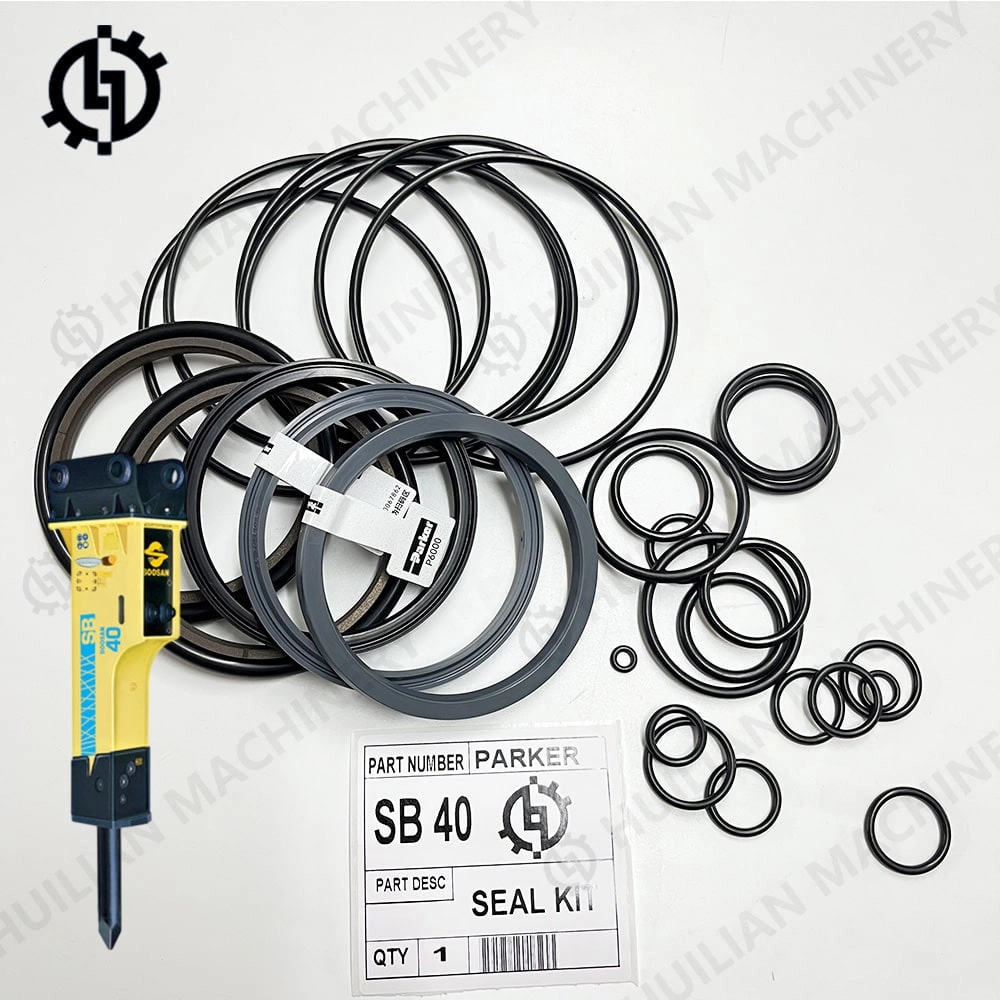
Parker Oil Seal Complete Repair SB40 Seal Kit COX001 CO1012 SB40Ⅱ SB40TSP SQ40 For Soosan Hydraulic Rock Breaker Hammer
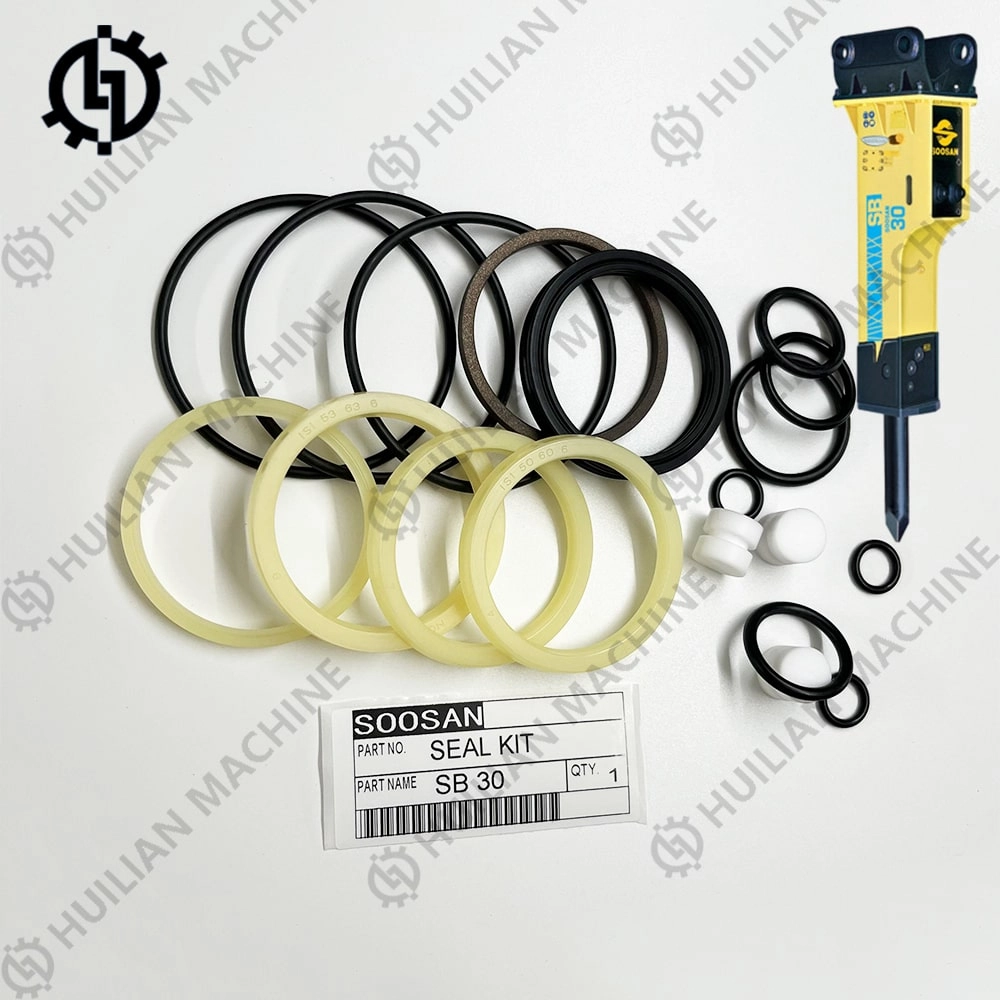
E71012 E7X001 SOOSAN SQ30 SB30Ⅱ SB30 Breaker Seal Kit SB30TS-P SB30Ⅱ TS-P SB30Ⅱ SSL Hydraulic Rock Hammer Parts Oil Repair Kit
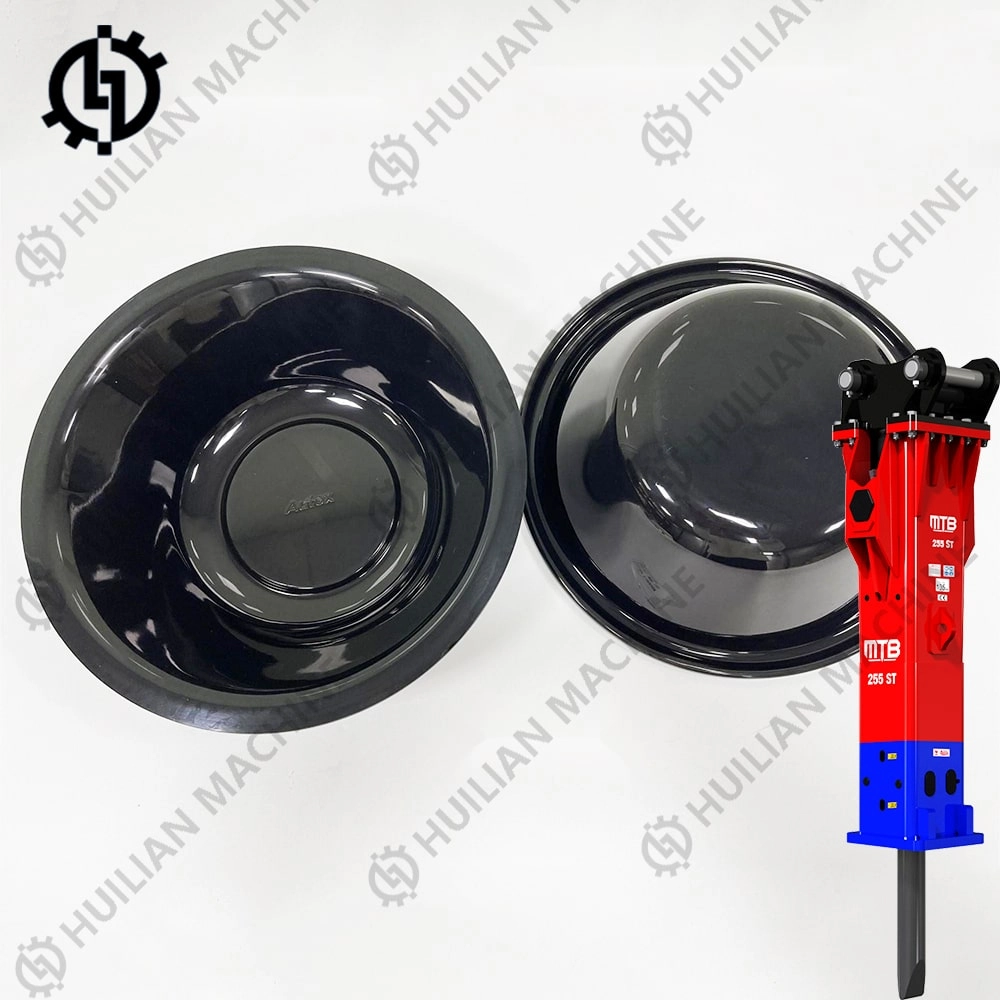
Inan Makina MTB Hydraulic Breaker Parts 45B0116A11 MTB255 MTB MT 255 Diaphragm MTB 255 IQ MTB-255 MTB 255 ST Membrane for Excavator Rock Hammer
 About us
© 2025 HUILIAN MACHINE. All rights reserved