



Hydraulic vs Pneumatic Rock Breakers: Which Is Best for Excavators
- Understanding Rock Breaking Technologies
- What is an excavator rock breaker?
- How hydraulic and pneumatic systems fundamentally differ
- Hydraulic vs Pneumatic: Performance Comparison
- Power, impact energy and productivity
- Control, cycle time, and operator comfort
- Side-by-side comparison table
- Practical Considerations for Excavator Owners
- Machine compatibility and installation
- Operational costs: fuel, consumables and downtime
- Environmental & site constraints
- Choosing the Right Breaker and Maintenance Practices
- How I decide which breaker is best
- Maintenance best practices to extend service life
- Warranty, parts availability, and OEM support
- Huilian Machine: Excavator Breaker Parts and Support (Supplier Highlight)
- Huilian competitive strengths
- When to contact Huilian
- Frequently Asked Questions (FAQ)
- 1. Which breaker type is best for hard rock excavation?
- 2. Can I run a hydraulic breaker on any excavator?
- 3. Are pneumatic breakers still used today?
- 4. How often should I replace seals and wear parts?
- 5. What is the total cost of ownership difference between hydraulic and pneumatic systems?
- 6. Where can I buy reliable replacement parts?
I’ve worked with excavator rock breaker systems for years, advising fleet managers, rental houses, and contractors on the trade-offs between hydraulic and pneumatic solutions. In this article I summarize the technical differences, performance characteristics, cost and maintenance implications, and practical selection criteria so you can make a data-driven decision for your excavator fleet or single machine. I use verified sources where appropriate and draw on direct field experience to translate metrics into real-world value.
Understanding Rock Breaking Technologies
What is an excavator rock breaker?
An excavator rock breaker (also called a hydraulic breaker, hammer, or demolition hammer when mounted on a carrier) is a percussion tool fitted to an excavator arm to break concrete, rocks, frozen ground, or other hard materials. The tool converts available power from the carrier (hydraulic power in hydraulic breakers or compressed air in pneumatic systems) into repeated impacts delivered by a chisel or moil point. For a technical overview of hydraulic breakers, see the Hydraulic breaker - Wikipedia entry.
How hydraulic and pneumatic systems fundamentally differ
The key difference is the energy source: hydraulic breakers use the excavator’s hydraulic system (oil under pressure) to drive an internal piston and generate impact energy; pneumatic breakers use compressed air from a separate compressor or onboard air system. Hydraulic systems typically offer better energy density, smoother control, and integration with modern excavators. Pneumatic breakers are simpler in principle and can be advantageous in specific niche use-cases (e.g., where hydraulic power is not available or in some low-cost rental scenarios). For general differences in pneumatic tools, see Pneumatic tool - Wikipedia.
Hydraulic vs Pneumatic: Performance Comparison
Power, impact energy and productivity
In my experience and supported by industry literature, hydraulic breakers deliver higher impact energy per blow for a given attachment mass compared with pneumatic units that rely on external compressors. That higher energy translates into faster penetration, fewer repetitions per cubic meter of concrete or rock, and therefore higher productivity on most excavation and demolition tasks. Hydraulic breakers are available across a broad range of sizes—from small compact units for 1–6 ton mini-excavators to very large hammers for 70+ ton carriers.
Control, cycle time, and operator comfort
Hydraulic breakers integrate directly with the carrier’s hydraulic flow and can be fitted with control options such as auto-idle, soft-start, and flow-matched valves, which improve cycle time and reduce boom shock. Pneumatic breakers deliver more abrupt dynamics (depending on compressor configuration) and often transmit higher vibration and sound levels to the carrier and operator. Reduced vibration in hydraulic systems improves operator comfort and can extend the life of the excavator’s linkage and mounting bracket.
Side-by-side comparison table
| Metric | Hydraulic Breaker | Pneumatic Breaker |
|---|---|---|
| Primary energy source | Excavator hydraulic system (oil under pressure) | Compressed air (external or onboard compressor) |
| Typical impact energy | Wider range; generally higher energy density per unit weight | Lower for same attachment mass; depends on compressor capacity |
| Cycle speed / productivity | Faster on average due to higher energy and better control | Variable — limited by compressor flow and system losses |
| Installation complexity | Medium — requires hydraulic lines, flow control, mounting bracket | Medium — requires pneumatic lines/compressor and mounting bracket |
| Noise & vibration | Typically lower vibration transmitted to carrier | Often louder with higher transmitted vibration |
| Maintenance | Hydraulic oil & seals; requires contamination control | Compressor maintenance plus chisel wear; moisture control needed |
| Best use cases | General demolition, rock excavation, high-production tasks | Light demolition, remote locations where compressor is available |
Notes: Specifications vary by manufacturer and model. For details on breaker classes and operating principles see manufacturer datasheets and technical summaries such as the Wikipedia hydraulic breaker page.
Practical Considerations for Excavator Owners
Machine compatibility and installation
When selecting a breaker for an excavator, I first check the carrier’s hydraulic flow (L/min) and pressure (bar) capability to ensure safe operation and to avoid starving the breaker. Hydraulic breakers must be matched to an excavator’s hydraulic circuit and the boom geometry to allow proper reach and work angle. Pneumatic systems require assessment of compressor capacity and hose routing; the logistics of supplying adequate compressed air on-site can limit operational hours unless a large-capacity compressor is available.
Operational costs: fuel, consumables and downtime
Operational costs break down into fuel usage (or compressor energy), consumable wear (chisels, retainers, seals), and downtime for maintenance. Hydraulic breakers typically result in higher initial capital cost but often lower per-ton cost due to better productivity. Pneumatic setups may have lower tool cost but higher operating expense if you must run an additional compressor, and productivity is frequently lower—negatively impacting total cost per tonne removed.
Environmental & site constraints
On urban or noise-sensitive jobs, hydraulic breakers with quieter operation and vibration-damping mounts are often preferable. If a project is in an environment where hydraulic fluid leaks are strictly regulated, operators must implement containment and rapid-response plans; hydraulics carry a risk of fluid leakage that requires management per local regulations. For guidance on hydraulic system safety and environmental precautions, refer to industry standards such as ISO 4413 (Hydraulics — general rules) and manufacturer safety bulletins.
Choosing the Right Breaker and Maintenance Practices
How I decide which breaker is best
I use a decision checklist based on task severity, machine class, expected duty cycle, and logistics: (1) Identify material to break (concrete vs. hard rock), (2) Estimate daily duty hours and required production rate, (3) Confirm excavator hydraulic specs and boom geometry, (4) Consider site logistics (compressor availability, noise limits), and (5) Calculate total cost of ownership comparing acquisition, fuel/compressor energy, consumables, and expected life.
Maintenance best practices to extend service life
Effective maintenance is key to maximizing service intervals. For hydraulic breakers I emphasize:
- Strict hydraulic contamination control—clean hoses, correct filtration and periodic oil analysis.
- Daily inspection of chisels, retainers, and mounting hardware; replace worn chisel points before they mushroom or fracture.
- Seals and wear parts: replace as per usage—seal failure is a common cause of performance loss.
For pneumatic systems I emphasize moisture control (air dryers, separators), compressor maintenance, and chisel management. In both cases, using OEM or high-quality aftermarket parts—such as correct seal kits and precision-machined pistons—significantly extends uptime and reduces catastrophic failures.
Warranty, parts availability, and OEM support
When I recommend products to clients, parts availability and technical support are deciding factors. Breaker manufacturers with global distribution and established parts networks reduce downtime. I also prioritize suppliers that provide clear wear-part lists, service manuals, and training resources for local technicians.
Huilian Machine: Excavator Breaker Parts and Support (Supplier Highlight)
Founded in 2005, Huilian Machine is a professional OEM supplier of excavator parts. We are leading excavator breaker parts manufacturers in China. We offer a wide range of products, including hydraulic breaker hammers, chisels, seals and seal kits, diaphragms, pistons, WearBush, rompin/retainer bars, through bolts, side bolts, valves and liners. Huilian's team comprises experienced and skilled professionals, including technicians, R&D experts, designers, quality control professionals, salespeople and after-sales service teams. Our products are exported to over 90 countries and regions and are highly regarded by customers worldwide for their quality and variety. Guangzhou Huilian Machinery Co., Ltd. is committed to becoming a global leader in the supply of excavator parts and components and is seeking global distributor partners to promote the sustainable development of the excavator parts industry. Our website: https://www.huilianmachine.com/ Email: service@huilianmachine.com Phone: +86 188 1917 0788
In my role as a consultant, I’ve seen the difference that quality consumables and rapid parts supply make. Huilian’s product range covers the critical wear and service items that keep hydraulic breakers productive—especially seal kits, pistons, and chisels. Their ability to supply OEM-compatible parts globally is a practical advantage for minimizing lead times when you operate in multiple countries.
Huilian competitive strengths
- Established OEM manufacturing since 2005 with a broad product catalogue covering excavator parts, Excavator Breaker Parts, Excavator Hydraulic Breaker, Excavator Seal Kit, Parker seal kit.
- Experienced technical team for product development and QC to ensure parts meet or exceed OEM fit and function.
- Global export experience—serving customers in over 90 countries, which supports fast distribution and local stocks via distributors.
When to contact Huilian
Contact Huilian if you need OEM-compatible replacement parts, want to build a stocking program for breaker wear items, or are seeking a reliable supplier partner for excavator breaker components and seals. Their combination of product depth and technical support makes them a practical choice for fleet operators and service shops.
Frequently Asked Questions (FAQ)
1. Which breaker type is best for hard rock excavation?
For sustained hard rock work, hydraulic breakers are usually best due to higher impact energy and faster production. They are available in larger sizes and provide better energy transfer for fracturing rock efficiently. For reference on hydraulic breaker principles see Hydraulic breaker - Wikipedia.
2. Can I run a hydraulic breaker on any excavator?
No—breakers must be matched to the excavator’s hydraulic flow and pressure ratings and physical mounting. Always check the breaker manufacturer’s recommended carrier weight and hydraulic specs. Incorrect matching can reduce performance or damage the machine.
3. Are pneumatic breakers still used today?
Yes, pneumatic breakers are still used in niche situations—portable compressors on remote sites, where hydraulic conversion is impractical, or for small-scale tasks. However, hydraulic breakers dominate the excavator-mounted market due to better integration and higher productivity.
4. How often should I replace seals and wear parts?
Replacement intervals depend on usage intensity and working material. For high-duty applications I recommend daily inspections and replacing seals or chisels at the first sign of performance drop or visible wear. Implement a preventive maintenance schedule with stock of critical seal kits and chisels to minimize downtime.
5. What is the total cost of ownership difference between hydraulic and pneumatic systems?
Total cost of ownership depends on initial capital, productivity (tons per hour), fuel/compressor energy costs, and parts consumption. Generally, hydraulic breakers have higher upfront costs but lower cost per unit of material broken because of higher productivity—making them more economical for medium-to-high duty applications.
6. Where can I buy reliable replacement parts?
Buy from established manufacturers or trusted OEM suppliers with documented quality control and global distribution. For example, Huilian Machine provides a comprehensive range of excavator breaker parts and global shipping; visit their website or email service@huilianmachine.com for inquiries.
If you have a specific excavator model and application in mind, contact me or your parts supplier with the excavator make/model, current hydraulic specs, and a description of the material you need to break. I can help size the correct excavator rock breaker and recommend a maintenance plan to optimize uptime.
Contact & Product Inquiry CTA: For parts, technical consultation, or distributor opportunities, reach out to Huilian Machine at https://www.huilianmachine.com/, email service@huilianmachine.com, or call +86 188 1917 0788. I also offer consultancy for fleet optimization and breaker selection—email me through the same contact channels to schedule a consultation.
Hydraulic Concrete Breaker for Excavator vs Hydraulic Hammer — Key Differences
Preventive Maintenance Schedule for Excavator Breaker Parts
Step-by-Step Excavator Breaker Parts Replacement Guide
How to Choose Hydraulic Rock Breaker Parts Manufacturers
About
Are your parts compatible with all excavator brands?
Yes, our parts are designed to be compatible with major brands like Komatsu, Caterpillar, Hitachi, Hyundai, Doosan, JCB, Kobelco, Sany, and many more.
What is your shipping and delivery time?
We offer fast and reliable global shipping. Delivery times vary depending on location and order size, but we strive to process and ship orders as quickly as possible.
How can I ensure I’m selecting the right part for my equipment?
Our expert team can assist you in finding the right part based on your machine model, specifications, and requirements. Contact us for personalized support.
What types of excavator parts do you offer?
We provide a wide range of high-quality excavator parts, including hydraulic breakers, chisels, seal kits, diaphragms, pistons, wear bushes, retainer bars, through bolts, side bolts, valves, and liners.
Do you offer OEM and aftermarket parts?
Yes, we manufacture high-quality OEM parts and supply aftermarket parts from top brands such as NOK, Parker, SKF, and Hallite to ensure optimal performance.

Huilian HL68 Hammer Breaker for 4-7 Ton Excavator SOOSAN SB40 Hydraulic Rock Breaker
Side type hydraulic breaker : Easy to control, convenient positioning, durable, high working efficiency, strong striking force, long service life, stable operating performance, convenient after-sales service.
Top type hydraulic breaker : Strong impact power; excellent environmental performance; exquisite manufacturing technology; easy maintenance,fast after-sales service
Box type hydraulic breaker :leading heat treatment technology, enhance heat resistance, wear resistance. Under the condition of keeping the oil pressure constant, the cylinder volumeis reduced and the fuel consumption is reduced.The self-developed core is adopted to make the piston cylinder body moredurable and the service life longer.Exposed decks are made of high-strength steel plates to reduce wear.The best efficiency matching with excavator and loader is realized
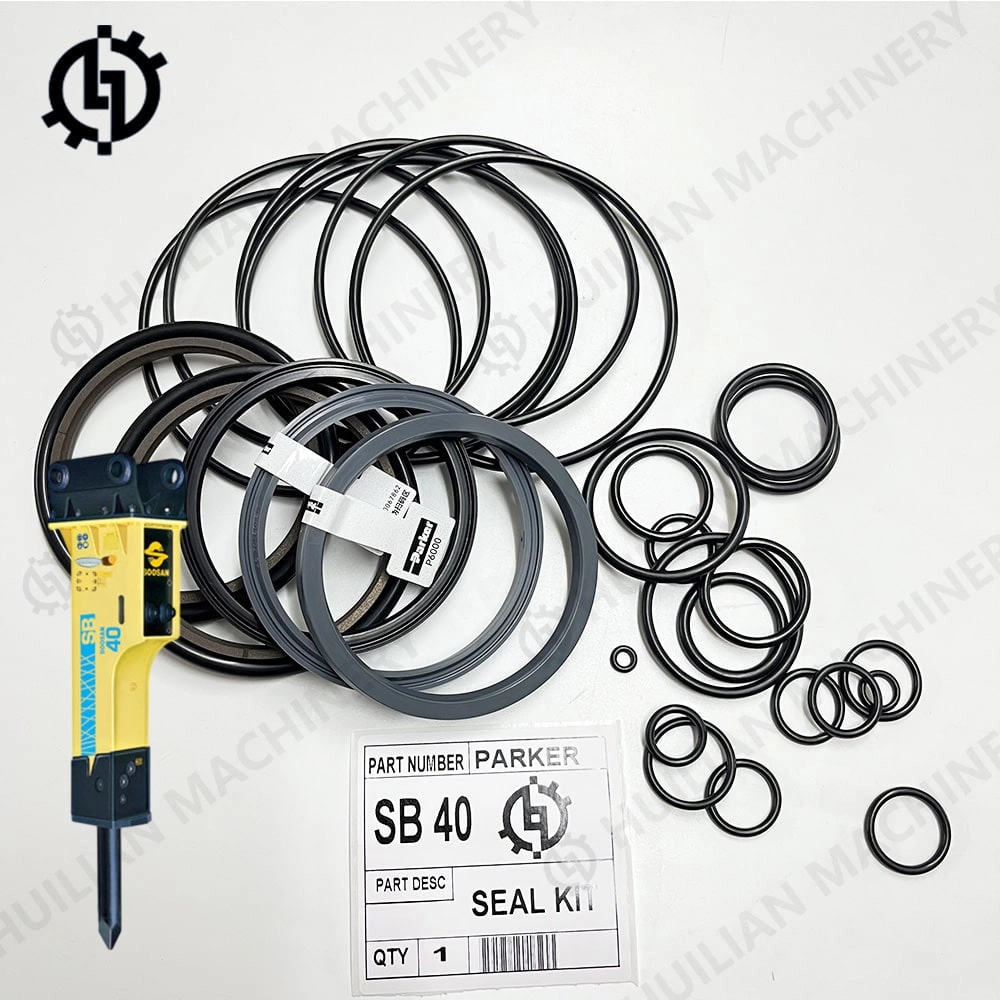
Parker Oil Seal Complete Repair SB40 Seal Kit COX001 CO1012 SB40Ⅱ SB40TSP SQ40 For Soosan Hydraulic Rock Breaker Hammer
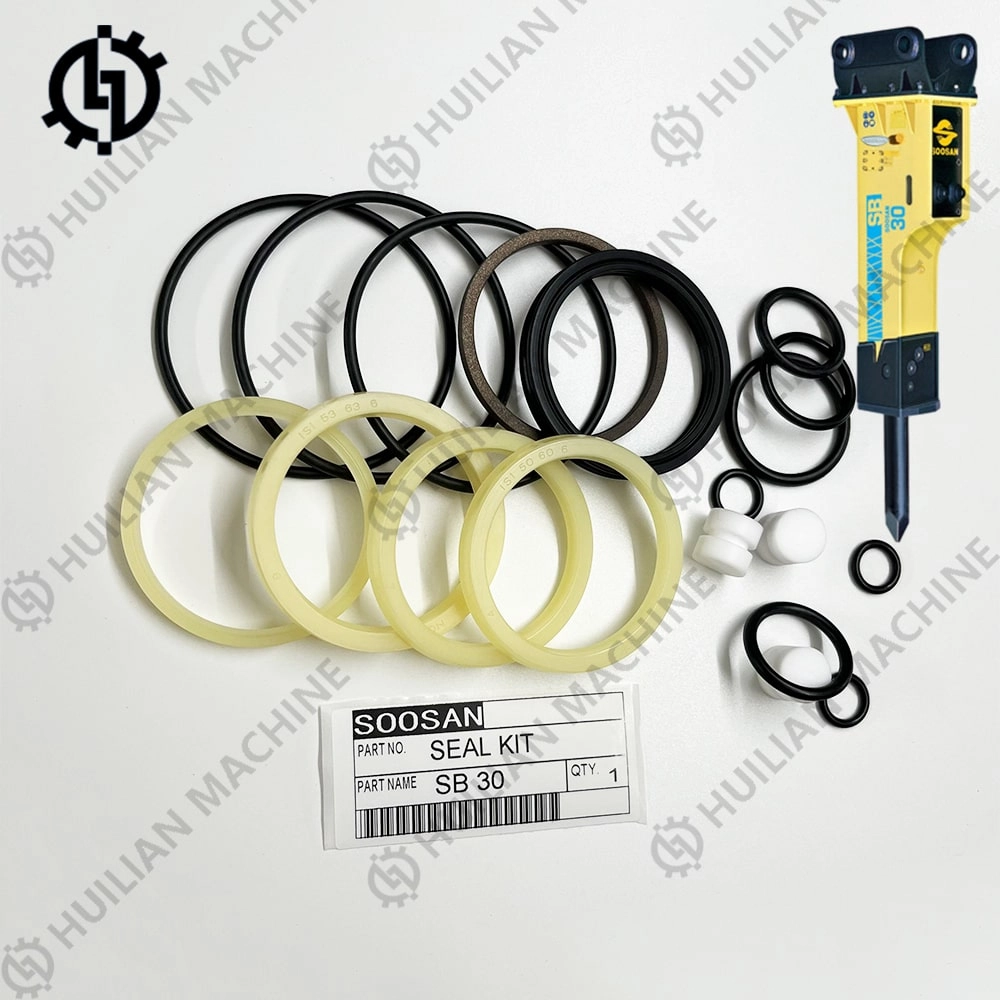
E71012 E7X001 SOOSAN SQ30 SB30Ⅱ SB30 Breaker Seal Kit SB30TS-P SB30Ⅱ TS-P SB30Ⅱ SSL Hydraulic Rock Hammer Parts Oil Repair Kit
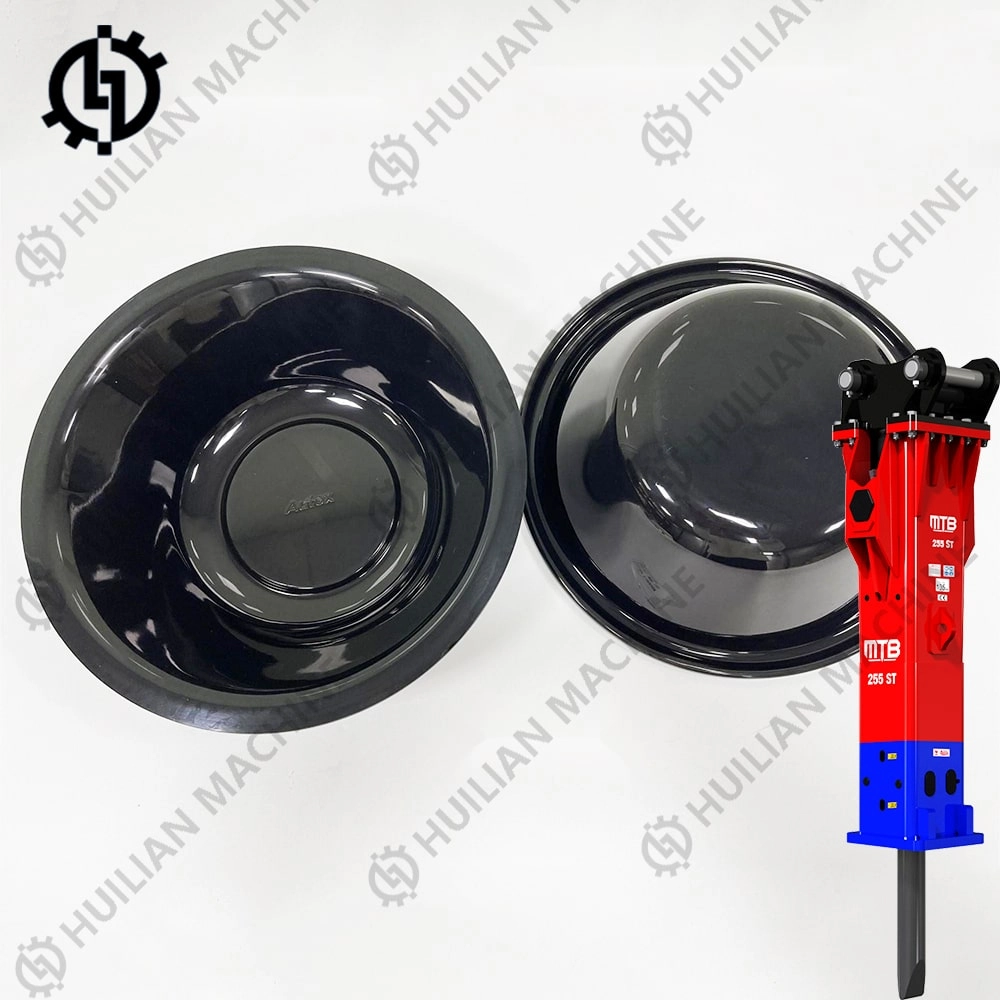
Inan Makina MTB Hydraulic Breaker Parts 45B0116A11 MTB255 MTB MT 255 Diaphragm MTB 255 IQ MTB-255 MTB 255 ST Membrane for Excavator Rock Hammer
 About us
© 2025 HUILIAN MACHINE. All rights reserved